Tag Archives: writing

517. The Three Stages of Heinlein

This is one of the fifteen that hit the sweet spot.

As I look back over my five hundred plus posts, I find Heinlein mentioned more than any other writer. I’m not going to repeat all that I have said, but I will provide links for you to see for yourselves.

You might think RAH is my favorite, but he isn’t. That would probably be Zelazny. When I was new to science fiction, in the fifties and sixties, it would have been Andre Norton. However, Heinlein is the one I most enjoy reading. His prose sings, but in an odd kind of way. He is like a weird uncle who sits by the fire telling lies and funny stories, occasionally laughing out loud at his own jokes, and getting serious just often enough to keep from looking like a clown.

But he does it so well.

Heinlein has been through three stages as an author. At first he was the master of compact, carefully plotted works, both short stories and novels. That was what publishers demanded at the time and he produced some masterpieces. I reviewed five of them in one post.

Then came Stranger in a Strange Land, his most popular book, and a dud, for my taste. That was the start of his inflated period, which continued until his death, as his books got longer and more discursive. He gets a lot of criticism for long windedness, and deserves all of it, but some of those works are my favorites.

Alongside his early work, Heinlein produced a number of juveniles (as they were called then) and some of them were of top quality. I reviewed several briefly, just this month. At the end of his list of juveniles is the book that Scribners rejected, Starship Troopers. It is another favorite of many, myself decidedly not included.

Heinlein had a thing for group sex and a short but pleasant relationship with the rock group Jefferson Starship.

Actually, I’ve talked about RAH more than I had realized. Maybe I need to give him a rest for a couple of years.

516. 15 Best Stories

I’ve been reading people’s lists of favorites just about as long as I can remember. It’s a great game — pitting their best list against my best list. They always lose.

So I decided to make my own best 100 list, but it didn’t work. I stalled at sixteen. Then I looked again at some of those favorites that I hadn’t read for a while, and the number dropped to fourteen. Then I remembered another long un-read classic and the number went up to fifteen.

The small number is partly because I am picky, and partly because I can’t remember every book I’ve ever read. Nevertheless, the ones I remember deserve a shout-out, and I guarantee they are an eclectic group. They do have one unifying characteristic — they all sing.

That they sing is the only real criterion for greatness in my universe. This means finding the precise balance between workaday language and the kind of overblown language that is too precious to live. That point of balance depends in part on the story being told. Hemingway, Roberts, and Le Guin, three authors from the list, are quite different from one another but each strikes the precisely right note for the story he or she is telling.

Here is the list. Six of the entries have been covered already in previous posts. I have keyed most of them with a link at the bottom of this post so you can check them out. The remaining nine will show up as individual posts over the next couple of months.

These are a mixture of novels, novellas, compilations of linked short stories, and series of novels. Some are the best or most accessible books that stand for a writers whole body of work. One represents a brilliant writer whose career was cut short before he wrote a single SF or fantasy novel.

Works that hit the sweet spot.

Nine I haven’t yet written about.

The Old Man and the Sea               Ernest Hemingway
Pavane                                               Keith Roberts
A Wizard of Earthsea                       Ursula LeGuin
The Road to Corlay                          Richard Cowper
Lensman Series                                E. E. Smith
Jack of Shadows                               Roger Zelazny
Davy and
The Trial of Calista Blake               Edgar Pangborn
The Traveler in Black                      John Brunner
Highland Laddie Gone                   Sharyn McCrumb

Six I have written about

Hunter, Come Home                     Richard McKenna
Richard McKenna had one novel in his short career, The Sand Pebbles, a best seller but not science fiction. He also wrote a number of short science fiction pieces including this one.

A Prince of the Captivity               John Buchan
John Buchan is most famous for his novel The 39 Steps. My selection is a less well known work.

The Riddle of the Sands               Erskine Childers
Erskine Childers wrote this, the first modern spy novel.

Kidnapped/Catriona                    Robert Louis Stevenson
There are two posts on this, 508 and 509, both just last month.

A Christmas Carol, et al              Charles Dickens
Altogether, Charles Dickens wrote five Christmas novels.

The Three Stages of …                Robert A. Heinlein
No link here. Check Wednesday’s post.

515. Immortal Hunger

Magic requires an agile mind and a good memory.

Immortal Hunger
by Syd Logsdon

Abbit perault desegené . . .

An old man tried to speak the words
That his fading mind could not compel;
Began again, and once again,
Could not complete the vital spell.

Outside his walls a storm was coming
Snow had just begun to fall,
Within his chest there beat the ragged,
Slowing pulse of death’s own song.

Abbit perault divalté  . . . Damn!

The formula locked in his skull,
He could not force them free —
Those words that he had labored long
To etch in stones of memory.

Four thousand years ago he spoke them,
At Marduk’s feet in Babylon.
The old God said that death was conquered,
But warned him, never wait too long.

A hundred years ago he spoke them,
With shortened breath he sang their song,
And rose to live another century —
Remember, never wait too long.

A man grows tired, a brain grows weary
Childhood memories fade away.
Three hundred wives, so many children;
Still clinging at end of day.

Not satisfied, not done with dreaming,
Not ready for his final lay,
Desire unquenched, immortal hunger
Not to simply slip away.

But hunger isn’t all he needs
If memory fades with every breath.
Abbit . . . my God what was that spell?
The one that puts an end to death.

514. Space Force

As a die-hard space fan you might think I would like Trump’s Space Force idea, but I’m too much wedded to reality. This is just another publicity stunt, although there is a real history behind it.

The Russians had an independent Space Force from 1992 to 1997, and again from 2001 to 2011. Then they gave it up and made it a sub-set of the Russian air force. That’s not as sexy, but it makes more sense. It is also the way we have things organized here in the United States.

The poor Air Force! They have made a career out of trying to make space their domain, only to be slapped in the face by bureaucracy. Do you remember project MISS? No? Nobody else does either. MISS (Man In Space Soonest) was a plan to put a man in a capsule and shoot him into space on top of a converted ICBM. Now does it sound familiar? It was an Air Force project that was handed over to NASA and became Project Mercury.

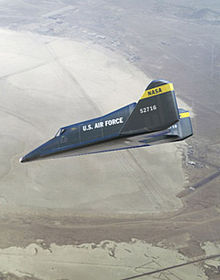
The Air Force followed up with project Dyna Soar, which would have put a winged vehicle on top of a rocket. It was cancelled because the money was needed for NASA. At the top of the post that is an artist’s impression of Dyna Soar landing at Edwards AFB after a mission.

Then the Air Force designed the Manned Orbital Laboratory, a black program which would have been America’s first space station. Cancelled; this time not by bureaucracy, but because of unexpected advances in unmanned satellites which made it obsolete before it flew.

The Air Force did provide input into the design of the Space Shuttle, and got to do some black missions. What were they? Beats me; they were secret.

The Air Force had a hand in several post-shuttle projects which never went to completion and finally got their own space ship in the X-37b. Sadly, it was unmanned.

As you can see, I’ve been writing a lot about all this. If you click on these four links, you will have a thumbnail history of NASA vs. the Air Force in a battle for space.

Now Trump wants to take space away from the Air Force altogether, but don’t blame him. He probably knows less about this than I do, and I am just an amateur enthusiast. Maybe he should click four times.

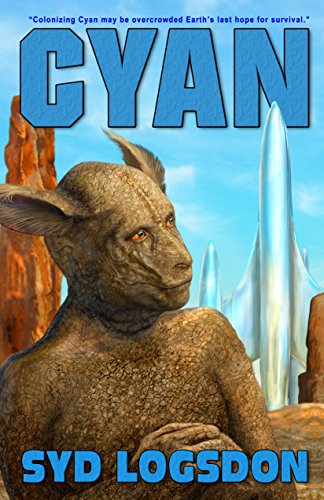
Enough of the latest publicity stunt. In Cyan, my explorers coming back from the Procyon system also faced a conflict that had been going on between NASA and a military space force while they were away. Here’s a quote:

All seemed well, on the surface, but something profound was happening to the people of Earth. They were waking up to reality. When interstellar exploration had begun, few had taken it seriously. Now the process was flushed with success, and that success carried the seeds of its own downfall.

Suddenly, all over Earth, people who had been indifferent to space travel, except to mutter about a waste of resources, became truly aware of what was happening. And they didn’t like it. In the vague common mind of the beast, numbers began to move in slow, painful calculations.

A few thousand colonists; billions of the rest of us.

They — the rich, the powerful, the smart, the educated, the lucky — they will go to the stars and walk the green valleys of paradise. We — the downtrodden, the ordinary, the workers, the plodders, the ones who really make things happen, the ones who always get screwed — in short, you and me. We will stay behind.

In the general elections of 2103, and in a hundred scattered elections and revolutions in 2104, the people of Earth turned on their leaders and said with a loud voice that the spacers who brought in the ore from the belt, and the workers of L-5, and especially those who were finding new worlds, were no longer heroic friends but dangerous enemies. They would no longer be given freedom to do as they pleased, but would be harnessed to the common good.

This was the Earth Darwin returned to in 2105. When Tasmeen signaled Ganymede Station, she received a taped reply.

“Welcome home, Darwin. You will find the language of this year somewhat different from when you left. When the Dog Star returned in 2088, we found that it would be best to train comtechs in the jargon of your departure year, and that is the reason for this tape.

“The biggest change you will have to be ready for is that NASA no longer exists … because after the general elections of 2103 the people of North America decided to combine all space efforts into one military organization. You are all now members of the Federated Space Service.”

Tasmeen said, “I have a bad feeling about this.”

Yeah, Tasmeen. Me, too.

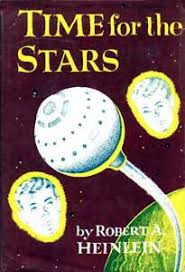
513. Heinlein’s Time for the Stars

Yesterday (June 25) I had a request from a reader for advice on which Heinleins to read after Stranger and Starship Troopers. I replied that my favorites were Door into Summer for the old compact Heinleins, Time Enough for Love for the later, long-winded ones, and Time for the Stars among the juveniles.

The exchange reminded me of a post I had written but not published, because I had an excess of Heinlein related posts going at the time. Here it is, slightly updated and finally published.

===============

Time for the Stars is one of my favorite Heinlein juveniles. I am using it here as a foil to Spirit Deer, in talking about core stories.

Spirit Deer was my first novel, written for adults but very short. I later stripped it of wife and adult friends, and turned into a juvenile. It appeared in Serial between June 5th and August 10th of last year. See 364. The Core Story and 398. Summing up Spirit Deer.

If you strip Time for the Stars and Spirit Deer both down to the core, and they are quest stories. The explorers on the torch ship Lewis and Clark are ostensibly seeking knowledge, but for the young communication techs (i.e. telepaths) that quest in inextricably bound up with a search for maturity. Tim, in Spirit Deer, is seeking survival, and a return to normalcy, but he cannot achieve that without finding maturity.

If you haven’t read Time for the Stars (and why haven’t you?), here is a brief summary.

Tom and Pat Bartlett are twin brothers who are part of an experiment to see if telepathy exists. They go along as a joke, and find that it is not a joke. The “secret language” they have used all their lives turns out to actually be telepathy. What they think other people can’t understand, they in fact cannot hear.

The discovery that makes this more than a parlor trick is that true telepaths can communicate long distances — proven as far as Pluto — and their contact does not show a speed of light time lag. Now relativistic starships can go out from star to star without having to return home to bring back their data.

Tom goes to space and Pat, the dominating twin, stays behind. Tom learns to assert his independence, especially as his stay-behind twin ages much more rapidly. The trip is grueling, the exploration dangerous, and eventually Tom returns home, still young while his twin has grown old.

That is all the summary I can give without spoilers, but how much do you need?

The voyage of the Lewis and Clark is a long trip away and a quick return. Tim, in Spirit Deer, has a quick plunge into the wild and a long return. They differ in detail, but the arc is home — away — home again.

There aren’t more than a billion stories with that arc, significantly including the Heinlein juveniles Starman Jones, Tunnel in the Sky, and Have Spacesuit — Will Travel, all of which are excellent. Upon returning home, these story’s characters characters are changed by their experiences. Jones’ life is most changed, with some losses and great gains. Rod Walker of Tunnel finds a career. Kip Russell of Spacesuit gets on with plans for his life, but his options are immensely augmented.

All four are Heinlein at his best.

512. Time Jacks

Beginning last July I wrote a steampunk novel called Cost of Empire. It is presently seeking a home. I am now working on a second but very different steampunk novel called Like Clockwork. Besides being weird, it also insists on being about 65,000 words long. I really don’t know what I’m going to do about that; that would be a happy length for a 70s or 80s novel, but today’s market demands 100,000 words. Writing is easy compared to meeting the artificial needs of publishing, but short or long, LC is nearing completion.

(Of course, the post last Wednesday makes some of this obsolete. That is the problem with writing ahead.)

It is time to start thinking about a new novel. I have a time travel trilogy I began outlining about two years ago, just before Empire demanded to be written. I’ve been looking over my notes from then, to get my head in order before plunging in. At that time, I wrote a short first chapter, just to test things out.

Would you like to see it? I thought so. The novel will be called Time Jacks.

=========================

In the middle of the continent is a state called Kansas, and in the middle of Kansas is a medium sized town devoted to Time.

Near the middle of the town is a university devoted to the study of time, its mathematical nature, manipulation, inviolability (or lack thereof), and philosophical implications. Bleekman University is the most theoretical of all theoretical institutions, where the finest mathematicians and the finest of philosophers meet and attempt to understand each other, while both are trying to understand Bleekman’s legacy.

On a lintel stone over the entrance to the campus is an engraving of Bleekman’s Theorem. It takes one hundred seventeen symbols, some of which are seen nowhere else in the history of human thought, and some of which are still disputed by those mathematicians and philosophers.

There are three other institutions in Bleekman — surely you guessed that would be the name of the town. Near the university on the north is the Institute of Applications, where the knowledge brought back from alterlines is studied before it is released to the world at large. Scholars at the Institute ask, ”How does it work?” and “What use can we make of it?”

Scholars at Bleekman University do not care for such questions. They spend their time — that statement is almost a pun in itself — poking about on the edges of the Universal Why, knowing that they will never penetrate to its core.

Scholars from the Institute and from the University rarely talk to each other. That may be fortunate for mankind. Opinions differ on this matter.

South of both is “The Academy”. It has a longer name, but no one uses it. Here the brightest and best from all over the Earth come to become Time Agents. Ten thousand are admitted each autumn, having been previously winnowed by harsh competitive examinations. After three years, a few hundred become technicians and a few dozen become agents.

As you might expect, the graduates are a cocky lot.

[I left space here for several paragraphs I wasn’t yet ready to write.]

Oh, you noticed? Not surprising, really. I mentioned the University and three other institutions, then only told you about two.

In the center of Bleekman is a dome, a hundred meters high and a thousand meters across. You can see it from space, but I can’t tell you much more than that. Agents go in through the dome’s only entrance and a year or so later they come out, changed forever. Within the dome are the mechanisms of transference, which anyone is welcome to understand. Just study Bleekman’s Theorem, and good luck to you.

There are many other exits from the dome, but they are all in other timelines; alterlines, most people call them. This Bleekman, this Kansas, this Earth, and this universe constitute the homeline.

Time agents go through the dome to various elsewheres and bring back treasure. They go with the courage of a lion and the stealth of a mouse, changing nothing, and stealing nothing but knowledge.

That is all I can tell you. No one knows more, except for the few who have passed the entrance exams and the three years of winnowing that produces time agents.

=========================

Okay, it’s clearly a rough draft, but I like where it is going. This will be fun.

511. Novel or Novella

If you don’t know about <tor.com>, it is a high quality on-line magazine of science fiction. For years they were one of the few places which would take unagented submissions for short stories, although they have recently changed that policy. They have been mostly closed to novellas as well, but they still have occasional open periods, and one has just begun.

Since most submissions end in, “Try again elsewhere,” I have not previously mentioned any of my own submissions in this blog. However this opening for novellas has brought up some things I want to talk about. Again (see also 146. Novella 1).

Before we begin, here is a piece of information. SFWA (Science Fiction Writers of America), the professional organization which awards the Nebulas, breaks stories into these categories:

short story    under 7,500 words
novelette       7,500 – 17,500 words
novella         17,500 – 40,000 words
novel            40,000 words and up

In the last few years, most people would add very short, or flash fiction, to this list.

I have been working since January on a novel called Like Clockwork, but it has been fighting back. It wants to be 65,000 words long. That would be just right for a submission in the 1970s or ’80s, but is too short to sell in today’s market, unless you are self-publishing.

I’m not. I have considered it seriously, but it calls for a skill set that I don’t have, and don’t want. So I continued soldiering on, hoping for inspiration. Then I became aware of the novella opening at Tor (dot) com, which left me with a choice — try to make Like Clockwork longer than it wanted to be, self-publish it at its natural length, or cut it drastically to create a novella.

My own first publication was a novella, To Go Not Gently in Galaxy in 1978. It was roughly the first third of the novel A Fond Farewell to Dying which I was then in the process of writing.

Cutting TGNG out of FFTD was easy. There was a natural break in the action that allowed me to end the story without leaving the reader feeling cheated.

Cutting Like Clockwork down to size would be another matter; I would have to remove about a third of the book. That would be painful, but would not be a new situation. The floor under my computer is already metaphorically knee deep with good writing that didn’t fit into various novels.

First I had to cut out a long section that took place before the main story. That was easy enough, except that it meant dribbling the necessary backstory into the rest of the book a sentence here and a paragraph there. Smoothly, you understand, and without letting the seams show.

There were four main characters and four lesser characters in Like Clockwork, all paired off. One pair had to be dropped. Some of the things that they did for the plot had to be shoehorned into the lives of the remaining pairs. Smoothly; without letting the seams show.

Much was lost. The Great Babbage, companion to the Great Clock, simply went away. It was reduced to a couple of off-hand references, and that really hurt.  Altogether, it took me a month to chew 65,000 words down to 39,000 words. I submitted it earlier this week, retitled The Clock That Ate Time.

Will you be reading it soon? The writer’s psychotic optimism says yes, but I didn’t destroy any of the files that I cut, and everything that was removed can always be restored if necessary.

That’s my recent history, but it is only worth telling because it points out a larger problem.

Only certain lengths of story can find a market in today’s world. There are homes for flash fiction and for short stories, and novellas can occasionally find their place, but the lengths between 40,000 words and about 90,000 words reside in a wasteland. That is really unfortunate, since most of the best novels in the history of science fiction were in that range.

It’s all a matter of fashion. The best of today’s science fiction would have been rejected unread as too long to publish just a few decades ago.

To put it bluntly, then and now both stink if you have a good story that is the wrong length.

All this is somewhat malleable but there are stories that need to be a certain length. If you are a young writer, this profiling by story length is one more reason self publishing may be your future.

510. Books About Books

The Great American Read sent me scurrying to my personal library to review some books about books. That is an odd sub-genre, but not a small one.

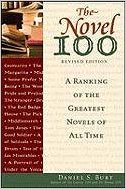
From my library (i.e., room-filling book pile) I pulled out The Novel 100 by Daniel Burt, The 100 Most Influential Books Ever Written by Martin Seymour-Smith and Twenty-five Books That Shaped America by Thomas C. Foster. I have certainly read many others over the years, picked up while wandering through libraries. I own these three because they were on remainder lists, which made them cheap enough to buy.

I also have A Great Idea at the Time by Alex Beam, which deserves a whole ‘nother post, later. (See the aside below before you write me about my bad grammar.)

Why do we read these books on books? For the lists and for the opinions. Everyone who writes one of these books is highly opinionated. They have to be, since there are no real criteria for making these choices. It’s all very subjective. One person’s Great is another person’s Crap.

It might be interesting to read a few dozen of these lists and see what books, if any, end up on all of them. Moby Dick, might qualify; everyone admires it from afar, although few read it. Still, I wouldn’t bet money on any title ending up on every list.

The best of these authors admit that their picks are personal, and could have gone a different way on a different day. They defend their choices with humor, which is always welcome. A good book-on-books is fun to read. Even when the prejudice is potentially offensive, we get to laugh at academics looking like red-necks without realizing it. And, no, I’m not going to admit which one of the above I’m talking about.

The criteria for inclusion are also different from book to book. The Novel 100 is based on pure quality, and on continuing to be recognized as fashions change. Daniel Burt begins with 1. Don Quixote and carries though 100. Gone With the Wind. Then he adds an appendix called the second hundred. The reader gets a two-fer.

Seymour-Smith skips great books which were not influential on other writers or the culture in general, and includes books which were influential, even if they were inherently bad. Calvin’s Institutes of the Christian Religion is an example of the latter. Seymour-Smith’s list runs from 1 The I Ching through 100 Beyond Freedom and Dignity. Mercifully, he does not provide a second hundred.

Foster writes with a light tone, sometimes slipping too far into flippancy, and only gives us twenty-eight books. His twenty-five include a two-fer of short books of poetry and a trilogy of novels. He also provides a list of fifteen runners-up.

If I wanted to collate the books in these three collections, throwing out the duplicates, the number would probably be close to 300. Am I going to read them all? Not in this lifetime, but I can read these reviews and come away with at least an idea of what I am missing. I can also garner a much smaller list of ones I actually might read some day.

========

Aside. If you are a writer, you must ponder the weird cock-ups where grammar meets usage. Take the phrase I used humorously, a whole ‘nother post.

Another post makes sense. If you add the modifier whole, the phrase falls apart. In another whole post , whole seems to modify post when it is meant to modify another. That is, it seems to say an additional post instead of a very different post.

It is similar to German, which has two words for another. Noch eine Bier means “Bring me an additional beer”, but ein andera Bier means “Bring me a different beer, I don’t like this one.”

You might try to break another into an other so you can squeeze in the additional modifier closer to its referent. But that doesn’t work either. You end up with—

An whole other post. That puts an instead of a in front of a consonant. So you try—

A whole other post. But that doesn’t work either, because you have lost the “n“, which leaves your reader muttering under his breath, “A other post? That’s not right!”

So you end up splitting another in a different place, ending up with a nother. Put that back into the phrase, and you get a whole ‘nother post which sounds right, even though it’s wrong.

Ain’t English fun?

This brings up Writers Rule # 1, to wit: If that which is grammatically correct looks bad, use a different sentence altogether.

You might also call it the “There are things up with which I will not put!” rule.

509. Kidnapped and Catriona (2)

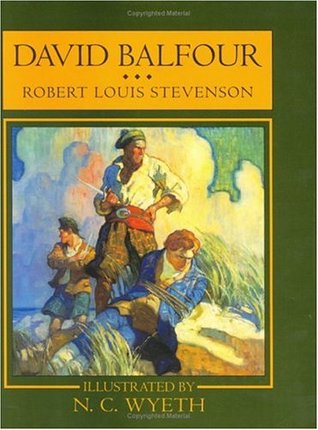
Catriona, aka David Balfour, continues the story begun in Kidnapped. I prefer the former title, probably because it was the title of the library copy I first read. I have headed this with a David Balfour cover, because all the Catriona covers I found were artistically inferior. By either name, this is quite a different kind of book. The balance between action and moral dilemma has shifted hard to the right.

Kidnapped had too much meat to be properly called a boy’s book, but it fell into that category among booksellers largely because it didn’t have sex or even romance. In Catriona, there still isn’t any sex — it was published in the Victorian era, after all — but it does have romance. Catriona is David’s love interest from early in the novel, and he wins her at the end. But the path of that romance is so slow, self-consciously moral, and tedious that it wouldn’t work as a modern girl’s book either. (Assuming anyone would dare to use that phrase any more.)

I recommend both novel and sequel to adults who are willing to take a journey, not only to another land, but also to another time. It’s easier to follow the lowland Scots dialect than it is to understand why David is so backward in his pursuit of Catriona. Once you get past that, you will be closer to understanding the era.

The book is in two parts. In the first, David is trying to get his friend Alan to safety overseas, and trying to get a chance to testify that James of the Glen cannot have committed the Appin murder. The latter turns out to be no easy task. The level of bias and corruption is astounding, on both sides of the political spectrum. (Sound familiar?) Shenanigans abound; David is kidnapped, again, this time by his friends and held captive on Bass Rock to keep him from the trial. He manages to get there anyway, after the trial is over, but before the verdict is announced. He falls in with those who are James friends, and finds them as blind to justice and reason as the ones who want James dead. David says:

And it was forced home upon my mind how this, that had the externals of a sober process of law, was in its essence a clan battle between savage clans.

There were no quotations in the last post, but Catriona is a garden of quotations, so brace yourself as David tells you what happened in his own words.

. . . in course of time, on November 8th, and in the midst of a prodigious storm of wind and rain, poor James of the Glens was duly hanged at Lettermore by Balachulish.

So there was the final upshot of my politics! Innocent men have perished before James, and are like to keep on perishing (in spite of all our wisdom) till the end of time. And till the end of time, young folk (who are not yet used with the duplicity of life and men) will struggle as I did, and make heroical resolves, and take long risks; and the course of events will push them upon the one side and go on like a marching army.   . . . (James) had been hanged by fraud and violence, and the world wagged along, and there was not a pennyweight of difference; and the villains of that horrid plot were decent, kind, respectable fathers of families, who went to kirk and took the sacrament!

What follows immediately thereafter is perhaps my favorite quotation from all of literature.

But I had had my view of that detestable business they call politics–I had seen it from behind, when it is all bones and blackness; and I was cured for life of any temptations to take part in it again.

David may have accomplished nothing, but he has given a moving example of decency in his attempt.

The last third of the book is a romance, mixed with more intrigue. Alan appears again, David ends up as the temporary guardian of Catriona, which makes him morally bound to say nothing about his feelings for her, since she is in his power. It is all very touching, frustrating, and Victorian. I would not blame a modern reader for wishing David would just say, “Hey, Babe, we’ve got a problem here, let’s talk about it.” But of course, he can’t. Living through his misery with him is the price we pay for diving deep into a historic culture, told through the words of a man who lived it.

Spoiler alert: all comes well in the end.

In his dedication to David Balfour/Catriona, written in Samoa, RLS revealed his affection for both books and added:

And I have come so far; and the sights and thoughts of my youth pursue me; and I see like a vision the youth of my father, and of his father, and the whole stream of lives flowing down there, far in the north, with the sound of laughter and tears, to cast me out in the end, as by a sudden freshet, on those ultimate islands. And I admire and bow my head before the romance of destiny.

Kidnapped might be mistaken for a boy’s book; RLS suggested it himself. Catriona, or Kidnapped/Catriona seen as a single story, is an adult look at a very different world.

508. Kidnapped and Catriona (1)

This is a double homage to Robert Louis Stevenson’s Kidnapped and to David Balfour or Catriona, the alternate titles of its sequel. It is a follow-on to 504. Homage to Robert Louis Stevenson.

Kidnapped was published 132 years ago, so there are bound to be some problems with language and culture. If it were being read by adults familiar with how historical novels function, there would be no issue, but Kidnapped is seen as a boy’s book.

It isn’t. Kidnapped is a Bildungsroman, a coming of age novel in which the main character faces moral choices. Kidnapped and Treasue Island are often lumped together, but they are quite separate species. Consequently, Kidnapped does not get the respect it deserves.

David Balfour is off to seek his fortune, shortly after his father’s death. He is going to see a rich Uncle Ebenezer, without knowing that he has a claim on his uncle’s fortune. At his uncle’s connivance, he is kidnapped onto the brig Covenant and shipped off to the America’s as a slave.

Complications ensue. David falls in with Alan Breck, the Covenant is wrecked off the west coast of Scotland, and David and Alan find their way back to Edinburgh. Along the way, they witness the murder of Colin Roy Campbell, a matter of great political importance in the days shortly after the Jacobite uprising.

Alan Breck Stewart, which is the full name of David’s companion, was based on the real historical character who was implicated for the murder (also real), tried in absentia, and sentenced to death. The sentence was never carried out and the real Alan disappeared from history, leaving a trail of local stories about what happened to him.

RLS took the Appin murder, as the incident was called, as the backbone of his story, not only in Kidnapped, but also in its sequel.

There is plenty of adventure, danger, and intrigue to carry the novel to its conclusion, but its quality lies in the view David gets of both sides of the recent war, and the moral decisions he constantly faces. David is a lowlander, a conservative, and a supporter of King George II; his companion Alan is in rebellion, on the run, and collecting rents which will go to support his King, Charles Edward Stuart. Patriotism would have David turn Alan in; their friendship, and the fact that each has saved the other’s life during their journey, will not allow him to do so. David knows that Alan is innocent of the murder, but he can’t testify to this without revealing that Alan is a traitor in the eyes of the British and already condemned, while throwing away his own future for consorting with King George’s enemies.

At the end of Kidnapped, David overcomes his uncle, then shows him mercy, gains his proper inheritance, and is in the process of helping Alan escape to France. As many critics have pointed out, the novel ends short of completion, with Alan still waiting for passage and James of the Glens was still in jail awaiting trial for a murder he did not commit. RLS himself admits this and hoped to make things right if Kidnapped were successful. I would give it to you in his words, but I haven’t been able to find the quotation. It comes of reading too many books in a lifetime, and not being organized enough to write down every quote I like.

Kidnapped was successful, and he did write a sequel, called Catriona in Britain and David Balfour in the US. The sequel never got the acclaim of Kidnapped. I find that unacceptable, so stay tuned for a look at Catriona on Thursday.

Kidnapped is not on the list for The Great American Read, as I discussed a week ago.

The fans of Kidnapping — they are legion — have arranged a walking trail in Scotland that follows David’s path from the shipwreck to Edinburgh. You can find information here. I’ve added it to my bucket list.