Tag Archives: writing

476. Sex in School

The real title of this post should be Sex Education in School, but I chose bait-and-switch to get more readers.

I taught sex eduction for about twenty years, starting about 1984. I started the first year I taught, as a favor to a female teacher who wanted a man’s point of view in her sex ed. class. I got roped in pretty much like Neil in today’s Symphony post. The next year, sex ed. became my class since I was the unofficial science specialist. I always had a female co-teacher. I taught sixth graders, then seventh, then eighth as I moved up the grades as a teacher.

Truthfully, I hated it, but it was probably the most important thing I ever taught, and the thing I’m most proud of. I continued as long as I could, but it is a dangerous subject to teach, especially if you are a man. No matter what you say on that subject, some parents won’t like it. Say something inclusive, and conservative parents will hate it. Say something traditional, and liberal parents will hate it.

There came a time after two decades when we got a useless, cowardly, incompetent principal who couldn’t be depended on to back up his teachers, and that was the end of sex ed.

Having sex education in the schools is not enough. It can be hijacked. I knew a woman who worked for the county as a sex ed. teacher, who was there to be borrowed by small schools. We had her in our school twice. The first time she was quite good. The second time, a few years later, she had been refunded by a grant with specific requirements which she could not violate.

As she was teaching, she stated that pre-marital sex was wrong because it could lead to transmission of STDs. This was in an eighth grade class. One of my students raised her hand and said, “If your companion has an STD, what does it matter if you are married or not? You still get an STD.”

This woman was a competent and conscientious teacher. She knew the answer. She could have defended her point by saying something like, “The more partners you have the greater the chances of transmitting an STD.” She didn’t say that, even though she had correctly handled such questions the first time I worked with her. Instead, she simply repeated what she had said before. It was an awkward moment, since every student in the room knew they were being hosed.

It happens sometimes that teachers are required by contract to speak half-truths. A mortgage and a family to feed are powerful incentives to toe the line.

I wasn’t tied to her contract, so I interrupted, told the student that she was exactly right, and praised her for clear thinking.

Starting the middle of next week and continuing through the middle of the week after, Neil is going to teach sex ed. over in Serial. It is an accurate portrayal of a sixth grade class in the late eighties. I apologize for the fact that it’s ugly; I’m just reporting here. There is no mention of any sex but male-female, but that would no longer be true. It had begun to change by the nineties and I can only imagine how wide ranging conversations must be today.

We were not allowed to talk about contraception, so we never mentioned it. No problem. There was always a question and answer session, with written questions to keep down embarrassment, and somebody always asked, “What is a condom and how do you use one?” I always answered, clearly, accurately and without embarrassment. I also took that opportunity to point out that they sometimes fail.

We always talked about sex abuse, telling the students that they had a right to the privacy of their own bodies, and that they should tell someone they trusted if something seemed wrong to them. No child ever confided in me; I wasn’t the motherly type. I am reasonably sure that some of them confided in my female co-teachers, but I never knew for sure.

Sometimes teachers know, without proof, that abuse is occurring. The signs are there, but the victim says nothing, no matter how much you make yourself available. Abusers are very good at training their victims to silence.

Sometimes you know, but you have no proof, and you can do nothing. That is the worst of all.
Symphony 117

Sex Ed.

A miracle took place right in front of Neil and he did not see it. Then one morning, when the spring sunlight fell hard upon the playground, he looked around him and all his children were no longer children.

They had come to him looking like babies, but only two or three still did. The rest had shot up, slimmed down, and slowed down. Where they used to come into the classroom and sit squirming for forty-five minutes, they now sat down and went to their work with quiet maturity. They ran now with a loping awkwardness, and they had begun to notice one another in a new way. Puberty was setting in and hormones were flowing through their young bodies like the sap in the trees.

The school year was three-quarter’s gone. Neil could look back with satisfaction on the things he had learned and the progress he had made. His children were doing well. Only seven of the Chicano children were still coming regularly to his after school class in Mrs. Alvarez’s apartment, but the ones who remained were learning rapidly. He only regretted not starting the class sooner.

Kiernan had proved a refuge in which to recover his strength. He had weathered the storm of controversy surrounding his actions in Oregon. If there were any parents who still believed him guilty, they had given up attempting to have him removed. The children had forgotten all about it.

# # #

Neil was in the teachers’ lounge grading papers over a cup of coffee. Fiona had been sitting with Glen Ulrich when Neil came in, having a discussion that verged on being an argument. She got up, crossed to where Neil was sitting, and said, “How would you like to do me a favor?”

“Sure. What?”

“You’re agreeable this morning. I want you to teach sex education with me.”

“What?”

Fiona laughed at his consternation. She explained, “I teach sex education as part of the regular science class to seventh and eighth graders, but is is school policy to teach it to sixth graders as a separate unit. We give it all to them in one afternoon.”

“Why?”

“There are some parents who object to having sex taught to their children in school. This way we can give them the option of holding their child out of the class.”

After a minute, Neil said, “I don’t like that.”

“Me, either. Sixth grade is the year most girls have their first menstrual period and it can be a terrifying experience, especially with all the old wives tales they hear. And they can get pregnant without ever knowing what is going on.

“What we do is, we send out a letter that says if you don’t want your child to participate, sign here. If we don’t get a letter back, then we assume that its okay. The kids usually read all the notes they carry home, so a lot of them never get there. If anyone does send back a refusal letter, I call them and try to talk them into letting their child take the class.”

Neil smiled and said, “It sounds like you have it all covered. You won’t be needing me.”

“Wrong. I always teach the girls and Glen or Tom always teaches the boys. However, since our sixth grade core teacher is male this year, and since you have established a rapport with them . . .”

“Aren’t you forgetting something?”

“What?”

“My scandalous past. These parents have gotten off my back and accepted me as a temporary replacement, but I’d lay you odds they don’t want me talking to their boys about sex.” more tomorrow

Look Out Overhead

Over the last week, from local to national news, everyone has been commenting on the likelihood of being in the path of the falling Chinese space station. The chance of being hit by debris was one in a trillion, they said. My question would be, how did they ever find data to come up with that or any other statistical figure?

On the news Saturday morning I saw this interchange:

             Mike Massimino gives a full explanation of why the Chinese space station is going to come down soon.
             Talking head who wasn’t listening says, “But Mike, why is the space station going to come down?”
             Massimino calmly explains again, without missing a beat, proving why he is the usual face of NASA.

Well, the wait is over. The space station hit open water in the Pacific last night.

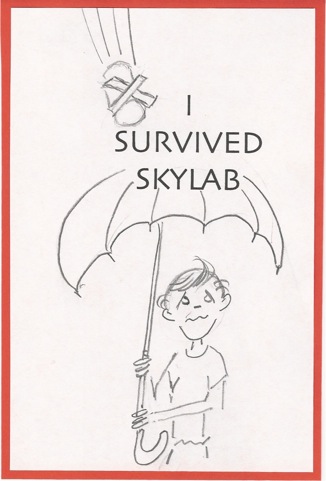
This isn’t the first space station to fall out of the sky, out of control. American’s first space station did the same in 1979. To see what happened then, go to 299. I Survived Skylab. For a full report on that space station, see 297. Skylab 1 and 298. Skylab 2.

Symphony 116

“Do you still think I am not fit to teach your daughter?”

Maria Alvarez said, “I’m not sure.”

“You were pretty sure that I wasn’t fit, so I guess that’s progress. May I sit down?”

She gestured gracelessly toward the couch. He sat. Rosa stuck her head around the door, then jerked it back when her mother yelled something to her in Spanish.

Mrs. Alvarez moved a kitchen chair up and sat very stiffly facing Neil. Jose Alvarez was watching protectively. She made a side comment to him that Neil could not understand.

“Mrs. Alvarez, I have a problem that you may be able to help me with. It has nothing to do with what happened in Oregon. It has to do with the education of the Mexican children in the sixth grade.”

She nodded.

“I don’t have any Spanish, so if you want, Rosa can translate.”

“I do okay. If I don’t understand something, you can say it some other way. I don’t want her in here.”

Neil said, “All right,” and began to explain how his year had gone. He gave here a brief explanation of the pros and cons of leveling, told her of his early failures, told her how he had leveled his class, and told her of the results he had had since he has discontinued leveling.

She heard him through, and Neil thought he detected a softening in her as he talked. She had respected him once, and she wanted to respect him again, but trust is easier to win the first time than it is to regain once it has been lost. When he finished, she said, “Why you telling me this?”

“Rosa has been having Delores Perez over to study here, hasn’t she?”

“Yes.”

“How would you feel about having a larger group of students over to study?”

“How many?” Maria asked.

Neil took a paper from his pocket, unfolded it, and handed it to her. “There are twenty names on the list, but I doubt that more than half of them would come.” She glanced at the list as Neil continued, “What I am asking is this: would you be willing to contact the parents of these kids and talk them into sending them to your apartment for half a day each day during spring break? If you will do that, I will come here and teach them at their own level. If it’s a success, I will continue to come after school for the rest of this year.”

She shook her head. “Twenty kids, here?” She looked around at the tiny apartment.

“Probably ten kids or fewer. It doesn’t have to be at your apartment, but it needs to be somewhere in this little barrio so the kids can walk to get to it.”

“You’ll do this?”

“If you find the place, and talk the parents into it, I will teach them.” more tomorrow

Symphony 115

On the day that prompted Neil’s mental review, Rosa Alvarez was trying desperately to prepare Delores Perez to read a passage on which they would all be graded. Neil disliked this particular exercise; it was a cruel means of getting the low readers to read aloud, but he had not yet found an alternative.

Rosa left her group and came up to Neil, looking completely frustrated. “Mr. McCrae,” she said, “I can’t get Delores to read that paragraph. It’s just too hard for her. Can’t she read something easier?”

Neil said, “I know. I’ve been watching. Are you sure that she isn’t going to get it?”

“I’m sure.”

Neil fished into a desk drawer and pulled out one of the fourth grade textbooks he had been using when they were leveled and said, “All right. If she can’t, she can’t. Let’s find something she can read.”

Then Rosa startled him with her mature assessment. She said, “I like the way we are reading now better than before, but I don’t think the kids like Delores are learning as much.” Rosa picked up the textbook and said, “This will be great. Delores has been coming over to my house at night to study. Now I think I can help her.”

Neil watched her walk back to her desk, shaking his head in wonder. Yet it should have been no surprise. Chicano girls are taught hard work and responsibility early in life; they often spend hours a day caring for their younger siblings. It is only in school, where the shyness that they are also taught inhibits them, that they seem placid and unresponsive.

At recess that morning, Neil listed his low readers and went to check out their addresses. Sure enough, most of them lived in the Oaks and Johnson apartments. That night he waited around school until the busses had had time to deliver their students, then drove to the Oaks Apartments and knocked on the Alvarez’s door.  He had deliberately come alone because he wanted Maria Alvarez to talk to him, not to Carmen. If there was need of a translator, he would depend on Rosa.

Jose Alvarez answered the door. He looked hostile at first, but then his look turned embarrassed and he motioned Neil in, calling toward the back of the house in Spanish. Maria came out drying her hands on a towel and stopped abruptly at the sight of Neil.

“Good evening, Mrs. Alvarez,” Neil said. “Buenas tardes. I’m afraid that’s about all the Spanish I know.”

“What do you want. Is something wrong with Rosa?”

“Rosa is doing extremely well. I have a question for you. Do you still think I am not fit to teach your daughter?”

Maria Alvarez’s eyes were opaque black and her face was suspicious. She said, “I’m not sure.” more Monday

475. Speak English!

Over in Serial today, a fairly long bit of exposition appears in Symphony in a Minor Key. It amounts to an essay (or maybe sermon) on English and Spanish in American schools. It has nothing to do with DACA or contemporary issues of immigration, since it was written in the late eighties. It also doesn’t come down for or against bilingualism. It is a look at the underlying problems faced by both Anglo and Hispanic students. Even if you aren’t following Symphony, this post is still worth a look.

I came to these conclusions by a three step process, beginning with growing up as a smart kid in a tiny, rural Oklahoma school. We were all white, all English speakers, and we all sounded more or less the same. The teachers spoke grammatical English, mostly, but the kids and their parents did not. I wanted to, and I needed to, since I planned to go to college. I read books, and the words on the page did not closely resemble the words I heard from farmers down at the grain elevator.

Eventually, I realized that the language of the books I was reading was not the same dialect that I was hearing from those around me. My English teachers consciously and painfully spoke grammatical English, the other teacher also did, but with many noticeable lapses, and no one else even tried. If I was going to go to college, I needed more, so I memorized Strunk and White.

Now I could write essays that were as good, and as grammatical, as anyone’s, no matter where that person was educated. It got me into college. Michigan State University gave me a scholarship and I was on my way.

Except — when I got off the train in East Lansing, no one could understand a word I said. My words were all correct, and grammatically strung together, but they were all pronounced “wrong”. I had “learned to talk like the man on the six o’clock news”, but he had an Okie accent too, and I never knew it.

My roommates learned to understand me, and translated during the first few weeks until I had gotten used to Michigander pronunciations and learned to mimic them. My accent slowly faded, but came back with a vengeance every time I went home. I never did learn the supposed difference between “i” and “e”. Pen and pin are still pronounced exactly the same inside my head. I can fake the difference, but it hurts my mouth.

Personal experience showed me how our American language works, but I did not know why until PBS produced a mini-series called The Story of English in 1986. I recommend it if you can find a copy and a VCR to play it on. I wish PBS would make it available in some modern format.

It turns out that American English is so diverse because British English was a melange of dialects when it arrived in the New World. They found their way to various regions of America and thrived there. Now I came to understand that, when JFK said Cuber instead of Cuba, and all those fine craftsmen on This Old House leave out their “r”s, they aren’t really as goofy as they sound. They are reflecting an Old English dialect that happened to land in their region. I also realize now that “there ain’t no such word as ain’t”, simply because the South lost the Civil War.

When I started teaching in the mid-eighties, I had a clear understanding of the many Englishes, and I quickly came to recognize what that meant for Spanish speaking English learners, which led to today’s post in Serial. I won’t repeat those conclusions here, since you can just go read them there.

One final anecdote, regarding the last sentence in today’s Serial post — One our better English learners graduated from eighth grade and left us. She came back a few years later to visit her middle school teachers. Her parents had moved back to Mexico and had enrolled her in a quality Mexican high school. When we asked her how she liked it, she said, “I thought I was good until I got there, but I found out all those kids speak Spanish and I speak Mexican!”

Symphony 114

English

As spring break approached, Neil decided to reassess his classes’ progress in reading. The results were disheartening. His new teaching method was helping his less able students: it was expanding their horizons, drawing them into conversations they would not have had part in, and giving them a base of shared experiences. It was not teaching them to read independently.

Rosa Alvarez had blossomed. Her reading had improved dramatically and her understanding had kept pace. Sometimes she would be thrown off by English idiom, but Bob and Tim were there to put her back on track. Among the three of them, they managed to make little Delores Perez understand what they were reading, but Delores was only two years out of Mexico. She was just beginning to speak the Kiernan community’s slang-ridden, ungrammatical English. She was essentially a non-reader, and standard English was a mystery to her.

Neil often heard people say that it was hard for Mexican children because they had to learn two languages. Not true; his Anglo children had to learn two languages: their own version of English, and so-called standard English. The Mexican children were expected to learn both of these in addition to their own Spanish, and no one even bothered to let them know that the language of the classroom and the language of the playground were essentially two different dialects.

It was not a matter of current slang. When David Breshears had said to Neil that he could not keep up with his daughter’s language, he was only referring to one or two dozen words. David Breshears and his daughter spoke the same language, and it was not “standard” English.   

What they spoke was a genuine dialect, with very specific rules. The reversal of objective and subjective, the free use of double negatives, and the collapse of tense were its hallmarks.  One might say: “I come to school without my lunch this morning;” or “Me and my friends are going out to play;” or “I don’t have no money.” Those statements were all within the boundaries of “correct” usage in their dialect. But to say “I don’t got no money,” was a solecism. It was recognizably baby-talk. Anna Breshears might use it, but her father never would.

It was not a regional dialect. It was not the speech of California, nor a hold-over from the speech of the Okie immigrants of the dust bowl days. It was the true, common, standard speech of America. From Alaska to Florida, and California to Maine, it was the speech of field and factory. It reached artistic heights on the ten thousand country-western radio stations where it was the only accepted dialect. It was the true sound of America.

Eighty percent of Americans speak this dialect in their everyday lives. It is the language American children drink in with their mother’s milk, learn at their fathers’ knees, and hone to a fine edge in play. Then, the day they arrive at school, they are told to forget it and learn a new language with different and foreign rules; a language which most of them cannot share with their own families.

“Standard” English is by no means standard. It is the consciously cultivated language of an elite.

Even those who do not speak standard English, recognize its utility. Bob McDill, in a country-western song, wrote:

But I was smarter than most, and I could choose —
Learned to talk like the man on the six o’clock news.

Children coming into the school system have to learn a new and foreign dialect before they can begin to succeed. And these are the Anglos!

For the Hispanics it is far worse. They come in speaking a version of Spanish that has the same relationship to Castilian Spanish as the English of the factory holds to the English of the university. Anglos learning new grammatical forms at least have the same base of vocabulary as “standard” English. The Hispanics lack this, and when they begin to learn “English”, they are taught one “English” in the classroom while they are learning another “English” on the playground.

To succeed in America, a Hispanic must be tri-lingual. And if such a student does succeed, he will still lack the “proper” Spanish which would be a passport to a job of status in Mexico. more tomorrow, and also check out today’s post in A Writing Life for more on this subject

Symphony 113

“Mrs. Alvarez, there is nothing in the world I would ever do to hurt Rosa. If I thought it was the right thing to do for her, I would walk out that door right now and never come back.”

Their eyes held until Maria’s softened and she blinked away tears. No rhetoric could have melted her, but Neil had spoken to her from heart to heart.

He let his eyes travel over the room again. So many of them he did not know. Nor did they know him, yet they had given him their children. Not of choice, but of necessity. It was a precious trust. He knew that; he had always known that.

He raised his voice and said, “I know how much you love your children and how vulnerable they are. I know how you must sometimes wonder when they leave you in the morning if they will ever come back to you. Or if they will come back battered in mind, or body, or soul. I understand that, to you, it would be better to overreact and be sure. To drive away anyone who even seems to be a threat. I understand that.

“But you can’t give in to fear. I know. I have faced the other side of your dilemma; the side you don’t even know exists. If you give in to fear — if you act on rumors — then those who spread rumors will control your lives. Those who wish your children well, those who work hardest for their welfare, will be the first targets if you give in to rule by rumor. I know. It happened to me.

“There was a girl named Alice Hamilton . . .”

# # #

Neil stood in the front of the room as one naked, with his hands in his pockets and only his soft voice to carry his message. He told them everything, even his weaknesses. He told them of his foolishness in tutoring the girl. He told them of his weakness in leaving when he was faced with a fight. He told them what had happened to Alice and her father afterward. He told them that he still felt for her, and admitted that his anger was nearly as great as his pity.

He held back nothing. He hid neither his strengths nor his weaknesses. If he had been cowardly in leaving Oregon, he was no longer the same man he had been. Time and pain had strengthened him. This time he told everything and silently challenged them:  Accept me if you will; damn me if you think you can; but here I stand. I will not run again.

# # #

The parents filed out. One or two stopped to speak, but most moved quickly away. Perhaps they were ashamed of the whole affair; perhaps they were unconvinced and only wanted privacy to plot further against him; perhaps — most likely — they needed time alone to think about what he had said.

Bill Campbell slipped away with no word, but that was all right. They would talk later, privately. His friendship was like Tom Lewis’; it was based on trust. As long as Bill believed in Neil, he would do everything he could for him.

The school board members also slipped out in quiet neutrality.

Now that his anger had begun to ebb, Neil could admit that he did not envy them their job. Poised between school and community, they did a constant juggling act to please as many as they could while getting the best education for their children that limited resources could provide. It could not be easy.

Carmen was waiting for him in the shadows outside the room. As he emerged she caught his arm and drew him close to her; her arm went around his waist with a strong, possessive grip and she guided him away into the darkness. There she held him hard against her and kissed him passionately. 

“Neil,” she whispered, “I have never been so proud in my life. You were magnificent.”

He could not answer, except by holding her closer. more tomorrow

474. They Never Flew (1)

Continuing from 472. Teaching Space, this and the upcoming April 5 post will discuss the manned space programs that never happened.

Wikipedia lists seven manned pace programs which were canceled before they were launched, but this list is only technically accurate.

MISS, Man in Space Soonest, was a project from the early days when the Air Force planned to dominate space. The preliminary work was transferred to NASA when it was formed and became Project Mercury. Technically, MISS never flew; looked at more reasonably, MISS became Mercury, which was quite successful.

Dyan-Soar was a follow up Air Force project which planned to put a winged craft into low earth orbit, and subsequently turn that into an ultra-long range space bomber. It was contemporary to Project Mercury. There was not enough money or will to keep them both, so Dyna-Soar was cancelled, only to be reborn, in a manner of speaking, as the Space Shuttle. For details see 342. Dyna-Soar.

The Manned Orbital Development System, Blue Gemini, and the Manned Orbital Laboratory were successive names for the same secret project, designed to use modified Gemini craft to service an early one-use space station as an orbital observation post. It got to the point of one unmanned launch before being cancelled. It was made obsolete before it went into service by advances in unmanned reconnaissance satellites. For details see 256. The Space Station that Never Was.

By the time I started teaching, the era of manned space exploration was over, but there were plenty of manned space flights. The shuttle had 135 manned missions; Mercury, Gemini, Apollo, Skylab, and Apollo-Soyuz combined had only flown 35 manned mission. However, none of the Shuttle flights were explorations.

The early Shuttle flights were exciting and technologically innovative, but they only went where Mercury had gone two decades earlier. The flights quickly became routine. They were dangerous — Challenger and Columbia proved that — but danger alone does not bring excitement. Commuting on a freeway is dangerous, but only exciting during moments of imminent disaster.

The Space Shuttle was supposed to be a cost saving way to space, but it proved quite expensive. It was supposed to be reusable, but that turned out to be only partially true. It was supposed to be single stage to orbit, but it never was. Each launch had four components, not one. The fuel tank was only used once. The two solid fuel boosters had to be recovered from the ocean and refurbished each time. Only the orbiter was fully reusable, and it had massive problems with failing tiles.

A vast number of its flights were spent building and maintaining the International Space Station. Many scientists tried to stop the construction of the ISS, claiming that not much science would be done there, but the cost would cripple other exploration. They were not listened to. Politically, the ISS was a demonstration that the cold war was over and the US and Russia were now pals. You know how well that turned out.

From the viewpoint of science, plenty of exploration was going on in my kids’ era, but it all involved unmanned craft. From the viewpoint of a teacher trying to excite middle school kids, a Mars rover landing was great, but if it couldn’t be followed up by a statement like, “You may go there someday,” if fell relatively flat. None of the kids I taught in the eighties are going to Mars; by the time anyone gets there, those kids will be retired, and they knew it at the time.

The only manned space craft of my kids’ generation was the Space Shuttle, and it was only flying to low earth orbit. A lot of good science got done by the shuttle (and a lot of political nonsense) but it wasn’t the same. Mercury, Gemini, and Apollo were like going down the Amazon in a dugout canoe, with adventure around every corner. The shuttle was like driving to Sacramento on Highway 99. Dangerous, yes, but not exciting.

But every year there was hope. New manned space projects kept being proposed, and I studied all of them so I could teach my kids something that would excite them.

Regan had NASP; Clinton had VentureStar; Bush Two had Project Constellation. We’ll look at all three on April 5, and try to recapture the genuine excitement they generated, before they faded into history

Symphony 112

Toni Boyd said, “Last Thursday I got a call from my sis . . . from someone in Oregon who had heard that Mr. McCrae was teaching here. She told me what I said in that petition, that he had been fired for seducing one of his students. Now I don’t have anything against Mr. McCrae personally. I only met him once before all this started, and he was helpful even though I didn’t really approve of his teaching methods. And my son hasn’t had any complaints. But we can’t have someone in this school that we don’t trust.”

The wind was shifting. Neil’s quietly threatening presence had made the school board members think twice about their legal position. So far, they had made no accusations. Neil could sue those who had signed the petition, but not them. They had this firmly in mind, so it was less courage than self-preservation that made Alan Burke say, “Mrs. Boyd, we knew about the accusations against Mr. McCrae when we hired him. They were never substantiated. He was never brought to trial, even though the local police investigated the matter. The school board in his last school found him innocent of any wrong doing.”

Here Burke was stretching the truth in Neil’s favor, for they had simply failed to find him guilty. What Burke did not say was how much he regretted hiring Neil.

Toni Boyd felt the ground crumbling beneath her feet; she looked embarrassed, angry, and betrayed.

So far it had been easy. Yet if Neil had learned anything, he had learned that a legal victory was useless if it resulted in a community that was poisoned against him.

Neil had used his anger to attack their positions. Now he had an infinitely harder task before him. He had to harness that anger, that basically destructive energy, transmute it, and use it to win them over. He would never have another chance. He would never have this audience again.

“Mr. Burke,” Neil said again, “may I speak?”

“Now what?”

“I have been accused of a crime which, if it were true, I myself would find repulsive. You know that I am innocent of sexual wrongdoing. You all knew that, or you would never have hired me.”

Even while smoothing things over, he managed to throw the board off balance and force them to take his side to save themselves. He was learning.

“You know the whole story, but these people do not. Now that the matter has come up, it can never be put down again with less than full information.”

“You want to tell everything in an open meeting?” Burke asked in surprise.

“No,” Neil replied softly. “I am a private person, but I don’t seem to have any choice.”

That put Burke in a terrible bind. If Neil could persuade the parents, all would be well; but if he failed to convince them, they would ask why Burke and his fellow board members had been persuaded. Worst of all, Burke had no choice. If he said no, he would be saying that the parents did not have a right to the information. That would be suicide.

Neil turned and moved to the center of the room. There was great anger in him, and fear as well. He was risking all on his oratory, and he did not trust his ability to persuade them.

He let his eyes wander about the room until the settled on Maria Alvarez. Neil, who did not let himself show favoritism, had a favorite in Rosa; sweet, gentle, shy Rosa who had come so far in so few months. In Maria Alvarez’s eyes, he saw his own feelings mirrored. If he loved Rosa greatly, her mother loved her with an all encompassing love — a love that would destroy him if necessary, for Rosa’s sake.

With no sense of melodrama he touched Maria Alvarez on the shoulder. He said, “Mrs. Alvarez, there is nothing in the world I would ever do to hurt Rosa. If I thought it was the right thing to do for her, I would walk out that door right now and never come back.” more tomorrow