Tag Archives: writing

660. Methuselah’s Children

I used a quote from Methuselah’s Children about a half a year ago in my diatribe against driverless cars. Taking a glance at Heinlein is always a mistake. I found myself committed to reading the whole novel, even though I’ve read it often enough to nearly memorize the thing.

The problem is, it’s his best work, from the viewpoint of skilled writing and skilled science fiction plotting. That is opposed to boy-meets-girl plotting or western-shoot-em-up plotting, which are completely different skill sets.

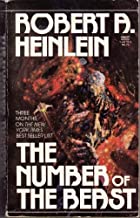
Stranger in a Strange Land and Starship Troopers are Heinlein’s best known works, but I find them both to be second rate. The first hundred pages of Number of the Beast is my favorite thing to re-read, but the rest of the book is kinderdrivel.

Methuselah’s Children is the best novel he ever wrote, hands down, despite my deep affection for at least a dozen runners-up. An early version came out in Astounding in 1941, and was expanded to the work we now know when it was published in paperback in 1958. Methuselah’s Children is the book Paul Kantner was referencing when Jefferson Starship suggested we all “hijack the starship” in 1970.

Heinlein has his strengths and his weaknesses. I acknowledge the latter, but I won’t catalog them. There are plenty of people who like him less than I do who are more than willing to do that. For my money, Methuselah’s Children is the book in which those weaknesses are least in evidence.

As the book begins, Lazarus Long (his first appearance) and Phyllis Sterling meet, interact, and are sexually aware of each other without letting it get in the way. Long offers advice without trying to run her life. Danger rears its head, and each of them reacts with maturity and grace, respecting each other’s competence. There is very little boy-girl snarkiness.

It’s too bad Heinlein couldn’t pull this off more often.

As everyone knows, Lazarus Long hijacks a starship to save his fellow long-lifers. If you haven’t read Methuselah’s Children or haven’t read it lately, this might seem preposterous, but he manages the task with a lot of help from people in power. The things he actually does are all well within the powers of any competent space pilot. He pulls it off not because he is a superman, but because he is a sneaky bastard.

Once on board, Slipstick Libby invents a space drive which takes them to the stars.

Assembled odd bits of other equipment, looking more like the product of a boy’s workshop than the output of a scientist’s laboratory, the gadget which Libby referred to as a “space drive” underwent Lazarus’s critical examination. Against the polished sophisticated perfection of the control room it looked uncouth, pathetic, ridiculously inadequate.

. . . but it works, and yes, Libby is a superman. Heinlein got away with that by making him a relatively minor character.

On planets they visit along the way they meet the Jockaira and their “Gods”, as well as the “little people”, and find out that humans aren’t the smartest race in our corner of the galaxy. Another writer would have made this a cause for feelings of inferiority, but Lazarus Long is Heinlein in disguise. He doesn’t have a humble bone in his body.

The refugees, armed with all they have learned, return to Earth to fight for their rights. Flags wave, cannons sound, bands march — well, not really, but that is the feeling.

Everything that Heinlein was, is on display here. It’s great fun, but it’s not slapstick. Heinlein keeps a light touch, but his alter ego “takes his soul out and examines it” just often enough to keep matters in perspective.

Heinlein would revisit every idea, many of the characters, and every character-type in subsequent novels. None of them would be so well balanced, nor have so few groaners.

659. Leap Boy’s Last Word

On February 29th, 2016, I wrote Leap Boy For President about a kid, born on Leap Day of 1952 and named Leap Alan Hed. Take a moment to say that with a middle initial. Childhood taunts about his name made him a rebel, some joker put him up as a write-in candidate for President in 2016, and he won.

It was a pretty good joke at a time when there were more Republican candidates for the nomination than there are in that flock of turkeys which shows up in my yard every week or so.

The piece wasn’t anti-Trump. I wasn’t worried about The Donald in the least. No one at the end of February of 2016 had any idea he would make a showing in the race.

At that time I was worried about Hillary, hoping she wouldn’t win the Democratic nomination, and scanning the available Republicans in hopes of finding one I could vote for.

Did I mention that I’m registered as an independent?

By July of 2016, Trump was looking likely and so was Clinton. Reasonable candidates were falling to the wayside in droves and Election Day was looking more and more like a no-win situation. Looking back after all this time with Trump, it is hard to remember how unappealing Hillary was.

So I resurrected Leap Alan Hed, and provided a series of posts through the summer and fall about the poor schmuck who was railroaded into standing as a write-in candidate against his will, hounded by the press, and beloved by those who wouldn’t take his “No!” for an answer. He eventually went underground, hid from the world, and won anyway — then ran for the border to keep from being inaugurated.

On the night before the election, I gave Leap the last word. We found him sitting around a fire with a bunch of homeless guys, wondering about what would happen the next day. He was still in hiding, but his companions had recognized him from seeing his picture in the papers. One of them asked his opinion.

Leap said, “They won’t vote for me. They aren’t that stupid, no matter how frustrated they have become. They will vote for Hillary and God knows what that will mean. Or they will vote for Donald, and everybody knows what that will mean.

“In a few days, or maybe a few weeks, I’ll be able to surface again and get back something like a life of my own. I just hope there’s a country for me to go back to.”

Leap’s companion said, “I don’t have a life to go back to. I can’t vote for you, or anybody else. You have to have an address to vote and I haven’t had an address in years. But I would vote for you if I could.”

“Why, for God’s sake? Why?”

“Because you aren’t him and you aren’t her, and anybody else is better. Somebody has to do the job. At least you don’t want it, and that means something.”

“If nominated, I won’t run. If elected, I won’t serve.”

“I don’t think so. I think you would come out of hiding and do your duty.”

Leap shook his head, and just said, “No.”

“Its going to be Donald or Hillary or you,” the other said.

Leap sighed. He said, “No good can come of this.”

Truer words were never spoken.

658. Non-Political ?

Like 2020, 2016 was also the year of a Presidential election. I had a new blog designed to bring in readers for my upcoming novel Cyan and I had no intention of writing on politics. I was planning to share some of the things I had learned in decades of writing while drumming up customers. The last thing I wanted to do was make half of my readers mad at me.

Not that I had any readers yet, so early in my blogging career, but I hoped to soon.

Life has a way of changing our plans. My neutrality lasted about a month, from mid-August until mid-September. Then I had to interrupt my sequence of blogs between 10 and 11 to say:

This is not normally a political blog, but as I am a citizen, there are times to speak out. The post originally scheduled to be here will appear tomorrow.

Have you ever asked yourself, “How could Germany have been fooled into following Adolph Hitler?” The answer is on your television this morning, and it is Donald Trump.

I called him out for his fear-mongering, but added that I didn’t see him as evil, just foolish. I subsequently changed my mind about that.

Still I couldn’t see spending much time on someone who had no chance of winning. That was another error in judgment, both about how effective Trump would be and about how much time I would spend yelling at him.

On February 29th I celebrated the end of Black History Month with a bit of whimsy that would grow into a long series of posts about an imaginary Presidential candidate. I’ll remind you about that on Wednesday.

By Election Day things looked pretty well settled on a Hillary win. I had never been impressed by her either, so on September third I wrote a post to be placed election day, making these predictions:

By now you know who won this time around . . . As of today, Hillary’s win seems certain if she doesn’t stumble, but she stumbles a lot. It could still be Donald. You know the outcome. So do I, but I didn’t when I wrote this.

Here is what I do know, now, September third. Whoever was elected yesterday will be a one-term president.

You’ve heard every talking head for the last year say that no two candidates in history have been so hated and feared as Donald and Hillary. Almost everyone dislikes one or the other; a sad majority dislikes them both.

So the question arises:  who will win the Presidency in 2020? You can be sure it won’t be Donald or Hillary, no matter who won yesterday.

If your candidate lost yesterday, take heart. Whoever your party chooses in 2020 will win – barring another match-up of turkeys, and what are the chances of that happening again?

If your candidate won yesterday, tough luck.

Well, that is what it looked like in September of 2016. I’m not so sure that prediction was any better than the others I made during the campaign. I just hope I got that one right.

657. 366 Days

Welcome to 2020. It’s leap year again. That makes it a little more than four years since I started this blog.

Leap year is that calendrical oddity brought about by the fact that the rotation of the Earth on its axis does not neatly coincide with the revolution of the Earth around the Sun, leaving us with a year which is 365 and a fourth (approximately) days long. We compensate for it by adding one day every four years to the shortest month, making it still the shortest, but a little longer. Then we call it Black History Month because we can’t find a shorter month to do the job.

Snarky? Yeah, get used to it.

The last time we had a February 29th — which would be 2016 — I was mentally and morally tired. I had just completed more than a month of writing posts on the morality (actually, the lack thereof) of racism in America, in the world, and in two created worlds. It meant a lot to me, and I was proud of the results, but it wasn’t easy to write and it wasn’t fun.

For a break,  I wrote a comedy piece on February 29th about a kid who was born on leap day and ended up running, against his will, for president. I’ll remind you about the details next Wednesday

I began the Black History Month series on Martin Luther King Day of 2016 with a post called Whiter Than White that stated my position, and continued on to February 25. I was writing four posts a week in A Writing Life at that time, as well as another four in Serial. Don’t ask me how I managed.

The result was twenty-three A Writing Life posts in six weeks, all devoted to Black History. For most of that time, Serial was running in a novel-in-progress called Voices in the Wall, which was about the underground railway. That eventually ran thirty-four posts.

I have spent a lot of time since on issues of race, often Latino and sometimes Japanese, Chinese, or Native American, but those have been mostly connected with the latest stupidities out of Washington, or anniversaries of stupidities past. My position on race — black, white, or purple — was already pretty well laid out by the end of February, four years ago, so I don’t think I’ll have much new to add this year.

If you want to browse those posts, go to any page of A Writing Life, go to the right column and slide down to Archives, January 2016 and then February 2016.

Here is a navigational hint. On days when A Writing Life and Serial both appear, Serial is posted ten minutes earlier. That is part of an organizational scheme that didn’t work, but ended up grandfathered into everything. The result is that the two blogs of this website alternate when you work your way up a month’s archive. Pick AWL or Serial and skip the other, then come back later. Otherwise you’ll get whiplash.

656. Angle of Repose

As a point of accuracy, angle of repose is a civil engineering term referring to how steep a slope is possible without slumping due to gravity. The angle varies according to the material under consideration.

I am completely misusing the term here in reference to axial tilt because it sounds so good. So sue me.

Today is December 30; the year is near it’s end. The solstice was December 22 this year, so the days have been getting longer for eight days now. What we call the first day of winter is actually winter’s mid-point, judged by the inclination of the Earth. The “incorrect” way we measure winter actually works pretty well though, because there is a delay effect between tilt and the weather that depends on it.

“The Earth tilts south in the winter and tilts back north in the summer.” Easy to say and easy to understand, just like saying that the Earth is flat, but of course it’s wrong. I remember teaching the matter to my school kids every year. I would designate a student sitting in the center of the room as the Sun and walk around the classroom with the globe tilted roughly 23 degrees toward the bank of windows to demonstrate that the angle of inclination doesn’t change, only the position of the Earth in relation to the Sun. I’m sure they all forgot it by the next day.

The seasons as we know them are due to the degree of tilt. Tilt further, and the seasons would be more extreme. Tilt less and they would be less extreme. I’ve made a career of writing about that.

My first novel, Jandrax, was set on a world circling a cool sun, with a tilt of something like 32 degrees. That made for seasons like those on Earth, but more extreme. It worked out well for my intentions, stranding a bunch of religious extremists and watching them adapt in two different ways, as a static civilization in changing weather, and as nomads who followed the good season.

The unharmonious planet Harmony was in the middle of an ice age, with the only livable real estate flanking the equator, and of course they had two summers and two winters each year.

No, I know it isn’t obvious, but it is real. I explained the phenomenon in 14. Axial Tilt. Check if you doubt me.

Cyan came later. I set it up as a planet with virtually no tilt, resulting in unlivable cold, miserable cold, too cold for comfort, Goldilocks perfect, too hot for comfort, miserably hot, and too hot to live, all depending on your latitude. That would have made for a perfect climate somewhere (a boring thought for a writer) except that I threw in a 40 hour day so even at the “perfect” latitude you could count on burning your brain and frosting your buns every overlong day of the seemingly endless year.

It also resulted in two virtually independent super-biomes, separated by a dead torrid zone, as Keir lamented when Tasmeen, Beryl, Debra, and Viki . . .; no, sorry, you’ll have to read that yourself.

Okay, what’s opposite of the unchanging, tilt-less Cyan? A planet of Uranian orientation, of course. Stormking becomes the third of the trilogy, lying on its back in orbit, presenting first one pole and then the other to its star. Such a planet would probably not be viable for a human civilization, but as a place for an orbiting civilization to dump its exiles, it’s perfect.

Dome cities could survive on a Uranian planet, but why would they want to? Any people, like our exiles, who actually interact with the environment would have to keep continually on the run. That’s a little like the nomads of Jandrax, but where those were a people whose march kept them on the leading edge of a moving paradise, the exiles of Stormking live in an endless hell-storm. All of the water of that planet spends half of the year locked up in north polar ice caps while the south pole is desert. Then all that water has to move from north pole to south to freeze again while the north pole becomes desert. All this will have to happen twice a year.

You can’t imagine the storms. Actually, you don’t have to. I do, and then I have to write them.

This is going to be fun.

655. All the Little Children

What if Santa Claus weren’t white? What if he weren’t back either, or latino? What if he were a mixture of all the races and ethnicities? He could still have white hair; we all come to that in the end.

What if he were cast that way in a new version of Miracle on 34th Street? What might he say to the little Susan Walker (whatever color she turned out to be) when he caught her refusing to play with the other children?

He might use a word nobody uses any more. It rhymes. It fits — but it would probably make the audience uncomfortable.

Miscegenation is a place all by itself, a separate country. You’ve heard of the British nation and the French nation. Now this is the Miscegenation. It’s a wonderful place. How would you like to be able to to play with all your little friends, no matter what their color of their skin and hair or the shape of their faces? You could you know, if your parents weren’t afraid your babies, someday, were going to come out a different color than they are. 

Its odd how the words out of our childhoods that seemed so wrong then, can come to seem different now. And vice versa. We and They used to seem so normal, but now . . .

Merry Christmas to all the little children of the world.

654. The Anchor Baby

This was presented two Christmases ago, and I have chosen to repeat it here. President Trump’s attack on latino immigrants is out of the headlines while he fights impeachment, but it has not gone away. Everything I said two Christmases ago is still relevant.

In English we call him Joseph, in Italian he is Giuseppe, in Basque he is Joseba, in Spanish he is just plain Jose.

In English we call her Mary, in Hebrew she is Miryam, in German she is Maria, and also in Spanish.

In English he is Jesus, in Cornish he is Jesu, in Italian he is Gesu, and in Spanish he is Jesus again, but pronounced Hey-sous.

We are going to walk with these three in this sermon for the Christmas season.

And it came to pass in those days, that there went out a decree from Caesar Augustus, that all the world should be taxed. And all went, every on into his own city. And Jose also went up from Galilee, out of the city of Nazareth, into Judaea, unto the city of David, which is called Bethlehem, to be taxed with Maria his espoused wife, being great with child.

Of course that could be written as Joseph and Mary, but surely they are the same couple, in any language. Jose was a carpenter. He built things out of wood to feed his family, and he paid his taxes like everybody else. All the world was to be taxed, and he had to go back to the place from which his people came.

Where would that be? Perhaps a land with cities named Sacramento for the Holy Sacrament, or maybe Atascadero, Alameda, Camarillo, El Segundo, or Escondido. Perhaps cities like Fresno, La Mesa, Madera, or Mariposa show where his people once lived. Certainly they must have lived in cities like Los Angeles, Merced, Paso Robles, Salinas, or San Francisco. Even if his people no longer own the land, certainly the city named after him, San Jose, must once have belonged to his people.

And so it was, that, while they were there, the days were accomplished that she should be delivered. And she brought forth her firstborn son, and wrapped him in swaddling clothes, and laid him in a manger, because there was no room for them in the inn.

I think Luke shortened this a bit. Was there only one inn in Bethlehem? We can see the young couple, going from place to place, Jose leading, Maria on a burro since she cannot walk so late in her pregnancy. Everywhere they are turned away. Are all the sleeping places truly full? It may be. Or perhaps something about the two of them, perhaps the color of their skin, makes the innkeepers turn them away. Luke does not tell us.

I see migrant housing everywhere I go in California and I think, perhaps, a manger was preferable.

Now they are in a place where their people once lived, but in which they are no longer welcome. And here, their Son is born.

Donald Trump would call Him an anchor baby. I wonder what He will call Trump, when they finally meet.

And there were in the same country shepherds abiding in the field, keeping watch over their flock by night. And, lo, the angel of the Lord came upon them, and the glory of the Lord shone round about them: and they were sore afraid. And the angel said unto them, Fear not: for, behold, I bring you good tidings of great joy, which shall be to all people.

To all people. ALL people. Imagine that!

653. Eve Learns to Sing

If you want to put this excerpt from Like Clockwork into context, read Monday’s post. It takes place in the deserted shell of St Matthews Church, London, in the recurring year 1850.

The pocket London of the novel hangs uncomfortably between utopia and dystopia — pretty much like real life. It is a place where everyone lives forever in a peaceful world, but where alternative thinking is strictly avoided.

It is also a place where no one sings.

=================

Eve asked, “What are songs?”

The question hit him like a blow to the heart. Balfour said, “Didn’t your mother sing to you?”

“My mother was so desperate to live forever that she hardly lived at all. She held me and comforted me, but she lived for her work.”

“So she never sang?”

“Not to me. And I have never heard anyone singing here in Luddie London. Do they sing in the outer city?”

Balfour shook his head.

“Thank you for the book of songs, but these are just words on a page to me.”

“May I sing for you?” he asked.

For a moment her youth shone through her eyes and she nodded.

Balfour did not apologize, or say, “I’m not much of a singer.” This was not about quality, but about sharing. He found a familiar song and sang in a scratchy tenor:

Amazing Grace, How sweet the sound
That saved a wretch like me
I once was lost, but now am found
T’was blind but now I see

Eve said, “I don’t like that song. I’m not a wretch. Don’t sing me a song about self-loathing. Sing to me about a garden.”

Balfour ruffled the pages. He said, “I don’t know this one. Give me a moment to work out the notes.” She watched him, head bobbing slightly, lips moving as he read the staff twice through, then sang:

I come to the garden alone,
While the dew is still on the roses;
And the voice I hear, falling on my ear,
The Son of God discloses.

And He walks with me, and He talks with me,
And He tells me I am His own,
And the joy we share as we tarry there,
None other has ever known.

“Thank you. Oh, thank you,” Eve cried. “But that last line is wrong. If God gives the joy, then everybody would know it. Please go on.”

Balfour continued:

He speaks, and the sound of His voice
Is so sweet the birds hush their singing;
And the melody that He gave to me
Within my heart is ringing.

I’d stay in the garden with Him
Tho’ the night around me be falling;
But He bids me go; thro’ the voice of woe,
His voice to me is calling.

Eve said, “Don’t sing that last verse any more. I don’t want to leave the garden. I’ve never seen a garden, and I so much want to.”

“Could you sing it?” Balfour asked.

“I don’t know. Repeat it a time or two more and I’ll try.”

So Balfour repeated, dropping the last verse, and changing the last line of the chorus to All others shall ever know. Eve squeezed her eyes tight and her head moved to the music. After he had sung the song twice more, he said, “Now you.”

She sang. There was neither hesitation nor shyness in her manner, and her voice was pure and light. Balfour knew she was not singing for him, nor for herself, but for God. It was so beautiful that it almost made him believe again.

Eve shook her head at the end; there were tears in her eyes as she said, “How can I have lived my life, and never have heard a song?”

She remained silent for a time, then said, “I do thank you, but I don’t think you brought these songs just to please me.”

“No, although I would have if I had known how much you needed them. I have been trying to talk to my friends about Before, but they won’t listen. The direct approach to changing their minds is not going to work.”

Eve smiled and said, “So?”

“So we’re going to be sneaky. I’m are going to entertain them with excerpts from A Christmas Carol and you are going to sing sad love songs to them.”

“What good will that do?”

“Everything. It’s an formula that storytellers have used since the beginning of time. Tell them a story, and hide the message. They’ll listen to the surface, and then spend days trying to figure out what you really meant.”

Balfour and Eve do that thing with little visible results until other events intervene. Then Balfour says to Eve:

“The people are milling about and angry today. I don’t know if it is safe to go out.”

“We must. You need to read the third stave where Scrooge embraces a new life and I need to sing songs of change.”

“They are in no mood to listen.”

“They always hear, even when they don’t listen.”

=================

Obviously, since this is a blog by a writer on the subject of writing, Eve’s criticism of the two hymns is my criticism, which I hoarded for a lifetime until I found a place to express them.

There is one more song in Like Clockwork, the only song remaining in this London. Everybody sings it at Midwinter Midnight. That song turns out to be new lyrics to an old melody, and when Eve decodes it, she uses it to drive the last nail into the coffin of that pocket London.

Meanwhile, even an ex-Christian can feel the joy of carols and can miss hymns like In the Garden. Right or wrong, they express human longing for goodness.

652. Hymns vs. Carols

A note at the start: this may seem to be about religion, but it is also about the manner in which a writer presents his ideas.

During the last two days (November 10 and 11 in this time warp called writing posts ahead of time) I have reread Like Clockwork, putting on a final polish. I find that I have to give a finished piece a few months to lie fallow before I can see things like they when I meant to write the, or a perfectly fine sentence which leads the reader’s understanding in the wrong direction because it doesn’t match the lead-in from a previous sentence.

Songs, particularly their lyrics, play a late but vital role in the novel Like Clockwork, and polishing the parts of the book where Balfour teaches Eve to sing took me back to an earlier time in my life.

The first music I remember was in church, which was probably different from the church, synagogue, temple, ashram, or gurdwara you attended. It was the (town deleted) Southern Baptist Church, a white clapboard building that housed about fifty people each Sunday during the decade of the fifties. My father was song leader, although he couldn’t read a note of music, my mother played the piano, and everybody sang. Not well, mostly, but vigorously. That’s where I learned to sing without apologizing for my five note range.

We were fundamentalists, believing that God was all powerful, all knowing, and willing to forgive, but only if you accepted him as your personal savior. Otherwise, you would burn in Hell forever. I believed that myself at the time.

The hymns we sang echoed the sermons, particularly this one:

There is a fountain filled with blood
Drawn from Immanuel’s veins;
And sinners, plunged beneath that flood,
Lose all their guilty stains

This isn’t like the kind of fancy, up-town hymns most Christians were singing, but it suited our congregation. No one questioned the lyrics. Well, I did, but I never said so out loud. Even if you accept the underlying theology, this is a harsh way to present it.

There was also a sub-category of hymns called invitationals, which were the backbone of the service. At the end of the sermon, without exception, the last hymn sung was a call to repentance. It went on verse after verse in hopes that some sinner would come down to give himself to Jesus.

I know how often I speak tongue-in-cheek, but that’s not what I’m doing now. I myself went down when I was twelve years old, convinced that I would be Hell-bound if I did not. Loss of belief came a few years later, but the sound of those sweet invitationals still lives in my memory.

Just as I am, without one plea,
But that Thy blood was shed for me,
And that Thou bid’st me come to Thee,
O Lamb of God, I come! I come!

There’s that blood again, but you shouldn’t make too much of it. The sacrifice of a God or a parent for their children is hardwired into human DNA, from Jesus to Bambi’s mother. The presentation makes the difference, including the melody and the place. That “fountain filled with blood” never set well with me; today it makes me cringe and it makes me angry. But “just as I am” still rings in my memory as a sweet call to come to a God who would accept you, no matter what you had done.

Writers, it’s not just what you say, it’s how you say it.

Sometimes, however, it is what you say. There was only one hymn out of the hundreds I knew, In the Garden, that always spoke sweetly. I featured it late in Like Clockwork. Eve tweaks it a bit, but I was too young when I sang it to have that much nerve. It will show up in the next post.

Although I didn’t know it when I was a child, this hymn is supposed to be the thoughts of Mary Magdalene in the Garden of Gethsemane. I like it better as anybody, in any garden. The second verse says:

He speaks, and the sound of his voice
Is so sweet the birds hush their singing;
And the melody that He gave to me
Within my heart is ringing.

The sacrifice is always there, but you don’t always have to talk about it. People know.

Every Christmas we sang carols, which were that oxymoron, happy hymns. That was the only time we were singing the same thing more PC Christians were singing, and I loved them most of all.

If you are a Christian, you can look toward the manger, or you can look toward the cross. We looked toward the cross, but if I were still a Christian today, I would be kneeling before the Baby Jesus.

I suspect that all religions contain both those aspects. If you look past jihadis to the precepts of Islam, you will find a vast fund of good will. If you look at the history of “peaceful” Buddhism, you will find a war fought between followers of the Amida Buddha and the Buddha of the Pure Land. Everybody, everywhere, has the same choice to make.

In our Church, the sermon on the Sunday closest to Christmas started out with the Babe in the manger but quickly morphed into hellfire. The preacher never forgot that his primary duty was scaring the Hell out of sinners — or scaring sinners out of Hell.

That’s legitimate, but personally, I reject it.

There will be more on this in Eve Learns to Sing, on Wednesday.

651. Beyond the Toyshop Window

It’s classic, the scene of Tiny Tim and his sister looking through the toy shop window while waiting for Bob Cratchit. The world is cold behind them, but inside it a wonderland for children.

You’ll find this in most movie versions of A Christmas Carol. There is even a scene early in Tim Allen’s Santa Clause which is quick homage, with elves hidden among the children. I don’t think that scene ever appeared in the book. I’m not going to swear to it. I’ve read the book many times, and I don’t have time now to prove it to myself, but I’m pretty sure.

The first time I saw that scene in the 1970 movie musical Scrooge, it hit me hard. I wanted to know what else was going on in that toy shop. I wanted to know who ran it, and who made the toys. They couldn’t have been made by the silly proprietor in the movie. Their maker had to have a story to tell — or a story for me to tell.

I was particularly taken by the toy strong man, who eventually appears in critical scenes in Like Clockwork.

So . . . I wanted the builder to be highly intelligent and troubled. I named him Snap early on, with no idea why; then I had to scramble for a reason later in the process. I decided he should be a clock maker; now, why was he making toys instead? He had been cast out, of course, but from where and by whom? I had no idea when I started writing.

I wrote the first chapter and it fell out like water from a tap, including the name of the toy shop, which became the name of the book. Like Clockwork would start out as the story of a toymaker in a clockwork world. It smelled like steampunk, but I found out later that it was a pure time travel story.

At the end of the first chapter Snap turned around and there stood Balfour.

Robert Louis Balfour Stevenson is one of my favorite authors, and Kidnapped, the story of David Balfour, ranks right up there with A Wizard of Earthsea and The Old Man and the Sea as one of my three favorite books. As soon as my Balfour appeared unexpectedly on that London street, I knew that he was an avatar of RLS, but I made sure Balfour himself didn’t know it for quite a while.

Do you want to know where Like Clockwork came from? Other than from an image out of the movie Scrooge, and a lifetime of living, imaginatively, in Dickensian London, the answer is — out of left field. It has been a long time since a book has so completely written itself, chapter by chapter, line by line, with little foreknowledge on my part.

There is an exception to that. The ending came early and largely complete, but filling in the parts between was largely sans outline, sans planning, and sans any kind of reason. That may be part of why I like it so well.

Then Chapter 26, titled 62 – 54 = 9, which was the seventh chapter in my screwed up table of contents, fell out onto the screen. The opening sentence read, “Hemmings was a computer.” I didn’t see him coming at all. I just thought I needed a Babbage to balance the Great Clock. I had no idea how much it and Hemmings were going to take over.

It’s been fun. Throughout the novel there are little pieces of cultural reference and homages, sometimes humorous and almost always hidden. Scrooge himself is almost completely absent, except in feel, until near the end of the novel when he appears briefly in a cameo under an assumed name.

=============

Now that Snap had taken Pakrat with him, and Eve had sent a message that she would be gone today, Pilar was left alone with Lithbeth. She bundled her into a jacket, locked the toy store behind them, and set out to shop. They wandered the streets as if on holiday, talking with the cart vendors, and occasionally buying potatoes or onions. Lithbeth’s eyes were everywhere; she was almost never on the streets in the middle of the day, and things looked different in the strong, filtered light.

Through the grimy windows of an ancient building, Lithbeth saw a small man on a high stool, pen in hand, marking something in a thick ledger. His quick, bright eyes caught her as she passed, and he sent her a smile. She waved back, but then the Ogre came.

He was no larger than the other man, but powerful in his anger. He began to berate the clerk, and Lithbeth turned her face away.

Pilar put a hand on Lithbeth’s shoulder and said, “It’s best not to look into that window. It only makes old Countinghouse treat his clerk even worse than usual.”

“Why does he do that?”

Pilar shook her head. “Some men are like that,” she said. “A master can make his servant’s life a joy or a misery even in small things.”

“Snap would never do that.”

“No, he would not,” Pilar said, and felt a brief moment of peace. Snap would never do that.

=============

Of course, like Scrooge, Countinghouse has to have his come-to-Jesus moment. It comes on almost the last page of the novel.

=============

Dickens stopped dead in the street. The old scarecrow Countinghouse stopped likewise, and cringed at the sight of him, feeling a premonition of things to come.

“Who are you?” Dickens asked, in a voice firm with purpose.

“Countinghouse, not that it’s any of your business.”

“It is my business. Mankind is my business, but you in particular are my business. And you only call yourself Countinghouse because you have forgotten your name.”

“If I have forgotten it, let it remain forgotten.”

“There has been enough of forgetting. It is time to remember. You and I have much business together.”

=============

Poor old codger, people just won’t leave him alone.