Tag Archives: writing

421. Gobbles Returns

Those who have been with me for a while know that I often give you a glimpse of the life going on outside my door. It’s time for a new installment, because Gobbles came back recently, and I had missed him.

Gobbles is a wild turkey. As I’ve mentioned before, there is a flock of about thirty wild turkeys who come through our acreage about every three days and usually spend an afternoon. A little over a month ago, one of them stayed behind. He was crippled. He carried his left leg bent so that it never touched the ground. When we became aware of him, we were careful not to approach to closely and scare him into leaving.

He took up residence, primarily in our fenced back yard. At first I tried to keep a gate open so he would not be trapped, but then I saw him fly and there was nothing wrong with his wings. After that, we left him alone, talked softly when we were near him, and enjoyed his company.

We wondered where he slept, concerned that he would be vulnerable. We needn’t have worried. After about a week, we happened to be looking the right direction at sundown and saw him fly up into the giant oak tree above our garden. It took him two tries, first to a lower limb and then to a limb near the top. And he had to land carefully with only one functioning leg. Once there, he was as safe as any in the flock he had had to leave.

After a couple of weeks, he started putting his left foot on the ground, but without weight. Then he began to hobble and eventually he hobbled fairly well. Every few days, the flock would come back and he would be with them for a few hours until they left and he had to stay behind.

Then he disappeared. Three or four days later, the flock was back in our yard and one of the turkeys was limping. That pattern still continues. Later, we saw a flock in a neighbor’s yard a mile away, and one of them was limping. No doubt, it was Gobbles.

I grew up on a farm. I know all about animals as food, and animals as economic units. When we raised a new crop of heifers for the dairy herd, typically one of them would fail to get pregnant. No calf means no milk, and that means no money from that heifer. She would end up in the freezer as steaks and hamburger. That’s life on the farm.

I also know the flip side. I don’t want to tell you how many abandoned kittens I have bottle fed to save them. Both relationships are legitimate. Gobbles was somewhere in between. I never touched him, never fed him, never got closer than twenty feet from him. He remained a wild creature, but he came to trust me slightly, and I came to enjoy having him around. I miss him, but I am glad he is out in the wild, back with his flock, doing what wild turkeys are supposed to do.

And if, in a few months, the flock no longer has a turkey among them who limps, there will be two possible interpretations. Either he will have healed so completely that he can no longer be distinguished, or the coyotes will have gotten him. If that happens, my head will say coyotes, and my heart will say healed.

Symphony 21

There was a diffuse groan at the mention of Ulrich’s name. It sounded genuine, so Neil pretended that he did not hear it. Then Brandy Runyon yelled, “Stop that,” and slapped the boy beside her.

Neil snapped, “Brandy!”

“Well, he’s bothering me!” Brandy’s face was red with anger and humiliation, and her eyes were wild.

Neil kept his face calm, but he was cursing fluently inside. This was something he had not had to face in high school. By that time the students with real learning disabilities had been weeded out. Until Brandy was moved out of his classroom, he had to use the same discipline on her that he did on everyone else, yet she probably would not respond as they did. It was a no-win situation for both of them. He said, “What is he doing?”

“He’s making fun of me!”

The boy, Pedro Velasquez, spread his hands and said, “I didn’t say nothing.”

Neil had no idea who was telling the truth, so he said firmly, “Pedro, if you were making fun of her, or anyone else in my classroom, I want you to stop it right now. I won’t put up with it. And Brandy, you will learn to keep control of yourself.”

Brandy muttered something unintelligible under her breath and Pedro gave a wry shrug. Neil let it go, and got another surprise. The class had ignored the whole incident. They had not waited to see what would come of it, as they had with Tony’s boundary testing. They were used to Brandy’s interruptions, and took them in stride.

They neither approved nor disapproved; they simply accepted Brandy for what she was, because she was one of them. It was a lesson in the difference between a large and a small school.

Neil had lost the thread of his thought, but Linda Muir brought it back to him with a question. “Do you mean that we all be together all day?”

“That’s right.”

“Then we will never get a chance to be in the same class with any of our friends.”

Neil smiled. “Don’t you have friends in this class?”

Linda twisted her hands together and squirmed in her seat. All of the students were getting restless. “Sure, I have friends in here,” she said, “but my very best friend is in the other section. I won’t see her all year!”

Neil tried to look sympathetic, because it was clearly a tragedy for Linda. He explained that they  would have recess, breaks, noon time, and after school together. That didn’t help. Linda said, “But that’s just not the same!”

Privately, Neil agreed, but he wasn’t about to criticize the school’s schedule in front of his class. He was saved by the bell for the end of the first period.

# # #

The children left the room like water poured out of a bucket. The echoes of the bell had not died before Neil found himself alone, and he was thankful to be alone. He could have used an hour to collect himself. Instead he had five minutes to rush to the bathroom and back.

Next came the distasteful task of explaining the school’s discipline system. Most of the students had lived under that system for years, but there are always new students, and children forget. Since physical punishment had been outlawed, Kiernan, like most school, had gone to a step system. more tomorrow

420. Created Equal, Not Likely

I made Neil McCrae an English teacher. This has quite a few advantages in that English teachers deal with emotions and hidden meanings. That works out well in writing about teaching.

Personally, I wouldn’t teach English for five times what they paid me. It is too hard. Any question you pose has fifty answers, and you have to read all of those awful student papers. I read my share one year when the English teacher, the History teacher, and I set up a cooperative teaching situation. Every student researched and wrote a paper on some nineteenth century scientific innovation.

In case you never thought about it, the nineteenth century is when science took over mankind. 1800 if far more different from 1900, than 1900 is from 2000. Look it up.

Our kids had to look it up. This was only ten years ago — we only did it one year — and for the first time our computer lab was fully connected to the internet. We gave them the time they needed to do the work in school, since many of our students were too poor to be connected at home. While they worked, we walked around to see that they weren’t playing the latest game or copying a student paper on their subject from half-way around the world.

When all was finished, all three teachers read the papers separately, with different criteria, and the papers got grades in all three classes. They got a grade for writing and grammar from the English teacher, a grade for how their innovation affected history from the History teacher, and a grade for scientific accuracy from me. That made for some odd moments.

One student, used to all As, bright, skillful, and cocky wrote a paper on a scientific innovation without doing any research. The paper was beautifully written, carefully printed, neatly bound, and grammatical, but she had faked it. I understand that; a good writer can fake his way out of a Federal prison, and it can become addictive.

All her scientific facts were dead wrong. The paper got an A in English, an A in History, and a D in Science, along with a half-page explanation of why, and a red circle around all her errors.

Does Middle School exist do teach you how to avoid getting caught in High School? Could be.

I taught everything my first year, and a little more science every year thereafter until I was finally down to just science. It’s surprising how many people don’t feel comfortable in science. The imposter syndrome is rampant. Personally, I loved it; it was my favorite subject from the first, and there were a lot of other teachers who were glad to let me do it.

The only other subject with more people who don’t want to teach it, is math. But even math has its advantages. “The answer to the problem is 9.72, Johnny. It doesn’t matter if you think it shouldn’t be. That’s what it is!”

Try saying that in a Civics class when you are discussing Republicans and Democrats.

PE teachers get a bad rap. I’m sure there are some lousy ones out there, but the ones in my school were excellent. Still, thirty years of playing Tate-ball (invented by our PE teacher Mr. Tate) seven hours a day can get to you. Adriana, my friend and the other PE teacher, enjoyed fifteen years of outdoor teaching, but all those early autumns and late springs in the blazing sun finally took their toll. She switched to science. There will be more on this Wednesday.

Symphony 20

Someone snickered, but Neil didn’t look up. He kept his eyes on Tanya until the pout evaporated and a worried look took its place. By that time the room had gotten completely quiet again.

Then he went on as if he had not been interrupted. “Mrs. Wyatt will be gone all year. She wanted to be with her baby during its first year, so I am not a substitute. I am your regular teacher.”

This time a hand went up. Neil glanced at the seating chart and said, “Yes, Anthony.”

“Tony.”

“Tony. I’ll try to remember that. Remind me if I forget.”

Tony blinked, surprised at Neil’s politeness. He said, “You mean we won’t have Mrs. Wyatt at all this year? That means we won’t ever have her.”

“You are probably right.”

“What a gyp!”

This was more daring than most of them were willing to be and they all grew quiet to see how Neil would handle it. He looked at Tony in silence until he had his complete attention, then said, “I met Mrs. Wyatt earlier this week. She is a very nice lady, and you are going to miss out by not having her. If that is what you meant, fine. But if you meant it is a gyp to have me instead, then you had better learn to keep that kind of opinion to yourself or you will be in more trouble than you can handle.”

Anthony Caraveli, the file card had said, suspended five times in the fifth grade. No wonder.

Tony’s face clouded with resentment, and Neil knew that he had to pursue the matter further. He had to establish his relationship with Tony now, or he never would. He said, “Do you understand?”

“I understand, all right!” 

So it is to be a contest of wills, Neil thought. If I turn away weakly now, I am lost, and if I become bitchy and defensive, I am just as lost.

Neil held Tony’s eyes and kept his face still. Ten seconds passed like as many minutes, and ten more seconds felt like an hour. Finally, Tony looked away, and the tension went out of the class like a silent sigh. Neil said, “Good,” very softly, then with a lift of his voice, brought them back from the unpleasantness and and told them about their schedule for the year.

“This class is called Core. You will spend the first three periods of every day here with me. You will learn reading, language, writing, and spelling here. You will have regular five minute breaks when the bells ring, but you will come back here after the first one. The second break is a fifteen minute recess. You come back here after that, too.”

Neil went to the board and sketched a quick layout of the classrooms. “Fourth period you will go to P.E. right next door, or wherever Mr. Wright tells you to assemble. Lunch is after fourth period. Mr. Campbell tells me that you have to show a lunch ticket if you are going to the cafeteria on the other side of the fence. Otherwise, you will eat your lunches on the yard or in Mrs. Richardson’s room if it is raining.

“Fifth period you will go to science here with Mrs. Kelly. Sixth period you will go to history here with Ms. Clementi, and last period you will have math with Mr. Ulrich.”

There was a diffuse groan at the mention of Ulrich’s name. It sounded genuine, so Neil pretended that he did not hear it. more tomorrow

Symphony 19

Neil sat down at his desk and half a dozen of the children moved quickly to their places. Some of the others looked at the clock and saw that they had five more minutes. Two of the boys ran out the door, and a handful of others began to look for their assigned seats.

They were a mosaic. They were very pale and very brown and every color in between. Like a mosaic, each piece was complete in itself, but put together would form a greater pattern. Now the mosaic was still a heap of multicolored stones, but the pattern would emerge. Neil’s job was to find it, without damaging any of the individuals in the process.

The bell rang. Those who were still wandering took their seats, and the boys who had left came running back. They were very docile, unsure, and even a little scared. This was their first year across the fence, with the big kids, and for many of them Neil would be their first male teacher.

Neil had known they would be different from high school students, but until now he had had no idea how different. They were meek (that would surely change), they were eager (he prayed that would not change), and they were tiny. Neil was nearly six feet tall, but he was used to looking up at many of his students. Here was a little girl — his seating chart told him it was Tanya Michelson — who could not be much more than four feet tall. He couldn’t even guess her weight; he had no standard for comparison. Tiny! And she wasn’t the only one; half the boys and a third of the girls were nearly as small.

Three of the students were still standing. One of them said, “Where do I sit?”

“What’s your name?”

“Rafael Ortiz.”

Without looking, Neil knew he had not seen that name. He asked, “Are you a sixth grader?”

He was, and as he spoke two more students came in. There were a number of empty seats, so he had them sit anywhere while he took roll. Of the thirty-two students on his list, nine had not shown up. When he called Duarte Zavala, one of the new arrivals spoke up, and Neil shifted him to his assigned seat. Tim Galloway was home with the chicken pox, according to his neighbor, and would be back in about a week. Juan Rogers was in Mexico; they could expect him back in about a month. And nobody knew where Olivia Pinero was, except that she was out riding her bike last week so she hadn’t moved.

It was clear that the empty seats were nothing unusual to them, but Neil was amazed. He could count on one hand all the first-day absentees he had had in four years of teaching at his last school.

Neil put down his class list and said, “Let’s finish that later. Everyone has a seat for now. If  you aren’t in the right place, or you aren’t on my list, we’ll take care of it, but first I want to introduce myself. I am Mr. McCrae. I will be taking Mrs. Wyatt’s place this year while she is having her baby.”

“She already had it!” Tanya Michelson interrupted. “She had it last night.”

Neil smiled at her and said, “That’s good news, Tanya, but you need to raise your hand before you speak. Otherwise things will get unruly.”

Tanya pouted and added, “It weighed seven pounds, and it is a boy named Michael.” more Monday

419. Airship Flamel

As I mentioned previously, I found To Rule the Skies: An Airship Flamel Adventure when its author, Michael Tierney, liked one of my posts and I went to visit his website. I bought it as an eBook, which is an adventure in itself. I read eBooks on my desktop Mac. Things that come through iBooks work fine, but the Kindle download is a piece of crap. As you read, it jumps to a new page every few seconds without any input from the user. The only way to successfully read is with your finger lightly on the mouse, and that only works part of the time. This is particularly irritating since the old Kindle download worked fine.

Let me say at the outset that I loved this book. It was a hoot. However, I’m not sure how many of you will feel the same. It probably depends on your vision of what steampunk should be.

To Rule the Skies reminded me of the books I read when I was a kid back in the fifties. Then books were straightforward, violence was muted, and nobody had any literary pretensions. Irony was unknown.

You couldn’t write a book like that if it were set in today’s world, or in the past as seen from today. You can do it in steampunk. As Perschon said of Oppel’s Airborne, it was a time “before the cynicism and doubt the Great War produced. This is the Gilded Age; this is the time of Victorian Optimism.”

That attitude may not be realistic, but it is a breath of fresh air.

The plot resembled an episode of The Wild Wild West, but the crew of the airship Flamel was pure Victorian British. Stiff, long winded, formal, but that was its charm. The tone was somewhere between innocent naiveté and tongue in cheek.

After all, True Grit isn’t Louis L’Amour, and that is its charm. The same thing works here.

I think its time for an example.

Sparks flew at every connection and disconnection. Montgomery was worried that the chamber was imbalanced and he made ready to pull the switch that would break the connection to the umbilical.  “She canna take it any more!” he cried, and just as he did, the shaking stopped suddenly, and the plasma inside the chamber settled down to a slowly pulsing orange glow.  He spun in his chair and checked the gauges.  “All normal, Mr. MacIver!  The luminous matter reaction has started!”  Montgomery slumped in his chair relieved.

MacIver? Say that one out loud. And engineer Montgomery shouting, “She canna take it any more!” as he performs a miraculous repair on a dying piece of high tech machinery. The pop culture references come thick and fast.

I hope Michael Tierney isn’t insulted if I say it isn’t literature, but, man, is it fun.

Symphony 18

Day One

School began on Friday the second of September. All of the other teachers complained about having the students for only one day and then losing them for the Labor Day weekend. They said it was like having to do the first day of school twice. For Neil, it was a Godsend. It allowed him three days grace to rethink his ideas after having a day with his students.

Even the weather relented and gave him a day that did not reach above ninety.

When Neil arrived, there was a short line of students with their parents in front of the secretary’s desk. Half a dozen early arriving students had begun a baseball game out back, and there were half a dozen more hanging around the doors of some of the classrooms.

Neil unlocked his door and propped it open with a chair. He had arranged the student desks in straight rows, and had put a student name tag on each desk. Neil’s mother would not have approved, but she had been teaching elementary for thirty years and could handle less restrictive seating arrangements. Neil intended to have everything orderly, at least at first. He had even seated the students in alphabetical order to make it easier to learn their names.

Neil was in his room by eight o’clock in case any parents came to meet him. Only four showed up and two of them dropped their children off at the door without coming in. Mr. Kruger brought Kenneth in and introduced himself briefly. Then Mrs. Whitlock brought in her son Larry and stood by while he introduced himself, squirming with embarrassment, and stayed to chat for a few minutes. Neil found out that Larry always did well in school, that he always liked his teachers, but that he sometimes forgot to do his homework, and that Neil was to call her immediately if anything went wrong. Neil said that he was happy that she cared enough to come in. He meant what he said, but privately he reserved judgment. She was a little too good to be true. He wondered if Larry loved school as much as she thought he did, or if she was reading her own enthusiasm into him.

By the time Mrs. Whitlock left, the room had begun to fill up with children. Some stood in small knots, talking and trying not to be seen looking at Neil. Others ignored him quite completely and wandered around the room without self-consciousness. One skinny blonde girl went up to look at the books that Gina had left, and began telling a dark haired friend which ones she had read. Three boys looked at a display of National Geographic maps Neil had put up.

Larry Whitlock had joined a trio of other boys in the back of the room and already two of them were beginning to scuffle. Neil raised his voice until his baritone filled the room. “Gentlemen,” he said calmly but sternly, “people don’t wrestle in my classroom, even between classes.”

The room was instantly silent, and all eyes were on him. He turned to look at the papers on his desk — papers he had no need to look at — and seemed to ignore the boys. They eased out the door and began wrestling again under his window. He continued to ignore them, so they went out onto the playground. more tomorrow

418. India by Dirigible

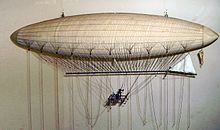
Today the British dirigible Henry V, nicknamed Harry, reached western India, then traveled south from Goa — still in Portuguese hands in 1887 in our world and theirs — to Mangalore (now called Mangaluru) where they will follow the Netravathi River in their crossing of the Western Ghats.

God, I love writing novels

This morning, so far (I’m writing this on Sept. 29), I have four views of various posts. Three are from the USA and one is from India. That is no surprise. As I reported in a previous post, India is the third most common country of origin for those who view my blog, after the USA and Canada. I don’t understand why, but I like it a lot. I have had a strong connection with India since 1967.

(This is in textual parentheses because it is a parenthetical event. I took a brief break to watch Well Read on my local PBS and found a rerun of an interview by Indian author Anuradha Roy. It was both another connection, and a caution that what I know about India is small compared to a writer who is a native.)

During my first year in college, I switched to Anthropology because Biology was going through a phase where, if a study didn’t require an electron microscope, it wasn’t worth doing. I was there to study ecology, and couldn’t see spending my life wearing a white coat in an air conditioned lab. Anthropology seemed a better bet, and I soon became enthralled with India. I even ended up taking a year of Hindi, but a language you don’t speak, goes away. I could still tell you how to get to the Ajmiri hotel, and that’s about it.

When I  was about to graduate from college, my wife and I volunteered for the Peace Corps and were assigned to a project in Mysore, the Indian state which is now called Karnataka. Between my draft number and Nixon’s cancellation of the Peace Corps deferment, we never got to go. Instead, I spent the next four years in the Navy, and then returned to college for an MA where my thesis was on Indian village economics.

Then I became a writer, and I never got to India.

India, however, always remained a part of my writing. In A Fond Farewell to Dying, a young scientist from post-apocalyptic America goes to India which, two hundred years from now, is the only refuge of civilization. In the steamunk novel I am now writing (still in search of a good title) Lieutenant Commander James of the dirigible Henry V is caught up in a conflict between Britain at her peak and her Indian possessions which are beginning their long fight for freedom.

Incidentally, at the other end of the Netravathi River which was mentioned in the first paragraph, is Mysore, the region I was assigned to almost fifty years ago. I never made it in the flesh, but I’m looking forward to going there by dirigible.

God, I love writing novels

Symphony 17

After his conversation with Carmen, Neil changed his plans. Instead of spending his pre-school days in academic preparation, he worked at getting to know his children. The cumulative folders were a gold mine. He found out who had been suspended during previous years. He found out which students needed the most academic help. He could see which students had a pattern of mid-winter absences to Mexico.

One boy had been registered originally as Dean Mason. Then his name had been changed to Dean Solstenes, back to Dean Mason, and finally to Dean Smallwood, all within three years. It was easy enough to read an unstable family situation from those changes.

On Dierdre Galloway’s folder he found a note that said, “Needs glasses and won’t wear them. Must sit up front or she won’t be able to read the chalkboard.”

Before he met them, he knew that:

Brandy Runyon had repeated kindergarten, and then had repeated third grade. She should have repeated fifth, but at fourteen, she was far too physically developed. She was marking time while waiting for the paperwork to be completed to transfer her to a school where her learning disability could be dealt with.

Oscar Teixeira had been making outstanding scores on his yearly tests every year since kindergarten, then in fifth grade he had scored almost zero. In the last two years, he had been suspended five times, always for insolence or insubordination. Every parent letter made reference to Oscar as being bored with school. He had failed last year’s test deliberately, and had been suspended for it.

Not every folder contained a problem. Some told stories of unbelievable progress. Tasmeen and Rabindranath Kumar had first enrolled four years ago, in first grade. They had come from Madras, in India, and spoke no English. Their first year scores were nearly zero, but by the second year they were only a little below grade level. At the end of the third grade they were both skipped ahead to bring their grade level more into line with their ages. Despite this, their fifth grade scores showed them to be well above their classmates.

Their fifth grade teacher had wanted to advance Tasmeen another grade. She was a year older than her brother, scored consistently higher, and the teacher felt that he was holding her back. The parents would not agree. They said that they both could be advanced, or Rabindranath alone could be advanced, but Tasmeen was not to be placed above her brother.

With sixty-seven children to remember, Neil fell back on a system that had worked for him in college. On five by eight cards he placed name, age, test scores and a four or five word physical description of each child. For most of the children, he could do no more until he met them. For students like Tasmeen, Oscar, and Brandy, his notes filled the card.

# # #

The night before school was to start, Neil sat in his apartment considering the string of students that had passed through his classes during his years in Oregon. The number was staggering. He had been seeing 170 to 180 students each day for four years. Seven to eight hundred students, and he could only remember about two dozen of their faces.

He had a feeling that he would remember these sixth graders long after he had forgotten every high school student he had ever taught.

417. Sturgeon and Steampunk

If I’ve learned anything in my ongoing study of steampunk, it is that Sturgeon’s Law does not apply. [Sturgeon’s Law: Ninety percent of everything is shit.]

Sturgeon’s rule applies to science fiction, fantasy, literature approved for the college curriculum, and the work of prominent philosophers. It applies to fields where there is some objective means of determining quality.

Steampunk, on the other hand, is so wide ranging that it would be hard to find any two fans who agree on precisely what it is, far less what constitutes good steampunk.

After I read and reviewed Steampunk by the Vandermeers (see 411. Steampunk I II III), I checked out how it fared in Goodreads. The reviews were all over the map. More notably, when reviewers told what stories they liked or hated, no one liked or hated the same stories.

So if Sturgeon is not useful, let’s try this: [Logsdon’s addendum: I don’t like ninety percent of what I try to read.] That is why I’ve read so many first-twenty-pages-of-novels, without finishing them. I’m referring to all novels, not just steampunk.

The Addendum is not just a matter of putting my name beside Sturgeon’s. You could call it Wilkes Addendum, if your name were Wilkes, or Jones Addendum if your name were Jones. I suspect it would still hold. Quality and liking are not the same thing. I frequently read works that are marvelously written, but I simply can’t find any interest in them. That often happens when I dip into the Classics. It happened in some of the stories in the Vandermeer anthology.

On the flip side, some stories are pure fun, even though I can’t claim that they are intrinsically good.

This like/dislike issue comes up all the time when people “like” one of my posts. I always visit their websites. A lot of them are very young or deeply wounded, and are baring their souls. Occasionally I say hello, but mostly I withdraw silently, just happy that the internet is there for them.

Frequently I find a writer who is displaying his work. I always read, but rarely comment, because, “Who am I to judge?” It was under those circumstances that I recently read the first chapter of Echo by Kent Wayne (very much not steampunk). It is a fine piece of fiction, powerfully written, and it will clearly have much to say in coming chapters. It is also quite violent, and the character at the center is not someone I could like — yet, although there are hints of coming change. I short, I rank it high for quality, but I won’t read it further because it takes me places I don’t want to go. My shortest honest response would be, fine work, but not for me.

On the other hand, I also found Michael Tierney through a “like”, bought his purely steampunk ebook To Rule the Skies, and am presently 77% of the way through it. That’s an ebook workaround for the lack of pagination. The novel reads like Tom Swift, the Steampunk Professor and I love it for that very reason. I’ll devote a post to it shortly.

Another thing I have tentatively concluded is that lots of steampunk fans must also love Downton Abbey and Fear of Flying. I’ve lost track of how many heroes and heroines are members of the Victorian upper crust, the heroines also being spunky and liberated.

Oh well, it’s a big tent, with room for everybody. Most of the people inside seem to be wearing top hats with gears on them, but it isn’t required.