Tag Archives: americana

455. Voices in the Walls

Annotated Links to
Voices in the Walls

Voices in the Walls is a fragment of a novel. It is still available in archives, but it would be impossible to navigate because it is entwined with A Writing Life posts and you would have to read long columns from bottom to top. Instead, I am going to provide a set of annotated links to make life easier.

Voices in the Walls was presented in Serial, parallel to the posts in A Writing Life that explored my position on race. You might want to read yesterday’s post for a quick summary of the novel’s genesis.

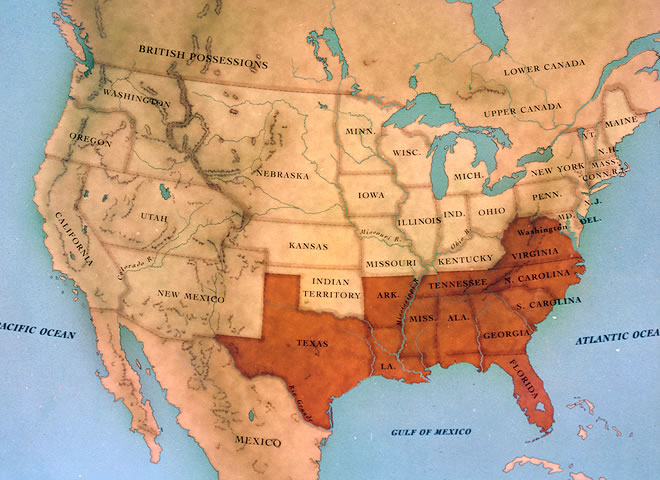
I wrote Voices in the Walls in the eighties, as a fictional way of presenting a young man who has to rethink his entire life when faced with with the fact that all his previous understanding of race is wrong. I used the opening days of Lincoln’s presidency, as the nation slid into war, as a vehicle for the story.

I never finished the novel, for reasons I explained yesterday, but it still means a lot to me. I also decided that, as an example of a writer’s struggle with a hard-headed idea, it might form a sort of how-to for writers. Enjoy.

Voices in the Walls 1  Setting the stage for the story.

Voices in the Walls 2  Setting the stage for the story.

Voices in the Walls 3  Prolog, and a discussion of bracketing.

Voices in the Walls 4  Why this novel and why 1861?

Voices in the Walls 5  Chap. 1 begins

Voices in the Walls 6  Chap. 1 continued

Voices in the Walls 7  Chap. 1 continued

Voices in the Walls 8  Chap. 1 continued

Voices in the Walls 9  Chap. 1 continued

Voices in the Walls 10  Chap. 1 continued

Voices in the Walls 11  Discussion inserted between chapters

Voices in the Walls 12  Chap.2 begins

Voices in the Walls 13  Chap. 2 continued

Voices in the Walls 14  Chap. 2 continued

Voices in the Walls 15  Chap. 2 continued

Voices in the Walls 16  Chap. 2 continued

Voices in the Walls 17  Chap. 3 begins

Voices in the Walls 18  Chap. 3 continued

Voices in the Walls 19  Chap. 3 continued

Voices in the Walls 20  Chap. 3 continued

Voices in the Walls 21  Chap. 4 begins

Voices in the Walls 22  Chap. 4 continued

Voices in the Walls 23    Chap. 4 continued

Voices in the Walls 24  Chap. 4 continued

Voices in the Walls 25  Chap. 5 begins

Voices in the Walls 26  Chap. 5 continued

Voices in the Walls 27  Chap. 5 continued

Voices in the Walls 28  Chap. 5 continued

Voices in the Walls 29  Chap. 5 ends, outline of the rest begins

Voices in the Walls 30  2 of 6, outline

Voices in the Walls 31  3 of 6, outline

Voices in the Walls 32  4 of 6, outline

Voices in the Walls 33  5 of 6, outline

Voices in the Walls 34  6 of 6, outline

454. Another Man’s Shoes

Another Martin Luther King day has rolled around. They always pose a problem for me.

What? You don’t care about my problems? Well, there is really no reason you should, except that this one is about trying to write honestly, which makes it a problem many of us share.

I grew up white in a conservative Oklahoma where blacks were not favored. That puts it gently. I watched the civil rights marches of the fifties and sixties on TV and decided I was on the wrong side of history. And humanity.

Then I became a writer, and that all needed to be explored. I did so in posts. Look at any post in A Writing Life from mid-January through the end of February of 2016 if you are curious.

I also tried to explore that story in a novel called Voices in the Walls. I began it in the eighties and made it through about seventy pages before I ran up against the essential issue — there was no way I could write about slavery from the inside, yet I had to in order to make the book work.

Matt Williams is a young southerner who is torn both ways at the outset of the Civil War. I put him through a series of events which sends him south to rescue a free black woman who has been recently captured. I pulled that part off without straining credulity, but once he is there I need for him to interact with escaping slaves and to see slavery from their perspective.

I had no problem with Matt’s perspective, and the overall novel is from a white viewpoint. However, he has to come to see the south from a slave’s viewpoint and when I reached that point in the book, a voice in the back of my head began screaming, “What right do you have to write that?”

Intellectually, the voice is bogus. It is the job of a fiction writer to crawl inside other people’s heads and speak through their mouths. I’ve done it innumerable times.

Emotionally, this particular voice is too loud to ignore.

Matt and his slave counterpart (I never got far enough to name him) each has to experience the other’s understanding of the world. That is what the novel is about. If a black writer can’t take the white position, and a white writer can’t take the black position, the story can never be told. I don’t accept that, and since I am a sympathetic white, I should be able to proceed.

I can’t. The voice in my head won’t shut up. It has been yammering at me for decades. It may just be one of those things that I am too locked into my own generation to ever get straight.

No problem. One of you will write it, sooner or later. Maybe one of you already has.

#                 #                 #

Voices in the Walls is still available in archives, but it would be impossible to navigate. Someday I will present it in another form, but for now, I am going to give you a set of annotated links in Wednesday’s post.

453. More Weight: Arthur Miller’s Crucible

About a month ago in a post I mentioned Arthur Miller’s The Crucible. Sometimes a passing reference like that can bring old thoughts and feelings to the surface, and send me back for a closer look.

I encountered The Crucible in the winter of 1966. Yes, they had printed books that far back. I was in my first quarter at college, writing what was probably my first college paper, “The Evil of Innocence.” My take was that evil came from the girls’ testimonies despite their essential innocence. I offer no apologies for lack of sophistication; everybody has to start somewhere.

For Arthur Miller, The Crucible was about the McCarthy hearings before the House Committee on Unamerican Activities. I remember those days only vaguely, since I was less than ten years old. What I actually remember is going to a public meeting with my parents at my grade school where our principal read from J. Edgar Hoover’s Masters of Deceit: The Story of Communism in America and How to Fight It, and gave a talk on how communism was a danger, even in our little town of 121 people.

The adults in my life were author to many nightmares.

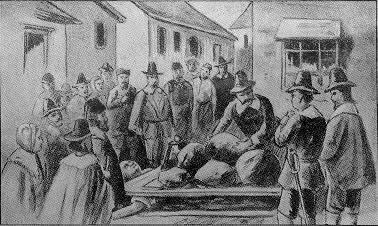
I met Arthur Miller’s The Crucible about a decade later than I met J. Edgar, and I didn’t react to the McCarthyism allegory. I didn’t respond strongly to the characters either, except for Giles Corey calling for “More weight!” as they crushed him under stones. John Proctor left me unmoved and the various girls were merely victims. I cut them a lot of slack, for reasons you’ll understand in a moment.

In short, I didn’t react to the words on the page, but to the implications that exploded in my mind as I read them. That happens sometimes.

I had turned atheist just before my sixteenth birthday, and had told no one. I was enmeshed in a Baptist family in a Baptist town in the Baptist State of Oklahoma in the middle of the Bible Belt. I kept my head down and my mouth shut and told no one until I reached college two and a half years later.

So, when I read The Crucible I was a recent escapee from my own personal Salem. For me the main protagonist was not a man, woman, or girl, but Salem itself, seen as a massive, encircling, inescapable miasma of religious intolerance, hovering ready to strike down any who disagreed with its particular version of Christianity.

That isn’t good history. It isn’t even a full reading of The Crucible, but it was the story as I read it. No surprise, really.

Today, being a reasonably honest scholar, I went to Goodreads to see how others had reacted to The Crucible and got an earful. About half reacted to the McCarthyism allegory and gave high marks. About half gave three stars for skillful writing, then trashed The Crucible for its sexism. To be more precise, they trashed Arthur Miller for making his males into characters and his females into cyphers.

It kind of makes you wonder: did Miller write a sexist Crucible to reflect the era of the actual witchcraft trials, or because he was a grown man in the fifties and it seemed normal?

Perhaps there is one thing we can learn about great literature, which The Crucible is no matter how unpalatable it may seem to some of today’s readers. It has many messages, for many people, in many ages, and not all of them were necessarily clear in the mind of the writer. Miller saw McCarthyism. I saw the danger of being different in a small community. Goodreads is full of reviews from readers who can’t get past its sexism.

Maybe we can all agree that Giles Corey was a hero and John Proctor was a weasel?

446. Until Proven Innocent

When I started this post, my queue was full into the second week of January. News in the world outside my writing space has moved so quickly, however, that I am squeezing it in today. I’ll leave the four parts date-stamped and unchanged from what I originally wrote.

========

I am writing this on December sixth, 2017. Right now President Trump is announcing his decision to recognize Jerusalem as the capital of Israel, but that isn’t the only news story of the day. It just increases the chance that we will all be dead before I get around to posting this.

The other news story of the day is the Time magazine person (people, actually) of the year, The Silence Breakers. I have been bothered by this movement since it began, but until now it seemed too early to say so.

I don’t disagree with the women coming out with accusations. I applaud them. But there is a problem with bandwagons, and every news story I’ve seen so far falls into the same trap. They all say, “The women must be believed.”

No. This is false. Completely and utterly false.

The truth is, “The women must be listened to. Their accusations must be considered valid, and subjected to the same scrutiny as any other accusations.”

In shorter terms, “The women must not be automatically disbelieved.” That is a very different statement from, “The women must be believed.”

There are two problems here. The first is conflation. A pat on the butt isn’t the same as rape. The accusations against Weinstein are not of the same level as the accusations against Franken.  There is a mass of absolutely disgusting behavior coming to light, but it is not all of the same weight. Some of it, if proven, deserves life in prison. Some deserves a powerful slap across the face, by the victim, at the time, and nothing more. Most of it falls between those two extremes.

The second problem is guilt and innocence. Even if every accusation so far is valid (and that wouldn’t surprise me), I guarantee that by the time you read this, some innocent guy is going to be on trial in the court of public opinion for something he didn’t do. Women also lie.

“Not likely,” you say? Perhaps not so far, but give it time.

Let’s take a little trip, mentally, one hundred years back and to certain parts of America. I didn’t say the South, because it wasn’t just the South. At that time and in those places, if a white man said something, it was taken for the truth. If a black man said something contrary, he was lying.

It’s rather like the reaction a woman would have received if she had made an accusation ten years ago. I don’t want to go back to that situation, not even with the roles reversed.

I am in favor of this shift in public sentiment. I applaud and support the Silence Breakers. But while we are all reading today’s Time magazine, let’s also pull out that dog-eared copy of Arthur Miller’s The Crucible and give it another glance.

It’s very simple, and damned unsatisfying, that not every accusation is false (even if we like the guy) and not every accusation is true (even if we hate the guy).

Bandwagons are fun to ride on, but you wouldn’t want to get run over by one.

========

Time flies when you are making predictions. This morning (December 14) Senate Minority Leader Chuck Schumer reported to the FBI that forged sexual harassment claim was sent to news media. The supposed author of the documents denies having written it.

So it begins.

========

And now it is Saturday, December 17. Next Monday morning, Tavis Smiley will present on GMA his statement of innocence about charges leveled in the last few days. Is he actually innocent? Is he guilty?

I don’t know. And that is the point.

At any rate, if I don’t shoehorn this into the post queue now, it will be too late to bother.

========

And now, December 18, I have heard Smiley’s response. I need to say more, since I wrote an entire novel based around false accusations (Symphony in a Minor Key, over in Serial) but my posting schedule and my life schedule will push that into January. No problem; I don’t think this issue is going away any time soon. more later

443. Booklist Reboot

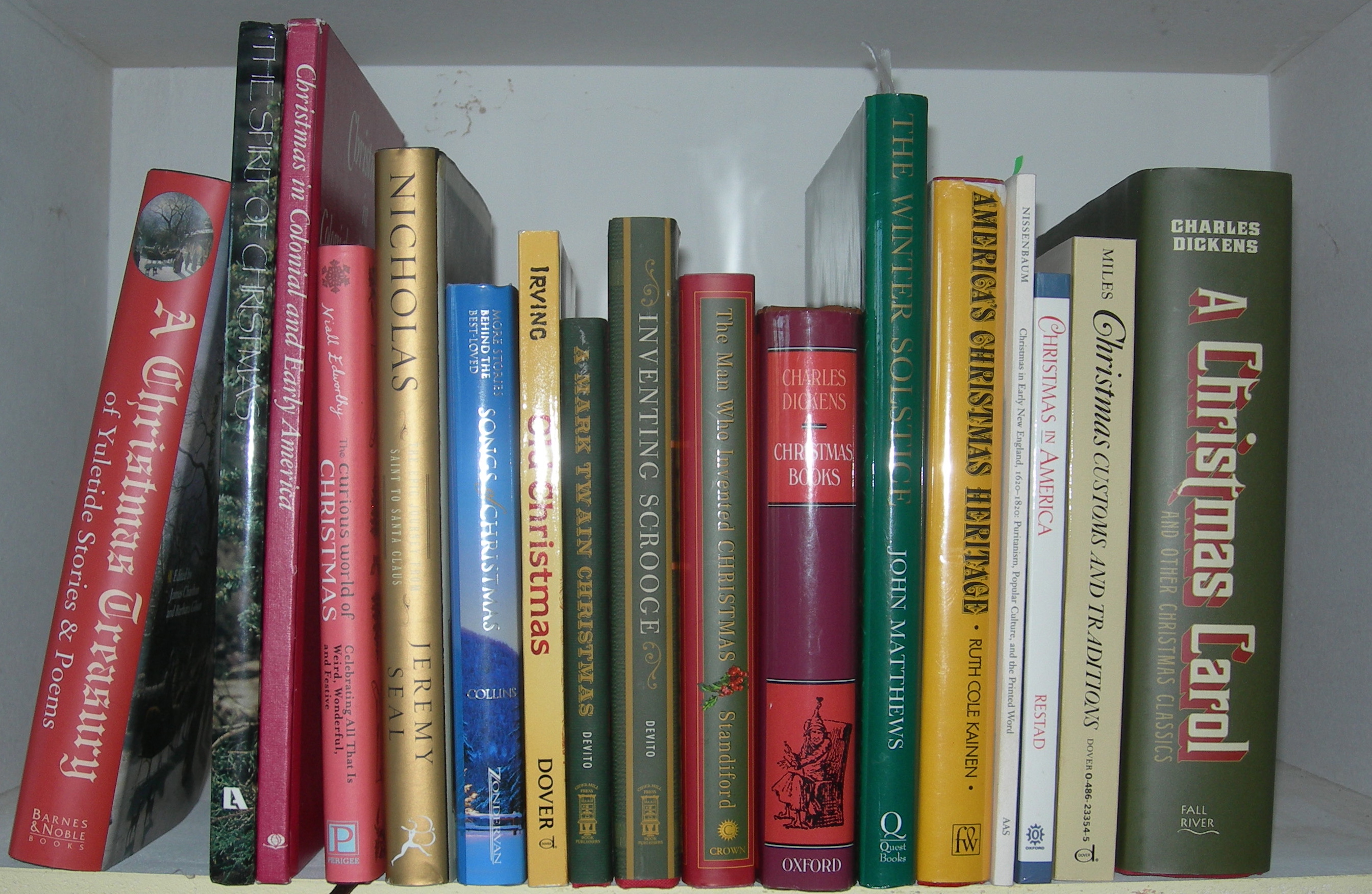
On December 15, 2015 I posted this list of Christmas books. 

Here is the annotated booklist I promised you yesterday. You could also Google Christmas or old Christmas, or search either of those subjects on Amazon. I suggest you do. This is not a best list because there are too many books on Christmas for anyone to have read them all. This is simply a list of what I’ve discovered over the years, minus the clinkers. Some of these are easy to find, others will lead you through the back stacks of used bookstores, but there’s no harm in that.

A Christmas Carol by Dickens has to head any list. He also wrote many other Christmas works and gets his own post next Wednesday, the 23rd.

Washington Irving had a powerful influence on Christmas, which is largely forgotten today. Among his followers was Clement Moore of Night Before Christmas fame. They also get their own post, on Christmas Eve.

The rest of this list is in order from decorator froth to historical complexity.

Go to any bookstore and you will find dozens of Christmas cookbooks and books on Christmas decor, sometimes with historical tidbits. You’re on you own here, with one exception. The Spirit of Christmas series by Leisure Arts is classy, has been around since about 1990, and fills up ten pages of Amazon with choices.

Christmas in Colonial and Early America, 1975, by World Book, is an early, sepia toned version of this kind of book with a little more meat in it’s history.

For almost two decades, Ace Collins has been writing books titled Stories Behind . . . , beginning with Stories Behind the Best-loved Songs of Christmas. The title tells the tale; the individual stories are interesting and heart felt.

The Curious World of Christmas is lightweight and breezy, a book of short entries which can be digested one little bite at a time.

The only recent Christmas book I can’t recommend is Nicholas, by Jeremy Seal. I found it dark and tedious, and couldn’t get past page 42, but if you want a detailed look at how St. Nicholas became Santa, it’s the only work I know completely devoted to that subject.

The Man Who Invented Christmas by Les Standiford and Inventing Scrooge by Carlo De Vito each tell the story of the genesis of Charles Dickens’ most famous story. As a writer and a lover of Christmas, I couldn’t choose between them. Read the one that is easier for you to find. Then read the other one next Christmas.

A Mark Twain Christmas has been sitting on my next shelf for a couple of weeks. I will give it a tentative approval based on a thumb-through, and the fact that it is also by Carlo De Vito.

A Christmas Treasury of Yuletide Stories and Poems by Charlton and Gilson has works by every famous author you’ve ever heard of, from St. Matthew through The Adventure of the Blue Carbuncle.

Ruth Kainen’s America’s Christmas Heritage contains well written regional histories of Christmas at a level of detail that is satisfying without being overwhelming.

John Matthews’ The Winter Solstice has a look similar to the decorator/cookbook works above, but with a unique twist. It concentrates on the Roman, Celtic, and Germanic contribution to Christmas. It feels like the Middle Ages, without falling into the trap of New Age Gaia worship.

Christmas Customs and Traditions by Clement Miles is a Dover reprint of a 1912 work. It is an old fashioned history of the evolution of Christmas from Roman times to what was then the present.

Christmas in America by Penne Restad is a scholarly telling of the history of American Christmas. 172 pages of text, 36 pages of notes. You get the picture; a book for the overeducated Christmas nerd, but it is still a good read.

The remaining “recommendations” are probably over the top.

I have in front of me Christmas in Early New England, 1620-1820: Puritanism, Popular Culture, and the Printed Word by Stephen Nissenbaum, published by the American Antiquarian Society. I have already confessed to having two masters degrees, one in Social Science and one in History. This is the kind of thing I used to read for a living. I still read them, but only if they are on a subject that really interests me. Nissenbaum taught at Amhurst; you will find his original research referenced in many of the less scholarly books above. His book The Battle for Christmas was a Pulitzer Prize finalist, but a scholarly work of 400 pages is not something to take on casually. I confess to not owning it; I read it on interlibrary loan years ago. If, however, you are a Christmas nerd and a history buff, it is available in paperback. Go for it; what have you got to lose?

===================

BY THE FOLLOWING YEAR I had purchased and re-read Nissenbaum, and wrote three posts summarizing The Battle for Christmas. If, like me, you are a complete Christmas nerd, click here to read them.

440. Pearl Harbor Day is Tomorrow

Pearl Harbor Day is tomorrow and for the third time, I am not going to write about it directly.

In 2015, I used Pearl Harbor Day as a jumping off place to discuss the decision to go to war in Iraq.

In 2016, I used Pearl Harbor Day as a jumping off place to discuss Japanese Internment.

In 2017, I am even less able to salute and shout hallelujah than I was on the last two times Pearl Harbor Day rolled around. Things are even worse than they were then.

Do I think we were shouldn’t have retaliated to the Pearl Harbor attack? Don’t be absurd.

Do I support disarmament? I wish I could, but it would be national suicide.

Am I a veteran? Yes; and I would love to be the last veteran.

Am I a pacifist? Don’t I wish. I would love to live long enough to be able to say yes to that, but I won’t. Neither will you, and you are younger than I am.

There are times when we have to fight and Pearl Harbor signaled one of those times, but our national default setting should not be attack. We should fight rarely, and only when necessary. For many years now, we have been doing a terrible job of deciding when to fight, so I find it hard to wave the flag. Someone might think that means I’m ready to start shooting.

Tomorrow is Pearl Harbor Day. It is also the forty-fifth anniversary of the last manned moon launch. I think I’ll write about that.

429. Scales, digital and ridiculous

Ah, the good old days. They really sucked.

Even the phrase sucked falls into that category. I know that most of those who read this will not remember, but there was a time when nobody said sucked. It ranked up there with the “F” word. I remember when it arrived on the scene in my middle school students’ vocabularies, how it was an issue for a short time, and how two years later teachers were saying it. That’s what happens when a perfectly good forbidden word becomes common; it loses its flavor.

============

I have a great respect for Science Olympiad, but I never liked coaching, so I always volunteered to judge events instead. I enjoyed taking on new events that needed to be shepherded through their first year of implementation, and that led me to build a lot of gadgets to use in judging the contestants’ gadgets.

The people who think up new events in Science Olympiad often show an Olympian detachment (pun intended) from reality. Case in point — and forgive me if my numbers are off, I’m writing from memory — in two events students had to build light structures and test them to destruction. First it was a bridge, and a few years later, a tower. The lightest bridge or tower that held the most weight before failing won the event. There was a formula for weight vs. load, and specifications for what constituted failure.

The students applied the weight by pouring sand into a suspended bucket and there was a set maximum. If the structure held the maximum, the lightest structure won. If the structure failed, the weight vs. load formula was invoked. All in all, it was a well thought out event.

Except for one thing. The load was in pounds — up to ten, as I remember — and the weight of the structure was in grams. Let’s do the conversion.

1 pound equals 16 ounces
1 ounce equals 28.35 grams
Therefore, 10 pounds equals 4536 grams
And 9 pounds equals 4082.4 grams
That is a difference of 453.6 grams

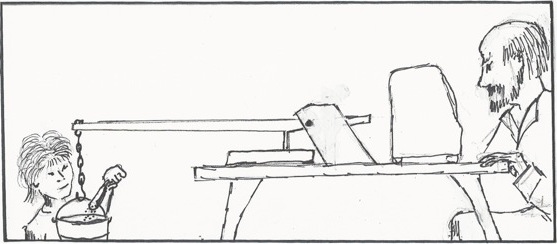
Did I lose you? Just look at the cartoon at the top for a moment, regain your equilibrium, and come back to me. There is no final exam on this. This is just memoir about how much fun teaching science can be on a small budget.

To measure mass in grams, you could use a triple beam balance available in any science class. To measure ten pounds, you have your bathroom scale. But wait a minute, that ten pound maximum-weight bucket of sand has to be measured in grams! How do you do that?

You do it with levers, using the gizmo pictured at the top of the page. I actually built it, and used it all the years I was associated with that event. The lever makes the scale read about 160 pounds when there are 10 pounds in the bucket. That spreads out the difference between two similar weights. The box the adult is staring at is my old Mac SE, with a preprogrammed formula in a database. The formula is:

Scale reading in pounds after the sand has been added (times) conversion factor to grams (minus) weight of bucket in grams ——- all this fed into the formula for comparing load in grams to weight of the bridge or tower in grams, a formula provided by Science Olympiad.

At the event, all I had to do was watch the contestant, and stop her/him at the moment the structure failed. He/she was only given ten pounds of sand to work with, so overfilling could not happen. I typed in the reading from the bathroom scale and the computer gave me the score — after I had built and tested the device, programmed the database, and provided ten pounds of sand, calculated to the nearest gram on the same device.

Fun? Of course it was fun. I volunteered to do this, remember?

Was it accurate? No and yes. No, there was too much friction for the gram readings to be accurate, but the friction was the same for every trial, so yes, the ranking of the contestants was completely reliable.

About three years after Science Olympiad retired the event, digital scales which would measure that much sand to the nearest gram became available for under five bucks at every-guy’s-public-man-cave, Harbor Freight. Thank goodness it didn’t come earlier and ruin my fun.

427. A Grave Story

The paragraph below comes from Symphony in a Minor Key. Neil McCrae has read a ghost story at Halloween, timing it to end just as the bell rings in his sixth grade class.

Half the students leaped to their feet screaming, then broke into laughter, and went out for their break repeating juicy bits of the story to one another. Neil sat back with a feeling of satisfaction, mixed with amusement at his own self-indulgence.  There was a lot of theater in Neil McCrae, but he kept it on a tight leash. Once in a while, though! Just once in a while it felt good to cut loose.

Since the novel is based on my teaching career, it will surprise no one that Neil and I share a few characteristics. Keeping theatricality on a tight leash is one of them. Telling ghost stories on Halloween is another. This is one of those stories, based loosely on a joke I read in Boy’s Life back in the fifties.

Of course it’s a true story. I wouldn’t lie to you.

=======================

I had two brothers as students. I had one in my class one year, and his younger brother the next. They were always hanging out together. Some brothers get along; come don’t. These two were great friends.

They were outdoors types. The liked to fish and hunt. Their dad would take them canoeing, and sometimes the three of them would camp out together.

The year I’m thinking about, the last year I knew them, their dad had been really busy all fall, so they were on their own. They decided to go off together in the canoe, and go camping along the river.

I didn’t mention, did I, that the Tuolumne River runs along about a mile from the school where I taught? Or that the regional cemetery is right along the river? Of course, the students I told this story to, already knew that.

Since it’s a true story, I have to keep the details straight.

This particular fall had been rainy, and both brothers were involved in soccer, so they kept putting off their canoeing and camping trip. September came and went, and then October, and by the time November was just around the corner, they were getting pretty desperate to go. That’s probably why they decided to go on the last Friday night in October.

I probably wouldn’t have gone, myself, because it was Halloween, but these two had a habit of daring each other, and that often got them into trouble. So they went. They put in the river at Fox Grove and intended to sleep somewhere about five miles west, then paddle on down to Legion Park the next morning. Their mom was going to pick them up there. Too bad she never got the chance.

Everything went along fine for the first hour. They got a late start, but that didn’t matter since they could camp anywhere. It’s pretty wild down along the river. They got past the rapids under the bridge. They were pretty tame rapids. Things went well for the first few miles, but then fog began to form. That was fun at first.

Did I mention it was Halloween?

The fog hung in the old trees along the river bank, but they could still slip along below it. At first. Then it got dark, all the sooner because the fog was cutting off the moonlight.

Did I mention there was a full moon? That was part of the reason they went that night, because they thought they would be able to see by it’s light. They hadn’t figured on the fog. Pretty soon they couldn’t see anything. They got on down the river for a while by instinct. If you’ve been on the water enough, you get a feel for currents, and anyway, you can’t get lost on a river. It only goes one direction.

Still, it started to get dangerous, not to mention creepy, so they pulled up on a mud bank to think things over. They also had been drinking two liter Pepsi’s, if you know what I mean. They had to take care of that little chore, and they did, but while they were looking for a bush apiece, they got separated. They could hear each other clearly, but the river banks threw back such echoes that they couldn’t find each other. And then they couldn’t find the canoe. Finally, Joe – that was the younger brother – found a path up and shouted to Tom – that was the older brother – that they should climb out of the river bottom and meet on the flat land up topside. Tom shouted back to go ahead, so Joe went up.

That might not have been the best idea they ever had. They had made it further down the river than either one realized, and when Joe got to the top, he found himself in the cemetery.

Now Joe wasn’t particularly spooky. Camp fire stories of ghosts just bored him. But this was a real cemetery, and the fog in the trees looked like Spanish moss hanging down – you know, like in the stories of the bayous. He didn’t like it. He hollered for Tom, but got no answer. Then the fog thickened and the moon, which had been mostly obscured, disappeared completely. He found that he couldn’t see anything, so he put his hands out to feel, and found himself moving along, guiding himself by the tops of tombstones. He didn’t like that much either, but what are you going to do?

Tom, meanwhile, thought he had found a trail up, but it only led him into a bramble of raspberry bushes. It took him ten minutes to work his way through them and by the time he made it up to the top, his clothes were in tatters and he had blood all over his hands from fighting the thorns. He staggered out on top, panting with the effort, and found himself in the cemetery, too.

I know all this because I was one of the ones who went looking for them then next day, after someone had found their abandoned canoe. It was easy enough to track them, first by river mud footprints, then prints in the soft soil. We knew which was which because Tom’s shoes were much bigger, and besides, there were all those drops of blood.

What neither boy knew was that there was a funeral scheduled for that Saturday. The groundskeepers had dug the grave, and it was standing open. Tom found it first.

Of course, it was pitch dark, so he found it by falling in. The groundskeepers had done a good job. It was seven feet deep, with straight-up sides, three feet wide and seven feet long and completely impossible for Tom to get out of. And did he try! He leaped. He scrambled. You could see the next day where he had dug his fingers into the sides of the grave, with no success. I’m sure he shouted, but no one could hear him. I wouldn’t be surprised if he cussed a little.

Eventually, he exhausted himself and sank to the ground, curled up in a ball, and decided to wait for morning. He was half asleep when Joe found the grave the same way Tom had.

Joe fell in, and the sound of a body falling into the grave with him sent Tom to his feet. He slammed himself back against the side of the grave, wanting to scream, but no sound came out. It never occurred to him that it might be Joe, but every other monster from every movie he had ever watched went running through his head. He squeezed back into a corner of the grave in abject fear, while Joe picked himself up, turned, and began leaping and scrabbling at the wall of the grave.

About that time, just enough moonlight came down into the grave that Tom could recognize his brother. Joe slid back to the bottom of the grave for the third or fourth time as Tom reached out his bloody hand, with tattered sleeves hanging down, and touched his brother’s shoulder. His voice was hoarse from fright as he said, “You’ll never make it out of this grave.”

But Joe did. He screamed and gave such a leap that he outdid himself, caught his fingertips on the lip of the grave, scrambled like a madman, and was gone.

Tom was still there when we found him the next morning. I won’t say he was all right. I don’t think he was ever all right again. But he was there.

Joe was never found. They dragged the river. Friends, neighbors, and strangers turned out in the search, but it was useless.

Tom and his family moved away soon after, but I get Christmas cards from his mother every year. She tells me what Tom has been doing, but she never mentions Joe.

Me either. Except every year about this time I feel the need to tell his story. Just a cautionary tale, you understand. Nothing to do with me, whatsoever.

I wouldn’t lie to you.

398. Summing Up Spirit Deer

Today Spirit Deer ends with a short post. Tim is home and all is well.

Here’s a short summing up for those who missed the start. Spirit Deer has appeared in two major forms. It was first a book for adults, with a thirty-something Tim Carson, who had a wife, a job, friends, and included various events which have since been excised. It was a carefully chosen story that offered me no research difficulties. The entire purpose of the original Spirit Deer was to see if I could write day after day until a novel length manuscript emerged. I could. It did. And I never stopped writing.

Years later I pared it back to its core story and recast it as a juvenile, which is what I have presented here.

Writing Spirit Deer was so enjoyable that I did not reapply for a Ph.D. program in Anthropology, as I had intended. Also, in full disclosure, I had come to the realization that, although Anthropology as an intellectual endeavor fascinated me, the idea of sitting in an Indian (South Asian, not Native American) village and taking down daily gossip as field work did not appeal. Not even a little bit.

So I kept writing, had some success, had a long dry spell for sales during which I still kept on writing, and now my new book Cyan is available. On the basis of that publication, I just came back from Westercon where I served on panels, met a batch of young authors, and was struck by the kernel of a new steampunk novel that I am working on as you read this. My second published novel was set in India, and made use of all those years studying Anthropology. My next one is built around an obscure event in the history of British India, turned inside out and backwards in an alternate steampunk universe.

Its been a good ride, and a rough ride, but I wouldn’t have had it it any other way.

Spirit Deer 40

Chapter 15

Well fed now, with his ankle all but healed, Tim snowshoed down the mountainside to the Tate, and upstream to the highway bridge. It took most of two days, but he had learned to build shelters quickly. With meat and a fire, and wrapped in a half cured bearskin, it did not take much to make Tim comfortable enough to sleep at night.

When Tim reached the road, it was still choked with snow, so he walked the last few miles into the village. It was afternoon of the fourteenth day of his absence when he headed down his own street looking like something out of another age. He wore ragged jeans and an enormous, shaggy bear skin, and moved confidently on snowshoes, dragging a rough toboggan of saplings piled high with greasy, frozen bear meat.

His father’s rig was sitting in the front yard. A feeling of guilt for the trouble he had caused took the edge off his homecoming, but only for a moment. He left his toboggan in the yard and stepped up onto the porch. He knocked.

His mother looked smaller, older, and more precious when she opened the door. She stood for a moment, frozen by the shock of his reappearance. Then she gathered Tim into his arms. Over her shoulder, he saw his father coming into the living room. The smile that split his father’s face was worth the whole ordeal Tim had gone through. In three strides his father crossed the floor and caught them both up in his embrace, and Tim was truly home at last. finis