Tag Archives: fantasy fiction

The Gods of Wind and Air 2

Something moved, far off but heading toward him. Pellan’s eyes followed, hoping for a deer, but finding a man instead. It was not a peasant, in rags. It was not Lord Kafi or any of his followers. This one wore a long cloak of coarse weave, buff in color, warm but plain.

A priest from the menhir then, and of no interest to Pellan. He turned his attention to the edge of the forest, where deer were most likely to appear. Minutes passed, then tens of minutes. There were no deer, but the priest continued to inch his way across the snowy landscape, and he too was bound for the forest’s edge.

How hungry do you have to be for curiosity to die? Hungrier than Pellan, apparently. He grunted in disgust at himself, and moved back under the edge of the trees, then northeastward to intercept the priest.

Deer are meat. Red bears are meat, if you are strong enough to kill one. Squirrels are meat. Krytes, lovely in their purple and gray plumage, are meat. Worms are meat, if you are hungry enough.

Man is meat, for bears and wolves.

Pellan considered the priest, who was not of his caste, and whose gods he no longer worshiped. He would weigh about as much as a deer. If he left the skull and other bones in the woods, by spring it would seem as if the man had met with wolves. The meat he could cut into strips, and dry it over a fire. He could say it was from a deer and his wife would never know.

Hungry men think strange thoughts.

Pellan considered the priest as meat as he ghosted across the snowy land, just under the edge of the forest. Then he grunted, and shook his head. Death is just death. It comes to all. There are some things a man cannot do, just to postpone it.

However, a priest so well provided with a warm cloak would not have left his temple without a sack of food. Dried meat, perhaps. Dried fruits, perhaps. Certainly he would have dried leathers of bitter melon, that staple of winter travel.

Pellan wouldn’t even have to kill the priest, unless he resisted excessively. He could be back with his wife and child in an hour, with some of the afternoon remaining to gather fuel. He could warm the hartwa, give them food, then go out tomorrow to hunt, stronger than he was today.

“Please don’t resist,” Pellan thought, as his fingers brushed the axe that hung beneath his arm. More Thursday.

The Gods of Wind and Air 1

.  .  .  the Weathermistress was cooking up something unpleasant in her cauldron of clouds.
from Valley of the Menhir

When the pot is boiling on the fire
       and cold sits crouching
outside, underneath the trees
       like a hungry beast waiting.

When the howling in the smokehole
       echoes the snuffling at the door,
and the trembling of the walls
       is like the heartbeat of the storm.

Then the gods of wind and air
       demand their portion

1.

Pellan wrapped his furs around his shoulders and touched his wife upon her cheek. The hartwa was dark and cold. The fire was down to embers. The fuel was nearly gone, and it was too late to go for more. He was too weak from hunger, and if he did not hunt now, no amount of fuel would keep them all alive.

He had hunted three times in the last few days, with only a squirrel to show for it. He needed a deer. Nothing smaller would sustain them.

Pellan looked at his son as he lay sleeping next to his wife. The boy was terribly thin. His chest moved as he breathed, and his mouth moved as if suckling. His wife had no more milk for the boy, and would not have it again, not until there was food in her own belly.

He closed the hartwa door tightly behind him.

Outside the sky was gray and smoke-blue with clouds that brushed the treetops. The gods of wind and air had gobbled up the sun. Pellan started down the path to the creek, crossed its frozen surface, and entered the pathless woods beyond. An hour later he topped out on a bluff that overlooked the valley.

There was no sun, but there was a bright spot where the sun hid behind the clouds. There were words to say, gestures to make, that would make the sun appear. That was what the priests said. That was what the old women said. Pellan made no invocations. He had grown too bitter for belief.

He had an iron axe, stolen from his master when he went feral. He had a spear. He had desperation. It would have to be enough.

There were no deer in sight. He stood still, patient as the rocks. He had no energy to waste on wandering through empty woods. He watched. He waited. His belly growled and the valley below misted over, but it was not weather mist, it was in his eyes.

Hartwas, meat sheds, barns, rows of straight-line snowbanks where fences lay overtopped: this was the world he had lived in before hunger and rebellion drove him to the hills. Now he ate his fill in summer and starved in winter. The serfs who lived below never ate their fill. They nearly starved in summer and they nearly starved in winter. But nearly starved is better than truly starved.

He could have raided them, but they were his own people, or had been. He would die before he would steal from his own kind.

That was easy enough to decide — for himself. It was harder to make that same decision for his wife and child.     More Wednesday.

614. Wind and Air

Over in Serial, starting tomorrow, there will be a short story that is technically a prequel to Firedrake and Scourge of Heaven, two novels set in the fantasy World of the Menhir. This short story, The Gods of Wind and Air, offers no insights into the novels. Instead, it exists to tell the story of a serf whose character and philosophy interest me, and to give me a chance to experiment with connecting poetry to prose in a manner new to me.

Short stories come to me rarely. The only other short story from the world of the menhir is set some years after the main action, and can be found in Backstory.

One of the reasons I am offering The Gods of Wind and Air now is that my life is temporarily full of chores. A tree I planted forty years ago has grown into a giant, and now has to be trimmed back one limb at a time, plus lots of watering of other trees and bushes during the long California summer, plus the fact that I am now writing full speed on Dreamsinger. In the next few weeks I may not be able to provide two posts a week, so I am giving you something to tide you over.

                   Now, about the story itself . . .

When Marquart and his little band first entered the Valley of the Menhir, the unseen narrator (me) said:

. . . the Weathermistress was cooking up something unpleasant in her cauldron of clouds.

It is about the only reference to the elder gods in that novel. Unfortunately, that line ended up on the cutting room floor.

The World of the Menhir has always been lousy with god. Most of them are more like Greek demi-gods than like world creators. They live on the ground, brawl and love and hate, and are fairly human except for having Powers. I find them more interesting than omnipotent beings.

First to arrive were the gods of Comai, who entered from another world and dominated the native humans. They were eventually ejected in a string of events too long to even précis. Then came a thousand years without gods.

The events that make up my novels and short stories begin when a new set of gods from yet another world enter the land of the menhir and take up residence, beginning the century long battle between the Damesept and the Remsept. A chunk of that story is found in Banner of the Hawk 1.

Even before the Comanyi arrived, there were home-grown gods like the Weathermistress. The serfs and free foresters still worship them, as well as the Flower of the Waning Day, a trio of Comanyi who helped humans drive out their brother-gods.

Not Pellan, though. He is mad at all the gods, and that is where our story begins — tomorrow in Serial.

Incidentally, if the title sounds familiar, stories called The blank of blank and blank are everywhere. I think they all stem from the classic title The Queen of Air and Darkness which was first a novel by T. H. White, then a novella by Poul Anderson, and recently another novel by Cassandra Clare. It is a title rhythm that sticks in the mind.

Also incidentally, the logo presented at the top of all these posts is a runeboard, which is a means of divination used throughout the World of the Menhir. It doesn’t appear in this short story, but it was the only piece of world-of-the-menhir artwork I had available to me.

Enjoy.

612. Zelazny Squared

Isle of the Dead, painting by Arnold Böcklin

Two of Roger Zelazny’s novels have been floating around in my interior conversations recently, Doorways in the Sand and Isle of the Dead.

A month or so ago I re-read Doorways in the Sand. It isn’t my favorite, ranking about half way down the thirty or so of Zelazny’s that I have read, but that still puts it into the top five percent of lifetime reads.

I was struck by how absolutely goofy its structure was. Every chapter starts in medias res, and then backtracks to fill it what the reader has missed. It is a common way of starting a fast moving novel, but in this case every chapter began with some kind of peril, then backtracked to fill in, extracted our hero from his trouble, and ended with things moving smoothly.

Weird — and I have to confess to a failure of imagination on my part. It took me forever to realize the trick Zelazny is playing.

He is taking us through the novel with serial style cliffhangers, but he is putting them at the beginning of each chapter instead of the end. It’s normally a technique to make a reader keep going so the writer doesn’t lose him, but Zelazny is forcing us to come to a full stop and start over (in terms of momentum) with each chapter.

It’s all inside out. And by the way, the machine that is central to the plot turns things inside out as well.

Zelazny likes to play games with us, and he isn’t afraid to skirt the edge of absurdity, assuming his readers will stay with him. The aliens who follow Doorways’s main character around are extremely not humanoid; to avoid being recognized, they wear disguises — a kangaroo, a wombat and a donkey, to name a few.

There aren’t very many writers who could get away with that without having me slam the book shut and move on.

Isle of the Dead came up when JM Williams asked for a book recommendation reciprocal to having cued me in to Small Gods. That lead me to re-read Isle for what would be the third or fourth time. What strikes me this time through, in view of discussions in recent posts, is Zelazny’s use of conversation.

Long before I was a writer, I read an advice-to-writers article titled “Multiply by Two,” which suggested that most fiction should start with two characters, because conversation is the easiest and reader-friendliest way of introducing a situation. I consistently ignore that advice — it doesn’t fit my personality — but I understand it.

You might think Zelazny is also ignoring that advice since Isle of the Dead opens with a long, philosophical monolog about Tokyo Bay. No, not really. This “monolog”, because of its loose, informal structure, is actually more of a conversation between author and reader. As in the following excerpt.

Of course everything in parentheses is an imagined reader’s response, which I have added to unfairly push my side of the argument about first person’s ability to snag the reader.

Life is a thing — if you’ll excuse a quick dab of philosophy (sure, go ahead) . . . that reminds me quite a bit of the beaches around Tokyo Bay . . . like Time . . . Tokyo Bay, on any given day, is likely to wash anything ashore . . . a bottle, with or without a note which you may or not be able to read, a human foetus, a piece of very smooth wood with a nail hole in it — maybe a piece of the True Cross (good, good) . . . it also used to be lousy with condoms (what?), limp, almost transparent testimonies to the instinct to continue the species (where are you going with this?) but not tonight (okay, now I get it) . . .

To be fair to Zelazny, the original, without all the ellipses and all my parenthetical comments, is much better. If you ever find the book and don’t have time to read it all, read the first three pages anyway.

This kind internal, self-referential conversation is storytelling within the storytelling. Zelazny excels at it. So does Louis L’amour, and Heinlein couldn’t write any other way.

Zelazny inhabits (I almost said owns) the shadowland between science fiction and fantasy. Trying to shoehorn his novels into either genre is futile. In Isle of the Dead, the protagonist and his opponent are a human and an alien, in purely SF fashion. However Sandow, the main character, is also a world shaper. In becoming one, he allied himself with one of the Named Gods of the Pei’an religion.

Gringrin, his enemy, is a Pei’an who didn’t quite make the cut as a world shaper. Why he didn’t is told two ways, one early and one late. Figuring out which reason is true it part of the mystery of the enemy’s motivation, and part of Zelazny’s skillful storytelling.

Are these Gods real, or psychological constructs that allow Pei’an worldshaping? Making a choice on that question would push Isle into SF or fantasy. Zelazny leaves it open, taking one side, then the other, leaving the question unanswered at the end. Meanwhile, the other 95% of the novel reads like pure SF. This is Zelazny’s basic MO.

Stripped to essentials, Isle of the Dead is the story of an enemy kidnapping loved ones, and the hero going to their rescue. Of course there is a twist at the end; Zelazny would never make it quite that simple. Nevertheless, the structure of Isle is extremely primitive. The novel’s charm lies in the telling. Given a choice between plot and style, I’ll choose style every time, which accounts for this being my favorite Zelazny stand-alone despite its somewhat disappointing ending.

609. Alternate Universes

During the Golden Age, most of Heinlein’s short stories linked together to make a complete future world. I didn’t know that at the time, since I wasn’t born yet. I discovered his Future History as his short stories began to be reissued in collections, when paperback books were relatively new. In the opening pages of several of them there was a chart of future history, showing times, scientific developments, and social changes, all keyed to the stories built around them.

Future history in science fiction is a first cousin to alternate history, which is sometimes seen as SF and is sometimes shelved with ordinary historical fiction.

Historical fiction isn’t history. Studies of history may be inaccurate, even deliberately so, but they aren’t fiction. Sometimes they may be as far away from truth as deliberate fiction, but that’s a whole ‘nuther can of posts.

Historical fiction may be romance, adventure, war, moral advance or moral decline, or any other type of story, just as contemporary fiction can be. It simply uses history as a place for things to happen, just like a boy meets girl story can take place in Palestine or Paducah.

Alternate history does the same thing, but with an additional twist. The author makes a choice of where and when to make a historical change, and then invents a fictional world based on that change. After that, as with science fiction, the story the author tells may resemble ordinary fiction, or it may depend on events special to the created world.

Almost all science fiction creates some kind of future history. Heinlein gets first mention because he coined the term, but his buddy E. E. Smith’s Lensmen series creates an even bigger, badder, and bolder alternate universe. Gordon Dickson had his Childe Cycle (known to ordinary mortals as the Dorsai books), and there are dozens, probably hundreds, of other examples.

Alternate history does the same thing, but starts earlier in time. Fantasy, from Tolkien to Diskworld, creates entirely non-ordinary worlds. Only contemporary and historical fictions are impoverished by a lack of world building.

Once a writer creates a universe, there is a temptation to return to it. After all, much of his work has already been done. The result may be an enriching of the imaginary world, or a steady decline in quality due to self-repetition. It depends on the skill of the author.

My own writings live in two variant futures, one variant past, and a variant past created by time traveling meddlers from a variant future. And a fantasy world.

The variant past story is The Cost of Empire, which could be shelved with science fiction (at a stretch), steampunk (easily), or alternate history. A dishonest capitalist steals a new type of engine; he also talks the British government into starting a spy organization which he then uses to sabotage other engine types, skewing industrial development. That’s backstory; if you are curious about the actual story, the opening pages were presented in posts 486, 487, 488, and 489.

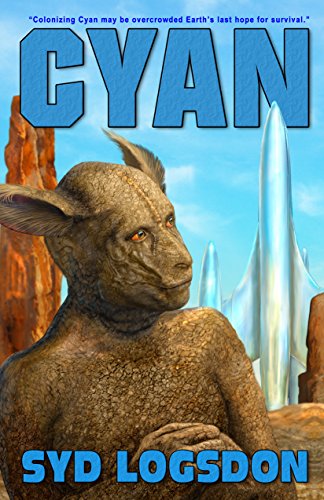
In one of my variant futures a scientist named Lassiter discovers a glitch in our understanding of physics which allows easy total annihilation of matter. That means a star drive for nearby star systems, with all the complications of near light-speed travel, but no FTL. This led to world building for all the stars within about five light years of Earth, and to the novel Cyan which explores one of them.

Such multiple world building calls for other novels, including the one alluded to in Monday’s post.

Not to belabor a point, but the world building in Cyan and the world building in The Cost of Empire are both based on a technological innovation. The only real difference is that one change took place in the past and one will take place in the future. SF and alternate history are often two faces of the same coin.

Incidentally, the Cyan universe came about after I wrote my first published novel Jandrax. I asked myself, where did this universe come from? How did it start? What were the ancestors of the people in Jandrax doing a few hundred years earlier? Then I filled in the missing pieces, and Cyan emerged.

My other early published novel, A Fond Farewell to Dying, is based on a historical change and a technological development. The world in general comes into being through a confluence of nuclear war and rising oceans, ending with the northern hemisphere devastated, and India as the last best hope of scientific culture. The technological event is the creation of a practical, artificial immortality. That world called for two sequels which have been outlined, but not yet been written. One of them has recently been calling my name, so maybe soon.

In FFTD, the bombs fell in the future, so it is clearly SF. If the bombs had fallen in 1957, it might be categorized as alternate history — but probably wouldn’t be because of the immortality theme.

Writers write. Putting novels into categories is the job of editors, critics, and booksellers. We do make life hard for them sometimes.

My latest novel, Like Clockwork, takes place in a quasi-Victorian pocket London and won’t have any direct sequels. It could be published as steampunk, but it is actually a straight SF time travel story.

However the future world of the time traveler who is Like Clockwork‘s hidden prime mover has infinite possibilities. In that world Einstein got it right, there can be no FTL, and only century ships are a possibility. Adventurous souls need not despair, however, because there is sideways travel in time. For fear of destroying their own existence, time travel in this culture’s own timeline is forbidden, but travel to alternate universes is the order of the day. 

My fantasy novels all take place in one created world, but that’s a whole different set of posts.

604. Changeable?

They proclaim it in every “How to Write” book: your character should change and grow. Truthfully, it almost never happens in genre fiction. The fact is, it’s really hard to get that kind of story published, and for a very simple reason. The reader won’t read it.

If the final condition of the character is the goal, the starting point has to be in some way unsavory. Let’s make up an example. Let’s let Sibrov (that’s a name taken from Small Gods, but spelled backwards) begin as a wild-eyed hunter of heretics. That’s a fairly standard villain. If our hero is a heretic, running from Sibrov, we have a whole sheaf of stories open to us, none of which pose any structural problems. And none of which will call for our hero to undergo any real change in his character. 

However, suppose we want Sibrov as hero. He will have to have a change of heart; at the extreme end of the change he might end up the picture of peace and love. This creates a problem. How do we get our reader through the first three-quarters of the book — the part where our hero-to-be is a dirty sewer rat?

It’s tough.

It’s also not something I’m normally interested in. I don’t like super heroic characters; even the gods I’ve written are flawed. Nevertheless, I do expect my heroes to be at least staunch and reliable. Another word for that would be unchanging. Readers like that, too. That is why genre fiction is able to have so many series — the main characters remain largely unchanged despite all the slings and arrows that outrageous fortune puts in their paths.

Hamlet, part two, back from the dead. Nope, it just doesn’t work.

There are ways of making a character change in genre fiction without losing the reader. Terry Pratchett does a masterful job in Small Gods, although his method is not a template many writers could borrow. He introduces dozens of characters, gives us a flurry of sound and fury, and doesn’t make it clear at first who is or is not going to be alive a few chapters later. While we are distracted by all the interesting bastards and losers, our main character — who is a complete cypher at the beginning — starts changing slowly. By the time that he has become the focus of the novel, he has already begun to become interesting.

I like my page-people to be fully formed when we encounter them, and then to have their characters tested by the universe. I have only tried to make them undergo fundamental changes in two novels. Of course, this ignores the growth from youth to adulthood. That is a different kind of change, suitable for a different post.

In my latest book, Like Clockwork, two of my forgetful characters discover who they used to be and integrate those memories. Another discovers feelings she had suppressed and cures herself of them. Those aren’t real changes; they are simply cases of regaining a previous state.

Another character, Hemmings, actually changes. He is pretty much a nobody at the outset — an emotionless creature who follows all the rules because he has no strong feelings about how things ought to be. Over a thousand years — or the length of the novel — he “grows a soul”.

I enjoyed that, but I only got away with it because Hemmings was one of a cast of eight characters. I got to show him in short bits while he was still dull, and then could bring him on stage for longer incidents as the universe slapped him silly and he fought back, becoming interesting in the process.

If that sounds familiar, let me clarify:  I wrote Like Clockwork at least six months before I read Small Gods. If I had to pull the Hemmings story out of the larger novel to stand alone, no one would read it because it would be too dull at the outset.

The other time I made one of my characters really change was in the novel Who Once Were Kin. It is a follow-on to a fantasy series, and the title comes from a local proverb, “There are no enemies like those who once were kin.” If this were a cowboy story, the proverb would be, “Ain’t nobody who can hurt you like kinfolks”, which is a true statement, in my personal experience.

For my taste, this is the best book I’ve written, but from the viewpoint of publication, it won’t fly. The hero is a fine upstanding member of his community, but his community has some foul notions of sexual morality. We spend the first half of the book getting to know him, and coming to like him for all his positive qualities, while slowly coming to understand and hate his culture. Then things happen to destroy his serenity and to show him that his life so far has been a tragic mistake.

Anyone who would enjoy the manly, military, self-assured first half of the book would absolutely hate the second half. Anyone who would appreciate the second half, would never get through the first half.

Real change is a bitch.

The ms. resides in my hard drive, mocking me. I’ve spent the last twenty years trying to figure out how to change it without losing the qualities it has now. Maybe I should just put a disclaimer at the top:

Be warned, this book may give you moral and emotional whiplash.

603. Small Gods, Big Result

Small Gods, Big Result
also known as
Full-Fledged Characters, Where Are You?

I have a colleague, JM Williams, who is a great fan of Terry Pratchett. On his suggestion, I checked one of his novels out of the library, read five pages, and tossed it.  Yech.

A month or so later I mentioned the fact to him. He suggested that I might prefer to start on a different novel, and suggested Small Gods.

I was hooked by page two. The scene, or was it an allegory, of the eagle and the tortoise was wonderful, and I was ready to believe that Terry Pratchett might be all JM said he was.

By page 38, I wasn’t so sure again, and I found myself trying to analyze exactly what was missing — for me — in the novel. I do that a lot. If you write, I’m sure you know what I mean.

Roughly by page 200, I was back on board again.

I had came to a conclusion, and since it bears on writing in general, I’m going to expound. As with the responses I got from 601. Home Court Advantage, feel free to disagree.

At page 38 of Small Gods, there was no character I liked well enough to care if he lived or died. Still, interesting  things were happening and I wanted to know how they were going to come out. That is a positive mark for a writer who knows what he is doing, but it isn’t really enough.

By about page 200, I wanted Om to make it and I really wanted Brutha to make it. From that time on, I had a vested interest that kept me going with enthusiasm. If I read another Pratchett (and I probably will) that enthusiasm will be there from the start, now that I trust the author.

I had needed characters I could care about.

This is not the same as full-fledged characters. There is no such thing. Robert Caro just wrote a four volume biography of Lyndon Johnson, and I’m sure he didn’t tell everything there was to tell. I read both parts of Patterson‘s bio of Heinlein and I still have questions.

If biographers who spend massive chunks of years don’t get it all, how can a fiction writer expect to have a “full-fledged” character. What does the phrase mean, anyway?

Om, Brutha, Vorbis, Simony, Urn, and Didactylos are all characters in Small Gods who are well thought out, powerful, and exactly sufficient to the task at hand. Not one of them is a “full-fledged” character, but they are each fledged exactly enough.

If you want to write full-fledged characters, maybe you should give up novels and write LITERATURE instead. (If WordPress allowed multiple fonts in one post, I would put LITERATURE in all curlicues.) Then you can out-Joyce Joyce if you want to, and still have readers.

They will have to read. There is a paper due next week, called for by the professor at the front of the room. He wants company in the misery of having been forced to read LITERATURE in order to get his degree.

In point of fact, there are powerful characters in literature and in genre fiction as well. The difference is in the expectations and tolerance of the reader. Powerful does not mean turning a microscope on his backstory and telling every detail.

Ursula LeGuin told us that science fiction is too small for Mrs. Brown, meaning there weren’t enough full-fledged characters. I listened. I respect LeGuin too much to ignore her, but after decades of considering her argument, it’s just smoke and mirrors.

I could (over)state in response, science fiction isn’t too small for Mrs. Brown; Mrs. Brown is too dull for science fiction.

Fiction, however humble or pretentious, is too small to contain any actual living human being. That isn’t what fiction is all about. Writers of fiction give a précis, a starting point, a few brief actions and emotions, and the reader fills in the rest. The reader draws on a full life of looking at other people, and at him or herself.

The real issue between literature and genre fiction is how many (and how dull) are the details the reader will tolerate.

Take Spenser (the detective, not the poet) for example. He has been around for almost fifty novels and, like Bond, has outlived his creator. After all this time we know a bit about him — actually, we may know all there is to know about him, and it isn’t much. Except for the interminable descriptions of food, all the details provided about him also move each story forward.

Recently I have worn out Spenser, Nero Wolfe and Archie, Judge Dee, Bony, Travis McGee and a dozen others, and have started Anne Cleves’s Shetland series. In my first attempt, I am having to get used to masses of detail about the lives of very ordinary people. I like it, but it is hard sledding; if I hadn’t visited Shetland and enjoyed the place, it would be even harder.

Cleves is a fine writer. My problem is a matter of expectations. Any detective writer in the list above would have finished Cleves’s novel in half as many pages, and the details left out would be the dull ones.

I like what I’m reading, really I do, but anything with this much detail about ordinary life has to be LITERATURE.

There will be more to say about all this on Monday.

HOLD IT – – – STOP THE PRESSES.

Something just came up as I was putting this to bed to wait for the 19th of June. It’s peripheral, but it struck me funny enough to put in a mini-post tomorrow. I will still say more about the main subject on Monday.
588. How Quickly Do You Write?

How long does it take to write a novel, a short story, or a poem?

Those who visit this site and register a like usually have websites of their own which I visit, so I know that many of you write. Many more of you would like to, or are just starting to. “How long does it take?” may not mean much to a poet, but anyone writing a novel has to wonder if she/he has a reasonable prospect of completing it.

I had that question myself when I started. I wondered if I could sit down and write every day until I had produced a novel. It seemed more likely that the well would run dry and I would end up going on to something else, but there was no way to know except by trying.

I began the day after Labor Day, 1975, and wrote five days a week. By Christmas, I had a novel. It was short, simple, and unsalable, but it was finished. I loved the process and I was hooked.

I started my second novel, Jandrax, the first of the next year, and had it finished by summer. That needs a little explanation. It was in the mid-seventies and the typical paperback novel ran about 50,000 words. Today a typical novel is, at minimum, twice that.

Novels in the seventies were often extremely fast paced. These days they are (to my taste) glacial. Comparing Gordon Dickson’s early novel Dorsai! to his late novel The Final Encyclopedia will show you what I mean.

Jandrax could have used more smooth transitions between scenes and less twitching speed. About another seven thousand words and another two or three weeks of attention would have helped. Still, it fit into its era and was published by Del Rey, but I would slow the pace if I were writing it today. A bit. Not much.

During 2017 I wrote a novel of about 90,000 words called The Cost of Empire. The rough draft took about four months and it went out looking for a home at the end of six. That is about twice the pace of my first published novel, which makes sense after all these years of experience.

Next I wrote Like Clockwork, a much more complicated novel. I worked from January to July of 2018; then I broke off and rewrote what I had as a novella for a sales opportunity that had come up. That didn’t pan out, so I went back to the original concept in October. I lost most of December and January to another project, then finished the novel at the end of February. Call it ten months of writing, spread out over fourteen months altogether.

Ten months vs. six seems about right for a complex vs. a straightforward novel at this stage of my life. The longest I ever took from concept to publication was just short of forty years, but that was a special case.

I write, rewrite, and polish — then polish again. Most authors with a long list of novels don’t do that. Louis L’amour clearly did little if any revising. His books are full of inconsistencies that he or an editor should have caught, but that didn’t keep him from being spectacularly successful. He wrote 89 novels in 38 years.

During World War II, Robert Sidney Bowen wrote about twenty air war novels for boys in five years. He said he could complete a novel in ten days and he never revised. No problem — considering their style and quality, revision probably would not have helped.

Lester Dent reportedly once wrote an entire Doc Savage novel over a weekend, although that amounted to taking two shorter works he had already written and blending them together.

I think we all want to write a bestseller in record time in a frenzy of inspiration. That dream probably won’t come true for any of us, but I know of at least once that it happened.

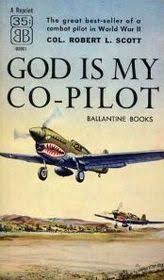
Colonel Robert Scott, WW II war hero, was recalled by the Pentagon for a tour America to stir up feelings of patriotism with his personal story of shooting down flocks of Japanese planes.

Near the end of that tour, Colonel Scott was asked by the Scribner (sic) publishing house to relate his experiences in a book. But he had only three days to do so before he had to report to Luke Field in Arizona as its new commander, so he simply spoke his recollections — 90,000 words — onto wax cylinder recording devices.*

Three days! God Is My Co-pilot became a best seller.

*The quotation is from his obituary in the New York Times.

587. Back to the Garden

Since summer, I have been working on reviewing the fifteen novels I chose as my favorites, and one thing has emerged. They nearly all have a rural or wild setting.

The exceptions are Heinlein and the Lensman series, both of which take place in completely civilized futures, and Dickens’s Christmas Carol, with its pre-modern urban setting.

The other twelve, whether past, contemporary, or future, are rigidly non-urban. Two take place at sea, three take place in variant, rural Englands, three take place in purely fantasy worlds, either wild or bucolic.

Davy Balfour spent his adventure crossing wild Scotland, and Roy Craig fought a wilderness so fierce that it threw off human domination.

Highland Laddie Gone takes place in modern America, but in a rural setting where the protagonists are pretending to recreate ancient Scotland. Part of A Prince of the Captivity takes place in an urban setting, but its soul and much of its action take place on an icecap, in the Alps, in the wasteland of war, and in wild places that exist only in Adam Melfort’s imagination.

If this were just my weird preference in books, it wouldn’t be worth a post, but it is much more than that. It is a reflection of recent history.

===============

Americans went to war in the forties. Those who came back changed the world. While England languished, half crippled as a result of the war, America exploded into the future. Freeways, cars that looked like jet planes, and housing tracts all emerged. Stamped tin toys were out; plastic was in.

The past (westerns were everywhere) and the present (endless spy stories) fought for dominance as the paperback revolution swept the nation.

While America was rushing forward technologically and outgrowing its landmass, some of the former generation were looking backward. A lot of young writers were looking to the future and seeing a post-nuclear age of Armageddon that was a replay of bad times past.

Some turned to fantasy. Ballantine gave us masses of books dug up from the actual past of literature, portraying pasts that never were, but which we all thought should have been. Tolkien became the king of backward looking nostalgia.

Two-thirds of my fifteen favorites were drawn from this anti-urban movement.

===============

I grew up on a farm, but most of my generation was urban. And rich, in comparison to any previous generation of youth. And they had the pill — which changed life a lot more than computers ever will. Sex, drugs and rock and roll. I missed all that, back in my Baptist-farmer world.

Then I got to college. I went from being marginal to my home town to being a marginal hippie. I agreed with most of their ideas, but I had no confidence that they would pull them off. And they didn’t. They stopped the war, but it wasn’t a clean victory. Nixon kept Viet Nam on life support long enough to win a second term.

By that time a new craze had hit; everybody wanted to go back to the land. I had waded through too much cow manure to buy into that.

I eventually went back to the land in a different way. I retired from teaching and bought a house on three acres in the Sierra foothills. Here I can see turkeys, deer, coyotes and an occasional bobcat walk past the picture window of the air conditioned shed where I write. I don’t raise crops, just novels.

A decade after the back-to-the-land crew had moved back to the cities, I wrote a novel, Raven’s Run, and put my opinions into the mouth of one of my characters, Rusty Dixon. For the record, he cusses more than I do.

Then along came the sixties. Some of us went off to Viet Nam and landed in pot heaven. Other kids my age went down to the cities and became hippies. When all that peace and love shit started to fall apart, a big bunch of hippies, lots of them from San Francisco and L.A., decided the new big thing was to go ‘back to the land’. ‘Course most of them had never been on the land, so they weren’t really going back to it. If they had, they’d have known better. I mean, I never saw any kid raised on a farm that went in for that shit.

It doesn’t take much insight to realize that the back-to-the-land movement, as well as Tolkien and his imitators, were moved my the same impulse. The modern eco-generation is singing the same tune, whether they understand it or not. It is a universal human hymn. For all of them, the future looks bleak and the past looks better than it really was.

Personally, I still have more faith in the future than in the past, but that twenty year spree of fine anti-urban and fantasy novels that came after World War II is still a pleasure to read.