Tag Archives: forgotten heroes

572. Apollo 9: Spacesuits

Left photo, the first American spacewalk using an umbilicus. Middle photo, the inner layer of a moon rated suit. Right photo, same suit with outer layer, visor, and backpack.

If you have not been following these Apollo posts, here is a quick summary: when three astronauts died on the launch pad, their scheduled flight was renamed Apollo 1. The flight which completed their mission, after much delay, was called Apollo 7 following the original sequence. Apollo’s “2 through 6” never existed.

The next flight, originally Apollo 8, was to be a repeat of 7, but was changed to be the first launch of the complete Apollo package, Control Module, Support Module, and Lunar Module. However, delays in building the LM (or LEM as it was called in the early days) meant that flight could not happen by the scheduled date. The Apollo 8 which actually flew was a different Saturn, different CSM without an LM and different crew. They <flew around the moon>.

The first flight with all parts of the Apollo was pushed back, renumbered to Apollo 9, and flew fifty years ago yesterday, March 3, 1969. A full picture of the shuffling of missions and crews would take more words that even the geekiest reader could tolerate.

=========

Apollo 9 was the second manned flight atop a Saturn V, and the first to have both CSM and LM on board. Jim McDivitt was in command. David Scott was the CM pilot and Rusty Schweickart was the LM pilot. Don’t confuse him with Jack Swigert of Apollo 13.

There were two main objectives for the ten day mission. First was to test the ability of the astronauts to dock the CSM to the LM, to undock and fly the LM separately, both as a complete unit and the ascent stage alone, and to dock the ascent stage to the CSM once again. The second objective was to test out the first American space suit which was not tethered to its mother vehicle.

We will concentrate on the space suit today and look at the testing of the LM on Friday. That will be posted at 3 PM, PDT, fifty years to the minute from the first separation of the LM from its CSM.

=========

The space suits worn by both Americans and Russians had not allowed true freedom. Cooling, power, and life support gasses were never contained in the suits, but were sent to the suits by umbilical connections. As long as the crew was inside the vehicle, this posed no problem. The suits were deflated and for long periods of each mission, helmets and gloves were removed. During launch and return, the suits were again made air tight but were not inflated. There was no need. If the cabin had been breached during those maneuvers, the suits would have continued to provide life support.

I never seen it admitted, but clearly both NASA and the Russians were flirting with disaster through all those early flights. Let me explain.

When the first spacewalks (EVAs, extra vehicular activities) were made by Alexey Leonov and then Ed White, the space suits proved to massively restrict mobility. Leonov could barely get back into his vehicle because his suit had puffed up so much. Ed White only got back into Gemini IV with great difficulty and with the help of fellow astronaut Jim McDivitt.

You can imagine what would have happened on any early fight if there had been a hull breach during a reentry, and the pilot’s spacesuit had suddenly become stiff and unmanageable when every second was critical.

Small glitches kill pilots, as everyone in aeronautics knows.

Five missions after White’s EVA, Eugene Cernan nearly died during a spacewalk because his suit was so unmanageable. See  posts 295 and 296. It took three more EVAs on three missions by three additional astronauts until before spacewalks were brought under control.

All of these EVA’s, Russian and American, used umbilicals to provide life support and to tether astronauts to their vehicles. That was not going to work on the moon.

The development of a suit suitable for moonwalks took seven years. Pressurization, oxygen, and cooling were taken care of by an inner layer that rarely made it into photos. See the middle picture above. The outer layer was a laminate designed to resist abrasion, radiant heat, and micrometeorites. The backpack took the place of the umbilicus and provided power and oxygen.

Backpacks were first tested on Apollo 9 by McDivitt and Schweickart. David Scott performed a standup EVA — that is, he stood up in the open hatch of the CM — but he received life support through an umbilicus. This was the pattern for Apollos 9 through 17. The moon bound astronauts used backpacks, the CM pilot did not.

If the LM tested on Apollo 9 had worked, but the backpack hadn’t, Apollo 11 could still have landed on the moon, but Armstrong could not have left the Eagle to make “once small step . . .”

But it did work. The EVA was cut short by Schweickart’s space sickness, but the backpack worked fine.

more on Apollo 9 Friday

Running From President 2

Billy Joe Barker, newsman, regular contributor to the Tulsa World was a long time Republican. He had a dalliance with liberalism during the sixties when he thought he was a hippie. He had the hair for it back then, and it’s the only part of that era he misses. By the mid-seventies he was back to a buzz cut and back to being a Republican.

Billy Joe hated Hillary, passionately. He was a Ted Cruz supporter, despite the hesitation Okies have for anything from Texas, but Cruz didn’t last. Billy Joe really tried to like Donald Trump, but he couldn’t. The last straw was watching Trump’s first interview with his new running mate Mike Pence. After that, Barker had a continuing  vision of Edgar Bergen with Charlie McCarthy on his knee. He gave up on Trump even before Cruz said, “Vote your conscience.”

Barker couldn’t begin to support Hillary, couldn’t stand the Libs and Greenies, and knew there was no hope for a third party. He was flummoxed. That’s when he decided to use the Tulsa World to push a pseudo-candidacy. He didn’t care who he ran, it was just a joke in a political season that had lost any taste of humor. He needed someone like Pat Paulsen, back when Billy Joe was briefly a hippie.

On the same day that he came to that conclusion, he read about Leap Alan Hed in Reader’s Digest. The article told about Leap celebrating birthdays only on years with a leap day, and about his claim to be 16 even though he was born in 1952. Billy Joe Barker had found his candidate.

First he had to locate him; that took two days. Leap had moved to Dannebrog, Nebraska, a bustling metropolis of 307 people. Wiki says 306, but that was before Leap moved in. Billy Joe called him long distance. That took a day of phone tag since Leap didn’t have a phone, and had to take the call at a neighbor’s house.

Billy Joe explained his proposition. Leap almost fell off his chair laughing. He said, “You’ve got to be out of your damned mind. The second worst part of what you want me to do is the campaigning. The worst part is, if I lie well enough, I might win. The answer is no!”

Billy wrote up his weekly column for the Tulsa World, telling the story of his aborted search for a candidate. At the end, he said, “If only crazy people run for the office of President, then Leap Alan Hed is the sanest person in America. He really doesn’t want the job.”

Beware of what you ask for. Or what you don’t ask for. more tomorrow

551. Apollo 8

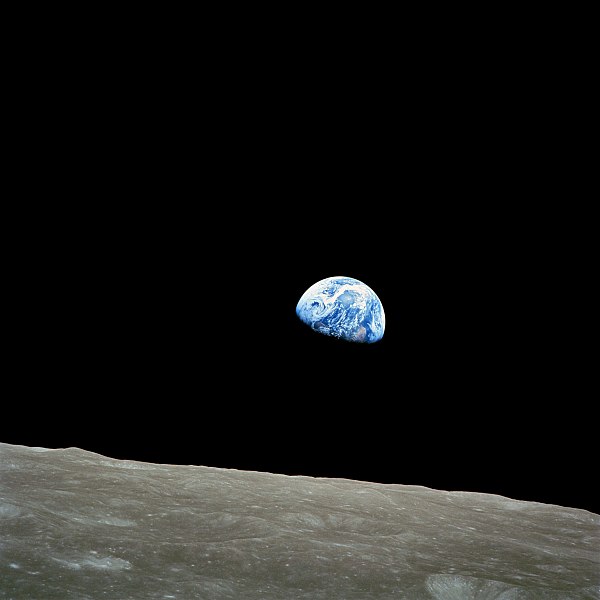
photo taken from Apollo 8

Things always look different in the rear view mirror.

If I were telling the story of Apollo 8 as it was understood when it was happening, it would be a different story than what it looks like today. We in the US knew what we were doing. We suspected what the Russians were doing, and our actions were based on those suspicions.

We were wrong. Here’s what was going on that we did not know then.

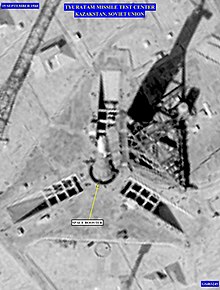
The Russians were developing a rocket, the N1, similar in size to the Saturn V. It was designed to carry two men into lunar orbit and allow one of them to land. America was aware of the existence of the N1, but not in any detail. It had been seen by reconnaissance satellite (shown here), but little else was known. Russia looked much closer to reaching the moon than the facts warranted.

In fact, the first N1 launch attempt came two months after Apollo 8, and was a disaster. There were four launch attempts in all, the last in November 1972, almost three years after Apollo 11. All ended in massive explosions and the N1 program was cancelled.

We didn’t know any of this until decades later. Based on our assessment, the Russians seemed to be on the verge of reaching the moon first, particularly after the delays that followed the Apollo One fire.

The LEM was not ready for use. The next mission was supposed to be in high Earth orbit, but NASA decided to go for broke instead. They changed the Apollo 8 mission, with only a few months to go, from an Earth orbit mission to a circumlunar mission.

On December 21, 1968 — fifty years ago this Friday — Frank Borman, James Lovell, and William Anders launched from Kennedy Space Center.

For anyone younger than sixty, it is impossible to recapture the feeling of the moment. We all know how the story came out, and that will be true over the next few years as a whole batch of fifth anniversaries come and go. At the time these spaceflights took place, no one knew if any of the astronauts would return to Earth alive.

The launch occurred at about eight AM, EST. The first and second stages burned their fuel and fell away. The third stage placed the craft in Earth orbit and remained attached.

The craft spent nearly three hours in near Earth orbit. This was standard; it allowed a full post-launch check before the craft’s irreversible journey to the moon began. Return to Earth from an aborted mission remained a possibility until the third stage fired again.

Once the third stage had fired, the CSM separated and rotated to have a view of the third stage and the retreating Earth. Having the spacecraft and the unmanned third stage on the same orbit was no part of the plan, so after five hours, the third stage vented its remaining fuel changing it to a different orbit that would not get in the way of the CSM.

The rocket in the Service Module was not used on the way to the moon. It could not be, for reasons that will be explained when we look at Apollo 9 in late February.

After nearly three days, Apollo 8 reached the vicinity of the moon. The Service Module engine fired for the first time, slowing the craft to place it in lunar orbit. The famous Earthrise photo at the top of this post was taken shortly thereafter. During the next twenty hours, Apollo 8 orbited the moon ten times. Then the Service Module engine fired again, sending them back to Earth to land in the Pacific on December 27th.

The lunar orbits took place on Christmas Eve and Christmas day. While in orbit, the astronauts read the first ten verses of the book of Genesis in a TV broadcast to Earth.

I have never been comfortable with that action. I recognize the need to comfort and unify the country at the end of a troubled year, and the need to set America apart from Russia. After all, Khrushchev had stated the Russian position when he said, “Gagarin flew into space, but didn’t see any god there.” And, despite those of us who disagree, America is demographically and historically a Christian country.

Nevertheless, why Genesis, the part of the scriptures most quoted by those who would hold back science? They would have been better to follow the lead of Linus van Pelt and quote Luke 2: 8-14. It was Christmas, after all.

The went, they orbited, and they returned. It doesn’t sound like much if you put it that way, but there was an additional factor. What if they didn’t make it back?

By the time of Apollo 8, eight astronauts had died in training or in on the launch pad. All those deaths were virtually instantaneous, but death in space could come another way. Astronauts could become stranded, unable to return.

That problem had been well understood from the first. During John Glenn’s first flight, my father, an Oklahoma farmer who considered the space program a complete waste of time and money, left his tractor in the field and went in to sit for hours in front of the television. He said later, “I just had to get that old boy back on the ground before I could go back to work.”

America had held its breath before, but going to the moon upped the ante. The possibility of three men being trapped in lunar orbit and unable to return was on everybody’s mind during Apollo 8. With subsequent moon landings, everybody worried about men being trapped on the moon, and unable to return.

It all turned out well; we know that now. But to have a sense of how it felt to those of us who watched it in real time, you have to factor in the fear of complete disaster.

544. Apollo 7

We are coming up on the fiftieth anniversary of the first moon landing.

Apollo One, the fire on the pad that caused the deaths of Grissom, White and Chaffee, took place February 21, 1967, causing a long delay. About a year and a half later things were just getting back up to speed. Apollo 7, the first successful manned flight took place on October 11, 1968.

The fiftieth anniversary of that flight was about a month ago, and I missed posting about it. That’s hard for me to believe, since I have been following the space program since 1957.

Purchased today, foot to butt kit, for self-application, apply immediately.

Apollo 7 is too important to simply mention, and too controversial for someone out of the loop to cover with authority. Nevertheless, here is a thumbnail.

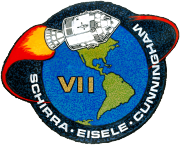
Mission Commander Wally Schirra’s attitude toward NASA after the Apollo one disaster was — not positive. The space program had grown into a massive source of funds for companies. Engineers and the builders in the trenches were fully committed to excellence, however top brass decisions were sometimes questionable. The choice of North American Aviation to build the Command Module was controversial. McDonnell Aircraft had built the Mercury and Gemini craft, and many pointed out that the shift to North American Aviation wasted the talent and experience that had made the space program a success so far.

To put it bluntly, the Apollo Command Module NAA originally turned out was a lemon, and everybody knew it.

During the year and a half from the disaster to the launch of Apollo 7, Wally Schirra made it his personal mission to see to it that the craft he and his fellow astronauts were to ride in was of top quality. He was abrasive and relentless, and when Apollo 7 flew successfully, it was largely because of his persistence.

The flight, which he considered an engineering test mission, was cluttered up with scientific and PR projects. When they interfered with testing out the craft, he refused to do them. In space, where nobody could override his decisions. His acerbic interchanges with ground control would have banned him from future missions, but he had already announced that he would retire at the end of the flight. What could NASA do?

Apollo 7, the first manned Apollo mission, was an engineering success but a failure in personal politics. Eisele and Cunningham were never allowed to fly again, but the subsequent missions had a CSM that they could trust.

Wally Schirra became the only astronaut to fly on Mercury, Gemini, and Apollo missions.

======

I have recently worked out a series of posts covering events in the run-up to the moon landing. As I was doing so, I also became aware of another, less joyful anniversary. Since it took place on December first, which is a Saturday this year, I will skip Wednesday’s post and fill you in this Friday.

540. Where Are the Vets?

Here are some statistics, tailored for those who read this blog. I know most of you are young. I see your pictures on your likes, and I check out your websites.  I’m not young, so I see changes you may not be aware of.

Harry Truman, Dwight Eisenhower, John Kennedy, Lyndon Johnson, Richard Nixon, Gerald Ford, Jimmy Carter, Ronald Reagan, and both presidents Bush all served in the military in wartime. Regan and Bush Two served stateside in wartime; the others all saw combat.

Bill Clinton, Barack Obama, and Donald Trump did not serve.

In the current House of Representatives only 70 of 435 have served in the military. In the current Senate, only 13 of 100 have served. Those numbers will go up slightly with the incoming congress.

Veterans were not so under represented in previous congresses.

These figures relate the the reduced number of persons in the military. That is not quite the same as a smaller military, since the persons now serving tend to spend more years in service. Draftees from previous eras tended to go home as soon as they were allowed to do so.

I come from a long line of draftees. My father served in Europe in WW II, was wounded, and remained during the occupation of Germany. His younger brother was drafted, trained, and was on a ship “heading for Japan to die” (his words) when the US dropped the A bomb. He ended up in the occupation of Japan. I joined the Navy, Vietnam era, but not by choice. My draft number was 41, which meant my number was up (in both senses of the word) before I finished college. And no, I did not see combat.

I hated the draft and I still do, but it had one positive aspect. It leveled the playing field. More Americans had to step up, whether they wanted to or not, and that led to more protests. Without the draft, we would have been in Vietnam much longer.

Today is the hundredth anniversary of the end of WW I. All those veterans are gone. WW II ended in 1945. Very few of the vets from my father’s generation are still around.

America left Vietnam in 1973. Any vet who saw that day at age 18 would be 63 today. That was also the last  year American’s were drafted.

I’m not suggesting a return to the draft, God forbid. I have no particular agenda at all; I just want to give you this to think about.

A country which everyone has to defend, or at least has to stand in jeopardy of military service, is a very different thing from a country that depends on a volunteer military.

Better? Worse? That will be your decision going forward.

======

The numbers in this post come from PBS.

522. First Black Astronauts

Dr. Ronald McNair, Guion Bulford, Frederick Gregory

I recently saw Leland Melvin’s new book Chasing Space and got a chance to look it over. It’s a good book, although in full disclosure I won’t finish it. I read and write for a living. so my time is limited. Additionally, I have already read more than dozen astronaut bios, so this one lacks newness for me, even though it might be just what you are looking for.

It got me thinking about the first black astronaut, if there were such a thing. We all know who the first woman astronaut was — Sally Ride. That is, if we continue our cold war prejudice against the Russians and ignore Valentina Tereshkova.

It would be neat and tidy if there were a first black astronaut, but it isn’t that simple. If you type the question into Google, it will return Guion Bluford. We’ll talk about him in a second, but there were others that came before him.

Ed Dwight was chosen by John F. Kennedy to join the astronaut corps. He was an Air Force test pilot with a degree in aeronautical engineering. While in training, he was the target of racism. When Kennedy was assassinated, Dwight withdrew from the astronaut program. A few years later, continued harassment led him to retire from the Air Force altogether. He became a noted sculptor in a second career.

Robert Henry Lawrence Jr. was the next African-American astronaut. At Edwards Air Force Base, Lawrence investigated unpowered glide return characteristics using an F-104 Starfighter, contributing greatly to knowledge necessary to the Space Shuttle program. He was assigned to the Air Force’s Manned Orbiting Laboratory program, but before he flew in space, he was killed in a crash landing while acting as a pilot instructor to a trainee. When the MOL project was abandoned, many of it’s astronauts transferred to NASA, where they became the backbone of the early Space Shuttle missions. Lawrence would almost certainly have been among them.

The “first black astronaut” falls out this way.

Ed Dwight was the first black astronaut trainee.

Robert Lawrence Jr. was the first black working astronaut. Remember that most of any astronaut’s time is spent in training and on-the-ground research. Actual flight in space makes up a tiny fraction of an astronaut’s career. Lawrence was as much a real astronaut as Roger Chaffee who died in the Apollo One fire just before his first flight.

Guion Bluford was the first black astronaut to actually fly in space in 1983 aboard the Challenger. He participated in four shuttle flights.

We also have to add Ronald McNair to the list of firsts. He was the first black astronaut to die on a space mission, when Challenger exploded. It was his second space shuttle mission.

Before 1978, there had been fifty-some American Mercury, Gemini, and Apollo astronauts and an additional few dozen assigned to other missions. Of, these only Lawrence had been black and there had been no women.

An up-to-date list of black astronauts can be found here. There are fourteen: Guion Bluford, Ronald McNair, Frederick Gregory, Charles Bolden, Mae Jemison, Bernard Harris Jr., Winston Scott, Robert Curbeam, Michael Anderson, Stephanie Wilson, Joan Higginbotham, Alvin Drew, Leland Melvin (whose book started this post), and Robert Satcher.

There are an additional eight who, for various reasons, never flew is space. Lawrence and Dwight are on that list.

469. Joe Engle, Astronaut

Joe Engle missed his chance to go to the moon when he was bumped from Apollo 17 by Harrison Schmitt. It made sense. Schmitt was a geologist turned astronaut, and became the only one of the scientist-astronauts to get to the moon. He was, in fact, the only scientist to fly in space before the space shuttle program.

Joe Engle never became a household name like John Glenn and Neil Armstrong, but fighter jet crazy and space crazy kids of my generation were already aware of him before Apollo began. Not through the internet, which was decades away, nor from books in the library which were always two generations out of date, but from Popular Mechanics and Popular Science magazines. That was where my generation went to read about what was newer, faster, shinier, and cooler.

Iven Kincheloe, Mel Apt, Chuck Yaeger, Scott Crossfield, Joe Walker — if those names don’t stir your blood, you missed out. They were test pilots at Edwards Air Force Base who flew the newest and the best, especially the X-1, X-2, and most especially the X-15.

Joe Engle was one of them. By the way, so was that other guy, Neil Armstrong.

Engle decided to be a test pilot while in college, where he was in Air Force ROTC. Chuck Yeager recommended him for USAF test pilot school, and he subsequently attended Aerospace Research Pilot School. This was pre-NASA when the Air Force planned to put a man in space in a project called MISS (Man in Space Soonest). MISS morphed into Mercury after NASA took over the space program from the Air Force.

Engle served as a jet test pilot at Edwards and applied to NASA to be an astronaut. Instead, the Air Force chose him for the X-15 program. There he made sixteen flights; the fastest speed he recorded was 3887 mph. His highest altitude was 53.1 miles.

FAI (Fédération aéronautique internationale) in Switzerland maintains world records for human space flight. They set the limit of space at 100 kilometers. That’s 62.1 miles in the measurements Americans still use. In the days of the X-15, the Air Force set 50 miles as the edge of space and awarded an astronaut’s wings to any pilot exceeding that altitude. Engle exceeded fifty miles three times in the X-15.

(Fellow test pilot Joe Walker flew the X-15 above 100 kilometers twice, becoming the eighth American in space by the FAI’s more difficult criterion.)

Joe Engle applied to NASA again and was accepted. He was backup Lunar Module pilot for Apollo 14, and would have landed on the moon in Apollo 17. Engle then elected to transfer to the Space Shuttle program. He commanded one of the crews which flew multiple flight on the unpowered Enterprise. This near-shuttle was carried aloft on a Boeing 747 and dropped for a dead stick landing to evaluate its aerodynamic characteristics. NASA had to determine if the shuttle could land before it would launch it into space.

Engle was backup for the first Space Shuttle flight, and commander of the second flight. He later commanded STS-51-1.

Joe Engle is the only man to have flown two different types of winged vehicle into space. He is also the only remaining pilot of the twelve who flew the X-15, which he still calls his favorite aircraft.

468. Astronauts Left Behind

These poor guys got left behind when Apollo 17 went to the moon, and then I left them behind as well. This and the following post were originally planned for January but life got in the way.

When Apollo missions 18, 19, and 20 were cancelled, ten astronauts lost their chance at the moon. They were:

joe Engle who was scheduled for Apollo 17, but was replaced on that mission by Harrison Schmitt. (see 444. Last Men on the Moon) He will get his own post on Wednesday.

Richard Gordon and Vance Brand, who were scheduled for Apollo 18 along with Schmitt.

Fred Haise, William Pogue, and Gerald Carr who were scheduled for Apollo 19.

Stuart Roosa, Paul Weitz, Jack Lousma, and Don Lind who were on the short list for Apollo 20, although the final choice of three had not been made at the time of cancellation.

Here are their individual stories:

Stuart Roosa had been the Command Module Pilot of Apollo 14, the third moon landing. It was his only mission in space. He did not fly in space after Apollo 18 was cancelled.

Richard Gordon flew first on Gemini 11 where he and Pete Conrad set a record for the highest apogee earth orbit, while Gordon performed two space walks. He was Command Module Pilot of Apollo 12, the second moon landing. He did not fly in space after Apollo 18 was cancelled.

Vance Brand was on the backup crew of Apollo 15 and scheduled for the cancelled Apollo 18. He was then backup on Skylabs 3 and 4, and was on the rescue team held in reserve for a possible Skylab disaster. He finally flew on space on the Apollo-Soyuz mission, and later commanded the first fully operational Space Shuttle mission on the Columbia. He commanded Challenger on the tenth Space Shuttle flight and Columbia again on the thirty-eighth shuttle flight.

Fred Haise had gone around the moon on the ill-fated Apollo 13. On Apollo 19 he would have landed on the moon. He subsequently was a pilot on the ALT program (full title, Space Shuttle Approach and Landing Tests), where he piloted the unpowered Enterprise to three successful landings, after being dropped from a 747. He was scheduled to fly the second Space Shuttle mission to boost Skylab to a higher orbit, but that was cancelled when delays in the shuttle program allowed Skylab to fall.

Skylab plays a role in the stories of several of these astronauts. For details, go to posts 297   298  and  299.

William Pogue and Gerald Carr both shifted from Apollo to Skylab after the cancellation of Apollo 19. They were part of the Skylab 4 crew which spent 84 days in space.

Paul Weitz also shifted to the Skylab project, where he was on the crew of Skylab 2, the first manned mission. Skylab was badly damaged during its unmanned launch, a mission that was called Skylab 1. Weitz along with Pete Conrad and Joseph Kerwin spent much of their mission doing repairs.  Weitz retired from NASA, then returned to fly the maiden voyage of the Space Shuttle Challenger.

Jack Lousma was on the crew of Skylab 3, where he spent 60 days in space. He subsequently was commander of STS-3, the third orbital test flight of Space Shuttle Columbia.

Don Lind once said he was “in the right place at the wrong time.” He was one of the scientist-astronauts brought into Apollo and would most likely have followed Schmitt in rotation had Apollo 20 not been cancelled. He moved to Skylab, where he was backup for Skylabs 3 and 4, on standby for a rescue mission that didn’t happen, and was scheduled for Skylab 5 mission, which also didn’t happen. He was under consideration for Skylab B, a second Skylab space station that was cancelled. He was under consideration for the Apollo-Soyuz mission, but was not chosen. He finally flew on STS-51-B in 1985 aboard Spacelab-3. Spacelab was a space lab, in module form, carried in the payload bay of a space shuttle. Lind had served nineteen years as an astronaut before his first and only spaceflight.

460. White World

“Welcome to Black History Month,” said the old white guy.

You might wonder what I know about black history. The answer is, actually, quite a bit. I was a teenager during the height of the civil rights movement. I wasn’t involved, but I was watching and learning.

I grew up in Oklahoma in the fifties. That isn’t the South, but it’s close enough. We didn’t have blacks-only facilities in my town, because we didn’t have blacks. There were blacks in Tulsa where we shopped, and a few in Claremore, the county seat, but not in the rural areas I inhabited.

We called them negroes in polite conversation, but niggers most of the time. Sorry. It hurts my fingers to type that word, but I’m not going to lie to you. Nowadays, I use the term blacks because that is what they chose for themselves in the sixties. African-American came later, along with Native American. Both those terms sound to me like something made up by embarrassed white guys. I’ll stick with blacks, because that is what blacks wanted to be called when I first became fully aware of them as real people.

When I was very young, I didn’t have much of an opinion. I had never met a black person. There was one black man who farmed somewhere in the area. I saw him go by in his pickup once in a while, but that was as close to a black person as I had been.

I had also never met a Jew. I had never met a Spanish speaker, nor an Italian, nor a Mormon. Certainly not a Muslim; actually, I had never heard of Muslims. There was one Catholic boy who attended our school briefly. He wasn’t well treated and he didn’t stay long.

We didn’t have segregation. We had apartheid. I just didn’t know it at the time.

You get the picture. Not just white — WHITE. And not just Protestant, but Southern Baptist. And not just Southern Baptist, but small-town-Southern-Baptist; not like those liberals down in Tulsa. There were so many Baptists in town that the local high school didn’t have a prom.

That’s who I was when I was at ten. That’s not who I was by the time I was fifteen.

When those black people down south went marching, and were met with clubs and dogs and firehoses — when my father (and everybody else’s father) said it was their own fault, I couldn’t buy it. When I saw them bloodied and beaten, yet standing firm for freedom and dignity, I knew they were right and we were wrong.

When they fought for their own freedom, they also gave this Oklahoma white boy his freedom. They gave me a new way of looking at the world, and I am grateful to this day.

So the first year I was blogging, I wrote a month’s worth of posts on civil rights. Check any post between January 18, 2016 and February 18, 2016 if you want to see them. Last year I didn’t try to repeat myself. I had said everything I had to say.

This year, everybody who doesn’t look like me is in jeopardy all over again.

I’m an American white male. I have all the civil rights in the world. I also have an obligation to see that I am not the only one who has them.

So here I go again. Welcome to Black History Month.

444. Last Men on the Moon

left to right: Schmitt, Cernan (seated), and Evens

The last Apollo mission occurred forty-five years ago this week, with final departure from the moon on December 14th..

The three men who went to the moon on Apollo 17 were not the original choice. Astronaut crews during Apollo were selected well in advance, with primary and backup crews for each mission. The backup crew, as a unit, was supposed to fly on a subsequent mission, but not the very next one. That plan was frequently disrupted by events. Everyone probably remembers from the movie Apollo 13 that Mattingly was originally part of the Apollo 13 crew, but was bumped at the last minute in favor of Swigert because Mattingly had been exposed to rubella. The actual shuffling that took place was far more complicated than that.

As Apollo wound down and missions 18, 19, and 20 were cancelled, (see 441. The Last Apollo) nine astronauts were going to lose their chance at the moon. One of these men was Harrison Schmitt who had been slated for Apollo 18. He was one of the scientist astronauts recruited by NASA. Given the schedule at the time Apollo 18 was cancelled, none of these scientists would have flown. This was unacceptable to the scientific community; they lobbied for and got Schmitt moved up to Apollo 17, which cost Joe Engle his mission.

What happened to the men who got the Apollo axe? Obviously that is worth at least one post, possibly more, but my rotation pushes that into January or later.

Eugene Cernan and Harrison Schmitt landed on the moon December 11. Their mission was J type, as were Apollo 15 and 16, which meant these missions were designed for a three day stay and included a Lunar Rover. This dune buggy looking vehicle allowed one or two astronauts to move further away from the Lunar Lander and greatly increased the usefulness of the mission.

Apollo 17 landed in the Taurus-Littrow region of the moon. This site allowed sampling a wide range of types of rock, as it consisted of an ancient lava flow, with surface broken by subsequent meteor strikes, and included secondary strikes. This means that ejecta from the nearby Tycho crater came to earth (came to Moon?) causing secondary, smaller craters at the Taurus-Littrow site. This allowed Schmitt to sample Tycho material even though an Apollo landing at Tycho never happened.

A few minutes before eleven PM, Greenwich Time, December 14, 1972, the last manned mission to the moon lifted off, to later rendezvous with the CSM and return to Earth. Gene Cernan was the last to enter the lunar Lander before take off. We’ll give him the final words:

“Too many years have passed for me to still be the last man to have left his footprints on the Moon. I believe with all my heart that somewhere out there is a young boy or girl with indomitable will and courage who will lift that dubious distinction from my shoulders and take us back where we belong. Let us give that dream a chance.”

==========

I’ve read a large number of memoirs by astronauts and others involved in space exploration. The Last Man on the Moon by Eugene Cernan and Don Davis is one of the best. If you want more of this story, that is the place to go for it.