Tag Archives: literature

535. Meeting the Nemesis

I introduced you to Balfour two weeks ago. He is, and is not, Robert Louis Stevenson. I don’t plan to explain that here; you’ll just have to read the book when it comes out.

Writers write about writing. It’s inevitable. I have mostly avoided the temptation, but it finally got to me through Balfour. This — somewhat modified to remove references that wouldn’t make sense without context — is Balfour struggling with inspiration.

==========

Balfour got out of bed and went to his desk without bothering to dress. He took paper and pen, and stared out his window at the street below. Everyone in Outer London was going to work. He watched them for a moment, caught up in the novelty of a daily scene he was rarely awake in time to see, but then his eyes moved back to the blank page before him.

An hour later, the page was still blank when he rose to make tea and put on his clothing. It didn’t bother him. There was not one scratch on the pristine paper, but he was weary already with the work he had done.

There weren’t any words — yet. Words would come later. There were not even concepts yet, only inchoate pictures moving behind his eyes. No matter. He had been here before, and he had faith in the process which he had begun. The pictures would sharpen, the concepts would explain themselves to him, and then, finally, the words would come. Most of the early words would be discarded anyway, but that was all right too. It didn’t matter how long it would take, as long as the journey had begun. And it had.

Again. And it had been so long.

It was like filling his lungs with air again, after being trapped underwater until he thought he would not survive. Breathing again, after thinking so long that he would never breathe again.

He was hungry for food, but hungrier still to continue working. He sat the cup of tea on the table beside the still pristine paper and took up his pen. After a while, he put the pen down again and sipped, then took it up again. If you had asked him later where the tea went, he could not have told you. He stared out the window as the day unfolded. If you asked him later who had walked by on the street below, he could not have told you.

It will not be the story of an event. It will be the story of a man.

Who?

For now, just call him the nemesis.

What does he look like?

There was a picture in Balfour’s head. It was mostly the ruffian he had met last night, although he had already begun to morph into something universal.

The picture was clear in Balfour’s mind, but he could not write it yet. It was not wrong, but it was incomplete. His pen moved across the page and he tried a few lines, then impatiently scratched them out.

Balfour stared at the picture in his head and it became more fearsome. The eyes became blacker; the soul became blacker. The creature’s hands moved. They were powerful, like Snap’s hands were, but these were not the hands of a builder. These were the hands of a destroyer.

Looking at the picture in his mind, he knew that he should feel fear. But he didn’t — yet. The picture was fearsome, but it was only a picture. Until Balfour could understand this nemesis, dive deep into his soul and find the source of his anger, his writing would be superficial.

Until he knew this creature well enough to actually fear him, he could not do him justice. But how do you learn fear? Where do you search for it?

In memory. Yet in the clean, ordinariness of Outer London, there was no room for fear, and little enough room for memory.

==========

Poor Balfour. He doesn’t know that he has already written the story he is struggling with, in the Before, when he was actually RLS. If that seems confusing, hang on. There are two more posts coming, which will carry us to Halloween.

533. A Writer Lives for Libraries (2)

Readers today are contemptuous of Tom Swift and his kind, and with good reason. I had loved those books up to my first day in the library because they were all I had. They had filled lots of hours with lots of entertainment, and had opened me up to worlds beyond the farm.

Once I had access to libraries, I took home real books, mostly science fiction, and things would never be the same. With my first book, I met a real writer; Andre Norton had something to say, and she said it with grace and style. Ultimately, I would find Heinlein, Zelazny, Dickson, Le Guin, and hundreds of others beyond science fiction. But Norton was the first and she taught me how to write. Almost sixty years later I still hear the echo of her style in my writing.

In full disclosure, the county library I’m talking about was not quite my first library. My class in grade school – all eight of us – were the last to haunt a building that had housed three hundred students before my town shrank. We discovered a disused closet that still held the books that had once been the library, and there I read my first book for adults, Thomas Costain’s The Black Rose.

The county library in Claremore was where my heart and soul lived, but I also had a dalliance with the library in Collinsville. It was an old, small, red brick building donated by Andrew Carnegie. If you have passed through small town America, you’ve probably seen one just like it. Carnegie libraries all look the same.

That was where I discovered one of the great secrets of life: libraries are time machines. I don’t mean that they have books on history. I mean that they never have enough money, so they never throw anything away. In Collinsville in the sixties, the shelves were full of books published during and before World War II. Not only were they about bygone days, the books themselves were actually, physically old. Hundreds of boys, too young to fight, had sat in that library reading the Dave Dawson war books that I now held in my hands twenty years later.

The same actual books. Match that, ebooks!

So I learned to re-read, and to treasure books from eras past. I still read John Buchan regularly, holding my nose at his imperialism and racism.

While digging through the books at home, I found one rare treasure, Tom Swift and his Electric Rifle, published in 1911. Yes, the taser book, although I couldn’t know that because this was long before tasers were invented.

My grandfather, who lived in Florida and whom I saw only once a year, had read this Tom Swift (Sr.) book fifty years earlier, and he was the one who sent me my first Tom Swift Jr. many years later. Wow!

Libraries are great, but everybody needs to have a stack of books of his own. more on Monday

530. In the Valley of Magic

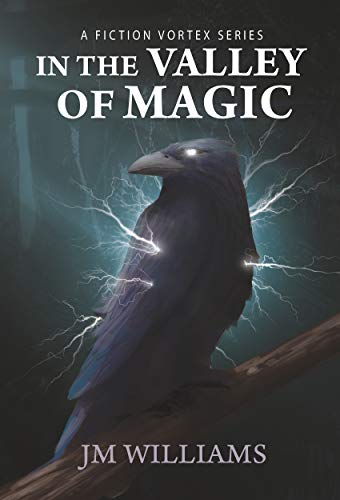
I recently finished JM Williams’s novel In the Valley of Magic, and I’m here to tell you about it.

Over the three years of this blog, I have been liked by quite a few people and most of them are bloggers. I always drop in to see their sites, with mixed results. If they are also writers, I try to sample what they have written. Usually the results belongs in a blog, not a bookstore. That’s not criticism; everybody has to start somewhere. Once in a while they are good, but not my type, so I have to give them a pass. One author wrote an amusing and entertaining first novel, which I reviewed positively, and a second novel I couldn’t get through.

JM Williams is the positive exception. I have read three of his works now, and they have all been excellent. Be careful if you go looking for him, though. An Amazon search will offer more than one JM Williams, and you won’t know which is which. You might try his website to keep things straight.

If you have read Iric, you have already been introduced to Marudal, the scene of the action. Iric’s appearance in the new novel is sadly brief.

JM Williams calls this a short-story-novel. There is no single, main hero. For most of the book, each chapter introduces a new viewpoint character. That may sound challenging, but the characters are cunningly drawn and are mostly people you will want to spend time with. It all works well, although I don’t care for his term short-story-novel. That suggests a fix-up novel, which this definitely is not.

If you don’t know the term, a fix-up novel is a novel made up of often tenuously linked short stories. They were popular in the early days of paperbacks, when writers would mine their short stories from SF magazines and shoehorn them together to make novels. Sometimes it worked; sometimes it didn’t.

In the Valley of Magic is nothing like that. It is a single, unified novel, very tightly organized and plot driven. It just has lots of characters, and each one has a piece of the story to tell. By the end of the book, those characters begin to reappear and to interact in ways that bring the whole to a satisfying conclusion.

The characters were varied and interesting, and the ones who should have been appealing, were. Many were flawed, sometimes deeply, and in need of a little redemption. There were plenty of villains, too, but most were self-serving or driven by ignorance and indifference. Some were simply on the wrong side of a developing war.

The plot was complex, and made to seem even more so by the way it was presented by one character at a time. It wasn’t a whodunnit, but more of a a what-the-hell-did-they-just-do? Since we couldn’t ask ourselves, “What will happen next to our hero?” given that our “hero” changed with every chapter, we were left asking, “What was that all about, and what is it going to lead to next?” The plot propelled the story forward and the payoff was well worth the read.

JM Williams also recently published a retelling of a Hans Christian Andersen tale titled The Nightingale. It has a few characters always on stage and the rest in the background, so we see the action through just a few viewpoints. That’s normal, and I wouldn’t mention it except to point out that Williams also excels in traditional storytelling.

528. Repeat, with Variations

You hear it said — author Joe Doakes has written the same book thirty times. The phrase is sometimes supercilious and often has more than a touch of envy hidden in it. The implication is, “Hell, I could do that.”

True confession: I couldn’t. Sometimes I feel good about that, and sometimes I wish I could do that, because repetition is one of the main paths to $ucce$$. I keep telling myself it is not the only path.

If you are, or want to be, a writer, you should examine this notion from the viewpoint of a reader, standing in front of a shelf of books, with only enough money and time to buy and read one of them.

The one with the naked woman catches your eye (male viewpoint assumed; for alternate gender, insert your own preference) but you’ve been burned by that advertising gimmick before. One looks likely, but you’ve never read anything by that author before, so you hesitate. If you could find a book by a favorite author, you would be reassured. If you could find a book by your favorite author, featuring a favorite character, your satisfaction would be almost certain.

It’s that simple. In addition, the author has the advantage of not having to invent a new main character for each book. It might be that finding something new for an old character to do would become tedious, but I can’t report on that from personal experience. No wonder publishers want books that can become the first of a new series.

We are talking about comfort food books here; true escapist reading for the times when you want to think, but only just a little. Television substitutes. Something for the long-haul trucker to read at night to take his mind off the fact that his wife is two thousand miles away, and what he would really like to be doing is . . .; you get the picture.

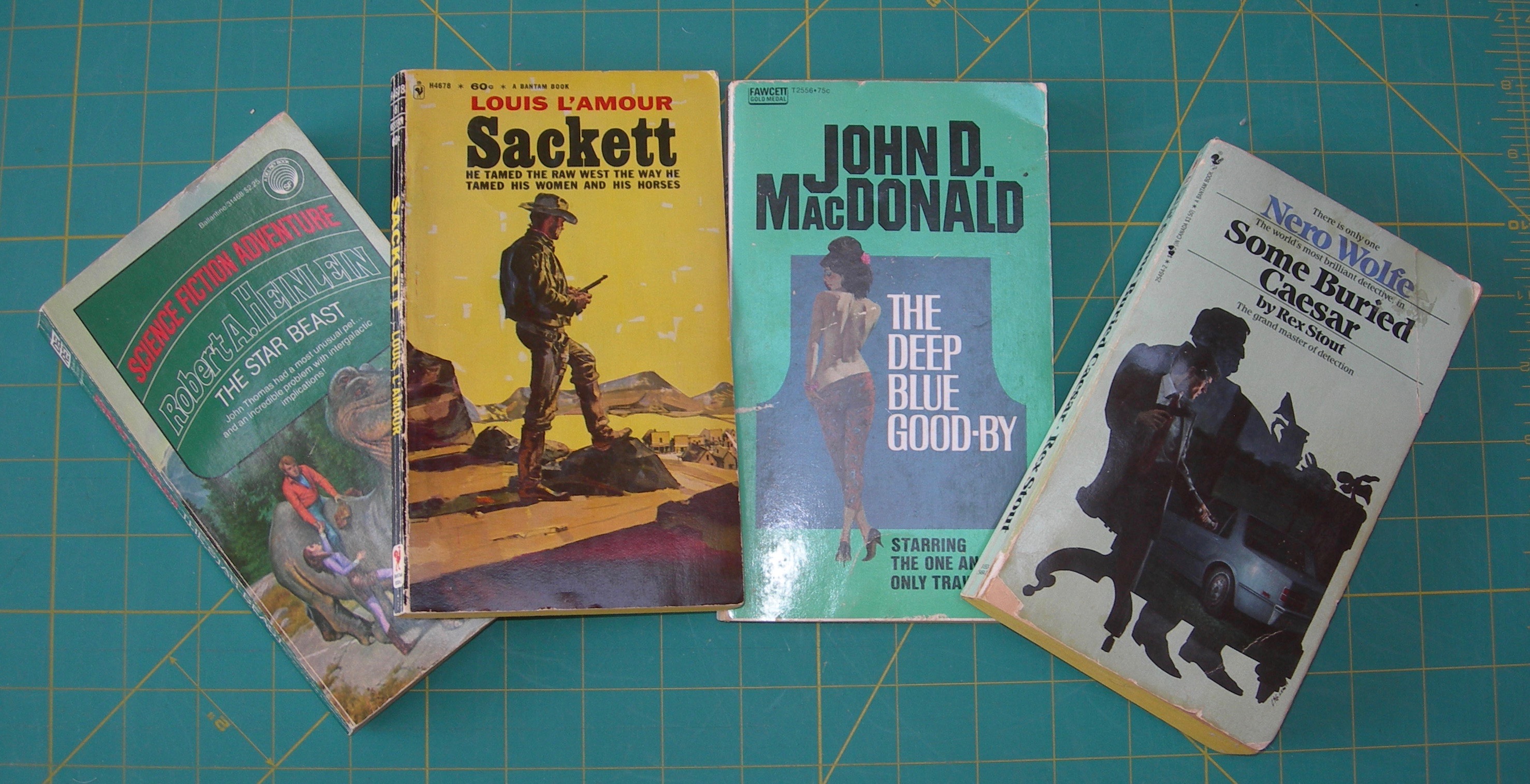
For me, during my first twenty years of writing, my go-to escape was Louis L’amour. I was writing science fiction and fantasy; he was writing westerns. He didn’t exactly write the same book fifty times. If he had, I couldn’t tell his good ones from his bad ones, and he had both. (Read Flint or Conagher, but avoid The Haunted Mesa.)

After beating my head against the typewriter (this was pre-computer) for a few hours, I would pick up a Louis L’amour western and ride off across the plains. Thoughts of interstellar travel were banished until the imagination well refilled itself. It was good stuff, but I don’t read him much any more. I have them all memorized.

I also have Heinlein in the photo at the top, which is a little unfair. He was not guilty of writing the same novel over and over (people who have only read from the second half of his career may disagree), but he only had one character. Male, female, both alternating, old, young — it didn’t matter. Every one was the Heinlein character, so if you liked one of his books, you were likely to like the rest. And if not, not.

The Travis McGee books are a clinic in how to do a series character who can continue to repeat with variations. No one ever did branding as well as John D. MacDonald. Every book contained a color in the title. He wrote The Deep Blue Good-by, Nightmare in Pink, A Purple Place for Dying, the Quick Red Fox, and seventeen more shades. You could recognize a McGee book from across the bookstore. MacDonald’s biography was titled The Red Hot Typewriter. In it, he explained that before he committed to the series, he wrote the first two novels to see if he could stand to be married to McGee for decades. For more, see 49. The Green Ripper.

The Spencer novels belong here as well. I read with pleasure through the first ten or so; each one was reasonably unique and expanded his character. The next thirty were increasingly dreary repetitions; they provided a quick escape and as quickly faded from memory. I still occasionally re-read one of the early novels, but the rest were all one-and-done.

Today, when the writing stalls, I rinse my mind out with Nero Wolfe and Archie Goodwin. I can’t say I really like them, but I always know what to expect.

527. Jack of Shadows

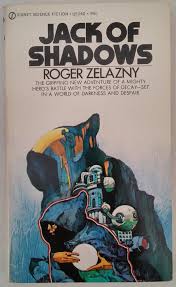
This is one of the fifteen that hit the sweet spot. Actually, almost anything by Zelazny belongs on somebody’s best-of list.

If you haven’t read Roger Zelazny, it’s time to start. The border between science fiction and fantasy is his domain, and nobody explores in better than he does.

Zelazny’s magnum opus is the Amber series, ten books detailing the story of Prince Corwin and his family and enemies — frequently the same people. You might start with Nine Princes in Amber, but then you will find yourself hooked, with nine more books to read before you can rest.

He also has a number of stand-alone novels, any one of which would be a proper place to begin to experience Zelazny. To name a few, in publication order:

This Immortal
The Dream Master
Isle of the Dead
Jack of Shadows
To Die in Italbar
Doorways in the Sand
Bridge of Ashes
Eye of Cat

There are also a half dozen between Bridge of Ashes and Eye of Cat which, in my opinion, don’t stack up to the rest. I’ve read and reread all of the above and a few more, along with numerous of his short stories. They always seem to be lurking in the Best Of . . . anthologies.

Isle of the Dead is probably my favorite among the stand-alones, followed closely by Eye of Cat, but as a recommendation for a Zelazny newbie I give you Jack of Shadows. It is close on the heels of the previous two in quality, and it is a more typical Zelazny. If you like Jack of Shadows as well as I do, you’re probably ready to take the big leap into the seemingly endless Amber books. Just make sure you don’t start out of order or it will drive you nuts. Check out the bottom of this post for details.

Jack, our (anti) hero begins his tale at his execution.

His planet is tidally locked with it’s sun like scientists used to think Mercury was. One side is constantly in day and the other constantly in night. Ah, you say, science fiction. Don’t jump to any conclusions. The daysiders are quite scientific, but the nightsiders are denizens of magic. Jack derives his power from shadow, so he is a creature of both and of neither, which is a very Zelaznyesque thing to be.

Nightsiders are immortal, but can be killed. Upon death, they are reborn in the Dung Pits of Glyve, which is at the middle of the nightside of the planet. That is where Jack finds himself shortly after the story begins, and the novel is basically the tale if Jack working his way back past innumerable enemies, to freedom, revenge, questionable redemption, and a cliffhanger ending.

Almost every review, and there are many of them, tells the whole story in brief. But why would you want to know if you plan to read it yourself? I won’t be party to cheating you like that.

If you decide to take the big leap into the Amber series, here is a list to keep you in proper order. There are two sets of five novels, the first being the story of Corwin:

Nine Princes in Amber
The Guns of Avalon
Sign of the Unicorn
The Hand of Oberon
The Courts of Chaos

The second set is the story of his son Merlin.

Trumps of Doom
Blood of Amber
Sign of Chaos
Knight of Shadows
Prince of Chaos

Neither set of novels comes to a proper conclusion. Zelazny was still writing them when he passed. We can imagine that he is somewhere in a luxurious room in Castle Amber, close enough to hear Random’s drumming, writing the ninety-second installment for the amusement of the immortals.

Aside for those old enough to have read Amber when it was being written: Did anybody else out there think the title of book one was a mashup of Nine Princes Waiting and Forever Amber and the second book title a spin on The Guns of Navarone, three best sellers of that era? Considering Zelazny’s sense of humor, it could be.

526. The Read Me Function

Never judge a book by its cover.

Sage advice, but largely meaningless. Covers sell books. A friend of a friend who writes romance eBooks advised me, if I ever published that way, to make sure that the cover looked like all the other covers for the same kind of book. She wasn’t talking about how good the cover looked. She was talking about branding. Did the cover scream at the top of its voice Romance, or Science Fiction, or Zombie Book.

I understood exactly what she meant, from sad experience. The cover for A Fond Farewell to Dying has an angel with a trumpet calling what appear to be dead folks out of some boxes. It fit the story only by a massive stretch of imagination, but it did look like one of those End of the World books that used to be popular. I found it once on a spinner rack of Christian books. Somebody got a surprise when they got home that night.

At least it used to be that you could pick up a paperback and read the blurb, but that is usually wildly inaccurate. The only hope you had, in the days when people went to bookstores and actually handled the books they were about to buy, was to read.

Imagine that.

Usually, the first few pages would tell you if you wanted to continue. That is why every how-to-write book you’ve ever read stresses making the first page great. That also works for selling manuscripts. If the first page is terrible, no reader or editor will ever read page two. Of course, there are fifty other hoops to jump through between a good first page and a sale.

At least a good first page might sell a book once it’s published and on the newsstand. The reader won’t come to hate you until he has slid into bed, with the light burning, and then finds out that everything goes south after page fourteen. All tucked in and nothing to read; and out a few dollars besides. Grrrrr.

So what do you do if you buy on line? You use the Read Me function, of course.

Technology giveth and technology taketh away, and the Read Me function is a pure gift. It’s like thumbing through the first pages of a novel by a new author in the newsstand to see if you like him (or her), but without the clerk giving you the stink eye. And you can do it in the comfort of your own home. It’s heaven.

It’s amazing how many books I haven’t bought, because of the Read Me function.

524. The Other Side of Dying

Atheism is not a satisfactory solution to life. It may be the truth — I’ve thought so for fifty-five years — but it isn’t satisfactory on many levels.

Religion, and it doesn’t much matter which one, is quite satisfactory, as long as belief holds out. The problem of death is solved by not dying, not really, just moving on to the next step in an ongoing life. I really miss the comforts of that belief. The question “why are we here?” is not really solved, but it gets kicked upstairs to the fellah at the higher pay grade, so we can stop worrying about it. Good enough; now we can get on with life.

Cyan, which is out now, is one of those novels that never gets into religion. There are thousands of them out there. However I grew up as a fundamentalist Christian, then changed my mind. That means religion plays a big role in my thinking and, therefore, in most of my writing.

My first science fiction book, Jandrax, concerns a group of fundamentalists stranded on an unexplored world. The hero is an ex-fundamentalist. Sound familiar?

My next SF novel, A Fond Farewell to Dying, concerned an ex-fundamentalist who had invented a mechanical form of immortality. Wish fulfillment, maybe? FFTD was designed to present a completely mechanistic world view, but about half way through the writing, unexplained things started happening in the manuscript. Events occurred that the hero’s version of immortality could not explain. Don’t blame me; they weren’t my (conscious) ideas, but clearly something in the back of my head was yelling “this isn’t enough.”

I left all the oddities in place. It is unwise to ignore the gods, or fates, or subconscious, but all my characters ended the book more or less happy with the result of their eternal lives.

My latest novel, Like Clockwork, takes place in a world where everybody lives forever, and nobody is satisfied. These are a group of people who were self-chosen for their disbelief, and given an alternative to death. They accepted, but have ended up with a massive case of buyer’s remorse.

I can’t tell you more, without giving away the plot, but their version of immortality is pretty screwy. I’m consciously bringing things full circle, with a work that is a deliberate flip side to A Fond Farewell to Dying.

There are two — or more — sides to every story. Fortunately, as writers we don’t have to know the philosophical truth of the universe. We just have to tell a plausible tale that resembles reality enough to please our readers. And if we get to exorcise a few personal demons at the same time, it’s a nice bonus.

523. Monkeying Around

This is about accuracy in discourse, and therefore applicable to writers, but it won’t seem so at first. Stick with me a few paragraphs and you’ll see.

The last week of August, there was a primary in Florida. In the aftermath, Ron DeSantis said the voters would “monkey this up” if they voted for his black opponent, and was slammed for making a racist comment.

Really?

I remember the Monkees, back in the Precambrian. Their theme song contained the words

Hey, hey, we’re the Monkees.
People say we monkey around.

I knew they were a fake band, but I never realized they were racists.

Knee-jerk liberals (that’s me, by the way) can look pretty silly when we overreach. Even people I respect were calling the monkey reference a racist dog whistle, and maybe it is. But let’s apply a little logic, in the form of Occam’s Razor.

What is the simplest and most likely explanation for the statement? There is no old saying “monkey this up” but there is an old saying “monkey around” and it is a simple extension to make that “monkey around and screw this up”. Millions of people have said that over the years, with no racial intent. My guess is that DeSantis was thinking “f—- this up”, and cleaned it up for television.

But I could be wrong. I don’t know the man and what I do know doesn’t impress me. “Monkey this up” may in fact be racist code, with built in plausible denial. If so, it worked beautifully. By assuming the worst, the liberal press has given the man massive publicity, and come off looking like fools.

As writers, on the other hand, we are in the business of not being misunderstood. See, I told you I would bring this around to writing.

Recently, I was revising an old novel. A young man and woman were about to move into a physical relationship, which was not not a love match. She was more excited than he was, because she lived in a small village, and he was the first male of her own age she had seen in a long time. He was planning to travel on in the spring, alone. He would tell her that in another line or two. This is what I wrote, years ago:

When he loosened the strings of her robe, she did not protest.

When I wrote that, the image in the mind of a reader would have exactly matched what I meant to say. There would have been no thought that he was forcing himself on her, or that she was reluctant in any way. In point of fact, if you had read a few sentences before and after, she was steaming.

That was then. Now, in the age of #Me Too, the phrase did not protest might be read differently than I intended when I wrote it. So I changed the line to read:

When he began to loosen the strings of her robe, she moved to hurry the process.

That is a pretty subtle change. To my mind, the two lines mean exactly the same thing, but they might not mean the same thing to a modern reader.

Readers read what we say, not what we meant to say. Communication isn’t entirely in our hands — readers do misread from time to time — but we have to do our best not to monkey things up. And no, that was not a racist dog whistle. That’s just me kicking the liberal press one more time for falling into a trap.

(Some) politicians (may) be in the business of doublespeak. They may bask in the comfort of plausible denial. Writers are not in that business. Our job is to say what we really mean, so skillfully that the reader is not confused about our intentions.

That is actually a fairly hard job.

521. The Eve of Battle

I was cleaning my computer of half started blog posts when I came across this quotation. It comes from the last pages of Scourge of Heaven, the sequel to Valley of the Menhir. This excerpt comes from a time when most of the action is over, when the godly battles have been won and lost, and the only task left for Tidac is stopping the human armies that have gathered in the Mariatrien Plains to do battle.

By this time Tidac is in full possession of his power. He lets his ai move from mind to mind, considering those who will stand on the verge of death when the morning comes and the armies move against each other.

============

Limiakos was king. He strode where others walked. He kept his head high, while those around him bowed. He looked at the men before him and knew that they would do what he told them to do. He walked with armed men at the left of him and armed men at the right of him, and all men feared him.

Limiakos and his kind are rare among men. If they seem common, it is only because they always make themselves so visible. Tidac had no use for them.

Such men are the leavening; they are not the loaf. Tidac set them aside and touched the others, those common men who make up the bulk of armies, and the bulk of mankind. Men neither overpoweringly good nor overpoweringly evil; men with mild ambitions and small accomplishments. Men herded to battle and taught to hate a faceless enemy. Men who die without any real understanding of the issues they decide.

For such men, the movement of nations has no reality beyond the slogans they are taught. The rise and fall of dynasties has only dim and distant meaning for them. To such men, this is reality — a woman in the night, a meal when they are hungry, a warm fire, a dry place away from the rain and perhaps, if they are among the lucky ones, a child to protect and teach.

To such men, death is the reality. The last reality they ever confront and its lessons live through eternity. If such men knew while still living, that which they learn in the moment of their deaths, there would be no wars.

Hiatus

Back in 2015 I started serializing things I had written. There have been novels, short stories, novellas, fragments, essays, and how-tos. First they came five days a week and later four days a week. All in all, I estimate that there have been between 700 and 800 posts in Serial, but I’m not going to count them. That would be too much trouble.

It has been three years, almost to the day, and I’m out of stuff.

I considered serializing Harold Goodwin’s Rip Foster novel. It is in public domain and I would love to introduce it to a new generation, but I decided against it, at least for now. Serial has been almost entirely mine, and I don’t want to screw that up. I could see serializing a series of public domain classics, but I doubt that I will.

I have two old novels, recently updated, which are out looking for a home. I have a new novel doing the same, and I see the completion of another new novel on the close horizon. None of those will appear in Serial since I am committed to seeing them published in the normal fashion.

There will be others, as well. I plan to keep writing until they nail the lid down.

I am not closing Serial. I can see several possibilities that would place more writing here at some time in the future, but none of them are likely to occur soon. So I am declaring a hiatus, not an end.

I’ll leave you with a picture of Snap working at his bench, in the shop called Like Clockwork. That’s the same as the title of the novel that is nearing completion.

Snap is still working, and so am I.