Tag Archives: memoir

308. All I Really Need to Know

dscn4338All I Really Need to Know I Learned in Kindergarten

All I Really Need to Know I Learned from my Dogs

Please don’t throw rocks at me, but that kind of prissy, perfect, and pretentious tag line activates my gag reflex. Let me suggest a different, more realistic take on life.

Everything I need to know, I learned in the dairy barn.

I’m not talking about a modern milk factory, but a real, old fashioned 1950s kind of dairy. To find one today, you’d have to go to a third world country.

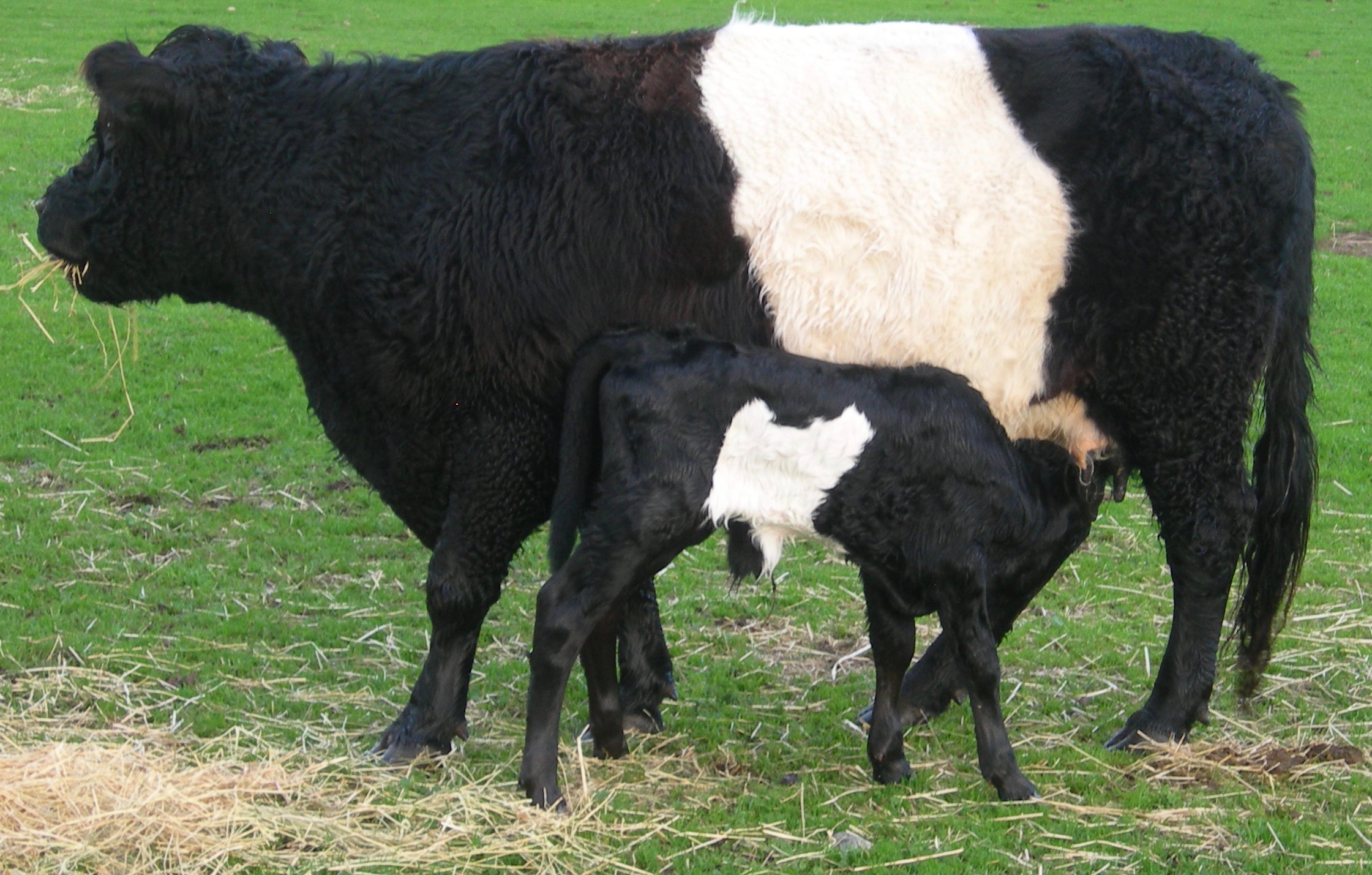
You’ve all seen milk and yoghurt ads showing perfectly clean, starkly black and white Holsteins standing knee deep in green, green grass. Erase that picture from your mind. It never happened.

Holstein calves come out of the womb clean, but from three days after birth they will never be black and white again. They are brown to the knees from the dust and dirt – and other things – that boil up when they walk. Their tails become a black club of matted cockle burs – and that other thing.

The grass in the ads looks so perfect because no creature is allowed to graze there before the ad is shot. Turn a herd of cattle out and in four days it will be matted, scarred, pockmarked with hoofprints, and covered with steaming piles of the fertilizer which completes the circle of life.

No complaints, you understand. A herd of cattle on a green meadow is beautiful, but the grass will be eaten down, and the ground itself will look like a billion angry golfers have been making divots. It will be nothing like pristine.

It all comes down, finally, to this. Cows produce three things. One is a clear, yellow, somewhat odorous liquid, which they produce in copious volumes. One is a brown to green semi-solid, and they produce mountains of this. One is the thick, white liquid that feeds the nation.

You can’t get the one you want, until you figure out how to handle the other two.

Just like life.
307. Give Me Air

I exist for open spaces. I lived a long time in a small city, but I could walk to the edge of town in five minutes. I spent four years at Michigan State, but that campus was a sylvan paradise. I only lived in a true inner city once, and it almost killed me.

It was Chicago. I know people who love Chicago – Andrew Greeley made a carreer out of loving that city – but they didn’t live where I did. 53rd street, student housing for the University of Chicago, a few blocks from the true south side. The same general area where President Obama got his start.

No, I didn’t meet him. He was in Hawaii, still in middle school, when I was at Chicago.

I never felt more at home intellectually, or more adrift in every other aspect of my life, than the year I spent there. It wasn’t just the dirt and the crowding and the nightly killings. It was that I would have to drive for hours through packed traffic to get to see open space. Without a car, I could have walked until my heart broke and never have reached the open sky.

I left after nine months with a master’s degree and a permanent case of cold chills.

When Keir Delacroix, in the novel Cyan, finds himself stranded on Earth after returning from exploring that virgin planet, I knew how he felt, and I knew where I had to put him. Chicago.

* * * * * * * * * *

The sky was slate gray to match Keir’s mood.    

Snow had been trickling down from ruptures in the sooty sky since noon, and now the dark of evening was upon him. He squatted against the bole of a smog blasted tree, staring at the house where he had been born. It was a half century older now than it had been then, although Keir was only thirty-nine. Even then, it had been old; a two story cottage subdivided to hold a dozen apartments. Now it had endured fifty more years of smog, fifty new layers of winter soot from a thousand chimneys, and half century more of the assault of air borne chemicals from the steel plants.

The orbital factories around L-5 were supposed to have removed the stigma of pollution, but even they were unable to cope with the needs of an Earth groaning under the weight of twenty billion people.

Someone came out the front door. Like Keir, he was bundled against the cold and he kept his right hand in the pocket of his coat. He looked around uneasily, saw no one but Keir, and advanced across the lawn. The grass was dead and brown, withdrawn from the sidewalk near the street to leave a barrier of frozen mud.

Keir drew a deep lungful of cannabis and threw the drag away.

The man was lean to the point of emaciation. His eyes were sunken in deep hollows. Keir nodded a greeting, but he only responded, “What do you want?”

“Nothing,” Keir answered. “Not a damned thing in this world!”

It was not the answer the stranger had looked for, but Keir let it hang between them for a moment before he went on, “I was born in that house – grew up there. In the little apartment to the left at the head of the stairs.”

“Who are you?”

“Keir Delacroix.”

The man knew him; it was written on his face. “What do you want with us?” he demanded. His voice was as tight as his face, all hard edges and deep hollows.

Keir sighed and shook his head. “Like I said; nothing. I don’t even know you.”

“I think you had better move along.” The stranger gestured with the hand in his pocket, and Keir finally decided that he did not have a gun. It was a foolish and dangerous bluff. Keir rose stiffly and threw back his shoulders to ease the strain of sitting too long in one position. The man stepped sharply backward toward safety.

Keir only shook his head and turned away.

303. Local Color


dscn4367I first saw California in 1969
,
on my honeymoon. A year later, my wife and I moved here temporarily while I waited to go into the Navy. Then came four years in southern California, stationed at the naval hospital inside Pendleton. Then a year in Chicago for a Masters degree, then back to the central valley.

It took me twenty years to get used to the climate and to feel truly at home.

I became a writer, more or less full time, then eventually, a teacher. I never stopped writing, and about ten years into my day job – which I had for twenty-seven years – I wrote a novel based on my teaching experiences called Symphony in a Minor Key. I presented the Christmas chapter in December of 2015.

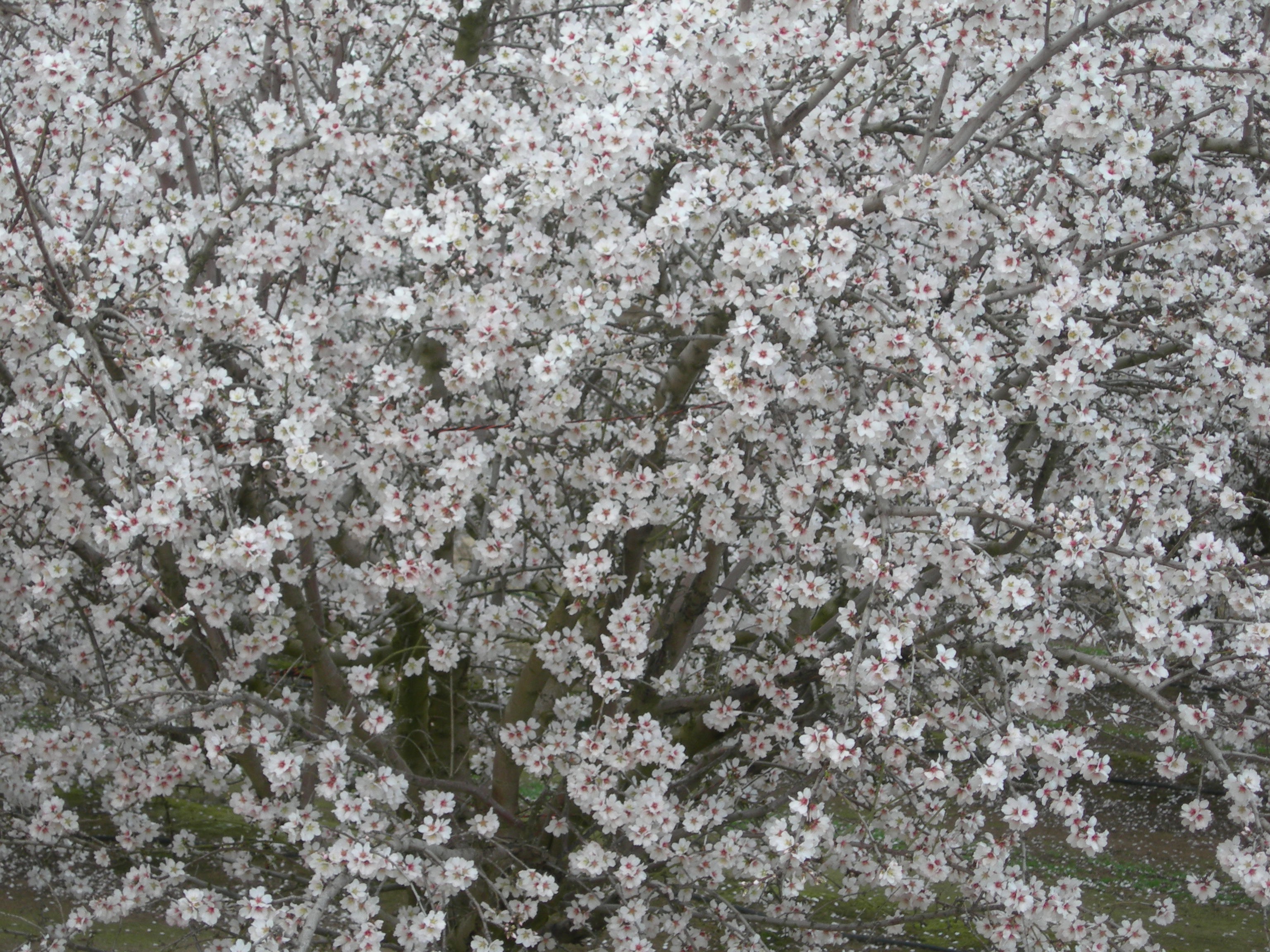
Driving around yesterday I saw the first almond blossoms of the year, and it reminded me of that novel. Within a week, the entire central valley of California will be alive with blossoms, California’s brief efflorescence of spring before the long, harsh days of summer. We have seasons, they’re just skewed early.

Here is a brief almond blossom excerpt.

**********

For the next two days, Neil’s afternoon class moved as smoothly as a well oiled bearing. It was amazing what the absence of one child could do.  When Saturday rolled around, Carmen took Neil for a ride without giving him a hint of their destination.  She had packed a picnic basket, and she set a course that circled northward across the river, then eastward toward Riverbank.

It was February eleventh.  In the midwest, there was a foot of new snow on the ground, but spring had come to California.  Almost overnight, the almond orchards had come to full blossom.  Everywhere Carmen took him, the trees were covered with pure white flowers, and already the wind was shaking the first of them free to cover the ground like a fragrant snowfall.

They stopped half a mile up a dirt orchard road.  Carmen spread a blanket under the trees, in a patch of sunlight.  It was just too chilly to be quite comfortable, so after they ate they put the food away and wrapped the blanket around them as they waited out the day, encircled by ten thousand acres of flowers.

302. The Drought Has Broken

dscn4470What is weather to a writer? If you live in the city, it might invoke a passing mood,. Beyond the city, where I live, it is everything.

I grew up on a farm, living in the glorious outdoors sixteen hours a day for half the year, and the other half freezing my #%*# off six hours a day milking cows. Weather was everything. Through the middle of my life, when I lived in cities, weather was mildly interesting. Now I live on three acres in the Sierra foothills, and weather is back with a vengeance.

I posted a picture at the top. This is an fold in the hills which is dry ninety percent of the year, and recently has been dry all year for half a decade. This is what it looks like now.

The drought has broken. Grass is green and knee deep in my yard. Yesterday was Valentines Day or, as my wife and I call it, the first day of spring.

That began as a joke. When we first came to where we live now, I bought her a tomato plant and we planted it together on Valentines Day, with high hopes and no expectations. A few months later we were eating tomatoes from it.

It doesn’t always work that way. In another year, a hard freeze on April 15th killed everything in the garden. Taxes and a hard freeze on the same day — it seemed appropriate. Life is like that in the real world. Sometimes you get the bear; sometimes the bear gets you.

If all this talk of green grass in February is making you jealous, take heart. By May, the rains will stop and they won’t return until winter. When you are having a picnic in June, on green grass under the trees, with cool breezes, here in the foothills it will be a hundred degrees with dry brown hills in every direction. The rattlesnakes will be carrying their canteens again.

But for now, the drought has broken. The grass is green, the weather is clement, and the lakes are full. And my novel Cyan is due out this summer, after the long dry spell since Jandrax and A Fond Farewell to Dying.

The drought has broken. Finally.

********

I have to offer a PS to my metaphorical connection of our breaking drought and the end of my publishing dry spell. Three days after I wrote this post for today’s release, the Oroville dam about two hundred miles north of here, hit the national news for excessive water and a failing spillway. Be careful what you ask for.

293. The Last Man on the Moon

600px-nasa_apollo_17_lunar_roving_vehicleOn one side is cynicism.

On the other, political correctness, a stiff upper lip, wearing your game face, or whatever is the most current version of refusing to acknowledge defeat or failure even while it is kicking your ass.

Somewhere in between is the truth.

I’ve been reading astronaut biographies for the last decade. You don’t really understand the American space program that made my youth so exciting until you have seen the same events through many different – sometimes sharply disagreeing – viewpoints. All of the biographies have been in that truthful middle ground, but some suffered from too much emotional distance and some from too much optimism. They all share bitterness at some contractors whose spacecraft were substandard, and ultimately deadly.

Of all these biographies, two stand out, Grissom’s Gemini (see 87. Gemini) and Cernan’s The Last Man on the Moon. I have long planned a post on Cernan’s book, but the timing of his death caught me tangled up in other matters and delayed it these last two weeks.

Cernan flew on Gemini 9, Apollo 10, and Apollo 17. He flew within 10 miles of the lunar surface, without landing on May 22, 1969. He landed the Apollo 17 craft three and a half years later, on December 11, 1972. When he stepped back aboard for the final time, he became the last man to walk on the moon, making the title of his memoir inevitable.

Unlike Glenn, Shepard, and Armstrong, Cernan didn’t become a household name, but he should have.

Cernan’s first flight was Gemini 9. Their first task was rendezvous and docking, which had been a pain in NASA’s side. Gemini 6 had been scrubbed when it docking target failed, and had flown later, using Gemini 7 as a rendezvous target, but without docking. Then Gemini 8 achieved rendezvous and docking with a subsequent Agena, only to be nearly torn apart by a thruster failure in the Gemini. Only Neil Armstrong’s skill saved the day.

When Cernan and Stafford on Gemini 9 rendezvoused with their Agena target vehicle they found that the shroud covering the docking target had only partially retracted. Docking was once again impossible. They succeeded in making three separate rendezvouses then set out to perform an ambitious EVA, or, as Cernan titled chapter 13 of his book, “The Spacewalk From Hell”.

I’ll save that story for later, when I give a full post of the trials of early spacewalks.

Three years later Stafford and Cernan were together again, along with John Young, on Apollo 10. When I taught the space program to eighth graders, I called this the most frustrating mission in the history of exploration. Leaving Young in the Command Module, Stafford and Cernan took their Lunar Lander down to about ten miles above the moon’s surface, did not land, and returned to lunar orbit to rendezvous with Young and return to Earth. Aside from de Sade level cruelty, it all seems so pointless from our perspective.

Of course, it was neither cruel nor pointless. It was necessary to calibrate the instruments which would calculate the vectors necessary to land accurately. It would be impossible to overemphasize how crude instruments were in 1969. Even with the help of Apollo 10, Apollo 11 did not land exactly where it was supposed to and nearly crashed in a rubble field.

By one number Stafford and Cernan missed being first on the moon. Stafford did not fly another mission until the Apollo-Soyusz mission of 1975. Cernan became commander of Apollo 17 which, because of funding cuts, became the last Apollo flight to land on the moon.

Back in Indiana, Purdue University holds bragging rights to having produced the first (Armstrong) and last (Cernan) astronauts to land on the moon.

268. Rick Brant Bibliography

Here is the list of the Rick Brant books I promised in last Thursday’s post. Numbers 1 through 18 were published by Grosset and Dunlap and widely distributed. They are hiding in thousands of dusty attics and can frequently be found in the children’s sections of used book stores, and used onlline through Amazon.

I have never seen books 19 through 24. although I’ve looked for them everywhere. According to Series Books numbers 19 through 23 were also published by G & D; I don’t dispute this, but clearly they were not well distributed. Also according to Series Books, number 24 was published by Manuscript Press. I have little to say about the last six books since I have not read them.

The list below is coded. KS (Kindle, single) means that the book is available for individual download to Kindle through Amazon. U (used) means the book is available used at reasonable prices, if you shop around or order through used bookstores carried by Amazon. $ (Egads!) means it is available used in the same way, but at ridiculous prices. I’ll buy these last six myself when I win the lottery.

GK (Gutenberg/Kindle) indicates an interesting phenomenon. These appear to be public domain works, and were made available for free through Project Gutenberg. Click to go to the Browse By Author:G page, then scroll down to Goodwin, Harold L.

I downloaded one novel into iBooks using EPUB format with images, and another into my desktop Kindle app using Kindle format with images. Both seem equally good. This was just a test for your sake; I still have treasured copies from my youth. While you are at Gutenberg, do yourself a favor and download the non-series SF novel Rip Foster —, under either variant title.

These Gutenberg books are also available from Amazon in the form of The Rick Brant Science-Adventure Series (Halcyon Classics). This Kindle download is a compendium of the eleven books available from Gutenberg. I had no reason to download it, but I have bought compendiums before and find them harder to navigate that individual titles. It’s your call.

KS  1.  The Rocket’s Shadow, 1947
KS  2.  The Lost City, 1947
KS  3.  Sea Gold, 1947
U    4.  100 Fathoms Under, 1947
U    5.  The Whispering Box Mystery, 1948
   6.  The Phantom Shark, 1949
GK  7.  Smugglers’ Reef, 1950
GK  8.  The Caves of Fear, 1951
U    9.   Stairway to Danger, 1952
GK 10. The Golden Skull, 1954
GK 11. The Wailing Octopus, 1956
GK 12. The Electronic Mind Reader, 1957
GK 13. The Scarlet Lake Mystery, 1958
GK 14. The Pirates of Shan, 1958
GK 15. The Blue Ghost Mystery, 1960
GK 16. The Egyptian Cat Mystery, 1961
GK 17. The Flaming Mountain, 1962
GK 18. The Flying Stingaree, 1963
$    19. The Ruby Ray Mystery, 1964
$    20. Veiled Raiders, 1965
$    21. Rocket Jumper, 1966
$    22. The Deadly Dutchman, 1967
$    23. Danger Below!, 1968
$    24. The Magic Talisman, 1990

I had considered doing a mini-review of each of the first 18, but I found a site that already has good mini-reviews of all 24. Go to http://tomswiftfanfiction.thehudsons.com/TS-Yahoo/author-TH-RickBrant.html . I’ve read these reviews and the eighteen I am familiar with are accurate, so I would trust the rest. This site also offers paperback (print on demand) versions of 19 – 24, but I can’t vouch for their legality regarding copyright issues.

*            *            *

I have been in contact with the people at Gutenberg. Most of that institution’s work is done by volunteers, including volunteer proofreaders. I would like to do that job myself, but only on a work I already love. Proofreading a novel is not like reading a novel. The experience is both long lasting and intense.

Gutenberg’s copyright research is also by volunteers, so the person I contacted could not tell me if more of the novels were copyright free, and therefore available to be proofread for release by Gutenberg. There are ways of finding out, and I am pursuing them. If anything comes of this, I’ll keep you updated.

267. Books Under the Christmas Tree

DSCN3974This is a slight reworking of post 60. Thank You, Harold Goodwin

I have a December birthday, which worked out well as a kid since books were my favorite gifts, and winter is a prime time for reading. The books I got were locally sourced and cheap, mostly published by Grosset and Dunlap, Whitman, or Golden. For anything by a normal publisher, I depended on libraries.

Nobody, not even Heinlein, wrote better juveniles than Harold Goodwin, although the comparison is apples to oranges. Heinlein’s juveniles were set in space and used future science reasonably extrapolated from the present. Goodwin’s stories, with one exception, were set in the present and built on extant science.

If you’ve never heard of Goodwin, its largely because he worked under the pseudonyms Blake Savage and John Blaine. If he gets no respect, it’s largely because he was published by Grosset and Dunlap. That meant Goodwin’s Rick Brant books shared bookstore space with Tom Swift, Jr and the Hardy Boys – series that were written to outline by anonymous authors.

I read all three G & D lines as a kid. They taught me to read and to love reading. But when I try to reread Hardy Boys books today, they come off dull and dumb. Tom Swift, Jr. – well, I can’t force myself through them.

Rick Brant holds up. A few years ago I reread the whole series from start to finish and they were as good as I remembered them. The same was true of Goodwin’s single outer space adventure, sometimes titled Rip Foster Rides the Gray Planet and sometimes Assignment in Space with Rip Foster. You won’t find Rip in a used bookstore, although he shows up occasionally in antique stores, right next to the BB guns and old, rusted roller skates. (See Monday’s post for a source.)

Rick Brant lived the perfect life. I would have traded with him in a heartbeat. He had adventures, twenty-six eventually, which he shared with Scotty (Don Scott) who was the ideal older brother figure. They appeared to be seventeen and eighteen in the first book and were still the same age forty-three years later. That’s good work if you can get it.

Rick lived with his family on Spindrift Island where his father was the head of a diverse group of scientists. Each had a different specialty, allowing for a wide range of stories, and they formed a dozen of the best uncle figures any boy could imagine.

Rick was bright and a bit precocious, but he wasn’t a wunderkind. Elsewhere he might have seemed nerdy, but on Spindrift he simply seemed a bright young scientist among brilliant experienced older scientists. He was always learning. He often saved the day, but he never had to save the world. In short, he seemed real.

The same timeliness that made the Rick Brant series perfect for its time makes it seem a bit dated today. A kid with a smart phone is not likely to be impressed when Rick invents a miniature walkie talkie, and that’s too bad. However, if you have a kid with an e-reader, and you can’t keep him supplied with enough good books, Rick Brant is available on the internet. For fifteen minutes of your time and no dollars, you can send him to Spindrift. The experience might surprise both of you.

Or maybe you remember reading one or two of these books yourself and want to indulge in a little nostalgia. Christmas is a good time for that. I’ll give you the details tomorrow.

264. Last Christmas

DSCN1839Welcome to my favorite season.

Last Christmas, this blog was only a few months old, but I still enjoyed writing Christmas themed posts. I would have enjoyed it more if I had thought anyone was listening.

I could recycle, but that seems like cheating, and besides, I have new things to say. How about a compromise? Here are tags which will take you to six of last year’s posts, then tomorrow we will move on into the future.

DSCN3975

*

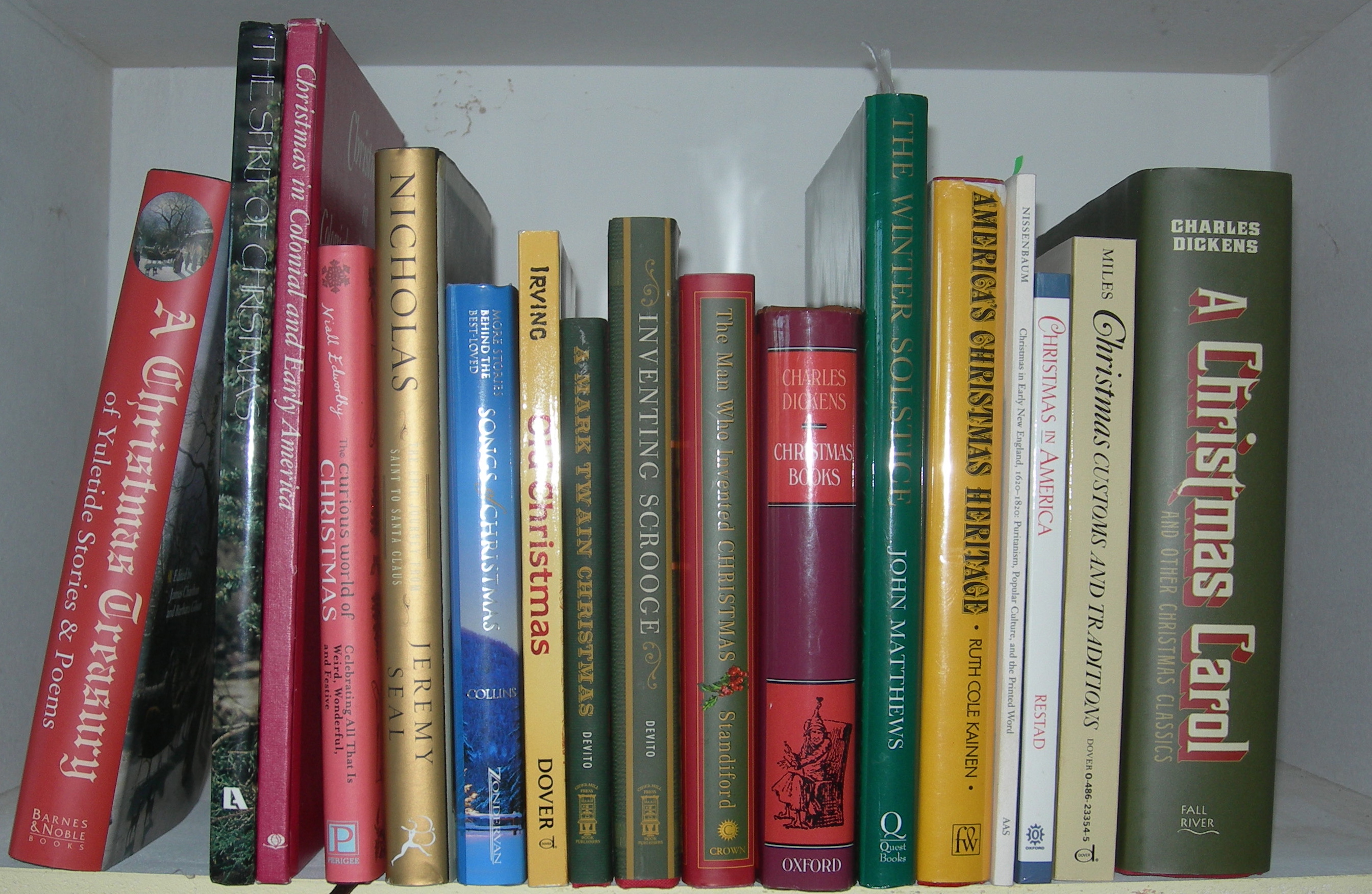
62. A Christmas Booklist – plenty of Christmas reading.

DSCN1795

*

*

*

63. ‘Twas the Season (post 1) – Christmas in Oklahoma during the fifties.  

DSCN1841

*

*

*

*

  64. ‘Twas the Season (post 2) – Christmas in Oklahoma during the fifties.

DSCN3975

*

*

*

*

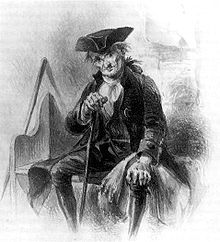
66. Five by Dickens – Dickens wrote more than A Christmas Carol.

220px-Diedrich_Knickerbocker

*

67. ‘Twas the Night . . .  – the story of The Night Before Christmas, extended  version.

Dec 25th

*

*

*

68. Nostalgia – some personal reflections on what Christmas means to me. 

259. Turkeys Under the Oak Tree


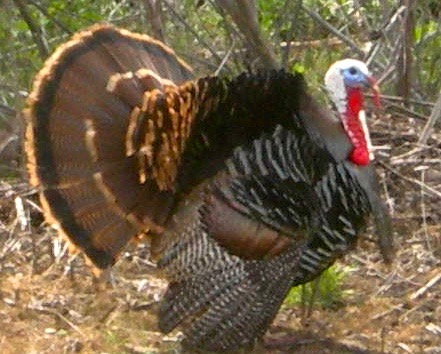
dscn0719dscn0693These birds were photographed on a spring drive through the foothills, about twenty miles from my house. The puffed up, greeting card version is what the males look like in season, when they are strutting their stuff and looking for love. The other bird is what most turkeys look like, most of the time.

You are reading this on Thanksgiving, but I am writing on September 27, about something that happened yesterday. My wife came to the door of the little building out back where I work and said, “Come here. Quietly.” There were ten wild turkeys eating bugs and acorns along the east side of the house.

We don’t get turkeys very often right up to the house, although seeing them in the neighborhood is a common occurrence. We stood for twenty minutes watching in the hundred degree heat of the tag end of summer before they casually wandered off.

Turkeys are the symbol of Thanksgiving, but I was thankful to see them because wild things fill my life with joy.

I grew up on a farm in Oklahoma in another century. I worked long hours when I was growing up, but I worked outdoors, so it might have well have been play. The music that filled my life was the churr of cicadas on summer evenings and the howl of coyotes echoing through the frosty night air in winter.

I left the farm for college, then spent my adult life in a small city, and moved to the foothills when I retired. Now my human neighbors are near enough for help in emergencies, but far enough away that I don’t hear them when they fight. I don’t even know if they fight.

Several times I have seen packs of coyotes running through my yard. Once a mother duck with nine ducklings following single file paraded through. Deer come in from time to time. They mostly prefer the low ground, and we live on a hill, but they come for water as the long days of summer dry out the last of their water holes. I keep water in bird baths for the birds, and water basins on the ground for everybody else.

The deer also have an uncanny knack of knowing when the tomatoes are ripe. Oh, well.

I see a bobcat about once a year, somewhere nearby. Twice they have come into our yard. Once I looked out the window to see a bobcat in the fenced back yard where stray cats stay out of reach of coyotes. My wife and I watched out the window as he sauntered along, unaware of us, then casually jumped the six foot fence without touching it.

We were even visited one holiday by the Christmas Pig. It was a three hundred pound porker who had obviously escaped from some farmer. I saw him several times after, so I’m maintaining hope that he was never found, and escaped becoming bacon and sausage.

So, happy Thanksgiving to you. And also to the turkeys and ducks and bobcats and raccoons and possums and the one lone pig.

In my house, Thanksgiving means turkey (from the supermarket, of course), stuffing, cranberries and pumpkin pie. Being thankful means looking out my window and never knowing what kind of critter might be looking back.

258. George Mackay Brown’s Seven Poets

Most of the people who read this blog are writers, or want to be writers. I know from visiting your websites that you range from beginner to professional, and many of your writings have impressed me.

Friends, I have something for you. I’ll give you details below, after the set-up.

I discovered George Mackay Brown in 1987 when my wife and I went to Europe for the first time. We started in England, then went to Scotland to see the land of my wife’s ancestors. Along the way, I visited bookstores to pick up reading material that I wouldn’t find at home and discovered Neil Gunn and George Mackay Brown, two Scottish authors who deeply enriched my life. Both write elegantly about their own experiences in Scotland and the Orkneys (technically part of Scotland but very different). I’m sure I’ll talk about them both from time to time in this blog, but today I just want to shill for one short piece by George Mackay Brown.

I recently had reason to flip through my George Mackay Brown collection, looking for a story I read years ago, and stumbled onto The Seven Poets, the final story in his collection The Sun’s Net. It is a post-apocalyptic story, but it is a fable, not science fiction.

    *     *

The world has reverted. After machines and cities swallowed up the earth, there was a revolution. Machines were banished. Cities were destroyed. Now there is a world wide agreement that no settlement can have more than 250 members. When a village grows beyond that, some are chosen to leave and form a new village.

(Now don’t tell me this wouldn’t work. I know it and GMB knew it. It’s a fable; a set-up to make a point about writing.)

The world is calm, serene, and boring; some men can’t abide that. They become wanderers, without a village, without a community, welcome everywhere for a brief stay, but welcome nowhere as permanent residents. Our narrator is such a man. He has wandered the whole world, through a long lifetime, staying with men of every occupation, but most usually, staying with poets.

Every village has a poet, who spends his year writing a masque for the midwinter festival. In Spain, such a poet told our narrator, “The world was created by one Word. Every poet makes, in his lifetime, a tiny fraction of one letter of that Word.” Another poet’s voice had deserted him. Another was a heretic to the new order who wrote of machines, but when his villagers performed his masque, their mocking turned the performance into a parody of his thoughts. In Siberia, a poet wrote in the inhuman language of roots and salmon and blizzards . . .

    *     *

I can’t begin to convey the depth of sensible weirdness of The Seven Poets. That would require exactly a many words as GMB took, exactly the same words, and in the same order. Prose written by poets can do that to people who try to paraphrase it. I can only say that his fable has captured beautifully the strangeness of trying to nail life to the page with words.

There doesn’t seem to be an online source for The Seven Poets, but it’s probably only fair that you’ll have to seek it out in print. I guarantee you a singular experience if you do.