Tag Archives: politics

360. Eternal Ballads

Just before noon on May 22, I was writing the posts leading up to the Golden Age panel I will be doing at Westercon. I wanted to know the name of a particular J. G. Ballard short story for the post. I remembered the story, not its name, so I pulled out my compilation of his work. It is massive, and by the time I had found the story in question (Deep End) I was approaching a state of depression. Ballard can do that. I suggest taking him in small doses; one story a week maximum.

That was when this story occurred to me. I wrote it in about an hour. Once it was finished, I realized that it might seem a very strange story — if you don’t know Ballard, and particularly Deep End.

=================

He was an old man already when they caught him. The crime, if it was a crime, and if he had done the deed, occurred so long ago that there were few witnesses left. Three, to be exact. One placed him on the scene. One testified that he had seemed to know too much about the crime, in conversation, a week after it was done. One said he saw it happen, and saw the old man, when he was a young man, and testified that they were the same person. None of the witnesses told exactly the same story two days running, but they were all old, so you could expect that.

The accused was found guilty and sentenced to ten years. It was a lenient sentence for the crime, but no one thought he would live long enough to serve it.

They placed him in a cell of the new type. For decades solitary confinement had been deemed cruel and unusual, so only the most dangerous endured it. The old man was not dangerous. He swayed when he walked and he was always short of breath.

But there were new rules now, designed to protect prisoners from each other. The old man was so clearly frail and helpless, that they applied to him. They put him in a cell, four meters by three, with a toilet and shower in an alcove, an opening that presented food three times a day, and a steel door that was closed once and forever, not to be opened for ten years, or until the old man died. This would keep him safe from the other prisoners who might have tormented him.

There was a camera at the ceiling, through which he could be observed.

Before he was incarcerated, they asked him what book he wanted with him. He would only get one. Most prisoners asked for the Bible. A few asked for the Koran. Buddhists never asked, as they carried their god within themselves.

The old man was not religious, but he loved the sound of human voices. It was the thing he anticipated missing the most, so he said, “Ballads,” thinking he could sing them and ease the eternal silence of the cell.

They gave him his book, pushed him through the doorway, and the last human sound he heard was the clanging of the door, and the oiled sliding of the lock. He sat on the bed. It was made of plastic, semi-soft, vastly durable, designed to outlast him. He was naked because once a prisoner had stuffed his mouth and nostrils with torn clothing, and slipped his hands into pre-tied manacles of denim, and had escaped into death.

After an hour of silence, eyes downcast to avoid the gray walls, the old man took up his book, but they must have misunderstood him. It was the complete short stories of J. G. Ballard. The old man had never heard of Ballard. With a sigh, he opened to the first page and read, “I first met Jane Ciraclides during the recess . . .”

#              #              #

When the proctors came to let him out at the end of ten years, they went first to the observation station. There were one hundred screens on the wall, ten rows of ten, all tied to the cameras in the cells for which this observer was responsible. The observer quickly darkened all but one screen, as protocol demanded. He had spent thirty hours a week in this room for eighteen years, viewing a hundred prisoners who could not look back. His outlook had become narrow, but his body had grown large.

The proctors were hardened to viewing the results of solitude, but even they were startled by the old man’s appearance. His head was shaggy in parts, bare and raw in other parts where he had torn out his hair by the handful. His body was a skeleton wrapped in wrinkled skin. The walls of his cell were covered with graffiti made with excrement. It must had smelled terrible.

Following protocol, they watched him for two hours, waiting for the moment his sentence would be up. He lay most of the first hour, foetal on the bed. Then he staggered up. There was no sound from the room, except the sliding of bare feet on concrete. The old man had uttered his last curse eight years before, and every day since then had been wordless. But not utterly without sound.

Now he approached the book, and opened it. He let pages flutter past, until he found a starting place, and then he read. After a moment, there was a faint groaning. After five minutes, that gave way to an ululation on two notes that grew in volume as his body began to shake. Eventually he leaped up and hurled himself against a wall, beating it with his fists until blood flowed, and sinking to the ground in whimpers.

The observer remained unmoved, sitting in his place like a fat Buddha who no longer saw the world’s pain. He leaned forward and rotated the camera, and said, “I thought so. Deep End. That always upsets him the most.”

One of the proctors said, “How can he have survived like this?”

The observed replied, “Everybody lives forever in Hell.”

355. Quotations

As I was listening to Trump’s address to the Coast Guard graduates, and his overnight tweets, I was reminded of another voice from years ago. Let me offer all three, side by side.

No politician in history, and I say this with great surety, has been treated worse or more unfairly.
          Trump speaking to Coast Guard graduates.

and also . . .

This is the single greatest witch hunt of a politician in American History.
          Trump tweet.

Setting aside the sound of Andrew Johnson rolling in his grave, let’s hear Robert Heinlein talking about one of his characters:

He had to be the bride at every wedding and the corpse at every funeral.

Yep. That sounds about right.

352. A Modern Maverick

The old TV show Maverick has been on local channels lately. It was one of my favorite programs when I was twelve years old, but I’ve pretty much outgrown it. I don’t watch the reruns, but they started me thinking about an American archetype — the lovable con man.

There are a lot of them in literature, and a lot more moving among us in our everyday lives. You know him, weird Uncle Bob who always has a beer in his hand but never buys drinks. Or Uncle Jim who thinks it is wonderful that you are planting trees in your mother’s yard, and drives home to get his favorite shovel, but never comes back.

What all these slick dealers have in common is that they are funny, charming, and it is almost impossible to stay mad at them. They’ll steal your beer, or steal your heart, or steal your money, and leave you laughing at how easy you were to take.

In the movie version of Maverick, he says, “There is no more deeply moving religious experience, than cheating on a cheater.” Cute, but in point of fact, Bret and Bart and Beau cheated everybody. It doesn’t matter though, because they were charming.

There were others before Maverick. Starbuck, in The Rain Maker, teaches Lizzie that she is beautiful, but she marries her home town swain. Good thing. If she had run off with Starbuck, it would not have ended well.

Harold Hill, in The Music Man, made a career of separating suckers from their money. He was charming and slick and thinks faster than the locals. When he falls in love with the librarian, it changes his attitude. She reforms him. Okay, fine, but for me that doesn’t saves the movie; the line that saves the movie is when he tells Winthrop, “I always think there’s a band.”

See, he didn’t mean it. He thinks he’s giving something back. He’s a good Joe at heart.

If a con man believes his own lies, does that make us forgive him? In the movies it frequently does. But what if a real Marian the librarian married a real Harold Hill. We would probably find her later with eight kids, hungry and living on skid row, after Harold Hill moved on. I like the movie version better.

Does our charming American con man believe his own lies? Does he even know himself where the truth is? Does it matter to him? Does it matter to us?

If he is slick enough, and fast enough, and plausible enough — if he can tell one lie to cover another until we get lost in the shell game — there is no limit to how far he can go.

He could even become President.

347. Prenatal Algebra

I wrote a post some time ago on the subject of No Child Left Behind, without saying one good thing about the program. I know almost nothing about Common Core, since it came on the scene just as I was leaving. When I retired, I retired. I enjoyed my days of teaching, but twenty-seven years was enough.

Without reference to the latest nonsense, I can say as a general and probably universal rule that a lot of BS floats down onto teachers from above. And from whom?

Everyone knows the saying, “Those who can, do, and those who can’t, teach.” Like most sayings, it isn’t always true, but sometimes it feels true. There is another saying that only teachers know. “Those who can, do, those who can’t, teach, and those who can’t teach, teach teachers.” Again, not universally true, but I have known some Professors of Education who fit the aphorism with sad precision. And I’ve seen a lot of self-appointed experts who make the circuit of schools, giving training programs they devised themselves, who could spin out reams of self-evident drivel as if they were conveying the word of God.

It makes you wonder. Could it be that they weren’t fitted by their education to work outside of the schools, but they would do anything to get away from kids? I don’t know. I never knew any of them personally. I can tell you that of the hundred or so trainers I endured while teaching, only one or two had anything worthwhile to say.

I can also tell you that there should be a banner on the State Board of Education building that reads, “If it doesn’t work, do more of it.” They double down on every bad idea.

________________

The French scholar Jean Piaget, studying children back in the 1930s, discovered that there are stages of readiness for learning. If you try to teach a skill before the readiness is there, it won’t take. I can’t say that is a shocking conclusion. What is shocking is that eighty years later the educational establishment is pretending that it isn’t true.

Everyone can learn. Okay, that’s probably true, but an administrator who says it, means this: Everyone can learn everything. And that’s a lie.

Worse, in their actions, in the textbooks they approve and the tests they give, they are really saying: Everyone can learn everything, and all at the same age, on the schedule we set. And that’s just bullshit.

In California about the time I retired, students in eighth grade had to take algebra, whether they were ready or not, whether they could pass or not — whether they would ever be ready or not. But as soon as they were in ninth grade, and presumably a year more advanced, they could opt out of algebra and take something easier.

Read that three times and it still won’t make sense.

The general rule is this: the state assigns a skill to a certain grade. Some kids get it, some don’t. Does the state let the latter group try when they’re older and more mentally developed? No. They say the students lacked readiness, but they don’t mean readiness in the way Piaget meant it. The state thinks readiness can be taught, so teachers have to try.

If students can’t understand algebra in eighth grade, the schools could teach it to those who are ready, and teach another year of more basic math to the others. Fat chance. Instead the state requires pre-algebra of seventh graders so they will be ready for algebra in eighth. And when that doesn’t work? Let’s try pre-pre-algebra in sixth grade? Where will it end — with expectant mothers sleeping with opened algebra books on their baby bumps?

Read that three times. No, read it 4(2N+3) where N=9 times. It still won’t make sense.

Like it says in the title, get ready for prenatal algebra.

________________

All right, if any of you are young and want to change the world by becoming teachers, more power to you. You are needed.

But first, buy yourself a big pair of hip boots. It’s a swamp out there.

343. Black Shuttles

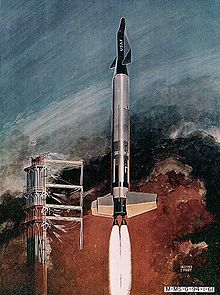
Atlantis, first launch, DOD mission.

Regular readers will notice that these posts are coming later in the day.

During the planning stage of the Space Shuttle, some changes were called for by the National Reconnaissance Office. That is an organization which, at that time, was not acknowledged to exist, but which is the home of sophisticated space hardware and a big budget. Specifically, NRO wanted the cargo bay on the shuttles to be bigger, presumably to accommodate their oversized spy satellites. They got their way, and the money they provided helped keep the struggling shuttle program afloat during the hard early days.

We’ve been looking at the Air Force in space this week and NRO isn’t the Air Force — quite. However, the head of NRO has traditionally been an undersecretary or Assistant Secretary of the Air Force. So, close enough.

It would not be unreasonable to think of the Air Force as an organization run by pilots and ex-pilots. MISS was a program designed to put men into space; so were the Dyna-soar and the MOL. But none of them ever succeeded in putting Air Force astronauts into space.

During this period of public failure, there were secret successes in the form of more and more military satellites. One of the earliest class of mission was reconnaissance, and the Air Force/NRO success with unmanned satellites was the primary reason MOL was abandoned. Through the sixties and into the seventies, these satellites used sophisticated film cameras, and their findings came back to earth via film canisters dropped from satellites and snagged out of the air by military aircraft. After digital imaging came to maturity, that was no longer necessary.

Sidebar.      Just how successful those satellites were, and how rich the NRO is, became embarrassingly obvious in 2012. The NRO gave NASA two Hubble-quality space telescopes that they had ordered, but weren’t using. One of these is slated to become the Wide Field Infrared Survey Telescope, due for launch in 2024.

At the same time that the Air Force, through NRO, arranged to have the shuttle’s cargo bay expanded, it began to build a shuttle launching facility at Vandenberg Air Base in California. To understand what this means requires knowledge that every space nerd had in the sixties, but which is never talked about these days.

Why do we launch space missions from Florida? Because it is the only place in the US which is both far south and on the eastern seaboard. Rockets are typically launched as close the the equator as practical so that the rotation of the Earth is added to the rocket’s speed — something vitally important when crude, early craft were being launched. They are launched from the eastern seaboard to provide thousands of miles of open ocean for first stages — or fiery, falling failures — to land in.

Vandenberg is situated on the western edge of the nation, ideally located for launching rockets north or south into polar orbit — that orange-peel path spy satellites need. Advanced Titans and Atlases launch from there as needed, without fanfare. But not with complete secrecy. It is a California cliché for a UFO scare to be debunked as “just another night launch from Vandenberg”.

The Johnson Space Center is in Huston because Texan LBJ was President when it was built. Orbital physics had nothing to do with it.

No shuttle was ever launched from Vandenberg. Shortly after the second classified Department of Defense shuttle mission, the Challenger was lost. Important secret launches were delayed by the hearings that followed.

The relationship between NASA and the Air Force had never been a happy one, and the Air Force shifted as quickly as possible back to its own resources. They used the shuttle to take up satellites too large to be launched by other means, and otherwise returned to using their own missiles, typically out of Vandenberg.

The Luke Skywalker picture of Air Force pilots in their space fighters has never come about. The closest to that idea is the robot X-37b, which we will look at in some future post.

——————————

The Smithsonian Air & Space magazine carried an article in 2009 on the eleven black shuttle missions. Since most details are still classified, the article is frustrating, but will provide about as much as you will find anywhere outside of alien-influence websites.

342. Dyna-soar

Regular readers will notice that posts are now coming later in the day.

MISS, Man in Space Soonest, was a USAF project to put a man into a capsule and boost him into space on top of a converted ICBM. It was cancelled, resurrected, and passed on to the new organization NASA, where it became Project Mercury.

Times were tense. The Soviets had launched a satellite into orbit in 1957, beating America into space by a few months. They added to the humiliation by beating the US again in 1961, this time with a man in space. Worse than either accomplishment, was they booster that was used. It was far more powerful than anything America had in service, or in development. A booster that powerful presented all kinds of doomsday scenarios.

Eisenhower had plenty of problems at the time. He was using U-2 spy planes to illegally overfly the Soviet Union, and recognized that it was only a matter of time before that blew up in his face — which it did in 1960 when one of the U-2s was shot down while spying. MISS being transferred to NASA made it a civilian project, and less objectionable. The same logic led the Navy originated Project Vanguard to be passed on to NASA, and also to the use of underpowered rockets to launch it because they were not military hardware.

Sputnik and the Soviet manned missions were on top of a military booster, rendering that concern moot.

NASA went on to success in manned space flight, but in the fifties and early sixties, that was not a foregone conclusion. The Air Force moved on to the Dyna-soar.

Project Dyna-soar (from the phrase dynamic soaring) had begun in 1957, when it was to be the next step after MISS. It was based on the theories of Eugen Sänger, who had a suborbital bomber on the drawing board for the Germans during WWII.

The basic idea was to send a winged vehicle above the atmosphere on top of a rocket, whether in a sub-orbital flight or returning from orbital flight. That craft would skip repeatedly off the upper atmosphere on returning, dissipating the heat of reentry, and ultimately land as a glider.

This sounds a lot like the Space Shuttle, but there are two main differences. STS was designed as a single stage to orbit vehicle, and it dissipated heat by shock waves while being protected by insulated tiles, much like the Mercury through Apollo missions had used shock waves off ablative heat shields. Dyna-soar was designed to ride into orbit on top of a military rocket and to lose its heat by skipping — that is, by dipping into the atmosphere, then bouncing back into space to radiate away the heat it had built up, followed by repeat, repeat, repeat, until cool enough to finally land as a glider.

That would make for a long, hard, bumpy ride. If you are simply thinking of reentry, it would be a unnecessarily tough way to go. To understand why the skip-glide method was so inviting, you have to project yourself back to dawn of the 1960s when rockets were small and space exploration was new. With skip-glide, a relatively small and not particularly powerful rocket could send the Dyna-soar anywhere on Earth.

When Alan Shepard made his sub-orbital flight, he traveled 116 miles above the Earth but landed only about 300 miles downrange. With that initial altitude, Dyna-soar could probably have circled the Earth before landing.

Dyna-soar was developed as a reconnaissance and bombing vehicle. It was, after all, an Air Force project.

Had it gone to completion, the Dyna-soar (also called the X-20 later in its development) would have been the most sophisticated space craft of its era. Unfortunately, money was scarce, and while in orbit, the Gemini could do anything the Dyna-soar could do.

Gemini was a monumentally successful project (see Gemini) that sucked up all of America’s attention. In December of 1963, the Dyna-soar project was cancelled.

Again, the Air Force had lost out to its civilian counterpart. It didn’t give up. The next time around, the Air Force co-opted the Gemini. That third chapter in the Air Force’s bid for space was told here last November as The Space Station That Never Was. We’ll cover the rest of the story – so far –  tomorrow.

330. Dred Scott Rides Again

The issue at hand is constitutionality v. right and wrong.

My respect for the constitution is profound, but terrible things have been done in the name of constitutionality. Some of them are being done right now. (see yesterday’s post)

There is no question of the constitutionality of the move to deport undocumented immigrants, but a great deal of question as to its wisdom and its morality. Trump’s motives are unknowable and irrelevant. It doesn’t matter if he thinks he is saving America from an enemy within, or if he just jumped on an issue to provide a path the white house. The real question is — should it happen.

History has lessons for us on this issue. The constitution allowed Chinese immigrants to be deemed unfit for citizenship. The same was true of Japanese immigrants. Chinese were, eventually and quite constitutionally, denied entry into the US altogether simply for being Chinese. (see 306. White Men Only)

Andrew Jackson used his constitutional powers to make treaties in his removal of the southern Indian tribes. He also used trickery and deceit, but that is politics. American Indians living a settled life in agricultural villages, whose ancestors had been in America since before Columbus was a gleam in his father’s eye, were led by trickery and force to sign away their lands and were removed from the United States by military force, all quite constitutionally through the Indian Removal Act of 1930. (see 247. The People’s President)

Let’s turn the calendar forward from Indian removal to 1857. This was the era of the Missouri Compromise, which allowed new northern states to enter the union as non-slave states, while new southern states entered the union as slave states.

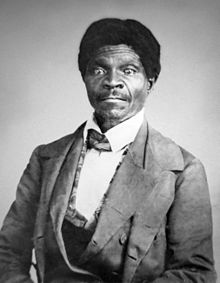
Dred Scott was born a slave in Virginia. His owner took him to Illinois and later to what is now Minnesota. Later, he was returned to Missouri where he eventually sued for his freedom based on his long residence in free states. The litigations passed through multiple trials, which Scott sometimes won and sometimes lost, and finally made it to the U. S. Supreme Court as Dred Scott v. Sandford.

Scott lost. Chief Justice Taney stated that any person descended from Africans, whether slave or free, is not a citizen of the United States, according to the constitution. He further stated that the government could not confer either freedom or citizenship to non-whites, and the Missouri compromise could not exclude slavery from the northern territories.

All this in the name of the constitution. It brought anger, the election of Lincoln, and the civil war.

At the end of the Civil War, the 14th amendment stated that “all persons born or naturalized in the Unites States .  . . are citizens.”  That did nothing to help the Chinese and later Japanese who came to this country, but could not be naturalized because they weren’t white. (again, see 306. White Men Only)

And it does nothing for the Mexican-Americans who came to America illegally because the laws made it impossible to come in legally. If you read yesterday’s post, and if you followed the link and actually looked at the Permanent Residence application form, you know this to be true. If we native born Americans were required to positively answer all the questions on that form, three-quarters of us would have to leave the country.

I respect the Constitution, but I don’t respect those who misuse it. Trickery and deceit gave Andrew Jackson his way, but this is not 1830, and it should not happen again.

329. Green Card Blues

Just before Christmas, I wrote a post from the viewpoint of a little Mexican girl, born in the US, whose parents were about to be deported. I received a comment suggesting that the problem was caused by Mexicans breaking the law. I posted that comment because everyone has a right to his opinion.

Why don’t Mexican immigrants just follow the law? I’m no expert, so I did a bit of research. Here is what it says on the Homeland Security website.

Because more people want a green card than there are visas available, not everyone who wants a green card can get one immediately. Therefore, some people have to wait in line until a visa is available. The U.S. Department of State (DOS) gives out 140,000 employment-based visas each year. . . . Currently, about 234,000 people have employment-based adjustment of status (green card) applications pending in the United States and are waiting to get a visa.

And from the site of the North American Immigration Law Group

Each application must also be supported by evidence that the alien will not become a public charge.

That suggests the applicant has to already have an employee, or has to be rich.

According to information scattered through half a dozen websites, the wait for a visa can easily take up to nine months. I can’t credit this to an official source, so call it a strong rumor.

Okay, let’s say you have a visa? That gets you over the border, but to stay, you have to apply for permanent residence. So what does that application look like? Here are some excerpts; you can download a PDF if you want to look at the whole thing.

List your present and past membership in or affiliation with every organization, association, fund, foundation, party, club, society, or similar group in the United States or in other places since your 16th birthday. Include any military service in this part. If none, write “None.” Include the name of each organization, location, nature, and dates of membership. If additional space is needed, attach a separate sheet of paper.

Have you received public assistance in the United States from any source, including the U.S. Government or any State, county, city, or municipality (other than emergency medical treatment), or are you likely to receive public assistance in the future?

Have you EVER been a member of, or in any way affiliated with, the Communist Party or any other totalitarian party?

Have you EVER received any type of military, paramilitary, or weapons training? 

These are a few of the most egregious questions found in five tightly packed pages of questions. It looks a bit like an IRS tax form on steroids.

If you were a Mexican doctor or businessman facing this document, you would set down for a hour with your lawyer and all would be well. But what if you were an uneducated, non-English-speaking farm worker?

Trump wants to build a wall. There is already a wall, built of paper, keeping poor and uneducated Mexicans from legally entering the US, and sending them across the border illegally to find work to feed their families.

This post is only a first look at a process full of complications and permutations. I’ve followed the paper trail as far as I care to. Knowing the full story of any government program would take a lifetime, and I have other things to do. But I have one more question to ask:

Is the system set up this way to turn Mexican laborers into virtual slaves, afraid to speak up from fear of the INS? No one can answer with certainty. But we can suspect, and I do.

327. The Lone Hero

bks275-1

                         A note before we start  ——

     Yesterday, someone searched on the sub-title of this blog (be not ashamed . . .) but my software doesn’t tell me who. For your information, unknown and curious person, I explained my relationship to this poem on the last day of 2015, and included a copy of the poem the same day.

     And now to our regularly scheduled business ——

===============

In my youth, before Star Trek and Star Wars and computer generated effects, the typical movie hero was a cowboy, riding into town alone, beholden to no one, ready to stand or fall on his own.

Even the word “beholden” seems old fashioned. Ancient. Outmoded — like the western hero himself. And to be fair, he never really existed. If you spend any time at all reading histories of the old west, you’ll find out that things were done by groups, not by lone heroes. When the Dalton gang tried to hold up two banks at once in Coffeyville, Kansas, it wasn’t a John Wayne figure standing tall in the street that stopped them. It was a dozen or so armed citizens that blew them out of the saddle from windows and doorways. Same story in Northfield, Minnesota when the James gang bit the dust.

I called them armed citizens. That sounds pretty good. Put them up on horses with Winchesters and send them as a posse after the bad guys. It still works — unless you are the one they are after. Call them vigilantes, and some people will start to feel uncomfortable, but not everyone. Call them a gang and people will start thinking about locking their doors.

Put them in white hoods. What do you think of them now?

It’s all a matter of perspective, isn’t it?

The lone, self-sufficient individual or small family did exist. There were soddies on the Kansas prairie miles from the next settler. Or log cabins in the deep woods of Ohio and Indiana — back when Ohio and Indiana had deep woods. And there were the mountain men. You can’t get more independent than that — except that they moved across the prairie in companies, and only dispersed once they were in the mountains.

One thing is certain. The idea of the loner was always there.

I wrote my first book, a young adult novel called Spirit Deer, with the idea of the loner front and center. The young man Tim — he didn’t need a last name — got lost in the Sierras while deer hunting and found his way out without help despite innumerable trials and tribulations. You can still sell that kind of book (see Two Hands and a Knife), but they are becoming rare. Today’s YA novels seem to be about how to get along in the world.

There’s nothing wrong with that. It better fits the world today’s youth live in. The — ask a friend, seek companionship, don’t rock the boat, politically correct, do no harm, love yourself, make no judgments, everything is morally right as long as you don’t hurt someone’s feelings — world.

Granted, there is much good in these “civilized” changes, but whatever happened to standing up on your hind feet and saying, “I don’t agree. That’s not for me.” There’s nothing wrong with having an opinion different from the crowd.

No wonder Trump won.

He’s as fake as Rooster Cogburn, but he represents something Americans have come to miss. The cowboy hero, riding into town alone, beholden to no one, ready to stand or fall on his own.

There is one thing to remember though. When the smoke cleared and the sound of six guns faded at the end of that movie, half the town was dead in the street. That may work when you can leave the theatre and drive home to your secure suburban house. It doesn’t work so well when you have to pick up a shovel and go bury your dead.

The self-certain loner and the soft spoken conformer. As Kirk said to Spock, “The truth probably lies somewhere in between.”

306. White Men Only

Mostly, A Writing Life is a look at science fiction and writing in general. However, I am an American, and my country did something seventy-five years ago that needs to be remembered. See also Monday’s and Tuesday’s posts.

The Naturalization Act of 1790 stated that citizenship was available to “any alien, being a free white person”. That set the tone for the future. When the law was amended after the Civil War, it’s new iteration was taken to mean that Chinese were not eligible for citizenship.

Economic reality brought them to America anyway, where their children became citizens by birth, even though their parents could not be naturalized. The Chinese importance to the transcontinental railroad is well known. When the golden spike was driven, Chinese by the thousand were thrown out of work, and in the years that followed, downturns in the American economy were blamed on cheap Chinese labor. By 1882, Chinese were forbidden entry into the United States, a condition that continued until the 1940s.

In 1880, only 148 Japanese were living in the United States. Between 1885 and 1894, the need for cheap labor in Hawaii coupled with economic difficulties in Japan led 25,000 Japanese to emigrate to Hawaii. Many of those later moved on to the mainland.

During the last quarter of the nineteenth century, particularly during the Alaskan gold rush, there was a need for cheap labor all over the American west. Chinese were prohibited from entering the US, but Japanese were not. The result was predictable; between 1901 and 1908, 127,000 Japanese entered the United States. Many entered the fishing industry. Many were skilled in a kind of small scale, intensive agriculture that was new to the United States. All came from a culture that emphasized the entrepreneurial spirit.

Like the Chinese before them, the Japanese immigrants were denied citizenship, but their children became citizens at birth.

Most of these Japanese settled in California, where they formed a tiny minority. By 1941, only a small minority of that minority were both native born and of voting age, leaving the Japanese politically voiceless.

Throughout the half century before Pearl Harbor, the Japanese, especially in California, were subject to virulent racism. Repeatedly, the California legislature made it illegal for Japanese to lease or own land, but these were poorly conceived laws that were universally evaded. Japanese children were segregated out of public education.

It is a familiar pattern. Most ethnic groups endured it when they first came to America – then used the same tactics against whoever came after them. Like hazing at West Point, it is a long-standing American tradition.

Then came Pearl Harbor. Unfounded fears of the Japanese led to Executive Order 9066, and in 1942 the American military moved 120,000 Americans from their homes and incarcerated them thousands of miles away in “relocation centers”. I call them Americans because they were either actual citizens or long time residents who intended to live out their lives in their new country, but were prevented from receiving citizenship because of their race.

Much is made of the harshness of the centers, but that is not the point. Tens of thousands of GIs lived in barracks identical to those that made up the relocation centers. There was one difference, however, that does matter. The GI barracks were not surrounded by barbed wire fences, with guard towers manned by soldiers with guns.

And those GIs who made it back from the war, returned to their homes. The homes, farms and businesses of the Japanese were largely taken by the neighbors who had sent them away.

* * * * * * * *

I said in the beginning that I would not shove conclusions down your throat. I will, however, leave you with this quotation from Personal Justice Denied, p. 28:

(Japanese relocation) is the bitter history of an original mistake, a failure of America’s faith in its citizens’ devotion to their country’s cause and their right to liberty, when there was no evidence or proof of wrongdoing.

For me, 2017 is beginning to look a lot like 1942. Decide for yourself.