Tag Archives: politics

589.5 Tequila and Lederhosen

Cinco de Mayo caught me by surprise this year. It is an important holiday in California, and was particularly important to about half the kids I taught before I retired.

You will note that I did not say Mexican-American kids. Even before the advent of Trump, a surprisingly large number of (whatever) students didn’t like that name. Some wore a T-shirt that said:

Not Mexican-American
Not Hispanic
Not Chicano
MEXICAN!

I’ve already had my say on the subject of Cinco de Mayo. I invite you to check out these two older posts to see what that was.

One post had the full title: Juan Angus Georg Angelo O’Malley celebrates St. Patrick’s Day by drinking tequila and while wearing lederhosen under his kilt.

The other was titled: Who said you were Mexican?

589. A Son of the Sooner State

I was born in Oklahoma, a land on the edge of the South and also on the edge of the West. It was the land of the Indians, but you wouldn’t know it from the power structure. Its flag honors 60 tribes, but the whole place is pretty damned white. During my childhood, it wasn’t a great place to be a Black, a Jew, or an Indian.

Some say Oklahoma fought on the side of the South, but that isn’t accurate. Some Indian tribes living there fought against the Federal government, and they had reason, but the white folks who came in, took over, and dominated the new state of Oklahoma came from both north and south, long after the Civil War was over.

Kansas did fight for the North, and soon after the Civil War it had become culturally eastern. It was a place where the eastern cattle buyers bought the herds driven up from Texas, and where the immigrant sodbusters set up their farms. Dodge City, Abilene, Wyatt Earp, you know the story.

Texas fought for the South and right after the Civil War it began sending herds of cattle north to the newly built Kansas railroads. They left Texas scrawny and arrived at the railhead fat, working their way slowly northward while eating free grass.

Did I say free? Well . . .

Bear in mind what lay between Texas and Kansas — Indian Territory which would later become Oklahoma. I.T. was the dumping ground for disenfranchised Native Americans (see 247. The People’s President), and it was their grass that fed the cattle, which made the cattle owners rich, made the railroad owners rich, and fed the people in eastern cities.

Pretty soon railroads like the KATY were cutting across Indian Territory itself. That was the nickname of the MKT, the Missouri, Kansas and Texas. It started in Missouri (barely) but primarily it linked Kansas with Texas. The land between was still called Indian Territory, but more and more whites were moving in, often to railroad towns, and the tribes were rapidly losing what hold they had over their new homeland.

My paternal grandparents were both young when they separately moved into Oklahoma, while it was still Indian Territory. My grandmother liked to tell tales about getting her mail addressed to K2C, IT. In modern English, that’s Catoosa, Indian Territory. Even though this was long after the great cattle drives, my grandfather still herded cattle on horseback. Someone in the family still has a photo of him in wooly chaps, hat, boots, and six-shooter, looking like Sam Elliott. My maternal great-grandfather was a locomotive engineer on the railroads that opened up the territory.

Piece by piece, the Native Americans lost the land they had been granted when they were forced out of the Eastern United States. Whites moved in and Oklahoma was born in 1907. I came along forty years later, a year after my father returned from WW II.

When I was young, we had our own version of rich and poor, but it was a mild form of The Great American Malady. Ranchers wore Stetsons and cowboy boots, had horses and drove Cadillacs. Farmers wore ball caps and laced up work shoes, did not have horses and drove pickups, usually old and rusty ones. We were farmers, although my Dad finally treated himself to a Stetson when he was well into middle age and wore it to church every Sunday after that.

By the time of his death, and even more rapidly a few years later, the land and culture of my youth and his adulthood disappeared. Our farm no longer produced grain and milk, but was subdivided into toy farms for people who worked in Tulsa, but wanted to breathe clean air on the weekends.

By that time I was gone. I left Oklahoma in 1966 and rarely returned, but everything I have written since is filtered through memories of that place. I suspect every other writer could tell a similar story.

583. Mutually Assured Destruction

I taught middle school science for twenty-seven years, and every year I taught the manned space program. It was never called for in the required curriculum, but I always managed to shoehorn it in while still teaching everything I was required to. It wasn’t just because I loved the subject, although I did. There were plenty of things in science that I loved but never mentioned.

The plain fact is that seventh graders don’t listen unless you excite them, and the manned space program was exciting.

Here is a schtick I used in my middle-school classroom all through the eighties and nineties. The subject was, “What motivated Americans who didn’t care about space to spend billions to outrun the Russians in the Space Race?”

I would choose two pushy, self-assured young guys and call them to the front of the room. I would put them face to face, about ten feet apart, and say, “Now, imagine each of you has a .45 automatic, and each of you hates the other one. We’ll call one of you America and the other Russia. I don’t want to insult you, so I won’t say which is which.

“Point your guns at each other. (They would gleefully assume the position.) If either one of you fires, the other will have just time enough to pull the trigger, too. You will both go down. If you sneeze, though, you’re a goner. If you blink, you’re a goner. If you look away, same thing.

“Now hold that pose for fifty years.”

Clearly, I couldn’t get away with that today, but this was pre-Columbine. My kids were thinking about cops and robbers, not  a terrorist who was out to kill them.

Do I have to point out that the guns represented the American and Soviet nuclear armed arsenal of missiles? It was a demonstration of Mutually Assured Destruction, also known by its entirely appropriate acronym MAD. If either side had attained an overwhelming superiority in number of missiles, the delicate balance would have been disrupted. Witness the Soviet’s parading their missiles in Moscow, and taking them several times around the block to look like they had more than they did.

The balance could be disrupted by having missiles closer to the enemy than the enemy did to us. Witness secret American missile bases in Turkey, on the Soviet border, which led them to put missiles in Cuba. The Cuban Missile Crisis was not an unprovoked Soviet threat.

The balance would have also been disrupted by an effective missile defense system. There is no such thing as defensive in the MAD scenario.

What does this have to do with space travel? Two things, one positive and one negative. The entire business was a race for the nuclear high ground. If either side had managed to put an orbital missile platform into orbit, it would have been bad news for the other side. That was not possible, so each side tried to maximize their capabilities in space while proving to the hundred plus other nations on the Earth that they were the firstest with the mostest.

I would repeat that in Russian if I could write Cyrillic.

All this turned into the Space Race, culminating in a manned lunar landing, It’s nice that something good came out of all that nonsense.

The other side of the coin was a reinforcement of fear of nukes, whether it was bombs, powerplants, or space drives. In the fiction of the sixties, the solar system was filled with nuclear powered spacecraft. In the real world, fear killed the idea.

Should we have nuclear spacecraft? I think so, but it isn’t for me to say. It isn’t for you to say, either. It isn’t even for the people to say.

Why? Because we’ve shifted our focus from the Russians to the Chinese.

If history is a guide, we will have a nuclear spacecraft — a few years after the Chinese launch their first one. We’ll be running behind and playing catch-up as usual.

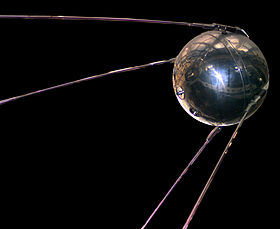
Remember Sputnik?

571. Nothing New Under the Sun

There is nothing new under the sun, but the old things keep coming back to poke you in the eye, and it all seems interconnected.

On MLK day I talked about growing up and shaking off racism. Then I talked about America’s love affair with great men who really aren’t all that great.

That led to a back and forth in the comments in which I talked about trying to teach truth in American schools, by using the space program as an example. Meanwhile, I’ve been trying to remind my younger readers of the incredible reality of what was happening fifty years ago in space exploration.

On President’s Day and we looked at the last half century’s sad and depressing crop of leaders.

Then it all came together in one coincidental discovery. I bought a copy of Apollo in Perspective by Jonathan Allday to fill in some gaps in my knowledge, and found this inserted as an epilog:

Men who have worked together to reach the stars are not likely to descend together into the depths of war and desolation. Lyndon B. Johnson, 1958

I need to insert three paragraphs of blank space here, to express my incredulity.

In 1958, Sputnik had just been launched. America was in a panic. The bureaucrats and the military were fighting (as usual) and the result was that American satellites were not being launched. The space program had begun in fear, riding on rockets which had been designed to carry nuclear warheads, and fueled by the terror those same warheads represented. Men were not working together to reach space; countries were working against each other for the best capacity to wage war.

Not only was every word in the quotation a lie, it was all a set of lies that no one could have believed, even then. Every word was the exact opposite of the truth, even as contemporary Americans understood the truth.

And all this from Lyndon Johnson, who would, a decade later, give us the Viet Nam war.

It seems that the greatest of our achievements and the most poignant of our failures remain inexorably intertwined. I guess that’s the human condition, but it’s hard to take sometimes.

Running From President 11

This has been a tale from an alternate universe. In that world, Hillary did not win and Donald did not win.

Disaffected liberals distanced themselves from Hillary after the Wiki-leaked emails told what her people did to Bernie. Disaffected Christians stuck to their guns over Trump’s immorality. It was like our universe, with a single difference. Leap’s non-candidacy had caught fire and provided an alternative which vast numbers accepted..

Donald Trump denounced him. He said that if Leap claimed to be sixteen years old, that made him too young to be President. Hillary kept her mouth shut; it was one thing she could do better than Trump

Things got out of hand. On November eighth, after a massive write-in campaign by people who surely didn’t really expect to succeed, Leap Alan Hed was voted in as the forty-fifth president of the United States.

Oh, well. Could he be any worse? The people of his alternate universe may never know.

Leap read the election results at a news stand and his heart all but stopped. Then he ran.

It is said that anyone who wants to be President is automatically disqualified by reason of insanity. Maybe; if so Leap was the sanest man in America, because he really didn’t want it. He considered trying for asylum in another country. He thought about Switzerland, but he gets a nosebleed in an elevator. He thought about Russia, but the last thing he needed was to be caught up in that tug-of-war. He considered Great Britain, but he had once lived in California and the thought of all that rain dissuaded him.

He decided to just disappear, and he did. I don’t know where he went; he didn’t tell me. Geraldo claimed to know, but that turned out to be a bluff. Somebody said they saw him heading north, following a compass, but everybody knows you can’t walk to the North Pole now that the ice caps have melted. He was probably looking for a Fortress of Solitude, and you can’t blame him.

All those people who voted for Leap are now wringing their hands and wondering what is going to happen next. Every one of them thought they were the only one who would write him in. They never thought he would win. They certainly never thought he would run to Canada like a modern day draft dodger. Which, essentially, is what he is — drafted to be President, and scared out of his wits.

Hillary has been very quiet about it all. She hopes to win in the House if they can find Leap and get him to resign. But it’s problematical. There are only fourteen Democrats and eleven Republicans in the new Congressional class. Aside from a few Libs and Greenies, the rest are all newly elected Independents, sent by a disgusted America. Bernie is smiling about that.

Donald claims he will still win, and when he does, he plans to invade Canada to bring back that traitor Leap. I think he just might.

We’ll have to leave their alternate universe now, worried sick and talking to each other about the kind of changes one man can make — even if he doesn’t want to. We have to get back to our own universe. We have problems of our own.

finis

Running From President 10

It was late on November seventh. The sun had already set and with its passing, the chill of evening had set in hard. Leap Alan Hed — calling himself Joe and hoping that none of his homeless companions around the fire would recognize him — pulled his coat closer around his shoulders and stretched his hands out to the warmth.

It was a vain hope. The press had hounded him out of his home in Dannebrog, and hounded him half way across America and back again. His picture had been spread across the country in countless newspapers and television broadcasts.

One of his companions said, “Joe,” and his tone made it clear that he knew the real name behind the nom de flight, “tomorrow is the big day. What do you think will happen?”

Leap gave up the masquerade. He said, “I don’t know. They won’t vote for me. They aren’t that stupid, no matter how frustrated they have become. They will vote for Hillary and God knows what that will mean. Or they will vote for Donald, and everybody knows what that will mean.

“In a few days, or maybe a few weeks, I’ll be able to surface again and get back something like a life of my own. I just hope there’s a country for me to go back to.”

His companion shrugged and said, “I don’t have a life to go back to. I haven’t had anything like a life in years. I can’t vote for you, or anybody else. You have to have an address to register to vote and I haven’t had an address in in a long time. But I would vote for you.”

“Why, for God’s sake? Why?”

“Because you aren’t him and you aren’t her, and anybody else is better. Somebody has to do the job. At least you don’t want it, and that means something.”

Leap quoted, “If nominated, I won’t run. If elected, I won’t serve.”

“I don’t think so. I think you would come out of hiding and do your duty.”

Leap shook his head, and just said, “No.”

“Its going to be Donald or Hillary or you,” the other said.

Leap sighed. He said, “No good can come of this.” more tomorrow

Running From President 9

Leap Alan Hed was going to Tulsa, to have it out with Billy Joe Barker. It had been eight weeks since he left his home in Dannebrog, running from the media circus that Barker had set in motion by calling on Americans to write in Leap’s name for President. Barker had started it all; Leap figured Barker owed it to him to at least try to stop it.

It was hard for Leap to travel. He could go by bus, slumped down, face covered by the brim of his hat, and take his chances on being recognized. That was how he got to Hays, Kansas. There he picked up a ride with a friend of a friend from Dannebrog who took him as far as northern Oklahoma. He found himself stranded in Ochelata on a Sunday morning.

By now Leap was hungry for normalcy, and on Sunday morning, that meant church. He couldn’t go in, of course. If you are from the city, or the north, you may not know this, but when you go into a small town southern church as a visitor, everyone in the congregation will come up and shake your hand, ask you your name, welcome you to their fellowship, and half of them will invite you for Sunday dinner. Leap would have loved that, but since his face had been in every newspaper in America . . .

The Ochelata Baptist Church was a long, low green roofed building, built around a courtyard. There was a park on the east, so that was the direction Leap used for his approach. He walked in, as bold as if he belonged there, across the park to the blind back of the sanctuary where he settled down hidden by a few trash cans and sat for two hours listening to the service taking place on the other side of the wall. From time to time, his eyes were awash with the moisture of homesickness.

He slept the day out in a wooded ravine, and walked southward on Highway 75 during the night. Morning found him somewhere, but he didn’t know where, hungry, cold, and discouraged. He was in front of a convenience store, on the outskirts of a small town, so he pulled up the hood of his sweatshirt and went in. He kept his eyes floorward as he picked out a couple of donuts and a cup of coffee, and didn’t look up at the checkout where the surveillance cameras are clustered. Outside again, he found a bench at the edge of the light.

He was on his second donut when a pickup rolled to a stop. A man of fifty got out and exchanged a few parting words with his driver before she u-turned and disappeared. Everything about their casual friendliness said man and wife. He was carrying a brown paper bag that said “lunch”. He crossed to Leap’s bench and sat down.

He glanced at Leap, looked away, then his head snapped back again. He studied Leap for about five seconds, then turned his head back toward the road and didn’t look again.

Discovered! This man knew exactly who Leap was, but he made no acknowledgment. With eyes averted, the man talked as casually as if he hadn’t guessed Leap’s identity. Leap had seen that reaction several times in the farm country and small towns where he had been wandering these last weeks. People in rural America have a respect for privacy and a willingness to mind their own business which he found admirable

Leap’s bench mate said was waiting for a bus that would take him west to Sperry where he had a job as a school custodian. And, yes, there was another bus that went south to Tulsa. After twenty years as a skilled lathe operator in a small factory, the man had lost his job after 2008. He had been out of work, except for odd jobs, for seven years, and now he was pushing a broom at age fifty, and glad to get the work.

He had gone from Democrat, to Republican, then further with the rise of the Tea Party. He had no faith in government, no faith in politicians, but he still had faith in free enterprise. Where he had worked all his life, the owner had been just down the hall, working all day behind a second hand desk in a room with plywood walls. They had gone to the same church, and every decision the owner had made had included concern for his employees.

The factory made small parts, that went onto larger parts, that then went onto automobiles. In 2008, the system collapsed and the factory folded. Leap’s temporary friend blamed free trade and Hillary and Obama. He did not blame large corporations and their CEOs. His vision of free enterprise was a hard working owner in a dusty plywood room, with forty hard working employees out on the floor making things. Multi-national corporations were outside his experience and outside his imagination.

The bus rolled up with whoosh of air brakes. As the man got up, he added, shaking his head, “Donald Trump says he’s going to fix all that.”

“Do you believe him?”

“No, not really.”

“Are you going to vote for him?”

“I might. Maybe not, though. It’s hard to vote for a man that full of hate.”

After a pause, he added, “I might just throw my vote away on this guy called Leap. That way I won’t be responsible for what happens later.” more Monday

Running From President 8

From Leap Alan Hed, somewhere in America,
to Anne, a favorite cousin, location not given.

Dear Anne,

I’m still on the run from the news media and from those who would write me in as President.  I’ve been on the road now for about six weeks. I’ve lost weight and grown a beard, but anyone who looks closely could still recognize me, so I stay hidden most of the time. That was almost a blessing at first. The high Rockies were beautiful when I could stay there. It has been getting colder every day for a while now, and I have had to come down, so I am once again hiding too close to people.

I thought the desert would be open and empty enough for me to go unnoticed, but it isn’t. I stumbled onto a deserted shack and made myself comfortable last night. Then I had midnight visitors. Five Mexicans: two young men, one young woman, a child, and an old man. They must have been a family. You could tell they were just over the border and on their way north looking for work.

Donald would have crapped himself to be caught by a bunch of “rapists and murderers”, but, of course, they were just frightened people, looking for a little peace. And hungry. Both hungry in the long term sense that had sent them looking for work, and hungry in the immediate moment. I don’t speak enough Spanish to matter, but sometimes smiles and gestures are enough. I shared my food with them. I cooked up all I had, but it wasn’t enough. Tomorrow I’ll have to take a chance and find a place to buy more.

They left this morning before the sun came up. They were very quiet as they went, but the child’s voice woke me. The old man was last to leave. He is probably my age but he looks a hundred years old. He saw that I was awake, so I said, “VIa con Dios,” and he made a little wave as he slipped out the door. I wish them well, but I fear for them. I fear that they will be caught, or die in the desert as so many do. And I fear for what will happen to them after November.

Damn these people who chose Hillary and Donald, and now they hound me to run as a joke President. Or worse, a real one. I’ll bet they thought it was funny, when it all started. Well, very little of this seems funny to me now.

I’d better quit so I can mail this when I go looking to buy food. Anyway, if I get any angrier, I’ll set the paper on fire just touching it. Soon November will have come and gone, and I can come out of hiding, and see you and Ted again. Bake me an apple pie, say November 15th, and I’ll be there to eat it.

I wonder what will become of my new Mexican friends in November?

                  Love,
                  Leap

more tomorrow

568. Presidents Day

I agonized over this post more than any in memory. I am not completely cynical, and the presidents I address, even the worst of them, also did things worthy of the office. I came back to this post a dozen times after I wrote it to ask myself, “Do I really want to say these things?” The answer is, “No.” But I will say them anyway, because the truth is the truth.

===========

Presidents Day. Humm.

We used to celebrate Lincoln’s birthday and Washington’s birthday, and ignored the rest of them. That wasn’t such a bad system. It allowed us to avoid linking Andrew Jackson with his betters.

How about our recent Presidents? Should we celebrate them?

John Kennedy. I have a friend who grew up in Boston and would punch out anyone who spoke against JFK, but let’s tally up what he really did. He lost the Bay of Pigs by abandoning the Cuban insurgents he had encouraged. He faced Khruschchev over the Cuban Missile crisis so let’s give credit for that, but he also sent Americans to Vietnam. Kennedy supporters claim he would have pulled out, if he had lived, but who knows. The jury will always be out of what might have happened.

Lyndon Johnson. He has massive accomplishments pushing through Kennedy’s programs and his own War on Poverty, but he also lied to the American people, lied to Congress, and conducted a secret war including massive bombings outside Vietnam. He, and Nixon after him, are responsible for over three million unnecessary  deaths. There is no responsible way to avoid calling him a war criminal.

Richard Nixon. Watergate, of course; it hardly needs repeating. He also opened up China and got us out of Vietnam by declaring that our defeat was a victory, and then running like hell. I really don’t know what else anyone could have done by that time, but why did he wait all those years and waste all those lives before telling the Big Lie? Maybe to win a second term?

Gerald Ford. They say his pardon saved the country from division and heartache. I say it only gave later Presidents bad ideas that should have been squelched fifty years ago by trying Nixon for his crimes.

Jimmy Carter. An attack on an embassy is an attack on American soil, but Carter sat impotent in the White House through the Iran hostage crisis.

Ronald Reagan. Tax cuts for the wealthy. Trickle down economics that never trickled down. Also the Iran-Contra affair in which Regan himself avoided punishment but fourteen members of his administration were indicted.

George H. W. Bush. “Read my lips.” Actually, going back on his promise regarding taxes was an act of courage that probably cost him a second term. That honorable act was sullied when he pardoned those convicted in Iran-Contra.

Bill Clinton. Plenty of good ideas, but we just remember him as the man who couldn’t keep his hands to himself.

George W. Bush. “Brownie, you’re doing a heck of a job”, and other stumble-statements too numerous to list and too painful to remember.

Barack Obama. I like the man, but I spend eight years cussing under my breath at some of the foolish things he did.

Donald Trump. I once said I didn’t consider Trump evil, just foolish. Subsequent events suggest that I was probably wrong. His fake declaration of emergency pretty much clinches matters.

Were these the best men in America?

Let’s celebrate President’s Day by taking a hard look at what’s coming our way in 2020. They don’t all look good. Let’s vow to make better choices for the future.

Lincoln and Washington, where are you?

Running From President 7

This continues the interview with Leap that began last Wednesday.

G S..: “If the choices are so unpalatable, would you choose one anyway?”

Leap: “I would vote for Hillary — reluctantly — if I could, but since I’m on the run from the media, there is no way I can get within miles of my polling place.”

G. S.: “You wouldn’t vote for a write-in, or a registered third party?”

Leap: “Third parties never win. Third party candidates don’t expect to win, they are just using the election to make a statement. If a third party candidate won, it would scare hell out of him. Just like this write-in nonsense has scared me.”

G. S.: “So you don’t really like Hillary, you think third parties are throwing away your vote, and you don’t want the job. So why not Donald Trump?”

Leap: “The wall. A million reasons, but most of all, the wall.”

“I worked as an engineer all my life. My company built farm equipment. Once, they sent me to California for a few years, to a plant near Salinas.

“There weren’t any undocumenteds in our facility, although more than half the staff were Mexican American. Several of them became my close friends, and they are the ones who opened my eyes to how things work.

“I spent a lot of time in the field, checking out the equipment we built. Everywhere I went I saw swarms of migrant farm workers. Mexicans – that’s what everybody called them. Whether they were Mexican American, legal immigrants, or illegal immigrants didn’t matter. Mexicans. I saw how hard they worked and under what terrible conditions. I saw the shacks they lived in, and it didn’t seem right. It didn’t seem American.

“I asked my Mexican American friends back at the plant and they told me that farm workers live in fear of immigration officers. Even the ones who are here legally know a whole community of those who aren’t. Children who were born here, American citizens, live in fear that their parents will be deported.

“It makes them pliable. Deportation is a whip in the hands of their employers.

“A wall – what a joke. We have a wall already. It doesn’t stop the hungry, because it isn’t supposed to stop the hungry. It exists to let workers through, and then remind them that if they step out of line, they will find themselves back on the other side.

“America couldn’t survive without a wall that lets through workers who will be silent and docile and work for slave wages under slave conditions.”

=========

Foolish Leap. He set up the interview to show how much he didn’t want to be a write-in candidate, the made the mistake of letting his passion show. He made the mistake of making sense, in a world that is hungry for sense, so of course he made his own life worse.

The interview galvanized the nation. Leap’s anti-candidacy went from being a curiosity to being a real alternative. New websites sprang up everywhere, along with tweets by the hundreds of thousand, and even a dozen fake Facebook accounts.

The biggest of them all was hashtag #Leapthewall. Commentators were forced to search for a new term to replace “went viral”. Viral didn’t do it justice.

And Leap went back on the run. more tomorrow