Tag Archives: politics

509. Kidnapped and Catriona (2)

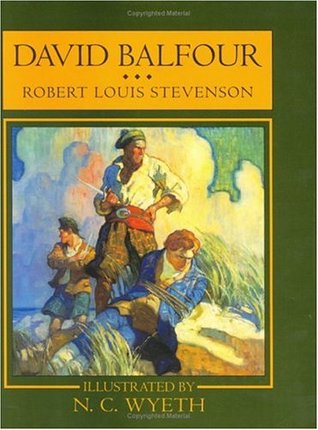
Catriona, aka David Balfour, continues the story begun in Kidnapped. I prefer the former title, probably because it was the title of the library copy I first read. I have headed this with a David Balfour cover, because all the Catriona covers I found were artistically inferior. By either name, this is quite a different kind of book. The balance between action and moral dilemma has shifted hard to the right.

Kidnapped had too much meat to be properly called a boy’s book, but it fell into that category among booksellers largely because it didn’t have sex or even romance. In Catriona, there still isn’t any sex — it was published in the Victorian era, after all — but it does have romance. Catriona is David’s love interest from early in the novel, and he wins her at the end. But the path of that romance is so slow, self-consciously moral, and tedious that it wouldn’t work as a modern girl’s book either. (Assuming anyone would dare to use that phrase any more.)

I recommend both novel and sequel to adults who are willing to take a journey, not only to another land, but also to another time. It’s easier to follow the lowland Scots dialect than it is to understand why David is so backward in his pursuit of Catriona. Once you get past that, you will be closer to understanding the era.

The book is in two parts. In the first, David is trying to get his friend Alan to safety overseas, and trying to get a chance to testify that James of the Glen cannot have committed the Appin murder. The latter turns out to be no easy task. The level of bias and corruption is astounding, on both sides of the political spectrum. (Sound familiar?) Shenanigans abound; David is kidnapped, again, this time by his friends and held captive on Bass Rock to keep him from the trial. He manages to get there anyway, after the trial is over, but before the verdict is announced. He falls in with those who are James friends, and finds them as blind to justice and reason as the ones who want James dead. David says:

And it was forced home upon my mind how this, that had the externals of a sober process of law, was in its essence a clan battle between savage clans.

There were no quotations in the last post, but Catriona is a garden of quotations, so brace yourself as David tells you what happened in his own words.

. . . in course of time, on November 8th, and in the midst of a prodigious storm of wind and rain, poor James of the Glens was duly hanged at Lettermore by Balachulish.

So there was the final upshot of my politics! Innocent men have perished before James, and are like to keep on perishing (in spite of all our wisdom) till the end of time. And till the end of time, young folk (who are not yet used with the duplicity of life and men) will struggle as I did, and make heroical resolves, and take long risks; and the course of events will push them upon the one side and go on like a marching army.   . . . (James) had been hanged by fraud and violence, and the world wagged along, and there was not a pennyweight of difference; and the villains of that horrid plot were decent, kind, respectable fathers of families, who went to kirk and took the sacrament!

What follows immediately thereafter is perhaps my favorite quotation from all of literature.

But I had had my view of that detestable business they call politics–I had seen it from behind, when it is all bones and blackness; and I was cured for life of any temptations to take part in it again.

David may have accomplished nothing, but he has given a moving example of decency in his attempt.

The last third of the book is a romance, mixed with more intrigue. Alan appears again, David ends up as the temporary guardian of Catriona, which makes him morally bound to say nothing about his feelings for her, since she is in his power. It is all very touching, frustrating, and Victorian. I would not blame a modern reader for wishing David would just say, “Hey, Babe, we’ve got a problem here, let’s talk about it.” But of course, he can’t. Living through his misery with him is the price we pay for diving deep into a historic culture, told through the words of a man who lived it.

Spoiler alert: all comes well in the end.

In his dedication to David Balfour/Catriona, written in Samoa, RLS revealed his affection for both books and added:

And I have come so far; and the sights and thoughts of my youth pursue me; and I see like a vision the youth of my father, and of his father, and the whole stream of lives flowing down there, far in the north, with the sound of laughter and tears, to cast me out in the end, as by a sudden freshet, on those ultimate islands. And I admire and bow my head before the romance of destiny.

Kidnapped might be mistaken for a boy’s book; RLS suggested it himself. Catriona, or Kidnapped/Catriona seen as a single story, is an adult look at a very different world.

508. Kidnapped and Catriona (1)

This is a double homage to Robert Louis Stevenson’s Kidnapped and to David Balfour or Catriona, the alternate titles of its sequel. It is a follow-on to 504. Homage to Robert Louis Stevenson.

Kidnapped was published 132 years ago, so there are bound to be some problems with language and culture. If it were being read by adults familiar with how historical novels function, there would be no issue, but Kidnapped is seen as a boy’s book.

It isn’t. Kidnapped is a Bildungsroman, a coming of age novel in which the main character faces moral choices. Kidnapped and Treasue Island are often lumped together, but they are quite separate species. Consequently, Kidnapped does not get the respect it deserves.

David Balfour is off to seek his fortune, shortly after his father’s death. He is going to see a rich Uncle Ebenezer, without knowing that he has a claim on his uncle’s fortune. At his uncle’s connivance, he is kidnapped onto the brig Covenant and shipped off to the America’s as a slave.

Complications ensue. David falls in with Alan Breck, the Covenant is wrecked off the west coast of Scotland, and David and Alan find their way back to Edinburgh. Along the way, they witness the murder of Colin Roy Campbell, a matter of great political importance in the days shortly after the Jacobite uprising.

Alan Breck Stewart, which is the full name of David’s companion, was based on the real historical character who was implicated for the murder (also real), tried in absentia, and sentenced to death. The sentence was never carried out and the real Alan disappeared from history, leaving a trail of local stories about what happened to him.

RLS took the Appin murder, as the incident was called, as the backbone of his story, not only in Kidnapped, but also in its sequel.

There is plenty of adventure, danger, and intrigue to carry the novel to its conclusion, but its quality lies in the view David gets of both sides of the recent war, and the moral decisions he constantly faces. David is a lowlander, a conservative, and a supporter of King George II; his companion Alan is in rebellion, on the run, and collecting rents which will go to support his King, Charles Edward Stuart. Patriotism would have David turn Alan in; their friendship, and the fact that each has saved the other’s life during their journey, will not allow him to do so. David knows that Alan is innocent of the murder, but he can’t testify to this without revealing that Alan is a traitor in the eyes of the British and already condemned, while throwing away his own future for consorting with King George’s enemies.

At the end of Kidnapped, David overcomes his uncle, then shows him mercy, gains his proper inheritance, and is in the process of helping Alan escape to France. As many critics have pointed out, the novel ends short of completion, with Alan still waiting for passage and James of the Glens was still in jail awaiting trial for a murder he did not commit. RLS himself admits this and hoped to make things right if Kidnapped were successful. I would give it to you in his words, but I haven’t been able to find the quotation. It comes of reading too many books in a lifetime, and not being organized enough to write down every quote I like.

Kidnapped was successful, and he did write a sequel, called Catriona in Britain and David Balfour in the US. The sequel never got the acclaim of Kidnapped. I find that unacceptable, so stay tuned for a look at Catriona on Thursday.

Kidnapped is not on the list for The Great American Read, as I discussed a week ago.

The fans of Kidnapping — they are legion — have arranged a walking trail in Scotland that follows David’s path from the shipwreck to Edinburgh. You can find information here. I’ve added it to my bucket list.

I, Too

Here is a poem for the day after the Fourth of July. Langston Hughes wrote this in 1926.

I, Too

I, too, sing America.

I am the darker brother.
They send me to eat in the kitchen
When company comes,
But I laugh,
And eat well,
And grow strong.

Tomorrow,
I’ll be at the table
When company comes.
Nobody’ll dare
Say to me,
“Eat in the kitchen,”
Then.

Besides,
They’ll see how beautiful I am
And be ashamed—

I, too, am America.

Apparently, it isn’t tomorrow yet. But tomorrow is coming, and it’s up to us to help it along.

poem for the fourth

Poem for the Fourth of July

I look out of the mesh
Out of the cage
and I do not see my mother
and I do not see my father.

We are so many here
So crowded
I smell the stench of fear
I hear the low hum of hopelessness

We came for refuge
.          Where is it?

I wrote this poem on June 18th and put it in line to appear on July 4th. When you read this, Zero Tolerance may have been reversed. If not, we all have work to do.

[It has, but only somewhat, and we still have work to do.]

498. Living in the Promiseland

There is a winding road across the shifting sand
And room for everyone living in the promiseland
Willie Nelson

I began this website in the fall of 2015. It was to be about writing, particularly about writing science fiction, and I had no intention of responding to political events.

Fat chance of that happening, given what has happened in America since.

In fact, I had written about twenty numbered posts when events in the world forced me to stick some personal political comments in between posts 10 and 11. It was called Walls Against the World. It wouldn’t be the last time I had to interrupt my regular programming to speak out.

That was the day after Hungary closed it’s borders to Syrian refugees. It reminded me too forcibly of the Russians closing Hungary’s borders in 1956, to keep Hungarian refugees from reaching the west and freedom.

East Germany had built a wall across Berlin in 1961, and then-candidate Trump was running on the promise to build a wall across the border with Mexico. I didn’t buy in. At the time I said, “Hitler would be proud. East Germany would understand. Russia is laughing.”

Was that only thirty-three months ago? Time flies when you are running from a forest fire.

I opened that post with these words:

          Have you ever asked yourself, “How could Germany have been fooled into following Adolph Hitler?” The answer is on your television this morning, and it is Donald Trump.
          I’m not saying that Trump is a Nazi. I don’t see him as evil, merely foolish. But the techniques that have brought him to prominence are the same techniques that Hitler used.

Then Trump won and here we are. I have tried since then to be fair and at least somewhat balanced. After all, he was elected by the American people (aided by Putin and Comey) and the Democrats hadn’t given Americans much of an alternative.

I have resisted calling Trump evil, and I have resisted refusing to see why many Americans chose to vote for him. I understand them; I just don’t understand him. I have not called him by the H****r word, even as Trump has become increasingly dictatorial. I have tried to avoid pointing out that Hitler was initially elected to office, before he took over everything.

All that was before Trump opened concentration camps on the Mexican border in the name of Zero Tolerance. We haven’t seen this in America since 1942.

Maybe I’ll send the White House a copy of Willie Nelson’s Living in the Promiseland. At least I would if I thought it would do any good.

Give us your tired and weak and we will make them strong
Bring us your foreign songs and we will sing along
.               from Living in the Promiseland

480. Mairi at Culloden

272 years ago today, the last battle took place on British soil. Followers of Charles Edward Stuart (aka Bonnie Prince Charlie) met British forces under the Duke of Cumberland on Culloden moor. Like all battles, it was a confusing, bloody mess, but it had the virtue of being decisive. The reprisals which followed brought highland culture largely to an end.

The mists of nostalgia roll over the Battle of Culloden, casting it in a romantic light as the last day of Scottish independence from the English. Sorry, but it was nothing like that. There were Scots on both sides of the fight. The “champion of the Scots” was the grandson of a deposed British king, born in Rome and raised in France, now fighting to regain his grandfather’s throne in London. The highlanders who followed him were despised by the lowland Scots who fought on Cumberland’s side — but the lowlanders’ descendants now claim clan membership and wear kilts — even though kilts hadn’t been invented yet in 1756.

I would have sworn that I would never write about Culloden, until I saw a brief note in an article about the history of oats in Scotland which described the actions of a Scotswoman who sat down beside the road leading from Culloden and cooked oat cakes for the soldiers, knowing they would need food to survive. Her simple and humane reaction to the conflict moved me to write this poem.

Mairi sat down by the side of the road

The night was filled with the sound of men
And the moan of wind in the heather,
As Mairi’s kinsmen went south toward the field,
That Charlie had set for the meeting.

Three sons of Mairi came out of her hut
And kissed her cheek as they left her
With Ross the youngest trailing along
To see what the battle would bring.

Mairi took oats from the pantry shelf,
There was not enough to please her,
So she dragged in a sack from the loft of the ben,
Took peats, and salt, and her griddle.

Then Mairi went down to the side of the road,
Built a peat fire and kneaded the grain,
Heated her griddle and cooked fat cakes,
To stack for the coming of day.

“They will come,” she said, “in the morning,
And all through the rest of the day,
Strutting proud or running scared,
Theyʼll be hungry either way.”

The oat cakes sizzled; the smell was fine;
She flipped them and stacked them and listened
To the musket fire from Cumberlandʼs men
And the deeper roar of his cannons.

The cries that went up as the claymores flashed
Were too distant for Mairi to hear,
But Ross would come back from where he watched
To tell how the Scotsmen had fared.

Then a sudden wind, and the fire flared up,
She shivered as pain rushed through her.
Three quick shocks in her empty womb,
And her heart in her breast went numb.

Her hands dug deeper into the oats,
And flew at the task of the kneading,
The stack of bannocks at her side grew tall
For she knew now that they would be needed.

Then Ross came running from the battlefield
He could only come out with a groan.
But Mairi knew without any words
That his brothers would not return.

******

The first man she saw was limping hard
With his leg bound up in a rag.
A highland face, with matted red hair,
He was lean as an iron bar.

A hungry man with a strangerʼs face;
Mairi gestured to the cakes.
He picked one up, took a bite, and sighed.
“God Bless you,” he said, and moved on.

The second man was a stranger, too,
He said, “Mother, it was awful.”
“Eat,” she said, “and move along,
I’ll pray that you find safety.”

The third was young, more a boy than a man,
With face flat and eyes that were dry.
Half held up by a second youth
Who coughed along along at his side.

“Take cakes and eat,” Mairi started to say.
But the coughing youth shook his head.
“I thank you, Mother, but let them go
To living men instead.

My friendʼs bled dry; thereʼs a ball in my lung;
Weʼre as dead as the ones behind.
Just show us a hidden place to crawl in,
And a quiet place to die.”

Mairi worked on, with a clenched up heart
While Ross fed peats to the fire,
Saving the lives of the fleeing men,
For hungry men soon tire.

All through the morning and the afternoon,
Those who lived to flee streamed by them,
Mairi rolled dough in her aged hands
As she mourned for the dead and the living.

For even these battered and tattered men,
Who would leave the field still living
Had lost more than battle, kinsmen, and sons.
A whole way of life had died with them.

And Mairi knew, with foresight clear,
That the winners would fare no better.
That the losers had lost, and the winners would lose,
All except for the rich and the English.

Then the last cake was gone, and Ross was gone,
Sent on with the last survivor.
Up past the river and into the hills.
To hide for a while in the heather.

Down the road she saw them, a mile away,
The Redcoats at last were coming,
Marching proud with bloody swords.
                Mairi stood up and put out the fire.

477. They Never Flew (2)


NASP

Continuing from 472. Teaching Space and 474. They Never Flew (1), this post will discuss three manned space programs that never happened.

Eisenhower, Kennedy, Johnson, and Nixon were the presidents who took us into space. Whatever you think of any of them, they will always have that marked down on the positive side of their ledger.

Other presidents aspired to join them. How much of their thinking was patriotic for America, patriotic for all of mankind, or pure political calculation, is way outside the realm of my knowledge. I’m going to give them all benefit of the doubt and just talk about the programs themselves. You can spin motives any way that suits you.

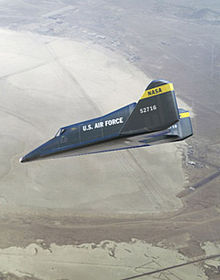
Regan proposed NASP, the National AeroSpace Plane, also called the X-30. In his 1986 State of the Union, he said that we should produce a vehicle which would be “a new Orient Express that could, by the end of the next decade, take off from Dulles Airport and accelerate up to twenty-five times the speed of sound, attaining low earth orbit or flying to Tokyo within two hours.” It was an exciting idea, coming out of DARPA where it had begun as a black project.

NASP was supposed to produce two prototype planes, but neither was ever built. That doesn’t mean that it was a political scam. The technological difficulties of the project were staggering.

In detail, NASP was cutting edge. As an idea, the horizontal launch of a spacecraft was old in science fiction. There it was usually accomplished by electromagnetic technology, with ground based and powered launchers and only maneuvering fuel on the vehicle itself. See many early Heinleins, especially Starman Jones and The Moon is a Harsh Mistress.

One reason rockets take off vertically is to get mostly out of the atmosphere before achieving speed. That way, massive friction is only a reentry issue, when it can be used to advantage.

NASP was a jet, not a rocket. It had to operate primarily inside the atmosphere. This has the advantage of avoiding carrying oxidizer, but has a series of disadvantages. Friction heating is an obvious one. In addition, its engine would have to operate in three modes — as a relatively conventional jet at takeoff, as a ramjet once sufficient speed had been achieved, then as a scramjet (supersonic ramjet) once it passed the speed of sound.

At that time, no one had successfully built a scramjet, and NASP didn’t make it happen. The first scramjet, the X-43, made a brief flight in 2001, eight years after NASP was cancelled.

No one has successfully built a skin that can withstand reentry level heating on a continuous basis, either. NASP was too far ahead of its time. I spent a few years explaining to my kids how it was supposed to work — before it didn’t work, and silently crept away.

Then came Venturestar, which, if it had been successfully completed, would have done what the Space Shuttle was originally designed to do. It was to be a vertically launched, completely reusable, single stage to orbit vehicle with a wider and more efficient lifting body that would have allowed it to land, in emergencies, on shorter runways than the Space Shuttle.

To do all this, it would require new and untested technologies, including composite material LH tanks, a new tile-free heat resistant skin, and an aerospike engine. The project was divided into two parts. To demonstrate the feasibility of the new technologies, a one-third size, unmanned model of the VentureStar, called the X-33 was to be built and tested, and only then was a full sized VentureStar to be constructed.

Things did not go well. When the X-33 was partially completed a version of its composite LH tank was tested and failed to hold pressure. Alternatives existed, but the decision was made to cancel the project. The funding for the X-33 was a complex mixture of commercial and governmental funds, and continuation depended on all parties agreeing. That didn’t happen. The Air Force was still part of the mix, as with MISS and the Dyna-Soar, as with the black missions by the Space Shuttle, but their request for continued funding was denied. The Air Force eventually got the X-37b instead. The X-33, and with it the VentureStar, disappeared. For a view that the cancellation should not have happened, click this link.

From the perspective of a science teacher, VentureStar had been a godsend, full of all the excitement the Shuttle and NASP had lacked. Once it failed, my kids had no future in space that they could personally dream about.

Then came Project Constellation. By that time, my days as a teacher were coming to a close, so I did not have to face the daunting task of generating enthusiasm for a cobbled up rerun. Ares I, the small booster, was built out of Space Shuttle leftovers and Ares V, the large booster looked suspiciously like a Saturn V reboot. The Orion Crew Exploration Vehicle was an oversized Apollo capsule and the Altair moon lander was a LEM on steroids. Not only was Project Constellation going to do again what had been done forty years earlier, it was going to use essentially the same hardware.

I didn’t buy it. I didn’t try to sell it to my kids. It died four years after it was floated.

The future isn’t dead. The Space Launch System continues where Constellation failed and private enterprise has more strongly entered the mix. Today’s science teachers should be able to say, “You might be the first person on Mars,” with a straight face. I continue to hope.

474. They Never Flew (1)

Continuing from 472. Teaching Space, this and the upcoming April 5 post will discuss the manned space programs that never happened.

Wikipedia lists seven manned pace programs which were canceled before they were launched, but this list is only technically accurate.

MISS, Man in Space Soonest, was a project from the early days when the Air Force planned to dominate space. The preliminary work was transferred to NASA when it was formed and became Project Mercury. Technically, MISS never flew; looked at more reasonably, MISS became Mercury, which was quite successful.

Dyan-Soar was a follow up Air Force project which planned to put a winged craft into low earth orbit, and subsequently turn that into an ultra-long range space bomber. It was contemporary to Project Mercury. There was not enough money or will to keep them both, so Dyna-Soar was cancelled, only to be reborn, in a manner of speaking, as the Space Shuttle. For details see 342. Dyna-Soar.

The Manned Orbital Development System, Blue Gemini, and the Manned Orbital Laboratory were successive names for the same secret project, designed to use modified Gemini craft to service an early one-use space station as an orbital observation post. It got to the point of one unmanned launch before being cancelled. It was made obsolete before it went into service by advances in unmanned reconnaissance satellites. For details see 256. The Space Station that Never Was.

By the time I started teaching, the era of manned space exploration was over, but there were plenty of manned space flights. The shuttle had 135 manned missions; Mercury, Gemini, Apollo, Skylab, and Apollo-Soyuz combined had only flown 35 manned mission. However, none of the Shuttle flights were explorations.

The early Shuttle flights were exciting and technologically innovative, but they only went where Mercury had gone two decades earlier. The flights quickly became routine. They were dangerous — Challenger and Columbia proved that — but danger alone does not bring excitement. Commuting on a freeway is dangerous, but only exciting during moments of imminent disaster.

The Space Shuttle was supposed to be a cost saving way to space, but it proved quite expensive. It was supposed to be reusable, but that turned out to be only partially true. It was supposed to be single stage to orbit, but it never was. Each launch had four components, not one. The fuel tank was only used once. The two solid fuel boosters had to be recovered from the ocean and refurbished each time. Only the orbiter was fully reusable, and it had massive problems with failing tiles.

A vast number of its flights were spent building and maintaining the International Space Station. Many scientists tried to stop the construction of the ISS, claiming that not much science would be done there, but the cost would cripple other exploration. They were not listened to. Politically, the ISS was a demonstration that the cold war was over and the US and Russia were now pals. You know how well that turned out.

From the viewpoint of science, plenty of exploration was going on in my kids’ era, but it all involved unmanned craft. From the viewpoint of a teacher trying to excite middle school kids, a Mars rover landing was great, but if it couldn’t be followed up by a statement like, “You may go there someday,” if fell relatively flat. None of the kids I taught in the eighties are going to Mars; by the time anyone gets there, those kids will be retired, and they knew it at the time.

The only manned space craft of my kids’ generation was the Space Shuttle, and it was only flying to low earth orbit. A lot of good science got done by the shuttle (and a lot of political nonsense) but it wasn’t the same. Mercury, Gemini, and Apollo were like going down the Amazon in a dugout canoe, with adventure around every corner. The shuttle was like driving to Sacramento on Highway 99. Dangerous, yes, but not exciting.

But every year there was hope. New manned space projects kept being proposed, and I studied all of them so I could teach my kids something that would excite them.

Regan had NASP; Clinton had VentureStar; Bush Two had Project Constellation. We’ll look at all three on April 5, and try to recapture the genuine excitement they generated, before they faded into history

467. Steel Drivin’ Man

So we come to the end of another Black History Month. I have said some new things, and repeated some posts that could not be said better. This is one of those repeats; it originally appeared as 88. John Henry, January 28, 2016.

The battle goes on, not just for “blacks” (who aren’t fully black) and “whites” (who aren’t fully white), gays, Latinos . . . the list goes on. If life permits, I’ll be back next year, beating the same drum. I won’t be here forever, but when I’m gone, you will still be here. It will be up to you then.

I have always wondered why John Henry is a folk hero.

Maybe it’s just a folk song. Maybe it isn’t supposed to make sense. I never worry about the fact that Stewball “never drank water, he only drank wine”; I do have a tendency to overthink things.

But let’s look at the facts. John Henry is big, strong, uneducated and very black. Symbolically black, even. As a ”little bitty baby” he picks up a hammer and accepts his fate. He works himself to death for white folks, while they stand around and bet against him. Then his wife takes over when he’s dead, and the story goes on unchanged.

Sounds pretty damned Jim Crow to me.

A technical point here, so it all makes sense. As a “steel drivin’ man”, John Henry is not spiking down rails to ties. He is digging tunnels. He is swinging a doublejack, a two handed medium weight sledge hammer. He is hitting a star drill, which is a steel rod about a yard long ending in a hardened cross bit. Every time John Henry hits the drill, another inch of rock is pulverized in the bottom of a hole. Between each stroke, his assistant turns the drill an eighth of a turn.

Men with John Henry’s job spent their days drilling holes in the face of a tunnel. Those holes were then filled with black powder or dynamite, depending on the era, and blasted. Then the drill men moved back in to do it all over again.

Imagine working in near darkness, covered with sweat and stone dust, breathing in the fumes from the last blast, damp and cold in winter, damp and hot in summer. Tough for John Henry; terrifying for his assistant, holding the drill steady, turning it only in that moment when the hammer is drawn back, and knowing that if John Henry ever misses, he’s dog meat.

It gets worse.

It is useful to those in power to have a large population of the powerless and hungry. Slaves fit that bill very well; so do new immigrants. Today we have the working poor, who are kept humble by the myth that if you can’t make it in America, it’s your own fault. You aren’t working hard enough (see post 5.Labor Day).

Immediately after the Civil War, white southerners found a way to get back some of their power and some of their slaves. They simply arrested and imprisoned newly freed blacks, then rented them out. They invented the chain gang. If you are trying to find historical reasons why blacks fill our prisons and why our police are so often corrupt, chances are pretty good your research will lead you to those events.

What does this have to do with John Henry? In searching for the man behind the legend, writer Scott Reynolds Nelson’s* discoveries suggest that John Henry was one of these convict-slaves.

John Henry was a man who could not break his chains, but was still a man for all that. His status as a black hero makes sense.

Still . . ., if I were borrowing all this to make a story, I would rewrite it so that John Henry used his hammer to brain the overseer. But, of course, the real John Henry could never do that, and today’s black community would not accept such a cheap answer, or such an easy road to freedom. It would not match up with their own experiences.

History is usually uglier than anything we novelists can invent.

——————–

*Scott Reynolds Nelson. Steel Drivin’ Man: John Henry, the Untold Story of an American Legend.

466. Nothing But White

The first African slaves arrived in America in 1619. That’s 399 years ago. If we count twenty-five years as a generation, that’s 16 generations.

Now, lets look at you and your ancestors. Chances are, they haven’t been in America for 16 generations. In fact, this being the internet, chances are you aren’t even in America, so let me explain.

Here in America, whether you are white or black is a big deal.

If you are from India, or Indonesia, or the Philippines, or just about any place else in the world, you are likely to have your own racial and ethnic issues. Your tangle may be different from our tangle, but it’s probably just as tangled.

Being black or white in America isn’t as big a deal as when I was a kid, but it’s still big. And that is true even though there is probably no American black who is actually, fully, and truly black. Don’t take my word for it. Here is what Langston Hughes, negro poet,  said in his autobiography:

You see, unfortunately, I am not black. There are lots of different kinds of blood in our family. 

Being white in America is a big deal too, in the other direction. And that is true even though very few whites are actually, fully, and truly white. Don’t take my word for it. In 1895, speaking against defining whiteness in the new South Carolina constitution, Congressman George Tillman said:

It is a scientific fact that there is not one full-blooded Caucasian on the floor of this convention. Every member has in him a certain mixture of… colored blood…It would be a cruel injustice and the source of endless litigation, of scandal, horror, feud, and bloodshed to undertake to annul or forbid marriage for a remote, perhaps obsolete trace of Negro blood.

A generation later, several southern states did define race, declaring that one black ancestor, however distant, was enough to turn a white man black. It was a sad day for those perceived to be black, and a bad day for truth.

Back to your ancestors. You had two parents (we’re speaking biologically here) and they had four parents and they had eight parents . . .; up the line 16 generations, that’s just under 33,000 ancestors sending their DNA down the line.

Can that be right? Let’s look. The first generation is you, alone, and for the rest we will need a chart.

generation     number of ancestors

               2                     2
               3                     4
               4                     8
               5                    16
               6                    32
               7                    64
               8                  128
               9                  256
               10                512
               11                1024
               12                2048
               13                4096
               14                8192
               15                16384
               16                32768

You have 32,768 great . . . great grand parents. If you are a “white” person in America, what are the chances that not one of them was out of Africa?

If you are just of the plane from rural Norway with ancestors going back unbroken into antiquity, as soon as you have a child with an American who has been here, that child’s number becomes 16384. You can run scenarios to lower the number, but it will never drop below BIG.

All right, let’s say you are a member of the Aryan Nation, and your father and his father were Klansmen all the way back to Appomattox Courthouse. You only marry white girls, and only natural blondes at that. What are the chances that her thirteenth great grandmother wasn’t partly black and passing for white?

You don’t think so? Your ancestors knew better back in the 1800s.

Let’s go at this from the other direction. Suppose one black woman was made pregnant by her master in the first generation. How many of her descendants would carry at least a trace of African DNA? All of them. How many would that be?

Historically, women bore many children, and many of them died while young. Let’s say that the average woman had four children who lived long enough to have children of their own. That original black woman would have one billion, seventy three million, seven hundred forty one thousand, eight hundred twenty four descendants.

You don’t believe me? Get out your calculator. No, better make it a spreadsheet. You don’t think I did that math with pencil and paper, do you?

What are the chances than none of those children passed for white, and begat a line of offspring who are convinced that they are actually, fully, and truly white?

Let me put it another way —

Donald Trump is partly black. David Duke is partly black. Steve Bannon is partly black. You’re partly black. I’m partly black.

And my relatives just disowned me. That’s mighty white of them!