Tag Archives: science fiction

692. The Space Age Begins

The Space Age Begins

Britain measures eras by the reign of its Kings and Queens. America measures eras by Presidents. In our look at the beginnings of science fiction, we are about to enter the Truman/Eisenhower era, even though neither man will be our focus.

— << >> —

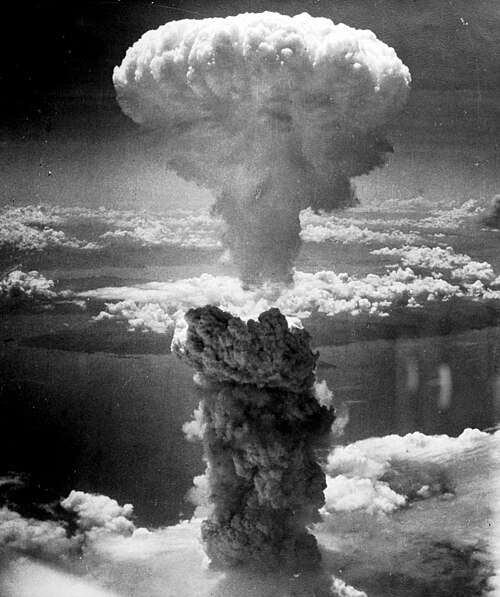
Hiroshima changed everything.

Science fiction people had read Einstein, or had tried to, so they knew about nuclear fission. They knew that an atom bomb could be built, and were expecting it. A few even got in trouble because they used atom bombs in stories, when the FBI was convinced they had it locked into secrecy.

For the rest of the country, Hiroshima was a shock to the heart.

It didn’t take long for the Russians to get the A bomb. Then we got the H bomb. Then the Russians got the H bomb. Welcome to my childhood.

Suddenly the future had become the present. Everybody was still driving ancient looking cars (no cars had been produced during WW II) and dressing like people in the old movies, but their world had been ripped open by futuristic perils.

Literature reacted to the situation. The Saturday Evening Post, that bastion of American norms, broke tradition and published a science fiction short story, The Green Hills of Earth by Robert Heinlein. Colliers Weekly published Wernher von Braun’s article Man Will Conquer Space Soon.

Von Braun also partnered with Disney to produce three episodes of Disneyland (as the Disney TV program was then called). The first, in March of 1955, was called Man in Space. This was followed by Man and the Moon and Mars and Beyond is later seasons. These were humorous and relied heavily on cartoon animation, but they showed American youth what the future held in store.

Eisenhower’s presidency saw a worsening of the Cold War, the rise of ICBM’s to deliver H bombs, and the development of satellites. The push for space flight had been properly begun. NASA was formed in 1958.

Space flight is key to science fiction, but it is by no means the whole of the genre. SF, by its nature, is always out ahead of contemporary science, and the giants of science fiction were producing major works during this period. The main difference from the golden age was that there were more novels, fewer short stories, and people had stopped laughing at the genre.

This was the era of Arthur C. Clarke’s Childhood’s End and Issac Asimov’s Foundation trilogy, while Robert Heinlein revised his novella Methuselah’s Children into a full novel.

This era also saw the rise of near future “science fiction”. The quotation marks are there to point out that this wasn’t really science fiction at all, because it was reacting, not predicting. Atomic power, atom bombs, jets, and rockets had been the stock in trade of science fiction fifty years earlier when they did not exist. Now they were the stock in trade of mainstream writers because they did exist.

Fail Safe was probably the most notable of these near future science fiction novels. It began as a short story in 1959 and was revised into a novel that appeared in 1962. In it, an American bomber is mistakenly on route to destroy Moscow with nuclear bombs. The American President, who cannot call back the bomber, must sacrifice millions of American lives to avert a world destroying all out nuclear war.

On the Beach was even more somber.  Years after a nuclear war, people of Melbourne, Australia wait for inevitable death as fallout from the northern hemisphere drifts down upon them.

No fun novels for a no fun time.

There were many others. Philip Wylie, who was already an established science fiction writer, turned out Tomorrow and Triumph. I read both in high school.

This new sub-genre of science fiction continued to gain readers who might never have read Clarke or Heinlein. In 1984 it reached apotheosis when Tom Clancy published The Hunt for Red October.

— << >> —

Over the course of this blog, fifty year anniversaries of events from the early space program kept happening, and I kept writing about them. By the time of my covid hiatus, those posts had grown into a book to be called Brief but Glorious.

Of all the books I plan to e-publish, it is the most dubious. Not the text — that’s fine — but I want to illustrate it heavily with NASA photos, and I don’t know what kind of technical problems that will cause. I have tentatively scheduled it for October 2027, but that could change. I’ll keep you posted.

The discussion continues next week.

691. Science Fiction Begins

Science Fiction Begins

If you don’t like that title, here’s a longer one.

Science fiction begins as literature, becomes a genre, sinks to a sub-literate state in the eyes of the intelligentsia, regains legitimacy in the Saturday Evening Post, and then consumes the universe.

I like the short one better. And by the way, this is just a quick survey. If you don’t like the way I’ve chopped up history, write your own. After all, most SF “scholars” disagree — on everything.

— << >> —

Science fiction has been around for a long time, although the early stuff is hardly recognizable. You could make the argument that it truly began when writers started using machines instead of supernatural beings to do marvelous things. That is why we look to H. G. Wells instead of Charles Dickens for the beginning of time travel stories.

Scrooge visited the past, present, and future, but it took three spirits (plus Marley) to pull it off. Wells did it with a time machine.

Jules Verne’s Five Weeks in a Balloon (1863) and H. G. Wells’s The Time Machine (1895) are a good enough place to start looking at science fiction. Both were considered literature from the beginning. Verne’s writing style was held up for emulation by the French establishment. H. G. Wells was a respected social commentator. In that same era, Edward Bellamy’s Looking Backward was a call for society to perfect itself — science fiction ideas spoken by the voice of the elite.

But what if you are an outsider, with a coarser voice?

Later, rougher, more exciting writers of science fiction didn’t fit the proper mold. They were frequently not all that interested in uplift, they just liked the idea of the future. Their characters were more likely to carry a ray gun than to address Parliament. Through the early decades of the twentieth century a whole generation of young men (and a few young women) found excitement in reading this kind of science fiction presented in the form of short stories in inexpensive specialty magazines.

This period, beginning in the thirties and lasting until roughly World War II, was often called the Golden Age of Science Fiction. (Remember, golden ages are always in the past somewhere.) A great deal of high quality science fiction was produced, along with the usual kinderdrivel. Science fiction had left the mainstream and become a niche interest, ignored or derided by most people.

Science fiction also acquired its own name. The Time Machine was just called a novel when it was published, but now science fiction had become a genre. Calling it sci-fi was forbidden by those who loved it. Everybody else just considered it cheap trash.

I wasn’t there for all that. For most of the Golden Age, I wasn’t born yet. I saw the science fiction of the golden age when it was reprinted in the paperback books published in the sixties, seventies, and eighties.

My actual connection with Golden Age magazines was brief but exciting. A few of them were still around when I began writing, and my first publication was in Galaxy. It was a novella called To Go Not Gently, and the cover of Vol. 39, No. 6, 1978, showed my character Ram David Singh walking uneasily down the Avenue of Abominations in New Bombay. I was over the moon.

It was also the last issue of Galaxy, although there were later attempts at resurrection.

So science fiction began as just a part of normal literature, then went on the gain an intense fan base as well as the disdain of everyone else. Heinlein and history were about to change that.

The discussion continues next week.

689. Birth of a Blog

I started the blog you are reading on the twenty-ninth of August, 2015. I took a hiatus in 2020, because of covid. Here is what I said that day.

— << >> —

Yesterday, here in California, the Governor requested that all people over 65 self-isolate. That makes sense to me, and I passed that milestone seven years ago, so my wife and I are going to hunker down and become temporary hermits. That isn’t too much of a hardship since we live in the country and keep a well stocked larder anyway.

This change shouldn’t bother my blog, but it does. I’m not worried for my wife and myself, but worrying about the rest of the country and the world beyond weighs on me. It has also been getting harder lately to come up with new things to say, especially on subjects that don’t call for hours of research for a post that will be read in three minutes. This is post 678, after all.

— << >> —

Actually, A Writing Life had more than 678 posts. From day one it was a double effort, a website called A Writing Life with almost daily entries in a blog of the same name (causing some confusion) and a secondary blog on the same website called Serial which provided many of my fiction writings in serial form.

According to WordPress who handles my blog and keeps track of such things, I had 1280 posts when I restarted this blog.

During the hiatus, seven posts trickled through, so make that 1273 posts in less than five years. I know I was working my tail off during that period, but it still boggles my mind.

I made a lot of friends during that period, but after six years off most of them probably don’t even know I’m still alive.

I am.

I disappeared but I never went away. During those years I finally put the last period on a five book series of novels I have been working on since 1972 called The Menhir Series (fantasy). I completed two new novels The Cost of Empire (alternate universe) and Like Clockwork (time travel), and am fighting with another called Dreamsinger, a sideways sequel to Cyan which won’t quite come to heel yet.

You will be seeing all my works, old and new, in e-book format in the next few years. The Cost of Empire and Like Clockwork won’t be published for a while, so I won’t name their release dates. Too many possibilities lie between now and then.

686. It Was Fifty Years Ago Today . . .

It Was Fifty Years Ago Today . . .

If you are my age, music from Sergeant Pepper just popped into your head in honor of that title. But you probably aren’t my age — 77 — so it probably didn’t.

Today, I’m throwing myself a digital anniversary party. I’ve earned it.

Today is September 2, 2025. It’s also the day after Labor Day.

In 1975, on the day after Labor Day — also September second — I sat down at a home-made plywood desk, in the tiny back bedroom of a rented house, in front of an electric typewriter to try something new. I was going to find out if I could write a novel.

I didn’t doubt my intellegence, nor my skill with language. What I doubted was whether I could sit down day after day and think of enough interesting things to say to fill up a novel.

I was going to give it my best shot.

At the time, I was reconsidering my plans. I had always intended to be a scientist, initially in ecology. The problem was that I was a decade too early. No one had heard of ecology in 1966. Michigan State University had only two classes even close to the subject when I arrived and they were both in Fisheries and Wildlife, not Biology.

I switched to anthropology and spent five years pursuing that goal. I loved it as long as I was studying work done by other anthropologists, but the idea of field work (sitting in a mud hut recording local gossip, to be snarky about it) did not appeal.

I had never considered writing novels. I had started a dozen, just for fun, but inspiration always ran out about page ten. Now,  I had a little time on  my hands, so . . .

To my amazement, between September and Christmas, I turned out a novel. It was simple and short — a hunter gets lost in the wilderness and, after many adventures, finds his way back to civilization. I used the local Sierras which I knew well and kept my hero so lost that I never had to worry about absolute accuracy in describing his surroundings.

It was unpublishable, but that isn’t unusual for first novels. The important thing was that in four months I had neither stalled nor stumbled as I worked my way through 45,000 words, which was just long enough for a novel in 1975.

I could write a whole novel! Who knew? Certainly not me.

After Christmas I started doing the research and world building for a novel of science fiction. It was finished by the end of 1976, sold by 1978, and published in 1979. The title was Jandrax, from Ballantine under the Del Rey imprint.

Now I was a published writer. Who would have believed it. Certainly not me.

I’m still working at my trade after fifty years, so it’s happy anniversary to me.

I am also using this anniversary as the starting point for a rebirth of my blog A Writing Life. Keep coming back, mostly on Wednesdays — we still have a lot to talk about.

678. Taking a Break

I’m going to take a break

Yesterday, here in California, the Governor requested that all people over 65 self-isolate. That makes sense to me, and I passed that milestone seven years ago, so my wife and I are going to hunker down and become temporary hermits. That isn’t too much of a hardship since we live in the country and keep a well stocked larder anyway.

This change shouldn’t bother my blog, but it does. I’m not worried for my wife and myself, but worrying about the rest of the country and the world beyond weighs on me. It has also been getting harder lately to come up with new things to say, especially on subjects that don’t call for hours of research for a post that will be read in three minutes. This is post 678, after all.

So I am going to take a break. I have other things on my mind and I’m sure you do too.

I’ll be back. Whether in two weeks or two months, I can’t say. Meanwhile, I’m going to keep working on my novels, keep my wife company, and keep thinking about all the good people out there beyond my driveway.

Take care, folks. Stay safe.

676. Cat A Strophic Fiction

One of my many friends.

I got a long and thoughtful reply to 668. Century Ships from a person (human name not given) whose website is dedicated to cats. I went there, as I always go at least once to the sites of people who like my posts.

Lots of SF people tend to be cat people. Heinlein famously loved cats and wrote about them. Two internet friends who found me through this blog, one a writer of fantasy and one a reviewer of old SF and other schlock, are both cat people. Me, too.

That is the tenuous connection between science fiction and this trip down memory lane.

In the late seventies, I was writing full time and my wife was working at an art and frame gallery. Leaving work one evening, she saw a cardboard box sitting in front of a pet store two doors down. The store was already closed, and she couldn’t walk away without looking. Inside were two abandoned kittens, only hours old. She knew they wouldn’t last the night.

Half an hour later she came in the front door of our house carrying the box and said, “Guess what I found.”

We raised them, cleaned their eyes, cleaned their other ends, burped them, and fed them multiple times a day. They slept in a box next to our bed so we could hear when they were hungry — frequently, as it turned out.

Big Buddy — the internet name of the SF fan who wrote about century ships — posted a study that “explained” why cats bond with us and see us as parents. As if that needed confirmation. (He didn’t think so either. He was making light of the study.) Cats, dogs, and people are herd animals. They naturally live in family groups, so of course they bond.

Bonding goes both ways, as if you didn’t already know that.

My wife suggested we raise the kittens just until they were old enough to give away. Right! They were with us seventeen years.

One was a gray tabby. I was looking into his kitten-blue eyes early on when Don McLean came on the radio singing about how the swirling clouds reflected in Vincent (van Gogh)’s eyes of china blue. China Blue became his name. His orange sister had a one inch tail, so she became Spike, and later Spikey.

It is a testimony to what cats do to us that we talk to them. China Blue was in my lap once, getting petted while I took a break from writing. Music was always playing in the background any time I was at the typewriter. A girl folk singer’s voice caught China’s ear and he looked around for her. I told him, “Don’t worry, buddy. That’s just the way people purr.”

“Sanity” and “cat” are rarely used in the same sentence.

I put a pillow on my desk and they took turns sleeping there, although China often preferred to drape himself around my shoulders while I wrote.

Good times.

The picture at the top is one of my many subsequent friends, resting in his favorite wheelbarrow. I have plenty of pictures of Spike and China, but they aren’t digital.

674. The Voice of a Scholar

This will be short, an excerpt from The Cost of Empire, set in the year 188-, in an alternate universe. It refers in part to what was published in Old Lascar.
Sometimes a writer drops a clue to his personal philosophy into conversations between his characters. Take this as a hint from a guy who could never get enough of learning.

Very little in an ordinary dirigible is asymmetrical, but the King Class had been designed to carry bombs or troops, and only given diplomatic quarters as an afterthought. As a consequence, in making room for the dining hall and the staterooms there had originally been no place for the passengers to gather and watch the view below. A second design had pulled the passageway from the center to the port side, lined the outboard wall with windows, and lined the inboard wall with benches. It had been unpopular while crossing the Arabian Sea, but now interesting scenery was back and so were the lounging passengers.

David had begun to spend his off hours there, answering the passenger’s questions and enjoying the scenery himself.

The fleet of eight had followed the coast down to Mangalore, circled the city without landing, and headed inland following the Netravathi River. Normally, Harry could have jumped the Western Ghats, but with an overload of passengers, cooks, servants, fancy food, and the added mass of the walls and fixtures of the passenger’s quarters, the ship’s altitude capability was considerably reduced.

This morning, Kalinath was seated on one of the benches, with his bodyguard sitting stiffly beside him. There was no place for Singh to stand and it clearly made him nervous. He looked on suspiciously as David approached, put palms together, and said, “Namaskar, Sri Kalinath.”

“Namaskar, Mr. James. Sit.” He gestured to the place beside him, and David took it. “How is it that you know to say namaskar, instead of namaste?”

“You are from Bengal, are you not?”

“I am. Have you been to India before?”

“No. I learned the difference from an old man in London, a displaced lascar.”

“A servant?”

“No, just an old man. He sat every day in the sun on the street near where I was living while they were building the Harry. I talked to him occasionally. He taught me the difference.”

“I don’t know many Englishmen, Mr. James, who talk to old men on the street whom they do not know.”

David shrugged. “I don’t normally, either, but I knew I was going to India and I wanted more than I could read in the newspapers. This old man was clearly a Sikh, and he seemed so calm and — I suppose the word is dignified — that he seemed like someone worth knowing.”

Kalinath only nodded, and chose not to pursue the subject. The river below was brown and slow. The countryside was green and heavy with trees. The air moving through the dirigible was still warm, even at a thousand feet of altitude, and carried a trace of the smell of vegetation. As they talked and the dirigible moved inland, there was a rapid change from coastal plain to foothills and forest gave way to plantation. David asked, and was told that these were crops of tea. Kalinath knew tea, and gave a brief description of its cultivation.

“You see, Mr James, even though I am a son of scholars and a man of the cities, when I knew that I would need to go to England to plead the case for my homeland’s freedom, I had to become an expert on many things. One cannot champion a land he does not know intimately. You understand, I know.”

“Not personally.”

“Come, Mr. James, one scholar knows another when they meet.”

“I’m no scholar, Sri Kalinath.”

“Is there anything about the construction and management of this craft that you do not know?”

“No, but that’s my job.”

“And you asked an old man about India, and the proper form of address.”

David shook his head and said, “I just wanted to know.”

“I just wanted to know,” Kalinath repeated. “That, Sir, is the voice of a scholar.”

668. Century Ships

Joachim Boaz at Science Fiction and Other Suspect Ruminations has been running a series of reviews on century ship stories. He does a good job, even providing links so you can read the story itself before or after reading his review. I’ve read two of them, both story and review, picked out because they were by Brunner and Ballard.

Century ship stories are an extreme version of slow starship stories, that is, stories about exploration in ships which do not travel faster than light. Century ship stories assume that the people who start the journey will not live to complete it. It will be completed by their descendants who, when they arrive, will never have lived anywhere but on the ship.

That sounds like a recipe for disaster, and it typically is. A reversion to barbarism along with a superstitious belief that nothing outside the ship actually exists is a common trope. The original Star Trek used it in For the World is Hollow, and I Have Touched the Sky.

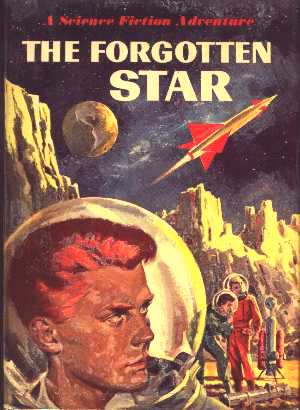
I first encountered century ships before I reached high school in The Forgotten Star, a top notch juvenile which has, ironically, been forgotten. It takes place in our solar system, before star flight; the young heroes discover that Ceres isn’t really an asteroid, but a century ship from elsewhere.

The first time I read a century ship story told from the occupants’ viewpoint was Heinlein’s Orphans of the Sky. It was such a dreary presentation of the “we forgot this is a starship” trope that I never returned to it, and it pretty much put me off century ship stories for a long time.

On the other hand, slow — but not that slow — starship stories are my bread and butter. They take relativity more or less seriously, and offer all kinds of complications through the slowing of time at the approach of lightspeed. Heinlein did it well in the juvenile Time for the Stars. Other authors had milked the concept for its considerable potential for weirdness.

At nearly the speed of light a trip to the stars will seem quick, no matter how many years pass back on Earth, but getting up to the speed of light is an issue is two senses.

First, it will require power on the order of what would come from the total annihilation of matter. This generally requires a MUD (magical unexplained dingus). Slipstick Libby invented one, but usually Heinlein got there by torch ship (what a wonderful name!), a MUD he never bothered to explain. When I needed that much power in Cyan, I invoked Lassiter’s Anomaly as an ersatz explanation. This gave my core ships a nice philosophical underpinning, like E. E. Smith’s Bergenholm which cancelled inertia, but core ships are still MUDs.

Given the power, however you get it, relativistic starflight still has the problem of acceleration time. True, time slows down at near lightspeed, but you have to get there first. If you are an honest writer who takes the time to look at Einstein’s simpler equations, you will realize that it takes a long time to approach lightspeed at an acceleration that wouldn’t squash a human flat.

I did the math for Cyan, and it turned out that a one-way trip to Procyon — accelerating at one gee, coasting, then decelerating at one gee — took three years subjective while twelve years passed on Earth and Cyan. That’s a six year round trip for the ten crewmen, which calls for a lot of games of chess and a lot of intimate human interactions. If you’ve read Cyan, you know what I mean.

As a side note for new writers looking for a useful tip, that coasting stage is a near-freebie. A ten light year or a hundred light year trip would take about the same subjective time, but the time differential between the crew and the folks back home would become immense.

Later in the book, sending colonists took a whole different set of calculations. Accelerating to half the speed of light takes a tiny fraction of the fuel needed to accelerate to near lightspeed, so the colony ships were even-slower-starships, though still not nearly as slow as century ships. Call it twenty years, one way.

How do you get tens of thousands of people into a small space and keep them from killing each other over twenty years? Freeze them. Given the technology of 2107, that meant a twenty percent loss of life among those who chose to go.

Cold blooded? (Forgive the pun.) Not when you consider the conditions they were fleeing.

While the colonist were on their way toward Cyan, a group of beltmen (denizens of the asteroid belt) were also planning an escape. They were already used to living in space; many of them were born there. A long slow trip in a small habitat did not deter them, but the eighty year voyage to Sirius had a lot of unintended consequences. Not quite a century ship perhaps, but close enough.

Of course if you have been following this blog during the last six months you realize that I am talking about Dreamsinger, the sequel I am working on now.

Further down the to-write list is a sequel to the sequel to A Fond Farewell to Dying which concerns a hyper-century ship built around memory taping and a few frozen stem cells. That one doesn’t turn out the way its originators planned either.

I guess the trauma of reading Orphans of the Sky at a tender age hasn’t completely put me off century ships after all.

667. My India

I am frequently blown away by what I am doing here. I came to the internet late, and the magic of it has not worn off. I know that most of you reading this don’t remember a world without the World Wide Web. Even the phrase has fallen out of use, if not out of memory, and has become a basically meaningless www at the start of urls.

Not me. I grew up in a house without a telephone, without plumbing, and didn’t have a flush toilet until I was seven. Still, I have had decades to get used to the changes so I am as blasé as anyone about most of them, but one thing still knocks me out.

Here is an example: On January 6th, I had visitors to this site from nine countries; Canada, India, Netherlands, New Zealand, Philippines, Russia, South Korea, the United Kingdom, and the United States. More than half of those visitors were from India.

That isn’t a typical day. There is no such thing as a typical day, actually. However, if I were to tally all my days, the US would come in first in number of readers and India would come in second.

I would never have anticipated that when I began this blog, but there is some logic to it. To start with, India is a big country, second in the world by population, with five times as many people as the US. China is bigger, but I get few hits from China. There is a reason for that too, beyond politics.

Although the official language of India is Hindi, English is widely used. That is a legacy of hundreds of years of British domination. When India achieved independence in 1947, there were dozens of major languages. If any one had achieved dominance, it would have given its speakers a major political advantage, so English became a “subsidiary official language”. There are vast number of English speakers in India, and a lot of them are on the internet. Of those whose sites I’ve seen, many are in one of the Indian languages plus English.

I get a kick out of all the hits I get from distant countries, but India is special. I have had a relationship with India since 1968. When I switched from Biology to Anthropology at the start of my Sophomore year in college I had just taken Introduction to India and had already found my area of specialization. During the last three years at MSU I was a member of the Indian studies group, researched overseas Indian colonization, and took a year of Hindi (of which I remember little, all these years later). I made friends among Indian students studying at MSU and among returned Peace Corps volunteers.

My wife and I signed up for and were accepted to the Peace Corps for assignment in India, but lost out when the deferment was cancelled. Then I spent four years in the Navy, before entering the University of Chicago for a masters degree. Again India was my area specialization, and my thesis was on Indian village economics.

All of that makes me an expert, right? Not on your life it doesn’t. I’ll give you an example. I once took a graduate level class in Indian history. The first day we were asked about our backgrounds. One young Indian woman said that she was only auditing the class. She was in America with her husband who was a student in another department, and she was just coming by to fill in a few details that she might have missed in her high school history class.

I was in my late twenties with a B.S., enrolled in a top graduate school, and right out of high school she knew ten times more about India than I ever would.

It’s enough to keep you humble.

When I started writing, I put that knowledge to use. My second published novel, A Fond Farewell to Dying takes place in a post nuclear war, post flood world where India is the only remaining modern technical civilization. My main character was an American scientist who had moved there because North America was so backward after being heavily nuked. Because of his research, he becomes embroiled in the rising conflict between India and a pan-Muslim neighbor.

A major sub-plot in Cyan concerns parallel colonization efforts by Indian and North American groups.

The Cost of Empire is primarily built around actual Indian history, somewhat modified since it is taking place in an alternate universe. The various durbars in which Britain announced its imperial claims on India are collapsed into one, watched over by a fleet of dirigibles flown there to overawe the Indians who are agitating for independence. David James, the main character, learns from overseas Indians in Trinidad and later in India itself that maybe his country shouldn’t be ruling the whole world after all.

I you are a writer, you use what you know.

666. The Beast Crawls Up

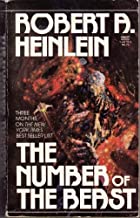
The Number of the Beast is a novel by Robert Heinlein. I have referred to it several times, most recently on the January 13th post when I said that the first hundred pages are “my favorite thing to re-read, but the rest of the book is kinderdrivel”. Yep, that pretty much covers it, but it is a fascinating book to talk about because it generates so much hatred. For example, David Langford said of it:

My (fairly) humble view is that the book says nothing and says it very badly.

I like that — brief and to the point, with nothing held back. I don’t fully agree with it, but I don’t fully disagree with it either. There will be more below, after we put things into some perspective.

There is a long history of science fiction works that treat Christianity as fact, and derive either positive or negative results from that assumption. On the positive side is one of my favorite books from high school, Starship Through Space by Lee Corey (aka G. Harry Stein). Ninety percent of the book details the building of the first starship and its maiden voyage to Alpha Centauri. It was a wonderful book until they arrived to find American Indians reading Genesis waiting to greet them. Dumb! Massively, unforgivably dumb to end a great novel on such a note.

Also from my high school library were the Perelandra books by C. S. Lewis which were a kind of space faring John Bunyan. Not good; I got through them and never looked back. They were allegory and they were tedious, but I could at least respect them.

Most of the SF that sees religion in a negative light concentrates on the practitioners and leaves God himself out of the argument. A Canticle for Leibowitz comes to mind. That’s also what I’ve typically done.

The ones that take on God himself tend to be serious and usually angry. James Blish rewrites the outcome of the Revelation in his After Such Knowledge trilogy. (Doctor Mirabilis, Black Easter and The Day After Judgment.) Arthur C. Clarke’s The Star is disturbing and sad, but his The Nine Billion Names of God simply ends all creation in a mild and matter-of-fact way when Buddhist prophesy comes true.

Heinlein does it all differently. In The Number of the Beast he turns Revelation’s beast into an alien species and turns science fiction into a romp. Or a travesty in the eyes of many reviewers. I’ve read everything RAH wrote, save his first two juveniles, and I can attest that no other work is so completely lacking in seriousness.

For those who see him as a guru or a devil, this must be completely infuriating.

For me, I read the whole thing once and I’m glad I did. I’ve read the first hundred pages several times since, not because it is particularly good, but because it is a silly game, an unexpected vacation with old friends. Who? The Heinlein character, in four variations, making love to its/his/her/their self. If you can read between the lines, I’ll skip the “m” word. Since I’m a classy guy, I’ll just say inner directed and very self-admiring.

I grew up spending endless hours listening to my father and two of his brothers sitting around the kitchen table telling tales out of their childhoods, trying to outdo each other in hyperbole, and having a wonderful time laughing together. Heinlein, to me, is like another uncle. I love to listen to his stories because I love the way he tells them.

What else is there to like? His world building? Yes, if you look at his pre-war short stories, but the world building in his novels typically amounts to one or two pithy sentences per book. His characters? He only has one. His philosophy? Discounting solipsism as his joke on the world, he is a realist totally undercut by his own sentimentality. His political ideas? There are enough so that everyone can find something to hate.

David Langford, quoted above, spent a lot of ink taking The Number of the Beast apart at the seams, which totally missed the point. The Number of the Beast isn’t a novel; it’s post-Heinlein Heinlein. It’s the old man reminiscing about all the books he read as a kid, and all the books he wrote as a man (starring himself) in a relatively clever stroll down memory lane. And we get to go with him, which is why I liked it when I read it. But there is no meat, which is why I haven’t gone back.

If you hate it, you’re right. Heinlein doesn’t care. He’s having a wonderful time.