Tag Archives: science fiction

668. Century Ships

Joachim Boaz at Science Fiction and Other Suspect Ruminations has been running a series of reviews on century ship stories. He does a good job, even providing links so you can read the story itself before or after reading his review. I’ve read two of them, both story and review, picked out because they were by Brunner and Ballard.

Century ship stories are an extreme version of slow starship stories, that is, stories about exploration in ships which do not travel faster than light. Century ship stories assume that the people who start the journey will not live to complete it. It will be completed by their descendants who, when they arrive, will never have lived anywhere but on the ship.

That sounds like a recipe for disaster, and it typically is. A reversion to barbarism along with a superstitious belief that nothing outside the ship actually exists is a common trope. The original Star Trek used it in For the World is Hollow, and I Have Touched the Sky.

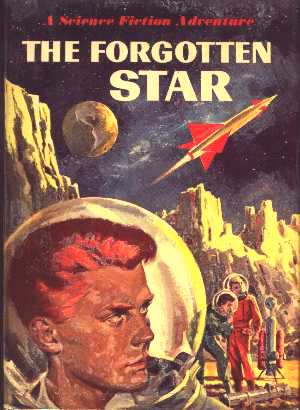
I first encountered century ships before I reached high school in The Forgotten Star, a top notch juvenile which has, ironically, been forgotten. It takes place in our solar system, before star flight; the young heroes discover that Ceres isn’t really an asteroid, but a century ship from elsewhere.

The first time I read a century ship story told from the occupants’ viewpoint was Heinlein’s Orphans of the Sky. It was such a dreary presentation of the “we forgot this is a starship” trope that I never returned to it, and it pretty much put me off century ship stories for a long time.

On the other hand, slow — but not that slow — starship stories are my bread and butter. They take relativity more or less seriously, and offer all kinds of complications through the slowing of time at the approach of lightspeed. Heinlein did it well in the juvenile Time for the Stars. Other authors had milked the concept for its considerable potential for weirdness.

At nearly the speed of light a trip to the stars will seem quick, no matter how many years pass back on Earth, but getting up to the speed of light is an issue is two senses.

First, it will require power on the order of what would come from the total annihilation of matter. This generally requires a MUD (magical unexplained dingus). Slipstick Libby invented one, but usually Heinlein got there by torch ship (what a wonderful name!), a MUD he never bothered to explain. When I needed that much power in Cyan, I invoked Lassiter’s Anomaly as an ersatz explanation. This gave my core ships a nice philosophical underpinning, like E. E. Smith’s Bergenholm which cancelled inertia, but core ships are still MUDs.

Given the power, however you get it, relativistic starflight still has the problem of acceleration time. True, time slows down at near lightspeed, but you have to get there first. If you are an honest writer who takes the time to look at Einstein’s simpler equations, you will realize that it takes a long time to approach lightspeed at an acceleration that wouldn’t squash a human flat.

I did the math for Cyan, and it turned out that a one-way trip to Procyon — accelerating at one gee, coasting, then decelerating at one gee — took three years subjective while twelve years passed on Earth and Cyan. That’s a six year round trip for the ten crewmen, which calls for a lot of games of chess and a lot of intimate human interactions. If you’ve read Cyan, you know what I mean.

As a side note for new writers looking for a useful tip, that coasting stage is a near-freebie. A ten light year or a hundred light year trip would take about the same subjective time, but the time differential between the crew and the folks back home would become immense.

Later in the book, sending colonists took a whole different set of calculations. Accelerating to half the speed of light takes a tiny fraction of the fuel needed to accelerate to near lightspeed, so the colony ships were even-slower-starships, though still not nearly as slow as century ships. Call it twenty years, one way.

How do you get tens of thousands of people into a small space and keep them from killing each other over twenty years? Freeze them. Given the technology of 2107, that meant a twenty percent loss of life among those who chose to go.

Cold blooded? (Forgive the pun.) Not when you consider the conditions they were fleeing.

While the colonist were on their way toward Cyan, a group of beltmen (denizens of the asteroid belt) were also planning an escape. They were already used to living in space; many of them were born there. A long slow trip in a small habitat did not deter them, but the eighty year voyage to Sirius had a lot of unintended consequences. Not quite a century ship perhaps, but close enough.

Of course if you have been following this blog during the last six months you realize that I am talking about Dreamsinger, the sequel I am working on now.

Further down the to-write list is a sequel to the sequel to A Fond Farewell to Dying which concerns a hyper-century ship built around memory taping and a few frozen stem cells. That one doesn’t turn out the way its originators planned either.

I guess the trauma of reading Orphans of the Sky at a tender age hasn’t completely put me off century ships after all.

667. My India

I am frequently blown away by what I am doing here. I came to the internet late, and the magic of it has not worn off. I know that most of you reading this don’t remember a world without the World Wide Web. Even the phrase has fallen out of use, if not out of memory, and has become a basically meaningless www at the start of urls.

Not me. I grew up in a house without a telephone, without plumbing, and didn’t have a flush toilet until I was seven. Still, I have had decades to get used to the changes so I am as blasé as anyone about most of them, but one thing still knocks me out.

Here is an example: On January 6th, I had visitors to this site from nine countries; Canada, India, Netherlands, New Zealand, Philippines, Russia, South Korea, the United Kingdom, and the United States. More than half of those visitors were from India.

That isn’t a typical day. There is no such thing as a typical day, actually. However, if I were to tally all my days, the US would come in first in number of readers and India would come in second.

I would never have anticipated that when I began this blog, but there is some logic to it. To start with, India is a big country, second in the world by population, with five times as many people as the US. China is bigger, but I get few hits from China. There is a reason for that too, beyond politics.

Although the official language of India is Hindi, English is widely used. That is a legacy of hundreds of years of British domination. When India achieved independence in 1947, there were dozens of major languages. If any one had achieved dominance, it would have given its speakers a major political advantage, so English became a “subsidiary official language”. There are vast number of English speakers in India, and a lot of them are on the internet. Of those whose sites I’ve seen, many are in one of the Indian languages plus English.

I get a kick out of all the hits I get from distant countries, but India is special. I have had a relationship with India since 1968. When I switched from Biology to Anthropology at the start of my Sophomore year in college I had just taken Introduction to India and had already found my area of specialization. During the last three years at MSU I was a member of the Indian studies group, researched overseas Indian colonization, and took a year of Hindi (of which I remember little, all these years later). I made friends among Indian students studying at MSU and among returned Peace Corps volunteers.

My wife and I signed up for and were accepted to the Peace Corps for assignment in India, but lost out when the deferment was cancelled. Then I spent four years in the Navy, before entering the University of Chicago for a masters degree. Again India was my area specialization, and my thesis was on Indian village economics.

All of that makes me an expert, right? Not on your life it doesn’t. I’ll give you an example. I once took a graduate level class in Indian history. The first day we were asked about our backgrounds. One young Indian woman said that she was only auditing the class. She was in America with her husband who was a student in another department, and she was just coming by to fill in a few details that she might have missed in her high school history class.

I was in my late twenties with a B.S., enrolled in a top graduate school, and right out of high school she knew ten times more about India than I ever would.

It’s enough to keep you humble.

When I started writing, I put that knowledge to use. My second published novel, A Fond Farewell to Dying takes place in a post nuclear war, post flood world where India is the only remaining modern technical civilization. My main character was an American scientist who had moved there because North America was so backward after being heavily nuked. Because of his research, he becomes embroiled in the rising conflict between India and a pan-Muslim neighbor.

A major sub-plot in Cyan concerns parallel colonization efforts by Indian and North American groups.

The Cost of Empire is primarily built around actual Indian history, somewhat modified since it is taking place in an alternate universe. The various durbars in which Britain announced its imperial claims on India are collapsed into one, watched over by a fleet of dirigibles flown there to overawe the Indians who are agitating for independence. David James, the main character, learns from overseas Indians in Trinidad and later in India itself that maybe his country shouldn’t be ruling the whole world after all.

I you are a writer, you use what you know.

666. The Beast Crawls Up

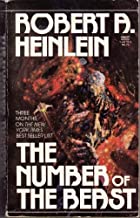
The Number of the Beast is a novel by Robert Heinlein. I have referred to it several times, most recently on the January 13th post when I said that the first hundred pages are “my favorite thing to re-read, but the rest of the book is kinderdrivel”. Yep, that pretty much covers it, but it is a fascinating book to talk about because it generates so much hatred. For example, David Langford said of it:

My (fairly) humble view is that the book says nothing and says it very badly.

I like that — brief and to the point, with nothing held back. I don’t fully agree with it, but I don’t fully disagree with it either. There will be more below, after we put things into some perspective.

There is a long history of science fiction works that treat Christianity as fact, and derive either positive or negative results from that assumption. On the positive side is one of my favorite books from high school, Starship Through Space by Lee Corey (aka G. Harry Stein). Ninety percent of the book details the building of the first starship and its maiden voyage to Alpha Centauri. It was a wonderful book until they arrived to find American Indians reading Genesis waiting to greet them. Dumb! Massively, unforgivably dumb to end a great novel on such a note.

Also from my high school library were the Perelandra books by C. S. Lewis which were a kind of space faring John Bunyan. Not good; I got through them and never looked back. They were allegory and they were tedious, but I could at least respect them.

Most of the SF that sees religion in a negative light concentrates on the practitioners and leaves God himself out of the argument. A Canticle for Leibowitz comes to mind. That’s also what I’ve typically done.

The ones that take on God himself tend to be serious and usually angry. James Blish rewrites the outcome of the Revelation in his After Such Knowledge trilogy. (Doctor Mirabilis, Black Easter and The Day After Judgment.) Arthur C. Clarke’s The Star is disturbing and sad, but his The Nine Billion Names of God simply ends all creation in a mild and matter-of-fact way when Buddhist prophesy comes true.

Heinlein does it all differently. In The Number of the Beast he turns Revelation’s beast into an alien species and turns science fiction into a romp. Or a travesty in the eyes of many reviewers. I’ve read everything RAH wrote, save his first two juveniles, and I can attest that no other work is so completely lacking in seriousness.

For those who see him as a guru or a devil, this must be completely infuriating.

For me, I read the whole thing once and I’m glad I did. I’ve read the first hundred pages several times since, not because it is particularly good, but because it is a silly game, an unexpected vacation with old friends. Who? The Heinlein character, in four variations, making love to its/his/her/their self. If you can read between the lines, I’ll skip the “m” word. Since I’m a classy guy, I’ll just say inner directed and very self-admiring.

I grew up spending endless hours listening to my father and two of his brothers sitting around the kitchen table telling tales out of their childhoods, trying to outdo each other in hyperbole, and having a wonderful time laughing together. Heinlein, to me, is like another uncle. I love to listen to his stories because I love the way he tells them.

What else is there to like? His world building? Yes, if you look at his pre-war short stories, but the world building in his novels typically amounts to one or two pithy sentences per book. His characters? He only has one. His philosophy? Discounting solipsism as his joke on the world, he is a realist totally undercut by his own sentimentality. His political ideas? There are enough so that everyone can find something to hate.

David Langford, quoted above, spent a lot of ink taking The Number of the Beast apart at the seams, which totally missed the point. The Number of the Beast isn’t a novel; it’s post-Heinlein Heinlein. It’s the old man reminiscing about all the books he read as a kid, and all the books he wrote as a man (starring himself) in a relatively clever stroll down memory lane. And we get to go with him, which is why I liked it when I read it. But there is no meat, which is why I haven’t gone back.

If you hate it, you’re right. Heinlein doesn’t care. He’s having a wonderful time.

664. Whose Number is This Anyway?

Post number 666 is coming soon, and there is no way I can ignore it. It stirs things up, three posts worth in fact, so I have to start talking about it today.

Perhaps I should explain the number 666, because many people who read this blog do not live in overwhelmingly Christian countries.

666 is a number that appears in the Christian Bible, in the Revelation, which is its last book. Revelation purports to be prophesy of the last days and the end of the world. Serious Christians spend a lot of time thinking about that and not so serious Christians are fully aware of it. Smart ass kids joke about it; serious kids get freaked out by it. Writers of fantasy use it for inspiration, atmosphere, and images. If you take the time to read Revelation (get the King James version for the full smell of brimstone) you will find that it makes Stephen King sound like Little Lord Fauntleroy. The heavy metal band Iron Maiden rode to fame on it. Nobody ignores it.

Just to make my own position clear, I used to be a Christian and now I’m not. I have a tenuous relations with Christianity since almost all my friends are Christian, many deeply so, and I would not want to offend them. Still . . .

Here is the quotation in question, from Revelation 13:16-18, King James Version:

[16] And he causeth all, both small and great, rich and poor, free and bond, to receive a mark in their right hand, or in their foreheads:

[17] And that no man might buy or sell, save he that had the mark, or the name of the beast, or the number of his name.

[18] Here is wisdom. Let him that hath understanding count the number of the beast: for it is the number of a man; and his number is Six hundred threescore and six.

The beast carried the number 666 in his forehead and all his followers were required to do the same. This quotation is just about the number itself. The rest of the chapter is about the beast, and it is terrifying.

The Revelation’s picture of the last days was deeply disturbing to a twelve year old kid sitting in the back pew of a small Baptist Church, deep in Oklahoma, well into the night service, surrounded by the moist heat of August, with darkness outside and the sweat-soaked preacher thundering from the pulpit as his hour of hellfire preaching reached its crescendo. And it wasn’t an isolated sermon. My church served up hellfire three times a week, and the Revelation was the text for the feast several times a month.

It still gives me a chill, and it makes me understand the almost superstitious revulsion many people have for the number 666.

*        *        *

Thinking about all this brought up a fairly frivolous question — since phone codes are three digit, is there an area code 666? Apparently not, although my authority is the internet, so let’s treat this as hearsay. Apparently the number 666 is “currently not assigned” which means that it is one of those area code numbers reserved for growth. It also means that it could be assigned at any time. Wouldn’t that be interesting?

My wandering through the internet in search of more bits about 666 revealed a lot of facts which may not be so factual. It is said that area code 666 was once assigned to an area in Louisiana and that local Christians petitioned successfully to have it changed. It sounds like something that could have happened, but stories that good are often invented.

There was one Q&A which I can’t resist repeating.

In what state is area code 666 located? Hellsavania.

That’s enough for one post about the infamous number, but the issues have barely been touched on. There’s more. Stand by.

663. Delayed Youth

Last week I mentioned that I was not allowed to have non-Disney comic books as a child. There were two small exceptions. When we moved onto a new farm when I was seven, someone had left a Blackhawk comic behind. I hid it and read it in secret until the ink wore off (metaphorically).

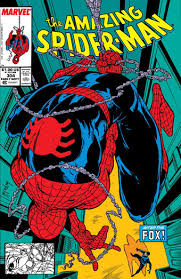
Every week my Dad and I went in for haircuts — a flattop for me, not by choice. While my Dad had his haircut, I read Spiderman from one of the comic books that was always there hidden under Outdoor Life and the Progressive Farmer. He never caught on.

Here’s a hint. If you want your kid to want something, make sure he can’t have it.

There were a lot of words I couldn’t say growing up. All the usual cuss words, of course, but also Chevy (we were a Ford family), Allis Chalmers (we were a John Deere family), or Democrat (we were a Republican family).

Here’s another hint. If you want your kid to be a rebel, don’t ask him what he thinks, just tell him what to think.

When I finally got away from home, one of my college roommates was a folk singer. He had an extra guitar which I borrowed. While I was learning to play it that first year, I was also accumulating records by people like Baez (Deportees), Paxton (The Ballad of Spiro Agnew), and Ochs (I Ain’t Marching Anymore), and starting to pay attention to that war in Viet Nam that I would be expected wage when I got out of college.

Hint number three, if you want to grow a liberal, force him to be a conservative as he grows up. The threat of the draft doesn’t hurt either as a way of liberalizing a farm boy.

My other roommate gave me a couple of gifts, besides just being nice guy. He introduced me to the Lensman series (Doc Smith, aka E. E. Smith, Ph. D.) and to paperback science fiction in general.

In one sense, my childhood was lucky. I read science fiction from the beginning and my parents never caught on that Stranger in a Strange Land was probably more dangerous to a child’s sexual morality than Spiderman was.

It was the covers. Old books from an old library in the fifties meant that the covers on science fiction novels were plain tan cloth with no pictures. There were no bookstores anywhere near, so my parents never saw those wonderful paperback covers with all those wonderful half-nekked women. If they had, I would have been restricted to Mitchner and Costain.

The other thing my college roommate introduced me to was Marvel comics. Not counting an occasional Spiderman in the barber shop, I had never seen Marvels, and it didn’t take long to get hooked. I had my youthful dalliance with Marvel about ten years later than I should have.

Pretty soon I was reading them all. There were so many crossovers that you couldn’t skip one you didn’t care much for, for fear that it would mess up your enjoyment of one of your favorites. Those Marvel people were marketing geniuses.

I had my Marvel decade during the wrong decade of my life. Eventually, I had to quit cold turkey. By that time I was writing full time, Jandrax was out, A Fond Farewell to Dying was on the way, and I  wasn’t making enough money to support my habit.

So I quit. All at once. Quitting cigarettes would have been less painful.

Does anyone want to buy a collection, much thumbed and totally not mint, of every Marvel comic, one copy of each, from 1967 to 1977? Never mind, I might re-read them someday. After all, I re-read everything else.

661. J. G. Ballard’s Coral D

J. G. Ballard and The Cloud-Sculptors of Coral D

New Age, New Wave, New Deal — the names never seem to hold up more than a few years. When the New Wave in science fiction became an old wave, it kept its name. That’s too bad, really, because it makes a genuine change in science fiction seem a little silly. Art Noveau suffers from the same illogic, but since the phrase is French, no one notices.

I was there when the New Wave happened but I won’t try to define the movement. It can’t really be done, although Wikipedia does as good a job as anyone will. It was an exceedingly amorphous movement, full of wonderful writing and unbearable crap — pretty much like most movements.

For me as a reader, long before I became a writer, the New Wave just meant that there were wonderful stories available from Harlan Ellison, Roger Zelazny, and J. G. Ballard. And in the weird department, Ballard made Ellison and Zelazny look like insurance salesmen.

I’m going to try to untangle Ballard’s The CloudSculptors of Coral D down a few paragraphs, but first let me tell you a couple of things.

I bought Ballard’s complete short stories when it became available, probably ten years ago, but I hadn’t read a single story from it until recently. I remember his work with awe and wonder, but that doesn’t mean memories of joy. His stories crawl around like worms in my subconscious, so I didn’t read them again, even though I normally re-read everything.

I was thinking about those stories one day in 2017, especially the one called Deep End which is steeped in hopelessness about the human condition. A short story popped out of my head and fell onto paper. Since Ballard inspired it, it is grim. If you are interested in a dip into the black pool, click here.

Then, a few weeks ago, I found myself being challenged by Joachim Boaz. He recently reviewed Thirteen to Centaurus by Ballard. It’s one of Ballard’s works that I had not read, so I decided to do so before I read Boaz’s review.

But before starting that, I decided to re-read something I remembered fondly (but faintly) in order to repair some of the trauma induced by Deep End.

========

I normally avoid spoilers, but not this time. I could lay out the events of The Cloud-Sculptors of Coral D completely, and it would be like a skeleton compared to a man. The plot is nothing. The words are everything.

Here is what happens. Four men come together in a strange landscape, clearly one which remains after a cataclysm. One is a pilot with a broken leg, one is a dwarf, one is an artist, one is a playboy. Together they become purveyors of a transitory performance art. They sculpt statues out of clouds, flying in gliders, and carving with silver iodide.

Every one of these men is a cripple in one sense or another. The pilot with his broken leg, through whose eyes we see events, is the least crippled of them.

Enter Leonora Chanel, heiress, flawed beauty, and murderess. She surrounds herself with portraits of herself, and she is the most crippled of them all. She hires the men to sculpt her face in the sky, but at another location. When they arrive, the main character says to her . . .

Clouds . . . those are tigers, tigers with wings. We are manicurists of the air, not dragon-tamers.

. . . and we immediately know that not all of the sculptors will survive.

I will leave the rest of the how and why unreported in case you read the story. What we have here is a group of damaged men, in a damaged world, under the spell of a powerful la belle dame sans merci. It could be Burma after WWII, or any of a hundred other places, in any of a dozen movies or novels out of the fifties.

What makes it science fiction, and moving, is not the plot but the descriptions. And what makes the descriptions memorable is as much what is left out as what is said.

Vermillion sands. Towers of coral rising up from the shattered bed of a dead sea. Sonic statues which wail eerily at just the right moment. Gliders, “brilliant painted toys, revolving like lazing birds above Coral D”. Leonora’s jeweled eyes, a phrase repeated almost too often before we find out what it actually means. “Memories, caravels without sails, crossing the shadowy deserts of her burnt-out eyes.” The dwarf, “with a child’s overlit eyes”.

It is all clearly an allegory, but Ballard gives us very few clues as to what it is an allegory of. One character says, “We had entered an inflamed landscape,” and that is a good short description of Coral D and of Ballard as a writer.

The people, actions, and motives are as surreal as the landscape. It seems like a cop-out to say this, but Coral D, like most of Ballard, has to be read. It can’t be conveyed. And when you finish reading, you may still feel frustrated and confused.

But you won’t forget it.

========

Now, from the sublime to the absurd.

When I was ten years old, while other kids were reading Spiderman, I was reading Scrooge McDuck. My hyper-religious parents would not allow non-Disney comic books in the house.

In one episode, Scrooge had another get-rich(er) scheme. He outfitted biplanes with bulldozer blades, flew around herding clouds into cubical shapes over farmers’ fields, and seeded them with silver iodide — all for profit. I don’t remember too much more detail, and I have been unable to find a copy anywhere, but I do remember one picture of the rain falling to the exact middle of a wooden fence, since Scrooge McDuck would not let one drop of his rain fall on a field which had not been paid for.

You would have a hard time finding two works more superficially similar and essentially different than McDuck and Coral D. It boggles the mind. Did Ballard read McDuck in his youth and get a picture lodged in his subconscious? Or was Carl Barks, who wrote and drew Scrooge McDuck, secretly a fan of weird science fiction?

Either alternative is too strange to contemplate.

660. Methuselah’s Children

I used a quote from Methuselah’s Children about a half a year ago in my diatribe against driverless cars. Taking a glance at Heinlein is always a mistake. I found myself committed to reading the whole novel, even though I’ve read it often enough to nearly memorize the thing.

The problem is, it’s his best work, from the viewpoint of skilled writing and skilled science fiction plotting. That is opposed to boy-meets-girl plotting or western-shoot-em-up plotting, which are completely different skill sets.

Stranger in a Strange Land and Starship Troopers are Heinlein’s best known works, but I find them both to be second rate. The first hundred pages of Number of the Beast is my favorite thing to re-read, but the rest of the book is kinderdrivel.

Methuselah’s Children is the best novel he ever wrote, hands down, despite my deep affection for at least a dozen runners-up. An early version came out in Astounding in 1941, and was expanded to the work we now know when it was published in paperback in 1958. Methuselah’s Children is the book Paul Kantner was referencing when Jefferson Starship suggested we all “hijack the starship” in 1970.

Heinlein has his strengths and his weaknesses. I acknowledge the latter, but I won’t catalog them. There are plenty of people who like him less than I do who are more than willing to do that. For my money, Methuselah’s Children is the book in which those weaknesses are least in evidence.

As the book begins, Lazarus Long (his first appearance) and Phyllis Sterling meet, interact, and are sexually aware of each other without letting it get in the way. Long offers advice without trying to run her life. Danger rears its head, and each of them reacts with maturity and grace, respecting each other’s competence. There is very little boy-girl snarkiness.

It’s too bad Heinlein couldn’t pull this off more often.

As everyone knows, Lazarus Long hijacks a starship to save his fellow long-lifers. If you haven’t read Methuselah’s Children or haven’t read it lately, this might seem preposterous, but he manages the task with a lot of help from people in power. The things he actually does are all well within the powers of any competent space pilot. He pulls it off not because he is a superman, but because he is a sneaky bastard.

Once on board, Slipstick Libby invents a space drive which takes them to the stars.

Assembled odd bits of other equipment, looking more like the product of a boy’s workshop than the output of a scientist’s laboratory, the gadget which Libby referred to as a “space drive” underwent Lazarus’s critical examination. Against the polished sophisticated perfection of the control room it looked uncouth, pathetic, ridiculously inadequate.

. . . but it works, and yes, Libby is a superman. Heinlein got away with that by making him a relatively minor character.

On planets they visit along the way they meet the Jockaira and their “Gods”, as well as the “little people”, and find out that humans aren’t the smartest race in our corner of the galaxy. Another writer would have made this a cause for feelings of inferiority, but Lazarus Long is Heinlein in disguise. He doesn’t have a humble bone in his body.

The refugees, armed with all they have learned, return to Earth to fight for their rights. Flags wave, cannons sound, bands march — well, not really, but that is the feeling.

Everything that Heinlein was, is on display here. It’s great fun, but it’s not slapstick. Heinlein keeps a light touch, but his alter ego “takes his soul out and examines it” just often enough to keep matters in perspective.

Heinlein would revisit every idea, many of the characters, and every character-type in subsequent novels. None of them would be so well balanced, nor have so few groaners.

658. Non-Political ?

Like 2020, 2016 was also the year of a Presidential election. I had a new blog designed to bring in readers for my upcoming novel Cyan and I had no intention of writing on politics. I was planning to share some of the things I had learned in decades of writing while drumming up customers. The last thing I wanted to do was make half of my readers mad at me.

Not that I had any readers yet, so early in my blogging career, but I hoped to soon.

Life has a way of changing our plans. My neutrality lasted about a month, from mid-August until mid-September. Then I had to interrupt my sequence of blogs between 10 and 11 to say:

This is not normally a political blog, but as I am a citizen, there are times to speak out. The post originally scheduled to be here will appear tomorrow.

Have you ever asked yourself, “How could Germany have been fooled into following Adolph Hitler?” The answer is on your television this morning, and it is Donald Trump.

I called him out for his fear-mongering, but added that I didn’t see him as evil, just foolish. I subsequently changed my mind about that.

Still I couldn’t see spending much time on someone who had no chance of winning. That was another error in judgment, both about how effective Trump would be and about how much time I would spend yelling at him.

On February 29th I celebrated the end of Black History Month with a bit of whimsy that would grow into a long series of posts about an imaginary Presidential candidate. I’ll remind you about that on Wednesday.

By Election Day things looked pretty well settled on a Hillary win. I had never been impressed by her either, so on September third I wrote a post to be placed election day, making these predictions:

By now you know who won this time around . . . As of today, Hillary’s win seems certain if she doesn’t stumble, but she stumbles a lot. It could still be Donald. You know the outcome. So do I, but I didn’t when I wrote this.

Here is what I do know, now, September third. Whoever was elected yesterday will be a one-term president.

You’ve heard every talking head for the last year say that no two candidates in history have been so hated and feared as Donald and Hillary. Almost everyone dislikes one or the other; a sad majority dislikes them both.

So the question arises:  who will win the Presidency in 2020? You can be sure it won’t be Donald or Hillary, no matter who won yesterday.

If your candidate lost yesterday, take heart. Whoever your party chooses in 2020 will win – barring another match-up of turkeys, and what are the chances of that happening again?

If your candidate won yesterday, tough luck.

Well, that is what it looked like in September of 2016. I’m not so sure that prediction was any better than the others I made during the campaign. I just hope I got that one right.

656. Angle of Repose

As a point of accuracy, angle of repose is a civil engineering term referring to how steep a slope is possible without slumping due to gravity. The angle varies according to the material under consideration.

I am completely misusing the term here in reference to axial tilt because it sounds so good. So sue me.

Today is December 30; the year is near it’s end. The solstice was December 22 this year, so the days have been getting longer for eight days now. What we call the first day of winter is actually winter’s mid-point, judged by the inclination of the Earth. The “incorrect” way we measure winter actually works pretty well though, because there is a delay effect between tilt and the weather that depends on it.

“The Earth tilts south in the winter and tilts back north in the summer.” Easy to say and easy to understand, just like saying that the Earth is flat, but of course it’s wrong. I remember teaching the matter to my school kids every year. I would designate a student sitting in the center of the room as the Sun and walk around the classroom with the globe tilted roughly 23 degrees toward the bank of windows to demonstrate that the angle of inclination doesn’t change, only the position of the Earth in relation to the Sun. I’m sure they all forgot it by the next day.

The seasons as we know them are due to the degree of tilt. Tilt further, and the seasons would be more extreme. Tilt less and they would be less extreme. I’ve made a career of writing about that.

My first novel, Jandrax, was set on a world circling a cool sun, with a tilt of something like 32 degrees. That made for seasons like those on Earth, but more extreme. It worked out well for my intentions, stranding a bunch of religious extremists and watching them adapt in two different ways, as a static civilization in changing weather, and as nomads who followed the good season.

The unharmonious planet Harmony was in the middle of an ice age, with the only livable real estate flanking the equator, and of course they had two summers and two winters each year.

No, I know it isn’t obvious, but it is real. I explained the phenomenon in 14. Axial Tilt. Check if you doubt me.

Cyan came later. I set it up as a planet with virtually no tilt, resulting in unlivable cold, miserable cold, too cold for comfort, Goldilocks perfect, too hot for comfort, miserably hot, and too hot to live, all depending on your latitude. That would have made for a perfect climate somewhere (a boring thought for a writer) except that I threw in a 40 hour day so even at the “perfect” latitude you could count on burning your brain and frosting your buns every overlong day of the seemingly endless year.

It also resulted in two virtually independent super-biomes, separated by a dead torrid zone, as Keir lamented when Tasmeen, Beryl, Debra, and Viki . . .; no, sorry, you’ll have to read that yourself.

Okay, what’s opposite of the unchanging, tilt-less Cyan? A planet of Uranian orientation, of course. Stormking becomes the third of the trilogy, lying on its back in orbit, presenting first one pole and then the other to its star. Such a planet would probably not be viable for a human civilization, but as a place for an orbiting civilization to dump its exiles, it’s perfect.

Dome cities could survive on a Uranian planet, but why would they want to? Any people, like our exiles, who actually interact with the environment would have to keep continually on the run. That’s a little like the nomads of Jandrax, but where those were a people whose march kept them on the leading edge of a moving paradise, the exiles of Stormking live in an endless hell-storm. All of the water of that planet spends half of the year locked up in north polar ice caps while the south pole is desert. Then all that water has to move from north pole to south to freeze again while the north pole becomes desert. All this will have to happen twice a year.

You can’t imagine the storms. Actually, you don’t have to. I do, and then I have to write them.

This is going to be fun.

653. Eve Learns to Sing

If you want to put this excerpt from Like Clockwork into context, read Monday’s post. It takes place in the deserted shell of St Matthews Church, London, in the recurring year 1850.

The pocket London of the novel hangs uncomfortably between utopia and dystopia — pretty much like real life. It is a place where everyone lives forever in a peaceful world, but where alternative thinking is strictly avoided.

It is also a place where no one sings.

=================

Eve asked, “What are songs?”

The question hit him like a blow to the heart. Balfour said, “Didn’t your mother sing to you?”

“My mother was so desperate to live forever that she hardly lived at all. She held me and comforted me, but she lived for her work.”

“So she never sang?”

“Not to me. And I have never heard anyone singing here in Luddie London. Do they sing in the outer city?”

Balfour shook his head.

“Thank you for the book of songs, but these are just words on a page to me.”

“May I sing for you?” he asked.

For a moment her youth shone through her eyes and she nodded.

Balfour did not apologize, or say, “I’m not much of a singer.” This was not about quality, but about sharing. He found a familiar song and sang in a scratchy tenor:

Amazing Grace, How sweet the sound
That saved a wretch like me
I once was lost, but now am found
T’was blind but now I see

Eve said, “I don’t like that song. I’m not a wretch. Don’t sing me a song about self-loathing. Sing to me about a garden.”

Balfour ruffled the pages. He said, “I don’t know this one. Give me a moment to work out the notes.” She watched him, head bobbing slightly, lips moving as he read the staff twice through, then sang:

I come to the garden alone,
While the dew is still on the roses;
And the voice I hear, falling on my ear,
The Son of God discloses.

And He walks with me, and He talks with me,
And He tells me I am His own,
And the joy we share as we tarry there,
None other has ever known.

“Thank you. Oh, thank you,” Eve cried. “But that last line is wrong. If God gives the joy, then everybody would know it. Please go on.”

Balfour continued:

He speaks, and the sound of His voice
Is so sweet the birds hush their singing;
And the melody that He gave to me
Within my heart is ringing.

I’d stay in the garden with Him
Tho’ the night around me be falling;
But He bids me go; thro’ the voice of woe,
His voice to me is calling.

Eve said, “Don’t sing that last verse any more. I don’t want to leave the garden. I’ve never seen a garden, and I so much want to.”

“Could you sing it?” Balfour asked.

“I don’t know. Repeat it a time or two more and I’ll try.”

So Balfour repeated, dropping the last verse, and changing the last line of the chorus to All others shall ever know. Eve squeezed her eyes tight and her head moved to the music. After he had sung the song twice more, he said, “Now you.”

She sang. There was neither hesitation nor shyness in her manner, and her voice was pure and light. Balfour knew she was not singing for him, nor for herself, but for God. It was so beautiful that it almost made him believe again.

Eve shook her head at the end; there were tears in her eyes as she said, “How can I have lived my life, and never have heard a song?”

She remained silent for a time, then said, “I do thank you, but I don’t think you brought these songs just to please me.”

“No, although I would have if I had known how much you needed them. I have been trying to talk to my friends about Before, but they won’t listen. The direct approach to changing their minds is not going to work.”

Eve smiled and said, “So?”

“So we’re going to be sneaky. I’m are going to entertain them with excerpts from A Christmas Carol and you are going to sing sad love songs to them.”

“What good will that do?”

“Everything. It’s an formula that storytellers have used since the beginning of time. Tell them a story, and hide the message. They’ll listen to the surface, and then spend days trying to figure out what you really meant.”

Balfour and Eve do that thing with little visible results until other events intervene. Then Balfour says to Eve:

“The people are milling about and angry today. I don’t know if it is safe to go out.”

“We must. You need to read the third stave where Scrooge embraces a new life and I need to sing songs of change.”

“They are in no mood to listen.”

“They always hear, even when they don’t listen.”

=================

Obviously, since this is a blog by a writer on the subject of writing, Eve’s criticism of the two hymns is my criticism, which I hoarded for a lifetime until I found a place to express them.

There is one more song in Like Clockwork, the only song remaining in this London. Everybody sings it at Midwinter Midnight. That song turns out to be new lyrics to an old melody, and when Eve decodes it, she uses it to drive the last nail into the coffin of that pocket London.

Meanwhile, even an ex-Christian can feel the joy of carols and can miss hymns like In the Garden. Right or wrong, they express human longing for goodness.