Tag Archives: science fiction

372. The Introverted Author (2)

This is the second of three posts of online notes for the Westercon panel
Fake it ’til you make it: a survivor’s guide for the introverted author

Okay, you’re introverted. Welcome to the  club. Why else would we sit at home in front of a computer and talk to people who aren’t there.

There are actually three separate questions facing the Introverted Author — or the other kind, if there are any. How can you learn to write? How can you get published? And how can you get that published work into the hands of the right readers? Let’s tackle them one at a time.

Here is an entire lecture, given by Sinclair Lewis, supposedly when he was drunk.

“You stupid-looking sons of bitches wanna write? Well, gwan home and write!”

That wasn’t very useful, was it?

Some people have a natural talent for writing. They just write, with some degree of ease; everyone knows it, although it isn’t politically correct to say so. I have to confess to being one of those people.

I also have to say that, while it makes life pleasant to have that natural capacity, it doesn’t make writing well any easier. And it doesn’t make selling any easier. A would-be writer who has to learn to write by diligent effort, but has something to say that the public wants to hear, or who has a voice like the voice of his audience, will probably sell more and sooner.

Is there any help out there for young writers? Actually, there’s a ton. Possibly too much. There are classes and workshops galore. You can even get a college degree in writing. I suppose you could get a degree in writing, then turn around and teach writing, without ever having had a commercial publication. That seems to be the way it is done these days. It isn’t for me, but it might be for you. I seem to detect a sameness int the products of this system, but that may be prejudice.

It is certain that the writers of the 30s, 40s, and 50s, didn’t learn to write in classes or at conferences, but they did learn.

There is a certain amount of sameness in genre fiction anyway — virtually by definition. You can learn the requirements of the genre in class, or by careful reading of what has been recently published in your field. It doesn’t matter whether it is science fiction, fantasy, horror, romance, or so-called literary fiction — which is just a genre with a necktie and a superior attitude.

Whatever comes first, classes and conferences or just extensive reading in your chosen field, what comes next is putting your butt in the chair and writing.

Writing is the easy part. Getting published is harder. I wish I had some good advice to give you about that. In fact, I wish I had some good advice to give myself.

Stick with it. Persevere. Don’t give up. Never say die.

Platitudes, just platitudes.

You can say it in reverse. If you don’t keep trying, you can’t succeed. That’s true, but it doesn’t guarantee anything.

I read this advice in a fishing book — “You won’t catch a fish if you don’t keep your lure in the water.” Now that sounds like a metaphor if I’ve ever heard one. But, really, what does it mean. If you keep the wrong lure, in the wrong pond, at the wrong time of day, you’re going to go home hungry.

Now there’s a metaphor.

Here’s my own story, in brief. I started writing full time in 1975. My first book, Jandrax, came out from Del Rey in 1978. My second book came out from Pocket Books in 1981. That book sold again in German translation in 1983.

My next publication came out this year.

That makes me the poster child for perseverance, but is anyone else willing to undergo a thirty-four year dry spell? I didn’t think so.

There are a thousand books which will tell you how to write your novel, and how to get it published. Read them if you want. I’ve certainly read my share, and most of them have at least some useful things to say. Then ask yourself, “How many successful novels has the author written?” And draw your own conclusions.

I know that’s all depressing, but I’m not here to lie to you.

When I was a young writer, there were only two paths to publication. You would find an agent if you could, or you would have to go it alone. Now the number of publishers willing to look at unagented submissions has shrunk, and at the same time it seems harder than ever to get an agent.

Today, self-publication forms a third path. I cay much about it, as I haven’t yet tried it myself. I plan to listen this weekend to those who have, and form some conclusions.

So let’s assume that you are recently published. If you have a commercial publisher, he may do something to help sell your book, but not much if you are new. That is both a disaster and an opportunity — which sounds like something out of a self-help book. Okay, let’s admit that, and take a look.

Back in the seventies and eighties, success for a book, once it was published, was in the lap of the Gods. Not the lap of the publisher because they were already working on the next book in the pipeline. Not the lap of the author, because there was absolutely nothing he could do to help himself. continued tomorrow

Click here for next post.

371. The Introverted Author (1)

These are the online notes for the Westercon panel
Fake it ’til you make it: a survivor’s guide for the introverted author

Here is a true tale for you, set once upon a time when the world was young. You can take some comfort in it when you are feeling shy.

I had just sold my second novel to David Hartwell, and had him lined up to buy my third. He invited me to a get-together with other young authors at Charles Brown’s house in the Oakland Hills. Charles Brown was then the editor of Locus.

I date this by the fact that A Fond Farewell to Dying was the only book Hartwell bought from me. The other deal fell through. No fault, no foul, no complaints; he gave it a fair hearing but it wasn’t ready. That’s a different story for a different time.

I also date that night by the fact that Heinlein had just delivered his first new manuscript in years. Everybody was speculating about it at the party. Hartwell’s assistant, who had read it, wouldn’t comment. It was Number of the Beast.

The year must have been 1979.

That night, I think, or perhaps at one of the Westercons I attended shortly after, I met Marta Randal and Chelsea Quinn Yarbro. I went home immediately afterward and read Islands and Hotel Transylvania. I suspect that I will spend the weeks after this Westercon similarly playing catch-up.

I might have met several other authors who were unknown then and are famous now — memory does not record all the faces I saw that night.

I remember Charles Brown’s house, old, wooden, perched on the edge of a winding hill road. He had good bookcases and old bookcases and rickety bookcases and stacks of books and spills of books; more books than I had seen outside of a library. The main room was full too —  of writers, most of them new to the business.

Now, here’s the survival guide for the introverted author part.

The room had four corners. Every corner had a young author in it. All the rest of us were milling around trying to find a corner, but there weren’t any more. Every one of us was trying to look like we thought we belonged.

No one was succeeding.

Mind you, we did belong. We had been invited. We were all authors who had made it to at least the bottom rung of the ladder, but nobody seemed to feel it yet.

There were a few more experienced writers, known names who had won awards. They were working the room like a stand-up at Vegas. I don’t think they were showing off. I think they were trying to put us at ease.

I appreciated the effort, but it didn’t work. Introverted is introverted, and a lot of writers seem to suffer from the malady.

A year or two later, I gave a talk at Westercon on “How to Build a Culture.” It went smoothly and I enjoyed it immensely. The difference was confidence, and it wasn’t the year or two that gave it to me. It was the setting. I was on stage, with a microphone, behind a table and they were out there. They means you.

I could speak in front of a thousand of people with no hesitation, but I get tongue-tied in an elevator. I have a lot of non-writer friends, and most of them are of the opposite persuasion. They excel at small talk, at chatting, at putting a new acquaintance at ease. I envy them that skill, but if you put them in front of a large audience, they would freeze up.

Of course, one could try the old chestnut about imagining the audience naked. I’ve never thought that was a good idea. If the audience is full of beautiful people of the gender that interests you, you might get distracted. If they are significantly the opposite, they might scare you.

It seems better to me to imagine that the audience likes you, and wants to hear what you have to say. Whether it’s true or not, that mind-set might make for a self-fulfilling prophesy.

I’m sure that there are people who can talk to one person, then turn around and talk to a thousand, and never miss a beat. We can ignore them. They won’t be found in a room where the panel discussion is “Fake it till you make it”.

This discussion continues next Monday and Tuesday.

Click here for next post.

370. Fantasy World Building (3)

When you are ready to build your own fantasy world, you might consider these four things: tone, magic, language, and the concept of the archaic (found in posts Monday, Tuesday, and today).

The question, as we ended yesterday, was language, and who bothers to create them.

I did, in a manner of speaking. The Menhir stories grew from a single image, and I had no idea for years where they were going. Things got invented, and the world of the Menhir grew by accretion. I invented a style of fighting, which required invention of a sword/lance, which required invention of a name, and lancette entered my story’s vocabulary. A thousand place names and personal names got invented. Gradually, the world grew a religious background which became the underpinning for what passes for magic on that world. This morphed into an entire system for the handling of life and death, and words like ai, enreithment, and abahara entered the vocabulary of the story. I invented a kind of peasant dwelling and now we had hartwa. My people started out with oxen and horses but that wasn’t satisfactory, so they were soon riding kakais and using tichan to pull their wagons.

Words begat words, morphographically. Since ai means power and dzi– means man of, then a dziai is a man of power, and the men of the plains whose entire lives revolve around their mounts are, of course, the dzikakai.

As if that weren’t enough, my people started quoting words and phrases from the language of a nearby kingdom — just like the English quote the French, n’est-ce pas. I eventually made myself a glossary, but don’t take that as a requirement. I’ve been living on the world of the Menhir, part time at least, for four decades, but even I get confused sometimes.

Archaism

I’ve told this story before, but I can’t help repeating it. The scene, as I recall, was Westercon 33, Los Angeles, in 1980. A panel of writers and editors was discussing fantasy, and things had gotten out of hand. After a grueling discussion of what some magical breed of horses in Lord of the Rings ate, they had moved on to the subject of archaic language.

Somebody said it was okay, but don’t overdo it. Somebody said archaisms should be used sparingly, like spice in food. That went back and forth for several minutes until some wag in the audience stood up and asked, “Are you saying we can have archaic, and eat it too?”

I wish I had thought of that.

Marion Zimmer Bradley is well known for her fantasies, but she cut her teeth on science fiction. Her Darkover series was a massive best seller in its day. Darkover is a planet in our universe, populated by humans from a stranded starship, whose powers of the mind come (quite scientifically) from the pollen of psychotropic plants and from interbreeding with non-human natives. Lost and out of contact with their technological roots, they evolve a feudal society. They create an archaic world from a purely science fiction starting point.

Of course this is a reductionist view of a complex and massive series of novels and short stories. But it makes the point that archaism is easy to achieve. For archaism in fantasy, you could almost write a formula:

HORSES + SWORDS + MAGIC = FANTASY

Of course it takes more than that to achieve good fantasy.

The time-before-known-time is an ancient idea. Atlantis and Mu fit into it. Tolkien’s Middle Earth came before recorded history. So did the world of Conan. The worlds of Michael Moorcock seem to be of this nature, but a closer reading will have to follow them sideways in time.

Alternate histories allow access to archaic worlds coexisting with our modern world. We can go to other 2017s, where the Native Americans are the only Americans, or Rome still rules, or Muhammed became an atheist. Take your pick, and if you can’t find what you like, you can write your own.

Remnant stories also let the past live on. Professor Challenger found dinosaurs still living deep in the Amazon. Hilton’s characters found Shangri-La. Even Rick Brant, in the favorite juvenile series from my childhood, found a lost remnant of an earlier age hidden in the Himalayas in The Lost City.

It would be logical to assume that you could go sideways in time, or backward, or to some lost valley and find dystopian, crowded cities, but that almost never happens. Archaism is about escaping modernity, crowding, complication, and life in cities. Back to simpler times. Back to the good old days. Back to the land of childhood. Back to the middle ages where knights in shiny armor rode pretty horses and rescued damsels with big bosoms and pearly white teeth from dastardly villains — or maybe from dragons.

Does anybody believe this? Of course not. Does anybody want to believe? Of course. And in the friction generated when those two truths rub together, the fire of archaism is born.

So our hero goes back (or sideways) and he/she finds the land of her/his heart’s desire and it isn’t what she/he expected at all. But it isn’t bad. There are problems to overcome, heartaches to endure, and villainy to face, but so what? That’s true in Portland, and Tempe, and New York City as well. In the new/old world  there are beauties and wonders, in addition to troubles. And it’s probably green, with trees and meadows, even if it also has rain and snow instead of eternal sunshine.

Above all, there aren’t any traffic jams. And the cell phone never rings.

Wait a minute. I’ll get my backpack, and we can go.

369. Fantasy World Building (2)

When you are ready to build your own fantasy world, you might consider these four things: tone, magic, language, and the concept of the archaic (found in posts today, yesterday, and tomorrow).

Continuing the concept of magic . . .

Christianity, in earlier centuries, saw witches as wielders of power which they obtained by pacts with Satan. Harmful as they were, witches had no power of their own. In many dark fantasies, the searcher after power obtains his heart’s desire from some greater being who is, in essence, a Satanic stand-in. Such Faustian bargains never end well.

Well, almost never. Martin does turn the tables on Satan in Robert Bloch’s That Hell-Bound Train.

Magic, in fantasy writing, often goes unexplained. The talisman in The Monkey’s Paw is understood by the reader without elaboration, just as a reader of westerns doesn’t need an explanation of how a six-gun works.

It is quite usual for a fantasy hero to have inborn power. Harry Potter was a wizard born of wizards. Ged is an unknown until his power is discovered by a mage. Corwin is a son of Amber.

It is equally usual to concentrate on the education of a wizard, or mage, or dziai. Ged went to Roke, Harry Potter went to Hogwarts, and my Tidac took two books to learn how to use his power because he had no mentor. His father never learned, and it destroyed him.

Can we have fantasy without magic? Probably not. Pavane is an alternate universe science fiction or an alternate history novel, but its tone makes it read like fantasy, except for the absence of magic. What seems to be magic in one chapter, may just be a dying dream; it isn’t made clear to the reader. For me, this places Pavane on the borderline between genres.

On the other hand, Randall Garrett’s Lord Darcy stories are all about magic, but their system of magic is so comprehensively worked out that they read like science fiction.

I know that my Menhir story, in its infancy, before I really knew what it was going to be about, read like a quasi-medieval world. Slowly I came to grips with how the powers of every soul are affixed to menhirs at death, making menhirs into gestalt beings which become repositories of power that can be tapped, at peril, by men of power. Only then did magic come into the world of the menhir. And only then did it begin to read as fantasy.

Language

“Up sword,” sayeth Sir Gallant, “lest I cleave thee where thou standest.”

Yeah, that’s pretty bad, and it has been a long time since I’ve seen that kind of fake-ancient language used in fantasy, except as a joke.

Language in fantasy is both a necessary tool, and a dangerous one. You can’t just throw in some thees and thous and -ests, but you also can’t speak in modern, colloquial English. Simple formality is the easiest way out. Even Zelazny, for all his smart-ass-with-a-sword characters, wrote with intelligence and a great deal of formality. If you want your characters to speak slang, you have to invent slang appropriate to their world, and that takes some effort.

Remember, whatever language your characters speak, even if you are setting your fantasy in early England, no one on Earth speaks that language today. In my fantasy world of the Menhir there are three languages in play, and a mid-sea island has a bastard language drawn from all three. It doesn’t matter. The book gets translated into English, whatever language the characters are speaking.

Whatever your genre, you are likely to have characters from different levels of society. Whether you are writing about nomads from the desert encountering the Pasha of Nevermore, or a Bostonian talking to a southern slave in 1845, you need to find a way to make your characters sound different from modern America, and from each other, but still be comprehensible. And it needs to sound natural. ‘Taint easy.

Languages – note the difference – are also dangerous, but at least you don’t have to invent one if you don’t want to. Tolkien did, to a degree far in excess of the needs of his stories. Almost no one else ever does. language continues tomorrow

Click here for next post.

368. Fantasy World Building (1)

    Here we have an oddity. I am adding this paragraph after the original post date, but before Westercon. The title of this panel was changed from Fantasy World Building to Of Wizards, Dragons and Klingons: Fantasy and Sci-Fi World Buiiding. That is a bit ambitious; it pretty much includes everything writers do. I will leave these posts as they were, covering only fantasy worlds, but if you look at the rest of the panels on my Westercon page, you will find enough to justify the omnibus title.

I love fantasy, as long as you understand that I don’t include horror. Although all my publications so far have been science fiction, I have actually spent more time writing fantasy. You’ll see it, eventually.
     The first thing I wrote seriously, three years before I sat down to become a writer, was the first chapter of what became a three book fantasy series, Valley of the Menhir, Scourge of Heaven, and Who Once Were Kin.
     Since I began this blog, snippets of fantasy fiction and posts about the writing of fantasy have appeared here and there. Long term followers may recognize the following from posts 240 -243.

When you are ready to build your own fantasy world, you might consider these four things: tone and magic (today’s post), as well as language and the concept of the archaic (tomorrow).

Tone

The tone of the prolog to my novel Valley of the Menhir is intense and serious, but it can afford to be. It only lasts eight ms pages; if it were prolonged, such seriousness would quickly become pretentious. Books, like the characters in them, need to breathe. This is true whatever the genre.

J. R. R Tolkien set the tone for fantasy, and not necessarily in a positive way. The feel of Lord of the Rings is a combination of pretension and childishness, a tone that came from the uneasy mixing of hobbits with humans and elves. I liked LOTR well enough to read it twice, decades apart, but I don’t think I could make it through again. To be fair, the hobbits were the best thing in the books. When I tried to read the Silmarillion, the hobbits weren’t there to lighten the mood, so I finally bogged down and quit.

Tone at its best is found in A Wizard of Earthsea, which is, for my taste, and without equivocation, the best fantasy novel of them all. The overriding factor in the tone of Earthsea is humility. Ged is the son of peasants (or Earthsea’s equivalent) and he never loses touch with his humble beginnings. True, his arrogance leads to tragedy, but the bulk of the book is the story of Ged regaining the humility which is his natural state.

The language of the book is simple, matching the tone of the story. The image of a man in a tiny boat, pursuing his nemesis alone across Earthsea, has an almost Ghandiesque simplicity about it — if we remember that Ghandi had the simplicity and arrogance to bring down the British empire.

Tone can take many shades in fantasy, and still work. Fritz Leiber’s Fahfrd and the Grey Mouser stories on one hand and Keith Robert’s Pavane on the other are worlds apart in every way, but each strikes the tone necessary for its story. And yes, I know Pavane is an alternate worlds novel, but it reads like fantasy.

Roger Zelazny’s tone has one foot in science fiction and the other in fantasy. It doesn’t matter what he writes, his tone remains the same, and it works everywhere. Lord of Light is certainly science fiction and Creatures of Light and Darkness is certainly fantasy. Amber, in all its volumes, transcends categorization, but all these works belong in the genre called everything-Zelazny-wrote. I’ve read all his work repeatedly, and will continue to do so, because I get lost in the sound of his voice. And that is what tone is, after all.

Magic

Any sufficiently advanced technology is indistinguishable from magic.
                Clarke’s third law.

The universe is full of forces; some of those forces are personalities.
                reference lost

I believe that the second quotation above is from a piece by James Blish, which I read many years ago and no longer have available to me. If anyone recognizes the source, let me know. In that same piece, as I recall, he spoke of Black Easter as an experiment in which he treated the Book of Revelation as simple fact. Roger Zelazny made a career out of treating non-Western religions as if they were simple fact.

Like stardrives, magic can be highly structured or haphazardly thrown in when the story needs it. Both styles work, depending on the skill of the author. The most organized magic I recall is Randall Garrett’s Lord Darcy stories. For disorganization, see any new author.

A primary, underlying question in any presentation of a fantasy world is, “Where does the magic come from?” Is it a dispersed, readily available natural resource like The Force in Star Wars? Does it reside within its wielder, as a natural consequence of his being? Or is it owned by other powerful beings, who must be supplicated or bargained with to obtain a portion of their power? This choice has a huge effect on how dark the story is likely to become. we continue magic tomorrow

Click here for next post.

367. Alien Autopsy (5)

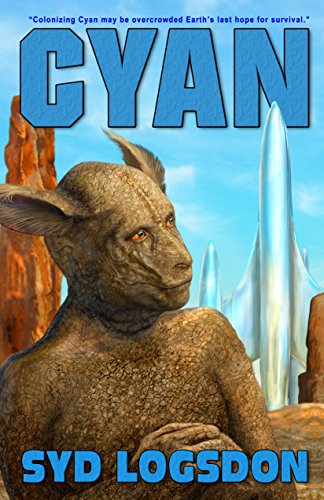
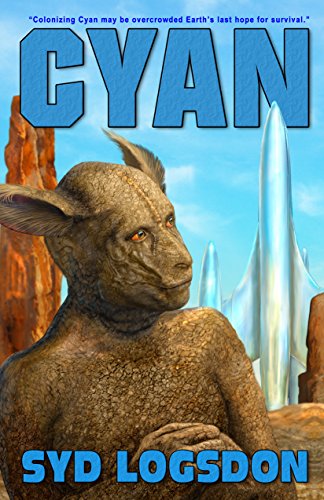
The other four Alien Autopsy posts were in Serial last week. After they were finished, I realized that I needed to give you a better picture of the Cyl. They are kind-of my favorites.

On Cyan, the dominant alien species of the torrid zone are the Cyl.  Viki Johansen, the scout specializing in Anthropology.—

. . . began a campaign of attrition and, after eight months, managed finally to enter the Cyl camp without disturbing them. They had become so used to her presence that they largely ignored her, and first-hand she confirmed her suspicions that the Cyl were of Australopithecine level intelligence

Their ears, she discovered, conveyed a complex emotive language that no one could hope to translate. Every position, every nuance of stance, was replete with meaning, and immense complexities of feeling could be portrayed by counterpoising irreconcilable emotions against one another. Yet there was no communication of ideas.

The Cyl are physiologically incapable of speech. After some changes you’ll have to read the book to find out about, “they” are taught to sign. Much later, Keir Delacroix meets up with a Cyl leader, and describes her —

The leader was an old female. Her scale filaments were sparse and shaggy, and her gel glands were puckered and no longer functioning. It was the first close up look Keir had had of a living Cyl. When she squatted at rest, her powerful hind legs jutted forward at a sharp angle and she rested her tiny forearms across her huge, scarred knees. Her mouth was broad and toothy, her bare facial skin stretched taut over massive bones and utterly impassive. She had no need of facial expression while her ears played symphonies of feeling.

Still later, Viki and her Cyl come to Beryl, Debra, and Tasmeen, needing help, and there is a dangerous moment of interspecies distrust.

The Cyl heads swiveled back toward Beryl and Debra again. There was no change of expression. There never would be, never could be, any change of expression on those bony faces. That fact alone would always keep humans and Cyl from completely trusting each other, for the humans, with their immobile, underdeveloped ears were as expressionless to the Cyl as the Cyl were to humans.

It comes near to a bloodletting as Beryl stands, armed, between the Cyl she has never seen, and her child. But then . . .

The Cyl ears moved in a symphony of sudden understanding, and of appreciation for the humanity of these strange creatures who would die — just as a Cyl would die — to protect their young.

The lead Cyl leaned forward and placed her darts, crossed, on the floor in front of Beryl and Debra. Her two companions quickly copied the motion, then all three shuffled backward. They were awkward inside the dome where the furnishings of the place made a maze for them to negotiate. As bounders, they were creatures of the unobstructed open plain. This human habitation was utterly foreign to them, not because of the steel from which it was made, or the interlocking triangles of its geodesic construction, but because it was cluttered. How could one hope to move about in it?

Beryl just stared at the Cyl. Their huge heads, their stone faces, and the heavy teeth showing through the thin slash of their lips, were too much for her to trust.

Cooler heads prevail, and Viki explains their need. Tasmeen is quick to come to their defense.

Viki was signing to her Cyl as Tasmeen spoke. It was not a translation. Cyl thought was too different for that. What she signed were a string of independent concepts. Had she been Cyl, the positions of her ears would have placed the concepts in an emotional context and tied them together into a rich and complex whole. When the Cyl spoke to Viki, that was what she received, the great subtlety of hands and ears in concert, but when she spoke, it was, to the Cyl, as if she were a halting child. She said:

WOMAN. LEADER. POWER. (my) PRIDE. TRUST (her).

The lead Cyl signed that Viki’s trust in Tasmeen was like the trust of the entire Cyl race for Viki; that in trusting Viki, they therefore trusted Tasmeen; that they too recognized the power in this woman; and that it was a lovely irony (the Cyl live for irony) that the sister of the mother of the race of Cyl was of an age to be the daughter of the mother of the race of Cyl, and therefore this woman of power who was their mother’s-sister was also their agemate-sister, so that the emotions of love and respect that they must necessarily have for her as the savior of their race were also the emotions they would choose to have for one who was both mother and sister to them all.

This she said in a three-second flurry of ear and hand motions.

Beryl watched, wondering if this hulking, stupid-looking creature was really of human intelligence, or if Viki was merely fooling herself.

A little irony never hurts.

The best aliens not only look different, but think differently as well.

Alien Autopsy (4)

In Jandrax, I was happy to use modified mammals and birds. That was all the story needed. When I wrote Cyan, I faced a different situation. My crew was set down on an alien planet for one year, with the task of coming to understand its weather, geology, and ecology in order to prepare for colonization. They were all scientists, so their actions and conversations called for a deeper understanding of their new world than any other kind of science fiction novel would have required. That challenge was half the fun.

When I began Cyan, I had been studying ecology for about twenty years, starting back when I had to explain what the word meant. I later came to understand the essence of Earth’s taxonomy in the most rigorous possible way — I had had to condense it to a level which middle school students could understand without dying of boredom.

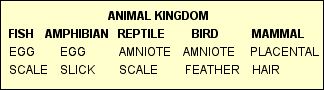
Terrestrial taxonomy looks something like this:taxon

Drop a salmon egg on the gunwale of your canoe and it will dry out in minutes. A chicken or turtle egg would survive the same treatment. This is the meaning of amniote egg (although there are other, competing meanings). Creatures who lack them, must lay their eggs in water. The rest of the chart should be clear, although simplified. For example, birds have scales on their legs as well as feathers elsewhere, and I skipped Dinosauria altogether.

I built up Cyan from the taxonomic level. If I had hadn’t been showing the planet through the eyes of a team of scientists, I would never have started out there.

It had to be weird but recognizable — that’s the key to all science fiction invention. It also required restraint. You can only explain so much to your reader without losing them, and beyond a certain point, your backstory is wasted effort.

I took grasses and weeds for granted. I gave my trees multiple trunks bound together, like a strangler fig without its victim. For something like insects, I made Chitropods – chitro sounds like chitin, and pod means foot, so the reader can be expected to infer an exoskeleton. Continuing the idea of inference, if we call the flying creatures who eat the chitropods pouchbats, the reader will draw a better picture in his mind that we could on paper.

The number of legs is important to Terrestrial arthropods, but I bypassed that by giving all chitropods many legs, but with only one joint each where each meets the body. This gave them a rolling gait “like caterpillars on crutches”.

These are throw-away inventions. They could have been applied to any ecosystem and they are not systemically related to each other. They alone would be good enough for most science fiction novels, but not for one about scientists teasing out the essence of their planet.

Here we need a key differentiation, from early in evolution, from which a thousand lesser differences can be derived. I decided that on Cyan, early in the development of chordate life, the vertebral column doubled at the posterior, giving Cyanian sea life twin tails. That changed everything. Earth fishes evolved legs from their fins. Cyanian “fishes” evolved legs from their split tails, so every Cyanian land creature is a tail-less hopper, fundamentally different from anything on Earth.

On Cyan, the classes are Pseudo-pisces, Amphibia, and Inturbia. No reptiles, no birds, no mammals, no dinosaurs. The Amphibia are cold blooded. Inturbia are inefficiently warm blooded. The term Inturbia should imply “internal body temperature un-perturbed by external changes”. Not every reader will get that, but writers should reward their best readers by not spelling everything out.

There are a thousand other details, but for that, you will just have to download Cyan.

All this is not to say that I didn’t invent interesting alien creatures. Kavines are incredibly fierce. Dropels, especially after they became domesticated, are cute and tasty. In the southern part of the upper continent, the Cyl developed something close to sapience, leading Viki to . . . nope, sorry, that’s a spoiler. I just started with taxonomy so they would all fit together.

Of course, too much consistency without outliers would be boring, so I added the globe wombs. The explorers see them shining in the treetops from their first minutes on the planet, and it takes a while for them to figure out what they mean.

Inturbia have live birth. Cyanian amphibs have to return to water to lay their eggs, except for one group, the Sphaeralvids, who produce globewombs. When a Sphaeralvid mother comes to term, she moves to a sunny spot in the treetops and exudes a transparent, leathery sac filled with a clear fluid like seawater. Into this she deposits fertile ova, then defecates. Algae from the Sphaeralvid mother’s bowels convert the feces into biomass and the Sphaeralvid nymphs fed off the algae.  When the feces are gone, the globewomb walls break down, leaving the now sizable nymphs free to face Cyan on their own.

Neat, huh? That is entirely too much detail for most books, but Cyan was written to show, realistically, what exploration of a new world might be like. This is just the kind of detail a crew of scientists would be recording.

Aside:      Shortly after posting this, I received a digital copy of the print-on-demand version of Cyan to proof. I spent May 29 and 30 in close reading of all 315 pages. The taxonomy and ecology of Cyan are backstory, dribbled out in bits here and there, but what the reader sees up front and in their faces are the individual alien beings. I realized that I need a fifth Alien Autopsy post to devote to the Cyl (the cover critter), but there is no space for it here. You will find it next Thursday over on the A Writing Life side of this website.

#               #               #

I began Cyan a few years after I wrote Jandrax, and set it in the same universe but hundreds of years earlier.

I also have in mind a third novel set in the same universe, but very different. It will take place on Stormking, a prison planet with a Uranian inclination to the ecliptic. The people who make up its population are not scientists, but outcasts. They have no interest in taxonomy. They meet the creatures native to their world one by one, and all they care about are which ones can they eat and which ones want to eat them. This time I’ll stop worrying about how these alien creatures make up a logical system, and just weird them up big time. That ought to be fun, too.

Alien Autopsy (3)

Imagined alien life forms can range from nearly human to outrageously strange. They can be imagined to meet story needs, or imagined first, with stories arising from their peculiarities.

Actually we can do even more. We can imagine whole ecologies. And again, we can go from minimalist to extreme. Arzor from Norton’s Beast Master is suspiciously like the American southwest, but Dune is a desert with an ecology quite a bit developed beyond any desert on Earth.

My first science fiction novel Jandrax [see note at the bottom of the page] is set on a deeply frozen planet, with only the equatorial region ice free. The only area I developed was a plain roughly a thousand miles across, centering on a massive freshwater lake. I stranded a starship with a load of fundamentalist passengers and a relatively unreligious crew, and watched the fireworks as they found two quite different ways of coping with the local ecology.

The area in question never sees rain, but during the cold season, snow and sleet falls, then melts during the (slightly) warm season. Viewed locally, this results in a dead season of snow, a brief season of wild plant growth during which massive migratory herds move through, and then a long season of dry, warm aftermath until the churned and destroyed vegetation is covered with new snow, where it and its seeds will wait for the next melt.

Viewed from the starship stranded in orbit, there is a moving line of green, eating up a mass of white, and followed by a growing gray, brown temporary desert.

I won’t tell you what happens to the people. That would be a spoiler to a book I’m hoping you will still read. Instead, let’s look at the alien creatures, starting with the herbivores.

Herbies are burrow bodied, tapir headed, fleet and harmless. Humpox don’t get much description, but don’t need it, with that name. Trihorns are as deadly as they sound. All are mammals, as are the carnivorous longnecks and krats. There are also huge carnivorous toothed birds called leers. They ended up on the cover.

These are the deliberately realistic creatures, all mammals and birds, devised in an era when warm blooded dinosaurs had not yet reached public awareness. In another part of the book, there is an interlude on an island which may be a hallucination or perhaps an encounter with the local version of God. Here the rules of realism don’t fully apply, and we find winged people who would never stand up to the laws of aerodynamics, and an insufferably cute, seal-faced, plump flying mammal called a dilwildi.

The example of Jandrax goes straight to the notion of purpose. Weird critters for the sake of weird critters is entirely valid. I love a weird critter novel. But Jandrax was my first full fledged novel, designed to show human interaction in a harsh, ice-age environment. It contains an entire religion, devised for the purpose of providing conflict. The ecology of the world was central to the story, and it was developed, but the individual alien creatures just needed to look right in an ice age environment. Nortonian minimalism is at work here.

#               #               #

I was in high school when I  first read Richard McKenna ’s novella Hunter, Come Home. It was a deeply moving, human story of manhood, honor, and love. It also had a second dimension, the description of an entire sentient ecosystem in peril and fighting back.

Here is a brief summary. Mordinmen were descendants of a lost Earth colony which had fought a generations long war against the dinosaur-like creatures which inhabited their planet. Manhood had become symbolized by the killing of a dino, but now the dinos were scarce and poor families, like Roy Craig’s, could no longer afford a hunt.

Mordinmen had now claimed another planet and were setting about to destroy its native ecosystem, in order to rebuild it in the image of their home planet. Red dots (successful hunters) were running the show, assisted by blankies like Roy who was working toward the time he could make his kill on the new planet. Hired as specialists, the Belconti biologists were providing the virus-like Thanasis used to destroy the native life.

When the story begins, the fight to transform this new planet has been going on for decades, and it is failing. Now the Mordinmen, against warnings by the Belacaonti, are about to unleash newer, harsher, more dangerous plague on the planet.

That’s about as far as I can summarize without a spoiler alert. Roy Craig wants more than anything to be a full fledged member of his machismo society, but his blanky status leaves him marginalized and frustrated. At the same time, he is drawn to the relatively gentle society of the Belaconti with whom is is working, symbolized for him by the woman Midori Blake.

Other than the dinosaur like creatures imported by the Mordinmen, there is only one other alien species — the entire planet they are all on. The native life of the planet is totally interconnected, essentially a one-world-tree (shades of Gaia).

There is a three way contrast in Hunter, Come Home. The Mordinmen, from a macho society built on killing are placed in contrast to the Belaconti, scientists who understand and treasure the ecosystem they are trying to destroy, and they in turn are contrasted to the interlocked, semi-sentient native life of the planet. Roy and Midori are each caught in conflicting loyalties as the planned apocalypse moves forward.

This is one of those cases where world building, culture building, and alien species building work together seamlessly. more tomorrow

Click here for next post.

[You can find Jandrax in used book stores. It is also available on this website, in an annotated form. Eventually it will be placed in Backfile, but I’ve been busy. I you want to read it here and now, your best bet for navigation is to begin by clicking the March 2016 archive and find Jandrax 2, then read and slide up, skipping every other post — archives alternates posts from the two blogs on this site. It is a bit of a pain. You can get Jandrax most days through Amazon’s cadre of used book stores. If you want the annotated version, in which I explain the various foibles of a young author, I plan to put it into an easily accessed form in Backfile, as soon after Westercon as I can find the time.]

Alien Autopsy (2)

This material is the second post of four for the panel “Alien Autopsy: the biology of ET” Posts for the rest of the panels will be published in A Writing Life.

You can write a story and make up aliens – sentient or otherwise –  to fit. Or, you can make up aliens, and write a story about some peculiarity of their makeup. Decades of stories were about human mutants (not technically alien, but close enough) with psi powers. if you didn’t live through the fifties, you probably don’t realize how many ESP wielding mutants there were in science fiction, long before Professor X and his X-men made it to the comic books.

Sometimes a single biological factor, with its secondary ramifications, may suggest a whole species and their culture, as in Gardner Dozois novel Strangers.

It is the bittersweet story of a love affair between an Earth man and an alien woman of a people called the Cian. Throughout the novel, Dozois drops hints about the central paradox of Cianian culture, but Farber, his hero – if that is the right word – doesn’t pick up on them. Because he doesn’t understand his wife’s culture, he chooses to have children by her, thinking that is what she wants, and in the closing chapters Dozois drops a house on all of us when Farber – and we – discover that Cianian culture is all built around the fact that, because of a biological defect, its women always die in childbirth.

Technically, this is a gimmick story, but it is so well done that it doesn’t feel like one. Strangers is build around Cianian culture, but Cianian culture is built around the structure of its aliens’ reproductive biology.

There have also been a lot of less salutary books written about aliens with odd reproductive structures, but lets not go down that road.

(Aside: My novel Cyan, named after the planet which was named after the color, has no relationship to Dozois Cian, or the thousand other Cians — characters, book titles, and authors names — to be found if you type cian into Goodreads.)

Those of us that grew up with the original Star Trek knew aliens as humans with big masks and padded clothing. CGI made quite a bit of progress in removing that limitation in movies and subsequent TV programs, but the wildest aliens aren’t products of technology. They have been around for more than a century in novels. Remember War of the Worlds? Great monster. Even better radio broadcast.

Larry Niven’s Puppeteers might be hard to reproduce in a movie, but that doesn’t stop readers of Ringworld from enjoying them. In fact, that may be part of the appeal. We science fiction readers enjoy having a cadre of writers producing phalanxes of weird critters that would leave lesser readers shaking their heads.

No one has read all of science fiction, but I’ve read a lot. And in my slice of the SF universe, I have never found a writer who created more or weirder creatures than E. E. Smith, PhD; aka Doc Smith.

Smith was not available in either of the two libraries that were the centers of my childhood universe, but when I got to college, one of my roommates was a fan. He wisely started me on Galactic Patrol, and I read through to the end, then circled back. Take my word for it — keep the same order. If you start on the putative book one, Triplanetary, you’ll probably never make it past page five.

(Another aside: books four through six were written from 1937 through 1948, all appearing in Astounding. Smith wrote “book one” in 1934, unconnected to the rest. When he got a chance to see the complete series published, he rewrote Triplanetary to fit the others, wrote an entire new “book two”, First Lensman, and tweaked the rest. They fit together, and the first two have moments of excellence, but the last four are the essence of the tale. If you find the style too old fashioned after two chapters of Galactic Patrol, move on; you were born too late.)

You will, however,  miss a menagerie of strange aliens, both sentient and otherwise. I’ll describe just two; first Worsel:

. . . there was hurtling downward toward them a veritable dragon: a nightmare’s horror of hideously reptilian head, of leathern wings, of viciously fanged jaws, of frightfully taloned feet,  of multiple knotty arms, of long, sinuous heavily-scaled serpent’s body.

This is the creature who will become the second most formidable Lensman, and Kennison’ s best friend. The third second-stage Lensman was Tregonsee:

This . . .apparition was at least erect, which was something. His body was the size and shape of an oil-drum. Beneath this massive cylinder of a body were four short, blocky legs upon which he waddled about with surprising speed. Midway up the body, above each leg, there sprouted out a ten-foot-long, writhing, boneless, tentacular arm, which toward the extremity branched out into dozens of lesser tentacles, ranging in size from hair-like tendrils up to mighty fingers two inches or more in diameter. Tregonsee’s head was merely a neckless, immobile, bulging dome in the center of the flat upper surface of his body — a dome bearing neither eyes nor ears, but only four equally-spaced toothless mouths and four single, flaring nostrils.

These are the minions of civilization; the baddies look worse.

Part of the power of these descriptions comes from E. E. Smith’s writing style. In flipping through the internet while writing this, I ran across a comment that if the Lensmen series were to be offered for publication today, it would not be accepted. That is absolutely true, but it is also true that without the Lensmen series, there would be no Star Wars, nor any other space opera. The Lensman series set the pattern that all others would follow, and nothing that came after was as good as the original.

Heinlein was Smith’s friend, and our best picture of him, from RAH, shows Smith as the original of the Gray Lensman, and shows his wife as the original of Clarissa MacDougal. Much of the charm of the series lies in Kennison’s Boy Scout incorruptibility. Those who say he has no personality are wrong. He simply has a personality that is out of the modern norm. Like Jesus. Which is exactly what he should be, as the end product of thousands of years of Arisan work in perfecting human DNA.

All this works, and the hundreds of weird aliens work, because E. E. Smith’s writing style is essentially naive. His rolling cascades of description could only come from someone who is so sure of himself that he is incapable of embarrassment.

It’s been a long time since that kind of writer has been in vogue. more tomorrow

Click here for next post.

360. Eternal Ballads

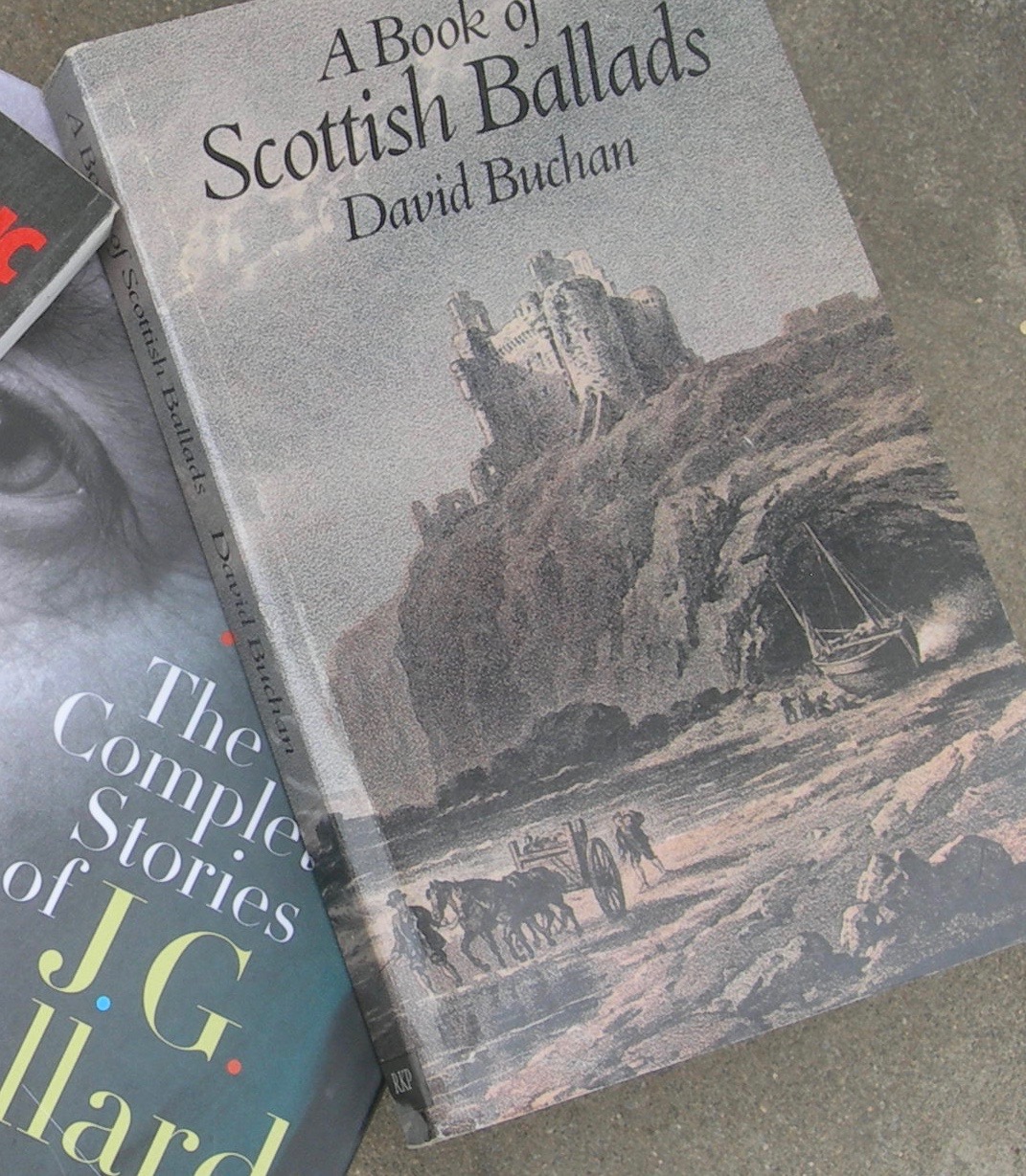
Just before noon on May 22, I was writing the posts leading up to the Golden Age panel I will be doing at Westercon. I wanted to know the name of a particular J. G. Ballard short story for the post. I remembered the story, not its name, so I pulled out my compilation of his work. It is massive, and by the time I had found the story in question (Deep End) I was approaching a state of depression. Ballard can do that. I suggest taking him in small doses; one story a week maximum.

That was when this story occurred to me. I wrote it in about an hour. Once it was finished, I realized that it might seem a very strange story — if you don’t know Ballard, and particularly Deep End.

=================

He was an old man already when they caught him. The crime, if it was a crime, and if he had done the deed, occurred so long ago that there were few witnesses left. Three, to be exact. One placed him on the scene. One testified that he had seemed to know too much about the crime, in conversation, a week after it was done. One said he saw it happen, and saw the old man, when he was a young man, and testified that they were the same person. None of the witnesses told exactly the same story two days running, but they were all old, so you could expect that.

The accused was found guilty and sentenced to ten years. It was a lenient sentence for the crime, but no one thought he would live long enough to serve it.

They placed him in a cell of the new type. For decades solitary confinement had been deemed cruel and unusual, so only the most dangerous endured it. The old man was not dangerous. He swayed when he walked and he was always short of breath.

But there were new rules now, designed to protect prisoners from each other. The old man was so clearly frail and helpless, that they applied to him. They put him in a cell, four meters by three, with a toilet and shower in an alcove, an opening that presented food three times a day, and a steel door that was closed once and forever, not to be opened for ten years, or until the old man died. This would keep him safe from the other prisoners who might have tormented him.

There was a camera at the ceiling, through which he could be observed.

Before he was incarcerated, they asked him what book he wanted with him. He would only get one. Most prisoners asked for the Bible. A few asked for the Koran. Buddhists never asked, as they carried their god within themselves.

The old man was not religious, but he loved the sound of human voices. It was the thing he anticipated missing the most, so he said, “Ballads,” thinking he could sing them and ease the eternal silence of the cell.

They gave him his book, pushed him through the doorway, and the last human sound he heard was the clanging of the door, and the oiled sliding of the lock. He sat on the bed. It was made of plastic, semi-soft, vastly durable, designed to outlast him. He was naked because once a prisoner had stuffed his mouth and nostrils with torn clothing, and slipped his hands into pre-tied manacles of denim, and had escaped into death.

After an hour of silence, eyes downcast to avoid the gray walls, the old man took up his book, but they must have misunderstood him. It was the complete short stories of J. G. Ballard. The old man had never heard of Ballard. With a sigh, he opened to the first page and read, “I first met Jane Ciraclides during the recess . . .”

#              #              #

When the proctors came to let him out at the end of ten years, they went first to the observation station. There were one hundred screens on the wall, ten rows of ten, all tied to the cameras in the cells for which this observer was responsible. The observer quickly darkened all but one screen, as protocol demanded. He had spent thirty hours a week in this room for eighteen years, viewing a hundred prisoners who could not look back. His outlook had become narrow, but his body had grown large.

The proctors were hardened to viewing the results of solitude, but even they were startled by the old man’s appearance. His head was shaggy in parts, bare and raw in other parts where he had torn out his hair by the handful. His body was a skeleton wrapped in wrinkled skin. The walls of his cell were covered with graffiti made with excrement. It must had smelled terrible.

Following protocol, they watched him for two hours, waiting for the moment his sentence would be up. He lay most of the first hour, foetal on the bed. Then he staggered up. There was no sound from the room, except the sliding of bare feet on concrete. The old man had uttered his last curse eight years before, and every day since then had been wordless. But not utterly without sound.

Now he approached the book, and opened it. He let pages flutter past, until he found a starting place, and then he read. After a moment, there was a faint groaning. After five minutes, that gave way to an ululation on two notes that grew in volume as his body began to shake. Eventually he leaped up and hurled himself against a wall, beating it with his fists until blood flowed, and sinking to the ground in whimpers.

The observer remained unmoved, sitting in his place like a fat Buddha who no longer saw the world’s pain. He leaned forward and rotated the camera, and said, “I thought so. Deep End. That always upsets him the most.”

One of the proctors said, “How can he have survived like this?”

The observed replied, “Everybody lives forever in Hell.”