Tag Archives: steampunk

600. Christmas in Paradise?

Back in November I finished Like Clockwork and made mention of the next novel in line. I’m still looking for it. I have nearly a dozen in the pipeline; some have fully developed characters, some have well developed worlds, but not one of them has a solid story. Yet.

Story isn’t everything, but if you don’t have one, you can write for a long time without ever getting anywhere.

A few days ago, I took time to reread The Cost of Empire, and now I’ve started rereading Like Clockwork. It is a way of jumpstarting a balky imagination. This morning I ran across a piece of writing from Like Clockwork, chapter 25 — which is actually the sixth chapter in a somewhat twisted book — and decided to show it to you.

And despite the title, this post — like the novel itself — is only a tiny bit about Christmas.

====================

Across Division Street, in the half of Outer London where the factories are, everyone was hard at work. They always were, but with more energy now than any other time of the year. It was late November and Christmas was only a month away.

Christmas Day is the most important day in Outer London. It’s odd that this should be so, in a place so aggressively secular, but it is true. On that day all the millions of candle sticks, and candles, and candied fruit cakes, and all the perfect white faced dolls in their perfect pinafores with their perfect pink ribbons in their perfect blonde hair, pass from the warehouses where they have been stored to all the Captains of Industry to be given to their perfect children. Their boys get toys, too, and the children of the workers get lesser toys, appropriate to their station.

The toys are played with ecstatically for a month, but by the end of January, most of them have magically and mysteriously disappeared. Those which remain are carefully programmed to degrade. By October, they are tattered. By November they become fodder for the ashcan. Thus want is artificially introduced. There arises a hunger for toys and games to fill the children’s empty hours. From want, comes anticipation, and on Christmas Day, want is relieved.

It is a beautiful system, a kind of circle of life. And by this late in November, want was keenly felt.

The day after Christmas every warehouse stands empty, but then the stream of merchandise begins again. Chairs and beds and blankets, dresses and trousers and coats, toys and games and diversions, fill every space as the year winds on. Everything is planned for. Every need is anticipated. Everything will be ready for that one day when all dreams are fulfilled.

It gives the workers a reason to work. It gives the Captains of Industry a reason to watch. It gives the Masters of Accountancy a reason to record what the Great Babbage calculates.

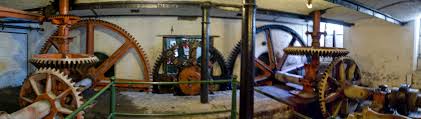
Just watch the flow of raw materials into the factories, watch the coal move down to the basements where it becomes steam, watch the steam engines turn it into motion, watch the motion flow from shaft to pulley to belt to shaft to belt.

Watch the lathes and spinners and looms and cutters and sewers as they produce the goods. Watch the painters and polishers and packers and finishers as they store it all away for the glorious coming of Christmas.

In every block east of Division Street there is a factory with vast spaces for workers to work, and near every factory there are tenements with small rooms where the workers live. Above every factory are boardrooms where the Captains of Industry oversee it all, and across town the Babbage Bureau of Accountancy keeps track of every tool, product, planner, and worker.

Every morning workers arrive, in their brown trousers and blue shirts, folded back to the forearm, all as alike as the bricks in the walls of the factory. Every morning the planners and counters arrive, as alike as all the zeroes in a million. With frock coats and waistcoats; with white shirts and blue ties and hard, flat-topped hats of silk.

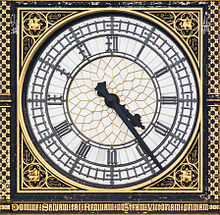
They go in each morning at 7 by the Great Clock and leave in the evening at 6 by the Great Clock. They march in by the thousand every morning and leave again every evening like bats coming out of a cave. No matter how long the line becomes coming and going, they all check in at exactly 7:00:00 AM and out at 6:00:00 PM. A youngster named Albert manages this miracle, utilizing a fine point of difference between the mathematics of Newton and Leibniz.

And somewhere a man named Adam Smith smokes his pipe, rocks his chair, and smiles in contentment. Over his head is a framed sign that says, “Today is the Perfect Day.”

Perfection? From human hands?

Human hands pull the handles of the drill presses, but jigs and fixtures assure that every hole goes where it is needed. A human hand pull the lever that frees the stamp, that the steam drives down onto plaint clay, and every doll’s head comes out wearing the same smile.

Humanity and machinery and a Babbage to oversee it all. Perfection.

that’s all, for now

579. Guilt

How many times have you seen it: the massive city, the grinding machinery of the state, the downtrodden under the wheels of the machine — it’s a classic dystopia. One man (or, rarely, woman) fights back, foments a rebellion, and it all comes crashing down, ushering in a new day.

End of movie or novel.

Well, maybe . . .

It seems to me that this trope has been overused. I have no real argument with all those stories that end with the destruction of a dystopia, but I was looking for something a bit more subtle in Like Clockwork. There is something resembling a downfall (you’ll get no spoilers here) but it doesn’t come at the end, and those who bring it about have to face the reality of what they have done. Here’s a taste.

(Hemmings) laid his head on his crossed arms. His heart hurt.

Life may be nasty, brutish, and short. Life may be eternal in the lap of Jesus. Or life maybe a recurring year, extended far too long, but it is still life. And Hemmings had taken the lives of men who had done him no wrong.

He had not known the others who had died, but he clearly remembered the guard at the waggon door. He grieved for him.

I know exactly where this scene originated.

I was a young teen. I had recently discovered the local public library and my hundredth-or-so book was Underwater Adventure by Willard Price. Overall, it was a good book, although no better or worse that the average I was reading at the time. However, one scene knocked me out.

The villain, posing as a friend, went for a dive with the mentor. The two brothers who were the heroes of the book were elsewhere. The villain contrived to have the mentor trapped underwater, and left him there to drown.

Two things about this affected me. First, the mentor did not make a brilliant and heroic escape. He actually did drown. Second, the villain — who was pretty scummy and eventually came to a well deserved bad end — came up out of the water full of remorse. Not enough remorse to go back and save the mentor, but enough to be shaken.

The scene was told from the villain’s perspective. In that moment, I identified with him far more than I had identified with the cardboard heroes. Through him, I came to an understanding of how it would feel to take the life of a good man. It was something worth knowing, and something a bit more real than most of what I was reading at the time.

So here I am, decades later. I have a debt to Willard Price for that moment of clarity, and I’m paying it forward.

556. How it All Began

Let me offer a slightly belated Happy New Year. My first post of the year was tied in to the last/first/only year of the novel Like Clockwork, and my second was an apology for any posts that might be missing this month. I still may miss some, but I am trying to avoid that.

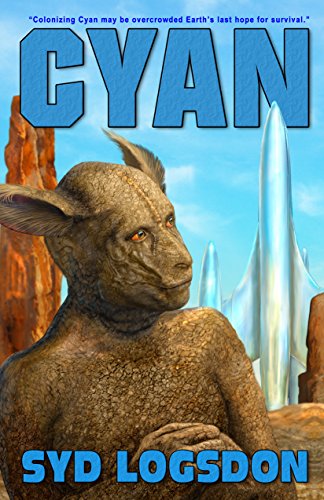
Since we are in the month of beginnings, I thought I would remind my newer followers how this enterprise started. In 2015, EDGE publisher bought my SF novel Cyan, to be released as an e-book in their new EDGE lite (dumb name) line. In honor of that — which is a sneaky way of saying to drum up business for that — I began a blog.

By the way, if you haven’t bought Cyan yet (and why haven’t you?), you can pick it up from Amazon as an ebook or paperback.

Actually, I began a website containing two blogs. The website was to be called A Writing Life and the two blogs were to be called A Writing Life and Serial. It was a glaringly bad decision to call the site and one of the blogs by the same name, but I’m stuck with it now.

Cyan was due out at the beginning of 2016 and actually came out nearly a year and a half late. I had the embarrassing task of explaining every delay in the blog.

Posts were short at first. Here is the first one:

========

1. Welcome to my World

Hi, I’m Syd Logsdon. I have been writing novels for four decades, but I’m a new blogger.

When I began, writers wrote, publishers published, and readers bought their books in bookstores – or at least at bookstands which might pop up anywhere. E-books, nooks and kindles, and the internet have changed all that. Now e-books outsell hardbacks and writers have to adapt.

Actually, this is an opportunity for me. Over the years I have accumulated a mass of knowledge, ideas, complaints, irritations, joys, disappointments, and backstage savvy that didn’t fit into any format available to me. Now I have a place to share these things.

What prompted me to start blogging at this time was the release of my e-book Cyan from EDGE, due in January of 2016. If you don’t know them, EDGE is the premier science fiction publisher of Canada.

Cyan is the story of the discovery, exploration, and colonization of a nearby habitable planet, set against the backdrop of cataclysmic overpopulation on Earth, and carried out by a fascinating and varied group of characters.

Old fashioned? No; just temporarily out of fashion.

Recent science fiction has often lost sight of the next century. This is too bad, since we are the last generation which can write what we want about nearby stars before astronomers map the actual planets which exist there.

You can expect daily posts here at A Writing Life. It is set up like a blog, but it isn’t a chronicle of daily activities. Each post is a mini-essay on some subject, current, historical, or timeless.  Most of the time, these posts will come four days a week.

At Serial, in the menu, you will find serialized fiction. Pop over there for details.

Drop in often; you will always find something new.

========

A few things changed over the years. It quickly became obvious that running A Writing Life (the blog) four days a week and Serial five days a week was an unnecessary complication. I dropped Serial to four days a week early on.

After nearly four hundred posts of the A Writing Life blog, the four day a week schedule became unsupportable and I dropped to two days a week. Serial changed as well, but I’ll talk about that on Wednesday.

554. Midwinter Midnight

Last night (Dec. 6), I watched a PBS special on the Highwaymen and heard Kris Kristofferson singing Me and Bobby McGee. One familiar line jumped out at me, and I added it to the page of short quotations that opens Like Clockwork.

I’d trade all of my tomorrows
For one single yesterday

That line encapsulates one of the strongest human sentiments, the fear of loss and the nearly insane clinging to that which cannot last.

What would you do if you were given the chance to relive the prime year of your life? Would you take the chance, or would you proceed into the unknown future?

Like Clockwork asks — and answers — that question. It begins and end at midnight on the last/first day of the Only Year.

Here is the Prolog to Like Clockwork. Or is it an epilog? Or something else altogether? You decide.

===================

“Tonight Snap has gone down to the Clock for Midwinter Midnight. In just a few minutes, the reversion will occur and I will forget writing this note. It will be midnight of January first, 1850. Not next year, nor last year, but the only year there is.

It isn’t a bad year and it isn’t a particularly good year, but if it is to be my only year, I want more.”

Pilar laid down her pen and listened, straining to hear the song they always sang at midnight:

The year that ends, but never ends,
That ‘ere again unfolds,
We live that year forever and
We never shall grow old

It was probably her imagination. Surely voices could not be heard over such a distance. She rose to move closer to a window and as she did, the note she had written ceased to be. All her memories of the past twelve months ceased to be. Her body sloughed off a year of age and it was January first of the last-this-next-only year.

Again.

553. The Babbage Bureau of Accountancy

Yesterday was Christmas. Today is the 26th of December. Happy Boxing Day.

If Boxing Day is just something British you’ve vaguely heard of, let me explain. It is the holiday on which various workers expect to receive their Christmas-box from those they serve.

I have never written about the commercialism of Christmas. That notion has been done to death, and besides, even Santa’s elves get paid in cookies. Christmas gifts don’t make themselves, you know.

So you can imagine my surprise when, seven chapters into Like Clockwork, the Dickens-inspired steampunk novel that turned out to not be about Christmas, Hemmings appeared without warning and dragged me into exploring the commerce of my pocket London. Take a look.

============

Throughout the main building of the Babbage Bureau of Accountancy, ten thousand human computers were required to keep up the constant cross checking of the Great Babbage, as it kept track of every transaction in all the factories and warehouses of London.

It was late November. Christmas was coming, the warehouses were nearly full, and the remaining raw materials had to move through the system to produce the goods, neither running short of materials too soon, nor finishing the last needed item before the final day.

Full employment, full consumption. Everybody has a job. Everybody consumes the goods that everybody else makes. Every tally book balances. The capitalistic ideal.

A single employer. Every job suited to the person who does it. All those tally books replaced by the Great Babbage. The communistic ideal.

Either way, it was no place to be unemployed.

The ten thousand computers counted themselves lucky. They were Time’s Favored Ones. They worked seated, in gentleman’s clothing. They returned home at night unstained. Not for them was the curse of Adam, to work by the sweat of their faces. The middle fingers of their right hands all bore the honorable callus that came from holding a pen. The skin on the rest of their bodies was smooth. Time moved crisply for them, to the smooth rhythm of numerals filling up little blue squares.

In the factories, time moved differently, slowing down and growing more resistant to human movement as the day wore on. That does not seem possible, but young Albert had done work in time dilation according to theories of his own. Time moved smoothly for the computers; time dragged on more slowly as the day progressed for those who bent their backs.

It had always felt that way, throughout the history of mankind, and now it actually was that way.

Morning, morning tea, and luncheon all rolled by with stately grace. It was at 2:18 in the afternoon, November 27, 1850, that Hemmings the computer hit a reef.

His whole job was to check by hand the calculations made by the Great Babbage, looking for errors. On November 27, he found one. Did they thank him? Of course not. The Babbage was incapable of error — even though Hemmings had found one — so they fired him.

Hemmings stood on the street in front of the Babbage Bureau of Accountancy and stared upward, considering the machine which had just become his nemesis. He had never seen the Great Babbage itself, but he imagined it as a massive collection of repeating components, interlaced with walkways where the technicians came and went to clean and oil and inspect. There were a trillion gears, cams, and escapements in his mental image. There were Jacquardian punch cards by the waggon load, as many cards as there were oysters in the ocean.

As many as there had been oysters, when there was an ocean.

Now the picture in his mind had changed. Not much, really, but enough. There was rust on some of the gears now, and some unidentifiable ooze coming out of some of the housings. Hemmings shook his head, trying to clear his mind. He knew the rust was hatred and the ooze was envy, and that they were in him, not the machine.

Still, here he was, with no place in the world, ripped out of the one thing he had been trained to do. With no money to buy his food or pay his rent, no companions, no usefulness to stabilize his identity.

Every stone and brick in London was unchanged, but Hemmings was changed, and suddenly he was as adrift as a chip of wood floating somewhere on the ocean.

When there had been an ocean.

There was no fight in him. He ate his supper where he always did, but this time he sat alone. There were very few coins left in his pocket. Then he walked.

All the streets were well lighted by gaslight. There was no refuse in the gutters. There were few pedestrians, and they all were moving purposefully toward someplace they belonged. He looked at their faces. He had never cared before to look into the faces of the strangers he passed by each day, but now he chose to examine them.

Their faces were calm and peaceful, but there was no joy in them.

He wandered into darkness. By that time, he owned the empty streets. He needed sleep, but it was hard to choose a place to lie down. Every place was identical to every other place. It clearly did not matter where he slept, but that was why he couldn’t choose.

Every clock-face on every building-face in all of London said 3:35 when he could no longer stand. He crawled behind an ash can and let go of everything.

He dreamed of whirling gears, and rust, and ooze.

On the third day, his coins ran out. He did not eat on the fourth day. He had never been hungry before, and the misery of that condition frightened him. He considered stealing. He could go into the place where he had always eaten, scoop up a loaf of bread, and walk away. They probably wouldn’t chase him, at least not far.

Then what? Would the — bobbies, peelers, cops, pigs, police — come to get him? He realized that all the names he had dredged up from deep memory were without weight or taste. He had never seen a policeman, not in a thousand iterations of the year.

What kind of place is so smug, so self-righteous, so self-certain that no one breaks the law? How could there be no rebellion?

He could probably become invisible to the machinery of the state and make his living by simple theft. Could the Great Babbage find him? How? Track him by arithmetic errors, by all the places which reported one less loaf of bread than the Great Babbage had predicted?

Try to find me, you bucket of rusty gears and ooze.

He considered the possibility of living by theft, outside the norms of the rest of mankind, and it tore at his heart. The thought hurt him more than hunger.

============

Now, back to our world.

There I was, sitting at my computer, comfortably contemplating my novel of a variant Dickensian London, when suddenly Hemmings appeared. Now my pocket London was split in two. Half would have looked familiar to Scrooge, and the other half was as four-square and linear as an equation. One half was under thrall to the Great Babbage and the other half to the Great Clock that kept turning time back on itself.

Weird. I’ll let you know when you can read it for yourself and see just how weird.

548. Victorian Steampunk?


Please note that Serial is back temporarily, to present the short story by Dickens which was a predecessor to A Christmas Carol. It starts today. Check it out.


=======

The Victorian era — was there such a thing?

Victoria became Queen in 1837 and died in 1901, a reign of just short of sixty-four years. Everything in Britain changed in that time except the Queen, so does the phrase Victorian Era have any real meaning?

If you are going to write steampunk, that is a fair question. Of course steampunk usually takes place in an alternate Victorian era — sometimes extremely alternate — but you have to have at least a reasonable knowledge of the original if you are going to mimic it.

Most of us get our history everywhere but a history book, so let’s see what fiction we can use to subdivide the era. Jane Austen, the Brontes, and the Queen were born only a few years apart, so if you enjoy those authors, you are reading about the early Victorian period. Not my wheelhouse, but to each his own.

More to my taste, Charles Dickens’s first novel was published in 1837, the year Victoria became queen. His last novel (uncompleted) and his death took place in 1870. At that time Victoria still had three decades to live.

The Dickensian era is almost as widely known as the Victorian. In full disclosure, I have read all of Dickens’s Christmas novellas — A Christmas Carol several times — but his larger works tend to defeat me. I think I was inoculated against them by being force-fed Great Expectations at too young an age.

Not everyone reads Dickens by choice, but everyone knows what Dickensian means. Judith Flanders in The Victorian City, said:

Today “Dickensian” means squalor . . .(Dickens was) the greatest recorder the London streets has ever known — through whose eyes those streets have become Dickensian . . .

She got it right for her literary audience, but wrong for those who never read a Dickens novel that they weren’t forced to read. Dickensian, to the average Joe (or Joan) means carolers in fancy dress, Scrooge redeemed, Tiny Tim getting a second chance at life, and a village of quaint houses for the Christmas mantle. The actual harshness of Dickens’s other novels is excluded.

The squalor and the sweetness: that is the dual heritage that steampunk authors have to work with if they set their works in variations of the early Victorian period.

As I explained last Wednesday, Like Clockwork is derived from A Christmas Carol, although it morphed into something very different from a Christmas novel. I don’t think Dickens would recognize my London at all.

========

From 1870 when Dickens died, until 1901 when Queen Victoria died, the world became a very different place from the home of Scrooge, Tiny Tim, and Oliver Twist. The industrial revolution changed the world into something much closer to the present.

You might choose Jules Verne as the author that most represents this era, but not if you are concentrating on England. Verne would be the right literary reference for a steampunk novel set in the La Belle Époque, Paris. If you know of such a work, send me the author and title. I would love to read it.

My earlier steampunk novel, The Cost of Empire, travels across five continents by dirigible, but much of the action takes place in London. For that time period in London, there is only one literary creature who is in everyone’s DNA; not an author, but a character who is more real to most of us than the author who created him — Sherlock Holmes.

Holmes first case, A Study in Scarlet, was published in 1887, and there were flashbacks to earlier cases. His Last Bow was on the eve of World War I. This neatly fills in the rest of the Victorian era and spills over into the Edwardian.

Gender gets involved here. Dickens appeals, or doesn’t appeal, to men and women alike. The rest of British popular literature, contemporary to the era (not historical fiction) is largely gender biased, with Austen and the Brontes for the gals, Kipling, Buchan, and Conan Doyle for the guys.

In other words, if you are a guy (guilty as charged) and you consider Victorian characters, you are more likely to think first of Sherlock Holmes than of Elizabeth Bennet — or even Mr. Darcy.

When I first became involved in the Victorian era, after becoming interested in steampunk, my knowledge of everyday life in London came largely from multiple readings of the canon. That is what Holmes fans call the fifty-six stories and four novels written by ACD himself.  My internal vision of Victorian London was that which could be seen from 221b Baker Street, even though Sherlock himself never makes an appearance in my writings.

Yet.

========

If you want a reference book for each era, I recommend:

For the early Victorian period — The Victorian City by Judith Flanders. She gives a modern scholar’s look at the reality behind the world that Dickens wrote about.

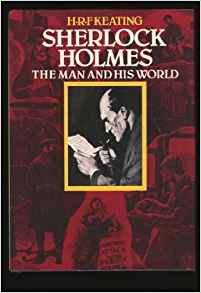
For the late Victorian period — Sherlock Holmes: the Man and his World by H. R. F. Keating. He provides commentary on Holmes’s world, with contemporary photographs of scenes from the canon.

547. Where Do You Get Your Ideas (2)

Continued from Monday.

In the movie Scrooge, just after Bob Cratchit leaves Scrooge to return home on Christmas eve, he meets his two youngest children outside a toyshop. Inside is a wonderland of toys, including mechanical marvels. Most notable is a clockwork strongman who lifts himself horizontally and then holds himself suspended by one arm. You’ll no doubt see the movie on TV sometime this month; you can watch for the scene.

When I saw it — and every time thereafter — I found myself asking who, in an obviously poor corner of London, would buy such toys? Who would make them? Why were they there?

I buy into Christmas and its magic 100%, but I also look behind the curtain. If you are a writer, you know the feeling.

Clearly, historically, these were late Victorian toys. Their existence was a product of Dickens’ push for humanity, kindness, and his desire to make childhood the joy it never was for him. In short, these toys existed in the 1970 version of Dickens’s Christmas Carol precisely because Dickens had called them forth by the writing of the novel in 1843.

If that confused you, don’t try to write time travel stories.

As I saw the toyshop, and the poor children outside who would never have such toys, I said to myself:

Let’s write a story about the toyshop, and the man who inhabits it. Let’s make him the toy maker, not simply the proprietor. How does he feel when he see children pressing their faces against the glass, knowing that they cannot afford the toys he makes? Why is he in this poor part of London? What is his backstory?

Let’s not make him a simple fellow like the one in the movie. Let’s make him a brooding figure. Let’s unfold his story slowly, and let him find his own kind of redemption. Let’s not make him anything like Scrooge, but the product of some irreversible tragedy outside himself. And then let’s reverse the irreversible, but slowly.

The skeleton of this idea floated about in the ether for decades. The final connections came when I was writing The Cost of Empire and getting acquainted with steampunk traditions.

Clockwork. Steampunk worlds work on steam and on clockwork. The toys in the toy shop are clockwork. Clocks are clockwork. Clocks measure time. Steampunk is full of time travel. Time travel is based on unsupportable science, so it touches on fantasy. A Christmas Carol is full of fantasy, if you count ghosts impinging on the “real” world as fantasy.

Remember, the subtitle of Dickens’ story was Being a Ghost Story of Christmas.

When you come right down to it, A Christmas Carol is a story about time travel. Three ghosts take Scrooge to the past, present, and future. And it displays the most cliché time paradox, that Scrooge goes back in time (from the future to the present) and becomes a different person than he would have been if he had never seen the future.

So suppose a time traveler from the future goes back to Victorian London to — no, I don’t want to tell you that yet. I have to leave something for the book.

Don’t think of all this speculation as something that moves in linear order, like an outline. Think of it as ten thousand bees in a swarm inside the author’s head. Nine thousand of those bees will be blind alleys and will never appear in the final product.

The ones that made the cut were dragged out of the cosmos by hard thought and reflection over the year it took to write Like Clockwork. Those are the “ideas” no one ever asks about, but they are the ones that really count.

The ironic thing is that Like Clockwork ended up not being a Christmas story at all. In fact, it takes place in a universe where Christmas has been all but forgotten. The part of the novel actually dependent on the toy shop ends up as about ten percent of the whole.

So if, on some future date, you are reading Like Clockwork and you ask yourself, “Where the hell did all this come from?” — the answer is, “Dickens made me do it.”

Or the answer could be, “Out of the ether.” Both answers are true.

543. The Door


Photo: Marcin Konsek / Wikimedia Commons

Here is a quote for you, hot off the grill.

There is a door. On one side is written Science Fiction. On the other side is written Fantasy. You can come from either side, and pass through either way, but it will still be the same door.

You can write pure, hard science fiction, and you can write pure fantasy. At least you can try to, but no matter how much you try there will always be a modicum of fantasy in science fiction. And fantasy will always have a hard edge of life and death, or it won’t be worth reading.

Like Clockwork sounds like fantasy until half way through, when all the weird things are shown to have a scientific basis — more or less. And in the middle of the setting of the story, there is an arch between Inner London, which looks like a Dickens movie set, and Outer London, which looks like an equation.

 Snap’s world lay pinned against the Thames, from St. Paul’s to the Clock and on to the Tower, with London Bridge somewhere near the middle. It would be hard to chart the boundaries of Snap’s world, as it was a world of fogs.

Balfour walked with Snap as far as Pickwick’s and took his leave. From there, his path took him along the wider thoroughfares — and the widest were none too wide — past the shell of St. Paul’s. It was familiar territory for Balfour. He was one of the few whose nature allowed him to move freely between Inner and Outer London.

Eventually, he reached The Wall at Newgate Arch. As he faced the opening, it was a weathered arch with carvings mellowed by the corrosive fog until they were quite unreadable.  He passed through and looked back. On this side of the wall, the gate was foursquare and framed in brick. Every brick was identical and a caliper could not have found a variation in the lines of mortar.

The city beyond was foursquare as well, with rectangular buildings on rectilinear streets. A small fragment of humanity lived with Snap in Luddie London; the rest lived here.

Yin and yang. Dark and light. Old and new. The look of fantasy and the look of science fiction. It makes for a nice tension.

541. Who is Balfour?

If there is a single characteristic of Steampunk that stands out as nearly universal, it is the use of changed versions of real persons. For instance, in The Cost of Empire, I made some fundamental changes in the British royal family (Victorian era) to get the Prince of Wales I needed for the story.

In Like Clockwork, there are quite a few alternate real people who pop up at the very end, but the most important is Balfour who is one of the main characters. You met him just before and on Halloween. Today we find him ruminating on what he has learned.

#     #     #

What do you do the day after your alter ego calls you out? Balfour spent the day in bed.

First he replayed the moment Hyde — he still thought of him as a separate person — had said, “Why now? Why not now?” It was a valid observation, but it missed the point. For endless iterations of the year, Balfour had not remembered.

“Why now?” was a valid question, and Hyde had not answered it. Why not yesterday, or a year ago, or a hundred years ago? How could Balfour change in a changeless land? Or was the land itself finally beginning to change?

Balfour took The Strange Case of Dr. Jekyll and Mr. Hyde from the shelf where it had lain unread and unremembered. He spent some time with it. It now seemed cumbersome and circuitous, but the ghost of Hyde had understood it well. It was a piece of rebellion against his father’s religion and a piece of youthful arrogance, all jumbled together.

Balfour remembered other books he had written, or Stevenson had written, now that the dam against memory had partially broken. He remembered his youthful travelogues, and he remembered Treasure Island, the book that had made him rich. When he wrote Kidnapped he had finally given David Balfour one of his own names, and now he was using it again. He thought fondly of that character, and fondly of his young self, so far in the past that even the memories were ghostly.

He remembered Edinburgh and thought, “London is not my town. Give me Auld Reekie any time, with its narrow twisted streets stretching from Holyrood to the Castle.”

He remembered Fanny, his wife, and how hard it had been to win her. He remembered her children. He had written a book of poems for them, and for all the other children of the world.

He remembered a race of dark skinned people who had found him strange, but had made him one of their own. He also remembered a single poem written on a grave in that hot and humid land.

Under the wide and starry sky,
Dig the grave and let me lie.
Glad did I live and gladly die,
And I laid me down with a will.

It was a lie. He had not laid himself down with a will. He had laid down in exhaustion after a lifetime of fighting tuberculosis, happy to have the pain stop and happy not to face once more the terror of being unable to breathe; but not happy to let go of the life and the people he had loved.

Robert Louis Balfour Stevenson was born in 1850, and now he was living in an eternal 1850, not as an infant, but as a grown man with the accomplishments of a lifetime behind him.

A whole lifetime. A lifetime that tunneled all the way from that squalling infant in Scotland to a tombstone on a mountaintop in Samoa.

How could that be?

He had some of the memories of Stevenson, but the man himself had lived and died, and surely was no more. Hyde, who lived in his soul, had said to call himself Stevenson, but what was he really? Not the man himself; at best, a shade of the man. A memory, lying in bed, remembering.

He squirmed and groaned, and fought with those memories that were his, and yet were not his.

The first memory he could call his own, separate from Stevenson, was this room. He had no memory of choosing the Clock in the time Before. Whatever had brought him here, it was by a different path than any other citizen of this new London had taken.

Whatever else he was, he was Balfour, and he had been Balfour for endless iterations of the year. He had a face that looked like the face on the cover of Stevenson’s books. He had a lean body that served him well. Stevenson had been sickly, consumptive, and Balfour was not.

The man — or the shade of the man — who had passed from Edinburgh to Samoa, wracked with tuberculosis, fighting weakness all the way, through poverty to riches, from obscurity and parental disapproval to universal fame, was not content to leave things the way they were.

He was not truly Stevenson and this was not truly 1850 by a wide margin. He was Balfour, and he was ready to do battle once again to find out what it all meant.

Curious? Sure you are. Want more? It’s coming.

538. Not Like Clockwork at All

I have been writing my latest novel Like Clockwork for ten months and today (October 17) I called it “first draft done”. But it’s not that simple.

I have a file on my computer called ???When???, where I keep track of starts and finishes because I would never remember dates otherwise. I went there to make note of the tentative conclusion of the first draft and took time to remind myself how I got here.

It’s a tangle. I’ve had books that took longer to write, and books that grew well beyond the size I had intended, but I have never before had a book that refused to tell me ahead of time what was going on. I decided to share the file of my progress(?), edited to remove irrelevant family matters.

===============

January 2, 2018. I began the first page of a novel/novella with the working title Clockwork Christmas.

Jan. 13, 2018.  Clockwork Christmas is now titled Like Clockwork, after the toy store where Snap works. As of today, I am about 12,000 words into the thing. I hope it will reach at least 60,000 words to be sold as a novel, but it still could possibly be finished at novella length.

(For reference, SFWA sets novella length at 17,500-40,000 words. F&SF sets 25,000 as the largest piece they will publish.)

Like Clockwork is being constructed of (minimum and approximate) 1000 word chapters.

From roughly 17 to 22 January, 2018, I paused Like Clockwork to write posts for the website. (There were several pauses for colds and other minor illnesses which I will not record.)

On Jan 31, I wrote chapter 10 in which Balfour gets the idea for Jekyll and Hyde. He does not yet know that he already wrote it in another life.

Mar. 6, 2018, things are coming slowly. As of today, about 25 chapters done. That’s a large number, but each chapter is short.

March 11, 2018  Today Stevenson emerged into consciousness, absorbing both Balfour and Hyde. That lasted about a day, then Balfour realized he can’t be the actual Stevenson because he remembers Stevenson’s tombstone. What exactly  is he? As of now, I have no more idea than he does.

April 3, 2018, writing on the chapter Slow Time, I began to show Bartleby’s dogged determination to follow any task to its completion. The question occurred to me for the first time, is Bartleby human, or a robot or android. As of this date, I hadn’t decided if he is a person or an living story character with Melville as Fabulist, and now here is a third possibility.

April 4, 2018, writing the final paragraph of the chapter Slow Time I came to the realization that Like Clockwork is the story of a whole cadre of people who made a Faustian bargain, got what they asked for, and now are suffering from buyers’ remorse. I also came to the realization that yesterday’s question, “Is he a robot?” is answered this way — he is a cold, detached, hard boiled detective type who can’t be pushed aside from a goal or puzzle. He doesn’t need a personality any more than Sam Spade did. Not a machine, but thinks like one.

(Aside — Bartleby’s name changed as the writing progressed. First he was named after the Melville scrivener. Then he became Helmsman. I liked that name but it implied that he was a leader type, which he wasn’t. Finally he became Hemmings, because it’s just a name with no hidden meanings.)

About here, some time was devoted to my personal life, plus the completion of an unrelated short story.

On about June 28, I became aware the Tor would accept novellas beginning July 30. Like Clockwork had been nearing its end at about 70000 words. That doesn’t work for today’s publishing industry, and some of that was less that compelling writing in a long flashback section. I had three choices. Shorten and go for Tor novella publication, stretch even further and try to reach salable novel length, or let it find it’s own length and self-publish. I have opted to make it a Tor novella, although the other choices remain if Tor rejects it.

On July 14, 2018, I finished the Tor novella version of Like Clockwork, now retitled The Clock that Ate Time. I still have to do some e-formating to match their submission engine. The novella version runs 39,365 words. I had to cut out everything relating to Hemmings and Crump, which means cutting out the Babbage and Hemmings’s brief career as a sweeper in a factory, along with the extended memory-retrieved-as-flashback that details how the Founder set up the whole thing and why. I really hated to let go of all that.

I would enjoy the long version better, but the short version is less discursive. If the novella doesn’t fly, I may try it elsewhere (if there is any elsewhere — F&SF maxes out their novellas at 25,000 words) or I may go back and finish the long version. For now, I’m just glad to be at least temporarily done with it.

The novella version went off to tor.com.

You have to understand that writing is schizophrenic. I was sure that it would be accepted. No other outlook would allow a writer to retain his sanity. I was equally sure that it wouldn’t be accepted. The market being what it is, everyone on Earth with a novella ready is going to jump into the tor.com window of opportunity.

From the end of July until the beginning of October, I worked on other projects.

Oct 2, 2018   tor.com rejected The Clock that Ate Time, resulting in disappointment followed by relief. Now I can complete the novel version. Bear in mind, it is not insanity to carefully edit out feelings of irritation and disappointment, as long as you know that you are doing it.

Now I am expanding Hemmings part of the story and grafting it back onto the whole. It is called Like Clockwork again and it is taking forever to complete.

October 17, 2018 I finished both part one and part three of Like Clockwork months ago. I have recently been filling in the middle third, which amounts to a long flashback that explains how reiterant London came to be. Today I wrote the last line of the middle section. I still have several  half-page long dialogs or descriptions to fill in, and I still haven’t quite finished deciding how to integrate Hemmings and Crump into the big finale, but I am calling it “rough draft finished”.

Still, it feels (and is) very unfinished at this stage. I think I need to fill in more of the Founder’s personality. That may take only a few touches here and there, but they have to be the exact right touches, and that can take a long time. I also have four versions to integrate: beginning, middle, and end of the latest version, along with the tor.com version which is the least extensive but most polished.

I need to find something to write next, or perhaps finally decide to begin self-publishing; it may take a long time for all the finalizing of Like Clockwork, a few hours here and a few hours there.

===============

See what I mean? This is my fourteenth book, and the only one that has driven me this crazy. I know that I did a lot of character name dropping, but that was unavoidable. I don’t expect you to understand anything except the level of madness this book has engendered.

Today I started deciding which potential novel will be number number fifteen. I plan to outline this one.

I think.