Author Archives: sydlogsdon

551. Apollo 8

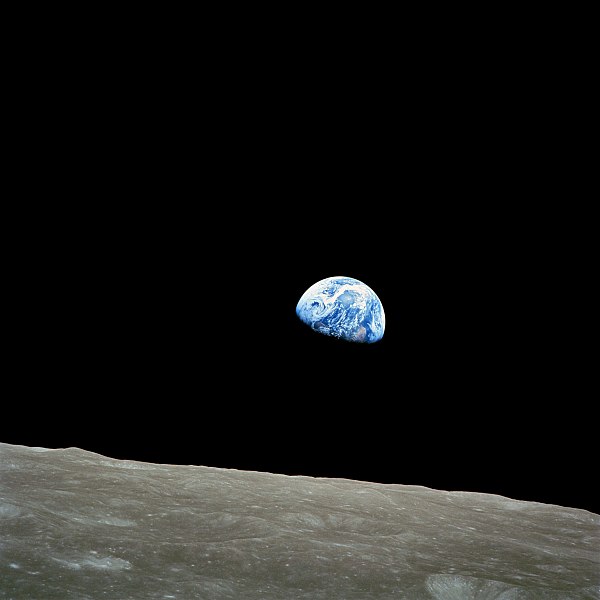
photo taken from Apollo 8

Things always look different in the rear view mirror.

If I were telling the story of Apollo 8 as it was understood when it was happening, it would be a different story than what it looks like today. We in the US knew what we were doing. We suspected what the Russians were doing, and our actions were based on those suspicions.

We were wrong. Here’s what was going on that we did not know then.

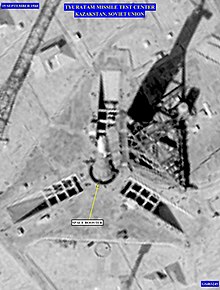
The Russians were developing a rocket, the N1, similar in size to the Saturn V. It was designed to carry two men into lunar orbit and allow one of them to land. America was aware of the existence of the N1, but not in any detail. It had been seen by reconnaissance satellite (shown here), but little else was known. Russia looked much closer to reaching the moon than the facts warranted.

In fact, the first N1 launch attempt came two months after Apollo 8, and was a disaster. There were four launch attempts in all, the last in November 1972, almost three years after Apollo 11. All ended in massive explosions and the N1 program was cancelled.

We didn’t know any of this until decades later. Based on our assessment, the Russians seemed to be on the verge of reaching the moon first, particularly after the delays that followed the Apollo One fire.

The LEM was not ready for use. The next mission was supposed to be in high Earth orbit, but NASA decided to go for broke instead. They changed the Apollo 8 mission, with only a few months to go, from an Earth orbit mission to a circumlunar mission.

On December 21, 1968 — fifty years ago this Friday — Frank Borman, James Lovell, and William Anders launched from Kennedy Space Center.

For anyone younger than sixty, it is impossible to recapture the feeling of the moment. We all know how the story came out, and that will be true over the next few years as a whole batch of fifth anniversaries come and go. At the time these spaceflights took place, no one knew if any of the astronauts would return to Earth alive.

The launch occurred at about eight AM, EST. The first and second stages burned their fuel and fell away. The third stage placed the craft in Earth orbit and remained attached.

The craft spent nearly three hours in near Earth orbit. This was standard; it allowed a full post-launch check before the craft’s irreversible journey to the moon began. Return to Earth from an aborted mission remained a possibility until the third stage fired again.

Once the third stage had fired, the CSM separated and rotated to have a view of the third stage and the retreating Earth. Having the spacecraft and the unmanned third stage on the same orbit was no part of the plan, so after five hours, the third stage vented its remaining fuel changing it to a different orbit that would not get in the way of the CSM.

The rocket in the Service Module was not used on the way to the moon. It could not be, for reasons that will be explained when we look at Apollo 9 in late February.

After nearly three days, Apollo 8 reached the vicinity of the moon. The Service Module engine fired for the first time, slowing the craft to place it in lunar orbit. The famous Earthrise photo at the top of this post was taken shortly thereafter. During the next twenty hours, Apollo 8 orbited the moon ten times. Then the Service Module engine fired again, sending them back to Earth to land in the Pacific on December 27th.

The lunar orbits took place on Christmas Eve and Christmas day. While in orbit, the astronauts read the first ten verses of the book of Genesis in a TV broadcast to Earth.

I have never been comfortable with that action. I recognize the need to comfort and unify the country at the end of a troubled year, and the need to set America apart from Russia. After all, Khrushchev had stated the Russian position when he said, “Gagarin flew into space, but didn’t see any god there.” And, despite those of us who disagree, America is demographically and historically a Christian country.

Nevertheless, why Genesis, the part of the scriptures most quoted by those who would hold back science? They would have been better to follow the lead of Linus van Pelt and quote Luke 2: 8-14. It was Christmas, after all.

The went, they orbited, and they returned. It doesn’t sound like much if you put it that way, but there was an additional factor. What if they didn’t make it back?

By the time of Apollo 8, eight astronauts had died in training or in on the launch pad. All those deaths were virtually instantaneous, but death in space could come another way. Astronauts could become stranded, unable to return.

That problem had been well understood from the first. During John Glenn’s first flight, my father, an Oklahoma farmer who considered the space program a complete waste of time and money, left his tractor in the field and went in to sit for hours in front of the television. He said later, “I just had to get that old boy back on the ground before I could go back to work.”

America had held its breath before, but going to the moon upped the ante. The possibility of three men being trapped in lunar orbit and unable to return was on everybody’s mind during Apollo 8. With subsequent moon landings, everybody worried about men being trapped on the moon, and unable to return.

It all turned out well; we know that now. But to have a sense of how it felt to those of us who watched it in real time, you have to factor in the fear of complete disaster.

A Graveyard Christmas 7

The Story of the Goblins Who Stole a Sexton
by Charles Dickens

In eight parts. Click here to begin at the beginning.

Many a time the cloud went and came, and many a lesson it taught to Gabriel Grub, who, although his shoulders smarted with pain from the frequent applications of the goblins’ feet thereunto, looked on with an interest that nothing could diminish. He saw that men who worked hard, and earned their scanty bread with lives of labour, were cheerful and happy; and that to the most ignorant, the sweet face of Nature was a never-failing source of cheerfulness and joy. He saw those who had been delicately nurtured, and tenderly brought up, cheerful under privations, and superior to suffering, that would have crushed many of a rougher grain, because they bore within their own bosoms the materials of happiness, contentment, and peace. He saw that women, the tenderest and most fragile of all God’s creatures, were the oftenest superior to sorrow, adversity, and distress; and he saw that it was because they bore, in their own hearts, an inexhaustible well-spring of affection and devotion. Above all, he saw that men like himself, who snarled at the mirth and cheerfulness of others, were the foulest weeds on the fair surface of the earth; and setting all the good of the world against the evil, he came to the conclusion that it was a very decent and respectable sort of world after all. No sooner had he formed it, than the cloud which had closed over the last picture, seemed to settle on his senses, and lull him to repose. One by one, the goblins faded from his sight; and, as the last one disappeared, he sank to sleep.

The day had broken when Gabriel Grub awoke, and found himself lying at full length on the flat gravestone in the churchyard, with the wicker bottle lying empty by his side, and his coat, spade, and lantern, all well whitened by the last night’s frost, scattered on the ground. The stone on which he had first seen the goblin seated, stood bolt upright before him, and the grave at which he had worked, the night before, was not far off. At first, he began to doubt the reality of his adventures, but the acute pain in his shoulders when he attempted to rise, assured him that the kicking of the goblins was certainly not ideal. He was staggered again, by observing no traces of footsteps in the snow on which the goblins had played at leap-frog with the gravestones, but he speedily accounted for this circumstance when he remembered that, being spirits, they would leave no visible impression behind them. So, Gabriel Grub got on his feet as well as he could, for the pain in his back; and, brushing the frost off his coat, put it on, and turned his face towards the town. continued tomorrow

A Graveyard Christmas 6

The Story of the Goblins Who Stole a Sexton
by Charles Dickens

In eight parts. Click here to begin at the beginning.

But a change came upon the view, almost imperceptibly. The scene was altered to a small bedroom, where the fairest and youngest child lay dying; the roses had fled from his cheek, and the light from his eye; and even as the sexton looked upon him with an interest he had never felt or known before, he died. His young brothers and sisters crowded round his little bed, and seized his tiny hand, so cold and heavy; but they shrank back from its touch, and looked with awe on his infant face; for calm and tranquil as it was, and sleeping in rest and peace as the beautiful child seemed to be, they saw that he was dead, and they knew that he was an angel looking down upon, and blessing them, from a bright and happy Heaven.

Again the light cloud passed across the picture, and again the subject changed. The father and mother were old and helpless now, and the number of those about them was diminished more than half; but content and cheerfulness sat on every face, and beamed in every eye, as they crowded round the fireside, and told and listened to old stories of earlier and bygone days. Slowly and peacefully, the father sank into the grave, and, soon after, the sharer of all his cares and troubles followed him to a place of rest. The few who yet survived them, kneeled by their tomb, and watered the green turf which covered it with their tears; then rose, and turned away, sadly and mournfully, but not with bitter cries, or despairing lamentations, for they knew that they should one day meet again; and once more they mixed with the busy world, and their content and cheerfulness were restored. The cloud settled upon the picture, and concealed it from the sexton’s view.

“What do you think of THAT?” said the goblin, turning his large face towards Gabriel Grub.

Gabriel murmured out something about its being very pretty, and looked somewhat ashamed, as the goblin bent his fiery eyes upon him.

” You miserable man!” said the goblin, in a tone of excessive contempt. “You!” He appeared disposed to add more, but indignation choked his utterance, so he lifted up one of his very pliable legs, and, flourishing it above his head a little, to insure his aim, administered a good sound kick to Gabriel Grub; immediately after which, all the goblins in waiting crowded round the wretched sexton, and kicked him without mercy, according to the established and invariable custom of courtiers upon earth, who kick whom royalty kicks, and hug whom royalty hugs.

“Show him some more!” said the king of the goblins.

At these words, the cloud was dispelled, and a rich and beautiful landscape was disclosed to view – there is just such another, to this day, within half a mile of the old abbey town. The sun shone from out the clear blue sky, the water sparkled beneath his rays, and the trees looked greener, and the flowers more gay, beneath its cheering influence. The water rippled on with a pleasant sound, the trees rustled in the light wind that murmured among their leaves, the birds sang upon the boughs, and the lark carolled on high her welcome to the morning. Yes, it was morning; the bright, balmy morning of summer; the minutest leaf, the smallest blade of grass, was instinct with life. The ant crept forth to her daily toil, the butterfly fluttered and basked in the warm rays of the sun; myriads of insects spread their transparent wings, and revelled in their brief but happy existence. Man walked forth, elated with the scene; and all was brightness and splendour.

“YOU a miserable man!” said the king of the goblins, in a more contemptuous tone than before. And again the king of the goblins gave his leg a flourish; again it descended on the shoulders of the sexton; and again the attendant goblins imitated the example of their chief. continued tomorow

550. CSM and Friends

The moon bound Apollo missions sent three things along, a LEM, a Command Module, and a Support Module. Apollo 8 was the only moon bound launch that didn’t carry a LEM, so we will save it for later. CSM was the common abbreviation for the linked Command Module and Support Module. The photo at the top of this post is a CSM.

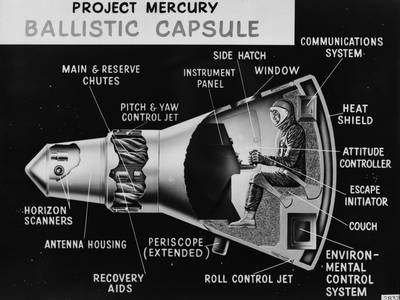
In the original Mercury spacecraft, (shown here) the single occupant was in a closed space with all his supplies of air and, on longer flights, water and food. Flights were short and maneuverability was minimal. There was no need to store large quantities of fuel or oxygen. The retrorockets which burned to return the craft to earth were outside the vehicle and behind the heat shield; this was also true on the Gemini craft.

On Gemini flights, the ability to maneuver was critical. Gemini was the program in which astronauts learned how to rendezvous and dock and how to perform space walks. (EVAs; extra-vehicular activities) Gemini was also designed to test the effects of long term weightlessness. There was a need to store large quantities of fuel and oxygen, so a section was added between the crew cabin and the heat shield. It was not accessible from the crew space. You can see it in the silhouette of the Gemini spacecraft shown here.

Gemini could not contain both enough oxygen for very long missions and enough fuel for major maneuvering. Long missions were loaded up with oxygen, but little fuel. Rendezvous and docking missions were shorter and loaded up with fuel.

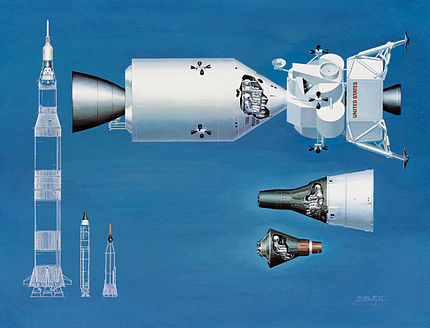
The trip to the moon would take plenty of breathing oxygen and maneuvering fuel, and a lot more besides. All this, and fuel cells for electricity, were crammed into the Support Module. It also had to act as another stage in the Saturn rocket. It had to have a large engine and fuel supply to use while entering lunar orbit, and when exiting lunar orbit to return to Earth. A comparison of the three photos will show that Mercury and Gemini had only retrorockets for return, strapped outside the heat shield, along with maneuvering thrusters you can’t see in the pictures. The bell of the CSM’s large rocket is clearly visible.

With Apollo, the heat shield was moved back to the base of the crew space. The Command and Support Modules were designed to be separated just before reentry. The Support Module burned up in the atmosphere while the Command Module was slowed by its heat shield before landing by parachutes.

This poster from NASA shows all three spacecraft side by side, at scale, with the LEM thrown in as a bonus.

We’ll look at the Apollo 8 mission itself on Wednesday.

A Graveyard Christmas 5

The Story of the Goblins Who Stole a Sexton
by Charles Dickens

In eight parts. Click here to begin at the beginning.

At last the game reached to a most exciting pitch; the organ played quicker and quicker, and the goblins leaped faster and faster, coiling themselves up, rolling head over heels upon the ground, and bounding over the tombstones like footballs. The sexton’s brain whirled round with the rapidity of the motion he beheld, and his legs reeled beneath him, as the spirits flew before his eyes; when the goblin king, suddenly darting towards him, laid his hand upon his collar, and sank with him through the earth.

When Gabriel Grub had had time to fetch his breath, which the rapidity of his descent had for the moment taken away, he found himself in what appeared to be a large cavern, surrounded on all sides by crowds of goblins, ugly and grim; in the centre of the room, on an elevated seat, was stationed his friend of the churchyard; and close behind him stood Gabriel Grub himself, without power of motion.

“Cold to-night,” said the king of the goblins, “very cold. A glass of something warm here!”

At this command, half a dozen officious goblins, with a perpetual smile upon their faces, whom Gabriel Grub imagined to be courtiers, on that account, hastily disappeared, and presently returned with a goblet of liquid fire, which they presented to the king.

“Ah!” cried the goblin, whose cheeks and throat were transparent, as he tossed down the flame, “this warms one, indeed! Bring a bumper of the same, for Mr. Grub.”

It was in vain for the unfortunate sexton to protest that he was not in the habit of taking anything warm at night; one of the goblins held him while another poured the blazing liquid down his throat; the whole assembly screeched with laughter, as he coughed and choked, and wiped away the tears which gushed plentifully from his eyes, after swallowing the burning draught.

“And now,” said the king, fantastically poking the taper corner of his sugar-loaf hat into the sexton’s eye, and thereby occasioning him the most exquisite pain; “and now, show the man of misery and gloom, a few of the pictures from our own great storehouse!”

As the goblin said this, a thick cloud which obscured the remoter end of the cavern rolled gradually away, and disclosed, apparently at a great distance, a small and scantily furnished, but neat and clean apartment. A crowd of little children were gathered round a bright fire, clinging to their mother’s gown, and gambolling around her chair. The mother occasionally rose, and drew aside the window-curtain, as if to look for some expected object; a frugal meal was ready spread upon the table; and an elbow chair was placed near the fire. A knock was heard at the door; the mother opened it, and the children crowded round her, and clapped their hands for joy, as their father entered. He was wet and weary, and shook the snow from his garments, as the children crowded round him, and seizing his cloak, hat, stick, and gloves, with busy zeal, ran with them from the room. Then, as he sat down to his meal before the fire, the children climbed about his knee, and the mother sat by his side, and all seemed happiness and comfort.

But a change came upon the view, almost imperceptibly. The scene was altered to a small bedroom, where the fairest and youngest child lay dying. continued tomorrow

A Graveyard Christmas 4

The Story of the Goblins Who Stole a Sexton
by Charles Dickens

In eight parts. Click here to begin at the beginning.

The goblin grinned a broader grin than before, as he said, “Well, Gabriel, what do you say to this?”

The sexton gasped for breath.

“What do you think of this, Gabriel?” said the goblin, kicking up his feet in the air on either side of the tombstone, and looking at the turned-up points with as much complacency as if he had been contemplating the most fashionable pair of Wellingtons in all Bond Street.

“It’s – it’s – very curious, Sir,” replied the sexton, half dead with fright; “very curious, and very pretty, but I think I’ll go back and finish my work, Sir, if you please.”

“Work!” said the goblin, “what work?”

“The grave, Sir; making the grave,” stammered the sexton.

“Oh, the grave, eh?” said the goblin; “who makes graves at a time when all other men are merry, and takes a pleasure in it?”

Again the mysterious voices replied, “Gabriel Grub! Gabriel Grub!”

“I am afraid my friends want you, Gabriel,” said the goblin, thrusting his tongue farther into his cheek than ever – and a most astonishing tongue it was – “I’m afraid my friends want you, Gabriel,” said the goblin.

“Under favour, Sir,” replied the horror-stricken sexton, “I don’t think they can, Sir; they don’t know me, Sir; I don’t think the gentlemen have ever seen me, Sir.”

“Oh, yes, they have,” replied the goblin; “we know the man with the sulky face and grim scowl, that came down the street to-night, throwing his evil looks at the children, and grasping his burying-spade the tighter. We know the man who struck the boy in the envious malice of his heart, because the boy could be merry, and he could not. We know him, we know him.”

Here, the goblin gave a loud, shrill laugh, which the echoes returned twentyfold; and throwing his legs up in the air, stood upon his head, or rather upon the very point of his sugar-loaf hat, on the narrow edge of the tombstone, whence he threw a Somerset with extraordinary agility, right to the sexton’s feet, at which he planted himself in the attitude in which tailors generally sit upon the shop-board.

“I – I – am afraid I must leave you, Sir,” said the sexton, making an effort to move.

“Leave us!” said the goblin, “Gabriel Grub going to leave us. Ho! ho! ho!”

As the goblin laughed, the sexton observed, for one instant, a brilliant illumination within the windows of the church, as if the whole building were lighted up; it disappeared, the organ pealed forth a lively air, and whole troops of goblins, the very counterpart of the first one, poured into the churchyard, and began playing at leap-frog with the tombstones, never stopping for an instant to take breath, but “overing” the highest among them, one after the other, with the most marvellous dexterity. The first goblin was a most astonishing leaper, and none of the others could come near him; even in the extremity of his terror the sexton could not help observing, that while his friends were content to leap over the common-sized gravestones, the first one took the family vaults, iron railings and all, with as much ease as if they had been so many street-posts. continued Monday

549. The Saturn Rockets

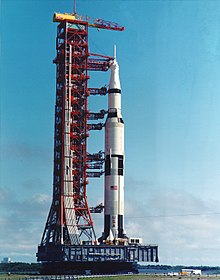
Saturn V

This post is called The Saturn Rockets, plural, because there were two if you speak loosely, or three if you are picky. If we were looking at all of the rockets of the Apollo program, we would have to add Little Joe. Getting men to the moon was a complex operation.

The pre-Apollo manned missions used modified military missiles as launch vehicles. Atlas was designated for Mercury, but delays in achieving reliability caused the first two Mercury flights to be sub-orbital on Redstone missiles. Gemini used Titan II missiles throughout the program.

The Saturn rockets are often said to be designed from the start as space launch vehicles, not military missiles. That is a somewhat limited view. The program that eventually produced the Saturns began in 1956 and ran through an amazing number of paper iterations before anything ever left the ground. “Saturn” development was simultaneous with the developments of Atlas, Titan, and other military missiles, and kept changing as those other missiles refined rocket technology.

The same infighting family of scientists and engineers developed Saturn and all American military missiles, the same set of companies built them, and the same government paid for it all. Saturn was developed through NASA and was never planned to carry warheads, but the entire American manned space program was a child of the cold war. The civilian vs. military distinction is a bit of sleight of hand.

By 1959, the possible types of Saturn rockets had been reduced to eight configurations. Eventually three were built.

Saturn I was designed to put spacecraft into low Earth orbit. Saturn V was designed to put men on the moon, and later tasked with launching Skylab. See 297. Skylab 1 and 298. Skylab 2.

Remember Little Joe? That was an existing rocket that was used early to test out the Apollo capsule’s abort mechanism.

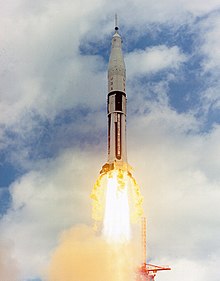
Ten Saturn I rockets flew;. Five were in Saturn development flights. Five others carried early, unmanned versions of Apollo spacecraft, as well as Pegasus micrometeorite satellites.

The Saturn I was replaced by the more powerful Saturn IB (shown at left) in 1966. Saturn IB became a workhorse for heavy, low Earth orbit launches.

The first Saturn IB topped by an unmanned CSM was launched in a mission then called Apollo 1. Later, after the deaths of three astronauts in the capsule fire, there was a mass renumbering of past flights in order to call their mission Apollo 1. It was an entirely understandable gesture, but it causes confusion to this day.

Two more Saturn IBs were launched in 1966, then the first Saturn V was launched. The next launch was to test an unmanned LEM in low Earth orbit. That flight fell to the Saturn IB which had been involved in the “Apollo One” disaster, since the capsule fire had not damaged the launch vehicle. Another Saturn V launch in 1968 completed the unmanned phase of Apollo.

On October 11, 1968, the first manned Apollo craft achieved orbit. Manned missions are what we all remember, but by that time there had been seven abort tests, sixteen launches of Saturn I, IB, and V vehicles, and twelve major ground simulation tests.

Apollo 7 was the only manned Apollo mission to use a Saturn IB. Apollo 9 was also a flight to low Earth orbit, but it used a Saturn V because it was  a full, close-in dress rehearsal and first launching of a manned LEM.

The other ten Apollo mission used the Saturn V, cementing a picture of that rocket into everyone’s mind.

After the end of Apollo, a Saturn V launched Skylab. Three subsequent launches of Saturn IBs took up the astronauts who manned it.

The last manned use of Saturn IB was to carry an Apollo CSM to rendezvous with a Soyuz vehicle in 1975.

A Graveyard Christmas 3

The Story of the Goblins Who Stole a Sexton
by Charles Dickens

In eight parts. Click here to begin at the beginning.

Gabriel started up, and stood rooted to the spot with astonishment and terror; for his eyes rested on a form that made his blood run cold.

Seated on an upright tombstone, close to him, was a strange, unearthly figure, whom Gabriel felt at once, was no being of this world. His long, fantastic legs which might have reached the ground, were cocked up, and crossed after a quaint, fantastic fashion; his sinewy arms were bare; and his hands rested on his knees. On his short, round body, he wore a close covering, ornamented with small slashes; a short cloak dangled at his back; the collar was cut into curious peaks, which served the goblin in lieu of ruff or neckerchief; and his shoes curled up at his toes into long points. On his head, he wore a broad-brimmed sugar-loaf hat, garnished with a single feather. The hat was covered with the white frost; and the goblin looked as if he had sat on the same tombstone very comfortably, for two or three hundred years. He was sitting perfectly still; his tongue was put out, as if in derision; and he was grinning at Gabriel Grub with such a grin as only a goblin could call up.

“It was NOT the echoes,” said the goblin.

Gabriel Grub was paralysed, and could make no reply.

“What do you do here on Christmas Eve?” said the goblin sternly.

“I came to dig a grave, Sir,” stammered Gabriel Grub.

“What man wanders among graves and churchyards on such a night as this?” cried the goblin.

“Gabriel Grub! Gabriel Grub!” screamed a wild chorus of voices that seemed to fill the churchyard. Gabriel looked fearfully round – nothing was to be seen.

“What have you got in that bottle?” said the goblin.

“Hollands, sir,” replied the sexton, trembling more than ever; for he had bought it of the smugglers, and he thought that perhaps his questioner might be in the excise department of the goblins.

“Who drinks Hollands alone, and in a churchyard, on such a night as this?” said the goblin.

“Gabriel Grub! Gabriel Grub!” exclaimed the wild voices again.

The goblin leered maliciously at the terrified sexton, and then raising his voice, exclaimed –

“And who, then, is our fair and lawful prize?”

To this inquiry the invisible chorus replied, in a strain that sounded like the voices of many choristers singing to the mighty swell of the old church organ – a strain that seemed borne to the sexton’s ears upon a wild wind, and to die away as it passed onward; but the burden of the reply was still the same, “Gabriel Grub! Gabriel Grub!”

The goblin grinned a broader grin than before, as he said, “Well, Gabriel, what do you say to this?”

The sexton gasped for breath. continued tomorrow

A Graveyard Christmas 2

The Story of the Goblins Who Stole a Sexton
by Charles Dickens

In eight parts. Click here to begin at the beginning.

In this happy frame of mind, Gabriel strode along, returning a short, sullen growl to the good-humoured greetings of such of his neighbours as now and then passed him, until he turned into the dark lane which led to the churchyard. Now, Gabriel had been looking forward to reaching the dark lane, because it was, generally speaking, a nice, gloomy, mournful place, into which the townspeople did not much care to go, except in broad daylight, and when the sun was shining; consequently, he was not a little indignant to hear a young urchin roaring out some jolly song about a merry Christmas, in this very sanctuary which had been called Coffin Lane ever since the days of the old abbey, and the time of the shaven-headed monks. As Gabriel walked on, and the voice drew nearer, he found it proceeded from a small boy, who was hurrying along, to join one of the little parties in the old street, and who, partly to keep himself company, and partly to prepare himself for the occasion, was shouting out the song at the highest pitch of his lungs. So Gabriel waited until the boy came up, and then dodged him into a corner, and rapped him over the head with his lantern five or six times, just to teach him to modulate his voice. And as the boy hurried away with his hand to his head, singing quite a different sort of tune, Gabriel Grub chuckled very heartily to himself, and entered the churchyard, locking the gate behind him.

He took off his coat, set down his lantern, and getting into the unfinished grave, worked at it for an hour or so with right good- will. But the earth was hardened with the frost, and it was no very easy matter to break it up, and shovel it out; and although there was a moon, it was a very young one, and shed little light upon the grave, which was in the shadow of the church. At any other time, these obstacles would have made Gabriel Grub very moody and miserable, but he was so well pleased with having stopped the small boy’s singing, that he took little heed of the scanty progress he had made, and looked down into the grave, when he had finished work for the night, with grim satisfaction, murmuring as he gathered up his things-

Brave lodgings for one, brave lodgings for one,
A few feet of earth, when life is done;
A stone at the head, a stone at the feet,
A rich, juicy meal for the worms to eat;
Rank grass overhead, and damp clay around,
Brave lodgings for one, these, in holy ground!

“Ho! ho!” laughed Gabriel Grub, as he sat himself down on a flat tombstone which was a favourite resting-place of his, and drew forth his wicker bottle. “A coffin at Christmas! A Christmas box! Ho! ho! ho!”

“Ho! ho! ho!” repeated a voice which sounded close behind him.

Gabriel paused, in some alarm, in the act of raising the wicker bottle to his lips, and looked round. The bottom of the oldest grave about him was not more still and quiet than the churchyard in the pale moonlight. The cold hoar frost glistened on the tombstones, and sparkled like rows of gems, among the stone carvings of the old church. The snow lay hard and crisp upon the ground; and spread over the thickly-strewn mounds of earth, so white and smooth a cover that it seemed as if corpses lay there, hidden only by their winding sheets. Not the faintest rustle broke the profound tranquillity of the solemn scene. Sound itself appeared to be frozen up, all was so cold and still.

“It was the echoes,” said Gabriel Grub, raising the bottle to his lips again.

“It was NOT,” said a deep voice. continued tomorrow

548. Victorian Steampunk?


Please note that Serial is back temporarily, to present the short story by Dickens which was a predecessor to A Christmas Carol. It starts today. Check it out.


=======

The Victorian era — was there such a thing?

Victoria became Queen in 1837 and died in 1901, a reign of just short of sixty-four years. Everything in Britain changed in that time except the Queen, so does the phrase Victorian Era have any real meaning?

If you are going to write steampunk, that is a fair question. Of course steampunk usually takes place in an alternate Victorian era — sometimes extremely alternate — but you have to have at least a reasonable knowledge of the original if you are going to mimic it.

Most of us get our history everywhere but a history book, so let’s see what fiction we can use to subdivide the era. Jane Austen, the Brontes, and the Queen were born only a few years apart, so if you enjoy those authors, you are reading about the early Victorian period. Not my wheelhouse, but to each his own.

More to my taste, Charles Dickens’s first novel was published in 1837, the year Victoria became queen. His last novel (uncompleted) and his death took place in 1870. At that time Victoria still had three decades to live.

The Dickensian era is almost as widely known as the Victorian. In full disclosure, I have read all of Dickens’s Christmas novellas — A Christmas Carol several times — but his larger works tend to defeat me. I think I was inoculated against them by being force-fed Great Expectations at too young an age.

Not everyone reads Dickens by choice, but everyone knows what Dickensian means. Judith Flanders in The Victorian City, said:

Today “Dickensian” means squalor . . .(Dickens was) the greatest recorder the London streets has ever known — through whose eyes those streets have become Dickensian . . .

She got it right for her literary audience, but wrong for those who never read a Dickens novel that they weren’t forced to read. Dickensian, to the average Joe (or Joan) means carolers in fancy dress, Scrooge redeemed, Tiny Tim getting a second chance at life, and a village of quaint houses for the Christmas mantle. The actual harshness of Dickens’s other novels is excluded.

The squalor and the sweetness: that is the dual heritage that steampunk authors have to work with if they set their works in variations of the early Victorian period.

As I explained last Wednesday, Like Clockwork is derived from A Christmas Carol, although it morphed into something very different from a Christmas novel. I don’t think Dickens would recognize my London at all.

========

From 1870 when Dickens died, until 1901 when Queen Victoria died, the world became a very different place from the home of Scrooge, Tiny Tim, and Oliver Twist. The industrial revolution changed the world into something much closer to the present.

You might choose Jules Verne as the author that most represents this era, but not if you are concentrating on England. Verne would be the right literary reference for a steampunk novel set in the La Belle Époque, Paris. If you know of such a work, send me the author and title. I would love to read it.

My earlier steampunk novel, The Cost of Empire, travels across five continents by dirigible, but much of the action takes place in London. For that time period in London, there is only one literary creature who is in everyone’s DNA; not an author, but a character who is more real to most of us than the author who created him — Sherlock Holmes.

Holmes first case, A Study in Scarlet, was published in 1887, and there were flashbacks to earlier cases. His Last Bow was on the eve of World War I. This neatly fills in the rest of the Victorian era and spills over into the Edwardian.

Gender gets involved here. Dickens appeals, or doesn’t appeal, to men and women alike. The rest of British popular literature, contemporary to the era (not historical fiction) is largely gender biased, with Austen and the Brontes for the gals, Kipling, Buchan, and Conan Doyle for the guys.

In other words, if you are a guy (guilty as charged) and you consider Victorian characters, you are more likely to think first of Sherlock Holmes than of Elizabeth Bennet — or even Mr. Darcy.

When I first became involved in the Victorian era, after becoming interested in steampunk, my knowledge of everyday life in London came largely from multiple readings of the canon. That is what Holmes fans call the fifty-six stories and four novels written by ACD himself.  My internal vision of Victorian London was that which could be seen from 221b Baker Street, even though Sherlock himself never makes an appearance in my writings.

Yet.

========

If you want a reference book for each era, I recommend:

For the early Victorian period — The Victorian City by Judith Flanders. She gives a modern scholar’s look at the reality behind the world that Dickens wrote about.

For the late Victorian period — Sherlock Holmes: the Man and his World by H. R. F. Keating. He provides commentary on Holmes’s world, with contemporary photographs of scenes from the canon.