Tag Archives: memoir

606. We Learn

University of Chicago

In the review of Louis L’amour’s memoir, a lot was said about self education, but that should not obscure the usefulness of college.

If you cut classes, sleep through classes, read digested notes instead of the textbook, and write merely adequate papers (or buy them), you can get all the way to graduation without learning anything. It takes some effort, but people do it every day.

On the other hand, if you recognize that your education is your responsibility, college will at least provide you with a reading list. And while you are in the stacks there is no telling what kind of other amazing additional things you will find to read.

Also, a few of the professors, at least, will have something worth listening to. I have had brilliant professors and professors who were dolts. You just have to deal with it.

There are grad students (I’ve met some) who were plowing their way toward a Ph.D. on pure inertia. Something got them started down that path and they didn’t have the imagination or courage to make a change. They can make it all the way to professorship with the help of other misfits from the last generation.

It’s pretty much like the rest of life.

I left a town in Oklahoma, population 121, and arrived at Michigan State University in 1966. That year the campus had about 48,000 students. I loved it. I could walk down the street without everybody knowing me, and reporting back everything I did. (Sigh of relief!)

I started in biology, switched to anthropology, and concentrated on the cultures of South Asia. Just before graduation my draft number came up, so my diploma was immediately followed by four years in the Navy.

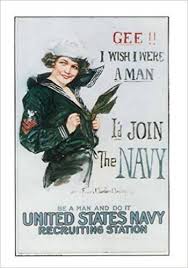
A word of advice: if you have a degree in engineering, they make you an officer. If you have a degree in anthropology, they make you an enlisted man. Oh well.

I next attended the University of Chicago, where I got an MA studying the interface between South Asian village economics and native theories of ritual purity. Title: Jajmani, an alternative conceptualization.

Obscure? You’d better believe it. Obscurity does not make a thing useless, but it does make it hard to talk to your friends about it.

Then I got blindsided by novel writing, but I’ve talked about that enough in the past.

The University of Chicago is a premier school. California State College, Stanislaus, which I attended a few years later, was known only to locals. The profs at Chicago were probably better scholars, but not better teachers. I got a good education both places.

CSCS is now CSUS. It was upgraded to a University a few years after I left. While I was there, I studied History, and received a second BA and second MA. Why a second set of degrees is a long story, to be told another time.

My thesis was “The Crisis in American Shipping and Shipbuilding: 1865 to 1918” That was an era of arguments about the role of tariffs and subsidies, with much testimony before Congress in which every competing party misrepresented the facts. Same old, same old. Teflon Don would have felt right at home.

To finish this quasi curriculum vitae, I went back to the University of the Pacific a few years later to get a teaching credential. It only required a few courses with all I already had on board. Everything I had done until then was from love of learning. I went to UOP purely to get a job so I could continue eating.

============

Everything I learned, everywhere I went, was useful to me as a teacher and as a writer. Over the next few months, I plan to pass on Reader’s Digest versions of some of it that might help you in your writing.

(Yes, I know most of the people reading this are or want to be writers, and more power to you.)

605. My Life as a Beaver

First I thought, this is too much about me. Then I thought, it’s a blog, stupid, go for it.

I am not a hoarder. Hoarders buy and store things they don’t need. I’m a beaver. I build things, and they accumulate. The tools also accumulate. Also the raw material for the next project, and there is always a next project.

Normally I keep my home life out of this blog, but I have to admit that my wife is also a beaver. It’s a good thing, really, or we couldn’t have had all these happy years together.

I always wanted to be a craftsman, but I grew up as a farmer’s son instead. Farming is a make-do profession. If a nail will do the job, don’t use a screw, and certainly don’t cut a mortise and tenon. We built a few barns when I was home, but the test of a barn isn’t how well it is built. If It doesn’t leak or fall down, it’s good enough. But it wasn’t good enough for me.

I took a semester of shop in high school, where I built a mahogany gun case for an aunt and a maple book case for a family friend. It was quite satisfying, but I needed all the rest of my time to prepare for college.

Once in college, I started a classical guitar, working where and when I could find space. I didn’t have the skills to do it right, but attempting it taught me skills I still use today. It sits, half completed in a closet; maybe someday I’ll complete it. Every successful craftsman has a few failures along the way, which is all right if he learns from them. Some years later I completed a dulcimer and later still the expanded range guitar shown here. I have a few more instruments in pieces waiting their turn.

That seems to be a pattern. I’ve finished quite a few novels, but I have at least as many more in pieces, waiting their turn.

Over the years I’ve built bookcases, tables, workbenches, cupboards, a bed, a couple of sheds, and all the other wood-based things a person on a teacher’s salary or a writer’s non-salary can’t afford to buy. I’ve also built for fun — fancy canoe paddles as family gifts, a cold-molded rowboat for the frustrated sailor that lives inside me, and other things too numerous to mention — or even remember.

Beavers gotta build stuff.

My wife lends a hand sometimes, and sometimes we build projects as a team. We spent a year of spare minutes building an arch to commemorate our (redacted) wedding anniversary. Her father and mother were both craftsmen, and she learned well before I ever met her.

Sometime in the eighties, we discovered quilting, and that’s something we do as a team. We design and build both together and individually. Over quite a few years, we designed better than a hundred quilts, most of which were built by a charity group in her guild to be donated. We built the three shown here ourselves; the designs are one each of hers, mine, and ours.

Beavers gotta design stuff.

The image at the head of the post is another project of ours. We built portable stands that carry 24 of these mini-quilts, and provide them for display in rest homes. We designed and built the stands; the mini-quilts come from guild members, including us.

In 2015 I decided my scheduled novel Cyan needed some support so I started this blog. A thousand plus posts later, I’m still at it.

Beavers gotta keep busy. Life can be boring if you’re standing still.

603. Small Gods, Big Result

Small Gods, Big Result
also known as
Full-Fledged Characters, Where Are You?

I have a colleague, JM Williams, who is a great fan of Terry Pratchett. On his suggestion, I checked one of his novels out of the library, read five pages, and tossed it.  Yech.

A month or so later I mentioned the fact to him. He suggested that I might prefer to start on a different novel, and suggested Small Gods.

I was hooked by page two. The scene, or was it an allegory, of the eagle and the tortoise was wonderful, and I was ready to believe that Terry Pratchett might be all JM said he was.

By page 38, I wasn’t so sure again, and I found myself trying to analyze exactly what was missing — for me — in the novel. I do that a lot. If you write, I’m sure you know what I mean.

Roughly by page 200, I was back on board again.

I had came to a conclusion, and since it bears on writing in general, I’m going to expound. As with the responses I got from 601. Home Court Advantage, feel free to disagree.

At page 38 of Small Gods, there was no character I liked well enough to care if he lived or died. Still, interesting  things were happening and I wanted to know how they were going to come out. That is a positive mark for a writer who knows what he is doing, but it isn’t really enough.

By about page 200, I wanted Om to make it and I really wanted Brutha to make it. From that time on, I had a vested interest that kept me going with enthusiasm. If I read another Pratchett (and I probably will) that enthusiasm will be there from the start, now that I trust the author.

I had needed characters I could care about.

This is not the same as full-fledged characters. There is no such thing. Robert Caro just wrote a four volume biography of Lyndon Johnson, and I’m sure he didn’t tell everything there was to tell. I read both parts of Patterson‘s bio of Heinlein and I still have questions.

If biographers who spend massive chunks of years don’t get it all, how can a fiction writer expect to have a “full-fledged” character. What does the phrase mean, anyway?

Om, Brutha, Vorbis, Simony, Urn, and Didactylos are all characters in Small Gods who are well thought out, powerful, and exactly sufficient to the task at hand. Not one of them is a “full-fledged” character, but they are each fledged exactly enough.

If you want to write full-fledged characters, maybe you should give up novels and write LITERATURE instead. (If WordPress allowed multiple fonts in one post, I would put LITERATURE in all curlicues.) Then you can out-Joyce Joyce if you want to, and still have readers.

They will have to read. There is a paper due next week, called for by the professor at the front of the room. He wants company in the misery of having been forced to read LITERATURE in order to get his degree.

In point of fact, there are powerful characters in literature and in genre fiction as well. The difference is in the expectations and tolerance of the reader. Powerful does not mean turning a microscope on his backstory and telling every detail.

Ursula LeGuin told us that science fiction is too small for Mrs. Brown, meaning there weren’t enough full-fledged characters. I listened. I respect LeGuin too much to ignore her, but after decades of considering her argument, it’s just smoke and mirrors.

I could (over)state in response, science fiction isn’t too small for Mrs. Brown; Mrs. Brown is too dull for science fiction.

Fiction, however humble or pretentious, is too small to contain any actual living human being. That isn’t what fiction is all about. Writers of fiction give a précis, a starting point, a few brief actions and emotions, and the reader fills in the rest. The reader draws on a full life of looking at other people, and at him or herself.

The real issue between literature and genre fiction is how many (and how dull) are the details the reader will tolerate.

Take Spenser (the detective, not the poet) for example. He has been around for almost fifty novels and, like Bond, has outlived his creator. After all this time we know a bit about him — actually, we may know all there is to know about him, and it isn’t much. Except for the interminable descriptions of food, all the details provided about him also move each story forward.

Recently I have worn out Spenser, Nero Wolfe and Archie, Judge Dee, Bony, Travis McGee and a dozen others, and have started Anne Cleves’s Shetland series. In my first attempt, I am having to get used to masses of detail about the lives of very ordinary people. I like it, but it is hard sledding; if I hadn’t visited Shetland and enjoyed the place, it would be even harder.

Cleves is a fine writer. My problem is a matter of expectations. Any detective writer in the list above would have finished Cleves’s novel in half as many pages, and the details left out would be the dull ones.

I like what I’m reading, really I do, but anything with this much detail about ordinary life has to be LITERATURE.

There will be more to say about all this on Monday.

HOLD IT – – – STOP THE PRESSES.

Something just came up as I was putting this to bed to wait for the 19th of June. It’s peripheral, but it struck me funny enough to put in a mini-post tomorrow. I will still say more about the main subject on Monday.

601. Home Court Advantage

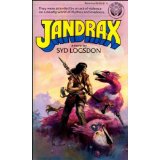
Jandrax was the second novel I wrote, and the first that was published, back in the late seventies. You can still find it in used bookstores everywhere. If you were to read it, you would never know that I wrote it twice.

The first time through, I wrote it in first person. It didn’t work for me. I agonized a bit about what was wrong, then bit the bullet and rewrote it from start to finish in third person.

By the way, this was before computers . No cut and paste, no spell check. Just an electric typewriter and gallons of correction fluid — that thin white paint that came in a small bottle with built in brush, and was a lifesaver for poor typists.

Also, I cheated. Two chapters sounded just fine in first person, so I left them that way. One is a main character reminiscing about his childhood, and the other is another main character, alone in a boat, talking to himself as he undergoes experiences that may or may not be real.

I have written fifteen novels, and only that lost iteration of Jandrax was in first person. I could give you good plot-based reasons for that, but the reality is that I like the distance third person put between the author and the work. That may be a mistake.

Recently, I have been analyzing what makes books readable and re-readable, and that has led me to my favorite SF writers, Heinlein and Zelazny. For all their differences, they share a few authorial traits, including the fact that both are masters of first person.

Each author has a stock character that recurs with variations. For Heinlein, it is complicated by the fact that his stock character often comes as a matched pair. There is an older, seasoned man of the world, cynical, with no apparent respect for authority. He will, nevertheless, hurl himself into danger for his own people while pretending that he is doing it for selfish reasons. He reads like your crazy uncle. The matching character is a young smart-ass in training, studying up to become like the oldster. But don’t accuse him of that. He would punch you in the nose if you did. Or at least, threaten to.

Zelazny didn’t limit himself to one stock character, but he did have one that recurred frequently. He was part way between the halves of the paired Heinlein character. He was young, but fully formed. He had the attitude of a smart-ass college student, an upper class-man who had already learned the ropes. The kind who knew which professors had something worth listening to and which ones were dopes. (There are a lot of dopes in academia.) There was a brightness, a newness, about his attitude. He seemed to take nothing seriously on the surface, but underneath he took everything very seriously. And he expected the reader to see this for themselves.

In the Amber series, Merlin was such a character. Corwin was similar, but older and more damaged by time. His responsibilities had risen to the surface, and he got a lot less enjoyment out of life. Consequently the second half of the Amber series is a lot more fun to read (and re-read) than the first half.

Merlin and his clones, and the Heinlein character whatever gender or age he/she happened to be, are what every American youth pretends to be. And what American oldsters claim they once were.

All these characters speak directly to the reader, but not honestly. They hide their nobility under a guise of selfishness, but they expect the reader to know that it is all a sham. They speak in first person. They say “I”, not “he”, and it works.

One suspects that Heinlein and Zelazny — the actual people — said “I” a lot, too. As Harlan Ellison put it, “The thing every writer has to have is arrogance.” And by any definition, Heinlein and Zelazny were writers.

When a writer chooses first person, she/he is giving him/her-self a tremendous home court advantage. If his character if full of sadness and self-pity, there will be readers to say, “That’s just how I feel.” If his character appears to have no fear, there will be readers who share the same pretense.

If the character is a smart-ass, that’s even better. We all have those cutting remarks we don’t make, in order to keep peace with family and friends. We are all smart-asses under the skin.

599. Wandering Quotes

This is a follow-on from Monday’s post, but it isn’t Part 2.
Either post can be read independently.

Louis L’amour left home early, wandered the world, then settled down to be a writer. Unlike many who came at writing later in life, L’amour was set on it from the first. He said:

My intention had been to write, and consequently I had made  no effort to acquire a trade . . . All I had to offer was considerable physical strength and two hands, but for most jobs that was all that was required . . . All the while I read. There was no plan, nor at the time could there be. One had to read what was available . . .

It would be hard to live such a life today. The hard work of the world has been outsourced — within America to undocumented aliens who fear INS too much to fight back against slave-like labor, and outside America, to a world-wide cadre of peasants, living slave-like lives. 

L’amour also said of his memoir:

This is a story of an adventure in education, pursued not under the best of conditions. The idea of education has been so tied to schools, universities, and professors that many assume there is no other way, but education is available to anyone within reach of a library, a post office, or even a newsstand.

If L’amour were alive today, he would of course include the internet, with appropriate caveats.

L’amour’s westerns are full of slam bang action. There is no way to pretend that isn’t a large part of their appeal, but it isn’t enough to account for their huge popularity. There are plenty of shoot-em-ups that are briefly on the newsstand, and as quickly disappear from memory. Louis L’amour has proved as close to immortal as a genre writer can become.

I’ll take a stab at explaining why. Feel free to disagree. He was a “frontier philosopher”. Note the quotes; this term is actually insulting, but it fits. L’amour had read as widely as any author, and his understanding of human beings was profound. But when he made “philosophical” pronouncements, he couched them in simple language, and frequently put them into the mouths of uneducated characters. They sound wise, but without arrogance.

Have faith in God but keep your powder dry.

Adventure is just a romantic name for trouble. It sounds swell when you write about it, but it’s hell when you meet it face to face in a dark and lonely place.

A mistake constantly made by those who should know better is to judge people of the past by our standards rather than their own. The only way men or women can be judged is against the canvas of their own time.

Violence is an evil thing, but when the guns are all in the hands of the men without respect for human rights, then men are really in trouble.

Just because the NRA also says it, doesn’t make it wrong.

A mind, like a home, is furnished by its owner, so if one’s life is cold and bare he can blame none but himself. You have a chance to select from pretty elegant furnishings.

Knowledge was not meant to be locked behind doors. It breathes best in the open air where all men can inhale its essence.

When you go to a country, you must learn how to say two things: how to ask for food, and to tell a woman that you love her. Of these the second is more important, for if you tell a woman you love her, she will certainly feed you.

That one might not be politically correct any more.

It is often said that one has but one life to live, but that is nonsense. For one who reads, there is no limit to the number of lives that may be lived, for fiction, biography and history offer an inexhaustible number of lives in many parts of the world, in all periods of time.

Few of us ever live in the present. We are forever anticipating what is to come or remembering what has gone.

Just because every New Age self-help book also says it, doesn’t make it wrong.

Historical novels are, without question, the best way of teaching history, for they offer the human stories behind the events and leave the reader with a desire to know more.

Do not let yourself be bothered by the inconsequential. One has only so much time in this world, so devote it to the work and the people most important to you, to those you love and things that matter.

If you want the law to leave you alone, keep your hair trimmed and your boots shined.

Okay, that last one could just as easily have come out of Heinlein’s mouth. I find those two authors to be much alike, each attuned perfectly to his own era, and both as American as the flag.

—- ALSO —-

When L’amour settled down to write, he tried his hand at many different genres, and stayed with the ones that paid the rent. Early on, he wrote poetry (and you know that didn’t pay the rent).

Many years ago I discovered that his poetry had been collected in a book that sold very few copies, and those only locally. I managed to get a copy on inter-library loan, and enjoyed it. I even copied a few poems and stored them in my computer, since I never expected to see the book again.

Then, in researching this post, I discovered that Bantam had reprinted Smoke From This Altar, so I immediately bought a copy.

If you have a liking for Kipling and Robert Service, you might give him a listen. The work is not all great, but there are gems. I can’t quote a whole poem, that would violate copyright, but I’ll give you a piece of one as a taste.

I turned the leaves of an ancient book
    A book that was faded and worn —-
And there ‘tween the leaves I found a rose,
    A tiny rose, and a thorn.

In truth, they aren’t all good, but I don’t mind digging through lumps of glass for an occasional diamond. Recommended, with reservations.

598. The Education of a Wandering Man

This is a fine book, but it falls into the not-for-everybody category. I stumbled across it years ago, read it, read it again a decade later, and its about time for me to have at it a third time.

The Education of a Wandering Man is an autobiography of Louis L’amour. It doesn’t revolve about where he went or what he did — although plenty of that creeps in — but focuses on what he learned. That includes from the old guys who were there, who told him what the west was like. It also includes from the books he read — a list that would make any book geek’s mouth water.

L’amour left home at 15 to make his way in the world. That would be 1926. One might be forgiven for thinking that the depression drove him to leave but the numbers don’t add up for that interpretation. The biography in his official website attributes it to hard times specific to his North Dakota home area, but the two biographies seem to diverge in details. That appears to be a matter of simplification, rather than concealment. Check Wednesday’s post for LL’s own statement.

The Education of a Wandering Man resonated from the moment I opened the first page. It sounded a bit like my own life. I didn’t leave home early, or leave school early, and I didn’t wander the world. I did start working about age eleven, pretty much full time plus school, but working on a family farm, sleeping in your own bed, and not going hungry does not describe L’amour’s experience.

The real similarity lay in being self-educated. I stayed in school through two masters degrees, but what I learned came mostly from outside the classroom.

Here’s what LL said:

Actually, all education is self-education. A teacher is only a guide, to point out the way, and no school, no matter how excellent, can give you education. What you receive is like the outlines in a child’s coloring book. You must fill in the colors yourself.

Yes, precisely. I went to tiny schools before college. The teachers worked hard, and I thank them, but ninety percent of what I learned came from reading beyond the textbook.

The Education of a Wandering Man is a feast. Here’s a snack to whet your appetite. First on education:

Byron’s Don Juan I read on an Arab dhow sailing north from Aden up the Red Sea . . . Boswell’s Life of Samuel Johnson I read while broke and on the beach in San Pedro . . . Somewhere along the line I had fallen in love with learning, and it became a lifelong romance. Early on I discovered it was fun to follow along the byways of history to find those treasures that await any searcher . . . One thing has always been true: That book or that person who can give me an idea or a new slant on an old idea is my friend. And there have been many such.

Then on America, as L’amour saw it during his wandering days:

(B)efore the Depression, one must realize there was a great demand for seasonal labor, and much of this was supplied by men called hoboes . . . To begin with, a bum was a local man who did not want to work . . . but a hobo was a wandering worker and essential to the nation’s economy . . . During harvest season, when the demand for farm labor was great, the freight trains permitted the hoboes to ride, as the railroads were to ship the harvested grain and it was in their interest to see that labor was provided. Often this lot of wandering workers was mixed with college boys earning enough money for school or working to get in shape for football . . .
The Depression brought a different kind of drifter to the railroads and highways, and only one who bridged that period can grasp the depth of the change. The Depression hoboes had little of that carefree, cheerful attitude of the earlier hobo. They were serious, often frightened men.

You can read The Education of a Wandering Man several ways. It will tell you about the early life of a beloved author. It will give you a gritty, ground level view of the first half of the twentieth century that you won’t find in history books. It will give you an education in how to get an education. And it will give you enough wanna-reads to last a lifetime.

As L’amour said:

Once you have read a book you care about, some part of it is always with you.

Yep, and thanks for this one, Mr. L’amour.

*    *    *    *

Louis L’amour wrote his novels until he was diagnosed with inoperable cancer. Then he finally took time to write his memoir. He was editing The Education of a Wandering Man the day he died.

592. Armed Forces Week 2019

Armed Forces Week comes in May. It runs from the second to the third Saturday. The third Saturday is also Armed Forces Day.

As holidays go, Armed Forces Week isn’t particularly notable. Mother’s Day also gets caught up in the mix as the only Sunday in the week. For “right thinking people”, that probably seems appropriate. For those of us whose thinking is always a bit off center, it is ironic.

It all depends on your view of the question of the legitimacy of military force. To a very few (not including me) it is always wrong. To the average American, a simple statement that, “We support our servicemen,” ends the discussion.

It really doesn’t end anything.

We all know, whether we want to admit it or not, that every military organization in history has committed atrocities. If your answer to, “Do you support [fill in the military action of your choice?]”, is “I support our troops.”, you are just avoiding the question.

I have problems with all this. I’m no pacifist, and I believe in defending my country. Still, I see example after example of our government screwing things up and getting our servicemen and women maimed and killed for unsupportable reasons. Viet Nam comes to mind, but the problem didn’t stop when that quasi-war was over.

It hits close to home for me in a rather odd way. My wife and I make quilts, and are members of a local quilt guild. There are several organizations like Quilts of Valor which coordinate the making of quilts to be given to veterans. It would be hard to find any organization which seems more useful and harmless, but I don’t participate. Most people see these organizations’ efforts as support for troops and veterans. I respect that position and I never argue with them, but, for me, it feels too much like validating the jackass generals in all the stupid and useless things they do.

It is the same with  Armed Forces week. Most people see it as an appreciation of our soldiers and sailors, but it looks to me like a smoke screen. It tends to make legitimate questions about American military actions look like a lack of patriotism.

I came to this opinion when I was in the service. To clarify that, it was in the Viet Nam era, but I was not deployed to Viet Nam itself.

And it all starts with boot camp. I wrote a post about that experience for Armed Forces Week of 2016, That was three years ago when the blog was new and not many people were reading. I repeated it two years ago, so I won’t print it again, but if you want to know what I think of that institution,  go to 432. The Making of a Navyman.

591. The Flower and the Seed

This is the picture of a place near my home. For eight months of the year it is a dry wash, surrounded by vegetation burned brown by the summer sun. It only looks like this during the brief rainy season.

Every year the water off the surrounding hills reconfigures the falls and pools, so every spring the place shows a different face.

Two years ago here, I saw a sprig of grass growing at the edge of a rushing torrent, ready to be torn off and swept away. This poem occurred to me:

Though the bee did not come,
And the fruit did not form,
            It does not follow
That the blossom lived in vain.

Of course it isn’t about bees, flowers, and seeds — or springs of grass — but about songs unsung and books unread.

I am short of time today, after Monday’s massive post, so I thought I would share this brief poem again.

589.5 Tequila and Lederhosen

Cinco de Mayo caught me by surprise this year. It is an important holiday in California, and was particularly important to about half the kids I taught before I retired.

You will note that I did not say Mexican-American kids. Even before the advent of Trump, a surprisingly large number of (whatever) students didn’t like that name. Some wore a T-shirt that said:

Not Mexican-American
Not Hispanic
Not Chicano
MEXICAN!

I’ve already had my say on the subject of Cinco de Mayo. I invite you to check out these two older posts to see what that was.

One post had the full title: Juan Angus Georg Angelo O’Malley celebrates St. Patrick’s Day by drinking tequila and while wearing lederhosen under his kilt.

The other was titled: Who said you were Mexican?

589. A Son of the Sooner State

I was born in Oklahoma, a land on the edge of the South and also on the edge of the West. It was the land of the Indians, but you wouldn’t know it from the power structure. Its flag honors 60 tribes, but the whole place is pretty damned white. During my childhood, it wasn’t a great place to be a Black, a Jew, or an Indian.

Some say Oklahoma fought on the side of the South, but that isn’t accurate. Some Indian tribes living there fought against the Federal government, and they had reason, but the white folks who came in, took over, and dominated the new state of Oklahoma came from both north and south, long after the Civil War was over.

Kansas did fight for the North, and soon after the Civil War it had become culturally eastern. It was a place where the eastern cattle buyers bought the herds driven up from Texas, and where the immigrant sodbusters set up their farms. Dodge City, Abilene, Wyatt Earp, you know the story.

Texas fought for the South and right after the Civil War it began sending herds of cattle north to the newly built Kansas railroads. They left Texas scrawny and arrived at the railhead fat, working their way slowly northward while eating free grass.

Did I say free? Well . . .

Bear in mind what lay between Texas and Kansas — Indian Territory which would later become Oklahoma. I.T. was the dumping ground for disenfranchised Native Americans (see 247. The People’s President), and it was their grass that fed the cattle, which made the cattle owners rich, made the railroad owners rich, and fed the people in eastern cities.

Pretty soon railroads like the KATY were cutting across Indian Territory itself. That was the nickname of the MKT, the Missouri, Kansas and Texas. It started in Missouri (barely) but primarily it linked Kansas with Texas. The land between was still called Indian Territory, but more and more whites were moving in, often to railroad towns, and the tribes were rapidly losing what hold they had over their new homeland.

My paternal grandparents were both young when they separately moved into Oklahoma, while it was still Indian Territory. My grandmother liked to tell tales about getting her mail addressed to K2C, IT. In modern English, that’s Catoosa, Indian Territory. Even though this was long after the great cattle drives, my grandfather still herded cattle on horseback. Someone in the family still has a photo of him in wooly chaps, hat, boots, and six-shooter, looking like Sam Elliott. My maternal great-grandfather was a locomotive engineer on the railroads that opened up the territory.

Piece by piece, the Native Americans lost the land they had been granted when they were forced out of the Eastern United States. Whites moved in and Oklahoma was born in 1907. I came along forty years later, a year after my father returned from WW II.

When I was young, we had our own version of rich and poor, but it was a mild form of The Great American Malady. Ranchers wore Stetsons and cowboy boots, had horses and drove Cadillacs. Farmers wore ball caps and laced up work shoes, did not have horses and drove pickups, usually old and rusty ones. We were farmers, although my Dad finally treated himself to a Stetson when he was well into middle age and wore it to church every Sunday after that.

By the time of his death, and even more rapidly a few years later, the land and culture of my youth and his adulthood disappeared. Our farm no longer produced grain and milk, but was subdivided into toy farms for people who worked in Tulsa, but wanted to breathe clean air on the weekends.

By that time I was gone. I left Oklahoma in 1966 and rarely returned, but everything I have written since is filtered through memories of that place. I suspect every other writer could tell a similar story.