Tag Archives: race

329. Green Card Blues

Just before Christmas, I wrote a post from the viewpoint of a little Mexican girl, born in the US, whose parents were about to be deported. I received a comment suggesting that the problem was caused by Mexicans breaking the law. I posted that comment because everyone has a right to his opinion.

Why don’t Mexican immigrants just follow the law? I’m no expert, so I did a bit of research. Here is what it says on the Homeland Security website.

Because more people want a green card than there are visas available, not everyone who wants a green card can get one immediately. Therefore, some people have to wait in line until a visa is available. The U.S. Department of State (DOS) gives out 140,000 employment-based visas each year. . . . Currently, about 234,000 people have employment-based adjustment of status (green card) applications pending in the United States and are waiting to get a visa.

And from the site of the North American Immigration Law Group

Each application must also be supported by evidence that the alien will not become a public charge.

That suggests the applicant has to already have an employee, or has to be rich.

According to information scattered through half a dozen websites, the wait for a visa can easily take up to nine months. I can’t credit this to an official source, so call it a strong rumor.

Okay, let’s say you have a visa? That gets you over the border, but to stay, you have to apply for permanent residence. So what does that application look like? Here are some excerpts; you can download a PDF if you want to look at the whole thing.

List your present and past membership in or affiliation with every organization, association, fund, foundation, party, club, society, or similar group in the United States or in other places since your 16th birthday. Include any military service in this part. If none, write “None.” Include the name of each organization, location, nature, and dates of membership. If additional space is needed, attach a separate sheet of paper.

Have you received public assistance in the United States from any source, including the U.S. Government or any State, county, city, or municipality (other than emergency medical treatment), or are you likely to receive public assistance in the future?

Have you EVER been a member of, or in any way affiliated with, the Communist Party or any other totalitarian party?

Have you EVER received any type of military, paramilitary, or weapons training? 

These are a few of the most egregious questions found in five tightly packed pages of questions. It looks a bit like an IRS tax form on steroids.

If you were a Mexican doctor or businessman facing this document, you would set down for a hour with your lawyer and all would be well. But what if you were an uneducated, non-English-speaking farm worker?

Trump wants to build a wall. There is already a wall, built of paper, keeping poor and uneducated Mexicans from legally entering the US, and sending them across the border illegally to find work to feed their families.

This post is only a first look at a process full of complications and permutations. I’ve followed the paper trail as far as I care to. Knowing the full story of any government program would take a lifetime, and I have other things to do. But I have one more question to ask:

Is the system set up this way to turn Mexican laborers into virtual slaves, afraid to speak up from fear of the INS? No one can answer with certainty. But we can suspect, and I do.

306. White Men Only

Mostly, A Writing Life is a look at science fiction and writing in general. However, I am an American, and my country did something seventy-five years ago that needs to be remembered. See also Monday’s and Tuesday’s posts.

The Naturalization Act of 1790 stated that citizenship was available to “any alien, being a free white person”. That set the tone for the future. When the law was amended after the Civil War, it’s new iteration was taken to mean that Chinese were not eligible for citizenship.

Economic reality brought them to America anyway, where their children became citizens by birth, even though their parents could not be naturalized. The Chinese importance to the transcontinental railroad is well known. When the golden spike was driven, Chinese by the thousand were thrown out of work, and in the years that followed, downturns in the American economy were blamed on cheap Chinese labor. By 1882, Chinese were forbidden entry into the United States, a condition that continued until the 1940s.

In 1880, only 148 Japanese were living in the United States. Between 1885 and 1894, the need for cheap labor in Hawaii coupled with economic difficulties in Japan led 25,000 Japanese to emigrate to Hawaii. Many of those later moved on to the mainland.

During the last quarter of the nineteenth century, particularly during the Alaskan gold rush, there was a need for cheap labor all over the American west. Chinese were prohibited from entering the US, but Japanese were not. The result was predictable; between 1901 and 1908, 127,000 Japanese entered the United States. Many entered the fishing industry. Many were skilled in a kind of small scale, intensive agriculture that was new to the United States. All came from a culture that emphasized the entrepreneurial spirit.

Like the Chinese before them, the Japanese immigrants were denied citizenship, but their children became citizens at birth.

Most of these Japanese settled in California, where they formed a tiny minority. By 1941, only a small minority of that minority were both native born and of voting age, leaving the Japanese politically voiceless.

Throughout the half century before Pearl Harbor, the Japanese, especially in California, were subject to virulent racism. Repeatedly, the California legislature made it illegal for Japanese to lease or own land, but these were poorly conceived laws that were universally evaded. Japanese children were segregated out of public education.

It is a familiar pattern. Most ethnic groups endured it when they first came to America – then used the same tactics against whoever came after them. Like hazing at West Point, it is a long-standing American tradition.

Then came Pearl Harbor. Unfounded fears of the Japanese led to Executive Order 9066, and in 1942 the American military moved 120,000 Americans from their homes and incarcerated them thousands of miles away in “relocation centers”. I call them Americans because they were either actual citizens or long time residents who intended to live out their lives in their new country, but were prevented from receiving citizenship because of their race.

Much is made of the harshness of the centers, but that is not the point. Tens of thousands of GIs lived in barracks identical to those that made up the relocation centers. There was one difference, however, that does matter. The GI barracks were not surrounded by barbed wire fences, with guard towers manned by soldiers with guns.

And those GIs who made it back from the war, returned to their homes. The homes, farms and businesses of the Japanese were largely taken by the neighbors who had sent them away.

* * * * * * * *

I said in the beginning that I would not shove conclusions down your throat. I will, however, leave you with this quotation from Personal Justice Denied, p. 28:

(Japanese relocation) is the bitter history of an original mistake, a failure of America’s faith in its citizens’ devotion to their country’s cause and their right to liberty, when there was no evidence or proof of wrongdoing.

For me, 2017 is beginning to look a lot like 1942. Decide for yourself.

305. Relocation – or not

Mostly, A Writing Life is a look at science fiction and writing in general. However, I am an American, and my country did something seventy-five years ago that needs to be remembered.

I have been aware of the relocation of the Japanese for a very long time, but in preparing these posts, I put on my historian’s hat and did my research. The final word (or as close to a final word as ever exists in history) comes from the government commission empaneled to investigate the matter in 1980. Their report, Personal Justice Denied, is available on line at https://www.archives.gov/research/japanese-americans/justice-denied

*************

Executive Order 9066 began with these words:

Whereas the successful prosecution of the war requires every possible protection against espionage and against sabotage to national-defense material, national-defense premises, and national-defense utilities . . .

Certainly, no one could argue with that. The devil was in the details of how Executive Order 9066 was carried out.

There were four groups of American residents who were affected by this order, in two categories – Japanese, German, Italian, and Aleut. The Aleuts were living in a war zone on distant Alaskan islands and had to be removed for their own safety. Their story is not a happy one, but their removal was necessary.

Our concern is with the other three groups, residents and citizen descendants from the three countries against which America was at war.

Italians were dismissed by the government and military as of no danger. They were so little regarded, that it almost seems embarrassing in retrospect. FDR called them “a lot of opera singers” and they were quickly removed from the category of “aliens of enemy nationality.” Whatever distrust individual citizens may have had, the government did not move against them, even though Executive Order 9066 allowed it to do so.

Germans were also treated differently than the Japanese in spite of the powerful pro-Nazi movement among German Americans before the war. The Bund rally for Hitler in New York in 1939 drew 20,00 people, and Bund membership nationwide was more than 200,000.

Of course, mass exclusion of Germans and Italians would have required dealing with a million detainees. And they were white, which Japanese were not, by the standards of the day.

Nevertheless, German and Italian individuals were at risk. Military commanders used their powers to exclude many individual citizens of German or Italian ancestry from the areas under their command. Many non-citizens were arrested and brought before INS hearings, where they were not allowed lawyers and could not object to the questions put to them. Any issues of loyalty were decided in favor of the government. By three months after Pearl Harbor, 1393 Germans and 264 Italians had been incarcerated by this system

Everyone knows that Japanese were relocated en masse, but there is a twist to the story. Not all Japanese were treated equally, either. Japanese from the west coast were the ones relocated. That means mostly California, Oregon, and Washington – Hawaii was only a territory at that time.

The Japanese in Hawaii were not relocated. Why? There is no single, simple answer. At least part of the reason lies in the fact that Hawaii was tightly under martial law. Part of the reason lies in the personalities of the regional generals, Emmons in Hawaii and DeWitt on the west coast. Part of the answer lies in sheer numbers. In 1942, 35% of the population of Hawaii was of Japanese ancestry.

However, most of the reason lies in years of racism in the western part of America. We will look at that tomorrow.

304. Another Day In Infamy

Seventy-five years ago yesterday, FDR signed Executive Order 9066 which allowed the Army to remove tens of thousands of American citizens from their homes and place them in relocation camps. America has long recognized the error of this action. Now, more than ever, we need to look at how it came about – not only because of the anniversary, but because of what is happening in our country today.

First, however, an aside. This is not a reaction to Donald Trump and his travel ban or his planned expulsion of undocumented residents. I’ve been planning this series of posts for over a year. I announced them in early December (See 266. The Other War), and I would be writing the same series of posts if Donald Trump had never existed.

Nevertheless, these posts do shine a sidelight on his policies.  You can make the comparisons for yourself.

* * * * * * * *

Executive orders are neither good nor bad, as a class of action. They are just the way legislation gets fine tuned and enforced. There are times when a president oversteps his authority and gets slapped down by the courts. There are times when a president should act, but does not. It would be easy to find citizens who applauded Obama’s executive orders and hate Trump’s – and just as easy to find the reverse.

Every executive order has to be seen on its own merits, even executive orders by the same president. Although Roosevelt’s Executive Order 9066 will receive harsh criticism here, we should also remember his Executive Order 8802, which prohibited racial discrimination in the defense industry. There are very few full time villains, and probably no full time heroes. That’s why, in a democracy, we choose our leaders carefully, and watch them just as carefully after they are in office – no matter who they are.

* * * * * * * *

The Japanese attacked Pearl Harbor on December 7, 1941. On December 8, America declared war. On December 12, FDR issued Executive Order 8972 which ordered military guards and patrols within the US to protect national defense areas. The justification was protection of America from domestic sabotage by internal enemies. That would also be the justification for Japanese removal.

On February 19, 1942, FDR issued an additional executive order, number 9066, toward the same end, but this time he called on the military to exclude “any or all persons” from areas of military importance, with wide discretion to decide who this meant and what constituted an area of military importance.

I have placed links to full versions of both orders at the bottom of this post. Here is a cut-down version of EO 9066, for those who don’t care to see the full text:

. . . by virtue of the authority vested in me as President of the United States, and Commander in Chief of the Army and Navy, I hereby authorize and direct the Secretary of War . . . to prescribe military areas . . . to which, the right of any person to enter, remain in, or leave shall be subject to whatever restrictions the Secretary of War . . . may impose in his discretion (and) to provide for residents of any such area who are excluded therefrom, such transportation, food, shelter, and other accommodations as may be necessary . . . I hereby further authorize and direct the Secretary of War . . . to take such other steps as he . . . may deem advisable to enforce compliance with the restrictions applicable . . .

As you begin reading the full text, at first it seems to be an order to do things like keep spies off Navy bases. But then you come to the part which says that “such transportation, food, shelter, and other accommodations as may be necessary” will be provided, and it becomes clear what is really intended.

They called it exclusion, as in being excluded from a Navy base. Today it is called removal, because it was not a Navy base from which these unnamed people were being excluded. It was the entire west coast of the United States. And the people excluded from their homes, farms, and businesses were Japanese Americans.

I know people who have no problem with this, who say we were at war with Japan and who see all Japanese as one. I know some whose hatred of Japan has never died.

Facts don’t support them. The Japanese, who were not a threat, were incarcerated. The Germans, with whose Fatherland we were also at war, had shown massive support for Hitler, but they were not incarcerated. Why? The details of all this will come in the next two posts.

Executive order 8972 https://fas.org/irp/offdocs/eo/eo-8972.htm

Executive order 9066 https://www.ourdocuments.gov/doc.php?doc=74&page=transcript

275. Christmas for Lupe

Today is Thursday, December 22, 2016. Christmas will be Sunday, and this is my last post until then.

I’m going to tell you a story about a little girl I know. This is how she will spend her time today, as you enjoy preparing for Christmas.

*          *          *

Ramon came in, stamping the snow from his feet, and shook the snow from his jacket before closing the door. The sun was low in the eastern sky behind him as Lupe moved up and hugged his leg. He smelled of sweat and manure and soured milk, but she didn’t mind. She had hugged him this way every morning for as long as she could remember, and he always smelled the same. For Lupe, the smell was as familiar and welcome as his cold fingers on the top of her head.

Every morning Ramon rose before the sun was up, and left the house. His daughter greeted him when he returned hours later, and saw him off again in the afternoon. She was usually asleep when he came home at night.

It is hard work milking cattle twice a day, and the pay is low. The cattle march in from the muddy lots to take their turns in the stalls, where fast moving men attach the milking machines. The cattle resent the process and the workers have to move quickly to avoid having their hands caught against he stanchions. It goes on for hours, in heat or cold, beginning every morning before daylight, and continuing again every evening until long after dark.

Lupe stepped aside to make room for her mother. Today she seemed worried; her voice was unusually sharp as she asked, “What did he say?”

Ramon said, “I didn’t tell him.”

I translate, of course. Every word was in Spanish.

“You got your money for the week?”

Lupe’s father nodded, “I told him I needed it today, to buy things for Christmas. I was afraid to tell him the truth. He is a good man, but it seemed best that he should not know.”

Lupe’s sister came out of the single bedroom with a cardboard box in her arms, tied up with twine. Lupe looked up with interest. It was not wrapped in paper, but any box is interesting so close to Christmas. Carmella put the box down on the floor and returned a moment later with blankets and bedding, also rolled up and also tied up with twine. Lupe asked what she was doing, but Carmella ignored her.

Her father carried the box and roll outside. Her mother came out of kitchen with a box of food, and that began a procession of boxes, coming from various parts of the house and out to the car. Lupe’s mother and sister had gathered their possessions during the pre-dawn, while Lupe slept.

Now Lupe dragged at her mothers leg asking questions, but she was ignored until Carmella pulled her aside and said, “We are going away.”

“Where?”

“I wish I knew Lupita. I wish I knew.”

“But why?”

“It’s only a month until he becomes President. Everyone here knows who we are. We have to go away, somewhere where people don’t know us.”

“But why? I was born here. This is home.”

“So was I, Lupe, but mother and father were not.”

When they pulled out an hour later, Lupe stared back at the little house where she had spent her whole, short life, until it disappeared around a bend. Then she looked out the windshield, past her mother and father’s silent heads. It was a long road, wet with melted snow. Her father would not leave the house tonight before the sun went down and go to the cows. There would be no more money, no more warmth, no more little house. It would be again as it had been, before the job at the cows, before she was born. Lupe knew what that was like from hearing her parents talk. Now it would be like that again.

*          *          *

Is Lupe real? She was born from the hundreds of little Mexican-American girls I taught over twenty-seven years. How many were undocumented? I never knew. I never asked. I didn’t need to know.

Is she real? She is as real as heartache. She is as real as fear. She is as real as dislocation, cold, hunger, and injustice.

266. The Other War

dscn5408

I was once interviewed, while in high school, for a summer internship in science. I had expected science questions, but they turned out to be philosophical. I suppose they wanted to see what kind of citizens we would be.

I was asked what I thought of the decision to drop the bomb on Hiroshima. I said that it shortened the war, saved American and Japanese lives (based on estimates of casualties incurred in taking Japan by conventional warfare), and was not essentially different from the firebombing of Dresden, which went mostly unquestioned because it was not nuclear.

I have become much more liberal since that faraway interview, but I still hold those same views. I mention that to point out that I am not a knee-jerk liberal who always assumes that America is wrong. I also don’t assume she is always right.

On December 7, 1941 – seventy-five years ago today – the Japanese attacked Pearl Harbor. You might expect me to write about that, but instead I intend to remind myself and my readers that, although war with Japan was necessary and right, the war waged against Japanese-American citizens at home was not.

On December 8, America declared war on Japan. On February 19, FDR signed executive order 9066, which led to the internment camps. I will say more about that in later posts, but today I want to show you some photos from a memorial on the Merced County Fairgrounds, near where I live.

dscn5410Between May and September of 1942, nearly five thousand Japanese-Americans were rounded up and sent to an assembly camp on the Merced County Fairgrounds, before being dispersed to relocation camps away from the West Coast. Today there is a memorial to that event. The photo above shows the top half of one of the plaques that were placed there. It takes six tall, bronze tablets, with closely spaced lettering, to hold all the names.

The first plaque is headed by the instructions given to the detainees. The last one contains the statement Never Again . . . May We, As A Democratic Society, Never Forget the Injustice.

dscn5406

The sculpture that stands before the wall of names tells the story in its own way.

The internment of the Japanese residents of America was a racial act, aimed at a group whose hard work and success had engendered jealousy among their neighbors. Citizens and non-citizens alike were caught up in the event. Older, non-citizen residents and their American born offspring were both at risk.

Families were not torn apart. Rather, they were moved intact out of their homes and their communities, both non-citizens and their citizen children.

Sounds a little familiar, doesn’t it? Even contemporary? What was it the last plaque said? Oh, yes — Never Again . . . May We, As A Democratic Society, Never Forget the Injustice.

251. Night at the Movies

Over in Raven’s Run in Serial today, Ian Gunn is reminiscing about:

The feeling in a night drive —- the humming of tires; the warm heaviness of the air, the darkness beyond the car —- when you were a child in the back seat —- and the thick air slid in and out of your throat like oil.

That description is pure memory.

Oklahoma is the edge of the South, with thunderstorms, tornadoes, and hot, humid summers. Air conditioner country – but I lived there before people has air conditioners. Days over a hundred were common, and the nights brought thick, moist, warm air. There were scraggly trees in the creek beds and flattish land between that was half native grass pastures and half grain fields.

Was. Now it grows houses, and people live indoors with the AC running, but in the fifties people were sparse on the ground and they spent most of their time outdoors.

I spent my summer days driving a tractor. There were no air conditioned cabs – no cabs at all, actually – but it wasn’t bad. There was an umbrella clamped to the seat, and as long as I was moving, which was at least ten hours a day, there was a breeze.

Nevertheless, nights were a pleasure by contrast. After the cows were milked, we sat in the living room with the west windows open to the wind. My parents watched TV (black and white, two channels). I joined them, or read a book. Once or twice a year, we would all go see a movie.

Those same years, my wife-to-be lived in Saginaw, Michigan. She used to walk to Saturday matinees. It’s a common reminiscence, but my nearest theatre was twenty miles away, so going to a movie was a family expedition.

After the day’s work, and milking the cows, and supper, and cleaning up, we would drive to Collinsville as the sun was going down. When we arrived, we went right in. There was only one theatre with one screen, and it changed movies every three days, so you went on the day your movie of choice was there. It didn’t matter what time the movie started; we went in, sat down, and started watching. Then we watched the coming attractions and the cartoon, and pretty soon the next showing started. We watched until my dad said, “Okay, this is where we came in.” Then we left, with no wasted time, because four AM was coming all too soon, and the cows weren’t going to milk themselves.

What I remember best about movie nights, is the ride home – especially when I was ten or so. Twenty miles on a two lane blacktop, lying stretched out on the back seat, reliving the movie, and the coming attractions which were pretty exciting for a ten year old in the fifties. Imitation of Life previews were disturbing, largely because I didn’t understand the premise of the picture (see 95. Literature of Passing). Then there was a scene of a girl wearing only a towel in a cowboy movie preview that revisited my libido for months. Mostly though, I remember a science fiction movie – something I would never have seen outside of previews – with animated pterosaurs and dinosaurs chasing people as they fled in their cars. Tame stuff for the Jurassic Park generation, but scary to me.

Outside the car, the night dampness amplified the smell of grass and weeds. The soundtrack of the night was the humming of tires and the unending churr of cicadas. The air swirling in through the open windows was syrup thick, damp and cool. The vibrations from the road, softened by the seat and transmitted through to my spine, was electric, and the little shocks from potholes were like tiny bursts of pleasure.

All this comfort was balanced by the emotional rush of hearing those imaginary dinosaurs in pursuit, along with the scree of giant pterosaurs flashing overhead.

I’ve forgotten most of the movies we saw, but I will never forget what the night felt like.

247. The People’s President

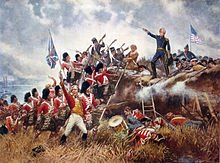
220px-battle_of_new_orleansSince my dad’s younger brother was named Andrew Jackson Logsdon, you might guess that Andrew Jackson was well thought of in my family. He is well thought of by most Americans as the first people’s president, a man who went to Washington, overthrew the elites, and returned the country to its democratic roots. A champion of the common man.

I disagree.

As a person trained in both anthropology and history, I have to declare my biases. Jackson was an important president, with much to his credit. I grant that. But he was also the leader of a successful movement to drive out the legal residents who were owners of vast tracts of land throughout the South, to make way for his white followers.

By the way, I plan to use the word Indian. It’s a description, not an insult, and it is the word that was used in the 1800’s. When Jackson finally sent the native people west of the Mississippi, he settled them in Indian Territory, not Native American Territory.

Jackson led an unapologetically racist movement, but there was no racial purity about it. The whites who moved into the vacated lands took their black slaves with them, and many of those slaves were partly white. (See yesterday’s post and numerous posts last January and February. Go to the tag cloud and click race.) The Indians who were moved out were frequently partly white, and took their black (and mixed) slaves with them when they went.

There is an argument that, morality notwithstanding, a stone age people had to give way before an industrialized one. Even if that idea has merit elsewhere, it does not apply to the frontier South in the early 1800s. The region was not industrialized, although gin-separated cotton would bring organized agriculture in the form of the plantation system during the next two decades. It was a land of small farmers (white or Indian), mostly engaged in subsistence agriculture (white or Indian), dotted with small towns (white or Indian) and few cities. White society and Indian both maintained slaves. Both traded with the larger world, mostly England, for manufactured goods.

White society, however, was under pressure from growing population beyond the Appalachians. Call it greed, or call it need, the whites wanted what the Indians had, and they took it. Jackson played a key roll in it all.

Jackson first came to public attention as an Indian fighter in the Creek War. It didn’t start out as a war between the Creeks (a historically imbedded term for the Muscogee tribe) and the Americans, but as a civil war between the lower Creeks who had made peace with the dominance of whites and the Red Stick faction which had not. Some whites were killed, militia units were organized, and Jackson became their leader. The regular American army was unavailable; they were fighting the British along the Atlantic coast. The War of 1812 was underway, and the Red Sticks were receiving British arms.

Jackson proved to be an effective general, tough and uncompromising. This is the period that gave him his nickname Old Hickory for those qualities. The Red Sticks were crushed and the entire Creek nation lost half their land at the end of hostilities. That was the pattern of frontier Indian fighting.

Next, Jackson defended New Orleans (brilliantly, to give the man his due) and emerged a Washington-like American hero. His road from New Orleans to the White House was long and rocky, but he became President in 1828 and won reelection in 1832.

Jackson was dedicated throughout his life to the removal of Indians from their lands in the South for resettlement them beyond the Mississippi. Toward that end, he effected passage of the Indian Removal Act in 1830.

This act required Indian tribes to sign treaties exchanging their original lands for new lands west of the Mississippi. Most tribes resisted, and the saga of bribery, coercion, and trickery that brought about the change would fill volumes. Among the Cherokee, for example, a small faction was bribed into signing a treaty which was then enforced on the whole tribe. Anger over this betrayal led to political assassinations among the Cherokee once they reached the new Indian Territory.

16,000 Cherokees were removed for the Indian Territory. 4000 died along the way. Jackson retired after his second term and died eight years later. By that time tens of thousands of non-citizens who had been resident in America for generations had been deported – excuse me, I meant removed – to beyond the borders of the United States.

**         **         **

We’ve looked at Andrew Jackson and Thomas Jefferson, two Presidents from the first half of the nineteenth century. We’ve seen what Jackson did about the non-citizens living in America. We’ve seen how different thinking was then on race and gender, even for someone like Thomas Jefferson. It’s good that we have progressed.

Or have we? I guess we’ll find out on Tuesday.

246. Unalienable Rights

u-rNext week, we elect a president. Today and tomorrow let’s look at the lives of two of our early ones, Jefferson and Jackson.

Everybody knows the passage in the box above. Thomas Jefferson wrote it. It is logical to think that he believed what he wrote, and yet he held Sally Hemings and his children by her in slavery.

Odd? By the standards of our day, certainly. By the standards of his day, it was odd that he freed any of them. His father-in-law also had a black concubine and children, and freed none of them.

If you have read anything I posted from mid-January to the end of February of this year, you know I am no apologist for slavery, Jim Crow, or resistance to interracial marriage. However, if you plan to understand historical events and beliefs, you have to examine them in their own context. The Sally Hemings story gives us a lens through which to examine both slavery and women as child bearers, whether wife or concubine, in the days when our nation was being created.

The story begins two generations before Jefferson. A slave name Susanna bore a child to a white man named Hemings; the child was named Betty. Both were owned by Francis Eppes, then were inherited by Eppes’ daughter Martha. When Martha Eppes married John Wayles, the slaves, mother and daughter, went with her.

Martha Eppes Wayles had a daughter, also named Martha, before her death. Wayles was widowed twice more, and also had several children by the slave Betty Hemings. The youngest of these was named Sally.

Martha Wayles (the daughter) married Thomas Jefferson. Sally Hemings was her half-sister (they shared a father) and was three-quarters white. When John Wayles died, Thomas and Martha Jefferson inherited his slaves, including Betty and Sally Hemings.

Martha Jefferson had a daughter, also Martha. Thankfully, for ease of reading this post, she was called Patsy. Jefferson’s wife Martha died. When Thomas Jefferson was appointed American envoy to France, he took Patsy with him, and took Sally Hemings as her companion. It appears that the Thomas Jefferson/Sally Hemings affair began in France.

Accurate research is difficult on affairs that are semi-hidden. As best we know, Sally Hemings bore Jefferson six children: two daughters who died in infancy, one daughter and three sons who live to adulthood. All these children were seven-eighths white, and all were slaves.

The children and their mother remained house slaves. They never worked the fields; the male children were given training to become artisans. At age 24, the eldest son was allowed to “escape” to the North. The daughter followed shortly after. The younger sons were given their freedom in Jefferson’s will. Sally Hemings was inherited by Patsy and informally freed.

Why did Jefferson, the champion of unalienable rights, hold his “wife” and children in slavery? Let’s look for answers.

Sally Hemings was legally negro, genetic heritage notwithstanding. That could not be changed. She could have been freed, but Jefferson could not have married her, even if the thought had ever occurred to him. If freed, she would have not become a full citizen of Virginia or of the United States. If freed, she would have passed completely out of Jefferson’s control, and she would also have passed out from under his protection. Which of those two factors weighed more heavily on Jefferson? We cannot know.

We can speculate, however, based on how he treated his children. They were legally negro, although actually seven-eighths white. They could not be given the rights of white children. They could not inherit, which was something of a moot point since Jefferson died deeply in debt and his estate went to his creditors. He allowed his elder two to “escape” to the North after they were adult. He freed his younger two in his will; they were just reaching legal maturity at the time of his death.

He did not free Sally Hemings in his will. Why? Was he unable to let go, or was he depending on his daughter Patsy to take care of her in her old age? She was in her mid-fifties when Jefferson died. Again, we cannot know.

A lot of scholarship has been devoted to Sally Hemings. We know quite a few facts, but from this distance, understanding comes hard. Did Jefferson do the best he could under the circumstances? Do we even have the right to be disappointed that he didn’t do more? We have more questions than answers.

**        **        **

It is important to consider what happened to Sally Hemings’ offspring, but that will require a future post.

221. The Wall

This post carries a poem at the bottom. Pardon me while I set the stage for it.

I wrote this poem years ago, when Trump wasn’t even a blip on anyone’s radar. It isn’t about him, but he eventually came to symbolize what the poem spoke against. When he started talking about a wall, I published the post repeated below, back in September of 2015. AWL was a new blog then, and no one was reading, so once again . . .

Have you ever asked yourself, “How could Germany have been fooled into following Adolph Hitler?” The answer is on your television this morning, and it is Donald Trump.

I’m not saying that Trump is a Nazi. I don’t see him as evil, merely foolish. But the techniques that have brought him to prominence are the same techniques that Hitler used.

First, appeal to a country’s deepest fears.
Second, claim to be the only one to have the answer.
Third, claim that your opponents are all cowardly and incompetent or, to use Trump’s favorite word – stupid.

The tactics are false. But the fears are real, so Trump promises his followers a wall to keep the world out. There is no wall strong enough to do it.

*****

This morning, September 15, 2015, Hungary closed its borders with a wall of razor wire. By the time this post reaches you, it will have been breached. Count on it.

The Hungarian Uprising of 1956 forms my first political memory. I was eight, and I remember sitting in front of the TV with my parents watching the streams of refugees escaping Soviet reprisals. Eventually 200,000 Hungarians fled. That memory makes it hard for me to watch Hungary put up a wall against Syrian refugees fleeing genocide.

Backed by Russia, East Germany built a wall across Berlin in 1961. It slowed the flow of refugees escaping from tyranny, but it did not stop them. And it didn’t stop the fall of East Germany.

There is a fence across our southern border that holds back no one hungry enough to jump it. Trump wants a wall to hold out “illegals” and a massive sweep through our country to deport the “illegals” who are already here. He wants declare that the 14th amendment doesn’t really mean what it says, in order to authorize the deportation of American citizens, born here just like you and I were.

Hitler would be proud. East Germany would understand. Russia is laughing.

*****

Poetry should stand without explanation, but, like anything else, it can be misused. So, be notified! This is not a right wing call to man the barricades to keep the enemy out, but a cautionary tale about what it will cost us if we don’t find real solutions.

Hungry

We who horde the common wealth
Upon this crowded planet,
Must look to see what lies beyond
Our barricaded borders.

The world stares back,
Unblinking eyes — prepared
To eat us all alive, and still be hungry.

                              It’s happened all before.

Once, seven in a cave drove out the eighth
With stones and fire-sharpened sticks,
Because the antlered carcass on the ground
Was not enough to feed them all.

And then in ancient days when kings and priests
Invented both religion and the law,
To fill their coffers so that they could eat
While those who raised the food went hungry.

Or yet again, when men of white
Despised the black, and black despised the gray.
And those whose colors ran together were disowned.
Color was enough to make them hate
But hunger taught them how and why
A thousand years ago.

Yet still we breed and laugh,
And play at deafness, though an angry sound
Declares the world is poised to seize its bread.

They will march like locusts through the earth,
And eat us all alive, and still be hungry.

This world is troubled. We are surrounded by people hungry for bread and freedom. Pointing a finger at them and saying, “It’s your fault!’ won’t solve our problems.

And a wall won’t do it. Never has; never will.

I’ll have more to say on this tomorrow.