Tag Archives: science fiction

403. Steampunk Dirigibles

Warning: this post gets nerdy.

If it has dirigibles, it’s steampunk. No, that doesn’t quite work.

If it doesn’t have dirigibles, it isn’t steampunk. No, that doesn’t work, either.

If it is steampunk, then chances are, there’s a dirigible in it somewhere. OK, now there’s a pronouncement I feel comfortable with. Even Brisco County, Jr. had a dirigible eventually.

The variety of airships (a more generic term) in steampunk is huge, especially if you look at the vast number of illustrations on line. The Aurora in Oppel’s Airborn is entirely realistic. The Predator in Butcher’s Aeronaut’s Windlass if essentially an air-floating wooden sailing ship. Some are essentially floating cities. Some run on diesels. Some run on magic, or crystal power.

Back here on Earth, everybody knows at least one dirigible, the Hindenburg, just like everybody knows at least one steam ship, the Titanic, and for essentially the same reasons. Beyond that, real knowledge of actual airships is spotty.

It might be helpful, before embracing the infinite variety of steampunk airships, to have a go at definitions for those which actually existed.

First up, why dirigible instead of Zeppelin? Answer: for the same reason that we use the word automobile instead of calling all automobiles, Fords. Ferdinand von Zeppelin meant more to the development of dirigibles than Henry Ford did to the development of autos, so if you want to say Zeppelin instead of dirigible, I won’t argue with you. After all, I used to say, “Gimme a Coke,” when I really wanted a Pepsi.

However, in the world of my upcoming steampunk novel, you wouldn’t dare say Zeppelin. It would be unpatriotic. A Brit with more ambition than morals stole Zeppelin’s plans, sabotaged his work, and built a British fleet of airships before the German war, while Zeppelin’s war efforts came to nothing. The result was a sweeping British victory, an overwhelmingly powerful Britain, and a very interesting world to write about. But no one calls dirigibles Zeppelins.

In our (real) world, airships are often divided into three classes, blimps, semi-rigids, and dirigibles. Blimps are bags of lifting gas which hold their shape entirely due to internal pressure. Pull the plug, and they collapse. Semi-rigids have a keel structure which helps to keep them from distorting due to localized weights, such as engines, but they still don’t have a solid skin. Dirigibles have a skeleton and a skin, and individual gas bags for the lifting gas. Dirigibles are sometimes called rigids; that is the most accurate term, but it is rarely used.

You will find this three part division in dozens of books on airships, and it fits pretty well. But the word dirigible was used far earlier, and at that time it meant “capable of self-movement and control”. There were dirigible torpedoes in the water, long before Zeppelin put dirigible airships into the air.

Which drags us back to another recycling of an old word — torpedo. During the American Civil War there were two types of torpedoes, stationary and spar. A stationary torpedo was a mine. When Admiral Farragut sailed into Mobile Bay, shouting, “Damn the torpedoes, full speed ahead,” that would translate into modern English as, “Damn the mines, full speed ahead.” A spar torpedo, on the other hand, was an explosive device attached to a long wooden pole and rammed into an enemy ship by a steam boat, often sinking both. Neither kind of torpedo had self propulsion or self steering.

Torpedoes with that capability were initially called dirigible torpedoes. The adjective dirigible was later dropped. E. E. Smith, in Triplanetary, recycled that old term for use in galactic warfare:

In furious haste the Secret Service men had been altering the controls of the radio-dirigible torpedoes, so that they would respond to ultra-wave control; and, few in number though they were, each was highly effective.

The original hot air balloons were (and still are) unable to steer or move on their own. The quest for dirigibilty (controlled self- movement) led to blimps, semi-rigids, and “dirigibles”.

So, there is plenty of confusion even before we get to the use of airships in steampunk. Call them dirigibles, if you want. Call them Zeppelins, if you want. I don’t see how anyone has a right to complain about your choice.

401. Harold Goodwin

Harold Goodwin was a diver, worked for Civil Defense, NASA, NOAA and other agencies, and said that his books “were often a spinoff from my technical work.” He wrote forty-three books in all. His popular science books were written under his own name, and included Space: Frontier Unlimited and Challenge of the Seven Seas. I have not been able to find a full list, but it hardly matters. They would be hopelessly out of date.

If you plan to look in Goodreads, look up his pseudonyms. The Harold Goodwin they feature isn’t our guy.

Try this: look up The Rocket’s Shadow on Goodreads. You will find three authors on the by-line — John Blaine, Harold Leland Goodwin, Peter J. Harkins. Harkins co-wrote the first three Rick Brants with Goodwin. Clicking on H. L. G will take you nowhere useful, but clicking on John Blaine will take you to his Washington Post obituary. For a man who is hard to track down, this is the most accessible mini-biography. Or just click here.

Goodwin’s twenty-four volume Rick Brant series of science adventures for young people were written under the name John Blaine. His only true science fiction novel, also for the young, was Rip Foster’s story, written under the pseudonym Blake Savage.

Goodwin served as a combat correspondent in the Marine Corps in the Pacific during World Was II. By no coincidence, Scotty, Rick Brant’s companion, was an ex-marine who also served in the Pacific. And Rip Foster’s Planeteers from the Rip Foster book are basically space marines.

Goodwin served as a State Department official in Manila after the war; Rick and Scotty end up in the Pacific and islands of the East Indies in several stories.

Goodwin wrote on the cutting edge of science, but he started writing in the late forties, so most of what he wrote seems dated today. He was generally accurate, with a couple of goofs. In his first Rick Brant The Rocket’s Shadow, he fouled up the calculations and got his rocket to the moon in hours instead of days. He later expressed embarrassment at his error. In the Rip Foster book, he has Rip conversing freely with Earth from a point near the Sun — he forgot that pesky speed-of-light communications delay.

When the Rip Foster book came out, we all expected to see nuclear spacecraft and a rapid expansion of the manned exploration of our solar system. Heinlein made an early career out of the same assumption, but it never happened. in that sense, the sixty-plus year old Rip Foster book is still out ahead of us.

400. A Forgotten Classic

This is a shortened version of the post introducing what I call the Rip Foster book, which I had considered serializing. See the previous post for why I changed my mind.

This book is one of the best of the “this is what might actually happen” style of science fiction. I wrote Cyan in the same style. Unlike the Rick Brant books, the science in this book stands up to modern scrutiny, except for the fact that Rip’s solar system has alien life on several planets and moons.

Even though I decided to continue presenting my own work in Serial, this classic deserves to be read, even today. I recommend it to adults and boys alike. Girls, I apologize. No girls were allowed in juvenile science fiction in the fifties. Sorry. Don’t blame me; I was just a kid back then.

#                     #                    #

Today, in Serial, I (had planned to begin) the presentation of a mostly forgotten classic.

The author was Harold Goodwin. I’ve talked about him before. (see 60. Thank You Harold Goodwin and 195 Boys at Work: Rick Brant) and I have suggested downloading this particular book from Project Gutenberg.

This novel was written under the pseudonym Blake Savage. It first appeared in 1952, published by Whitman, titled Rip Foster Rides the Gray Planet. This is the edition which Gutenberg has available, with illustrations by E. Dean Cate. The same year, the novel was released in England as Rip Foster Rides the Grey Planet (note the British spelling).

The novel was again published by Whitman in 1958 as Assignment in Space with Rip Foster. That was the version that lit up my childhood. Denny McMains’ illustrations were superb. Golden released a paperback reverting to the original title in 1969.

If you want a copy today, a Gutenberg download will come free. An ebook version of Assignment in Space with Rip Foster is available through Amazon, with the wonderful Denny McMains illustrations, for under a buck. The novel also appears at the end of the Tom Corbett Space Patrol Megapack, without illustrations.

Original copies show up from time to time, more often in antique stores than in used book stores, for prices ranging from pennies to “you gotta be kidding”.

By the way, Rip is the nickname of Richard Ingalls Peter Foster. It was a clever way to get a cool first name without going over the top. Donald Wollheim used the same acronymical schtick a few years later when he called the character Michael Albert Richard Sampson, Mike Mars. (see 357. Mike Mars and Project Quicksilver)

Most of the authors from my youth are still in print, or in libraries. Of the books that I loved then, which have since been forgotten, Rip Foster stands out as the best by far, as well as being the only one which was not part of a series. It deserves to be revived, and this seem(ed) the right time for me to do that.

And, yes, it is in public domain. I don’t steal from other authors.

399. I Changed My Mind

No, I did not change my mind about cutting back on posts in the A Writing Life blog. Since I made that decision, I have outlined most of, and written the first six chapters, rough draft only, of a new novel. The title is still in limbo so I won’t say more until I can name it properly. The decision to cut back was a good one.

I am actually making a change in Serial. I had planned to run a guest novel. I had written two posts explaining why and giving a bio of the author, Harold Goodwin. I had also reduced the first several chapters of that novel to serial posts, enough to carry through mid-September, and positioned them in the queue, ready to publish.

So, why? First, why a guest novel — then why did I change my mind?

Since 2015, Serial has been a place for me to present short stories, a novella, presentations from Westercon, long and short excerpts from novels, and complete novels.

Christmas week of 2015 I presented five classic poems that have inspired me. Otherwise, everything in Serial has been something I have written.

The cupboard isn’t empty; four novels remain. Valley of the Menhir, Scourge of Heaven, and Who Once Were Kin, are complete fantasy novels. They deserve to be held back to be presented in a more traditional way. Symphony in a Minor Key is a complete novel about teaching. I’m quite proud of it, but it didn’t seem right for this blog, which has been largely aimed at science fiction readers.

I argued with myself through the month of June. Should I run a classic SF novel that is unknown to today’s audience, or should I run a novel of my own about teaching. It was a big decision, since once committed, it would be six months before I could change course. I opted for the SF novel.

One the decision was made, I placed the first 20 posts in the Serial queue. Then I went on with my life, still mulling over the decision. Spirit Deer began appearing, and you all kept reading. I found no reduction in reader’s responses. Hmmm. You had stayed with me through Raven’s Run and through Voices in the Walls as well. Hmmm, again.

I started this blog to reach two audiences. First, I was looking for lovers of science fiction and fantasy who might want to read my novels, if I could make them aware of them. Second, I expected the blog to be read by new and would-be writers.

I found both but, clearly, in reverse order. Ok, I hear you. I never was comfortable with a guest novel, anyway.

New plan — I will post Symphony in a Minor Key. But first, I need to buy time. It takes many hours to turn a novel into a serial (see 245. Serializing), and my guest novel was due to start today.

No problem. I have several pieces that were published in Serial before anyone was reading this blog. I’ll recycle one or two — no one now reading has seen them, anyway — while I am preparing the next novel.

And so, PRESENTING—

Blondel of Arden, beginning in Serial today.

397. University of Steampunk

Here I am, quoting myself, from Golden Age of Science Fiction:

Recently I have been reading Neil and Neal, Gaiman and Stephenson, but I know I must have missed a feast of others. I have probably missed more than one feast. Is there a Golden Age of Steampunk? Probably, but I don’t know the sub-genre well enough to talk about it.

Since I wrote that, I have interacted with a bunch of steampunk authors, done a lot of research, and concluded that, “Yes, I was right. There is a golden age of steampunk and it is now about a century and a half deep.”

I love steampunk. i already knew that. But now I have a better handle on what steampunk is, and I am continuing to pursue my education. Let’s call it University of Steampunk (self-inflicted) and I am inviting you to come along. And don’t hesitate to use reply to tell me when you think I’m wrong.

Not only am I immersing myself in steampunk research, I am also writing my first steampunk novel. Since Westercon, it has tumbled out onto the screen. I have it fully outlined, with initial drafts of the introduction and first two chapters.

The rest of this post is drawn from the draft introduction.

#           #            #

This novel, as yet unnamed, working title Durbar, is steampunk, pure and simple, and designed to be so. It differs from other steampunk novels only in that it emphasizes strong scientific and historical excuses for the prevalence of steam power and pseudo-Victorian culture.

My literary introduction to that age on our own planet did not come from Austen, the Brontes and their ilk. My literary Victorian/Edwardians were Holmes and Watson, Hannay and all his friends, and Davies and Carruthers; in other words, the stories of Arthur Conan Doyle, John Buchan, and Erskine Childers’ Riddle of the Sands.

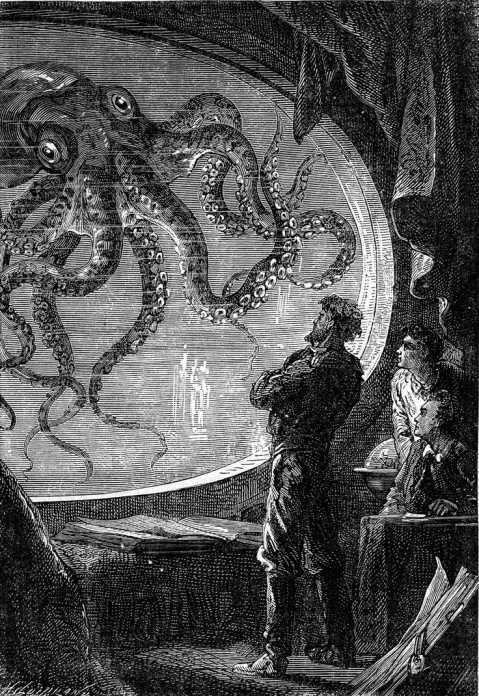
I can tell you the exact hour the new novel was born. I had gone looking for understanding of the steampunk phenomenon. I was aware of the movement; it seemed to always be in the periphery of my vision, but it wouldn’t come clear. Certainly Jules Verne, especially Twenty Thousand League Under the Sea, was steampunk before steampunk. So was the Wild Wild West, and both were staples of my childhood. I had stumbled onto Kenneth Oppel’s Airborn while teaching middle school. It was a fine novel which seemed on the verge of steampunk without completely fitting the mold.

Add a few inspiring steampunk short stories off the internet and childhood memories of reading my grandfather’s copy of Tom Swift and his Electric Rifle — also steampunk before steampunk — and I was ready to write something of my own. Still, it is foolish to write in somebody else’s genre without understanding the boundaries.

I visited a series to panels on steampunk while I was at Westercon 70. I found an inviting openness and nobody seemed interested in defending boundaries. I also came to appreciate the culture of steampunk (their term) and the joys of cosplay. Appreciate, not join in; I’m the guy in the corner, not the dressed up dude on the stage.

The panel which saw the birth of my new novel was called The Science of Steampunk: What Makes the Gears Go Round? As it turned out, there are steampunk authors who are perfectly happy to write their novels without caring what makes the gears go round, and there are also hard-science types who just can’t live that way. This panel had about an equal mix of those two.

They all had fun with the question, but the only scientific underpinning for some kinds of steampunk is magic. I enjoyed the interchange, and I want to thank Ashley Carlson, Bruce Davis, Steve Howe (not the guitarist), Susan Lazear and David Lee Summers — and Ryan Dalton who moderated — for the education.

As I was listening to the science types trying to find an equation for magic, it occurred to me that is would be great fun to write a novel which did tie up all the scientific and historical underpinnings of a steampunk world, neatly and realistically.

That was when two bombs went off in my head. I’m not ready to go public with what they were, but In the course of an hour, the new novel had gone from nonexistent to a full blown embryo. My thanks to the panel, but don’t expect any royalties.

394. Today, everything changed

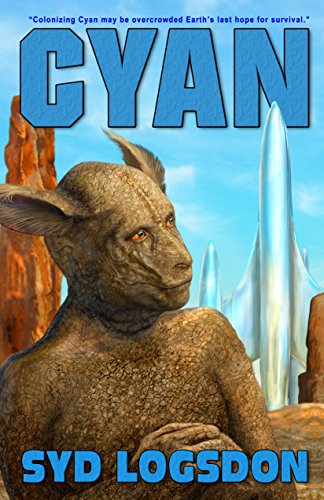
Today, everything changed. Those were Ramanda’s words when Viki picked up a chipped stone and the explorers of Cyan discovered that they were not alone.

Today, things will change in this blog, but perhaps more meaningfully for me than for you.

On the last day of August, 2015, I released the first post in A Writing Life and the first post in Serial. I immediately began a program of five posts of fiction and four mini-essays each week. It wasn’t long until I trimmed Serial to four posts a week to keep the two halves of the website in synch, and I have kept that schedule with very few breaks for nearly two years.

The early AWL posts were short, about 350 words, but they quickly grew and now they are typically about 700 words. Occasionally I repeated old posts, for various reasons, so my best estimate of how much I have written for A Writing Life (the blog) has reached over 200,000 words.

That’s the equivalent of a long novel or two short ones. I have never run out of material, but there have been times I have come close.

The content of Serial was already written, but even that takes a lot of time to convert into serial form. (see 245. Serializing)

I started preparing A Writing Life six months before its rollout. And yes, I know that it was dumb to name the overall website and one of the two posts with the same name. But I didn’t know it when I started, and it’s too late to fix it now. AWL (the website) came about when Cyan was accepted for publication, as a way to see that it didn’t die quick and quiet like A Fond Farewell to Dying had done. FFTD was a good novel. It deserved an audience, but it never found one.

It took a long time from acceptance to publication, but Cyan finally came out this April. In July, I went to Westercon to tell everybody who would listen that they ought to buy it. That’s how we do things these days. Hemingway would puke.

Where was I — oh yes, changes. I have spent so much time on this website that it has curtailed my actual writing. That can’t go on, but this site is how I met all of you, so I can’t quit it either. So here is the plan.

Starting today, I will no longer post on A Writing Life (the blog) to a schedule. When I have something to say, I will. For example, there will be a post August first about bears, and why they are in Spirit Deer.

If you haven’t followed me yet, this would be a good time to start, so you will get notification when I post. I will still have a lot to say, just not four days a week. This will get the schedule monkey off my back. I have a couple of sequels to Cyan that are calling me.

Serial will continue. Spirit Deer will be finished in early August. I will follow it with one of my favorite Harold Godwin novels from my childhood, now largely forgotten and in public domain. That will carry us most of the way to Christmas. Then we’ll see. There will be a post explaining all that on August 14, here in A Writing Life.

I’m not going away, I just won’t be around quite as often.

Download Cyan, or order it in paperback. If you like it, write reviews for Goodreads and Amazon. Tell your friends. Then in a year or so, you can tell them about the sequel.

In many ways, A Writing Life (the blog) has been less of a blog and more of a magazine. From now on it will be more like most blogs, with news, events, and updates of ongoing writing. But the magazine style mini-essays won’t disappear. They will simply stop dominating my life, so that I can get back to my novels.

393. The IDIC Epidemic

I am always amazed when I find yet another novel which should have won awards and a place on every bookshelf, but has instead been forgotten. I don’t know why I should be amazed though, as it happens all too often. The IDIC Epidemic is such a book.

An additional oddity, which is actually a pattern, is that though the book is massively infused with future science, and contains more Star Trek lore and alien species that a Star Trek convention, the story succeeds because it mimics the same underlying moral stance as any human story about very different people thrown together in a crisis, and rising to the occasion.

The IDIC Epidemic is a novel that stands alone, but can equally be seen as the third in a trilogy that began with the original series Star Trek episode Journey to Babel, continued in The Vulcan Academy Murders, and concludes with The IDIC Epidemic. The TV episode was by D. C. Fontana and the two books are by Jean Lorrah. To quote:

the reunion (between Spock and  Sarek) that had begun on the perilous journey to Babel and continued when they had melded on Vulcan to save Amanda’s life only a few weeks ago, was finally complete.

That is a leitmotif floating through the three stories, but needs no spoiler alert since it isn’t the main story. Here is a spoiler free summary of The IDIC Epidemic.

Nisus is a Vulcan science colony dedicated to the idea of IDIC, Infinite Diversity in Infinite Combination. Members of most of the races known to the Federation work there in something like harmony. A plague breaks out which crosses species and brings the Enterprise on scene to help. Infinite Complications ensue. 

I suppose the next statement is a spoiler. Kirk does not single-handedly save the day. To be fair, he only does that about half the time, but this is one of those books where every character –and there are a horde of them — has his time on stage.

There are no space battles, either. Although there is a bit of skullduggery among some relatively minor villains, this is primarily a story of varied intelligent species striving against nature.

A little aside here: I bought Legacies: Captain to Captain a few months ago, but gave up reading it about a third of the way in. I have no criticism of book or author; it was simply that I had been on this roller coaster too many times before, and it couldn’t hold my interest. If you’ve read enough Star Trek novels (I must be well above fifty), the word rehash starts to crop up in your appraisal, and it really isn’t fair. Take any thirty Star Trek novels and read them one after another — the first will be wonderful and the last will be a rehash, no matter in which order you read them.

The IDIC Epidemic isn’t like that. Yes, there is a threat to be overcome, through great courage and high competence, but we also meet a dozen new characters and a couple of dozen who are back from The Vulcan Academy Murders. Their interactions matter as much as the action. We also learn a great deal more about about sex and love among Vulcans and between species. (Tastefully handled. This is Star Trek, not soft porn.) And we see courage exhibited by everybody.

Everyone is a hero, because it is that kind of situation. I was reminded, by contrast, of books by Philip Wylie from my youth, set in times of nuclear war. There were no real heroes in those books. The difference wasn’t in the  competing visions of mankind. It was structural to the kind of novels involved. IDIC is a hopeful book even through massive disasters.  A nuclear strike leaves no hope.

The IDIC Epidemic is one of the best Star Trek novels I have read. I recommend it highly. Both these Jean Lorrah books are available on Kindle. If you get them both, read The Vulcan Academy Murders first, although The IDIC Epidemic is the better book.

388. Cyan Released Everywhere

Cyan was released in a sequence. First it was available in March for pre-order from Amazon.

On April 17, it was released, but exclusively from Amazon.

Today, it becomes available everywhere.

If you do your reading on another tablet, in EPUB or another format, you can finally download.

I thought the only hard copies available would be the fifty print-on-demand copies I took with me to Westercon, however once I made the POD order, they became available to everyone. I didn’t see that coming.

Enjoy.

387. Buchan the Racist

Getting ready for Westercon, I prepared a set of notes, placed as posts, for the panel What made the golden age golden? I was under the impression that it would be history and homage, and made notes appropriate for that. I was wrong, and it isn’t the first time I have spent time off track by starting before I had full information. When i’m ready to start a project, I’m ready, and sometimes I pay the price.

After I had posted my notes-to-self, but long before Westercon, I received this description of the panel:

Heinlein and Asimov are two pillars of the Golden Age of Sci-Fi. But reading those works with modern eyes can reveal attitudes that would be unacceptable in modern times. What can we learn from the classics when we look past the sexist and racist attitudes that pervaded the works of that time? Can we still appreciate works that present unacceptable ideologies?

Well, that’s a bit of a different story. No problem. I am always ready to fight the forces of political correctness.

I’ve been to this rodeo before. Once, several years ago, I was looking at on-line reviews of John Buchan’s The 39 Steps. I don’t remember why, but I do remember a review that ripped Buchan as a racist for seemingly anti-Semitic statements in that novel. I wrote a counter-review; both have since disappeared.

For those who don’t know him, John Buchan was a popular British novelist of the early twentieth century. He is very much a pro-British patriot, with the prejudices that implies. Think Kipling light. And he was a racist, but not an anti-Semite. I say that not as a scholar, but as a fan, who has read and re-read his works.

If you read him at length, his distaste for African blacks comes through loud and clear. His Jews, on the other hand, show up as both heroes and villains, just like his Germans and his Englishmen. But if you only read a little, you can be fooled.

#                #                #

To follow through on this, I used one of my favorite techniques. I recommend that you put this into your bag of tricks. I went to Project Gutenberg, downloaded The 39 Steps in Rich Text format, then cut and pasted that into my word processor. Now I had all 41,264 words in a searchable form.

One more hint. RTF will be hard to read because its wide line-length makes it look like bad modern poetry. Just switch your word processor to horizontal format and it will be much easier to work with.

The reviewer who started this controversy had complained about Buchan because of the words of one of his characters, Scudder. If you don’t know the book, Scudder is a kind of amateur spy who finds out that bad people are about to start World War I, and catch England off guard. This is what Hannay, the main character, says, quoting Scudder:

The Jew is everywhere, but you have to go far down the backstairs to find him. Take any big Teutonic business concern.  If you have dealings with it the first man you meet is Prince von und Zu Something, an elegant young man who talks Eton-and-Harrow English.  But he cuts no ice.  If your business is big, you get behind him and find a prognathous Westphalian with a retreating brow and the manners of a hog.  He is the German business man that gives your English papers the shakes.  But if you’re on the biggest kind of job and are bound to get to the real boss, ten to one you are brought up against a little white-faced Jew in a bath-chair with an eye like a rattlesnake.  Yes, Sir, he is the man who is ruling the world just now, and he has his knife in the Empire of the Tzar, because his aunt was outraged and his father flogged in some one-horse location on the Volga.

Wow! That sounds pretty anti-Semitic, and the reviewer who started this conversation took it as proof positive. But let’s wait a minute. Assume that the character Scudder is the worst anti-Semite since Hitler — does it follow that Buchan hated Jews? I wrote a mass murderer into Cyan — does that mean I approve of mass murder?

You can’t read the words of a fictional character as the opinion of the author, especially if you are looking at a minor character of questionable honesty.

Scudder dies in chapter one and his quest is taken over by Richard Hannay, the actual main character in this and several other novels. If you look closely at the character of Hannay and a dozen other lead characters in two dozen other novels, then you will come closer to having a fair and defensible picture of Buchan’s attitude.

In point of fact, not only was Scudder a minor character, he was also a liar. The reviewer who cried bigot never found this out because he quit the novel early. I knew that he was, but I needed a quote as proof. To find this, I searched for the word Scudder in my Find and Replace function. His name appears 65 times in the book because Hannay keeps thinking about him. Click and read. Click and read. Click and read. I found the passage I remembered at the beginning of chapter four.

The little man had told me a pack of lies.  All his yarns about the Balkans and the Jew-Anarchists and the Foreign Office Conference were eyewash . . .

Hannay worries at Scudder’s diary, taken off his body, because it seems odd, almost as if it were a cypher, and Hannay is good at cyphers. Sure enough, the Jew-Anarchist plot is just a cover for a much deeper plot (not by Jews), which Hannay foils by the end of the book.

So, everybody was a nice, unbigoted person and it was all a misunderstanding? If it were only that simple.

Reread the first quote, if you can stomach it. How would that passage play in a book published in 2017? When it was published in 1915, the book was a hit. Nobody minded that passage at all.

After Hitler and the holocaust, anti-Semitism fell out of favor. Before that, it was everywhere, in Europe and America. An actually anti-Semitic book in England in 1915 would have raised no eyebrows.

Was Buchan a bigot? Yes and no. He was not anti-German, he was not anti-Semitic, but he was anti-African. How do I know? I have read more than a dozen of his books, some multiple times. You can’t know from assumptions, and you can’t know from reading one book.

Bringing this back to the Golden Age of science fiction, we should be able to read and appreciate authors like Heinlein when he depicts mannerisms that are foreign to us. (Or to be fair, foreign to you; I grew up in the same era and it all seems normal to me, even when I disagree with it.) The fact, for example, that Joan Freeman in Lost Legacy is the object of mild sexist teasing should not mask the fact that she is a full participant in the action.

Nevertheless, understanding is one thing, enjoyment is another. There is a limit, and it varies with each of us. For me, Heinlein sometimes seems silly, but I still read and enjoy everything but Farnham’s Freehold. That one goes on my never-again list, along with John Buchan’s anti-Black tirade Prester John.

POSTSCRIPT: As it turned out, everyone on the panel ignored the description and we just talked about how great the golden age was. The forces of political correctness never raised their heads.

385. Westercon Report

I flew down to Tempe (part of greater Phoenix) to attend Westercon 70. It was a business trip — right? Like an amusement park attendant going to Disneyland is a business trip. That is, I had to go, but I had great fun.

There were panels and workshop on many subjects. I concentrated on the Books and Authors section, where there were enough things happening to keep me occupied three times over. I missed a lot of good stuff because I was presenting, or because something I couldn’t miss kept me away from something I didn’t want to miss. There were also panels on Art, Diversity, Fandom, Science, Steampunk and more, most of which I didn’t have time to attend.

I finally feel like I have a handle on what Steampunk is all about. I was born on the Nautilus, grew up with the Wild Wild West, and flipped out about Brisco. I have read a few Steampunk novels, and some short stories, and liked them all, but I never got what these people with goggles and gears glued to their clothing were all about. After two panels about Steampunk as literature, by Steampunk writers, and a panel by costumed members of Steampunk culture, I get it. And I like it — although you’ll never see me in costume. I also got the kernel of a new novel. That one is your fault, Steve Howe (not the guitarist) and Bruce Davis. Thank you Ashley Carlson, Suzanne Lazear and David Lee Summers for the literary education on Steampunk, and thank you Dirk Folmer, Katherine Stewart, and Madame Askew for the cultural education.

Those are just a few of the authors I met. They were mostly young people. Understand that, at my age, young is defined as under forty, and there weren’t many under thirty because it takes some time to have enough books published to get invited.

I won’t name drop at this time, except for Amy Nichols whose reading from Now That You’re Here (or was it While You Were Gone — I missed something at the introduction) was calm, clean, and unaffected, and sounded just like a teenager. The character in the book, that is; not Amy. I will testify that science fiction and fantasy are in good hands. I have at least a dozen new books on my must-read list, and a lot more on my want-to-read list. I expect to provide some reviews here and on Goodreads and Amazon. After all, that is how readers keep their favorites in sales, so they will be able to write more books.

I learned a hundred other technical tidbits on writing and publishing, but I won’t share them until I’ve tried them.

Worldcon is in my back yard next year. I can’t wait.