Category Archives: A Writing Life

638. In The Canebrake 2

A voice out of the darkness called, “Titus?” It shook him; he had expected almost anything except someone who knew his name. “Is that you, Titus Young?” the soft voice repeated.

In answer, he kneed his horse and rode further into the light of the fire. The hidden voice said, “You scared hell out of me.”

“You didn’t do my heart any good either, Cotton.”

A man of middle age came out of the canebrake and Titus swung down to walk up to the fire. Even though they had known each other most of Titus’s life, they didn’t shake hands, because Cotton was a slave.

Or had been. The fact that he was alone in the dark, not far from the Ohio border suggested he had run away. That left a lot of questions. Titus had been told that the Cherokees were allowed to take their slaves with them, and Cotton had been with Bullfrog since he was a boy.

Cotton was the one who taught Titus most of what he knew about hunting, fishing, and tracking, and just keeping alive in the hills and the swamps. That counted for a lot, but Bullfrog and Salali were the Cherokee couple who had adopted Titus when his parents died. Even if Chief Ross had told them to do it, and even if Bullfrog hadn’t paid much attention to him afterward, Titus still owed them both a debt of loyalty.

Titus asked, “Why are you here? What happened to Bullfrog and Salali?”

“I’m sorry to tell you, Titus,” the older man said. “I stayed with them as long as they were alive.”

“Go on.”

“Salali was sick all summer. By the time we left, she had no business traveling, but the soldiers didn’t give us any choice. She died two days along the trail.”

“And Bullfrog?”

“He was hurt bad inside when Salali died. He rode all day, he ate, he laid under his blanket at night, but I don’t think he ever slept. After about two weeks, he died too.

“The soldiers didn’t want to give us time to bury him, so I carried him out of camp in the middle of the night. Those soldiers weren’t much. It wasn’t hard to avoid them. I found a nice place under a pecan tree and buried him, same as I had buried Salali. When I finished, I stuck the shovel in the ground like a gravestone and started walking north. I was already out of the camp and there was no reason to go back.”

So. Bullfrog and Salali hadn’t been the best pair of substitute parents, but Titus missed them. To be fair, he had been no prize either when they got him. Headstrong; too young to be independent, but determined to be independent anyway. He had spent most of his time with Cotton, learning Cherokee ways from the slave, the same way Cotton had learned when he came to Bullfrog as a boy.

“Was Francesca in your group?” Titus asked.

“Your wife? Why would she be with us? She wasn’t Cherokee.”

“The soldiers took her anyway.”

“That’s why you’re following?” Titus nodded. Cotton said, “I never saw her, but there were several groups that moved out at different times. She might have been in a different group.”

“Okay,” Titus said, swallowing his disappointment. “Don’t matter, I’ll still find her.”

Cotton bustled about the fire, pulling something out of the ashes. It was meat, long, slender, cylindrical. Snake. Titus didn’t mind snakes, as long as they were dead. And if they were dead, you might as well cook them. When Cotton started to tear it with his fingers, Titus said, “Don’t you have a knife?”

“Got nothing. I should have kept the shovel, but it seemed too much trouble.”

Titus went to his horse and took a knife out of his saddlebag. “Keep it,” he said as he handed it over. “I’ve got another one.” Cotton grunted his thanks and split the snake. It tasted like squirrel, and it was as welcome as a feast.

Except for munching, they ate in silence. Titus hadn’t seen Cotton in a couple of years, and the time showed in extra wrinkles. It was good to see him again.

Titus had been born to a German father who had died too soon, adopted by a Cherokee father who had not been able to handle him, and had learned most of what he knew from this black slave. Only he wasn’t really that black.

“Cotton,” he said, “how come you’re so pale?”

This story will conclude tomorrow. After all, that will be Halloween.

637. In The Canebrake 1

The background for this story is told in 636. Half Breeds, Various.

In the Canebrake

It was a long, cold afternoon, with spits of snow that were slow melting. There wasn’t any green left in the grass; it was all the crackly brown of late fall. The year was 1838; the month was somewhere in that no-man’s land where October slides into November on a path slippery with sleet.

Titus’s mare was holding out, but he was treating her with extra care since she had lamed up a week earlier. Somewhere ahead of him the main body of the displaced Cherokees was moving west, but he didn’t know how far behind them he was. He had been riding after rumors, picked up at wood cutters’ camps and isolated cabins since he left eastern Tennessee. Now he was tangled up in a canebrake, following a narrow, muddy trail that paralleled one of the many tributaries of the Tennessee River. It wouldn’t be long now until he reached the Ohio — he thought. He hadn’t been really sure of his location for days, and the low overcast sky didn’t help any.

He pulled up at a familiar churring sound, followed by a slithering in the leaves. Canebrake rattler, probably. Titus had lived around snakes all his life, but he had never gotten to like them. Even worse were cottonmouths. They didn’t even have the decency to warn a man before they struck.

It was getting on dark, and the fog was rising from the stagnant waters beyond the trail. He was two days hungry and there wasn’t a scrap of food in his saddlebags. Pretty soon his horse would not be able to find her way ahead, but there was no place big enough or dry enough to spread a blanket. The tall canes around him seemed to close in as the light failed.

He could smell the swamp. He thought of waterhorses and the sluagh, and all the other fairy creatures his Scottish mother had told him about. Those weren’t comfortable thoughts for a night this dark and cold, on a trail this uncertain, at the approach of All Hallow’s Eve.

Something erupted from the brush at his side and hurled itself scrawking into the air. An egret probably, or maybe a heron, but when he saw it for a moment silhouetted against the moon, it became a boobrie, come all the way from the lochs of the highlands to haunt the Scottish half of his soul.

Then he saw the light, faint, almost luminescent in the distance. Perhaps the light of . . .

Titus took hold of his imagination and put it firmly away. What he needed to worry about tonight were not creatures designed to frighten children, but men with guns and knives, and the intent to do a traveller harm.

He eased forward; the sound of his horse’s hooves was swallowed up by the soft ground. There was a spot wide enough for a simple camp, and somebody had managed to find enough dry wood for a fire.

Then the mare stepped into a puddle. It was a small sound, but the figure by the fire vanished. First he was there and then he wasn’t, and he didn’t leave even a hint of movement in the canes.

Titus froze in place. His rifle was in a scabbard at his knee, but pulling it out now might cause the trouble he was trying to avoid. He hallooed the fire in a low voice, but got no answer.

Titus kicked his mare in the ribs and started forward, pausing at the edge of the firelight. He called out, “How about welcoming some company. I’ve been riding all day and this is the first wide spot in the trail I’ve seen in hours.”

No answer.

“I’m not going on in the dark. You might as well come out, unless you plan to stay squatting in the mud ’til morning.”

Still nothing, and a shiver ran up his spine. He wished he hadn’t been thinking of bogles. Then a voice out of the darkness softly called his name.

This story will continue on Wednesday and conclude on Thursday.

636. Half Breeds, Various

A couple of days ago, in late September, I was beginning to search around for an idea for this year’s Halloween post. I’m not into things that go bump in the night, but if there were ever a holiday that calls for the telling of stories, it would be All Hallows Eve. Then I remembered a scene in an unwritten novel.

Of all the novels I’ve written in my head only, not on paper, Titus Young is the most complete. I know who my protagonist is, I know his antecedents and I know his offspring. Titus Young is the middle book in three well plotted but mostly unwritten generational historical novels.

I think I would write it next, if it weren’t for money. I could write five SF novels in the time it would take me to research and write this one lengthy historical — and I will probably do that — but Titus Young still hangs in there, taunting me.

Titus Young himself was a half breed — half Scottish and half German, that is. I assume that the term half breed is offensive now; I certainly haven’t herd it in years. During my childhood it was in common use especially in Oklahoma. Nevertheless, now that I’ve gotten your attention by the post title, I will switch to mixed race to avoid offending modern sensibilities.

Titus’s Scottish mother met his German-speaking Moravian father and they married in the unwritten novel Nativity. They moved from Pennsylvania to south-eastern Tennessee to be missionaries to the Cherokees. Moravians often did that. Titus was born there and the Youngs became respected for their compassionate work. When Titus’s parents died during an epidemic, John Ross, principal chief of the Cherokees, himself mixed race Scottish and Cherokee, arranged for Titus to be adopted by one of his relatives. Thus Scottish-German Titus became legally Cherokee, without a drop of Indian blood.

As a young man, Titus took a flatboat down the Tennessee and Mississippi rivers with a load of cargo for New Orleans. His boatmates were two white brothers. They sold their wares in New Orleans, but on their return up the Nachez Trace a disagreement led to a lifelong feud.

While in New Orleans, Titus met and courted a beautiful young Italian girl. Actually, she had an Italian father and a Natchez Indian mother, but she so hated her Indian heritage that she chose to pass as Italian. On a later trip to New Orleans, Titus met her again and they married. They returned to Tennessee where they opened a business.

Some years later, the events leading up to the Cherokee removal occurred. When the soldiers come to round up the Cherokees, Titus was away. His old enemies informed the soldiers that Titus and his wife were Cherokee.

Titus’s wife was half Indian, but no one knew that. She was believed to be Italian, and Titus was Scots-German, but Titus was an adopted Cherokee and she was married to him. That was enough for the soldiers. She was taken away with the rest of the tribe.

This irony of this left her with much soul-searching to do as she experienced the horrors of the Trail of Tears, and saw those horrors inflicted on her husband’s adopted people.

Titus returned, found himself a fugitive, found his enemies in possession of his business, and fled. He headed west, retaining his freedom but following the path on which the soldiers had taken the Cherokees. While he was on this journey, he came across a runaway slave named Cotton, whom he knew from when he was a boy, and that scene will form this year’s Halloween post.

==============

In the 1830’s, America was full of half-breeds (to use the contemporary term). Even more appear in this story than I’ve presented so far. A lot of them were passing for white, and making life hard for the known half-breeds. Gay people didn’t invent the idea of being in the closet. We’ve always had closets.

Titus Young is one more way for me to explore that notion, but it is also just a great story. It begins on a Mississippi riverboat, where Titus meets his old enemies years after the events described above. They don’t recognize him, which allows him to engages them in a poker game and trick one of them into challenging him to a duel.

This part of the novel will be narrated by a young professional gambler who gets roped into being Titus’s second. During the night before the duel, Titus tells the young man his life story, which we will see in a series of flashbacks, and in the morning . . .

But I guess that’s enough for now. The scene which will become the Halloween post will begin next Monday.

635. That Many?

It’s hard for me to believe that I am two months into the fifth year of this site. On the other hand, it’s hard to believe that I’ve done this much writing in only four plus years.

According to WordPress, this will make 1289 posts. Some were longer, some shorter, a few quite short like this one, and others were quite long. They probably average roughly 700 words. I’ve made a few repeats, so by a rough estimate that’s about 800,000 words.

To be fair, about half of that was material in the form of old stories from my long and checkered past, mostly presented in Serial. Let’s call the rest a bit more than 400,000 new words.

No, I didn’t believe it either, so I checked my figures twice.

That’s the equivalent of three or four modern novels, or about seven novels the length they were when I started writing. Truthfully, it’s easier to write a post than the equivalent number of words from a novel, but still . . .

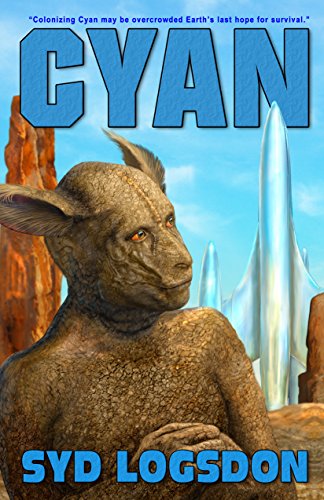
Oh, by the way, during that time I also spent a lot of effort playing editorial ping-pong getting Cyan into print, and wrote two new novels, The Cost of Empire and Like Clockwork, and to date about twenty percent of the novel Dreamsinger.

Retirement from teaching middle school has been fun, but not relaxing.

All this cogitation came about as I was considering a novel I didn’t write (yet) which I plan to tell you something about on Wednesday.

634.1 Critter Count

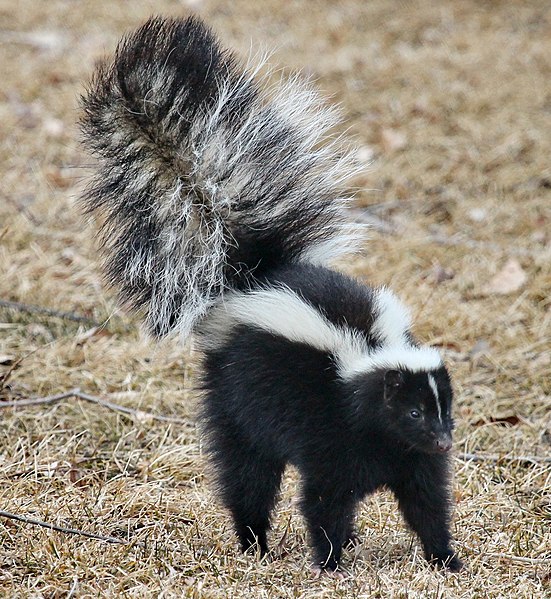
I have a post about two new critters who came to visit, called Stinky Boy and his Cousin. It was supposed to be posted yesterday, but the tribute to Alexi Leonov pushed it forward to the Monday before Thanksgiving.

As I was writing that post, I was a little uneasy. It ended up mentioning a large cadre of critters. Even though I made it clear that many only came by once in more than a decade, I still wondered if some readers would imagine that I live in a virtual zoo, instead of normal foothills full of sweet but ordinary creatures, and more rarely visited by the exotic.

Then today happened.

We went out early by car to watch a cattle drive which happens twice a year, going to the high country in spring and back down to the foothills in the fall. The critter count included cows, horses, dogs, and cowboys, but they don’t really count because they are all domesticated. Except the cowboys.

Driving back to my house, I had to brake for quail flying across the road. Driving on down toward the valley afterward, we had to dodge a tarantula crossing the road —

“Why did the tarantula cross the road? Mating season.”

— then passed a flock of turkeys in a neighbor’s yard. Still less than two miles from home I saw an egret standing at the edge of the lake waiting for a fish. Yesterday at the same spot I saw a flock of geese floating on the water.

A moment later a vulture swooped down. For a moment we were bracing for a collision but he was only interested in a piece of road kill in the ditch.

Okay, you’re right. I do live in a zoo.

634. A Tribute to Alexi Leonov

This is a substitute post. The one I had planned about my two latest animal neighbors will have to be pushed forward to sometime in late November, probably just before Thanksgiving.

The reason for the change is that Alexi Leonov died in Moscow on October 11, and I just became aware of it tonight (Oct. 15). You’ve probably never heard of Leonov, and that is a shame. He was the first person to walk in space, in a flight filled with incredible dangers. I wrote a post about the flight for its 51st anniversary, called Spacecraft Threatened by Bears. I will present it again below, changed only by the addition of a few links to other related posts.

Spacecraft Threatened by Bears

Yes, I agree; it’s a snarky title. It’s also accurate, believe it or not.

I had the great good fortune of living through the early days of manned space flight. I was nine years old when the Russians orbited the first satellite, and the early manned flights came when I was in high school. I watched every American launch with fascination and envy, but the Russian launches were shrouded in secrecy. I knew only the bare minimum that all Americans knew. I’m not sure the president knew much more.

During those early days, nothing was routine. Every mission was dangerous. They still are, of course, but not so much as then. American failures were there for all the world to see, while the Soviets kept their’s secret. After the breakup of the Soviet Union, information about the early Russian space program became generally available, but by then few people cared. I did, and I sought out the stories.

Today is the fifty-first anniversary of the first space walk — by the USSR. I would have brought it to you on the fiftieth anniversary, but I wasn’t blogging yet. Voskhod 2 was a triumph, and also a flight which went spectacularly awry.

Voskhod 2

March 18-19, 1965

The first six manned Soviet spaceflights were aboard Vostok craft. Gagarin became the first man in space on Vostok 1, Tereshkova became the first woman in space on Vostok 6. I plan to talk about them on their anniversaries, in April and June.  [For those posts, see 131. First Into Space, 132. Chasing Cosmonauts, and 168. A Woman in Space.]

Vostok astronauts wore space suits throughout their flights and landed by personal parachute separate from the descent module. Before the second generation Soyuz spacecraft came on line, the Soviets launched two additional manned missions on modified Vostoks called Voskhod.

On Voskhod, a backup solid fuel retrorocket was added to the spherical descent module, another additional rocket softened the landing so that the cosmonauts could remain within the descent module, and the ejection seat was no longer used. This allowed Voskhod 1 to carry three astronauts where Vostok had carried only one.

Voskhod 1 cosmonauts flew without space suits, as did early Soyuz missions. Voskhod 2 cosmonauts Belyayev and Leonov wore space suits because they were scheduled for the first space walk. Their craft also carried an inflatable airlock.

American space walks first took place during the Gemini program (see post 87). That craft had two hatches but no airlock; both astronauts were in vacuum during the entire spacewalk.

On Voskhod 2, Leonov crawled into the airlock, sealed the inner door and opened the outer one. Belyayev remained in the pressurized descent module.

For ten minutes, Leonov remained within the airlock but exposed to the vacuum of space, then he slipped free and floated on a tether for another ten minutes. He was called back in to terminate his space walk, and his difficulties began.

(Or perhaps they had already begun. Some sources state that he “experienced a disorienting euphoria” during the space walk and other sources state that he suffered bends-like symptoms after the space walk was over; I haven’t been able to confirm these statements.)

It is certain that he had extreme difficulty reentering the airlock. His space suit had over inflated; the boots and gloves had slipped beyond his toes and fingertips, and his suit had increased in girth. He had to vent part of his rapidly depleting oxygen in order to bring his suit down in size, and even then had to enter the airlock head first, instead of feet first as planned. Once inside the airlock, he had extreme difficulty contorting his body to close the outer door. All the time, his body was heating up dangerously. Since he was surrounded by vacuum, there was nothing to carry away the heat his body was generating.

Once air pressure had been restored in the airlock, Belyayev opened the inner door and Leonov was safe. For the moment. As he said in an article for Smithsonian’s Air and Space magazine in 2005, “the difficulties I experienced reentering the spacecraft were just the start of a series of dire emergencies that almost cost us our lives.”

The mission had achieved it’s goal and it was time to return, but just before the scheduled time for firing retro rockets the cosmonauts discovered that their automatic guidance system was malfunctioning. It took time to prepare for manual entry, so they had to wait one orbit, which would make them miss their return point by a thousand miles. Most of that orbit they were out of radio communications. When communications were restored, ground control asked them where they had landed, not knowing of their difficulties.

Their orbit was set, but the time they would fire their retro rockets would determine where on that orbit they would land. They chose a target just past the Urals. Using the clumsy and difficult manual backup equipment, they achieved the correct attitude and fired the retro rockets in the conical rear portion of the craft called the orbital module. The orbital and landing modules were supposed to separate ten seconds after retrofire. They didn’t.

The two cosmonauts knew immediately that something was terribly wrong. Instead of the steady press of force against their backs as they decelerated, they found themselves whipped about by confused forces that exceeded ten gravities. A communication cable between the two modules had failed to release, and now both modules were spinning about each other, tethered by the cable.

Finally, about 60 miles up, the cable burned through and the cosmonauts were freed. The drogue chute deployed, and then the main chute. All was peaceful and in order – briefly. Then it became dark as they dropped below cloud cover, the final rocket fired to slow them to landing speed, and they landed in 6 feet of snow.

They were 1200 miles beyond their intended landing point.

They blew the explosive bolts to release the hatch. It didn’t open. They had landed in the middle of a forest and the hatch was held shut by a tree. By yanking violently they dislodged it and it fell away, lost in the snow.

They made their way out of the spacecraft and waded through snow to a small clearing. Bikonur had not heard their landing signal, but a passing cargo plane had. It circled, and was soon joined by other planes and helicopters, but none of them could land in the rough taiga. Pilots threw a bottle of cognac; it broke. They threw warm clothing which got caught in the trees, but at least two pairs of wolfskin boots made it to the ground.

The light was failing. The cosmonauts returned to their landing module for shelter. Leonov was walking in calf deep sweat still trapped in his space suit from his space walk. Both cosmonauts stripped, removed the liners from their space suits and wring them as dry as possible, then put the on again along with the wolf skin boots and abandoned the useless space suits. The crawled into the landing module for the night, well aware that the taiga was filled with bears and wolves, and that this was mating season, when they were most aggressive.

The hatch was out of reach. The lights failed, but the circulation fan ran all night. The temperature dropped to 22 below zero.

A rescue party arrived on skis the next morning; they chopped trees to build a small log cabin and a big fire. The cosmonauts spent a second night, then skied out to where a second, larger party had chopped down enough trees for a helicopter to land.

I guess they made ‘em tough in those days. I suspect they still do.

633. Good Books for Kids

When I was a child, I read as a child,
I thought as a child, I understood as a child:
but when I became thirteen,
I switched to Clarke and Heinlein.

That pretty much screws up 1 Corinthians 13:11. And it isn’t exactly true. When I was a child, i.e. about twelve, plus or minus, I read what was available, and it wasn’t always great. It was primarily science fiction and mysteries, by which I mean Tom Swift, Jr. and the Hardy Boys. You could buy them in a toy and hobby store on the main street of Coffeeville, Kansas, one of the towns we shopped in. There were no bookstores; there were libraries, but I didn’t know that yet.

The Stratemeyer Syndicate, which ground out novels for kids like Hershey’s grinds out chocolate bars, was actually the best thing that ever happened to rural American youth for most of the twentieth century. I read them, my grandfather read them, and kids were still reading them when the millennium rolled over. They weren’t very good. In fact, a lot of them were terrible, but they were there. For a kid out in the sticks who liked science fiction, the choice wasn’t Tom Swift or something from Arthur C. Clarke. It was Tom Swift or nothing.

When I started going to libraries a couple of years later, my possibilities were expanded, but it was still a small library. I read a lot of things that I would never have touched if more had been available. I read a lot of books meant for adults, but that’s the goal anyway. I also read books way below my level, because they were there.

I recently remembered a book I hadn’t thought about since those days, The Wonderful Flight to the Mushroom Planet by Elanor Cameron. I was too old for it when I read it, but I still loved it, so much that I tried to find it again. No luck, but I did get a copy of the sequel.

I couldn’t read it. I could barely read it when I was thirteen, but if I had gotten to it when I was eight, I would have been in love.

That got me to thinking about what makes book a juvenile, as they were called then. The Mushroom Planet books would not have qualified. They were for children. Juveniles were for boys who were anxious to become men.

Of course there were juveniles for girls, but girls and boys were separate species in the fifties, so I can’t report on their books.

Heinlein did a lot of juveniles which I’ve already talked about. (See posts 311 and 513) My real favorite juvenile writer was Andre Norton, and I’ve done a few reviews on her as well. (For science fiction see posts 262 and 263, or others see posts 260 and 261.)

What Heinlein, Norton, and many other juveniles authors had in common was that their characters were not yet adults but were given adult roles by the author. The Heinlein characters were often learning a futuristic trade under an adult. Norton’s characters were often being stranded on an alien planet. Outdoors and with no other kids in sight — she was channelling my childhood.

Today’s young adult books seem to be quite different from yesterday’s juveniles. First, they are targeted for slightly older audience, and second, 2019 isn’t 1959. The audience itself is different.

I can’t imagine a modern kid reading the early Nortons I loved so much. With only slight exaggeration, those Nortons were about a young person alone in a wasteland, trying to survive the dangers of nature, and modern kids live in crowded cities trying to survive the dangers inflicted by the adults around them.

I wouldn’t want to be a modern kid, and I understand why the books of my childhood probably wouldn’t mean much to them.

I taught middle school for twenty-seven years and I tried to keep abreast of what was available for my students, but I’ve been out of that loop for a while. I used to go to every Scholastic book sale to see what was new and good. The answer — damn near nothing. The few good books the kids had to choose from were mostly reprints from way back when.

Those book sales were where I found Fog Magic by Julia Sauer. It’s a wonderful book but it was published in 1943. Later I found A Storm Without Rain by Jan Adkins published in 1983. That’s still almost four decades old. Both were time travel stories of the old style; that is, without a time machine. The kids just went back in time and never understood how it happened.

I also stumbled across a fine steampunk novel, before I really knew anything about steampunk. That would be Airborne by Kenneth Oppel, published 2004. At least we are getting into the right millennium.

Harry Potter? Tried it, couldn’t read it. Twilight and the Hunger Games? Don’t want to, and if you don’t know why, I could never convince you.

Good books for kids are rare. Fortunately they stay around forever.

Why didn’t I mention A Wizard of Earthsea? You can’t pigeonhole it as a juvenile or a young adult book. It’s literature. Buy it for your kids and read it yourself.

More Power

Hi, folks, I’m back. It’s five o’clock here on the west coast and I’m just getting home from helping a friend. I see that my power is restored. It went off 3:30 PM Wednesday and came back 1:30 PM Friday. That’s forty-six hours of no light, no computer, and spoiled food in the refrigerator, all of which was no fun. It was also forty-six hours without news of natural disasters or the liar-in-chief. My friends tell me it’s been a rough two days, so I have to go now and see how bad things got. Vacation is over.

632. Dam Gravity

M. Rehemtulla for QUOI Media Group

Tuesday morning. When I wrote these posts about two weeks ago, I mentioned PG&E. Guess what? They just announced that tomorrow my county is slated for a possible shutoff of power because of projected high winds. Even if that doesn’t happen, a regular power outage is likely. While you are reading this, there is a good chance I will be reading a book by sunlight through the window, because I won’t have any electricity to power my computer. I would find that ironically amusing, except my stove and refrigerator also won’t be working. At this moment I might be eating cold beans out of a can.

Additional, 6 hours later, it is now almost certain that we will be blacked out, and that it might well last up to five days. Posts come to you from WordPress, not directly from my computer, and I have a month of posts in the can so, see you later. Now back to what I already wrote.

==================================

This is a continuation of last post. What does a kid with a toboggan have to do with solar energy storage, you ask? You’ll find out by the end of the post.

If you have any science background at all, please forgive the next few paragraphs as I set things up for something you may not know.

A battery does not hold electricity like a can holds Coke. The electrons which are present inside the battery do not go into your device. They travel from the (-) pole to the (+) pole, and essentially the same electrons are there in a discharged battery as are in a charged one.

It is the flow itself which powers your device. The flow is caused by chemicals inside the battery changing from a high energy configuration to a low energy one. This is true of the lithium ion battery that just burned up your hoover board, and equally true of the car battery in your great-grandad’s 1950 Nash Rambler. Such batteries are recharged by running electricity back through them to return the low energy chemicals to a higher energy state.

In other words, batteries don’t store electricity, they store energy. Chemical energy, and there are many other ways to store energy besides batteries. Let’s look at one.

===================

Last post I invited you to take a trip with me from the California foothills toward the coast. Now we have dropped down out of the brown hills, have crossed the hot, flat, agriculturally green Central Valley, and suddenly our car turns its nose upward because we have reached the Coast Range which stands between us and the ocean. We are on Highway 152 and to our left is the imposing dam of San Luis Reservoir.

Everyone knows the story of rainfall on mountains. California lives on it. Sunlight on the Pacific raises moisture which gets an uplift first by the low Coast Range and then by the High Sierra. The west side of the Coast range and the western Sierra foothills get winter rain in moderate quantities, and west side of the high Sierras gets a big dump of snow which melts in spring to fill reservoirs all over the western foothills, providing irrigation and electricity to California.

The eastern side of the Coast Range and of the Sierras get squat.

Where San Luis Reservoir is located, there isn’t enough local rain or snow to fill it. Water is brought to it by a system of canals, accumulated in the forebay and pumped up into the reservoir.

Sounds goofy, right? The dam exists to harvest in spring and store for summer, water that has already passed thorough the other reservoirs and would otherwise go to the ocean. Of course it’s controversial; everything related to water in California is controversial.

So what does this have to do with solar cells on the roof? San Luis Reservoir not only stores water, it is essentially a giant storage battery for electricity.

When the water arrives at the forebay, it is pumped, by electricity, up about 320 feet into the reservoir. When it exits the dam to be used, it passes through a hydroelectric generator, recouping much of the energy originally used to lift it. It isn’t 100% efficient system, but nothing is.

Batteries store energy by chemical change. There are innumerable other ways to store energy, many of them new, complicated, expensive, and with unknown dangers. Carrying a load uphill to store gravitational energy, and getting that energy back when the load comes down is old, simple, and well known. Kids have been doing it with toboggans ever since there have been snow, toboggans, and kids. (See, I told you I’d explain that photo.)

In California, people have been doing the same thing for a hundred years or more in tankhouses, water tanks attached to houses which allow gravity flow so you don’t need to turn the well pump on every time you open a faucet. The one shown here even used wind power to get the water out of the well and up into the tank.

This was done for the sake of the water, but it could as easily be done for the sake of storing energy. With twin tanks, one high and one low, there would be no reason to “use up” the water. It could even be structured in tandem with the house’s normal water usage.

I submit that a good engineer could turn this into a cheap, simple, and easy way to harvest solar power all day and use it all night, without frightening Mother Nature. You would simply use excess solar electricity to pump water upward all day, and drain it back through a turbine and generator that night.

How much water, how high would we have to pump it, how much would the raised tank cost? Would it be practical? Would it make money for the ones who provide the system? Who knows; that’s for some young engineer is search of a project to determine. Will it be you?

Since I didn’t invent this technique, I can’t ask for royalties once you perfect it. I will, however, expect a finder’s fee.

And if any of you out there know of someone who is already doing this, I would love to take my tongue out of my cheek and hear about it.

631. To Grid or Not To Grid

Although I fully believe in it, I normally steer clear of talking about global warming, wind and solar power, and the impending end of civilization. There are plenty of sources for that, and I don’t want to get caught channeling PBS.

However, speaking of PBS, there was a bit about the problems of energy storage as part of the solar solution yesterday (Sept. 27) that made me realize I knew a few odd things from a few odd sources that were worth sharing.

I live in California, in the foothills of the Sierras. PG&E provides my electricity, but every time it rains more than a tenth of an inch, my power goes out for six hours. This has been true for decades, not just since PG&E went bankrupt for its role in recent fires and told us all that it was going to shut our power off every time the wind comes up.

It’s enough to make you want to go off the grid.

We’ve all grown up with the grid — even me. The first house I remember, about 1950, had no plumbing, no running water, and an outhouse out back, but it had electricity coming in from elsewhere through the wires. Consequently, I can’t honestly tell Lincolnesque tales of reading by a coal oil light (except when tornadoes took the wires down).

The history of the grid goes back to Tesla and Edison fighting the battle of AC vs DC, and continues through the REA. (That’s the Rural Electrification Administration which brought electricity to isolated farms throughout America in the thirties.)

The grid is wonderful; it has given us our present level of civilization.

The grid is terrible. It is a dinosaur, completely out of date and tying us to the mistakes of the past.

As is so often the case, both of those statements are true. No one decided to choose centralized production of electricity with a massive distribution system. Its alternative, dispersed production, was simply not an option in the past.

That is no longer the case. A system of solar power through electrovoltaic cells can now be built one roof at a time. (There are other alternative sources of electricity, but I’m only going to talk about one in this post.)

There is a big problem, though. Solar cells only generate sufficient power during reasonably sunny days. There is also a solution, but it is only going to work for a few years.

In today’s installation of rooftop solar cells, homes mostly draw on the grid at night and “turn the meter back” during the day. Quite clever, for now. It amounts to using the grid like a giant storage battery. But if enough rooftop solar installations try this trick, daytime generated electricity will become essentially a waste product from the viewpoint of the owners of the grid.

Of course you could have a mega-array of solar cells in America lighting up India at night, and a similar array in India lighting up America at night, but that’s turning the grid into a GRID. It’s good science fiction, but not very practical.

If you want off the grid — and eventually the grid will want you off, if you are a daytime energy generator — you will have to find a way to store your daytime energy for night time use.

Storage batteries are heavy and expensive, not only in the owner’s dollars but also in terms of world resources. They also blow up. I’m not just talking about lithium ion batteries; car batteries blow up too from time to time.

If you could invent the perfect battery — light, safe, cheap, environmentally friendly, capacious — it would make you more money than cold fusion.

If you could invent both, you would solve all the world’s problems except overpopulation and religious strife. You could run for God and probably win.

Heinlein invented the perfect battery, the Shipstone, and built a whole universe around it, but it’s harder to do in the real world.

Coming back down to the individual home owner, what is needed is a non-battery source of energy storage to make those solar cells practical.

I have an idea! Actually it isn’t mine; it already exists, and I can point to it.

Hop in the car with me and let’s take off for the coast. I drive by something every time the foothills get too hot and I need a Monterey fix down by the ocean. I’ll show it to you.

We’ll go there Wednesday.