Tag Archives: steampunk

How to Get Readers for Your Blog

I have discovered the secret to getting readers for my blog, and I hate it.

On November 29th I posted a blog called Machine Porn. It was about an episode of a PBS show that showed lots of old sewing machines, and it used that as a springboard for talking about the clockwork aspect of steampunk.

If you are a guitarist, you know that guitar porn doesn’t mean naked women with guitars, it means cool looking guitars. If you are a motorcyclist, you know that motorcycle porn means pictures of cool looking motorcycles. In either case there may be naked women, but that is incidental. By machine porn, I meant that the PBS show in question had lots of cool looking old machines.

So far no one has “liked” the post. That is appropriate; it was a very minor effort. But hardly a day goes by without someone, somewhere opening that post. It probably has more hits than anything else I have done.

I’m sure they must all be terribly disappointed. I refuse to visualize what they think they are going to find.

UPDATE. This is what I added to the post in question after it continued to bring about unrequited lust.

               Friends, I am amending this post as of June 1, 2018. I am changing it’s title from Machine P o r n. I have had more hits on this post than on anything I have written, but I have obviously just been generating frustration among those who clicked on purely because of the word P o r n. You will notice that I have also hidden the word itself from the view of crawlers.
I like hits as much as the next blogger, but I’m not into misrepresentation. I am leaving the post otherwise intact, since it does have something non- p or n ographic to say.

It is now called Machine P, and I don’t expect any more unhappy visitors.

471. Sunshine Blogger Award (2)

JM Williams nominated AWL for the Sunshine Blogger Award, which he and I both consider a chance to give a shout out to bloggers we follow. I started on Monday, and ran long, so here is the rest of the story.

There are four rules to the SBA. I took care of two of them on Monday. The remaining are:

Answer the 11 questions sent by the person who nominated you.
Nominate 11 new blogs to receive the award and write them 11 new questions.

I only nominated four blogs, and only wrote three questions. Michael, Thomas, Joaquin and James, the questions are at the bottom, should you chose to accept. (There is no penalty if you don’t. This post will not self destruct.)

 JM Williams’ questions to me were:

1. When did you start writing?   In the early seventies I started by writing a few articles for magazines. I started writing fiction in 1975. not counting the answer to question five.

2. Which genre do you prefer to write? To read?  Fantasy for both.

3. Which genre do you actually write most often? It is about equal between fantasy and science fiction, with a few contemporary novels as well, but only SF seems to sell.

4. What is your favorite piece of work and why? By other writers, A Wizard of Earthsea by Ursula Le Guin. From my own work, a short story The Prince of Exile. Of everything I’ve written, that was the only story in which I had no idea where it came from, nor where it was going while I was writing it. On the inspiration-perspiration continuum, it was way to the left.

5. Where is the most interesting place you came up with a story idea? This is not so much a where as a how.

A couple of years before I started writing fiction, I was with my wife in the stacks of a library. I had finished for the night and she was still working, so I took down something to read. The only tolerable book in the area was Beowulf. I flipped it open to a random page and read, “All that lonely winter . . .”

A vision exploded in my head, of a young boy, at an open wind hole in a castle, looking out over a snowy scene. He was living with relatives who had taken him in after his father was killed. They expected him to grow up and avenge his father’s death, but he had no interest in revenge. He just wanted to be left alone.

I saw him and his situation with instant and absolute clarity.

The next day I wrote the first chapter of the novel the incident called out, then put it away. Four years later, it became my third novel, but it remained unfinished for decades. Now it has grown into a three book series, and if I ever find a publisher, I’ll announce it here.

6. If you could win any writing award, which would it be? The Nebula, of course. A Hugo wouldn’t be bad either. I can’t hope for a Nobel Prize since I can’t sing, play guitar, and blow harmonica at the same time.

7. Do you associate with other writers? Are they at the same level as you? My level  is totally weird. I have been published since 1978, but I went unpublished (and unknown) for a long time after, and now am published again. I work strictly alone. I loved meeting writers at Westercon this year, and I love meeting them on the internet, but there is a huge generational gap.

8. What’s one of your writing goals for 2018? I have two actually. I want to see my recently finished steampunk novel find a publisher, and finish the second steampunk novel I am working on now.

9. Are you a plodder or a plotter? 100% plod. I outline very little. When I was a teacher, I was always in trouble because I refused to write lesson plans. I carried everything in my head, and that scared the principal half to death.

10. Where do you currently live, where are you originally from, and have you ever lived in a foreign country? I live in the foothills of central California, on three acres with wild turkeys and bobcats. I grew up on a farm in Oklahoma. In between, I lived in cities and hated it. When I became a teacher, and finally had a dollar in my pocket and summers off, my wife and I spent six summers living in a tent and subsisting on bread and apples, four in Europe and two in Australia. You can go far on little, if you want to badly enough.

11. If you could travel anywhere in the Universe, where would it be and why?   If?  What do you mean if?  I travel everywhere in the Universe I want to. Why else would I be a writer?

#                #                #

Now the questions for my nominees. Three instead of eleven, and loosely organized at that.

1. List your favorite authors. Length of list is your choice. A reason for the choices would be nice as well.
2. List your favorite books (That’s not the same question, since it it quite possible to have a favorite book by someone with only one great book.) Again, reasons would be nice.
3. List your favorite genres (or sub-genres, if you that works better for you) and tell what you look for as a sign of quality in that particular genre.

#                #                #

I had a great time doing this exercise, but my nominees may not feel the same way. If they don’t respond, no problem. The reviewers in particular have a tightly formatted product that might not work well with the Sunshine Blogger Award.

The main idea is to send them some new customers.

A Timely Note

I found it amusing to set my clock to Daylight Savings Time on Sunday, then turn on the computer and write a critical chapter in my new novel about a device called The Great Clock. That entity is also known as The Enemy, The Clock That Swallowed Time, The Clock that Put Time in a Cage, and quite a few other names.

I’m about a third of the way through the book, and it finally has its proper name. It’s called Like Clockwork. Of course. I should have known that from the beginning.

My computer must have been amused as well, because as I was typing in the title of this note, I hit a wrong key and it activated Time Machine, which is Apple’s name for the backup program I use.

Although — can there be any irony without surprise, and can there be any surprise in a multiverse where everything that can happen, must happen?

Yeah, it’s that kind of book. I have a short excerpt scheduled for April 11.

470. Sunshine Blogger Award (1)

The logo above is for the Sunshine Blogger Award, for which JM Williams just nominated A Writing Life. It’s not a HUGO, but a way for bloggers to give a shout out to other bloggers. Thanks JM. I appreciate it.

The rules of the contest (if that’s the right word for it) are:

1.) Thank the person who nominated you in a blog post and link back to their blog.
2.) Answer the 11 questions sent by the person who nominated you.
3.) Nominate 11 new blogs to receive the award and write them 11 new questions.
4.) List the rules and display the Sunshine Blogger Award logo in your post and/or on your blog.

Okay, I’ve done 4 and I’ll do 2 and part of 3 on Thursday. Here come 1 and the rest of 3, all mangled together.

JM Williams who nominated AWL, is a writer with a long list of stories, mostly published electronically, and one anthology of flash fiction, The Adventures of Iric. I mentioned Iric recently in a post about author’s names, and reviewed it positively on Amazon. JW Williams has a new website, and an old one that you might still fall into if you are using a search engine, along with an author page on Amazon.

Our connection came when he liked one of my posts, some time ago. I don’t formally follow any blogs, since my time is limited, but every time someone likes one of my posts, I drop in to their site and look them over. I get a lot of newbies, and a lot of people who are working out problems in the semi-public sphere of the internet.  I like that. I hope this doesn’t sound smart-ass, but it seems to me that baring your soul to the universe, without telling anyone your home address, is a safe way to both vent and find support. I also get likes from a lot of new and would-be authors, and every time I post a poem, I snare a lot of poets.

I end up reading a lot of poetry and fiction and occasionally something really grabs my attention. JM Williams and Iric did that. I have also found a lot of useful information on the world of e-publishing on his site. I’ve been in this game a long time, but the “e” side of publishing is something I’m just learning about. So thanks for shared interests and information. I’m glad we’ve met. I liked Iric and I’m anxious to read your novel when it comes out.

#                #                #

I’m only going to nominate four new blogs, one by an author and three by reviewers.

Michael Tierney was another whom I discovered when he liked one of my posts and I backtracked him. His blog, Airship Flamel, is largely devoted to steampunk and victoriana, and to publicizing his writing. That makes him a man after my own heart. I enjoy his blog, but this is primarily a shout out for his novel. I bought, read, and reviewed To Rule the Skies. I recommend it as a very British romp.

The remaining nominees are reviewers of novels that they consider really old — but which I read when they first came out.

Thomas Anderson is the voice of Schlock Value, which is the only blog I read without fail every week. His subtitle, Reading cheap literature so you don’t have to, is probably all you need to know in order to understand his perspective.

I found him in an odd way. About the time I was starting my blog, I googled myself. Strictly business, you understand, and I found a review of Jandrax, my first novel. It had been out of print for forty years, and here was a review dated 2014. Did I read it? Does Donald comb his hair funny?

Thomas didn’t love Jandrax, but his review was fair. More important, compared to the reviews it got when it came out, he had obviously read it closely.  I went to the contact me section and sent him a letter, saying something like, “Since you review books that came out forty years ago, you probably never expected one of the authors to respond, but here I am.” We’ve been going back and forth ever since.

Thomas likes to review schlocky books, and he has a talent for finding them, skewering them, and still finding something worthwhile in most of them. It’s an odd approach, but I really like it.

I discovered Joachim Boaz (actual name unknown to me) and his site Science Fiction and Other Suspect Ruminations via Schlock Value. He reviews book of the same era, but takes them all on, the good, the bad, and the weird, and with a more serious demeanor. If you check out one of his many indexes you will be amazed at the breadth of his coverage. If you are curious about an old SF book, this should be your go-to site.

James Nicholl  of James Nicholl Reviews also came to my attention when he reviewed one of my old novels. His site covers publications over a wider time scale, and anybody who has review categories like 50 Nortons in 50 Weeks and The Great Heinlein Juveniles (Plus The Other Two) has something worthwhile going on. I have read a dozen or so reviews so far, which means I have just scratched the surface. This is going to be fun.

Okay, I’m up to a thousand words and I haven’t started answering questions yet. It looks like this post is going to roll over into Thursday.

459. Steampunk Research, 2017

I’m offering a look at the nuts and bolts of how I organize my writing, in four posts. 456 explains the system I used for years. 457 tells how I keep order while writing today. 458 gives the gory details on why this system works and 459 shows you how to keep track of your research. Take what you can use and ignore the rest.

The best thing about doing novel research on a computer is that you have access to the world, instantly and right on your desktop.

The second best thing about doing research on a computer is that you don’t have to copy things down longhand.

I am very careful to respect the rights of other writers, especially on copyright issues. However, those rules don’t necessarily apply to copying into your own research notes to be considered, modified, used for inspiration, and not quoted.

You can’t copy everything you find on the internet, no matter how useful. Sometimes you have to bookmark. I found an 1868 map of London which I returned to a hundred times. It lives on Safari, along with bookmarks for thirty other websites I have used. A few of those which would be of general interest to steampunk fans and authors are: Beyond Victoriana, All Things Victorian, Historical Emporium (even if you don’t buy the clothes they sell), and The Victorian Web. That doesn’t even scratch the surface.

Another map from Wikimedia Commons was available in jpg. It lives on my desktop, along with a number of maps, coats of arms, and photographs whose jpgs could be snagged.

Whenever I copy from the internet into a word processor program, I always also copy the URL.

Most of what exists in the folder for The Cost of Empire consists of things I have written myself. I would guess that my character, historical, and world building notes probably run about half as many words as the novel itself.

So how can we keep track of all this?

I explained about keeping track of the chapters two posts ago, and about the nitty gritty of ordering last post. Now let’s tie it all together.

Here is a low-fat version of what my folder looks like, with 11 files instead of 77. It starts with important research files, then has chapters, and ends with less important research files.

  changes (notes on changes planned)
 Delhi Durbar Ebook ( excerpts from an Ebook)
 Final Timeline
 Sleeves, color (on uniform sleeves, color denotes rank)
0.1 chapter outlines
1 “Tick tick”
20 “Death of an Airship”
American submarines (notes)
Naphtha engine (excerpts on the real thing along with how I modified them)
The German War (I made it up, but I had to write a history of it to keep track)
zTimeline

You may not see it, but there are two spaces before “  changes”, and one space before each of the next three file names. The three file names after that begin with numbers. The last four begin with letters.

Here’s why it is done that way. The computer puts numbers (in numerical order) on the top of the stack. Letters (in alphabetical order) come next. However, a space comes above anything else.

If you want your most important files to be above your chapters, put a space in front of their titles. If you want one of them to be at the very top, put two spaces in front of that title. Once a file is no longer a priority, don’t throw it away. Put a “z” as the first letter in the title and it will drop all the way to the bottom.

“zTimeline” is an early attempt; I didn’t want it at the top where I might use it by accident, but I also didn’t want to lose track of my original thoughts on the order of in which things happened.

It’s amazing how simple this is in practice, and how well it works.

458. Alpha-not-betical

I’m offering a look at the nuts and bolts of how I organize my writing, in four posts. 456 explains the system I used for years. 457 tells how I keep order while writing today. 458 gives the gory details on why this system works and 459 shows you how to keep track of your research. Take what you can use and ignore the rest.

I wrote my first six novels on a typewriter, keeping notes in a card file. If I had to go back to that, I wouldn’t write. Thank you Steve Jobs.

The way I work today depends on having multiple files in one folder, each with it’s own function, while making full use of copy-and-paste between the files. This requires placing all the files in a manner that makes sense visually, and for that you have to have a deep understanding of how a computer orders files. Buckle your seat belt, it’s going to be a nerdy ride.

For my most recent project, a steampunk novel titled The Cost of Empire, I have 77 files in one folder. From the beginning I had imposed an organizational structure on it, so I never lost anything. I explained the chapter organization last post and I will explain the research organization next post. For now I’m gong to concentrate on the structure behind the structure.

The following is based on Mac. I can’t guarantee that it transfers totally to another platform, but it should be at least close, and you can find any differences by experimentation.

The files in your folders are an order that is not quite alphabetical. The words go in alphabetical order, the numbers go in numerical order, and special characters like tilde and backslash have an order of their own. Mixed units go where their left-most letter or digit directs. That is, 13b would be placed among the numbers and ordered numerically, but B13 would be placed among the words and ordered alphabetically.

Bear with me. This is a powerful organizational tool you can learn in about twenty minutes. I have tried to write this out, but this is one case where words don’t work. So let’s look at examples instead. The following numbers occur in numerical order.

1, 2, 7, 11, 23, 2514

Now let’s put those same numbers into alphabetical order. We get:

1, 11, 2, 23, 2514, 7

If this doesn’t make sense, let’s replace each numeral with the corresponding letter of the alphabet.

A, AA, B, BC, BEAD, G

There you have it, pure and proper alphabetical order.

Decades ago, I had a night job teaching spreadsheet to my fellow teachers. I would read a group of numerals such as the first example given here in random order, to be placed one per cell in vertical array. Then I would tell my teacher/students to let the spreadsheet put them in order. They would get what is given in the second example.

Once their minds were properly blown, I would show them where the program gave a choice of sorting numerically or alphabetically.

Alphabetical order takes all the words with A as the first letter, then all the words with B as the first letter, and so forth. Then it looks at the second letter in each word, then the third, and so forth. It also follows the rule that nothing comes before something, so that A comes before AA.

Numerical order takes all the numbers with one numeral to the left of the decimal place first, then the numbers with two numerals to the left of the decimal place, and so forth. It assumes that whole numbers always have an invisible decimal at the right. Then it puts things into 0, 1, 2 … 9 order, and it doesn’t care how many places lie to the right of the decimal point. That is, it assumes that all numeral groups to the right of the decimal point end in an infinite string of zeroes.

Am I wasting your time? Do they teach this in ninth grade now? I had to learn it by experimentation after I got my first computer in 1986.

All this is the key to the orderly arrangement of a complicated folder, and that is the key to my method of keeping track of both chapters and notes in one folder.

I number my chapters and use word titles for my research notes, then use the mixed system my computer provides to make it all easily retrievable. We’ll put this all together in the last post on Thursday.

=======

By the way, if you know ASCII, forget it. This isn’t ASCII. It isn’t a pure system at all, but a mixed system designed to produce a result that is intuitive to humans, not to computers.

457. I Don’t Write Novels Any More

I’m offering a look at the nuts and bolts of how I organize my writing, in four posts. 456 explains the system I used for years. 457 tells how I keep order while writing today. 458 gives the gory details on why this system works and 459 shows you how to keep track of your research. Take what you can use and ignore the rest.

The actual writing of novels before computers was a royal pain in a dozen ways, but there were a few advantages. The rough drafts — 300 to 500 sheets of actual paper — could be carried around, rummaged through, and sorted as needed. Several times I brought a long 1 x 12 from the wood shop as a temporary table to hold a row of single chapter stacks.

In the mid-eighties I quit writing full time and went to work as a teacher. I could finally afford a computer, and I never looked back. Symphony in a Minor Key and Raven’s Run, the first two novels I wrote on a computer, each ended up with a single file 80,000 to 100,000 words long. Finding something in that mass worked well enough if I remembered which page it was on, or if what I wanted contained a distinctive word cluster that allowed me to use the find function. You’d be surprised how often neither worked and I was left scrolling, scrolling, scrolling.

Cyan was written half on typewriter, decades ago, and half on computer. I used word recognition software to convert the first half to digital. All in all, Cyan called out the best and worst in both systems.

When I recently sat down to write The Cost of Empire, it was clearly time to reinvent and streamline my process.

First of all, there was the issue of manuscript length, and how to keep it under control. I have no trouble with writing too much; I learned the trade when novels were fifty to sixty thousand words long. That wouldn’t even be publishable today. I tend to write tersely and reach the last page under modern length requirements. It struck me that it would be a lot easier to correct that as I went along, if I knew where I stood on a daily basis.

For The Cost of Empire, I set a goal of 100,000 words. I divided that into twenty chapters of 5000 words each. That seemed a good chapter length for a novel that progressed in a linear fashion with a single viewpoint character and almost no flashbacks. It set a stately pace.

Another novel, just begun, has multiple viewpoints, confused chronology, and a ton of explanatory matter dropped in a word here and a sentence there. It seems to be all transitions. For that novel I have chosen 1000 word chapters, and lots of them.

I use the chapter break-down to keep from having to scroll through long chunks of text. I don’t write novels any more; I write chapters, and copy them into a single file only when the writing is done. Each chapter gets its own file, named (number)(space)(title in quotes). Here are the first four chapters from The Cost of Empire:

1 “Tick, tick”
2 “Unit A”
3 – 6
3 “First Mission”
3.1 rewrite
4 “Field of Fire”

When I began to write, I had placed a few numbered, blank files to receive the first few chapters, and had a dozen files of notes which I will explain two posts from now, on January 31. Chapter one went fairly smoothly, with a rough draft finished in a couple of days. The first draft of chapter two followed, also fairly quickly.

After that point, things were less clear in my head. The next chunk of writing stretched out with no obvious breaking points, and went through several rough re-writes. That piece of writing finally spanned pieces of several chapters. Now the value of the multi-file system came in to play. I simply re-titled that chunk of writing 3 – 6 and left it in place. I moved on to 3 “First Mission” and started writing again, copying and pasting large and small chunks of 3 – 6 as needed.

Note: copying, not cutting. 3 -6 is still unchanged today; nothing in it was ever lost, even though everything in it eventually found its way to a “real” chapter in the final book.

At first, there were days of research, days of invention, and days of writing. Or more likely, two hours of research, fourteen minutes of inspired writing, forty minutes of planning, thirty-two minutes of organization, twenty minutes of writing something to fill in a hole left in a previous chapter, and so forth.

Later in the process, I sat down every day and wrote, starting where I had left off the day before, and proceeding in a reasonably linear fashion. That is, I did what non-writers think writers always do.

Initially, that was not possible. I was inventing my character, inventing the plot, and inventing the world everything took place in — all at once. That process never stopped, but the amount of invention went down and the amount of linear writing went up all through the production of the book.

Even when I was a beginning writer following Whitney’s procedure, I didn’t do planning followed by writing. They always went on as simultaneous, semi-independent tracks.

There were a number of plot complications in 3 “First Mission” which had to be worked out. It took several iterations. I knew what I needed to do, I did it, and I didn’t like the results. This happens; it’s just part of the process. Sometimes you have a plan, you execute it, and the result just lies there, smelling like something that dropped out of a cow.

That, by the way, is the difference between an experienced writer and a beginner. The experienced writer recognizes the smell — from past experience — and reaches for his scoop shovel.

I copied (not cut!) out a big chunk and placed it into 3.1 rewrite. I took a new tack on some tricky points and wrote an alternative version. Again, this is where the multi-file system shone. I brought 3 “First Mission” up to standards, but kept the alternatives filed as 3.1 rewrite, for future reference.

I wrote two versions of chapter 7 because it was a critical introduction of a character that would be an important adjunct to my main character, and it had to be just right. A sizable chunk of chapter 13 was heading the wrong way and got pulled. It was titled 13.1 Pulled, but it was retained so that its content could be mined, if need be.

When I got to chapter 20 all was done. I was only seven or eight percent short of my goal length because I had kept track of my chapter lengths. I needed an Epilog. To keep it immediately after the last chapter in the folder, I titled it 20.1 Epilog. I could have called it 21, but that would have implied it was a chapter, and it was quite short.

I also needed for some ancillary material to stay with the chapters, so they were titled 0.1 chapter outlines and 0.2 introduction. That put them in order just before chapter one.

The really nerdy stuff comes next post.

456. A Map is Not a Journey

I’m offering a look at the nuts and bolts of how I organize my writing, in four posts. 456 explains the system I used for years. 457 tells how I keep order while writing today. 458 gives the gory details on why this system works and 459 shows you how to keep track of your research. Take what you can use and ignore the rest.

I don’t outline, and failure to do so has gotten me into a world of trouble over the years. If you don’t know where you are going, you are likely to drive off a cliff.

When I do outline, that gets me into a different kind of trouble. All the fun goes out of the writing. I can stare at blankness for hours, unable to force myself to begin something that, in my heart, is already done.

Someone, Vonnegut I think, wrote about a character that read novels just “to see what happens next.” That makes sense to me. I write novels to see what happens next. If I know too much, too soon, I lose interest.

On the other hand, starting on page one without a fair idea of what you plan to write will result in a lot of uncompleted novels.

All this is very vague and has been said a thousand times before. What a new writer need is nuts and bolts, so let me give you some, first from Phyllis A. Whitney.

Whitney died in 2008 at the age of 104, having written over a hundred novels. She wan’t someone I read, except for one article, A Map is Not a Journey, which appeared in the magazine The Writer and was reprinted in the 1972 Writer’s Handbook. That book was fresh and new in 1975 when I started writing and it is still a good source for learning writing as a humane art. You wouldn’t want to go to it for marketing advice.

Whitney’s article provided the organizational backbone of my first half dozen novels, all written before home computers. It still works. She used a notebook and I used a card file, but the structure was the same. I will give you a tastes of the categories of information she used, then send you to Whitney for detail.

Work Calendar: deadlines and daily progress.

Title Ideas: self explanatory.

Situation and Theme: what is going on and why.

Problem: what is the hero(ine) trying to solve.

Development: a catch-all to write down miscellaneous bits as they are thought of.

Outline: Whitney makes the point that she can’t outline too far ahead. She starts with a rough outline, and refines it all through the writing process. The full outline, in all its detail, can’t be written before the book is finished.

To Be Checked: things Whitney needs to know.

Additional: things Whitney needs to change. Remember, this was pre-computer, when making changes in a paper ms. was no small chore. The idea is, make a note as as you think of the change, then deal with it later.

Bibliography: self explanatory.

Research: self explanatory.

Diary: here Whitney lets recalcitrant characters make diary style entries to help her come to understand them.

Of course, I modified this scheme to meet my own needs. Cyan had sections on Cyan’s solar system, Cyan’s fauna, the Cyl before and after, Terrestrial politics, and Lassiter drive/core ships. It had a biography section with mini-biographies of the ten original explorers. There were also categories that fit Whitney’s personality and genre (mysteries) which I didn’t need and didn’t use.

Stripped to a summary, Whitney’s system doesn’t look like much. My recounting misses the charm of her writing and the details which won’t fit into a short post. You should go to the original.

I tried to find a copy of Whitney’s article online to link for you. No luck. I did find that its title is now one of the great and widely appreciated quotes.

If you want to know more, I do have a source for you. Whitney wrote a Guide to Fiction Writing in 1988. I just found it today. I haven’t actually seen a copy, but Amazon has a LOOK INSIDE which showed me that the article is there in the form of a couple of early chapters. You can get it used for under two bucks, and I’m sure it is worth a lot more than that.

Next post, how I work today.

450. Centuries Are Nothing to India

It is a new year, and once again I find myself in India. Metaphorically that is, in my latest novel.

I went to college as a biology major and quickly switched to Anthropology. Everyone in the Biology department wanted to study DNA and I wanted to study ecology. It was 1966 and I was about ten years too early.

Once in the Anthropology department, I quickly found myself drawn to Indian studies. That is, South Asian studies, not the study of American Indians, as they were called before the days of political correctness.

I also found that common terminology doesn’t fit the larger world. What Americans call the Middle East is neither middle nor eastern. It is West Asia. East Asia is China and Japan. South Asia is Pakistan, India, Nepal, Bangladesh and Sri Lanka I fell in love with all the parts of South Asia, and never made it to any of them in the flesh. The Viet Nam war got in the way, and then novel writing got in the way.

I have visited variant Indias three times now in novels. A Fond Farewell to Dying (Pocket/Timescape, 1981) was set in a future following nuclear war and rising of the waters, in which India is the last nation having a modern, scientific culture. America is reduced to backwardness while Europe and northern Asia are blasted by nuclear fallout. David Singer, having renamed himself Ram David Singh, has left America to become a scientist in India, where he perfects a type of mechanically derived immortality which gets him into no end of trouble.

During my years of Indian studies, I ran across Rabindranath Tagore’s poem Sunset of the Century. I was so taken by it that I quoted part of it when I wrote A Fond Farewell to Dying, and quoted a shorter piece of it as the sub-title of this website.

Here is what I quoted in Fond Farewell:

Be not ashamed, my brothers, to stand before the proud and the powerful.
With your white robes of simpleness.
Let your crown be of humility, your freedom the freedom of the soul.
Build God’s throne daily on the ample bareness of your poverty.
And know that what is huge is not great and pride is not everlasting.

That last line is probably my favorite quotation of all time. I posted the complete poem two years ago. Tagore wrote it on the last day of the nineteenth century, looking back at centuries of oppression and forward to a new century of freedom.

India showed up again in Cyan but I won’t give out any spoilers on that.

My latest novel The Cost of Empire is a look at an India just beginning to push for independence in a steampunk flavored alternate universe. Rabindranath Tagore is an off-camera character, as the cousin of one of the main characters who has a habit of quoting him. I’ll let you know when it is finished.

438. Machine P

               Friends, I am amending this post as of June 1, 2018. I am changing it’s title from Machine P o r n. I have had more hits on this post than on anything I have written, but I have obviously just been generating frustration among those who clicked on purely because of the word P o r n. You will notice that I have also hidden the word itself from the view of crawlers.
              I like hits as much as the next blogger, but I’m not into misrepresentation. I am leaving the post otherwise intact, since it does have something non- p o r n ographic to say.

================================================

On Monday, we started talking about steampunk, then wandered into changes in science fiction and in real world technology. Picking up where we left off . . .

I always watch the PBS program A Craftsman’s Legacy. It is very steampunk, although that may not be obvious until later in this post. The most recent episode was a jeans maker. If I weren’t already hooked on the program, that’s something I would never have watched. In actual fact, the making of jeans was boring, but the program turned out to be twenty-five minutes of pure Machine P o r n. Through the whole show, every scene was an orgy of early twentieth century sewing machines of every specialized type, all whirring and clunking with their working parts in naked sight.

The only thing moving on a modern sewing machine is the needle, but there is a computer screen where you can tell it what to do. One modern machine will do more than a warehouse full of old ones, but but everything is hidden. It is a classic black box. It does stuff, but you don’t get to see how.

You can see the procession from hands-on to hands-off, and from visible to hidden in boy’s fiction. Tom Swift (later called Senior) could build anything with his own hands back in the twenties. Tom Swift Junior in the fifties and sixties could design anything, but he usually turned it over to his chief engineer to build the prototype. In the first Rick Brant book (1947), work on their moon rocket was delayed when they couldn’t get a certain type of tube (that’s valve in the British half of the world). By book number nine (1952), Rick was learning how to make printed circuits and was introduced to transistors. We watched him build a control unit, but once it was finished, it was sealed and no one else would ever see its guts.

Real science has followed the same progression. Galileo did his experiments by rolling lead balls down ramps. Today science requires a Large Hadron Collider.

Do I miss the good old days? Not at all. I’ve been living in the future since I was eight years old. I am pointing out that one byproduct of the Good New Days is that the working parts of everything are hidden, and that has consequences.

I spent the majority of my teaching career trying to make up for this loss. When I taught pulleys, I used homebuilt equipment with heavy weights so the kids could actually feel the difference when they changed the mechanical advantage. Every year, students were divided into teams of three or four and they all built gizmos, which were devices of their own design that carried out an assigned task. It was a different task every year and they were not allowed to take their work home, so Dad or older brother couldn’t cheat. All they had to work with was a shop full of tools, a pile of donated materials, and what they had learned. They had to see their gizmos in their heads and build them with their hands. No black boxes here.

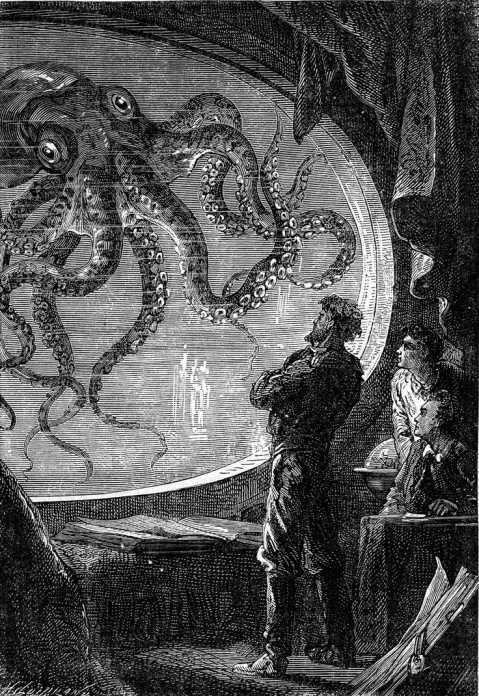
Steampunk fits in here, as well. Steampunk is the meeting of the past and the future. As part of the past, it is familiar and understandable. It is also full of all the nineteenth, twentieth, and twenty-first centuries’ hopes and fears. Retrofuturistic is one word used to describe it, and it fits. Of course, as a word, retrofuturistic is as strange as the thing it points toward.

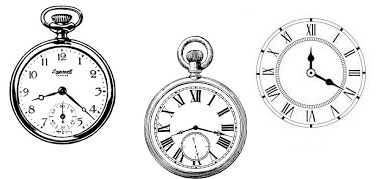
The clockwork aspect of steampunk is certainly one of its charms, especially in steampunk DIY and illustrations. We look at the pictures on the page, or the pictures in our mind while we read, and think, “I understand that. I could build that.”

And we could. Or at least the better, smarter self we all become when we sit down to read science fiction could.

In clockwork, once you take the back off the watch, everything is visible. If you look long enough, you can figure our what makes it tick.