
Author Archives: sydlogsdon

Symphony 38

“Do many parent’s show up?”

“Since you have all of the sixth graders, you can expect about thirty people to show up. In some ways, it will be the most important thirty. The ones who won’t show up for back to school tend to be of little use to you anyway.”

Neil was a little puzzled by the whole concept. “I guess I don’t quite follow you. What use are parents anyway — to me, I mean. I am not used to dealing with parents. In my old high school, I rarely even met them.”

“What did you do about discipline?”

“Discipline was between the student and me, or if it got really serious, between the student, me, and the office. The parent had little to do with it.”

“I see. Well, that might be all right for kids who are almost grown, but these students are still too young for that. Parent cooperation can still make all the difference at this age, and we try to cultivate it. That is what back to school night is really all about.”

With that in mind, Neil set about preparing. It didn’t take much physical effort. He cleaned up his room the day of the open house, wrote the bell schedule and a summary of the school rules on the blackboard, and put two name tags, one for each section, on each desk. He set extra copies of his textbooks out on the counter, and stapled some of the better student papers to the bulletin board.

The mental preparation was another story. Back to school night was scheduled for the eleventh of October. By that time he would have been teaching his students a little over four weeks. He had sixty-four students all together. How well did he know them? Could he even connect faces with names without error?

He ran his finger down his class list as he sat alone in his apartment that evening and tried to bring each face into focus. Some were easy. Tony and Jesse, his troublemakers, were engraved in his brain. So were Sean and Duarte, Rosa Alvarez and Rita Morales, Stephanie, Tasmeen and Rabindranath, Brandy, Oscar, little Randi Nguyen, and a dozen others. But the other forty were still hazy. He could put a face to most names, but for a few of them he still was not sure that he was putting the right face with the right name.

He spent the evening with his class list, as if he were cramming for an examination — and, in fact, he was.

# # #

When the night came, all his worries proved unfounded. The parents who came were unfailingly polite, and none of them were expecting miracles. He only had to jog his memory twice to bring up quiet, anonymous student faces. All the rest who came were parents of students who had made themselves known to him within the first week of class.

There was a message in that, but which way did the arrow point? Were these parents present because their children excelled and they were proud of them? Or were the children driven to make themselves known because the parents were always there expecting it of them?

# # #

The first woman to come in was tall, blonde, and confident. She stuck out her hand and said, “Hi. I’m Janice Hagstrom. This is my husband, Bill.” Bill was a bit shorter than his wife. He was young and good-looking, but he seemed a bit abashed in her presence. Janice did all the talking. Stephanie was her oldest daughter, and she always did well in school, but Janice was a little worried because this was a new situation and all, going from teacher to teacher all day, and she was glad that her daughter had at least one place to call home. more tomorrow

433. S. L. Goes to War

I served but did not see combat. The Syd Logsdon in this title is my father.

World War Two was a presence in our home when I was young. My dad served, was wounded, and returned. It was the biggest and most concentrated experience of his life.

My dad was a storyteller, but all his war stores were humorous tales of incidents along the way, or descriptions of enduring exhaustion and cold, or brief, dry, cool descriptions of the techniques used to clear a town or take a pillbox. He went through some of the worst fighting in the war, but his stories were essentially bloodless.

These were not the kind of gung-ho stories that would lead to hero worship. He didn’t consider himself a hero, anyway. He was just one of millions who went where he was sent and did what he was given to do; that was enough.

I can see him in memory, telling his stories. Even as a child, I could see the pain in his face. He had to tell the stories — he couldn’t keep them in — but he kept the horrors shut up behind his eyes. I don’t know how much he told my mother when they were alone, but I do know how often her nights were disrupted by the terrors that came to my father in his dreams. PTSD they would call it now. Then, it was just the way men were, when they came back from war.

He joined the First Infantry Division as a replacement after D-day and fought his way across northern France. His view was a soldier’s view — a road here, a village there, this particular house, that particular pillbox. I don’t think he ever had a global picture of where he was. He left combat in an ambulance before the assault on the Rhine. He always said that wound kept him alive. He had an almost superstitious belief that he would have died on the Rhine.

He was there for the entire Battle of the Bulge. Roughly two hundred thousand American and German troops died in a small corner of the Ardennes forest. You can see windrows of the dead, in history books, in grainy black and white photographs. He never talked about that, although he was eloquent about the cold and the exhaustion.

The wound that sent him out of combat came under incongruous circumstances. After the Battle of the Bulge was over, his group had captured a stash of German weapons. The lieutenant in charge wanted to try them, so he, my father, and some other privates took a panzerfaust — a German antitank weapon — out to an open field. My father put it on his shoulder and pulled the trigger.

My father always speculated that some Jewish prisoner in a munitions factory had sabotaged the weapon, in hopes of taking out a German soldier. No one will ever know. The weapon exploded an inch from his head, and he spent the remaining months of the war in a hospital in Paris. more tomorrow

Symphony 37

“You see, Jesse, Mr. Ulrich, Ms. Kelly, and Mrs. Clementi have all complained about your misbehavior in their classes. And when I asked the rest of the teachers how you are doing this year, they all said you weren’t doing very well. Things can’t go on this way, Jesus. What are we going to do about it?”

Jesse had stopped cooperating. Bill Campbell kept digging away at him, but Jesse refused to answer. Finally Bill said, “Jesus, do you think you can go out there and do your work without trying to stir up trouble with your classmates?”

Jesse shrugged and would not meet Bill’s eyes. He said, “That’s what I always do.”

There was a heavy silence in the room. Bill just said, “See that you do.”

# # #

When the mother and child had left, Bill said to Neil, “If I had asked him one more question, he would have called our whole teaching staff liars. Then I would have had to send him up before the board for expulsion. I couldn’t have allowed that kind of defiance.”

“You could have had him out of your hair,” Neil suggested.

“Yes. And I probably should have. It will come sooner or later, unless that woman gets some help. And she won’t; we’ve been trying to get her into counseling for three years now, without success.”

“What is going on? Was the boy abused by his father?”

“Now that is the essential question. We don’t know. We only know what the mother says and you could see how unreliable she is. If he was abused, she has made it worse. Since the father died five years ago, she has lost all semblance of discipline. Jesse runs that household. He is an only child. There are only the two of them in the house, and I thank God for that. If there were a younger sibling, I would really be worried about what Jesse might do to him.”

Neil sighed, staring at the door where Jesse had gone out. “He is so young.”

“That’s what hurts. But you would be doing him no favors if you cut him too much slack. He has to learn to live in society or society will destroy him. If he doesn’t learn some respect for authority now, he’ll be in prison before he’s twenty-one. Right now, his mother thinks she is his only friend, when in fact she’s his worst enemy. Don’t fall into that trap.”

Neil paused at the door and said, “Thank you for your support.”

“That’s my job.”

“What I mean is — I’m sorry. I misjudged you. You didn’t want me here, so I didn’t expect any support from you, but you have treated me like any other teacher.”

Bill Campbell shook his head. “Neil, I said that if you made so much as one mistake that I thought might be leading you into any form of sexual misconduct, I would nail you. And I will. However, if I hadn’t been ninety-nine percent sure that you were innocent, I wouldn’t have hired you.

“As far as the parents, students, and other teachers are concerned, you are just like any other teacher. Publicly and privately, I will treat you that way, except for one difference. I will be watching the way you deal with your female students even more carefully than I watch any other teacher — and I watch them all.”

# # #

That same afternoon Carmen came to see him about back to school night. He had given it no thought, so she explained, “This isn’t an open house to show off what the student’s have done. We have one of those in the spring. The purpose of back to school night is to give the parents a chance to see their children’s teachers and to see what they will be doing during the year. For us, it is a chance to meet some of the parents.” more tomorrow

432. The Making of a Navyman

I am writing a steampunk novel called The Cost of Empire. Here is a quote:

        He was a patriot. Unit A should have seen that. Patriots are not to be trusted; they act by their own lights, and they don’t always follow orders.
        Too bad for Unit A. Too bad for Daniel.

Actually, I’ve said that before, a year and a half ago. Here is a repost:

====================

The military has no use for patriots, because patriots think for themselves. In combat, a soldier who shouts, “We must not do this,” is likely to get himself and his teammates killed. He has to go on, following orders.

So how do we turn patriots into yes-men? Boot camp. That’s what it’s there for.

Boot camp is not seen as something important, or morally debilitating. And, I suppose, compared the things that happen later in the field, it isn’t that important. But . . . without boot camp to turn patriots into soldiers, those later events could never happen.

This isn’t about me. I went through boot camp in neutral mode, observing, remembering, and trying not to feel. I wan’t always successful, but I was successful enough to survive intact. I was changed, of course, but by my own experiences, not by pre-programmed manipulations.

This also isn’t about the eighteen year old children who made up most of the recruits, who were eager to follow the path their elders had set, and ready to go over and kick some commie ass. (It was 1971) This is about one young man, and those he represents. He came into boot camp a patriot, ready to serve his country, full of love and compassion, but ready to do his duty. They broke him. I can still see him standing in the barracks before lights out, talking to his friends, saying, “This isn’t right. I joined up to fight for my country. Why are they treating us like this?” His friends laughed at him and told him that this was nothing, it was just getting him ready for what was to come.

It wasn’t nothing, but it was getting ready for his life to come. That was the point.

I never talked to him. There was nothing I could say. He was learning in front of my eyes what I had learned years before, at other hands, under other circumstances. But I never forgot him.

Boot camp is what in Anthropology we call a liminal experience, one that tears down an old identity in order to build a new one. The folks at boot camp are really good at this, even in mild boot camps like the one I experienced at the San Diego Naval Training Center. We could see the real thing across the fence at the Marine boot camp, and we thanked God every day that we weren’t Marines. While I was there, a Marine recruit who could no longer take the daily abuse, ran off and stowed away on a jet liner at the civilian airport just over the fence. Hours later the jet landed at his home town on the east coast and he fell out of the wheel well, frozen, asphyxiated, and dead. The Marines said good riddance. We worms (as Navy recruits are called) laughed. Learning to laugh at the death of others is part of the boot camp experience.

It was all choreographed indignation, play-acting inflicted onto a captive audience. They said that if we didn’t keep our barracks clean enough or our socks rolled tightly enough, the Trouble Shooters would come.

“You worms have been given socks to roll! That’s all we trust you with now! How can we trust you with nuclear bombs once you’re on an aircraft carrier if you can’t roll socks now!”  Every word was delivered at a shout.

Of course, the Trouble Shooters came. They always do. They came in the night, screaming in manufactured rage and tearing the barracks apart while we stood at attention in our shorts at the foot of each bed.

Near-naked, helpless, frightened into immobility, knowing that the only way to survive was to  let the insanity happen. Civilian identities dying; new, military identities growing.

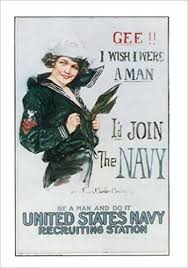
The making of a Navyman. You could put it on a poster.

Symphony 36

Neil glanced at Bill Campbell, but his face gave away nothing. Neil went on, “He is more than a scamp. He terrorizes the classroom.” He gave her a detailed account of all Jesse’s misbehavior. It took five minutes to tell. “And that is only what I have seen. He does these things and gets punished because of it, but the punishment doesn’t seem to change anything.”

“His father could never do anything with him either. He wouldn’t cry, no matter what my husband did.”

For the first time, Bill cut in to ask, “How did your husband punish Jesus?”

She shrugged. “They way everybody does, I guess. He would take away things Jesus liked, and if that didn’t work, he would spank him”

“Was he very strict?” Bill asked.

“Yes. I thought he was too strict, so I can’t understand why Jesus is acting like this now.”

“How long has your husband been dead?”

“Five years next month.” Nothing in her face changed, but you could feel the tension and guess what it cost her to keep her face from changing. She seemed under control, but Neil wondered what price she was paying for that control.

Now that Bill Campbell had taken over the conversation, he drove it remorseless toward his chosen destination. “Mrs. Herrera, would you say that you are as strict as your husband was when he was alive?”

Her lip trembled and her eyes narrowed as if she were summoning up anger to cover her hurt. She shook her head and said, “I can’t lay a hand on him.”

Still remorseless, Bill asked, “Why?”

“Because . . .” She broke down momentarily and fished a tissue out of her purse. “I can’t punish him because all Jesus remembers of his father is how he punished him. I don’t want Jesus to remember me that way. I want him to love me.”

“Are you saying that Jesus doesn’t remember his father with love?”

Mrs. Herrera shook her head mutely.

Bill Campbell leaned back in his chair and said, “Mrs. Herrera, we’ve had this conversation before. Just before Jesus was expelled last year, you said you had managed to start disciplining him, and you promised to get professional help. Have you been going to counseling like you promised?”

She had not, but she had a fistful of excuses. Bill heard her out, then said, “None of that matters. The fact is that Jesus is in the sixth grade now, and he is no better than he was in the fourth. He can’t stay here if he keeps acting like this. We have been patient before, but this year he has to shape up or we will expel him again, and we won’t take so long doing it this time. We can’t have one student disrupting a classroom so that thirty other students can’t learn.”

Bill went to the door and called Jesse in. Neil was suddenly struck by his youth. He thought, “He’s just a baby. How can we hold him accountable for his actions?” Jesse flopped down in a chair by his mother and she brushed his hair back. He pulled his head aside.

Bill sat down again and said, “Jesus, I don’t like seeing you in my office again, especially so early in the year. What’s going on?”

“Nothing’s going on.”

“Then why are you here?”

Jesse looked daggers at Neil and said, “‘Cause he hates me.”

Neil started to protest, but Bill went right on. “Does Mr. Ulrich hate you, too?”

Jesse saw the trap, but he went right on to say, “Yes, he hates me.”

“What about Ms. Kelly; and Mrs. Clementi?”

Jesse shrugged, “I don’t know.”

“What about Mrs. Rawlings and Ms. Zavala? And Mr. Wright?”

This time Jesse didn’t reply. more tomorrow

431. The Other Veterans

This is an update of a post I wrote for Veteran’s Day 2015. Not many were reading yet, so I could simply repost, but a lot of things have changed since then. The new writing is indented.

I am an American; I vote. During my nearly thirty year career as a school teacher, I always went to the polls early and wore my ”I have voted, have you?” sticker throughout the day. Children would ask me, “Who did you vote for?” I never told them. Sometimes they would ask me, “Are you a Democrat or a Republican?” I never told them.

Teachers have a responsibility to be involved and have political opinions, because they are citizens. But they also have a responsibility to avoid shoving those opinions down the throats of their captive audience.

You are not a captive audience. You get both barrels.

I am one of the other veterans, the ones who went, did their job, and moved on. I don’t march in parades. I love America, but I still have a love/hate relationship with the flag. It stands for aspirations toward universal freedom, and when I think of it like that, I love it. But it also stands for the darkest of horrors.

For twenty-seven years, I had to endure the flag salute five days a week in my classroom. Understand, there were days when I said it with my whole heart. There were also days when I could only remember the dead on both sides in that useless war in Viet Nam; on those days, I said the words through clenched teeth.

But I said them. I could have refused. I might have been fired, or I might have won my case on first amendment grounds. Either way, the children I was there to teach would have had their education disrupted. It was my problem, not theirs, so I gritted my teeth and said the words.

Even the words “under God”, notwithstanding that I stopped believing in God when I was fifteen. But every time I said them, I thought of the children who have to pray five times a day facing Mecca.

NFL players, I get it. I support your right to protest. I agree that the situation you are protesting is unacceptable. Nevertheless, I think you are making a mistake. The people who see you kneeling can’t get past the flag. You are alienating the people you need to convince.

My draft number was 41.

Heinlein said slavery is not made more appealing by calling it Selective Service. I agree, mostly; however conscription levels the field. Without conscription, the white and the rich would not have protested so loudly as they (we) did, and the Viet Nam war would have gone on much longer.

When I got to boot camp, I was surrounded by whites, blacks and variations. There were only two who stood out — me, and one other guy. I was 24, mature, married, and with enough life experience to resist brainwashing. The others were all malleable, except for one recruit. I’ll tell you his story on Monday.

During my last year in college I signed up for a term in the Peace Corps. Then Nixon did away with the Peace Corps deferment. The Marines were drafting, so I joined the Navy.

I wasn’t trying to avoid death; I was young enough to foolishly assume I wouldn’t get killed. I just didn’t want to shoot anyone who was defending his homeland.

Four years later I was a civilian again, the Viet Nam war was over, and the general opinion had shifted. Most Americans had come to believe that the war was a mistake.

Thirty years later Bush Two sent troops in to find weapons of mass destruction that never existed, as if we had learned nothing.

I am a veteran; I believe in defending my country against real enemies. But I’m also a retired teacher. When I see starry eyed children who can’t wait for their chance to plunge into battle –- well, pardon my lack of enthusiasm.

There will be three more veterans’ posts next week.

Symphony 35

Parents

Sean Kelly, Duarte Zavala, and their parents had to meet with Bill Campbell before the boys were allowed back into school. Carmen was there because she had written them up for fighting, and Neil showed up because he had the boys more hours than anyone else. It was the first parent conference Neil had ever attended. In high school, misbehavior had usually been settled between the school and the student without reference to the parent.

Since Sean’s mother and Duarte’s temporary guardian were both on the staff, there was a certain unreality about the proceedings. Parent conferences exist primarily to let parents know that their child’s misbehavior is considered serious. Fiona and Delores already knew that, so it was mostly a matter of conveying the seriousness of fighting to the boys. And since Fiona and Delores had already made the boys painfully aware of its seriousness, the conference was short.

At the end, Carmen suggested that one of the boys should be moved to the opposite section. Neil disagreed. “They have to learn to live together sometime,” he said.

“The question is, do we have to be the ones to teach them?”  Bill Campbell replied. “It may be enough to teach them academics and let them work that out on their own time.”

“I have them most of the day,” Neil said. “I am the one who has to put up with them. Unless Ms. Kelly or Ms. Zavala objects, I would like to keep them together.”

Fiona and Delores agreed. Carmen said nothing, and the boys didn’t seem too happy with the decision.

# # #

Two weeks later Neil was at another parent conference, and this one was of a different nature. Once he had put Jesse Herrera up front, he had seen him constantly poking at his seatmates, or whispering things that angered and embarrassed them. Neil was not sure how much of this apparent change was because he was seeing better and how much was because Jesse had stopped trying to hide his actions, but the end result was that Jesse got two detentions in two days. Unlike Tony, it did nothing to curb his behavior. If anything, it made him worse. When Jesse got his third detention, he threw it to the floor and screamed, “You just give me those things because you hate me!”

Neil counted to ten slowly, then to a hundred, while the class watched in silence. When he had swallowed his anger enough to speak clearly, he sent Jesse to the office. Bill Campbell sent him home for two days.

After any suspension at Kiernan, one of the child’s parents had to come in for a conference before the child was let back into school. Jesse’s mother came in with him before school started the following Wednesday. They met with Neil and Bill Campbell in the superintendent’s office.

Jesse’s mother was a surprise; she was plain faced, but stylishly and expensively dressed. She was a legal secretary, thirty years old, and a widow. Jesse’s father had died of cancer five years earlier.

“I won’t call him Jesse,” she said. “His name is Jesus.” She pronounced it in the Spanish manner, Hey-soos. “I don’t approve of our children taking Anglo-sounding nicknames. They should be proud of who they are.”

“I’ve noticed that a lot of them do that,” Neil agreed. “I always try to call a student by the name he or she prefers. Jesse — Jesus — corrected me the first day of school and said he wanted to be called Jesse.”

“He does that. Has he been giving you a lot of trouble?”

“He has been giving me some trouble. He finally got himself suspended through defiance. But what I am most concerned about is the trouble he gives the other children.”

“He is kind of a scamp.” more Monday

Symphony 34

When the bell rang, Neil told Jesse to stay behind.

“I can’t.”

“Why?”

“Because I’ve got to go to the bathroom.”

“You can go to the bathroom later. Right now I want to talk to you.”

“I gotta go now.”

“No. Later. Come here.”

Jesse came up to the front of the room, looking slantways at Neil as if he were not quite bright, and squirming as if he were about to wet his pants.  Neil almost let him go, but he had seen so much that he concluded this was also an act.

“Jesse, what were you doing during reading?”

“Just reading.”

“Not making anybody’s life miserable?”

Jesse was all wide-eyed innocence, hurt that he should be accused. He said, “I never did nothing to nobody.”

Neil enumerated the things he had seen Jesse doing.

“I didn’t do any of that stuff.”

“I saw you, Jesse.”

“You did not. I didn’t do it.”

Neil was shocked. Could the boy believe his own denials, or was this another scam? He looked into Jesse’s eyes and saw eyes that were old and wise and — evil? Can an eleven year old child be evil?

The look in Jesse’s eyes shook Neil to the core.

Still, it had to be dealt with. “Jesse, I saw you do everything I said, and I don’t intend to put up with it.”

Jesse lowered his eyes and said, under his breath, “Didn’t do it!”

“When the other kids come back, you will change places with Scott Anderson.”

“For today?”

“Until I say otherwise.”

“I don’t want to sit up front.”

“I’m afraid you don’t have any choice.”

“It’s not fair. I didn’t do anything.” The look on Jesse’s face was frightening. If the boy believed his own denials, then he had real problems. If he was lying coldly, he had worse problems.

Jesse left for the bathroom muttering under his breath. As soon as he came back, as late as he thought he dared be, Neil made him exchange seats with Scott. 

From the other students’ reactions, Neil realized he had been too slow in seeing this problem. Scott didn’t mind the move. Jesse muttered under his breath that it was unfair, but no one paid any attention to him. The ones in the back row heaved sighs of relief. Lorraine Dixon who sat in the front said, “Don’t you put him next to me!” and Rafael Ayala who would sit behind Jesse said, “I don’t want to be anywhere near him.”

Jesse made a grandstand production of the move, sighing deeply and sending black looks toward Neil. Neil ignored him.

When he was finally seated, and Jesse said, “I hope you’re satisfied!” he had pushed Neil one step too far. Neil leaned over Jesse to make close eye contact and said, “Jesse Herrera,  your behavior last hour was terrible, and this hour hasn’t been any better. I will not tolerate that kind of nonsense in my classroom. The next time you misbehave, you will get a detention.”

“Detentions don’t mean nothing to me. I lived in the detention room last year.”

Neil shook his head. The boy had gone from apparent angel to this in twenty minutes. Now he sat looking forward with a wooden expression on his face and ignored Neil when he told the class to get out their books. Neil decided to end the confrontation by letting Jesse have that bit of rebellion unchallenged. But when he looked at Jesse later, he realized that it really didn’t matter what he did. Jesse had declared himself ready to devote himself to making Neil’s life miserable. more tomorrow

430. The Rocket’s Red Glare

from Congreve’s original work.

“Oh, say can you see . . .”

No, this is not going to be about the NFL. It’s going to be about the rockets which figure into the anthem, into history, and into the steampunk novel The Cost of Empire, which I am now writing.

Rockets got their start in China, where they were used as fireworks and as military weapons. Just keep that in the back of your mind. We are going to start in the present and move backward in time, but not all the way to China.

When the average American sings the Star Spangled Banner — or mouths it, since it is a hard song to sing — it is unlikely that the image in his mind looks anything like the rockets which actually burst in air over Fort McHenry. My generation has V-2 rockets in our DNA, largely because early SF films used actual films of V-2 rockets as stand-ins before special effects were perfected. A later generation has Saturn-V rockets imprinted on their brain. To both, rockets are pointy ended cylinders with the flames coming out of the bottom.

Not so in 1814. The rockets that rained down on Fort McHenry looked more like fireworks rockets. They were called Congreves and a page of drawings of them is given at the top of the post. Some were explosive tipped. Some were parachute flares, which “gave proof through the night that our flag was still there.” All were guided, more or less, by a long stick that acted like a rudder, similar in function to the fins on a V-2.

They were nothing like accurate. That was the way of things before modern times. If you recall the battle of Agincourt in the movie version of Henry V, the English longbow men drew back together and fired hundreds of arrows simultaneously at a high trajectory, which rained down en masse on the French. The battle of Hastings was lost when King Harold Godwinson looked up at a bad moment and caught such an incoming arrow in the eye. Muskets in that era were also nothing like accurate, so lines of musket men firing together in the same direction managed to hit somebody, but probably not the targets they were aiming at.

William Congreve (not the playwrite and poet) gets credit and naming rights for the Congreve rocket, and he did make improvements, but his work was based on rockets captured in India.  Which brings me to why I’m writing this post. Here is a quote from The Cost of Empire. An Englishman who has gone native in India is speaking:

“About a hundred years ago this whole region was called Mysore and Hyder Ali was in charge. He fought the British and all the Indian princes around that kept shifting from the British side to his and back again. After he was killed, his son Tipu Sultan took over and formed an alliance with the French.

“It’s an old story. The same pattern happened all over India, as we British took over one region at a time. But this story has a kicker. Rockets.

“Rockets came from China. Everybody knows that, but they were widely used in India as well. Hyder Ali and Tipu Sultan used them extensively; some of their rocket brigades had over a thousand men. Rockets were made that exploded, that set fires, and even that had sword blades attached so when they came down spinning, they made a bloody mess of British ground troops.

“When the Mysore wars were over, the winners sent hundreds of captured rockets back to England. Congreve studied them and replicated them. The Congreve rockets we used all throughout the Napoleonic wars were just English versions of what Hyder Ali had used against us.”

The old guy is telling this story because a group calling themselves the Sons of Hyder Ali have built an arsenal full of rockets. They have bad feelings toward the British and a plan concerning the flotilla of dirigibles our hero is serving on.

I would tell you more, but that would be a spoiler.

Symphony 33

Sean and Duarte were not Neil’s only problems.

Anthony Caraveli had announced himself by testing Neil on the first day of school. He learned at once that Neil had sharply defined and clearly stated limits, and set out to find out how real they were. The first day he was warned. The second day he was warned. The third day found him in detention. The fourth day found him in detention again. After that, he kept his head down around Neil and was content to terrorize Glen Ulrich.

Jesse Herrera was a different and much more difficult case. He was much more intelligent than Anthony. He was probably the most street-wise child at Kiernan, in any grade, and his overriding goal seemed to be to make life hell for everyone around him. This he did with the kind of subtlety and finesse one would have expected in someone much older.

It was the second week of school before Neil realized what a problem he had on his hands, and it would have taken him much longer to accept if he had not been warned by his fellow teachers. Jessie’s technique consisted of faking a wide eyed innocence that bordered on stupidity. As long as the teacher bought the pose, Jesse could get away with murder.

For example:

On Monday, September twentieth, Sean and Duarte spent the morning sniping at each other, keeping their remarks just within the limits of Neil’s patience. Then they went out at noon and got into the fight that got them suspended. Neil had had to take over Carmen’s noon duty so she could take the two of them to the office; that made him two minutes late to his afternoon core and when he got there Jesse had Mickey Kerr’s arm in a lock with his head forced down on the desk.

Neil growled and Jesse let go, but slowly, with a knowing look on his face that irritated Neil. In that moment his whole view of Jesse refocused and he realized for himself what the other teachers had already told him — that Jesse was completely aware of everything he was did. It was not only deliberate; it was coldly pre-planned. The patina of innocence fell away from the angelic face of Jesse Herrera and Neil thought, “That boy would pull the wings off butterflies, and smile while he was doing it.”

Neil sat down and explained why he was late. He wanted to remind the other children that fighting would get them suspended. Jesse said, “They were bad boys!” in his sickly sweet, little boy voice. Neil shot him a dirty look and realized that even his voice sounded different.

“I will have to be careful,” Neil thought. “I saw no fault in him yesterday, and today I am ready to see no good in him.”

They began the period with reading. While the students read, Neil kept half his attention on Jesse, and was amazed at what he saw. The boy was near the back of the room and behind the facade of an angelic face he was tormenting all the students around him. He poked Mickey Kerr in the back with a pencil. He said things to Lisa Cobb that Neil could not hear, but which made her face turn red and her teeth clench. He stole Randi Nguyen’s paper, crumpled it and tossed it toward the door. He kicked Rabindranath Kumar’s chair on his left and Stephanie Carter’s on his right. more tomorrow