Author Archives: sydlogsdon

415. Life-long Day Job

After twenty some years of teaching
science, I finally got a lab.  SL

Continuing from Monday’s post — Jandrax came out and I went back to writing full time. Those were the years of A Fond Farewell to Dying, Todesgesanga (FFTD translated to German) Valley of the Menhir, Scourge of Heaven, Who Once Were Kin, and the first iteration of Cyan. I know you’ve never seen half of those books, but you will. I promise.

There is no better feeing than sitting down every day and writing, when the results are good. And they were. However, there are few more frustrating feelings than writing good books that don’t sell. After most of a decade of full time writing, it was clear that I couldn’t go on that way, and equally clear that I couldn’t quit. I needed a day job that would leave me some time for writing.

My wife suggested that I substitute teach. The pay was good (compared to minimum wage) and I didn’t have to look for jobs. I signed up, and the jobs came to me. It worked as a stopgap.

I couldn’t do it again, after being an actual teacher. Substitute teaching is to teaching, as going to the dentist is to being a dentist. The best one word description is probably painful.

However, I didn’t feel that way at the time. Yes, the job was boring, and yes, it was glorified babysitting, but I had made a shocking discovery.

I liked the kids. A lot.

You have to understand, I was an only child, raised on a farm, having little contact with other kids. I never had children of my own — by choice. To me, babies are just pre-humans. Kids under ten bore the hell out of me. But these kids were interesting and fun to be around.

I had discovered that middle school kids are more fun than a bucket of puppies. I realize that I am a minority in that opinion, and I also realize that part of my feeling comes from not having to take them home with me, but there it is.

Most teachers want to teach high school or fourth grade. Not me. My days as a substitute teacher in high school were dismal. My days teaching kindergarten were horrific. But middle school was my Goldilocks age — not too young, not too old.

By that time I had two masters degrees, so it didn’t take long to tack on a teaching credential. I took a job in one of the schools where I had substituted and I was still there twenty-seven years later.

In my mind, it was a day job. I continued writing. I continued working on the novels which weren’t quite right, and I wrote Raven’s Run. Years went by. I wrote a novel about teaching, Symphony in a Minor Key, which is running over in Serial right now.

I could tell you all about my first years, describe my first room, and give you insights into the joys and pains of teaching — except that I already have, in Symphony.

After about ten years, it was obvious that I wan’t going to get back to full time writing any time soon. After another decade, I admitted to myself that I wasn’t just a writer who was teaching. I was a teacher. It took me that long to be able to say it without having it sound like a defeat. I never stopped being a writer. I just became a teacher as well. I had two careers, parallel and simultaneous, and there was nothing wrong with that.

I was a writer, and a good one. I was a teacher, and a good one. Nothing wrong with that. After about twenty five years, I could even call myself a teacher out loud.

Now I am a retired teacher, and a full time writer again, with a new book out and another working its way through the computer. But I wouldn’t trade those years of teaching for anything.

Symphony 13

When he got back to his apartment, Neil dug around in his still packed boxes to find the few books he had kept as personal treasures from his childhood. The formula books had not worn well; they held little that the adult Neil McCrae could find worthwhile. But there were others that had kept their value, and he spent the next four hours accompanying the young Hunt brothers as they continued the expedition their father had had to abandon, collecting zoo animals while floating downriver on their Amazon Adventure.

# # #

On Monday morning, Neil arrived at work five minutes late in order to avoid meeting his colleagues before Campbell had a chance to introduce him. They were laughing and joking as old friends will when they have not seen each other for months. Neil was the only newcomer; their responses to him were quick and friendly.

Pearl Richardson was broad and heavy, with short white hair and a mouth full of laughter. Fiona Kelly sat beside her, sharing a joke, with a dry chuckle to Pearl’s hearty guffaw. Fiona was slender and pale with hair that might have been red even before her hairdresser got hold of it, and was absolutely red now.

Donna Clementi was petite and quiet. Neil thought it would take a long time to get to know her. Delores Zavala sat a little removed from the rest of the group as if she were not quite sure of her place there.

Tom Wright was well formed but slender. He had straw colored hair and a runner’s body; sitting there in gym shorts and a tee shirt he looked precisely like a P.E. teacher. Glen Ulrich looked old, tired, and ill. His eyes had the look of repressed physical pain.

“Finally,” Campbell said, completing the introductions, “is Carmen de la Vega. Her room is just across from yours, and she is teaching core to seventh graders. She will be the one to go to when you don’t understand something.”

Neil felt something like a shock run through him. It was not recognition — he did not know her and she did not remind him of anyone he knew — but it was a spark. A recognition of possibilities. It took him completely by surprise. It went straight through his smiling, guarded mask and gripped his heart in with both hands. 

But when she raised her eyes to his, there was no answering spark in them. They were cool and hooded. She smiled and said hello, but it was a distant, formal smile that brought no feeling to her eyes.

# # #

The morning was devoted to discussion of the changes in the language and social science frameworks. Neil was barely aware that such things existed and had never read one. He followed the discussion as best he could and offered no comments.

After lunch, they were free to work, so Neil went to his room. The walls were bare. It would remain a place without personality until he put his stamp on it. The student desks were a mixture of styles and colors. Some were new, but most were battle scarred veterans made of dark, much carved wood. He compared their number to the list of students he had been given and made a note to ask for two more.

It was one o’clock and the temperature outside was in the high nineties. In only a few days, Neil had come to know Modesto’s end-of-summer weather pattern. It would continue to grow hotter until four or five, and hold that heat until after sundown. The room was an oven. more tomorrow

414. Day Jobs

I  have had a lot of jobs in my life. The shortest lasted one day. I took a job as a rough carpenter, and spent a day putting blocking between rafters. I had a rough time of it. I had just spent four years indoors working in a naval hospital followed by a year in grad school, and I was out of shape by the standards of the farm boy I had once been. It was a hot summer day in California and I probably wasn’t worth my wages that day, but I would have gotten better. I had the skills for the job, but it was a physical challenge and I was up for it. Unfortunately, at the end of the day, the boss said that tomorrow I was to go to a site in Sonora to work. That was a town fifty miles away, not the state in Mexico. I realized that if I had to drive my dying car that far every day to get to work, it would cost me more in gasoline and repairs than I would make at minimum wage.

If you end the day with less money than you started, that isn’t a day job. That’s a mistake. However, when you write your first about the author for your first book or for your website, having worked at a lot of day jobs is an asset. It makes you look worldly and interesting.

Farm worker. That’s a job I didn’t get paid for at all. I started at age eleven and continued until I escaped to college.

Trim carpenter. That sounds skilled, and I am that skilled now. I wasn’t when I did the job, one summer between college terms. I was hired because the wages were so low that people who had the skills wouldn’t apply. I took the job because I was newly married and needed money to carry me through my last year of college.

Horticultural agent, peace corps. That’s a job I applied for, was accepted to, and really wanted, until Nixon did away with the deferment and I had to face my low draft number. I can’t count that one, since I never made it to India, to my eternal disappointment.

Cabinet maker. Another minimum wage job in a local shop to keep body and soul together while waiting for the Navy.

Surgical technician. Yes, really. I spent my naval career in the dental service of a naval hospital, stateside during the Viet Nam war, and happy not to be shot at. Since I was the only enlisted man with a college degree (the recruiter said, “College man? We’ll make you an officer.” Riiiiight!), I became head surgical tech. That meant standing across from the oral surgeon during about 2000 extractions of wisdom teeth.

Surgical nurse. I never count that one, because no one would believe me. The person who stands next to the doctor and hands him his instruments during an operation in the main OR is written down on the report as surgical nurse, whether they are a nurse or just have OJT. I did that maybe two hundred times while I was in the navy, usually on broken jaws, but occasionally on some pretty sophisticated maxillofacial reconstructions. Fascinating, but it didn’t make me a real nurse.

Writer. Nope, not a day job. A lifetime job, but you don’t make minimum wage.

County Red Cross Director. I earned that job. I had become a full time unpublished writer when I started as a Red Cross volunteer. I became a first aid and CPR instructor and taught hundreds of students, then became a member of the board of directors, and finally went full time for fifteen months. There weren’t a lot of applicants, since the job didn’t pay much above minimum wage. Non-profits are like that; they have to get money from donors, and it goes mostly to providing services, not cushy salaries — and that’s as it should be.

I was proud to work for the Red Cross and considered making it a career, but the bureaucracy is brutal. Besides, my first novel came out from Ballantine and I thought I was going to make a living at writing.

Stop laughing. It seemed possible in 1978. more on Wednesday

Symphony 12

Neil woke up stiff and disoriented. The breeze from the air conditioner had finally conquered the heat of the apartment and had gone on to chill him while he slept. He was sticky and clammy with half-dried sweat.

For a minute, he did not know where he was. He was caught up in the tag end of a dream. It had not been pleasant, but he could not remember enough details to understand his discomfort, and so he couldn’t let it go. Finally he shook his head and staggered up, forcing the remnants of sleep away by action. He turned on the lights in the kitchenette, drank deeply from the tap, and looked at the clock. He had slept six hours, and he knew the rest of his night would be sleepless.

He showered, ate, and watched the ten o’clock news. It had been 106 degrees. He rubbed his gritty eyes and thought longingly of the coastal fogs of his native Oregon.

He picked up the reading textbook again, then surprised himself by throwing it against the wall in disgust. It was trash — unfit to inflict on children — and it would get no better if he read it from cover to cover. He kicked on his shoes and went out.

The night was a pleasant shock. The heat of the day had miraculously disappeared and the evening breeze was deliciously cool as it coiled about him. He crossed the parking lot, then changed his mind, and pocketed the car keys he had been carrying. The only places that would be open at this time of night were bars, and alcohol would have no part in solving any of his problems. He walked down Sylvan and turned off onto the first residential street he crossed.

The night air was perfect, and the moon was almost full. Even between the widely spaced street lights, the lawns were well visible. It was a middle class neighborhood of twenty year old houses, neatly kept. Each lawn was well clipped, the sidewalk edges were meticulously neat, and the street trees were beginning to come into maturity. There was an air of respectability and prosperity about the place; not the snobbery of the wealthy houses in his home town, nor the poverty of the barrio apartments, but a California style embodiment of the American dream. They reminded him of the neighborhood where he had grown up, and he let the half dark houses around him fade into memories of the houses and people he had known.

Even in the midst of nostalgia, Neil was trying to solve the problems that would face him in the weeks to come. He tried to remember how he had learned to read, and found that he could not remember a single textbook. Had they been as insipid as the ones he had been given today? It was hard to believe that he would not remember such books — with loathing.

All he could remember were the books he had owned and loved, read and re-read. Many of them were trash, too, but of a different kind. They were written to a formula by anonymous authors and published under a company owned pseudonym. He had not know that at the time, of course. He had even written the “author” a fan letter, and had received a form thank-you in reply. But whatever they lacked in style, skill, and grace, they had had a plot. Someone young whom Neil had liked had gone somewhere interesting and had done something exciting while overcoming dangers without the help of an adult. That was more than he could say about the stories in the reading text. more tomorrow

413. Wherefore Art Thou Steampunk

As they teach us in high school, when Juliet says, “Wherefore art thou Romeo?”, she means why are you called Romeo, and then goes into a long bit about identity. This post will do the same thing.

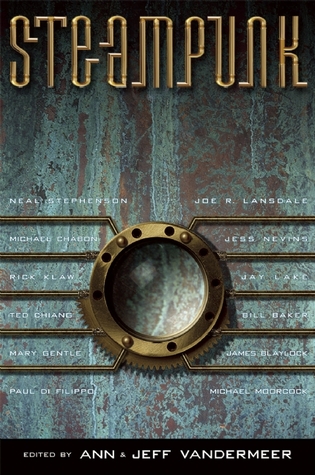
I have been writing a steampunk novel since July, and it is going quite well. I am roughly half way through the first draft, and doing my world building as I write. I am also researching what it means to be steampunk.

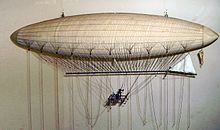
My justification for writing in an unknown genre is that it really isn’t all that unknown. It is a first cousin to science fiction, to fantasy, to horror, to the novels of Verne, to alternate history when limited to the near-Victorian, to Edisonade (a new name to me for a sub-genre I’ve been reading all my life — think Tom Swift), and to the old west with neo-mechanical devices (a genre that existed long before the Wild Wild West). I’ve been reading all of these, all my life.

The name steampunk was proposed by K. W. Jeter in a letter to Locus. Jetter, James P. Blaylock, and Tim Powers are three big names in early steampunk, but the genre has come a long way since then.

You would be surprised how much research into obscure subjects lies untapped in college libraries in the form of Ph.D. dissertations. I have learned to use the internet to seek them out, since so many of the things I am interested in are quite obscure.

Mike Perschon’s 2012 dissertation The Steampunk Aesthetic can be accessed at https://era.library.ualberta.ca/files/m039k6078#.WbA9kcdllBw. On that page, click Download the full-sized PDF if you want to follow me down that rabbit hole. If not, you could just try Perschon’s website http://steampunkscholar.blogspot.com.

No? Neither? I don’t blame you. Not many people have that much itch, so hang on and I will quote a few of Perschon’s conclusions.

Accordingly, this is not a study of Victorians or Victorianism, but rather a study of steampunk’s hodge-podge appropriation of elements from the Victorian period.

Non-speculative neo-Victorian writing is characterized by an adherence to realism that steampunk rarely cleaves to.

Steampunk (is) not . . . historical fiction per se, but . . .  speculative fiction— science fiction, fantasy, and horror, all mixed into one—that uses history as its playground, not classroom.

The most useful thing Perschon said, from my perspective, is that steampunk is not a genre, but an aesthetic. I had largely come to the same conclusion. The question for me has become not, “is it steampunk,” but rather, “does it taste like steampunk”.

I found that the more carefully I researched the Victorian past, both historically and technologically, the more I was attempting to make my novel fit a set of limitations. I was approaching it the same way I approached Cyan, where I first created a world with certain characteristics, then worked my story around it.

Steampunk doesn’t seem to work that way. In steampunk, an author has an idea of what his world looks like, then comes up with some quasi-magical dingus to make it work. Do you want your airship to be able to lift more and go faster? Invent a gas that never existed. In science fiction terms, it’s more Star Wars than Heinlein. There is nothing wrong with that, but I’m having a hard time wrapping my head around it.

In addition to academia. I am also half-way through a half-dozen recent steampunk novels. I would be further along, but I’ve been a bit busy writing my own. I’ll clue you in on those novels as I finish them.

Symphony 11

Near the tracks, where the dirt road left the tarmac, there was a cluster of tiny houses. Once they had been painted white, but they were repaired with raw wood, some new, some old, giving them a patchwork appearance of gray, tan, and dirty white. Some of the roofs were of corrugated iron, others were of tattered shingles. The few trees that sheltered the little houses from the August sun were unwatered and sparsely leafed. Over everything there was a patina of dust.

Neil slowed down and turned back east once more. Those little houses were typical of the kind of housing provided by farmers for their migrant help, but Gina had said that these had been bought up by a Modesto attorney and were being rented out. They had no formal name, but everyone called them the Johnson Road apartments because the farm had once been owned by the Johnson family.

As Neil cruised by one last time, three small brown children popped up out of the weeds in the road ditch and stared impassively at him as he passed. He waved, but got no response.

He had considered driving up the tarmac road past the small houses, but it had seemed too condescending; too much like slumming. Now he was glad that he had not.  In about a week some of those faces he had seen in the road ditch would be in his classroom, and he didn’t want to start his work here by offending anyone.

# # #

Back in his own apartment, Neil turned the air conditioner up, stripped to his shorts, and sat directly in front of the thin stream of cool air. His drapes were pulled against the afternoon sunlight, so that the room was a cool refuge against the heat. He turned on one small lamp and looked again at the textbooks. Despite the poverty of the barrio apartments, he had been rejuvenated by the sight of the three children. If they were his to teach, then he had to take a closer look at the tools he had been given to teach with.

They were awful. The grammar book was so confused and overdone that he could hardly read it. Every page was overprinted with colorful drawings and pictures. When it was new, that had probably caught some administrator’s eye. It was hard to imagine a working teacher being impressed.

In New York, Neil had learned how to lead a reader’s eye across a page by the manner in which the text was laid out. It could be done subtly by column spacing, choice of typefaces, and the judicious use of headings and simple drawings.

There was nothing subtle in this textbook. Everything was in glaring reds and blues, and the eye paths spiraled and folded back on themselves in total confusion. It was like listening to rock music written by an untalented garage band. It was visual noise.

The spelling workbook was merely dull. There were twenty words per lesson to be memorized, and four or five pages of insipid fill-in-the-blank exercises.

The reading textbook was the worst. It looked good; the pictures were varied, colorful, skillful, and the page layout did not distract the eye. But the stories were so dull and pointless that it would be a wonder if any child could bring himself to read them.

Neil read the first story and shook his head. The second left him feeling hopeless all over again. The third story put him to sleep. more Monday

412. Blogging Hints

I disclaimed technical skills in my last post, but I know a few things. I didn’t bail out of HTML because I didn’t understand it. I did understand it, but it was too time consuming.

There are a few features in WordPress which I rarely see bloggers taking advantage of. Insert/edit link is one of them. In fact, I just used it. Take a look at the words “my last post” in the preceding paragraph. If you click on them, it will take you to my last post.

I’ll show how it was done, but first a caution. The drawing at the top of this post was done quickly on a very old vector graphics program, with limitations. The arrow is added to draw your attention. The icon above the arrow, and the one to its right should be rotated 45 degrees, but it would explode if I tried that on my old program.

If you want to link a new post to an old one, first go to the old one and copy the permalink. You can identify it because it says permalink. Now come to the new post, highlight the words you want to identify your link, choose the Insert/edit link icon above the arrow and paste the permalink into the floater. Then be sure to hit the right angle back arrow afterward, or nothing will happen. All done.

You can also link to things you didn’t write. When I wrote about the worst story ever told (See 238. The Worst Story), I was referring to W. W. Jacobs’ The Monkey’s Paw. Since it is in public domain, you can find it in its entirety on the internet. That’s what I did when I wrote about it a year ago, and I linked to it. Things worked fine then, but now it gives a 403 error.

Nothing lasts forever on the internet, except misinformation.

==========

All this brings me to my second hint: If you read it a year ago, it isn’t true.

About five years ago, when I was just thinking about blogging someday, I bought and read a book about SEO (search engine optimization). SEO is the holy grail of websites. Do it right and everyone will be reading your posts. How do you do it right? Nobody knows because they keep changing the rules.

Every word of that SEO manual was gold when I bought it. Every word is false today.

Sloppy posting makes internet reliability even worse. If you are going to Octoberfest, beware. The date you got off the internet may be for Octoberfest of 2012.

Hint 2.1: Nobody ever takes down outdated internet data.

==========

Final hint: HTML is good to have in your back pocket.

Here we are reaching the limit of my knowledge. When I do this kind of thing, I have WordPress: the missing manual open to the appropriate page, and I don’t do it often. However, if you need the result, it is worth the work.

I use HTML to put virtual chapters in archived material. For example, Blondel of Arden, which just ran in Serial, is also available in Backfile. It was serialzed in 13 parts; when it went into archive, I kept those 13 parts as virtual chapters.

Go to the menu at the top of this page, to Backfile, follow the drop-down and click on Blondel of Arden. You will see a series of blue, underlined numbers from 1 through 13. If you click on one of them, it will jump you to an equivalent number in the body of the short story. That way, if you don’t read it all at once, you can go back later and jump to where you left off.

All it takes is some very short bits of code which I won’t try to teach you. But how do you get the code into the post or page in the first place?

Look at the drawing at the top of this post. In the upper right are the words Visual and Text. Visual is the default. The next time you write a post, follow up by clicking Text. You will see what you have written, translated into HTML. That’s where you go to slip in your little bits of code, but unless you are familiar with HTML, you need a good book or a good friend at your side the first time you try it.

Symphony 10

“They can’t expect me to teach anything to kids who don’t speak English. There has to be a better way.”

“There are better ways, for districts who can afford the specialized personnel,” Gina snapped. “This district can’t. When you’ve been around a while, you will see for yourself.”

Gina’s news was most unwelcome, and left Neil feeling sorry for himself again. For most of the summer, he had managed to keep the past out of mind by a complete change of scene. He had approached this new school with a grim determination not to let self-pity get the better of him, but that resolution hadn’t lasted out the first day.

“Look, I’m sorry,” Gina said, sensing his mood. “I didn’t mean to be critical, but things are different here than you are used to. I don’t know why Bill didn’t tell you what you were getting yourself into. It’s not like him.”

Neil wanted to change that subject. He said, “Don’t blame Bill. I walked into this with both eyes open. If I didn’t ask enough questions, it’s my fault, not his.”

“Still . . .”

“You were going to show me what books you use and what you do,” Neil suggested, and they spent some time doing that. Then Gina took her leave, waddling uncertainly out to her car.

When she had gone, he sat in stricken silence for half an hour, idly fingering the textbooks without really seeing them. First Alice Hamilton’s false accusation, and then a class full of students with needs he seemed unlikely to be able to meet. That would have been enough for depression. But the textbooks Gina had given him were awful.

Neil was in love with the English language, and with its expression in literature. That was what had taken him to New York, and it was the perversion of literature in the marketplace that had driven him back to college, and then into teaching. Now he would be teaching children who could not even read, and the materials he had been given were so trivial, so insipid, that his mind couldn’t deal with them.

All else he had born with at least an outward calm. But the descent from Shakespeare to Dick and Jane pushed him to the edge of despair.

Despair, however, was something Neil had no intention of giving in to.

# # #

Neil left a short time later, and drove eastward toward McHenry Avenue. Within a couple of miles, he approached the Western Pacific railroad tracks, and slowed down. According to Gina, most of the Chicanos who attended Kiernan School lived in a barrio-like cluster of houses and apartments on either side of the tracks. He rode slowly by, trying to gauge the depth of their poverty but it was impossible from the main road. He turned around and drove by a second time, more slowly.

On the east side of the tracks was a small, run-down apartment complex. It was called the Oaks; or miscalled, because the two huge trees shading it were sycamores. Two scruffy, unbarbered palms flanked a broken concrete fountain at the east entrance. The grass around the buildings was cut and green, but the dusty field beyond was full of abandoned cars. A few children were clustered around a swing set.

On the other side of the railroad, a pot-holed tarmac road led north parallel to the tracks. Two hundred yards from Kiernan, a dirt road led to a huge and ancient barn, a cluster of ragged trees and the burned out shell of what had been a two story farm house. Near the tracks, where the dirt road left the tarmac, there was a cluster of tiny houses. more tomorrow

Symphony 9

“Why,” Neil asked, “do they use one of the air conditioned rooms for a lounge instead of a classroom. That doesn’t make sense. In fact, it seems downright cruel.”

Gina pointed to the photocopy machine purring in the corner. “There’s your reason,” she said. “In hot weather kids grumble, complain, and get cranky. So do teachers. But xerox machines grumble, complain, get cranky — and quit. And it takes a lot of money to get them fixed.

“Now tell me, how did you teach when you were teaching high school kids?”

“We read together sometimes, sometimes they read alone, we discussed what they read, and they wrote papers on it.”

“Did you teach grammar?”

“Some. I taught it when I taught freshmen, but for my last three years I didn’t have to teach as much. It was pretty fully covered in the first two years of our high school.”

“How many of your students couldn’t read? And how many of them weren’t native English speakers?”

It seemed an odd question. Neil said, “All of my students could read, of course, and if any of them weren’t native speakers, I had no way of knowing it. Why?”

Gina looked puzzled. She said, “Let me ask you one more question. What was the socio-economic base of your school?”

“It was in a pretty rich district. I would say that it ranged from middle class to the country club set.”

Gina sighed, then grinned sympathetically. “Neil,” she said, “welcome to the real world. This is a small rural district. When the new mall went in ten years ago, we expected to grow, but it hasn’t happened. We are right next to the fastest growing part of town, but not quite in it, so we are still too small to hire more than a bare minimum staff. Fortunately, they are mostly good people who try hard, but we don’t have much to work with. The fact that four out of seven classrooms don’t have air conditioning tells you how tight our budget is.

“And that isn’t all. Over half of our students are Hispanic, and half of them come and go on an irregular basis. We have kids in the eighth grade who haven’t spent three complete years in school.  Some of them can barely speak English, let alone read or write it. They come in for a couple of months in the fall, go back to Mexico for the winter, and come back in the spring.

“Of the ones who stay, some of them are excellent students. Half our eighth grade valedictorians are Hispanic. But the others will break your heart. Just when one of them seems to be making progress, away he goes and you don’t see him again for six months — or never.”

This was news Neil could have done without. “What do you do with students who don’t speak English?” he asked.

“You do the best you can. There is a Spanish speaking aide who will come into your class two hours a day. Her name is Delores, and you will find that you can’t get along without her. But she has to cover all three grades, so most of the time you’ll be on your own.”

“But why are they passed on if they don’t speak English? They surely can’t learn anything that way.”

“Would you want to teach a six foot tall sixteen year old in first grade?”

“No, but they can’t expect me to teach anything to kids who don’t speak English,” Neil said. “That’s ridiculous. I don’t speak Spanish. There has to be a better way.” more tomorrow

411. WordCamp Sacramento

Saturday, September 16th, I attended WordCamp, Sacramento, and it was a disaster. I left when there were still hours remaining in the first day of a two day conference.

Don’t get me wrong. I was impressed; the conference was well organized and the presenters were knowledgable. The problem was in the advertising. There should have been a disclaimer to warn people like me to stay away. I’ll explain further, below.

About three years ago I decided to blog and set about learning how. It took a while and there were lots of wrong turns along the way. I began by studying HTML and CSS. (see 408. Behind the Curtain) I’m glad I did. That study gave me some deep background knowledge, and some specific skills as well.

Do you check out the comments when you read someone’s blog? I always do. There is a lot of back patting but also some interesting insights. J. M. Williams, in a comment on the post above, said that HTML served him better than algebra. That sounds entirely reasonable. I don’t use it often, but I couldn’t do without it when I need it.

Well into learning HTML and CSS, i stumbled on WordPress and found a way of blogging without coding. There are others who provide the same kind of service. Blogster comes to mind. I have seen blogs done on Blogster that looked great. I’ve never used it, so I don’t know how seamless the user experience is. That’s all I can say about Blogster.

On the other hand, I have worked with WordPress for about two and a half years. It comes in two flavors, WordPress.org and WordPress.com. From the user’s viewpoint, they are quite different.

WordPress.org is the master organization, largely staffed by volunteers, which provides the basic code that underpins everything else. They do not provide themes, plugins, hosting service, and so forth, but they are quite willing to help you find those things for yourself. They are the people who put on WordCamp and more power to them, even though it didn’t work for me.

WordPress.com is a one stop shop. The provide WordPress software (via the dot org people), hosting, themes, a plugin master pack, and they will sell you a URL or let you use one of theirs for free.

Big hint: if you plan to blog, buy your URL as soon as possible, before someone else gets it. The name you call your blog is much less important. If you google sydlogsdon.com, you’ll get me every time. If you google A Writing Life, you’ll get me and a hundred other bloggers who call their sites the same thing.

If all you want to do it write a blog, go WordPress.com. If you love the tech stuff, or if you have sophisticated tastes in aesthetics, or if you plan to run a business, dot org gives you much more flexibility. You pay for that by working harder at the tech side of your craft

WordCamp Sacramento was by and for the dot org side of WordPress. Three-quarters of what they presented had no application in my dot com world. The other quarter, I already knew.

Bottom line: If you are a dot organism there are WordCamps all over and you will probably find them useful. Most of the readers of my blog are dot commies, and don’t need what WordCamp provides. more Wednesday