Tag Archives: fantasy fiction

399. I Changed My Mind

No, I did not change my mind about cutting back on posts in the A Writing Life blog. Since I made that decision, I have outlined most of, and written the first six chapters, rough draft only, of a new novel. The title is still in limbo so I won’t say more until I can name it properly. The decision to cut back was a good one.

I am actually making a change in Serial. I had planned to run a guest novel. I had written two posts explaining why and giving a bio of the author, Harold Goodwin. I had also reduced the first several chapters of that novel to serial posts, enough to carry through mid-September, and positioned them in the queue, ready to publish.

So, why? First, why a guest novel — then why did I change my mind?

Since 2015, Serial has been a place for me to present short stories, a novella, presentations from Westercon, long and short excerpts from novels, and complete novels.

Christmas week of 2015 I presented five classic poems that have inspired me. Otherwise, everything in Serial has been something I have written.

The cupboard isn’t empty; four novels remain. Valley of the Menhir, Scourge of Heaven, and Who Once Were Kin, are complete fantasy novels. They deserve to be held back to be presented in a more traditional way. Symphony in a Minor Key is a complete novel about teaching. I’m quite proud of it, but it didn’t seem right for this blog, which has been largely aimed at science fiction readers.

I argued with myself through the month of June. Should I run a classic SF novel that is unknown to today’s audience, or should I run a novel of my own about teaching. It was a big decision, since once committed, it would be six months before I could change course. I opted for the SF novel.

One the decision was made, I placed the first 20 posts in the Serial queue. Then I went on with my life, still mulling over the decision. Spirit Deer began appearing, and you all kept reading. I found no reduction in reader’s responses. Hmmm. You had stayed with me through Raven’s Run and through Voices in the Walls as well. Hmmm, again.

I started this blog to reach two audiences. First, I was looking for lovers of science fiction and fantasy who might want to read my novels, if I could make them aware of them. Second, I expected the blog to be read by new and would-be writers.

I found both but, clearly, in reverse order. Ok, I hear you. I never was comfortable with a guest novel, anyway.

New plan — I will post Symphony in a Minor Key. But first, I need to buy time. It takes many hours to turn a novel into a serial (see 245. Serializing), and my guest novel was due to start today.

No problem. I have several pieces that were published in Serial before anyone was reading this blog. I’ll recycle one or two — no one now reading has seen them, anyway — while I am preparing the next novel.

And so, PRESENTING—

Blondel of Arden, beginning in Serial today.

Blondel 1

The Blondel of legend was the minstrel who found Richard the Lionhearted when he was imprisoned, and helped to effect his escape. I became aware of him through Gore Vidal’s novel A Search for the King.

My Blondel is a different character, wandering through a different medieval land. I like him, and I think you will too, but don’t expect him to save the world. His ambitions and magics are small, and he is more likely to hang out with peasants and innkeepers than with knights. Come to think of it, that is also true of Tidac and Cinnabar, who came later. Ah well, what do you expect when the son of an Oklahoma farmer sits down at the typewriter.

Blondel of Arden

Blondel was a man of many talents, not the least of which was survival. He could sing a ballad, juggle knives in a sideshow or books in a clerk’s office. He had been a traveling bard at times, but only when no other opportunity presented itself. Bards were, and still are in some rough places, considered of inferior stock. Though they regale, their status remains insecure and the songs they sing must fit into an acceptable mold.

Now Blondel was a man in love with the sound of his own voice, but to play the bard was to play the fool and he had no stomach for it. He had his pride, and he exercised it whenever circumstances permitted.

So Blondel, who was odd in many other ways as well, would pass up easy and lucrative employment at a Lord‘s house one night, only to spend half the next singing himself hoarse in a peasant‘s hut for a meal and a tick ridden tic to sleep on. He had done so only a week past, in fact, which accounted for a certain gruffness of speech and a cough that was just now passing.

Blondel had done many things in his time, but of them all, soldiering appealed to him least. He had a positive aversion to the feel of a blade piercing flesh; an aversion that was exceeded only by the unhappy possibility that the flesh might be his own. He carried a sword, which he had used on occasion, but he preferred flight to confrontation and tried to restrict its use to cutting wood for his night fires.

Blondel was a far ranging man. He never did say where he was born, but when asked his full title he invariably replied, “Blondel of Arden“. This phrase verged on usurpation, but it was merely and literally true. From Channel to Northpeak, Blondel had wandered the face of his native land for as long as anyone could remember. Oldsters remembered Blondel from their youths and said that he looked no different than he had then. This patent absurdity lent a certain mystical cast to Blondel‘s basically simple life, and he did nothing to discourage it. In point of fact, it was Blondel‘s father who had walked these paths thirty years earlier; they shared name, appearance, and an inclination to wander. In the north country, where they had both been these last two decades, everyone knew his secret; but here in the south they saw Blondel, remembered his father, and awe followed him like a shy, stray dog. more tomorrow

397. University of Steampunk

Here I am, quoting myself, from Golden Age of Science Fiction:

Recently I have been reading Neil and Neal, Gaiman and Stephenson, but I know I must have missed a feast of others. I have probably missed more than one feast. Is there a Golden Age of Steampunk? Probably, but I don’t know the sub-genre well enough to talk about it.

Since I wrote that, I have interacted with a bunch of steampunk authors, done a lot of research, and concluded that, “Yes, I was right. There is a golden age of steampunk and it is now about a century and a half deep.”

I love steampunk. i already knew that. But now I have a better handle on what steampunk is, and I am continuing to pursue my education. Let’s call it University of Steampunk (self-inflicted) and I am inviting you to come along. And don’t hesitate to use reply to tell me when you think I’m wrong.

Not only am I immersing myself in steampunk research, I am also writing my first steampunk novel. Since Westercon, it has tumbled out onto the screen. I have it fully outlined, with initial drafts of the introduction and first two chapters.

The rest of this post is drawn from the draft introduction.

#           #            #

This novel, as yet unnamed, working title Durbar, is steampunk, pure and simple, and designed to be so. It differs from other steampunk novels only in that it emphasizes strong scientific and historical excuses for the prevalence of steam power and pseudo-Victorian culture.

My literary introduction to that age on our own planet did not come from Austen, the Brontes and their ilk. My literary Victorian/Edwardians were Holmes and Watson, Hannay and all his friends, and Davies and Carruthers; in other words, the stories of Arthur Conan Doyle, John Buchan, and Erskine Childers’ Riddle of the Sands.

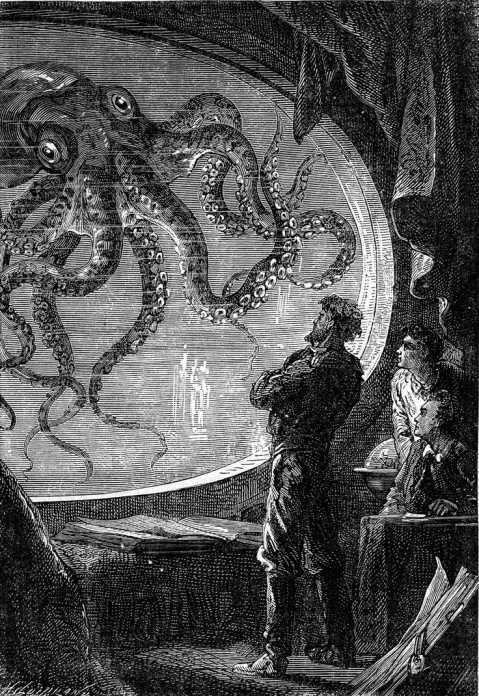
I can tell you the exact hour the new novel was born. I had gone looking for understanding of the steampunk phenomenon. I was aware of the movement; it seemed to always be in the periphery of my vision, but it wouldn’t come clear. Certainly Jules Verne, especially Twenty Thousand League Under the Sea, was steampunk before steampunk. So was the Wild Wild West, and both were staples of my childhood. I had stumbled onto Kenneth Oppel’s Airborn while teaching middle school. It was a fine novel which seemed on the verge of steampunk without completely fitting the mold.

Add a few inspiring steampunk short stories off the internet and childhood memories of reading my grandfather’s copy of Tom Swift and his Electric Rifle — also steampunk before steampunk — and I was ready to write something of my own. Still, it is foolish to write in somebody else’s genre without understanding the boundaries.

I visited a series to panels on steampunk while I was at Westercon 70. I found an inviting openness and nobody seemed interested in defending boundaries. I also came to appreciate the culture of steampunk (their term) and the joys of cosplay. Appreciate, not join in; I’m the guy in the corner, not the dressed up dude on the stage.

The panel which saw the birth of my new novel was called The Science of Steampunk: What Makes the Gears Go Round? As it turned out, there are steampunk authors who are perfectly happy to write their novels without caring what makes the gears go round, and there are also hard-science types who just can’t live that way. This panel had about an equal mix of those two.

They all had fun with the question, but the only scientific underpinning for some kinds of steampunk is magic. I enjoyed the interchange, and I want to thank Ashley Carlson, Bruce Davis, Steve Howe (not the guitarist), Susan Lazear and David Lee Summers — and Ryan Dalton who moderated — for the education.

As I was listening to the science types trying to find an equation for magic, it occurred to me that is would be great fun to write a novel which did tie up all the scientific and historical underpinnings of a steampunk world, neatly and realistically.

That was when two bombs went off in my head. I’m not ready to go public with what they were, but In the course of an hour, the new novel had gone from nonexistent to a full blown embryo. My thanks to the panel, but don’t expect any royalties.

385. Westercon Report

I flew down to Tempe (part of greater Phoenix) to attend Westercon 70. It was a business trip — right? Like an amusement park attendant going to Disneyland is a business trip. That is, I had to go, but I had great fun.

There were panels and workshop on many subjects. I concentrated on the Books and Authors section, where there were enough things happening to keep me occupied three times over. I missed a lot of good stuff because I was presenting, or because something I couldn’t miss kept me away from something I didn’t want to miss. There were also panels on Art, Diversity, Fandom, Science, Steampunk and more, most of which I didn’t have time to attend.

I finally feel like I have a handle on what Steampunk is all about. I was born on the Nautilus, grew up with the Wild Wild West, and flipped out about Brisco. I have read a few Steampunk novels, and some short stories, and liked them all, but I never got what these people with goggles and gears glued to their clothing were all about. After two panels about Steampunk as literature, by Steampunk writers, and a panel by costumed members of Steampunk culture, I get it. And I like it — although you’ll never see me in costume. I also got the kernel of a new novel. That one is your fault, Steve Howe (not the guitarist) and Bruce Davis. Thank you Ashley Carlson, Suzanne Lazear and David Lee Summers for the literary education on Steampunk, and thank you Dirk Folmer, Katherine Stewart, and Madame Askew for the cultural education.

Those are just a few of the authors I met. They were mostly young people. Understand that, at my age, young is defined as under forty, and there weren’t many under thirty because it takes some time to have enough books published to get invited.

I won’t name drop at this time, except for Amy Nichols whose reading from Now That You’re Here (or was it While You Were Gone — I missed something at the introduction) was calm, clean, and unaffected, and sounded just like a teenager. The character in the book, that is; not Amy. I will testify that science fiction and fantasy are in good hands. I have at least a dozen new books on my must-read list, and a lot more on my want-to-read list. I expect to provide some reviews here and on Goodreads and Amazon. After all, that is how readers keep their favorites in sales, so they will be able to write more books.

I learned a hundred other technical tidbits on writing and publishing, but I won’t share them until I’ve tried them.

Worldcon is in my back yard next year. I can’t wait.

Welcome to Summer

Hi, just a personal note, here; not one of my usual mini-essays.

I went to Tempe, Arizona to Westercon over the Fourth of July weekend. It was from 109 to 111 or thereabouts, but I felt no pain because the Mission Palms was well air conditioned. I have a report on that scheduled for the 11th.

I came home to find things weren’t much cooler. Yesterday was 109 here in the foothills of the Sierras, so my wife and I cut out for the coast and spent a few hours walking along the beach at Carmel. Today I’m home, hiding under the air conditioner, working out the details of a new novel that was sparked at Westercon.

I am also watering our non-native trees. When I just went out to change the sprinkler, I saw two mother wild turkeys with twenty-one gawky, half-grown chicks in our yard. They were panting, and looking miserable.

They and I are both asking — is it fall yet?

379. Westercon

You know that I write these posts in advance, and it’s a good thing because today I am leaving for Tempe, Arizona and Westercon 70.

Westercon is a western US regional science fiction and fantasy convention. It has been around since 1948, when the Los Angeles Science Fantasy Society organized it for those who could not travel to the east coast where most Worldcons were held at that time.

This will be my third Westercon. I attended Westercon 33 in Los Angeles the year Zelazny was the guest of honor. I stepped out for air during the afternoon and a lovely young woman told me I looked lonely (I wasn’t), told me she was a wannabe actress – actually she said “I’m just an LA nobody” – and told me the story of her life. I know what you’re thinking. There is no romantic ending, no money changed hands, and she didn’t steal my wallet. I think she was just exactly what she said she was.

Later that night I was cornered at a party by a guy who wanted to tell me about his screenplay. He wouldn’t take the hint that I wasn’t interested, or that I was in no position to further his career. The screenplay turned out to be for a space opera about a ray gun shooting femme fatale. He whipped out a copy of Playboy and showed me a beautiful naked black girl on the centerfold. He said she was the one he had in mind to play the part.

I don’t remember his name (a high functioning forgettery is a very useful tool) but he is probably living in a big house in Hollywood today. The plot was just dumb enough to sell.

I don’t think most Westercons are that weird, costumes notwithstanding. I think it was just LA.

The next year Westercon 34 was in Sacramento. It was a bit more sedate and I gave the paper “How to Build a Culture”. There was a good turnout; as best I can remember a couple of hundred attendees in a small auditorium. I had prepared a piece of mat board with a hand-drawn circle, divided into four pie-slices with the words environment, technology, world view, and biological structure hand written in the quadrants. It was makeshift because my first computer was still five years in the future.

When I said, “Which brings me to my visual aid”, I stood it up and, to cover it’s crudity, added “We have spared no expense!”

The joke got the small chuckle it deserved, but the sound died instantly. A young man in the middle of the auditorium was saying, in a conversational voice, “He is showing a chart. It’s circular, divided into quadrants . . .” We all realized that he was describing the chart to a blind companion, and for the length of time it took him to give his description, you could have heard a feather drop in the room. The respectful silence from crowd made me proud to be a part of the moment.

Last year I wanted to go to Westercon 69 in Portland. I hadn’t gone during all the years of my dry spell; it just didn’t seem like it would be fun under the circumstances. Then Cyan’s release was delayed again, so I skipped Portland. Now that Cyan is out, I am off to Tempe.

It will be good to be back.