Tag Archives: literature

494. We Can Have Archaic and Eat it Too

Marquart rode into my life on horseback. The day after my epiphany, I had a couple of hours off. I was in the Navy at that time, working as a dental technician in an oral surgery, and we had back-to-back cancellations. I wasn’t a writer yet, just an over-committed reader, but I had written the first chapters of a dozen novels. That was usually as far as I got before the impulse ran out.

I took that two hours to write Marquart and his companion’s entry into the Valley of the Menhir. You can see what it eventually became over in Serial today, but it took a long time to reach that level of sophistication.

When Marquart first rode into the valley, forty-six years ago, he was riding a horse. It was all very medieval because I hadn’t done any world building. All of the religious aspects aspects of the story, enreithment, the relation of souls to bodies, and both to ai — even the existence of ai — were nowhere in my mind. It was just a bunch of soldiers in armor riding horses into a valley populated by deer and dotted with oaks. The only fantasy element was a werewolf. I didn’t even know then that shapeshifters were not native to the world of the menhir, having been brought in through the Weirwood menhir from the world of Lorric by the Shambler. I didn’t even know there was a Shambler, nor any of the other gods that you met during the last two weeks.

After two hours I had a short chapter, and the next customer knocked on the door, ready to have his wisdom teeth extracted. I put the chapter in a drawer. I wasn’t a writer then, and had no intention of becoming one.

Three years later, I decided to give writing a try and got hooked. Two years after that I pulled out that chapter, dusted it off, and started world building.

All this was about the time of the fantasy revival led by Ballantine, and there was no lack of books on how to create fantasy worlds. Purists were arguing that a simply medieval world hardly qualified as fantasy. I could see their point. Although it never kept me from enjoying fantasies that did not rise to that standard, I decided that horses just weren’t going to work for me.

During those Navy years I had lived near the San Diego Zoo Safari Park. On one trip there I had seen okapi, had fallen in love with them, and now added them to the book. That lasted about a week before I realized that I needed a true fantasy creature, not just a real one most people had never heard of, so I created kakais in okapi’s much jazzed-up image. Their heavily sloped backs — much sharper than okapis —  gave me the need and opportunity to design strange saddles which would require unusual practices for troops in the field. They also gave me reason to design a harsh culture for the riders of the plains, the Dzikakai (literally, men of the kakai) who were going to be the perennial enemies of the people of the Inner Kingdom.

Okapi.

Eventually, I populated the world of the menhir with a mix of “normal” and created critters. Besides kakais, I brought in tichan as bovine substitutes, added krytes (described and used for plot purposes)  and jaungifowl to my list of birds, made my bears red, and kept ordinary squirrels and deer.

Plot building, world building, and language building all took place as I wrote successive drafts. I don’t recommend the technique. Not only did it take me decades to finish the project, but I ended up with at least a hundred thousand words of text that had to be cut out as the project grew out of hand. Maybe a few chunks of that will end up in Serial late this year, but most of it will never be read by anyone but me.

Still, I doubt if this particular fantasy could have been written any other way, so I guess I shouldn’t complain. At least that’s what I tell myself.

During all this, I went to Westercon 33 in Los Angeles in 1980. I sat in the audience of a lugubrious discussion of what the magic horses in Lord of the Rings ate, and whether it was Tolkien’s responsibility to tell us. (My answer, unspoken as I gritted my teeth, was, “No, you damned fools, it wasn’t!”)

This was followed by a spirited but deeply nerdy debate on the use of language in fantasy. The language of the Inner Kingdom in VOTM was just beginning to come together for me, so I perked up my ears. The idea of archaic language was floated, and someone said that it should only be used as a spice in regular English. The concept spice morphed into general food terms, and the metaphor had become almost embarrassingly labored when one member of the audience stood up and said:

“Are you trying to tell us that we can have archaic and eat it too?”

I wish I had said that. Maybe sometimes we do try too hard.

493. Lost Classics

I have been cleaning out a house where I used to live. It’s a little like archaeology. This was the house where I wrote some of my early novels, and it is the place I have been keeping the older and less often accessed half of my books. Every place I go in the house, a good memory looks back, and every box of books I open brings a forgotten smile.

I found an old A Common Reader catalog. I wish I had kept all the ones I received in those days, but who knew that A Common Reader would go out of business and make them irreplaceable. I’ll tell you about it in a future post.

One of the odd books I ordered from that odd catalog also turned up, Lost Classics by Michael Ondaatje, Michael Redhill, Esta Spalding, and Linda Spalding. You only need the first name to find it on Amazon, but fair is fair. I quote from the introduction:

A book that we love haunts us forever . . . it is in the act of reading, for many of us, that forged out first link to the world. And so, lost books . . . gnaw at us.

I know the feeling. Although, to be honest, I try not to lose my favorites, which is why it takes two houses to hold my library.

Lost Classics comes from Brick: a literary journal. In 1998, the editors ran a Lost Classics issue, and thereafter they were inundated with additional material from their readers. This was collated into the volume on the desk in front of me. You can still get it from Amazon, even though it came out in 2000.

Seventy-four writers provide short essays on somewhat more than that many lost books. They range from slightly forgotten to seriously obscure, but they all fascinate. Searching the index, I find that when I first read Lost Classics nearly two decades ago, I had already read two, The Highwayman by Phillip Noyes (one of only two which really weren’t lost) and N by E by Rockwell Kent. A couple were on my to-read list, and I made a point of finding and purchasing Islandia by Austin Tappan Wright. On full disclosure, it was too dense to penetrate.

That leaves nearly eighty unaccounted for, and that is the point. These are books you will probably never see, but the joy here is reading what they meant to those who did read them.

These are strange people, but I think they will be familiar to you. I will give you just one example:

I cannot find the book and the two or three people to whom I might have lent it have no memory of it, have never heard of it. But I have a clear memory of a Saturday in the summer of 1990, during the year when I tried to live one month in Dublin followed by one month in Barcelona and managed not to live much at all . . . the book hit me hard. I started reading . . . and I am still recovering, in certain ways, from what I learned.

Which reader was that? Which book? I won’t tell you. You will have to find a copy and seek it out for yourself. If you like old things, or odd things, or obscure things, you owe it to yourself.

492. Runeboards

If you are wondering what a runeboard is, look at the top of all the menhir posts. It is a stars-within-stars tool of divination used all over the world of the menhir. Dymal and Taipai were using one in the opening last Wednesday’s Serial and Hea Santala herself has one incised on a truncated stalagmite in her island fortress Whitethorn.

Normal folks, like Taipai, have runeboards incised on wood with counters of brass. There are seventy-one spaces on the runeboard, and seventy-one counters. Each counter bears a rune, but I’m no Tolkien. I didn’t design seventy-one unique runes. That is left for your imagination.

Each rune has several different possible meanings, so simply spilling counters on wood doesn’t mean much. There is a role for intuition in reading which meaning is appropriate to the moment. Also, in a typical spilling of counters about half of the counters just bounce off and lie mute around the board. The ai (personal power) of the caster is involved in a proper scrying.

Really exceptional runecasters, like Lyré, conjure up three dimensional runeboards out of their own personal ai, but normal people, including the rest of the gods, stick to wood and brass.

The inverted star in the center of the board is called the Heartstar. The pentagon that forms its center is called the Heart of the Heartstar. In a true reading, the rune carrying the personal symbol of the caster, or the subject of the casting, falls on the Heart of the Heartstar. If it does not, the scrying is suspect.

By the way, there is no diabolical reason for the inversion. It just lines up better that way with the small stars on either side. Aesthetics rule, in this case.

On very rare occasions, when the caster is a dziai or dziain (man or woman of power) a full mandala emerges. This means that all the counters fall on the board, one per space, with the kladak (personal symbol) in the Heart of the Heartstar. From such a casting, much can be learned about its subject, so achieving a full mandala gives the possessor power over the subject of the mandala. You will see that occur late in Banner of the Hawk.

Incidentally, if you want to pronounce dziai properly, the d is nearly silent, just a whisper of air over the tip of the tongue, as if you were saying “tisk“. Pronounced properly, dziai sounds almost like tziai. But not exactly. A native speaker would hear the difference.

I suppose there are writers who work all this kind of thing out in advance. I further suppose that those people are good at video games. Not me. I played video games with my nephew one time and found it supremely boring. In my case, I discovered (rather than invented) the rules of the runeboard as I wrote the first draft of the menhir books, and refined them while I refined the rest of the work.

That’s also how the language of the Inner Kingdom crept in, one word at a time. Grammar came later.

Also, Lyré is pronounced lee-ray.

Serial Novels

Continued from earlier this week, when I discussed the Serial posts that were also writing how-tos.

I’ve been writing a long time, with some publishing success, and long years of drought. I’m not going to say, “But the things that didn’t get published are still good!” If you have been reading Serial, you already know that.

Here is the full list of my novels, not counting fragments.

Contemporary novels: Spirit Deer, Symphony in a Minor Key, and Raven’s Run.

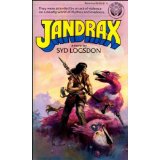
Science fiction: Jandrax, published 1979,  A Fond Farewell to Dying, published 1981,  (and the novella To Go Not Gently which was extracted from it in 1978) and Cyan which is presently available. 

Fantasy: Valley of the Menhir, Scourge of Heaven, and Who Once Were Kin.

Steampunk: The Cost of Empire and Like Clockwork.

The Cost of Empire is freshly finished and looking for a publisher. Like Clockwork is in progress as we speak, and a little more than half done. You won’t be seeing either of them in Serial, but I’ll tell you when to start looking at your local book seller.

Valley of the Menhir and Scourge of Heaven are a single story, long enough for two novels, with a natural break in the middle. You won’t be seeing them here. 

Weird Season

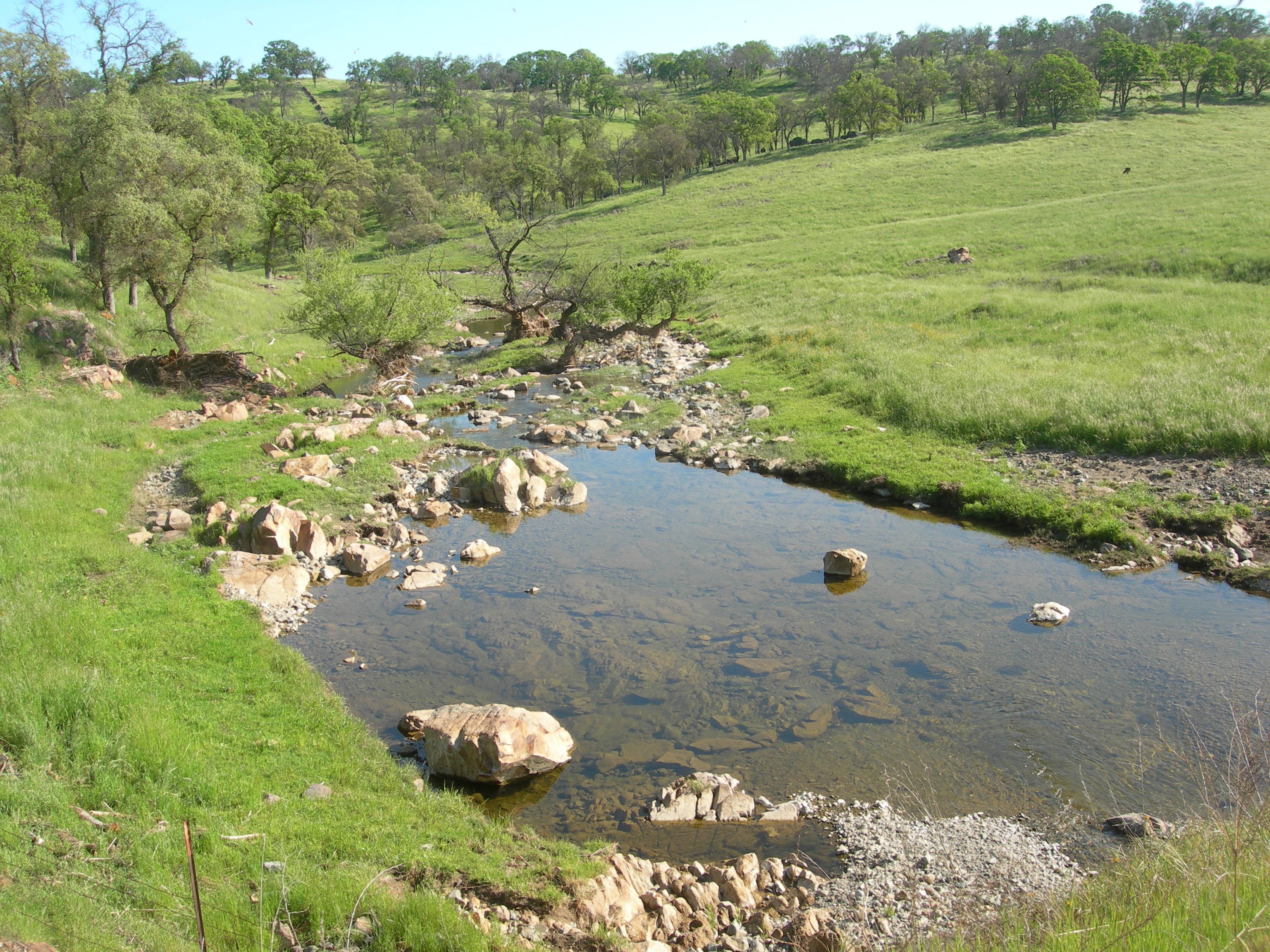
I grew up on a farm, spent my adult life in a city, and returned to a few acres in the Sierra foothills when I retired. That means that the passing of the seasons means more to me than it would to someone living in a city.

This year was strange. We had lots of rain early in the rainy season, none for a critical month, and then lots more at the end. It meant that there was close to normal rainfall,  but the timing was all off.

Usually our rainy season gives us a sequence of wildflowers, but this year they all came at once, giving us a brief look at a beautiful world. I thought I would show you a bit of it.

Within a month, the rattlesnakes will be carrying canteens again.

Serial Education

Continued from last week, when I started to talk about what has already appeared in Serial.

Starting January 20, 2016, I presented a long fragment of the unfinished novel Voices in the Walls. I won’t give details, since you can read for yourself, but it was a teaching event. I interlaced the novel fragment with a chance to look over my shoulder as I worked. That turned it into a how-to for new writers.

#           #           #

Here is a bit of unavoidable nerdishness. I should have transferred Voices to Backfile. I didn’t. Time is short and work is long, and I never found the time to get it done.

You can still read old multiple posts, but it can be a major PITA (pain in  . . . ) because they are presented in archives last-first, and you want to read them first-first. Worse still, archives does not distinguish between AWL posts and Serial posts, so you have to read every alternate one.

It isn’t really hard if you know the secret. Here’s how it is done. At the bottom of each post are right and left arrows to the next/previous post. If you start with the first post of VITW, read it, then click the right arrow, it will take you to the next post. Unfortunately, in my world that will be the same-day post over in AWL. Slide down through that post and click the right arrow to go to the next day’s post of Serial. And so forth.

It goes quickly after a few clicks to get into rhythm. Try it. VITW is worth your time.

#           #           #

The entire novel Jandrax followed. It was and is available in used bookstores both locally and on Amazon, so it was not a lost work, but I included it with annotations. If you just want to read Jandrax, buy a used copy. Clicking through 92 posts isn’t worth 95 cents. But if you want to read the annotations in which I discuss why I did what I did, and confess to my screw-ups, it’s all there for you to enjoy.

more tomorrow

Symphony 136

John Teixeira stared at his son, slowly shaking his head.  He said, “Son, I am proud of you. Why haven’t you been doing this kind of work all along?”

“Now,” Neil interjected quickly, “the favor you offered. I’m taking you at your word, and asking one. I am asking you, ‘Don’t spoil the moment.'”

John reached out for his son’s hands and said, “Of course. I am just surprised — and pleased,” he quickly added.

“Do you remember the last conversation we had, about how Oscar wants to be proud to be Chicano. Today he was, and if you were proud of him as a Chicano, I don’t think he’ll ask much more.”

John Teixeira swallowed hard and smiled to cover his feelings. He said, “I am proud of my son as anything he really wants to be, as long as he does his best at it.”

Oscar Teixeira looked eleven years old and eleven feet tall.

# # #

Carmen came to relieve Janice at the wheelchair, and managed to push him across the playground with one hand on the handle and one hand holding his hand. The children were milling around with their parents or wandering off toward the buses. Most of them had already come by to say hello to Neil, but a few more drifted in to welcome him back. There was much hand squeezing and hugging. It made him uncomfortable; it always did. But at the same time, it thrilled him.

Then he saw Lisa Cobb. She was standing with two strangers, waiting by Carmen’s car. As he rolled up, Lisa stepped forward, very proper and terribly embarrassed. She put out her hand for an adult hand shake, and Neil used it as a lever to pull her in for the hug she really needed. She backed away, biting her lip, and simply said, “Thank you.” Then she rushed to the woman and hid her face in her skirts.

The woman enfolded her in the kind of totally safe embrace that Neil could never provide. She said over Lisa’s head, “I’m Mrs. Bowman. The county uses me as a short term foster mother, so I see it all. Lisa told me a lot about what happened. She is one lucky little girl that it was stopped before things went any further. And she is lucky to have people who care for her like you two.”

“We are lucky to have kids like Lisa to care for,” Neil said.

“Coming here today was completely her idea. She didn’t know if she could go through with it. She’s still embarrassed by the whole thing. I told her the sooner she started living a normal life, the better. Then when she saw you, she had to talk to you even though that embarrassed her worse than anything.”

Lisa slipped under Mrs. Bowman’s arm and stared at Neil from its shelter. He said, “How do you feel, Hon?”

“Okay. I’m okay now.”

“How is your mother?”

“She’s getting better. They let me see her yesterday.”

She dropped her head and said, “I’m sorry about your jaw and all.”

Neil said, “Look.” He drew back his lips and showed her the wax covered wires. “I never had braces before.”

She giggled and then slipped around behind Mrs. Bowman, looking very young indeed.

# # #

On the way back to his apartment, Carmen said, “You just added another member to you fan club.”

“Jealous?”

“You just hurry up and get well, and I’ll show you how jealous.”

finis

Symphony 135

As they crossed the playground, the Cinco de Mayo celebration was just getting under way. Neil said, “I want to sit next to John Teixeira.”

“I don’t see him.”

“Keep looking. I sent word to his wife to have him here no matter what.”

Janice looked curiously at him, but their relationship was newly repaired and fragile. She did not presume upon it to ask questions. Instead, she searched the grassy area where folding chairs had been set up until she saw John and Sandy Teixeira.

She parked him beside them and pulled up a chair on the other side, still puzzled.

John Teixeira met Neil’s eyes while they measured each other anew. It was almost as if they were meeting for the first time. Neil put out his hand and John shook it without hesitation. He said, “I heard what you did for the Cobb girl. If there is anything I can ever do for you, just ask.”

“There may be. Just watch the show, and then we’ll talk about it.”

In the center of the open space in front of the folding chairs, the children had constructed a cardboard fort. Carmen and Gina had arranged for a PA system with two mikes. Stephanie Hagstrom stood by one; Rosa Alvarez stood by the other. They read the narration, first Stephanie in English, then Rosa in Spanish.

The year was 1862. Using independent Mexico’s debts to European powers as an excuse, France had decided to invade Mexico. The French General Laurences arrived:

“So this is Vera Cruz,” Stephanie read. “What a beautiful country Mexico is!”

“Asi es Veracruz,” Rosa echoed. “Que campo tan hermoso tiene Mexico!”

The French army arrived in construction paper hats, carrying broomstick rifles, and attacked the fort at Puebla. Regular Mexican troops and Zacapoaztla Indians rose up from where they had been hidden behind the walls and defended it. Three times the French attacked. Three times they were repulsed. When the day — Cinco de Mayo, the fifth of May — was over, the French invasion had failed. Never again would a European power invade the Americas.

When the applause had died down, Neil said, “What did you think?”

“It was very good,” John Teixeira admitted. “You must have put in a lot of work on it.”

“Not me. I was in the hospital.”

“Mrs. Wyatt then.”

“Not according to the reports I got. She said she just sat back and let the person in charge do his job.”

“I don’t understand.”

“You will. Here comes the person who wrote, produced, and directed the whole thing. He did the research; he organized the kids. He harassed them until they learned their lines and got their costumes together. He made it work.”

Oscar came walking up as Neil was speaking, with a smile that threatened to break out into a grin — or to go away altogether. Neil reached out and shook Oscar’s hand gravely. He said, “John, meet the one who put it all together while I was in the hospital. The boss. El patron.” more Monday

Symphony 134

He thought back. “I guess I didn’t. I felt my jaw give way when he hit me, so when I woke up with my mouth wired shut, I thought I knew the whole story.”

“It was more serious than you realize. The doctors tell me now that you will be fine, but we didn’t know that at first.”

Carmen took both his hands in hers and kissed his knuckles. She said, “I love you, Neil McCrae. When I thought I was going to lose you . . .”

Neil put his arm around her and drew her close. He ached to kiss her. He said, “You don’t have to lose me. Ever.”

He swept the hair back from her forehead. He admired the shape of her mouth, and the dark depths of her eyes.

“Bill offered me a job,” he said finally.

“I know. I knew about it yesterday.” She paused as if she were afraid to go on, then asked, “What did you say?”

“I didn’t say anything. It all depends.”

“On what?”

“On your answer to my next question.”

“What do you mean?”

“Well, I wouldn’t want to go on teaching at the same school with you, if you turned me down when I asked you to marry me.”

# # #

After Carmen left, Neil lay back thinking of the one irony everyone had either missed, or had chosen not to comment on. When it came down to blood and dust, he had believed Lisa instead of Jim Pollard. He had never even made a decision; it had been automatic. Just as automatic as the decision the community had rendered against him in Oregon a year earlier.

# # #

Bill had been right about how long it would take Neil to recover. By Friday morning he was still seeing double and he could not stand up for more than ten minutes at a time. The blows to his head had been a terrible shock to his system.

He badgered his doctor into letting him out by promising to stay in a wheelchair so he couldn’t fall and re-break his jaw if he passed out. It was nearly eleven by the time he had finished the paperwork. Janice Hagstrom picked him up at the hospital entrance, and stowed his folding wheelchair in the back of her station wagon.

He said, “Thank you for picking me up.”

She laughed self-consciously. “If ever there was a case of ‘the least I could do’, this is it. I still don’t understand why you don’t hate us all for the way we treated you.”

Neil closed his eyes against the brightness of the day and said, “That’s easy. You were just trying to protect your children. How could I hate you for that.”

“I would think it would be easy to hate us,” Janice said as she pulled out, “but I’m glad you don’t. Is it true what we hear?”

“What do you hear?”

“That you are going to keep on teaching here, and that you and Ms. de la Vega are getting married.”

“Yes and yes. June fourteenth.”

Janice took pity on his obvious exhaustion and let him sprawl quietly in the front seat all the way to the school. There she pulled out the wheel chair, and then had her hands full keeping his kids from trampling and battering him with greetings. more tomorrow

484. Steampunk Anglophiles

I have come to the conclusion that most steampunk fans are also Anglophiles. That isn’t really surprising, but it puts me in a bit of an odd position, since I am not.

It’s not an aversion to England; I’ve been there several time and it is full of wonderful things. However, I have a disinterest in many of the things Anglophiles find interesting. Downton Abbey bores me silly. I don’t care who lives Upstairs or who lives Downstairs, and I really couldn’t care less about Elizabeth Bennet and Mr. Darcy.

One reason for my disaffection with a certain kind of English literature comes from being forced during high school to read Great Expectations. It was enough to put a person off reading altogether. With some exceptions (to be fair, probably quite a few), the recommended cannon of English literature, 1750 to 1900, is a litany of insipid characters, dull plots, uninteresting situations, and tales of a tedious and self-destructive culture. Thank God for Shakespeare and science fiction, or I might be illiterate today.

English history is fascinating, but I found my interest in English literature only on the periphery. First came Robert Louis Stevenson. I’m not talking about Treasure Island, which made him rich and famous. I mean, primarily, Kidnapped, and its almost forgotten sequel David Balfour (also published as Catriona). They are two halves of the same story and form a true classic. Critics see them as children’s books, but together they are the tale of a young man who successfully fights his way to become a morally responsible and honorable adult.

Of course, Kidnapped/Catriona is really a Scottish novel.

As an undergraduate, I studied India, one of England’s major victims. That inoculated me against Kipling style jingoism. My wife’s ancestors were Scottish and that led me into a study of Scottish-English relations — another complicated and ugly story. It also led me to two incredibly talented Scottish authors, Neil Gunn and George Mackay Brown.

Nevertheless, I did find English literature to love — even Victorian/Edwardian English literature to love — but not in the official cannon. First came Sherlock Holmes. I found a copy of the two volume Doubleday version when I was in my twenties and I have read it to shreds. I really need a new copy. That led me to Chesterton’s Father Brown; the real one, not the imposter on PBS.

Through my interest in small boats, I stumbled onto Riddle of the Sands, with two of the most English, most honorable, most fun heroes ever. I also found author John Buchan, who now occupies two feet packed tight on my library shelf. Buchan finally showed me inside the minds of some British imperialists whom I could respect, and even identify with.

Finally, the musical Scrooge led me to the non-musical adaptations of A Christmas Carol, and they led me to the novella itself. What a revelation. Dickens is wonderful, despite the agony of being force-fed Great Expectations while still too young.

So I ended up with a balanced view of England. England is the origin of our civilization and also the meanest SOB on the block. England both destroyed and preserved the great civilizations of the past wherever they conquered; and that was pretty much everywhere. English literature is both fascinating and as dull as a downstairs maid polishing the silver. England brought modern mechanized civilization and increased poverty to most of the world.

So I came to steampunk from out of left field and it shows in my new steampunk novels.

In The Cost of Empire (written in 2017 and looking for a publisher as we speak) the hero is a farmer/fisherman from the fens who is on the rise as an officer in Her Majesty’s Air Service (dirigibles, of course). He is a defender of the empire, but he begins to have doubts when he comes to know Amir Kalinath, an advocate of Indian independence. I have a long excerpt from the opening chapter scheduled here shortly.

And Like Clockwork, presently more than half finished, is a deeply weird take on Old London. It started out by imagining what would happen if the toy shop in Scrooge (the musical) was real, and it’s proprietor had built those incredible clockwork toys himself. I’ll say no more, since even I am not sure how this one is going to turn out.