Tag Archives: science fiction

615. Worlds of Ursula K. Le Guin

Last night (August 2nd) I watched American Masters: Worlds of Ursula K. Le Guin. I was not looking forward to it, since PBS screws up so many of its programs. The advertisements didn’t help. They emphasized that “before Hogwarts there was Earthsea”, as if her work didn’t mean anything until Harry Potter imitated it.

It turned out to be an excellent program, balanced, praising her for her excellence and her importance to other authors like China Miéville and Neil Gaiman, but not suggesting that she single handedly made science fiction and fantasy great again.

I was afraid they would take the path of overreach — PBS tends to do that — but the presentation was closer to flawless as any one of us has a right to expect.

During the first twenty years of Le Guin’s career, I read her novels as they appeared. By the second half of her career, I had moved on to other things. After this presentation, I clearly have some catching up to do.

If Ursula K. Le Guin is someone you have only heard of, or perhaps planned to read someday, you should not miss the opportunity to view this presentation before it disappears back into the PBS vaults.

613. Cyan Remains

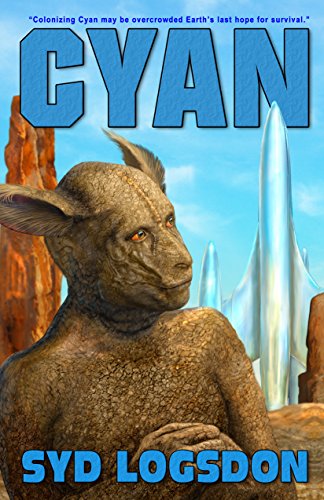
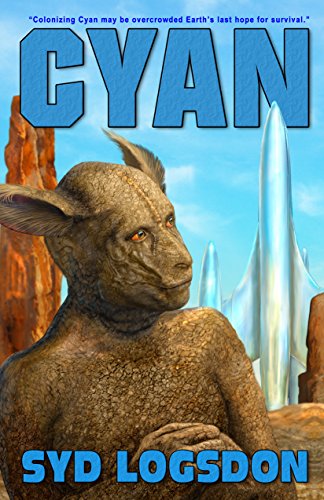
Late in 2015, I began this blog in order to drum up readership for my upcoming novel Cyan. ‘Upcoming’ turned out to be a long time, so I had placed quite a few excerpts by the time it was finally released. It received good reviews, 4.3 stars on Amazon and 4.6 on Goodreads, but it never found its audience.

Cyan is set in the near future and covers the discovery, exploration and colonization of a planet around a nearby star, portrayed as accurately as possible. In an age of novels about galaxy spanning wars, it is possibly out of fashion, but still an exciting, human, realistic story.

Here is your chance to find out for yourself why it deserved better. The opening chapter crowds in quite a bit of background before the excitement starts, but it will give you  a picture of what is about to happen.

Blatant plug — available on Amazon. You might as well get on with reading it, because I’m not going to stop talking about it

Chapter One:  A New Planet
CYAN
Standard Year 600
Anno Domini 2092

Driving in from the eternal night of interstellar space, the Darwin stood on its tail, chasing the kilometers-long plasma fountain of the Lassiter drive. Stephan Andrax and Tasmeen Rao had been working for weeks, and lately for thirty-one unbroken hours, to plot the orbits of Procyon’s planets and choose a course that would let their residual inertia carry them rapidly toward a favorable orbit. Now the torch was stuttering as they slipped deeper into the stars’ gravity well. Softvoiced exchanges between Stephan and Tasmeen were echoed by equally quiet observations by the other eight explorers.

Keir and Gus were manning the spectroscope, trying already to determine if Procyon A III’s atmosphere contained the gasses which would indicate life. Tasmeen’s husband, Ramananda, and Petra Crowley were canvassing the asteroid cloud that twisted its Möbius strip around the two stars, searching for any that might be mined for ice — fuel for the journey back. Above them the main viewscreen flashed successive visual reconstructions, multidimensional projections of varying parameters, and flashing strings of calculations as one or another of the pairs briefly preempted its use. Viki, Debra, Uke, and Leia stayed out of the way, watching the screen.

With a final shudder, the Lassiter torch cut out and, for the first time in over a year, they were weightless. In that same moment the masking effect of the torch ended, and Keir yelled, “We’ve got life gasses.” Overhead, unmistakable spectral lines showing hydrogen, oxygen, and carbon flooded the screen.

Spontaneous cheering broke out in the cramped control room.

Stephan switched to a display of the Procyon system. Much was still unknown, but the planets, moons, and major asteroids had already been mapped.

Procyon A, blazing with six and a half time the ferocity of Sol, was surrounded by three planets of her own. A torus of asteroids lay where a fourth planet would have been. Procyon B simmered, cold and shrunken by stellar standards, with half of Sol’s mass, three percent of its diameter, and less than one percent of its light. Snuggled in close were four tiny planets, all useless rock. A second torus of asteroids surrounded Procyon B.

The asteroid belts interpenetrated like two gears meshing, which excited Stephan no end. The prospect of seeing asteroids in collision was not merely likely, it was inevitable. Beyond the asteroids were five gas giants, none as big as Saturn, circling the paired suns in the frozen outer reaches of this complex solar system.

For a minute they looked at the system that would be their home for a year. Then Stephan switched to a real-time display of Procyon A III. It was only a faint disk, pulsing slightly as the computer worked to keep it in focus, but its pale blue color was unmistakable. Tasmeen, who had been too wrapped up in navigating to watch the unfolding story, said, “Keir, give us a quick update.”

“It’s a little bigger than Earth; a little higher gravity. It stands straight up in its orbit — less than a degree of inclination. Day, 40 hours; year, 1242 days — if you want to call it a year. There won’t be any seasons, so the equator and the poles will be uninhabitable, but the area about 45 degrees latitude should have good climate.”

Standing soldier-straight in its orbit, Procyon A III was a planet of small continents scattered across a huge, world-spanning ocean. The equator was chastely girdled with thick masses of steamy clouds, churning up continuous storms that would make a Terrestrial hurricane look like calm day. From ten to thirty degrees north and south, every island and continent was part of a world-spanning zone of desert, separated by hot, dead seas.

Uke asked, “What names did we draw?”

Ever since Neil Armstrong blew his lines, NASA had kept close tabs on what its explorers could bequeath to posterity. The computer contained several hundred “suitable” names for the planets they might find, but it would only give them ones matched to what they actually encountered. No one at NASA wanted a charred lump of rock to be named Eden, or for two planets to get the same name, and nobody wanted a planet named New Earth. Tasmeen keyed in a request, and fourteen names appeared on the viewscreen beneath the planet.

“What the…!” Debra began, then shut her mouth.

Gus chuckled. Petra said, “Someone certainly didn’t think much of our chances of finding an Earth-type planet.”

They were all the names of colors.

“Madder, umber, vermillion…” Keir read out in disgust. Then he stopped short, glanced up at the winking blue disk on the viewscreen, and said, “Cyan.”

“It’s the best of a bad lot.” Uke said.

“No,” Keir said, “it’s perfect.”

612. Zelazny Squared

Isle of the Dead, painting by Arnold Böcklin

Two of Roger Zelazny’s novels have been floating around in my interior conversations recently, Doorways in the Sand and Isle of the Dead.

A month or so ago I re-read Doorways in the Sand. It isn’t my favorite, ranking about half way down the thirty or so of Zelazny’s that I have read, but that still puts it into the top five percent of lifetime reads.

I was struck by how absolutely goofy its structure was. Every chapter starts in medias res, and then backtracks to fill it what the reader has missed. It is a common way of starting a fast moving novel, but in this case every chapter began with some kind of peril, then backtracked to fill in, extracted our hero from his trouble, and ended with things moving smoothly.

Weird — and I have to confess to a failure of imagination on my part. It took me forever to realize the trick Zelazny is playing.

He is taking us through the novel with serial style cliffhangers, but he is putting them at the beginning of each chapter instead of the end. It’s normally a technique to make a reader keep going so the writer doesn’t lose him, but Zelazny is forcing us to come to a full stop and start over (in terms of momentum) with each chapter.

It’s all inside out. And by the way, the machine that is central to the plot turns things inside out as well.

Zelazny likes to play games with us, and he isn’t afraid to skirt the edge of absurdity, assuming his readers will stay with him. The aliens who follow Doorways’s main character around are extremely not humanoid; to avoid being recognized, they wear disguises — a kangaroo, a wombat and a donkey, to name a few.

There aren’t very many writers who could get away with that without having me slam the book shut and move on.

Isle of the Dead came up when JM Williams asked for a book recommendation reciprocal to having cued me in to Small Gods. That lead me to re-read Isle for what would be the third or fourth time. What strikes me this time through, in view of discussions in recent posts, is Zelazny’s use of conversation.

Long before I was a writer, I read an advice-to-writers article titled “Multiply by Two,” which suggested that most fiction should start with two characters, because conversation is the easiest and reader-friendliest way of introducing a situation. I consistently ignore that advice — it doesn’t fit my personality — but I understand it.

You might think Zelazny is also ignoring that advice since Isle of the Dead opens with a long, philosophical monolog about Tokyo Bay. No, not really. This “monolog”, because of its loose, informal structure, is actually more of a conversation between author and reader. As in the following excerpt.

Of course everything in parentheses is an imagined reader’s response, which I have added to unfairly push my side of the argument about first person’s ability to snag the reader.

Life is a thing — if you’ll excuse a quick dab of philosophy (sure, go ahead) . . . that reminds me quite a bit of the beaches around Tokyo Bay . . . like Time . . . Tokyo Bay, on any given day, is likely to wash anything ashore . . . a bottle, with or without a note which you may or not be able to read, a human foetus, a piece of very smooth wood with a nail hole in it — maybe a piece of the True Cross (good, good) . . . it also used to be lousy with condoms (what?), limp, almost transparent testimonies to the instinct to continue the species (where are you going with this?) but not tonight (okay, now I get it) . . .

To be fair to Zelazny, the original, without all the ellipses and all my parenthetical comments, is much better. If you ever find the book and don’t have time to read it all, read the first three pages anyway.

This kind internal, self-referential conversation is storytelling within the storytelling. Zelazny excels at it. So does Louis L’amour, and Heinlein couldn’t write any other way.

Zelazny inhabits (I almost said owns) the shadowland between science fiction and fantasy. Trying to shoehorn his novels into either genre is futile. In Isle of the Dead, the protagonist and his opponent are a human and an alien, in purely SF fashion. However Sandow, the main character, is also a world shaper. In becoming one, he allied himself with one of the Named Gods of the Pei’an religion.

Gringrin, his enemy, is a Pei’an who didn’t quite make the cut as a world shaper. Why he didn’t is told two ways, one early and one late. Figuring out which reason is true it part of the mystery of the enemy’s motivation, and part of Zelazny’s skillful storytelling.

Are these Gods real, or psychological constructs that allow Pei’an worldshaping? Making a choice on that question would push Isle into SF or fantasy. Zelazny leaves it open, taking one side, then the other, leaving the question unanswered at the end. Meanwhile, the other 95% of the novel reads like pure SF. This is Zelazny’s basic MO.

Stripped to essentials, Isle of the Dead is the story of an enemy kidnapping loved ones, and the hero going to their rescue. Of course there is a twist at the end; Zelazny would never make it quite that simple. Nevertheless, the structure of Isle is extremely primitive. The novel’s charm lies in the telling. Given a choice between plot and style, I’ll choose style every time, which accounts for this being my favorite Zelazny stand-alone despite its somewhat disappointing ending.

610.1 Time Out!

When I wrote yesterday’s post, I thought it was probably more than most of my readers cared about. But what the hell, it was a continuation of a conversation, so why not.

Now I have more. Sorry about that, but I’m continuing to write Dreamsinger, and I keep running into ways in which out old time system just won’t let go.

Today I wrote a family reunion where Antrim and his sibs turned out for a party to celebrate one of their own graduating from flight school.

Family isn’t a word the Sirians use. They are turned out, eight at a time, from a DNA vat and raised in a creche by two professional parents, on alternating shifts. Sibs have a strong bond. Almost no one else does. If you were reading Dreamsinger, you wouldn’t know all that yet, since I am unfolding their culture slowly.

In a family reunion, you have to talk about age, and have people thinking back to childhood. You need the concept ‘year’, even if it just refers to human age, with no astronomical reference. I explained yesterday why YAR finds no favor, but I still need a big term.

There are 31,557,600 seconds in a terrestrial year (of 365.25 days) so let’s do what people do with grams when they need to measure something that weighs (sorry, masses) more — add a prefix, so that 1000 grams becomes one kilogram. That brings us to a kilo-det, which is about three years. Here is the small poster over in the corner of my screen, as it now stands.

SEC — 1 second — This is the same basic unit scientists have used for decades.

DEC — 10 seconds

DIN — 100 seconds — This is used as Earth dwellers would have used a minute.

DUR — 1000 seconds — This is about fifteen Earth minutes.

DEL — 10,000 seconds — This is just under three  Earth hours.

DAE — 100,000 seconds — A dae is 17% longer than a terrestrial day, which is close enough for human circadian rhythms to accommodate.

DET — 1,000,000 seconds — Used where Earth dwellers would have used week or fortnight.

KILO-DET — 1,000,000,000 seconds — About three  years.

As a writer, I would have been better off doing none of this, but I can’t help it. If my brain didn’t do odd things, I wouldn’t be writing science fiction.

I’ll leave this up for about a week and the append its contents to yesterday’s post. I don’t need three posts on one subject cluttering up the archives.

610. Time and Time Again

I love my jobs, both writing novels and blogging. Every new blog I write opens me up to new knowledge, often arriving in replies from the people who have read them.

Blogger and regular reader Thomas Anderson of Schlock Value replied to last Monday’s post on decimal time. I gave him a quick answer and then went looking for information because he referred to  Swatch Internet Time, and I had never heard of it.

Swatch Internet Time turns out to be a top down system, while the one the colonists of Sirius use is bottom up. No, I’m not talking about oligarchs and the people. Swatch Internet Time took the day and divided it into 1000 parts called beats. The Sirian system takes a second and builds up a system of terms from there. It turns out SIT was all about erasing borders, including time zones, to turn the internet into one endless, borderless day. It was more political (and marketing) than scientific.  After all, no matter what you call a time system, it is still daylight in India when it is night time here in California, and vice versa. Still, it’s a fascinating idea that I had missed out on.

Fascinating, but . . . there was already a universal time called  UTC, or Zulu, or military time, wherein you simply convert your local time to Greenwich Time, while pretending that Greenwich is never on Daylight Savings Time.

Further research showed that decimal time is a notion that has been tried occasionally, starting with the French about the time they adopted the metric system. It has never worked out, probably because we already have a system that works, irrational though it is. Our system won’t work so well once we are on planets with different day lengths and year lengths. It certainly wouldn’t be optimum in non-planetary colonies.

When the issue of decimal time originally came up for me, Swatch Internet Time didn’t exist. The internet didn’t exist either. It was, as nearly as I can calculate, about 1980, as a follow-on to several other things that had occurred in the particular universe I was writing about at the time.

I invented the Standard Year in Jandrax in 1976 with absolutely no thought, and had to flesh it out later in Cyan. It depended on the notion that Muslim countries would eventually refuse to let a Christian calendar stand for all mankind, so goodbye to BC and AD. The solution to that problem, in Cyan, was to reset year zero to October 12, 1492, the day that began the age of discovery which would finally knit the world into a whole. See 25. Columbus, King of Explorers. As part of the restructuring, months and weeks were dropped, and days were identified by the number of days since the beginning of the year, as in the opening words of Cyan:

From the Log of the Starship Darwin, en route to the Procyon system, S.Y. 594, Day 167

Cyan itself had a very long day and year, and it had no seasons. A Cyanian year meant little to the colonists, so people measured their ages by Earth years. The term day came to mean from sunup to sunup, and the human daily cycle of sleep and waking became known as a sleep.

Even these people, born on Earth and newly arrived on Cyan, had to make changes in the terminology of time. The colonists around Sirius would be refugees, fleeing the breakup of Earth after the Cyanian colonists departure, and living in space colonies. They made bigger changes. See last Monday.

These things occur by accretion in the real world, and also in writing. After I wrote last Monday’s post, but before any of you saw it, I had already had to add one more term, det, because my people needed a time unit longer than a dae to use in their everydae (not a misspelling) conversations.

Since then I have also come to realize that I have to also have to be able to put events into a deep framework.

On Earth, we would say something like February 12, 2019. On Cyan they use standard years and days for that, as in the quotation above. I decided that the colonists around Sirius would follow the standard year practice and set a certain dae as zero dae, then count forward. You could say:

Antrim was born on dae 348,278.

That is certainly clumsy for humans, but it is entirely suitable for computers which would be keeping all the records that far into a future world of ships and space stations.

To choose the zero dae, I will have to know how far in the future this story takes place. I haven’t decided yet, but once I figure that out, I’ll know how many daes ago they began to count time in daes.

There you go, simple. Clear as sunshine on a cloudless dae. Except in space, all daes are cloudless.

609. Alternate Universes

During the Golden Age, most of Heinlein’s short stories linked together to make a complete future world. I didn’t know that at the time, since I wasn’t born yet. I discovered his Future History as his short stories began to be reissued in collections, when paperback books were relatively new. In the opening pages of several of them there was a chart of future history, showing times, scientific developments, and social changes, all keyed to the stories built around them.

Future history in science fiction is a first cousin to alternate history, which is sometimes seen as SF and is sometimes shelved with ordinary historical fiction.

Historical fiction isn’t history. Studies of history may be inaccurate, even deliberately so, but they aren’t fiction. Sometimes they may be as far away from truth as deliberate fiction, but that’s a whole ‘nuther can of posts.

Historical fiction may be romance, adventure, war, moral advance or moral decline, or any other type of story, just as contemporary fiction can be. It simply uses history as a place for things to happen, just like a boy meets girl story can take place in Palestine or Paducah.

Alternate history does the same thing, but with an additional twist. The author makes a choice of where and when to make a historical change, and then invents a fictional world based on that change. After that, as with science fiction, the story the author tells may resemble ordinary fiction, or it may depend on events special to the created world.

Almost all science fiction creates some kind of future history. Heinlein gets first mention because he coined the term, but his buddy E. E. Smith’s Lensmen series creates an even bigger, badder, and bolder alternate universe. Gordon Dickson had his Childe Cycle (known to ordinary mortals as the Dorsai books), and there are dozens, probably hundreds, of other examples.

Alternate history does the same thing, but starts earlier in time. Fantasy, from Tolkien to Diskworld, creates entirely non-ordinary worlds. Only contemporary and historical fictions are impoverished by a lack of world building.

Once a writer creates a universe, there is a temptation to return to it. After all, much of his work has already been done. The result may be an enriching of the imaginary world, or a steady decline in quality due to self-repetition. It depends on the skill of the author.

My own writings live in two variant futures, one variant past, and a variant past created by time traveling meddlers from a variant future. And a fantasy world.

The variant past story is The Cost of Empire, which could be shelved with science fiction (at a stretch), steampunk (easily), or alternate history. A dishonest capitalist steals a new type of engine; he also talks the British government into starting a spy organization which he then uses to sabotage other engine types, skewing industrial development. That’s backstory; if you are curious about the actual story, the opening pages were presented in posts 486, 487, 488, and 489.

In one of my variant futures a scientist named Lassiter discovers a glitch in our understanding of physics which allows easy total annihilation of matter. That means a star drive for nearby star systems, with all the complications of near light-speed travel, but no FTL. This led to world building for all the stars within about five light years of Earth, and to the novel Cyan which explores one of them.

Such multiple world building calls for other novels, including the one alluded to in Monday’s post.

Not to belabor a point, but the world building in Cyan and the world building in The Cost of Empire are both based on a technological innovation. The only real difference is that one change took place in the past and one will take place in the future. SF and alternate history are often two faces of the same coin.

Incidentally, the Cyan universe came about after I wrote my first published novel Jandrax. I asked myself, where did this universe come from? How did it start? What were the ancestors of the people in Jandrax doing a few hundred years earlier? Then I filled in the missing pieces, and Cyan emerged.

My other early published novel, A Fond Farewell to Dying, is based on a historical change and a technological development. The world in general comes into being through a confluence of nuclear war and rising oceans, ending with the northern hemisphere devastated, and India as the last best hope of scientific culture. The technological event is the creation of a practical, artificial immortality. That world called for two sequels which have been outlined, but not yet been written. One of them has recently been calling my name, so maybe soon.

In FFTD, the bombs fell in the future, so it is clearly SF. If the bombs had fallen in 1957, it might be categorized as alternate history — but probably wouldn’t be because of the immortality theme.

Writers write. Putting novels into categories is the job of editors, critics, and booksellers. We do make life hard for them sometimes.

My latest novel, Like Clockwork, takes place in a quasi-Victorian pocket London and won’t have any direct sequels. It could be published as steampunk, but it is actually a straight SF time travel story.

However the future world of the time traveler who is Like Clockwork‘s hidden prime mover has infinite possibilities. In that world Einstein got it right, there can be no FTL, and only century ships are a possibility. Adventurous souls need not despair, however, because there is sideways travel in time. For fear of destroying their own existence, time travel in this culture’s own timeline is forbidden, but travel to alternate universes is the order of the day. 

My fantasy novels all take place in one created world, but that’s a whole different set of posts.

608. Decimal Time

Here’s something weird, but you guys are all weird enough to enjoy it.

I have a habit of writing novels that represent the future as I think it actually might happen. That may not sound imaginative, but I like making projections with a minimal number of new assumptions, and I find that it leads me to some very strange results.

Cyan was built that way. One group who showed up for a few chapters of that novel were a group of asteroid miners who preferred life in space. When Keir suggested they go with him to Cyan, they laughed at the idea. Their idea of colonization was a trip to Sirius, where there were no habitable planets, to continue living in space without the threats from an overcrowded Earth.

Shock and surprise, that called for a sequel — or rather a stand-alone novel moved sideways in the same universe. It will be called Dreamsinger.

I recently wrote a pre-prolog, designed to be placed just before the novel begins, which may or may not make the final cut. Have fun with it.

==========

Just for Nerds: Decimal Time

Some people like to jump into a story and have all the background come out piecemeal. If you are like that, have at it. Move on to the Prolog; you don’t need to read this at all.

Other readers like to know all about the backstory. This is for you.

If you can’t make up your mind which way to go, you can always forge ahead and come back here later.

Home Station is a gigantic torus in orbit of Sirius. The asteroid miners from the novel Cyan chose to emigrate to the Sirian system because it has no habitable planets. The planet which lies in the goldilocks spot has a Uranian tilt; it is called Stormking.

Perhaps life could never have evolved on such a planet, but it didn’t have to. For billions of years, Stormking stood upright like any normal planet, then a rogue body passing through the system tilted it and went on its way. Almost all life on Stormking was destroyed, but enough remained to evolve into a planet full of weird and fierce creatures.

The humans who colonized the Sirian system don’t care. They live in space stations situated wherever science or commerce requires them. Human culture centers on Home Station which lives happily in orbit of Stormking.

Since these people are not planet dwellers, ideas like month, year, or day and night have little meaning for them. If they had commerce with Earth, or fond memories of Earth, they would probably have kept Earth time. Instead they are bitter refugees, happy to leave everything about Earth behind them.

Consequently they have discarded all units of time but the second, and have built up a new, scientific set of units. (The metric system strikes again.) Only seven of these units are used in everyday conversation.

SEC — 1 second — This is the same basic unit scientists have used for decades.

DEC — 10 seconds

DIN — 100 seconds — This is used where Earth dwellers would have said a minute.

DUR — 1000 seconds — This is about fifteen minutes.

DEL — 10,000 seconds — This is just under three hours.

No decimal time unit is close to an hour, but between a dur and a del, the Sirian humans don’t miss that Earth unit at all.

DAE — 100,000 seconds — A dae is 17% longer than a terrestrial day, which is close enough for human circadian rhythms to accommodate.

DET — 1,000,000 seconds — Used where Earth dwellers would have used week or fortnight.

There is no decimal time unit that comes close to the length of a year, but there is also no need for one. No event in space or on Stormking has any resemblance to a set of seasons. Human age is measured in terrestrial years, if it comes up at all.

There is some pressure to add a YAR, consisting of 350 daes to replace a year, but that violates the rule of making all units multiples of a second by tens. And besides, nobody much cares.

==========

I wanted to do decimal time because traditional time is so screwy that I felt once people get beyond Earth, they are sure to dump it.

I remember the first time a student pointed to the wall and said, “Mr. Logsdon, what time is it? I can only read digital time.” What he was used to seeing on digital clocks was not decimal time, even though it looks a little like it. Take the world record for the thousand meter dash, 2:11.96. That’s two minutes, eleven seconds, and 96/100 of another second. Note that there is  a colon and a period/decimal place. That number eleven isn’t decimal because there aren’t 100 second in a minute — on Earth.

Let’s turn that record into fractions. One thirtieth of an hour, eleven sixtieths of a minute, and ninety-six one hundredths of a second. It’s crazy. The digital time on your microwave isn’t decimal either. Set your microwave for 65 and punch start. (Be sure to put a bowl of water inside so it doesn’t fry its circuits.) It will count down all the way to zero. Now try again, but this time set it for 105. It will count 104, 103, 102, 101, and then it will jump to 60 before continuing.

The whole thing is flat out nuts. No wonder kids are confused.

However . . .Now that I have begun writing the first chapters of Dreamsinger, I’m having a big problem. I can’t expect my readers to memorize this post before reading the novel so every time I say something like, “For nearly a del she fought for points,” I have to gently remind them what a del is. 

I think I may have just dug my own grave. Time will tell. (Pun intended.)

Oh, well, whatever happens, writing science fiction keeps you thinking.

605. My Life as a Beaver

First I thought, this is too much about me. Then I thought, it’s a blog, stupid, go for it.

I am not a hoarder. Hoarders buy and store things they don’t need. I’m a beaver. I build things, and they accumulate. The tools also accumulate. Also the raw material for the next project, and there is always a next project.

Normally I keep my home life out of this blog, but I have to admit that my wife is also a beaver. It’s a good thing, really, or we couldn’t have had all these happy years together.

I always wanted to be a craftsman, but I grew up as a farmer’s son instead. Farming is a make-do profession. If a nail will do the job, don’t use a screw, and certainly don’t cut a mortise and tenon. We built a few barns when I was home, but the test of a barn isn’t how well it is built. If It doesn’t leak or fall down, it’s good enough. But it wasn’t good enough for me.

I took a semester of shop in high school, where I built a mahogany gun case for an aunt and a maple book case for a family friend. It was quite satisfying, but I needed all the rest of my time to prepare for college.

Once in college, I started a classical guitar, working where and when I could find space. I didn’t have the skills to do it right, but attempting it taught me skills I still use today. It sits, half completed in a closet; maybe someday I’ll complete it. Every successful craftsman has a few failures along the way, which is all right if he learns from them. Some years later I completed a dulcimer and later still the expanded range guitar shown here. I have a few more instruments in pieces waiting their turn.

That seems to be a pattern. I’ve finished quite a few novels, but I have at least as many more in pieces, waiting their turn.

Over the years I’ve built bookcases, tables, workbenches, cupboards, a bed, a couple of sheds, and all the other wood-based things a person on a teacher’s salary or a writer’s non-salary can’t afford to buy. I’ve also built for fun — fancy canoe paddles as family gifts, a cold-molded rowboat for the frustrated sailor that lives inside me, and other things too numerous to mention — or even remember.

Beavers gotta build stuff.

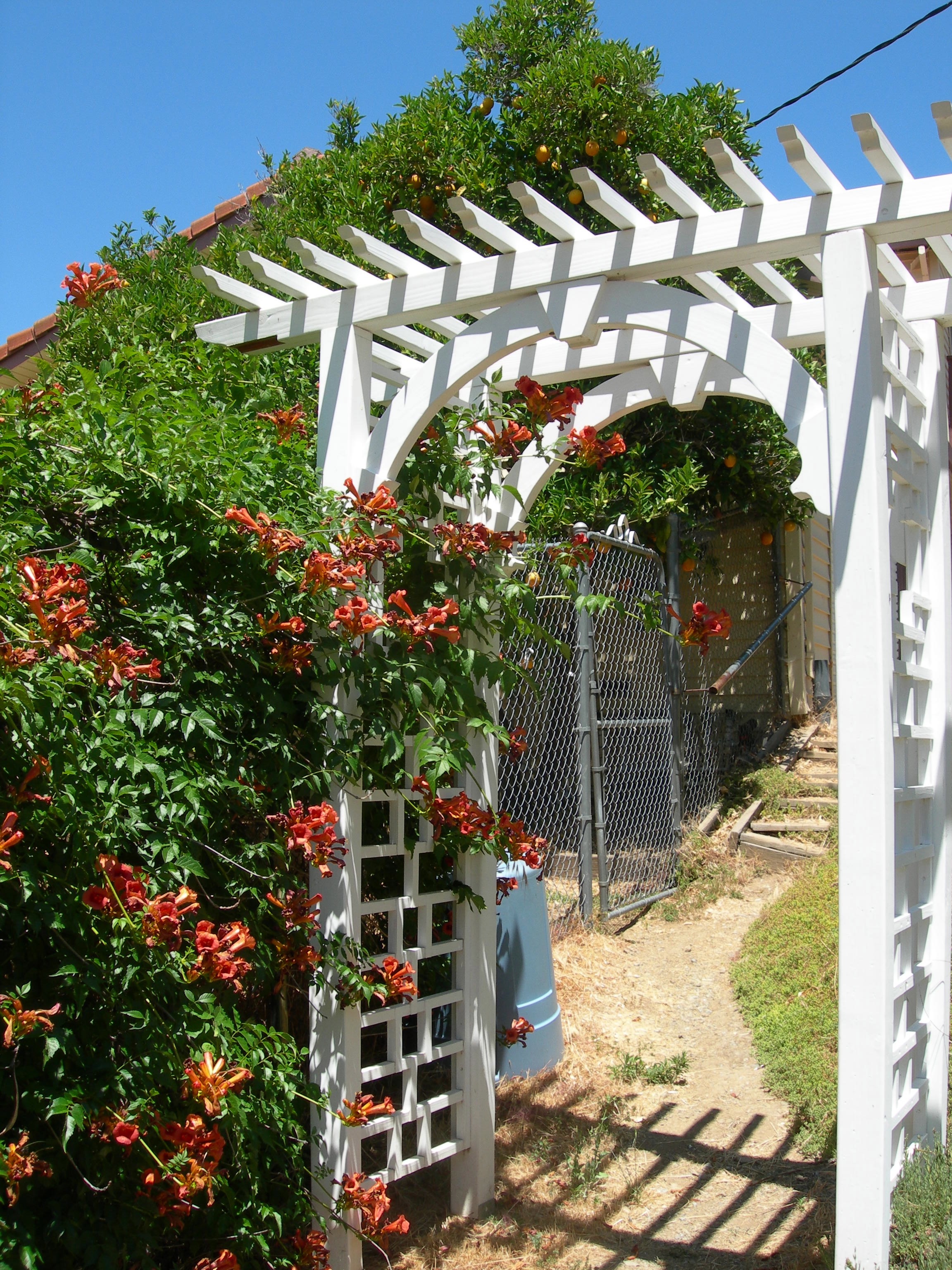
My wife lends a hand sometimes, and sometimes we build projects as a team. We spent a year of spare minutes building an arch to commemorate our (redacted) wedding anniversary. Her father and mother were both craftsmen, and she learned well before I ever met her.

Sometime in the eighties, we discovered quilting, and that’s something we do as a team. We design and build both together and individually. Over quite a few years, we designed better than a hundred quilts, most of which were built by a charity group in her guild to be donated. We built the three shown here ourselves; the designs are one each of hers, mine, and ours.

Beavers gotta design stuff.

The image at the head of the post is another project of ours. We built portable stands that carry 24 of these mini-quilts, and provide them for display in rest homes. We designed and built the stands; the mini-quilts come from guild members, including us.

In 2015 I decided my scheduled novel Cyan needed some support so I started this blog. A thousand plus posts later, I’m still at it.

Beavers gotta keep busy. Life can be boring if you’re standing still.

603. Small Gods, Big Result

Small Gods, Big Result
also known as
Full-Fledged Characters, Where Are You?

I have a colleague, JM Williams, who is a great fan of Terry Pratchett. On his suggestion, I checked one of his novels out of the library, read five pages, and tossed it.  Yech.

A month or so later I mentioned the fact to him. He suggested that I might prefer to start on a different novel, and suggested Small Gods.

I was hooked by page two. The scene, or was it an allegory, of the eagle and the tortoise was wonderful, and I was ready to believe that Terry Pratchett might be all JM said he was.

By page 38, I wasn’t so sure again, and I found myself trying to analyze exactly what was missing — for me — in the novel. I do that a lot. If you write, I’m sure you know what I mean.

Roughly by page 200, I was back on board again.

I had came to a conclusion, and since it bears on writing in general, I’m going to expound. As with the responses I got from 601. Home Court Advantage, feel free to disagree.

At page 38 of Small Gods, there was no character I liked well enough to care if he lived or died. Still, interesting  things were happening and I wanted to know how they were going to come out. That is a positive mark for a writer who knows what he is doing, but it isn’t really enough.

By about page 200, I wanted Om to make it and I really wanted Brutha to make it. From that time on, I had a vested interest that kept me going with enthusiasm. If I read another Pratchett (and I probably will) that enthusiasm will be there from the start, now that I trust the author.

I had needed characters I could care about.

This is not the same as full-fledged characters. There is no such thing. Robert Caro just wrote a four volume biography of Lyndon Johnson, and I’m sure he didn’t tell everything there was to tell. I read both parts of Patterson‘s bio of Heinlein and I still have questions.

If biographers who spend massive chunks of years don’t get it all, how can a fiction writer expect to have a “full-fledged” character. What does the phrase mean, anyway?

Om, Brutha, Vorbis, Simony, Urn, and Didactylos are all characters in Small Gods who are well thought out, powerful, and exactly sufficient to the task at hand. Not one of them is a “full-fledged” character, but they are each fledged exactly enough.

If you want to write full-fledged characters, maybe you should give up novels and write LITERATURE instead. (If WordPress allowed multiple fonts in one post, I would put LITERATURE in all curlicues.) Then you can out-Joyce Joyce if you want to, and still have readers.

They will have to read. There is a paper due next week, called for by the professor at the front of the room. He wants company in the misery of having been forced to read LITERATURE in order to get his degree.

In point of fact, there are powerful characters in literature and in genre fiction as well. The difference is in the expectations and tolerance of the reader. Powerful does not mean turning a microscope on his backstory and telling every detail.

Ursula LeGuin told us that science fiction is too small for Mrs. Brown, meaning there weren’t enough full-fledged characters. I listened. I respect LeGuin too much to ignore her, but after decades of considering her argument, it’s just smoke and mirrors.

I could (over)state in response, science fiction isn’t too small for Mrs. Brown; Mrs. Brown is too dull for science fiction.

Fiction, however humble or pretentious, is too small to contain any actual living human being. That isn’t what fiction is all about. Writers of fiction give a précis, a starting point, a few brief actions and emotions, and the reader fills in the rest. The reader draws on a full life of looking at other people, and at him or herself.

The real issue between literature and genre fiction is how many (and how dull) are the details the reader will tolerate.

Take Spenser (the detective, not the poet) for example. He has been around for almost fifty novels and, like Bond, has outlived his creator. After all this time we know a bit about him — actually, we may know all there is to know about him, and it isn’t much. Except for the interminable descriptions of food, all the details provided about him also move each story forward.

Recently I have worn out Spenser, Nero Wolfe and Archie, Judge Dee, Bony, Travis McGee and a dozen others, and have started Anne Cleves’s Shetland series. In my first attempt, I am having to get used to masses of detail about the lives of very ordinary people. I like it, but it is hard sledding; if I hadn’t visited Shetland and enjoyed the place, it would be even harder.

Cleves is a fine writer. My problem is a matter of expectations. Any detective writer in the list above would have finished Cleves’s novel in half as many pages, and the details left out would be the dull ones.

I like what I’m reading, really I do, but anything with this much detail about ordinary life has to be LITERATURE.

There will be more to say about all this on Monday.

HOLD IT – – – STOP THE PRESSES.

Something just came up as I was putting this to bed to wait for the 19th of June. It’s peripheral, but it struck me funny enough to put in a mini-post tomorrow. I will still say more about the main subject on Monday.

602. What Story Next

Every writer writes about writing eventually, and Balfour is my way of doing that. As his name might suggest, he both is and is not Robert Louis Stevenson. In what follows from my novel Like Clockwork, Balfour has just had a vision, and now he is seeking privacy to think about it. The vision was sparked by his visit to Snap’s toy shop, where he has met Snap’s wife Pilar for the first time.

===================

With the fog and the waning of the day, the streets had become dark. There were lighted windows here and there. Occasionally there were beckoning gaslighted rooms of grog shops, where warmth and noise spilled out into the street, but these were few and widely spaced.

When he walked with Snap through Inner London, Balfour found himself surrounded by friendly faces. Now that he was alone in the fog and dark the pedestrians around him drew back from him. Their movements seemed furtive and the shadows seemed full of danger.

All the things which passed before his outer eye were noted and flagged for memory — peering faces, vendors shouting their wares, signs plastered everywhere with messages like “Now is Forever” and “You Can Turn Back the Clock.” But mostly his mind was full of an inner vision of Pilar which, if nurtured, might become a story.

It was not of the real Pilar which he saw, but a Pilar whom his mind had abstracted and made symbolic. She stood tied between two coarse ropes, fighting both of them. It was not an image of sexual bondage. These ropes were forces, made manifest in his mind, which were tearing her in opposite directions.

Balfour knew from experience that if he could hold the image now, without understanding, it would morph and change over the coming weeks. Pilar herself would probably disappear. Someone else would a take her place, and the forces would be manifested in new ways. When the process had ended, and the story was completed, Pilar would be gone; yet without her the story would never have been triggered.

He walked far and long, mind racing, lost in thought, but eventually the world outside his mind reclaimed him — violently.

A ragged ruffian stepped up to block Balfour’s way.

Balfour had moved on past most of the light, and the few pedestrians who remained nearby were all scurrying for cover as if they knew and feared this man.

Balfour gripped his cane loosely, ready to parry or thrust, and felt a rush of adrenaline that washed away the picture of Pilar.

The man was massive, short, and angry. It wasn’t a transitory anger that could be avoided or worked around. This anger came from deep in his past and now encompassed his entire being. His heavy brows were furrowed above deep-set eyes and his mouth was set in a permanent snarl.

Balfour did not notice those details in the moment, but an internal photograph of the man was burned into his memory. He had a few coins, and he would have gladly have given them up, but robbery was not the reason for this encounter. Robbery was the excuse. The reason lay much deeper, and no amount of money would assuage the hatred in those eyes.

The mouth came open; words came out. Balfour only heard the roaring in his ears and his eyes focused on the man’s right hand as he reached beneath his loose coat and withdrew a blade.

It was a moment of deja vu. Balfour had known that the blade would be there. He was already moving when it emerged.

Balfour was no physical match for the man, but he was well trained in the use of a gentleman’s cane, and he had that momentary advantage conferred by precognition. He did not try to strike at the man’s wrist, but brought the cane across in a swinging, two-handed blow to the temple. The loaded head did the rest. There was a wet crunch of crushed bone as his assailant crumpled to the cobblestones. The blade clattered from his hand.

Balfour was already backing away, but the attack was over.

This man had been too full of wrath to have companions, and the dark street was empty of witnesses. Balfour turned away and walked back toward the gate to Outer London. There would be no outcry. There would be no inquest. Some time in the night, the body would mysteriously disappear.

Balfour knew all this because it had all happened before.

And it would all happen again.

===================

It’s perversely comforting to find that I am not the only one struggling to find the best next story to tell. If this seems a bit familiar, it is a precursor to my Halloween post last year, October 29 and 31.