Author Archives: sydlogsdon

24. Following the Market

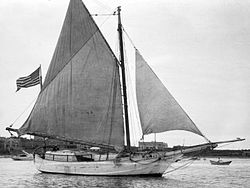
250px-SpraySome say write what you know. Some say, follow your passion. Some say find your natural readers.

Others say follow the market, write what the reader wants to read, position yourself just back of the leading edge of the latest trend.

I only followed the latter advice once, and did it without selling out. At a point in the late eighties, when my science fiction and fantasy work was hitting a brick wall for sales, I decided to write a contemporary adventure story.

I had always wanted to write my own equivalent of Travis McGee. Who wouldn’t? Neither detective nor spy, he went his own unique way and provided adventure for a generation of readers.

McGee was too much of con man for me, and he wasn’t enough of a loner. His buddy Meyer accompanied him in every other story. My guy, Ian Gunn, would be younger, better educated, but very much at odds with the world his education had prepared him for.

Here is the pitch:

Ian Gunn has a lot on his mind. He is facing a storm in mid-Atlantic, enroute to deliver a sailboat, a replica of Joshua Slocum’s Spray, to Marseille. He has just rescued Raven Cabral after someone tossed her off a cruise ship, and she hasn’t told him why that happened. Ian knows that if you rescue a mermaid, you are supposed to fall for her. No problem there, but her response is not quite so encouraging.

Raven’s attackers continue to pursue her after she arrives in Europe. Ian attempts to protect her until she leaves him in Paris, then finds himself tracking her across western Europe, trying to get to her before her attackers do.

What he discovers leads him back to California where he tracks down the man behind the attacks and wins immunity for Raven. Ian then returns to Europe to continue his search, needing to find her before rogue members of his enemy’s organization do. The search ends with a fire fight in a Norwegian fjord where . . .

I think I had better stop there, to avoid having to issue a spoiler alert.

When it was finished, I sent Raven’s Run to my agent. He was full of praise, especially for the exciting opening chapter. Then he said, “. . . but I’m afraid I can’t sell it. The bottom has completely fallen out of the men’s adventure market, and nobody is buying.”

So much for following the market.

I recently updated Raven’s Run a bit and sent it out to seek a home. What was once a contemporary adventure is now a historic one, and the new sales pitch begins:

It was April, 1989. Ayatollah Kohmeni had a few months left to live, and no one had yet heard of Osama ben Ladin. There were still two Germanies, two Berlins, and a wall; I had had my dealings with that wall a few years earlier, in uniform, when the cold war was even colder than today . . .

When it sells, I’ll tell you here. I don’t give up easily.

23. Star Drives

Wormhole_travel_as_envisioned_by_Les_Bossinas_for_NASAAssembled odd bits of other equipment, looking more like the product of a boy’s workshop than the output of a scientist’s laboratory, the gadget which Libby referred to as a “space drive” underwent Lazarus’s critical examination. Against the polished sophisticated perfection of the control room it looked uncouth, pathetic, ridiculously inadequate.

Heinlein had a technical background, but when he needed something to move a story forward, he invented it in the fewest possible words. He didn’t waste a lot of time consulting his slipstick.

Slipstick. Archaic. Slide rule; a device with two fixed and one sliding rectangles of wood or plastic, with scales attached, used to estimate mathematical calculations to three significant figures. Origin of the nickname Slipstick Libby, who invented the stardrive mentioned above after about an hour’s  thought.

I learned to use a slide rule in high school physics in 1965-6, just before Texas Instruments’s hand held calculators became cheap enough to toss the slide rule into the ash bin of history. In the movie Apollo 13, you will see all the engineers at mission control using them as they try to figure out how to save the crew.

The quotation at the head of this post is from Methuselah’s Children. The Number of the Beast was full of pseudo-mathematical jibber-jabber but the actual description of the space-time machine was simple.

”It’s on that bench, across the table from you.”

“All I see is a portable sewing machine.”

“That’s it.”

FTL star drives are so far beyond present knowledge that they are easy to invent. In my first science fiction novel Jandrax, I used an FTL drive to strand my colonists, and never referred to it again after the first two paragraphs. If I ever write another novel in that era, I’ll have to reverse engineer the thing to figure out how it works.

Getting to the stars without FTL is much harder for a writer. He has to work within the parameters of relativity and Newtonian mechanics. Lightspeed sets a limit, and getting near to it causes no end of fuel mass problems. Again from Methuselah’s Children, referring to the ship before Libby’s space drive was added:

The New Frontiers had no such limits, no tanks; her converters accepted any mass at all and turned it into pure radiant energy.

Although Heinlein is a little vague, it seems that he is referring to a kind of ram scoop, something much loved by hard science fiction writers.

Here we go again, cribbing from Einstein. Matter can be converted to energy, but how? With present day technology, you can’t burn a rock unless it’s coal, and you can’t convert mass to energy unless you start out with one of a very few elements. Science fiction writers, even in a relativistic universe, require a breakthrough allowing any element to be converted to energy. Usually, as in the New Frontiers, that breakthrough is simply assumed.

In my novel Cyan, due out in January, I wanted to do more than assume. I had an ulterior motive. As a non-physicist, I have been underwhelmed by the last half century of theoretical physics. It looks like as a lot of brilliant people running up blind alleys. If that seems disrespectful, I have three words for you – ether (the concept, not the gas), phrenology, and phlogiston. The history of science has more blind alleys than a slum in Calcutta, and a healthy disrespect is the only thing that keeps us from turning it into a religion.

My real world expectation is that the next great breakthrough in physics will come out of left field, violating our present understanding of the universe so completely that we cannot anticipate it. I built Lassiter’s anomaly out of that belief:

In 2048 Lassiter discovered that the Luna fusion reactor was producing a fraction of a percent more power than Einstein’s equations allowed. After a decade of research, he concluded that reduced gravity was the reason. Nothing in any theory supported him, and he was all but laughed out of physics, until the deep space probe Dirac settled the controversy.

Once the scientific community had recovered from the shock, these facts had emerged: that the power overage came from a larger portion of the reactor’s fuel being converted into energy, that gravity was indeed the inhibitor to the reaction, and that anyone who could provide sufficient heat to initiate a nuclear reaction beyond thirty-seven light minutes from Sol would have a self sustaining nuclear torch that would eat ice, asteroids, cosmic dust . . . anything. And it’s efficiency would rise with further reduction of gravity so that within a half light year it would approach one hundred percent conversion.

Total annihilation of matter. A power source for attaining near light speeds. A stardrive.

In an essay I read in high school, it was postulated that a race of creatures living on the bottom of a sea of mercury (the metal, not the planet) could never predict the existence of electricity, because an unbalanced charge could never build up. Exchange mercury for gravity, and you will see where I stole Lassiter’s anomaly. If anyone recognizes that essay, probably from Arthur C. Clarke, let me know. I would love to read it again.

22. Deathstar Drones

1280px-IAI_Heron_1_in_flight_1

Prediction in novels quickly becomes outdated. 1984 isn’t the future any more. Neil Armstrong, not Leslie LeCroix, was the fist man on the moon.

Historical novelists don’t have to deal with that problem. The North always wins the Civil War. Caesar always dies on the Ides of March. Contemporary novelists can stream any consciousness they want and nobody cares, but if you write science fiction and you don’t keep up to date, you look like a fool.

That can be a problem if there is a long time between first draft and publication.

In fact, this post is a prime example. You should realize by now that A Writing Life is not a normal blog; it isn’t about day by day events. I revise and revise and revise. Then I polish. Before my first post hits the internet, I will have sixty or seventy posts in the can. I don’t like working without a net.

The first draft of this post was written on May 20, 2015. I am polishing it now on August 13. It is due to appear in your computer on October 6.

This morning (i.e. May 20, not October 6) I saw a story on Good Morning America in which drones were being tried out to carry life rings to drowning victims at the beach. I applaud the idea, of course. Drones are everywhere and everybody is talking about them. Miniature drones, that is. Drone target aircraft have been around since the very early twentieth century, and relatively sophisticated ones at least since Viet Nam. Only the little ones are new.

They weren’t even a gleam in a designer’s eye when I put them into the first draft of my upcoming novel Cyan.

Keir was down by the river with Viki, beginning a bridge. They had swum the walker-crawler drone across, towing a strong, light line, and Viki was trying to get it to climb a tree. The tree bole leaned over the water at a sharp angle, and the track treads of the little drone could just grip the bark. Viki was manipulating the controls with deft care, heading for a crotch five meters above the water. Keir was on guard. His pistol was in its holster, but he was on alert, scanning the treetops above them, the grass at the break of the bluff, and the dark swirling waters. Twice the thought he saw something large and swift move beneath the surface, but it was hard to look through the sparkling, shade-dappled surface.

Viki’s face was drawn with concentration as her blunt fingers struggled with the controls. The drone was only a meter short of the crotch, and wobbling. Viki grimaced with unconscious fierceness.

The drone wavered and slipped. Viki twisted the controls viciously, grunting encouragement and insults in an undertone.  With a last effort, she coaxed it through the crotch so that it leaped forward and fell; splashed and bobbed to the surface; then began to churn through the water toward her like a playful dog, trailing the line out behind it.

I also gave them flying drones for aerial surveillance. They are both still in the final novel, because explorers will certainly use them, but they don’t look new like they did when I put them into the first draft.

It could be worse. In fact, it once was nearly a lot worse.

The year was 1977. I was writing my fourth novel, A Fond Farewell to Dying, and I had just gotten to the part where India was about to launch an orbital bomb platform. A friend and his wife took my wife and me to see a new movie called Star Wars. When we left the theater, he was bubbling. I wasn’t impressed.

But I was depressed, because I was going to have to go home and change the name of my orbiting bomb platform from Deathstar to something else. At least the novel wasn’t already printed and waiting for distribution.

21. Ae Fond Farewell

UnknownI have had more success selling A Fond Farewell to Dying in its various incarnations to publishers than I have selling it to readers. That’s a shame, because it’s a pretty good book.

Today, accurate clones in SF are common but it wasn’t always so. It used to be, usually on TV or in movies, that a clone would come into existence with the memories and personality of its donor. Of course, an actual clone would be no closer than a twin, and I wanted to set that right.

I also wanted to show contrasts between Hinduism and Christianity, between atman and soul, between rebirth and the continuation into the afterlife of an unchanged consciousness. I wanted to explore a post-flood world where America was a half flooded backwater (no pun intended) and India was the leading nation. Incidentally, this was decades before anyone was talking about global warming, so I did it in the crude old-SF fashion; I dropped thermonuclear devices on the San Andreas fault.

I wanted to create my own Lazarus Long, I wanted to have the fun of taking science fiction to an entirely new setting, and I wanted to get some mileage out of all those years I’d spent studying South Asia.

A Fond Farewell to Dying was my fourth novel. Part way through the writing, it became apparent that the first third, slightly modified, would make a good novella. I sent it around while I continued the novel and John J. Pierce of Galaxy magazine bought it. He didn’t like the name and suggested To Go Not Gently, after Dylan Thomas’s poem Do Not Go Gentle into That Good Night. Of course I agreed. It became my first fiction sale and the cover story of the last issue of Galaxy. Or what looked like the last issue at that time; Galaxy subsequently had more resurrections than my lead character.

The odd name A Fond Farewell to Dying had actually come about because Robert Burns’ poem Ae Fond Kiss, and then We Sever was floating around in my head when I needed a title.

A few months after the novella came out, Jandrax was published. Two years later the novel version of Fond Farewell was published in the first Pocket/Timescape release. Two years after that, it was sold for German translation as Todesgesanga (Death Song).

It went mostly unreviewed, which is not unusual for a new author, but the few who spoke of it were positive. Despite all that, it never found its readership.

These things happen. Even twenty-five years later I find Jandrax in every used bookstore, but I rarely see Fond Farewell. That tells you a lot about their relative sales.

I have no reason to whine. Timescape Books, which published Fond Farewell, produced over 100 paperback titles in four years, including many Hugo and Nebula winners, then died quietly because it wasn’t making enough money for its parent company. Publishing is a harsh game.

It would be poor sportsmanship to blame the cover, but it was confusing, with an angel blowing his trumpet and a bunch of weird zombie looking people coming out of jack-in-the-boxes. I understand the metaphor, but it was probably lost on anyone who hadn’t read the book yet. I do know that booksellers didn’t always understand it, because I saw it in my local supermarket on a rack of religious books. If anyone bought it there, they were in for quite a shock.

If you wander over to the Serials section of this website, you will find the novella version now being presented. For free – what do you have to lose?

20. Project Gutenberg (3)

Project_Gutenberg_logoregarding Those Extraordinary Twins (post 3)

The last two posts quoted an obscure Mark Twain piece on writing. I came upon it in an odd manner.

I read Pudd’nhead Wilson some years ago. It isn’t funny like Tom and Huck; instead it gives a merciless look at slavery during Mark Twain’s youth and a very angry version of Twain’s view of human behavior. Later I found that there was a related story called Those Extraordinary Twins. To get a copy of that rarity, I went to Gutenberg, and found the piece I have been quoting.

When I say Gutenberg, I don’t mean the man, or the printing press, or the bible printed on it. Project Gutenberg is a source of 46,000 free e-books which are in the public domain. These can be downloaded in a number of formats. Personally, I procured the Kindle app from Amazon so I could read on my desktop computer.

These books are in the public domain, so you usually won’t find modern authors. There is no Heinlein, but you will find one story by Asimov. Presumably some bureaucratic snafu caused him to lose the copyright. This happens more often than you would think, so don’t assume the author you want won’t be there.

Gutenberg books are not restricted to any subject, but were all “previously published by bona fide publishers”. You will find both E. E. Cummings and E. E. Smith.

You can Google Gutenberg and go to their homepage to find out more about them, but the URL you will want to bookmark is www.gutenberg.org/catalog/. That will take you directly to the overview where you choose a letter out of either the authors or titles list. Click on T in Authors and you will get to a scroll list from Lou Tabakow to Sarah Tytler with Mark Twain somewhere near the bottom.

If you download Those Extraordinary Twins, the explanation/stand-up-routine on writing is in the preface, but Twain doesn’t call it a preface. Just read what he writes before he gets to Chapter One.

Enjoy.

19. Guest Editorial by Mark Twain (2)

Mark_Twain,_Brady-Handy_photo_portrait,_Feb_7,_1871,_croppedfrom Those Extraordinary Twins (post 2)

Mark Twain’s words, begun in the last post, tell how The Prince and the Pauper began as a small story and escaped his control to become a novel .  . .

“Much the same thing happened with “Pudd’nhead Wilson.” I had a sufficiently hard time with that tale, because it changed itself from a farce to a tragedy while I was going along with it – a most embarrassing circumstance. But what was a great deal worse was, that it was not one story, but two stories tangled together; and they obstructed and interrupted each other at every turn and created no end of confusion and annoyance. I could not offer the book for publication, for I was afraid it would unseat the reader’s reason. I did not know what was the matter with it, for I had not noticed, as yet, that it was two stories in one. It took me months to make that discovery. I carried the manuscript back and forth across the Atlantic two or three times, and read it and studied over it on shipboard; and at last I saw where the difficulty lay. I had no further trouble. I pulled one of the stories out by the roots, and left the other one? a kind of literary Caesarean operation . . .”

Don’t misunderstand me – I have no pretensions to rank with Mark Twain, but I do understand what it means to have a story stand up on its hind legs and fight back. I have boxes full of unpublishable manuscript created when I tried to go east while my story demanded to go west. Some good writing ended up on the cutting room floor, and I will share a bit of it in later posts.

Meanwhile, the rest of Mark Twain’s story of Pudd’nhead and the Twins is too funny to leave hanging, and too long to share here. Come back next post and I’ll tell you where to find the full version. For free.

18. Guest Editorial by Mark Twain (1)

Mark_Twain,_Brady-Handy_photo_portrait,_Feb_7,_1871,_croppedfrom Those Extraordinary Twins (post 1)

Most science fiction readers want to be writers. They mine blogs like this for inside information. Fair enough; here’s the straight story from the old master, Mark Twain, presented over two posts with a third post to tell you where to get the rest of this little known gem, along with thousands of other free works to download.

I include this because I am of the Mark Twain school of writing. That is, I jump in with both feet and rarely know where it will all end. Twain says:

“A man who is not born with the novel-writing gift has a troublesome time of it when he tries to build a novel. I know this from experience. He has no clear idea of his story; in fact he has no story. He merely has some people in his mind, and an incident or two, also a locality . He knows these people, he knows the selected locality, and he trusts that he can plunge those people into those incidents with interesting results. So he goes to work. To write a novel? No? – that is a thought which comes later; in the beginning he is only proposing to tell a little tale; a very little tale; a six-page tale. But as it is a tale which he is not acquainted with, and can only find out what it is by listening as it goes along telling itself, it is more than apt to go on and on and on till it spreads itself into a book. I know about this, because it has happened to me so many times.

And I have noticed another thing: that as the short tale grows into a long tale, the original intention (or motif) is apt to get abolished and find itself superseded by a quite different one. It was so in the case of a magazine sketch which I once started to write? a funny and fantastic sketch about a prince and a pauper; it presently assumed a grave cast of its own accord, and in that new shape spread itself out into a book . . .”

More follows in the next post.

17. Nostalgia from Space

A few months ago I was using the satellite view on Google maps to look at the place I live now, when I realized I could look in on the farm where I grew up. I typed in ***, Oklahoma and navigated the few miles out of town. I could give you directions, but I’m not going to.

The house is still there, but it has a new roof, and it looks like the owners have expanded. What used to be farmland and pasture is growing a crop of houses, so the outbuildings surrounding my old home have no more reason to exist. The round granary that I built from a kit with the help of a hired hand when I was a teenager is still there, but rusted badly. The machine shed my dad and I rebuilt after a tornado took out the original is still there, too. I remember carrying ten foot recycled railroad ties on my shoulder to build that shed when I was about fifteen. It was good to be big, young, and strong. A year later we built a hay barn together. Now, the dairy barn where I spent my childhood is rubble, and there are trees growing through the roof of the hay barn.

I hadn’t realized how much I missed the place.

The fact is, my life there was hellish in many ways. That’s all I’m going to say. I don’t whine; I write novels. But the echo of those times runs through them all.

I never thought I would write a blog, but here I am, trolling the internet for readers. It’s a little like a baker standing out in front of his store giving away donuts, saying, “If you like the taste, I’ll tell you where to get more.”

The biggest surprise of blogging is how much fun I’m having. To get you interested in my writing, I have to tell you about the life that made me a writer. The good stuff, that is. You don’t want to hear the rest, and I don’t plan to tell it.

So I find that I am writing, for the first time, about all the good things that happened on the farm and in that little town, and I am enjoying it immensely.

Who would have thought?

Into the Storm

Into the Storm stands alone and without apologies, but it was intended as the opening of a longer story. Here Michael and Lydia have a relationship that is set but unstable. The strength of the story comes from the tensions  generated. If you want to know where all this might have gone, you will find a postscript here.

Into the Storm

Lydia spread her pinions as the pylon shivered beneath her. Dizzy with height, she swallowed back familiar bile and squeezed her eyes shut for one last moment of selfness.

“You are the eyes of my soul.”

She ignored Michael’s voice in her head and drew on all her strength to quell the shivering of her muscles. Thunderheads piled up in the west, clouds tumbling over one another in their haste to eat up the prairie. She retreated from confrontation to a safe, quiet corner of her mind, denying self and opening her mind to Michael while he waited with leashed impatience. The pylon swaying beneath her became as a great ocean swelling. With her quietude established she whispered, “Now, Michael,” and he filled her.

*****

Spreading their wings to the coming storm, he pumped quickly twice, rising from the pylon and settling again. Accustoming himself to her body. She rode on the left shoulder of his mind, bright eyed and frightened, but ready. Her gift to him; a pledge of her love. It filled him as he filled her and the gestalt threw tremblings through their shared body.

The storm was striding across the prairie, a juggernaut of cloud with lightning for eyes and skirts of rain.

He spread their wings again and brought them forcibly downward. They cleared the pylon railing and fell, spreading their wings wide to catch the updraft. Upward then, with a beating of wings augmented by the rising tide of air. His mental picture – Daedalus rising with wings rooted in his flesh. Hers – a frail human suspended from synthetic wings, powered by servos and the rising wind.

Two hundred meters they rose as Michael churned the air with wings meant for soaring. Then he rolled gently left and volplaned toward the city below. Even in the heat of summer he would find an updraft there. The sky was impossibly blue, the sun hot on their wings in these last moments before the storm broke. They caught the updraft and circled the city – a jumble of glass, concrete and solar collectors. She retreated from seeing, concentrating instead on the steady beat of her arms as Michael swung them through the fastest rising currents. Michael was an artist at this; he had only fallen once.

He was neglecting his body. She sent her consciousness down the shivering wire of thought that bound them together, found him breathing slowly, his heart rhythm slow but steady, and returned. Cutting figure-eights against the sky above the city, Michael gained altitude, but she had almost waited too long. She sensed his impatience and shielded her memory so that he would not catch a picture of her clinging in terror to the ladder between the fourth and fifth levels while a gust shivered the pylon. Had the monitor seen her then, he would have ordered her off the tower. What would Michael think if her weakness denied him his one chance at ecstasy? 

In word and deed, he demanded nothing of her, but when his soul cried out, she was bound.

She sensed his apprehension at their lack of altitude, and his hesitation, for this was her body that he piloted. Restraining her fears, she whispered, “Go ahead,” and felt the warm rush of his unspoken gratitude.

He banked away from the city, out over the open grain fields, fought the first gusts and rolled to enter the storm.

*****

They passed through a veil of rain into the heart of the thunder. The sudden wind tore her hair to shreds and the crackling static turned it into a puffball of startled tendrils. She felt the current, like her fear, and the lightning cut the clouds above and below them. Michael arched their back in exultation as he caught the first rising wind, but it died quickly and they were plunged downward.

She felt his fear as a sudden beast leaping from the bush; not like her own familiar companion.

“Michael!” Her voice and presence drew him back from the memory of that mad plunge when his skill and power had not been sufficient to match the storm. That was then; this was now. And as quickly as she spoke, he mastered his fear and thrust it away like a secret shame. He threw their arms wide to catch the air and beat their wings unmercifully to escape the downdraft. She felt the pain in her arms and shoulders, and cried out.

Their descent eased as he shunted them sideways toward an interface. She thought that she could sense the ground just below them, but he kept their eyes skyward. Then they passed through shuddering turbulence into a cell of rising air. Gently at first, then with gut-wrenching acceleration, the winds tossed them upward and she felt Michael’s animal cry of delight escape her lips.

How far upward? The altimeter spun at the edge of their vision, but Michael refused to look at it. There was no altitude for Michael short of the ultimate. Through the roof.

But not this time. They passed upward through the layers where lightning bolts play tag and on out of the rain, through the sleety layers where hail is born and into the eternal gray night of the upper storm. There Michael turned them in a lazy arc, resting and reading the instruments as he prepared for the slingshot.

These were the moments she treasured. Here, fear could take its silken claws from her throat for a moment. Floating high, serene and spent; knowing that what had passed would never come again, yet knowing that in the moments and years to come, it would repeat in endless variation. Sated.

In her languor she sent tendrils of half formed thoughts in caresses of shared selfhood through Michael’s mind. Now they were intrusions, but he would remember and treasure them in the days to come. This she knew in their great sharing.

It seemed a small thing to give him, when she longed to ease his burning. But that was denied by his shattered body.

He chose adjacent cells with care and dove into the well of a downdraft. They fell with wings spread just enough to catch the falling air and throw them toward the earth. Past the hail, past the lightning, and into the rain. Outspeeding the raindrops so that they smashed against her face like upward falling rain.

100 klicks, 200 klicks; speeds not to be measured on instruments; not for an artist; a master. Not for a man who had only fallen – once. He sensed their speed in the groaning of her titanium pinions and the growing strain on her arms.

She closed her eyes against the pain to come.

He arched their back and spread wings against their fall, arcing them upward and sideways through the turbulence of the interface and into a rising cell. The servos took the strain, but they communicated a portion of it to her. Pain, the instructor, the feedback; the pain would become unbearable before the fabric of her wings failed. Just before.

They shared the pain, but pain had become his world and this was his rising above it. His exultation. And it was her gift to him that she lent her body to this, for to her the pain was only pain, and she cried out against it.

Then they were climbing faster than ever, from the momentum gained in their plummet. She drew her pain in and made it a private thing that Michael could not feel. Later another, softer Michael would feel remorse for her pain. With hands and mouth, for his lower body was paralyzed, and with full knowledge that his own burning could never be satisfied, he would ravish her, putting all of his frustrations into her ecstasy. That he gave her freely, as she gave him this.

That was the Michael of endless nights and bitter days; but now, for one long moment of exultation, he was the Michael that had been, before misjudgment and arrogance had hurled his body to the ground.

Now, he soared.

Through the roof he called it. Augmented by the momentum gained in falling, propelled by the even beating of mechanical wings and buoyed by the rising cell of air, he took her through the rains and the lightnings and the pit-cold region where hail is born, upward through the thinning edges of the storm to where the air is still and the sun still shines. Through the roof.

With the last erg of upward force expended, Michael rolled over to float above the storm. From here the thunderheads were pearly white; billowing fields and valleys of cloud as peaceful as the sleep of childhood. They looked as if a man could walk across them to the end of the world. The sky was the dark blue of high altitude and the gray ring around the sun was itself encircled by a rainbow.

Hovering like some great eagle, above the tumult of the storm, with their height disguised by the carpet of clouds, her fear left her and her joy began.

For long minutes they glided, and she felt Michael slipping away. His ecstasy had ended. To dive again into the storm would be foolhardy; whatever Michael’s vitality, it was Lydia’s body they rode and she had reached her limit.

She felt his hesitation and knew his temptation. Just one more thrust into the clouds; just one more plunge to ecstasy and death.

She knew this and said nothing; and in her calm he found the courage to turn away from the storm and glide downward, carrying with him his tired and precious burden.   finis

16. Computer Lust (post 2)

In the beginning was the void, for there were no computers, and I wanted one badly. Then out of the void came Atari, and Tandy, and KayPro, but I couldn’t afford them.

Then the nascent mind of Microsoft was grafted onto the body of the old giant IBM, and the others were cast into outer darkness. (Vaporware had a lot to do with that, too, but since I don’t want to get sued, you didn’t hear it from me.)

Then the Woman ate the Apple, put on her running shorts and raced through the auditorium carrying a big hammer, and Mac was born.

About that same time I realized that if I kept writing full time, I was going to starve to death. I had written Spirit Deer, Jandrax, A Fond Farewell to Dying, multiple versions of Valley of the Menhir, and an early version of Cyan. I had shoved about 6000 sheets of paper through the old typewriter. I had two novels published by major publishers in America and one in Europe, and I wasn’t making enough to pay the rent.

I went back for my teaching credential. I worked a year at half salary, just before that became an illegal employment practice, then I got my first full paycheck in years. My colleagues were complaining about how little teachers were paid, but I thought I was rich.

After a couple of years of patching up the holes in my bank account, I finally bought a Mac SE. I may be prejudiced by first love, but I think that was the first “real” computer. The Mac graphic interface was already the ultimate game changer, and the SE was the first Mac with an internal hard drive. The practical advantages of that cannot be overstated.

The computer changed everything. It didn’t make writing easy, but it made re-writing easy. I still write multiple drafts, but I only type a small fraction as many words. I correct, rearrange, tweak, amplify and delete, but I never have to retype a complete page again. And again. And again.

Two things happened about the time computers took over writing. The average length of paperback novels doubled. And suddenly, everybody was writing.

There has to be a connection.

SPECIAL ANNOUNCEMENT. If you read A Writing Life without also following Serials, you may not realize that To Go Not Gently, the novella from Galaxy which is an excerpt from A Fond Farewell to Dying, begins today in Serials. Check it out.