
“You stupid-looking sons of bitches wanna write? Well, gwan home and write!”
Sinclair Lewis

This is the entire text of a lecture by Sinclair Lewis. It is quoted by John Masters, best selling author from the fifties and sixties, in his autobiography Pilgrim Son. Masters had just summed up his prospects as a beginning writer this way:
I could invest about two and a half years in making myself a self-supporting writer. I did not hesitate a moment in deciding it was a reasonable investment.
This was mid-1947. His evaluation was based on having severance pay after leaving the British Army in mid-career. Today’s equivalent would be a good day job.
In some ways, Masters is my touchstone for intelligent planning of a writing life. I read his autobiography early on, shortly after I had made a similar summing up, and had decided I could afford most of a year to see if I could write.
I’ve told my story before in the first three posts of this blog, and I repeated it a year later. I apologize to those few who were with me that early, but it needs telling yet again because it explains Spirit Deer, which is now appearing over in Serial. You will also hear more about Masters, both next week and later.
# # #
I started my college career at Michigan State in Biology, and later switched to Anthropology. The draft put me into the Navy, and then I returned to the University of Chicago for a masters degree. I intended to continue with my Ph.D., but didn’t work out that way.
I had lost my chops. Learning how to study, learning how to learn (not the same thing), and learning how to play the game (definitely not the same thing) are a college student’s chops. After four years in the Navy, it took me some time to get my chops back, and by then the next year’s quota for Ph.D. candidates had been filled. My would-be career was in hiatus.
However, all was not lost. When my major professor read my Master’s thesis, he told me to reapply the following year and they would find a place for me.
I had an unexpected year off. What to do? I knew I could write, but didn’t know if I could sit down day after day and write hundreds of pages. This was my chance to find out. The day after Labor Day, September 2, 1975, I sat down in front of my typewriter to find out.
Writing a science fiction novel or a fantasy novel would have called for a lot of time spent in world building. That wouldn’t tell me what I needed to know. A historical novel would have called for even more research, and a detective novel would have called for crafting a complex puzzle. I wasn’t worried about any of those skills. I just wanted to know — could I write word after word after word, day after day, week after week? And would it be fun?
I needed a minimal research story, so I decided to send my protagonist on a deer hunt, where he would get lost. I would set it in autumn, in a part of the Sierras I could drive to in a day if I needed to be on the scene. I would roll in a storm, with low hanging clouds so he couldn’t find north and couldn’t send up smoke. I intended to let him get out on his own. Over the weeks I piled misery after misery on the poor guy’s head.
Within two weeks, I was hooked. I was having a ball. Getting lost in the woods and finding my own way out was infinitely exciting, since every night I could go to my comfortable bed while poor Tim Carson (he had a last name then) tried to sleep on the frozen ground.
I never reapplied to Chicago, but I did go on to write many other novels.


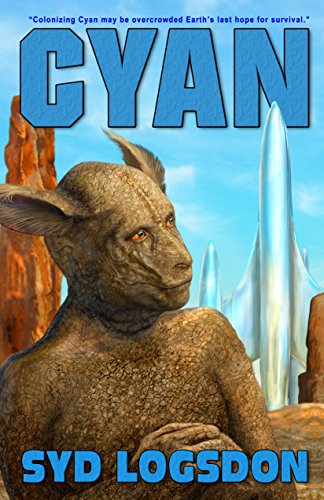




 A Writing Life