Tag Archives: science fiction

526. The Read Me Function

Never judge a book by its cover.

Sage advice, but largely meaningless. Covers sell books. A friend of a friend who writes romance eBooks advised me, if I ever published that way, to make sure that the cover looked like all the other covers for the same kind of book. She wasn’t talking about how good the cover looked. She was talking about branding. Did the cover scream at the top of its voice Romance, or Science Fiction, or Zombie Book.

I understood exactly what she meant, from sad experience. The cover for A Fond Farewell to Dying has an angel with a trumpet calling what appear to be dead folks out of some boxes. It fit the story only by a massive stretch of imagination, but it did look like one of those End of the World books that used to be popular. I found it once on a spinner rack of Christian books. Somebody got a surprise when they got home that night.

At least it used to be that you could pick up a paperback and read the blurb, but that is usually wildly inaccurate. The only hope you had, in the days when people went to bookstores and actually handled the books they were about to buy, was to read.

Imagine that.

Usually, the first few pages would tell you if you wanted to continue. That is why every how-to-write book you’ve ever read stresses making the first page great. That also works for selling manuscripts. If the first page is terrible, no reader or editor will ever read page two. Of course, there are fifty other hoops to jump through between a good first page and a sale.

At least a good first page might sell a book once it’s published and on the newsstand. The reader won’t come to hate you until he has slid into bed, with the light burning, and then finds out that everything goes south after page fourteen. All tucked in and nothing to read; and out a few dollars besides. Grrrrr.

So what do you do if you buy on line? You use the Read Me function, of course.

Technology giveth and technology taketh away, and the Read Me function is a pure gift. It’s like thumbing through the first pages of a novel by a new author in the newsstand to see if you like him (or her), but without the clerk giving you the stink eye. And you can do it in the comfort of your own home. It’s heaven.

It’s amazing how many books I haven’t bought, because of the Read Me function.

525. Highland Laddie Gone

This is one of the fifteen that hit the sweet spot.

Of all the books on my best list, this is the weirdest, hands down. It sings, but its song belongs on a Ray Stevens album. Highland Laddie Gone by Sharyn McCrumb is the funniest book in history, or an incomprehensible mess, depending on how well you understand the backstory.

Which brings me to my backstory. I am not a Scot, but my wife is. Her mother, a Swede, became more Scottish than the Scots in pursuit of her husband’s culture. I learned to love bagpipe music and appreciate tartans from her. I also got into the habit of going to the local Scottish Games every year, where I found this book in a Scottish book stall.

The Scottish Games are an odd mixture of athletic events, genuine Scottish history, and romantic historical claptrap, with the last being the strongest element. I love them, but I am not fooled about how silly the whole concept is. I like the games like some people like Benny Hill.

The Highland Games are about as realistic as a bunch of modern Virginia women shucking their skinny jeans for hoop skirts and sitting around sipping mint juleps while their husbands reenact the Civil War — and that happens in this book, too.

There is also a Scottish marine biologist who has come over for the summer on a grant to study the ecology of the Chesapeake Bay, only to find out that the man paying the bills really wants him to study Chessie. If you don’t know, Chessie is the Chesapeake Bay equivalent of the Loch Ness Monster.

Our heroine, Elizabeth MacPherson is attending the Glencoe Games, one of the bigger venues. She is naive, slightly overweight, and in love with glamor but can’t quite pull it off. She solves mysteries, although the reader is left wondering how, and she has a wicked tongue for countering catty remarks.

The more I describe Highland Laddie Gone, the more I can’t believe it is one of my favorites. But it is jammed full of the humor of juxtaposition, both linguistic and cultural. There are at least five one-liners per page. Example:

When Elizabeth falls for the visiting biologist’s Scottish accent, she tells him, “I love your rrr’s.”

Taken aback, he replies, “Yes, your arse is rather nice, as well.”

Elizabeth knows the fake Scottishness of the games, but little about historical Scotland, and absolutely nothing about modern Scotland. Cameron, the visiting biologist, has never seen a Game and finds them incomprehensible; he has no interest in history, and all he want to talk about are modern Scottish sports teams. He and Elizabeth spend the entire book talking past each other, with hilarious results.

Then Lachlan, the dealer in fake genealogies and associated trinkets, is killed with a skian dubh, a ceremonial dagger. The call goes out, and the local sheriff is just over the hill at a Civil War reenactment. He tells his troops to stop being dead until he gets back, and heads toward the Game at a gallop in the full dress of a Southern cavalry officer. He sees the death weapon and says, “This will be easy. How many of these things can there be?” The attendees have to tell him that every one of the thousand kilted pseudo-Scotsmen has a skian dubh in his sock.

Elizabeth decides to solve the mystery, and all her friends push her this way and that, hoping she will find the clues they are directing her toward. Eventually, she does find the killer, but she never has a clue of what has actually been going on.

The  joy of this book is all in the one-liners. I’ve given you a few; there are hundreds more in HLG, but you might miss many of them if you don’t know the Games or the Reenactments.

If this sounds like fun, but you are only into science fiction, you might try Bimbos of the Death Sun or Zombies of the Gene Pool in which McCrumb takes on science fiction conventions.

524. The Other Side of Dying

Atheism is not a satisfactory solution to life. It may be the truth — I’ve thought so for fifty-five years — but it isn’t satisfactory on many levels.

Religion, and it doesn’t much matter which one, is quite satisfactory, as long as belief holds out. The problem of death is solved by not dying, not really, just moving on to the next step in an ongoing life. I really miss the comforts of that belief. The question “why are we here?” is not really solved, but it gets kicked upstairs to the fellah at the higher pay grade, so we can stop worrying about it. Good enough; now we can get on with life.

Cyan, which is out now, is one of those novels that never gets into religion. There are thousands of them out there. However I grew up as a fundamentalist Christian, then changed my mind. That means religion plays a big role in my thinking and, therefore, in most of my writing.

My first science fiction book, Jandrax, concerns a group of fundamentalists stranded on an unexplored world. The hero is an ex-fundamentalist. Sound familiar?

My next SF novel, A Fond Farewell to Dying, concerned an ex-fundamentalist who had invented a mechanical form of immortality. Wish fulfillment, maybe? FFTD was designed to present a completely mechanistic world view, but about half way through the writing, unexplained things started happening in the manuscript. Events occurred that the hero’s version of immortality could not explain. Don’t blame me; they weren’t my (conscious) ideas, but clearly something in the back of my head was yelling “this isn’t enough.”

I left all the oddities in place. It is unwise to ignore the gods, or fates, or subconscious, but all my characters ended the book more or less happy with the result of their eternal lives.

My latest novel, Like Clockwork, takes place in a world where everybody lives forever, and nobody is satisfied. These are a group of people who were self-chosen for their disbelief, and given an alternative to death. They accepted, but have ended up with a massive case of buyer’s remorse.

I can’t tell you more, without giving away the plot, but their version of immortality is pretty screwy. I’m consciously bringing things full circle, with a work that is a deliberate flip side to A Fond Farewell to Dying.

There are two — or more — sides to every story. Fortunately, as writers we don’t have to know the philosophical truth of the universe. We just have to tell a plausible tale that resembles reality enough to please our readers. And if we get to exorcise a few personal demons at the same time, it’s a nice bonus.

523. Monkeying Around

This is about accuracy in discourse, and therefore applicable to writers, but it won’t seem so at first. Stick with me a few paragraphs and you’ll see.

The last week of August, there was a primary in Florida. In the aftermath, Ron DeSantis said the voters would “monkey this up” if they voted for his black opponent, and was slammed for making a racist comment.

Really?

I remember the Monkees, back in the Precambrian. Their theme song contained the words

Hey, hey, we’re the Monkees.
People say we monkey around.

I knew they were a fake band, but I never realized they were racists.

Knee-jerk liberals (that’s me, by the way) can look pretty silly when we overreach. Even people I respect were calling the monkey reference a racist dog whistle, and maybe it is. But let’s apply a little logic, in the form of Occam’s Razor.

What is the simplest and most likely explanation for the statement? There is no old saying “monkey this up” but there is an old saying “monkey around” and it is a simple extension to make that “monkey around and screw this up”. Millions of people have said that over the years, with no racial intent. My guess is that DeSantis was thinking “f—- this up”, and cleaned it up for television.

But I could be wrong. I don’t know the man and what I do know doesn’t impress me. “Monkey this up” may in fact be racist code, with built in plausible denial. If so, it worked beautifully. By assuming the worst, the liberal press has given the man massive publicity, and come off looking like fools.

As writers, on the other hand, we are in the business of not being misunderstood. See, I told you I would bring this around to writing.

Recently, I was revising an old novel. A young man and woman were about to move into a physical relationship, which was not not a love match. She was more excited than he was, because she lived in a small village, and he was the first male of her own age she had seen in a long time. He was planning to travel on in the spring, alone. He would tell her that in another line or two. This is what I wrote, years ago:

When he loosened the strings of her robe, she did not protest.

When I wrote that, the image in the mind of a reader would have exactly matched what I meant to say. There would have been no thought that he was forcing himself on her, or that she was reluctant in any way. In point of fact, if you had read a few sentences before and after, she was steaming.

That was then. Now, in the age of #Me Too, the phrase did not protest might be read differently than I intended when I wrote it. So I changed the line to read:

When he began to loosen the strings of her robe, she moved to hurry the process.

That is a pretty subtle change. To my mind, the two lines mean exactly the same thing, but they might not mean the same thing to a modern reader.

Readers read what we say, not what we meant to say. Communication isn’t entirely in our hands — readers do misread from time to time — but we have to do our best not to monkey things up. And no, that was not a racist dog whistle. That’s just me kicking the liberal press one more time for falling into a trap.

(Some) politicians (may) be in the business of doublespeak. They may bask in the comfort of plausible denial. Writers are not in that business. Our job is to say what we really mean, so skillfully that the reader is not confused about our intentions.

That is actually a fairly hard job.

Hiatus

Back in 2015 I started serializing things I had written. There have been novels, short stories, novellas, fragments, essays, and how-tos. First they came five days a week and later four days a week. All in all, I estimate that there have been between 700 and 800 posts in Serial, but I’m not going to count them. That would be too much trouble.

It has been three years, almost to the day, and I’m out of stuff.

I considered serializing Harold Goodwin’s Rip Foster novel. It is in public domain and I would love to introduce it to a new generation, but I decided against it, at least for now. Serial has been almost entirely mine, and I don’t want to screw that up. I could see serializing a series of public domain classics, but I doubt that I will.

I have two old novels, recently updated, which are out looking for a home. I have a new novel doing the same, and I see the completion of another new novel on the close horizon. None of those will appear in Serial since I am committed to seeing them published in the normal fashion.

There will be others, as well. I plan to keep writing until they nail the lid down.

I am not closing Serial. I can see several possibilities that would place more writing here at some time in the future, but none of them are likely to occur soon. So I am declaring a hiatus, not an end.

I’ll leave you with a picture of Snap working at his bench, in the shop called Like Clockwork. That’s the same as the title of the novel that is nearing completion.

Snap is still working, and so am I.

520. Beta Readers

This isn’t really a rant. Honest. If you had ever heard me rant, you would recognize the difference.

I find myself out of step with the modern world most of the time. I’m comfortable with that, but once in a while it catches me by surprise.

This comes of being an only child, raised on a farm, miles from the nearest small town. That is to say, alone. I also grew up in the era of the movie cowboy, the lone hero standing against the world. We’re talking John Wayne here; Clint Eastwood came much later.

In other words, I grew up in a place and time that preached individualism.

Today, we all cooperate.

That is, if we believe songs and movies and television and books, everything has changed. But has it really? I doubt it. We always cooperated on many things, and we still treasure the individual’s take on some things, although the balance between the two seems to be shifting. Even John Wayne always had some gang of scraggly misfits following along behind him.

I taught middle school as if cooperative learning hadn’t been invented yet. I could get away with that in the eighties and nineties, and a lot of other teachers had that same attitude. If I had to teach where “every child is equally and specially brilliant” — I’m quoting a TV ad for a private school — I’d rather drive a truck.

===============

So, what brought this to mind? Beta readers. The word is new, but the idea isn’t. Robert Louis Stevenson’s wife is rumored to have burned the first draft of Dr. Jekyll and Mr. Hyde, and didn’t like the rewrite all that much. We also hear that Mrs. Mark Twain often wasn’t too keen on what Sam Clements wrote.

Of course beta readers are more than censors. Ginny Heinlein always read RAH’s first drafts. She was agonizing about telling RAH that the first draft of Number of the Beast was not up to his standards, when an operation cured his mental fogginess and he saw it for himself. (It’s in the biography; I’m not claiming any special knowledge here.)

Since I always visit the websites of anyone who clicks a like button on one of my posts, I have been looking over the shoulders of a lot of young writers. I see people seeking beta readers and thanking their beta readers. They clearly think that beta readers strengthen the work.

Maybe. Even probably. Still . . .

It is certainly true that the editors who once filled that function are no longer as easy to reach. I also see the self-publishing advice that hiring an editor out of pocket before going to press is money well spent. Again, probably. It’s hard to spot your hundred and fifth grammatical error, after you have fixed a hundred and four.

Beta readers are all very twenty-first century, and I certainly have great respect for those writers who have the nerve to bypass traditional publishing. But for me . . .

Nobody reads a word I have written until it is checked and rechecked, read and reread, and then reread again a few dozen more times. By me, and only by me. It’s mine. I don’t share until I’m ready to publish. The first person to read my blog is you, and the first person to see one of my novels is an editor at some publishing house.

It’s all very much old school.

So beta readers need not apply to the old curmudgeon. But that’s just me. You’ll follow your own style. Writers always do.

519. The Lensmen (2)

Continued from Monday . . .

If you find the style of Galactic Patrol too old fashioned after two chapters, move on; you were born too late to enjoy it. But if you don’t stay, you will miss a menagerie of strange aliens, both sentient and otherwise.

No one has read all of science fiction, but I’ve read a lot. And in my slice of the SF universe, I have never found a writer who created more or weirder creatures than Doc Smith. I’ll describe just two; first Worsel:

. . . there was hurtling downward toward them a veritable dragon: a nightmare’s horror of hideously reptilian head, of leathern wings, of viciously fanged jaws, of frightfully taloned feet,  of multiple knotty arms, of long, sinuous heavily-scaled serpent’s body.

This is the creature who will become the second most formidable Lensman, and Kennison’s best friend. A third Lensman was Tregonsee:

This . . .apparition was at least erect, which was something. His body was the size and shape of an oil-drum. Beneath this massive cylinder of a body were four short, blocky legs upon which he waddled about with surprising speed. Midway up the body, above each leg, there sprouted out a ten-foot-long, writhing, boneless, tentacular arm, which toward the extremity branched out into dozens of lesser tentacles, ranging in size from hair-like tendrils up to mighty fingers two inches or more in diameter. Tregonsee’s head was merely a neckless, immobile, bulging dome in the center of the flat upper surface of his body — a dome bearing neither eyes nor ears, but only four equally-spaced toothless mouths and four single, flaring nostrils.

These are the minions of civilization; the baddies look worse.

Are these aliens too weird to be believable? Actually, the opposite is true. When we move beyond our solar system, if we don’t find aliens so outré that no science fiction writer could have predicted them, I’ll eat my keyboard.

Part of the power of these descriptions comes from E. E. Smith’s writing style. In flipping through the internet while writing this, I ran across a comment that if the Lensman series were to be offered for publication today, it would not be accepted. That is absolutely true, but it is also true that without the Lensman series, there would be no Star Wars, nor any other space opera. The Lensman series set the pattern that all others would follow, and nothing that came after was as good as the original.

Heinlein was Smith’s friend, and our best picture of him comes from RAH. He said that Smith was the original of the Gray Lensman, and that his wife was the original of Clarissa MacDougal, Kinnison’s sometime companion-in-adventure and wife-to-be.

Much of the charm of the series lies in Kennison’s Boy Scout incorruptibility. Those who say he has no personality are wrong. He simply has a personality that is out of the modern norm. Like Jesus. — which is exactly what he should be, as the end product of thousands of years of Arisan work in perfecting human DNA.

All this works, and the hundreds of weird aliens work, because E. E. Smith’s writing style is essentially naive. His rolling cascades of description could only come from someone who is incapable of embarrassment.

It’s been a long time since that kind of writer has been in vogue, and that day will probably never come again. But if you can achieve the right mind-set, you can still be amazed. The six paperback novels are available in any good used book store. Pass the clerk a ten-spot and the wonders of the universe will be yours.

518. The Lensmen (1)

This is one of the fifteen that hit the sweet spot.

Part of this appeared in Alien Autopsy (2), but this is an expanded version.

E. E. (Edward Elmer) Smith’s prose sings. I said that all my selections sing and I’m going to stick to that statement. I also said that that singing was a function of the story being told. Smith’s prose is like a heavy metal band in front of a driving beat, pumping their fists and screaming out in a harsh falsetto.

Doc Smith is the only writer I know above the age of twelve who uses capital letters for emphasis, as in —

All I can say in that you have the most important assignment in the Universe today, and repeat — that information MUST GET BACK TO BASE.     Galactic Patrol p. 23

Admittedly he only uses this sparingly, but if any modern writer were to use it at all, it would be tongue in cheek. Smith is completely serious. 

So why is he on my best list? Because no one is better than Doc Smith at what he does — pure evil, shining good, huge distances, dizzying speed, massive warfare, whole planets reduced to rubble, and a hero that is so perfect that Superman would retire if he ever met him. All this without a single blush; without even knowing that some of his fans might blush for him. That complete lack of a sense of the ridiculous is why the Lensman series works. Mankind is fighting for its life against an evil and overpowering enemy, every man must do his part, and there is no place for half measures.

Like Star Wars on steroids? No, that defames Smith and his work. Doc Smith invented space opera. Star Wars is the Lensman series diluted by a whole ocean.

[That, by the way, is me being over the top in homage to Smith, who lived over the top.]

Let’s take a moment to name the books in order.

                Triplanetary
                First Lensman
                Galactic Patrol
                Gray Lensman
                Second Stage Lensman
                Children of the Lens

Smith was not available in either of the two libraries that were the centers of my childhood universe, but when I got to college, one of my roommates was a fan. He wisely started me on Galactic Patrol, and I read through to the end of the series, then circled back. Take my word for it — keep the same order. If you start on the putative book one, Triplanetary, you’ll probably never make it past page five.

In fact, books four through six were written from 1937 through 1948, all appearing serialized in Astounding. Smith wrote Triplanetary in 1934, but it was a stand-alone. When he got a chance to get the complete series published in paperback, he rewrote Triplanetary to fit the others, wrote an entire new second book, First Lensman, and tweaked the rest. They fit together, and the first two have moments of excellence, but the last four are the essence of the tale. If you find the style too old fashioned after two chapters of Galactic Patrol, move on; you were born too late to enjoy it.

Continued on Wednesday.

517. The Three Stages of Heinlein

This is one of the fifteen that hit the sweet spot.

As I look back over my five hundred plus posts, I find Heinlein mentioned more than any other writer. I’m not going to repeat all that I have said, but I will provide links for you to see for yourselves.

You might think RAH is my favorite, but he isn’t. That would probably be Zelazny. When I was new to science fiction, in the fifties and sixties, it would have been Andre Norton. However, Heinlein is the one I most enjoy reading. His prose sings, but in an odd kind of way. He is like a weird uncle who sits by the fire telling lies and funny stories, occasionally laughing out loud at his own jokes, and getting serious just often enough to keep from looking like a clown.

But he does it so well.

Heinlein has been through three stages as an author. At first he was the master of compact, carefully plotted works, both short stories and novels. That was what publishers demanded at the time and he produced some masterpieces. I reviewed five of them in one post.

Then came Stranger in a Strange Land, his most popular book, and a dud, for my taste. That was the start of his inflated period, which continued until his death, as his books got longer and more discursive. He gets a lot of criticism for long windedness, and deserves all of it, but some of those works are my favorites.

Alongside his early work, Heinlein produced a number of juveniles (as they were called then) and some of them were of top quality. I reviewed several briefly, just this month. At the end of his list of juveniles is the book that Scribners rejected, Starship Troopers. It is another favorite of many, myself decidedly not included.

Heinlein had a thing for group sex and a short but pleasant relationship with the rock group Jefferson Starship.

Actually, I’ve talked about RAH more than I had realized. Maybe I need to give him a rest for a couple of years.

514. Space Force

As a die-hard space fan you might think I would like Trump’s Space Force idea, but I’m too much wedded to reality. This is just another publicity stunt, although there is a real history behind it.

The Russians had an independent Space Force from 1992 to 1997, and again from 2001 to 2011. Then they gave it up and made it a sub-set of the Russian air force. That’s not as sexy, but it makes more sense. It is also the way we have things organized here in the United States.

The poor Air Force! They have made a career out of trying to make space their domain, only to be slapped in the face by bureaucracy. Do you remember project MISS? No? Nobody else does either. MISS (Man In Space Soonest) was a plan to put a man in a capsule and shoot him into space on top of a converted ICBM. Now does it sound familiar? It was an Air Force project that was handed over to NASA and became Project Mercury.

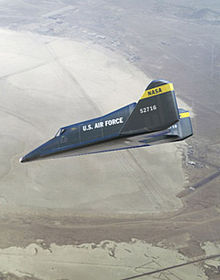
The Air Force followed up with project Dyna Soar, which would have put a winged vehicle on top of a rocket. It was cancelled because the money was needed for NASA. At the top of the post that is an artist’s impression of Dyna Soar landing at Edwards AFB after a mission.

Then the Air Force designed the Manned Orbital Laboratory, a black program which would have been America’s first space station. Cancelled; this time not by bureaucracy, but because of unexpected advances in unmanned satellites which made it obsolete before it flew.

The Air Force did provide input into the design of the Space Shuttle, and got to do some black missions. What were they? Beats me; they were secret.

The Air Force had a hand in several post-shuttle projects which never went to completion and finally got their own space ship in the X-37b. Sadly, it was unmanned.

As you can see, I’ve been writing a lot about all this. If you click on these four links, you will have a thumbnail history of NASA vs. the Air Force in a battle for space.

Now Trump wants to take space away from the Air Force altogether, but don’t blame him. He probably knows less about this than I do, and I am just an amateur enthusiast. Maybe he should click four times.

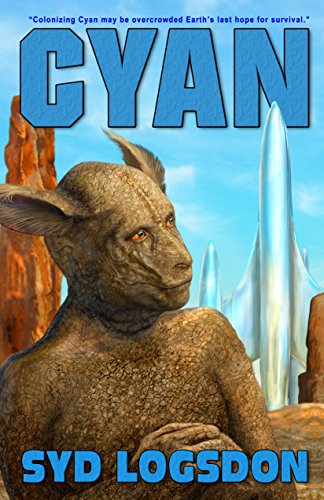
Enough of the latest publicity stunt. In Cyan, my explorers coming back from the Procyon system also faced a conflict that had been going on between NASA and a military space force while they were away. Here’s a quote:

All seemed well, on the surface, but something profound was happening to the people of Earth. They were waking up to reality. When interstellar exploration had begun, few had taken it seriously. Now the process was flushed with success, and that success carried the seeds of its own downfall.

Suddenly, all over Earth, people who had been indifferent to space travel, except to mutter about a waste of resources, became truly aware of what was happening. And they didn’t like it. In the vague common mind of the beast, numbers began to move in slow, painful calculations.

A few thousand colonists; billions of the rest of us.

They — the rich, the powerful, the smart, the educated, the lucky — they will go to the stars and walk the green valleys of paradise. We — the downtrodden, the ordinary, the workers, the plodders, the ones who really make things happen, the ones who always get screwed — in short, you and me. We will stay behind.

In the general elections of 2103, and in a hundred scattered elections and revolutions in 2104, the people of Earth turned on their leaders and said with a loud voice that the spacers who brought in the ore from the belt, and the workers of L-5, and especially those who were finding new worlds, were no longer heroic friends but dangerous enemies. They would no longer be given freedom to do as they pleased, but would be harnessed to the common good.

This was the Earth Darwin returned to in 2105. When Tasmeen signaled Ganymede Station, she received a taped reply.

“Welcome home, Darwin. You will find the language of this year somewhat different from when you left. When the Dog Star returned in 2088, we found that it would be best to train comtechs in the jargon of your departure year, and that is the reason for this tape.

“The biggest change you will have to be ready for is that NASA no longer exists … because after the general elections of 2103 the people of North America decided to combine all space efforts into one military organization. You are all now members of the Federated Space Service.”

Tasmeen said, “I have a bad feeling about this.”

Yeah, Tasmeen. Me, too.