Tag Archives: science fiction

Update

Last Friday, I added this to the post Machine Porn, and to the post How to Get Readers for your Blog.      Just so you know . . .

Friends, I am amending this post as of June 1, 2018. I am changing it’s title from Machine P o r n. I have had more hits on this post than on anything I have written, but I have obviously just been generating frustration among those who clicked on purely because of  the word P o r n. You will notice that I have also hidden the word itself from the view of search engines.
I like hits as much as the next blogger, but I’m not into misrepresentation. I am leaving the post otherwise intact, since it does have something non- p or n ographic to say.

If I had made a list of “Things I expect to happen now that I am a blogger,” this would not have been on the list.

494. We Can Have Archaic and Eat it Too

Marquart rode into my life on horseback. The day after my epiphany, I had a couple of hours off. I was in the Navy at that time, working as a dental technician in an oral surgery, and we had back-to-back cancellations. I wasn’t a writer yet, just an over-committed reader, but I had written the first chapters of a dozen novels. That was usually as far as I got before the impulse ran out.

I took that two hours to write Marquart and his companion’s entry into the Valley of the Menhir. You can see what it eventually became over in Serial today, but it took a long time to reach that level of sophistication.

When Marquart first rode into the valley, forty-six years ago, he was riding a horse. It was all very medieval because I hadn’t done any world building. All of the religious aspects aspects of the story, enreithment, the relation of souls to bodies, and both to ai — even the existence of ai — were nowhere in my mind. It was just a bunch of soldiers in armor riding horses into a valley populated by deer and dotted with oaks. The only fantasy element was a werewolf. I didn’t even know then that shapeshifters were not native to the world of the menhir, having been brought in through the Weirwood menhir from the world of Lorric by the Shambler. I didn’t even know there was a Shambler, nor any of the other gods that you met during the last two weeks.

After two hours I had a short chapter, and the next customer knocked on the door, ready to have his wisdom teeth extracted. I put the chapter in a drawer. I wasn’t a writer then, and had no intention of becoming one.

Three years later, I decided to give writing a try and got hooked. Two years after that I pulled out that chapter, dusted it off, and started world building.

All this was about the time of the fantasy revival led by Ballantine, and there was no lack of books on how to create fantasy worlds. Purists were arguing that a simply medieval world hardly qualified as fantasy. I could see their point. Although it never kept me from enjoying fantasies that did not rise to that standard, I decided that horses just weren’t going to work for me.

During those Navy years I had lived near the San Diego Zoo Safari Park. On one trip there I had seen okapi, had fallen in love with them, and now added them to the book. That lasted about a week before I realized that I needed a true fantasy creature, not just a real one most people had never heard of, so I created kakais in okapi’s much jazzed-up image. Their heavily sloped backs — much sharper than okapis —  gave me the need and opportunity to design strange saddles which would require unusual practices for troops in the field. They also gave me reason to design a harsh culture for the riders of the plains, the Dzikakai (literally, men of the kakai) who were going to be the perennial enemies of the people of the Inner Kingdom.

Okapi.

Eventually, I populated the world of the menhir with a mix of “normal” and created critters. Besides kakais, I brought in tichan as bovine substitutes, added krytes (described and used for plot purposes)  and jaungifowl to my list of birds, made my bears red, and kept ordinary squirrels and deer.

Plot building, world building, and language building all took place as I wrote successive drafts. I don’t recommend the technique. Not only did it take me decades to finish the project, but I ended up with at least a hundred thousand words of text that had to be cut out as the project grew out of hand. Maybe a few chunks of that will end up in Serial late this year, but most of it will never be read by anyone but me.

Still, I doubt if this particular fantasy could have been written any other way, so I guess I shouldn’t complain. At least that’s what I tell myself.

During all this, I went to Westercon 33 in Los Angeles in 1980. I sat in the audience of a lugubrious discussion of what the magic horses in Lord of the Rings ate, and whether it was Tolkien’s responsibility to tell us. (My answer, unspoken as I gritted my teeth, was, “No, you damned fools, it wasn’t!”)

This was followed by a spirited but deeply nerdy debate on the use of language in fantasy. The language of the Inner Kingdom in VOTM was just beginning to come together for me, so I perked up my ears. The idea of archaic language was floated, and someone said that it should only be used as a spice in regular English. The concept spice morphed into general food terms, and the metaphor had become almost embarrassingly labored when one member of the audience stood up and said:

“Are you trying to tell us that we can have archaic and eat it too?”

I wish I had said that. Maybe sometimes we do try too hard.

489. The Cost of Empire 4

This is the last of four posts from The Cost of Empire. Click here for post 1.

Jons had locked the lever, so Daniel gripped the rail in front of him and looked for the shark. By the time the Anne of Cleves had turned far enough to see it, the American had almost reached the outer line of ships. It seemed to be headed toward the narrow gap between two freighters. Daniel took bearings continuously, sending them to the Commander as fast as he could refocus. He marveled at the American’s audacity, and wondered how soon he would shear off.

He didn’t.

The American sub plowed along, passing before the Brixham, causing it to waver and turn partially aside, then turned hard to port and took station inside the convoy.

No, he didn’t take station. The shark did not slow down. It forged forward between the Naesby and the Bamburgh Castle, slick as a knife through butter, far faster than the freighters on either side. Then it made another hard turn across the Naesby’s bow and left them all behind, heading due north. Daniel continued taking readings on its retreating fin as it shot away, twice as fast as the ships in the convoy.

#                   #                   #

Old Ugly was a small ship with a small crew. Even Commander Dane was only in his mid-thirties, but that made him the oldest officer aboard. Daniel and David, just out of the Air Academy, were the youngest and least experienced. That made them the dogs of all work aboard the dirigible, constantly shifting duties through engines, gas bags, navigation, communications, ranging, and munitions. It was a great way to learn a lot, fast.

That night in the officers’ mess, Daniel and David took places on benches opposite each other at the bottom of the table. Commander Dane was in the single chair, bolted to the floor at the head. He mumbled some pleasantries until they had all begun to eat, then said to the assembled officers, “Today we had another demonstration of what the Americans are capable of, and what they are willing to risk. Mr. James, what was the top speed they demonstrated?”

There was a trace of a smile as he asked, and Daniel sighed softly. He was reminding Daniel of the two slight errors he had made today. It was Dane’s way of keeping all his men on their toes. Daniel answered, “Thirty-one knots, Sir.”

“Do you think that was their actual top speed, or were they holding something back from us?”

“No way to know, Sir.”

“Guess.”

By now Daniel knew it was better to be wrong than to be timid. He said with no apparent hesitation, “Probably not their emergency top speed, but their operating top speed, Sir.”

“Why? What is the basis for your estimate?”

“They were showing off, Sir. They always seem to be showing off, but this was more than audacious. This was actually dangerous, yet they did it anyway. Given that it was a show, and that they are showmen, if they could have gone faster, they would have.”

Dane nodded with no further comment and turned his attention to his next victim. Every meal at the officers’ mess was like an oral exam.

This evening Dane worked his way down the table, with a different mental task for each officer present, and ended with David.

“Mr. James — Mr. David James — tomorrow you will take your cousin with you — or he can take you with him, damned if I can tell you apart — and inspect the entire ship from bow to stern.”

“Yessir,” David interrupted, “but its easy to tell us apart. I’m the good looking one.”

“Debatable. As I was saying, you will inspect the entire ship from bow to stern, outside the gas bags.”

“Sir?”

“You do know how, don’t you?”

“In theory, Sir.”

“See Lieutenant Ennis about putting that theory into practice. But don’t waste more than ten minutes of his time. You won’t really understand it until you’ve done it.”

That’s all you get for a while. I’ll sound trumpets and send up fireworks when it gets published. SL

Serial Novels

Continued from earlier this week, when I discussed the Serial posts that were also writing how-tos.

I’ve been writing a long time, with some publishing success, and long years of drought. I’m not going to say, “But the things that didn’t get published are still good!” If you have been reading Serial, you already know that.

Here is the full list of my novels, not counting fragments.

Contemporary novels: Spirit Deer, Symphony in a Minor Key, and Raven’s Run.

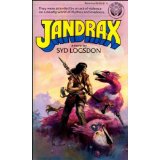
Science fiction: Jandrax, published 1979,  A Fond Farewell to Dying, published 1981,  (and the novella To Go Not Gently which was extracted from it in 1978) and Cyan which is presently available. 

Fantasy: Valley of the Menhir, Scourge of Heaven, and Who Once Were Kin.

Steampunk: The Cost of Empire and Like Clockwork.

The Cost of Empire is freshly finished and looking for a publisher. Like Clockwork is in progress as we speak, and a little more than half done. You won’t be seeing either of them in Serial, but I’ll tell you when to start looking at your local book seller.

Valley of the Menhir and Scourge of Heaven are a single story, long enough for two novels, with a natural break in the middle. You won’t be seeing them here. 

488. The Cost of Empire 3

This is the third of four posts from The Cost of Empire. Click here for post 1.

Another repeater above their heads spun, giving the tillerman a new bearing. He released the stop and heaved the chest high lever to his right. A linked lever in front of Daniel moved with it and he grabbed hold to add his strength. The tillerman could move the great ship’s rudder alone, but in time of need the Eye officer’s added power made things move faster.

Of course, faster is a relative term. Old Ugly never maneuvered with anything like speed. Now her bow swung slowly to starboard. Daniel could feel the increased trembling in the platform underfoot as her engines quickened far below and behind him.

Daniel’s arms felt the jolt as Jons locked the lever. Following the course was Jons’s duty; taking bearings was Daniel’s. Now he said, “Commander, the shark is moving parallel to the convoy, at high speed. Specification follows.”

David’s hands went to the sides of the cage surrounding his helmet, playing the levers there. He focused on the shark’s fin, set a lever, waited a slow five count, focused again and reset. Then he reported, “Twenty-nine knots, Sir.”

He heard the Commander acknowledge, then add, “Farragut class. We are honored by their newest.”

That didn’t require a response, so Daniel kept his mouth shut. They were moving to cut the sub off. Fat chance! The new diesel engines in that sub were much more powerful than the naphtha vapor engines in the Anne of Cleves, but also much too heavy for an airship to use.

Now the shark’s fin turned toward the convoy. Daniel had been waiting for any change in velocity. He took a bearing as it turned, counted a slow five, took another, and said through the speaking tube, “Changing course toward the convoy. New bearing coming on repeater. New speed — twenty-seven knots, but accelerating.” Daniel was taking readings continuously now. “New speed — twenty-nine knots. New speed — thirty-one knots. New speed — thirty-one knots. He seems to have maxed out.”

Daniel gritted his teeth at having added that unnecessary interpretation. The Commander didn’t need him to state the obvious.

“Thank you, Mr. James.” There was a judiciously measured touch of ice in Commander Dane’s voice and Daniel felt a flush in his cheeks.

He swallowed his embarrassment and continued taking bearings. The dirigible had made two more course changes; he had not aided Jons because all his attention was on the oncoming shark’s fin. The Anne of Cleves was small and slow, but she had an advantageous position.

Far below, Lieutenant Ennis and a crew of men had dragged up a spherical object, and now crouched around an open hatch. Commander Dane was calculating and estimating, based on Daniel’s continuous barrage of information. He ordered the drop.

Daniel saw a small black object fall into his field of vision, locked his monocular on it, and followed it down. It hit the water a dozen feet behind and to the left of the fin. He reported, then grabbed the linked lever. The sub has passed out of sight and the new bearings meant turning Old Ugly almost completely around. He and Jons fought the massive force of the rudder, and the dirigible slowed perceptibly as it swung onto its new course.

Through the strain on his body and the pounding of his heart, Daniel heard the Commander’s voice:

“A good try boys. When we bombed the Germans we usually hit our targets, but a stationary target is different from a moving one. It would have felt good to see a bladder of seawater burst on that American’s control deck. Still, we can console ourselves with the idea that they’ll wonder what we actually dropped.”

Jons snorted, and said, “Seawater, my ass, Sir. Brinley has been collecting urine all week. Now I know why.” more tomorrow Click here to jump directly to the final post.

Serial Education

Continued from last week, when I started to talk about what has already appeared in Serial.

Starting January 20, 2016, I presented a long fragment of the unfinished novel Voices in the Walls. I won’t give details, since you can read for yourself, but it was a teaching event. I interlaced the novel fragment with a chance to look over my shoulder as I worked. That turned it into a how-to for new writers.

#           #           #

Here is a bit of unavoidable nerdishness. I should have transferred Voices to Backfile. I didn’t. Time is short and work is long, and I never found the time to get it done.

You can still read old multiple posts, but it can be a major PITA (pain in  . . . ) because they are presented in archives last-first, and you want to read them first-first. Worse still, archives does not distinguish between AWL posts and Serial posts, so you have to read every alternate one.

It isn’t really hard if you know the secret. Here’s how it is done. At the bottom of each post are right and left arrows to the next/previous post. If you start with the first post of VITW, read it, then click the right arrow, it will take you to the next post. Unfortunately, in my world that will be the same-day post over in AWL. Slide down through that post and click the right arrow to go to the next day’s post of Serial. And so forth.

It goes quickly after a few clicks to get into rhythm. Try it. VITW is worth your time.

#           #           #

The entire novel Jandrax followed. It was and is available in used bookstores both locally and on Amazon, so it was not a lost work, but I included it with annotations. If you just want to read Jandrax, buy a used copy. Clicking through 92 posts isn’t worth 95 cents. But if you want to read the annotations in which I discuss why I did what I did, and confess to my screw-ups, it’s all there for you to enjoy.

more tomorrow

487. The Cost of Empire 2

This is the second of four posts from The Cost of Empire. Click here for post 1.

Submarine wasn’t entirely a proper term for the American craft. It had started as an improvement on their Hunley types, using the new engine devised by Rudolph Diesel, but because the engine had a hunger for air, they rarely submerged. The British called them sharks, because the only part anyone ever saw was the narrow fin that stuck above the water. The whole British Navy knew from direct experience was that they were fast while on the surface — faster than any ship in the British fleet.

Her Majesty’s Navy hated that.

America was not an enemy nation — technically. They had taken neither side in the German War. British-Americans and German-Americans had each lobbied Washington, but America had opted for neutrality. Actually, they acted more than a little holy about that.

That didn’t stop American sharks from harrying British convoys. There was no reason for it. It was just another game in which America flaunted her independence and self-righteousness. And any game that the British enter, they have to win. For Queen and Country. And just to prove that they are the best — especially Sub-Lieutenants.

Daniel tossed his canary to David and went down the starboard ladder in the unapproved manner, hands and feet outside the rungs, using friction to keep his descent just short of free fall. He hit the lower catwalk at a run and sprinted forward, past the last gas bag and up a sharply slanting ladder to the Eye of the ship. That was his battle station in this week’s rotation.

The tillerman was already there, of course. When not at battle stations, he stood his watch alone, translating the Commander’s orders into vertical and horizontal movements of the control surfaces. It was no easy task, and the ratings who qualified for the duty were uniformly big men, with bulging thighs and massive deltoids. Daniel slapped the tillerman on the shoulder to squeeze past him. He was a rating whom Daniel knew only as Jons, since his Welsh first name was unpronounceable. Jons nodded and eased aside. There was barely room for the two of them.

The Eye was in the foremost part of the ship, a tiny platform studded with ratcheted levers designed to allow one man’s unassisted strength to move the great rudders and elevators back at the rear of the craft.

Daniel struggled into the half-helmet and fastened the strap beneath his chin. Now his left eye was covered by a powerful monocular and his right eye was free. He could shift from detail to panorama by changing eyes. It took some getting used to, since opening both eyes at once caused a visual blackout. An hour in the half-helmet meant a headache that would last the rest of the day.

“Sub-Lieutenant James reporting, Sir,” he said into the speaking tube at his chin.

Commander Dane’s voice echoed in his ears, calm as always, “Daniel or David?”

“Daniel, Sir. Sorry.”

Jons pointed off the starboard bow, keeping him from a second embarrassment. Daniel managed to focus on the shark by the time the Commander asked, and was able to answer instantly, “I have it in sight, Sir. Bearings follow.”

He reached overhead and pulled down a head cage of silver, brass and mirrors. He slipped his half-helmet into the cavity and magnets snapped it into place. David looked at the ten foot red band on the flagmast of the nearest cargo vessel, set his verniers, chose another ship further back and to his left and repeated, then focused on the moving fin and pressed a button to finalize. The cage had monitored his head movements with great accuracy. Now the hundreds of gears in the babbage spun and sent the result down to the repeater in the control car. more next Tuesday. To jump straight there click here.

Serial History

Over the years, those who have been with me from the start have seen a lot of fiction appear in Serial. Newcomers may be surprised at the list which follows, here and over the next two days. The level in the well of unpublished work is dropping, and I have been agonizing for about six months on what to do next. I’ll tell you what I’ve decided as soon as I decide.

Cyan doesn’t belong here. You can buy it at Amazon, — and why haven’t you? — so there is no point in serializing it. A Fond Farewell to Dying won’t work either since the novella version, mentioned below, was already presented. Besides, it is still available used, although somewhat hard to find.

Since I began Serial, I have published my few short stories, and my poetry has been scattered about A Writing Life. I have one additional short story which is under construction and another which was written for an upcoming anthology, but nothing is available to publish here now.

I have non-fiction on science fiction relating to my appearance at Westercon 34 in Backfile, and relating to Westercon 70 scattered throughout May and June of 2017, in both AWL and Serial. Go to Westercon in the top menu for links.

Five pieces of long fiction, from 30 to 130 posts each, have been serialized here, starting with the novella To Go Not Gently, from Galaxy. TGNG consisted of the first third, slightly modified, of my then novel-in-progress A Fond Farewell to Dying. John J. Pierce of Galaxy magazine bought the novella version, but he didn’t like the name and suggested To Go Not Gently. I presented it in Serial, then transferred a more readable form to Backfile where you can still find it.

more tomorrow

486. The Cost of Empire 1

These next two weeks I am devoting four posts to an excerpt from my new steampunk novel The Cost of Empire.

Chapter One — Tick, tick 

There was a light haze over the sky above. The sea five hundred feet below sparkled, but the glare was easy on the eyes. It was typical North Atlantic weather for May, in the Year of Our Lord 18—, and of the Reign of Queen Victoria, year forty-seven, aboard Her Majesty’s Consort Class Dirigible, Anne of Cleves.

Daniel and David James saw none of this. They were busy clambering over, under, and about the two McFarland engines, looking for cracks or pinholes, and sniffing for the distinctive smell of leaking fuel. It was a bit of tricky business, since the engines continued to snort and whirl all the while. They were a maze of polished brass and shining gears, with shafts of oiled steel feeding power to massive cranks that sent power to the air screws. You could lose a finger — or a head — if you put it in the wrong place while crawling about.

The inspection never took less than twenty-five minutes, and they repeated it every three hours. There was no slacking of discipline as Her Majesty’s airships, filled with hydrogen and fueled by naphtha, were floating bombs.

Daniel climbed the short ladder to the catwalk as David did the same from the other side. Their first words were scripted by discipline. Daniel, who was senior by one week, asked, “Starboard engine report?”

David replied, “Starboard engine clean and tight. Port engine report?”

Daniel said, “Port engine clean and tight.” And he added, “Tick.”

David grinned and mimicked, “Tick.”

The ratings below glanced up from their work. Two smiled and one shook his head. The two cousins moved forward to a pair or racks and picked up canaries to continue their inspection. Canaries were not birds, although canaries in mines had carried out the same function fifty years previously. These canaries were thirty foot long poles of hex bamboo, with heavy glass syringes capped with valves, on one end. Daniel and David ascended the port and starboard ladders, with one hand for the rungs and the other for the canary, and managed to turn their ascent into an entirely unnecessary race.

Sub-Lieutenants are more than a little like puppies when no higher rank is watching. When they rejoined at the upper catwalk, David, who had arrived half a rung sooner, said, “Tick,” and Daniel responded in kind. They separated, Daniel going forward and David aft, then worked back toward each other.

The ring ribs divided the dirigible into many small coffers, any one of which might accumulate hydrogen leaking from a gas bag. The upper catwalk was high enough that the canaries would just reach the upper arch of the ship. Daniel dropped the lower half of his canary over the handrail so that it rotated to vertical, then shoved it up to within an inch of the outer skin. He pulled the lanyard connected to the syringe and it sucked in whatever gas was at that high arch. He then lowered it to his level and triggered the sparker inside the syringe.

Ratings called this making the canary fart. If there was leaked hydrogen in the heavy glass syringe there would be a brief, contained explosion; then everyone would be on instant alert until the leak was found and fixed.

No explosion occurred. It almost never did, but vigilance never let up. Daniel moved to the next coffer to repeat, and shouted down the catwalk to David, “Tick.”

The reply he got was unexpected. Full Lieutenant Ennis, all of twenty-seven years old and called Grandpa behind his back by the Sub-Lieutenants, stuck his head above the upper catwalk and shouted in his quarterdeck voice, “Damn your ticks, Mr. James. We all know we are on a vessel full of hydrogen and naphtha. We don’t need your infernal tick, tick, tick to remind us that we live inside a bomb. Now get below, stow those canaries, and man your stations. We’ve sighted a sub.” more Thursday. To jump straight there click here.

485. Uhura With a Dagger

Imagine Lieutenant Uhura in a different outfit, with a dagger at her belt, looking even sexier than usual. Actually, you don’t have to imagine, just check out Mirror, Mirror, which is simultaneously a pretty good piece of original Star Trek and one of the worst Star Treks ever.

How’s that? From the viewpoint of drama Mirror, Mirror is good television. From the viewpoint of logic, it stinks. Even though the alternate universe version of the Federation is completely changed and utterly barbaric, every member of the Enterprise crew is still at the same post, and the Enterprise is still in orbit of the same planet, going about the same business on the same day. Really?

Usually I don’t worry too much about accuracy in Star Trek. It is best viewed as  allegory, or as an attempt to make a decent SF program with minimal cost. I forgive a lot, but this one keeps me groaning more loudly than most.

#                #                #

As Mirror, Mirror shows us, building an alternative universe is no occupation for the lazy. But it sure can be fun. And if that universe has a steampunk attitude, all the better.

I spent the last half of last year writing a steampunk novel called The Cost of Empire, set in an alternate world in “the Year of Our Lord 18—, and of the Reign of Queen Victoria, year forty-seven”. It could be called an alternate history, but I made sure that most of the alternatives taste like steampunk, even though it doesn’t have werewolves or zombies or Jack the Ripper. Or automatons, although the sequels will. In fact, the whole intent was to provide a steampunk world that doesn’t depend on magic or unsupportable science.

Here’s the setup. After the Austro-Prussian War (real, 1866), a ruthless English businessman named McFarland (imaginary) stole an obscure type of engine (real, but forgotten today) which allowed him to produce useful dirigibles long before the Germans. He also started an organization of spying, disinformation, and assassination (imaginary, we hope) which allowed him to provoke and win a war with newly unified Germany, bringing England to universal power. In the process of suppressing German inventors, McFarland has skewed the course of science, prolonging the age of steam and clockwork.

To make this work, I had to shift a few dates, but not many and not by much. That is the reason, besides mimicking Victorian style, for the vague 18— date in the quotation. The challenge I gave to myself was to make big changes through the introduction of a single character.

So our story begins with England as the world’s most powerful nation (even more and sooner than in our reality) but hated by everyone, and with a fatal hidden flaw at its heart. England’s fleet covers the oceans, with dirigibles as eyes-in-the-sky above.

Our hero is about to fall afoul of the secret organization of assassins, escape, and spend the rest of this and hopefully several other novels fighting to free his nation from their grip.

The next two weeks will be devoted to the opening pages of that novel here in A Writing Life. As has happened a few times before, Serial will be tied up with other things.