
Tag Archives: memoir

Symphony 51

He shouldn’t have run. Until then, he had been clean in conscience and in action. Running had weakened his position; worse, it had shown a weakness within him that he had not known was there. In the six months since the incident, he had faced that weakness, and had grown because of it.

Still . . .  If he had stayed, he would never have met these children. They were so fresh, so new, so open and unafraid of the world around them. They were like Neil had been before Alice Hamilton. Their Alice Hamiltons were all still ahead of them.

He loved them. There was no lesser word to describe the warmth he felt whenever they flowed into his room like a river of life. It didn’t matter that some of them were rowdy, that some of them were incorrigible, that some of them were — be honest; use the right word — stupid. None of that could stand up for a moment against the sheer elemental liveliness of them. Little Randi Nguyen, face shining, skinny legs sticking down from her shorts, standing her ground to correct him when he made a misstatement. Oscar, so cool, so self-contained, but containing what? What mysteries made him turn against his intellect and act out a dumb-Mexican stereotype? All of them, even Tony Caraveli and Jesse Herrera, were precious to him, each in his or her own way.

Carmen broke his reverie with an unpleasant, “Ugh!”, and he smelled the sugar processing plant at Manteca. It fouled the air for miles around. And with that honest stench in his nostrils he admitted that, for all his other feelings, he could kill Jesse Herrera sometimes.

Apparently the silence had become uncomfortable for Carmen. She said, “How are things going for you after two months?”

Her question fell false on his ear. He said, “Fine,” and let the silence put its pressure on Carmen again. Whatever was wrong between them, was her problem. He could do nothing about it until she gave him some clue what it was all about.

Two miles slid away beneath them. She was concentrating on her driving now as the oncoming cars had the rising sun full in their faces, and were two-thirds blinded. Finally, the road widened to four lanes again, and she visibly relaxed.

“Tough driving,” he commiserated.

“I hate it. I would rather drive through the heart of L.A. than through that stretch of highway.”

She was quite a good driver, but he couldn’t say so. The compliment would sound false. Neil looked out the window to hide his irritation. It looked like it would be a long day.

The coast range rose up before them, low, golden-brown, and rounded like breasts in repose. Now, in late October, the grass was grazed to the ground and they were empty of animal life. Someone — Tom Wright — had told him that they were as green as the hills of Ireland in the springtime, and that for a few months they were covered with fattening cattle. It was hard to believe.

“I’ll have to come this way in the spring.” Neil said. “Tom said these hills are beautiful then.”

“They are,” Carmen responded. “If you really want to see something beautiful, though, go eastward into the foothills. They are similar to these, but with scattered live oaks, and they are covered with California poppies in the spring. These hills are pretty enough, but they are so overgrazed that the wildflowers really don’t have a chance.”

That, Neil thought, is what I’ve been wanting. An ordinary conversation without all those overtones of hostility. more Monday
440. Pearl Harbor Day is Tomorrow

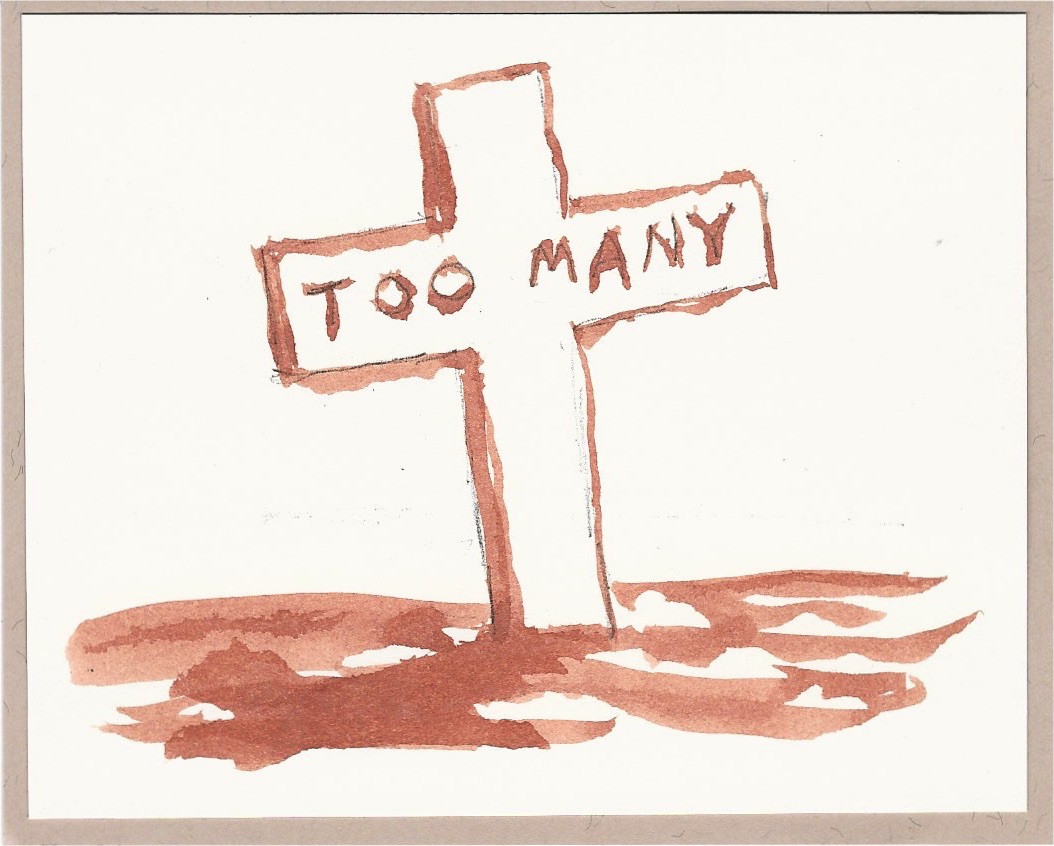
Pearl Harbor Day is tomorrow and for the third time, I am not going to write about it directly.

In 2015, I used Pearl Harbor Day as a jumping off place to discuss the decision to go to war in Iraq.

In 2016, I used Pearl Harbor Day as a jumping off place to discuss Japanese Internment.

In 2017, I am even less able to salute and shout hallelujah than I was on the last two times Pearl Harbor Day rolled around. Things are even worse than they were then.

Do I think we were shouldn’t have retaliated to the Pearl Harbor attack? Don’t be absurd.

Do I support disarmament? I wish I could, but it would be national suicide.

Am I a veteran? Yes; and I would love to be the last veteran.

Am I a pacifist? Don’t I wish. I would love to live long enough to be able to say yes to that, but I won’t. Neither will you, and you are younger than I am.

There are times when we have to fight and Pearl Harbor signaled one of those times, but our national default setting should not be attack. We should fight rarely, and only when necessary. For many years now, we have been doing a terrible job of deciding when to fight, so I find it hard to wave the flag. Someone might think that means I’m ready to start shooting.

Tomorrow is Pearl Harbor Day. It is also the forty-fifth anniversary of the last manned moon launch. I think I’ll write about that.

Symphony 50

“For now, Carlos, you will read with the group in the fifth grade book. Later, we’ll see. Give me that detention slip.”

Carlos fished it out, looking puzzled, and handed it over.

Neil took it and said, “Now you have a decision to make. Have you learned that I won’t put up with rebellion in my classroom, or would you rather take this home for your mother to sign and have her see that you were defiant?”

Carlos brightened when he saw that he was going to have a reprieve. He said, as if by rote, “I understand that you won’t put up with no defiance.” There was so much relief in his voice that it left no room for sarcasm.

Neil crumpled the form and tossed it into the trash. Then he motioned with his hand and said, “Go play.”

Carlos disappeared, as if by magic.

# # #

Grouping his readers was no panacea. It cost Neil time he would have like to use for language, because he had to teach reading three times a day instead of once, and it threw the students who were not reading onto their own resources. That worked well enough for the high readers. When he was working with the low readers, the high readers were quite capable of doing independent work in language. For the low readers it was a problem. If they could not read, they certainly were not self-sufficient in their language studies. Within a week, Neil was feeling ragged from shuttling between groups, and the misbehavior was way up. Students who are left alone to work by themselves at materials which are essentially above their grasp, will find other ways to amuse themselves.

But . . . the children could read.

# # #

At the end of that first week of leveled reading, Neil got a day off from teaching. On that Friday, he and Carmen went to Oakland to a conference.

Conferences and in-service training are a blessing and a curse: a blessing in that they allow teachers to stay up on the latest thinking in their field, and to see different way of approaching old problems; a curse in that they are usually bad and frequently very bad. Neil knew this already from the high school conferences he had attended, but he was not prepared for how abysmal elementary conferences could be.

During the second week of school Bill Campbell had called him in to say, “I want you to know what is in the wind. There have been so many changes coming out of Sacramento during the last year that I can’t keep up with them myself. Since you and Carmen are at the heart of it, I am sending you.” So Neil found himself paired off for the day with the one teacher at Kiernan who apparently couldn’t stand him.

He met Carmen at the school parking lot when the sun was just beginning to stain the sky with dawn. They had agreed to take her car because his was so old and decrepit. She pulled out expertly and headed for the freeway. As they passed through the same flat, oleander lined corridor he had traversed six months earlier on his first trip to Modesto, he reflected on the changes that had taken place in him since that time. The problems he had faced in Oregon had faded in his mind, but the bitterness remained.

If he had it to do over . . .  If he had it to do over, he would have stayed to fight it out. It was a mark of his callowness that he had chosen to run. He had never really been hurt before. He had never had a friend, lover, or institution turn upon him and damn him for no reason. more tomorrow

Symphony 49

Neil was rapidly losing patience. “Carlos,” he said, “I will always try to have good materials to teach you with, and I will never intentionally embarrass you. You’ve been with me long enough to know that. But this is the best book I could find for you right now. Maybe it won’t work and I will get rid of it, but I will make that decision, and you will read what I give you to read. Do you understand?”

Carlos did not reply and did not open his book.

“Carlos, this is the only warning you will get. Open your book and participate.”

Carlos looked out the window.

Neil got up, went to his desk, and returned silently with a detention form. He filled out Carlos’ name and in the line marked offence, he wrote, “Defiance. Refused to open his textbook.” The room had become completely quiet. He pushed the slip in front of Carlos and said, “Sign it.”

Carlos jerked the form angrily to him and read it. His face went pale at the word defiance. For a moment Neil thought he would start to cry, but even at eleven years old he was too macho for that. He scrawled his name angrily across the paper and spun it back across the table. Neil tore the top sheet off and handed it back and put the second copy into his shirt pocket.

“Now, everybody open to page eleven.”

This time Carlos opened his book.

It was easier when the children read at something closer to their own level, but the stories were even more insipid. Worse, they revolved around the interests of fourth graders, making it clear in subtle ways that these children were reading below their level. Even at that, Brandy and Pedro were unable to read.

After half an hour, Neil sent them back to their regular seats and called his poor readers together. He also called Carlos and Dixie back. This time there was no rebellion, even though most of these children had already read the fifth grade book. Tony Caraveli said, “Mr. McCrae, we read this book last year.”

“I know.”

“Do we have to read it again?”

“Maybe. Maybe not. We’ll see. Let’s just read today and we’ll see how it goes.”

After Carlos’ rebellion had been summarily smashed, no one else gave him any trouble. Neil felt badly about riding roughshod over their very sensible objections, but he had to see for himself and decide for himself. They might be unhappy with his methods, but they were getting nowhere with the present system. Something had to change and that change was sure to make somebody unhappy.

Dixie and Carlos had been the best readers in his other group. He had not explained why he was having them read again, but they could guess, and they did their best. Even though he stumbled, Carlos put more effort into his reading than he ever had before. He would do anything rather than endure the shame of reading out of a fourth grade book.

When the bell rang, Neil motioned for Carlos to remain behind. He said, “Carlos, I am the teacher and I won’t ever let a student tell me how to run my class. But I understand why you didn’t want to read out of the fourth grade book.”

Carlos looked fierce and said nothing. Neil had no intention of trying to break down his machiso. He doubted that he could anyway. “You worked pretty hard today when you read out of that fifth grade book. Do you think you could keep up that kind of effort?”

“Yes.” Carlos was the picture of an eleven year old Chicano boy in trouble, with a stiff, solemn face trying to protect his image, but close to tears. more tomorrow

Symphony 48

According to the latest pendulum swing, that was all wrong. Students who were segregated into “dumb” classes were given a stigma from which they could never escape. They would never have the opportunity to hear what good students sound like, and would have no model to emulate. Worst of all, gifted students would be reading literature while remedial students were reading Dick and Jane. Literature and a common cultural base are the rights of every student.

It all made sense, stated that way, and it was a fine goal to aim toward. But when it came to the reality of the individual classroom, the Pedro’s and Sabrina’s of the world were forced to face their incompetence on a daily basis, building up a mountain of failure from which they would never recover.

Doubtless, the pendulum would swing back. It always did. But for this generation, it would be too late.

# # #

The immediate solution to Neil’s problems in reading came in a conversation with Pearl Richardson. He asked her what she would do in his position, and she had tossed the question back to him. “What would you do if this problem came up in freshman literature?”

“It doesn’t come up; that’s why I have no experience to call on. I couldn’t teach freshman literature if the kids couldn’t read. I would have to back off and teach them reading first.”

“Precisely.”

“Okay, Pearl, I’m dense today. What do you mean ‘precisely’? Precisely what?”

“If you couldn’t teach in a literature style to freshmen who couldn’t read, how can you teach in a literature style sixth graders who can’t read? Do what teachers always do when a new system doesn’t work; go back to the old system and keep your mouth shut about it. Go out to the bus shed. It’s never locked. Go through the cardboard boxes that are stacked beside the bathroom and you’ll find old textbooks. Get something the kids can read.”

Neil just shook his head at the simplicity of it. He said, “Is that what you do?”

“Hell, no, and I don’t want to. Thanks to Gina and Carmen, I have always gotten kids who can read. I teach literature and always have; I didn’t need an edict from Sacramento for that. And I don’t want to start teaching eighth graders how to read, so you go solve your problem! Please!”

# # #

Remembering the “keep your mouth shut” part of Pearl’s prescription, Neil waited until well after school before going out to the bus shed. There he found more boxes of books than he had imagined possible. He was seduced into spending an hour longer than was really necessary, exploring the possibilities. Eventually, he found suitable books. They weren’t literature. In fact, they weren’t particularly good, but they were better than what he had, and there were books for several levels of readers.

His plan solved some problems and created others. Carlos Ruiz took one look at the new textbook, slammed it closed, and said, “This is a fourth grader’s book. It says so right here on the cover.”

Dixie Margaret Trujillo said, “I’ve already read this book. I read it in Mrs. Jamieson’s class.”

“Me, too.”

“So have I.”

Neil said, “Let’s try it, anyway, and see how things work out.”

He had his ten very slow readers clustered around him in the back of the room while the other children did seat work in language. Nine of them reluctantly opened their books, but Carlos sat with his arms crossed and stared out the window.

“Carlos?”

“I’m not reading out of no fourth grade book.” more tomorrow

Symphony 47

Theory

Those who can, do. Those who can’t, teach. Those who can’t teach, teach teachers.

Like most cliches, this one was based on truth. Most people know only the first two-thirds of it, and use it to laugh at the incompetent teachers. Teachers, who know the whole phrase, use it to laugh at incompetent professors of education.

Education is a curious discipline; being essentially without content, it abounds in theories. Neil was more fortunate than most elementary teachers in that he had not had an undergraduate major in education. He had majored in English literature which, although it too abounds in theories, has at least some content. He had not taken any teaching courses until he was back for his masters, again in literature, and then he had taken only the minimum necessary to get a credential.

Even those few courses had shown him the emptiness of most educational theories. Each was a partial solution. Each theorist staked out a particular set of behaviors, explained them, and then proceeded to act as if he had explained all behavior. Since each theorist staked out a slightly different set of behaviors, each theory was right within self-imposed limits. The arguments between theorists could go on forever, since no theorist could either prove himself fully right or his opponents fully wrong.

It was like sociology, but without sociology’s sense of its own limitations.

None of this would matter very much if it remained academic, but educational theories have a profound effect on the real world. Professors of education teach their theories to their students and send them out into the world as their champions. For those who remain in teaching, this is no long lasting tragedy; experience will show them the limitations of any theory. Unfortunately, some teachers move too quickly into administration before they have time to become disillusioned by their pet theories. Worse still, when professors of education serve on state curriculum committees or run for state superintendent of education, they have the opportunity to enshrine their theories as received wisdom.

A pendulum effect results from this. An individual teacher can try out a theory and quickly determine whether or not it is useful in his or her classroom. The ponderous weight of committee politics stretches the period of try-out and disillusionment over years. Any new panacea will go through the same steps. First it will be the hot new idea. Converts will flock to the new banner, and form action committees. These committees will begin a process of political action that will eventually land them in power. Once in power, they will begin, first by persuasion and then by coersion, to see that their theory becomes required practice. All of this takes years. By the time the new theory is enshrined in law and in the educational frameworks that govern the schools, it will already be far along the curve of disillusionment out in the real world. New committees with new ideas will already be starting the process all over again.

This would be bad enough, but the “new” theories are basically variations on old ones. A teacher with thirty years experience can not only recognize a “new” idea as an old friend (or enemy), but can accurately predict the next sad steps as the theorists try to shore up the crumbling edifice of a decade of work.

Neil was only as interested in theory as circumstances forced him to be. It was theory that had set up the classes he taught. Three years ago at Kiernan he would have been teaching reading for one hour to a set of students who were all of similar ability level. If they were reading at a third grade level, their textbook would have been of that level. They would have had language and spelling as separate subjects. more Monday

438. Machine P

               Friends, I am amending this post as of June 1, 2018. I am changing it’s title from Machine P o r n. I have had more hits on this post than on anything I have written, but I have obviously just been generating frustration among those who clicked on purely because of the word P o r n. You will notice that I have also hidden the word itself from the view of crawlers.
              I like hits as much as the next blogger, but I’m not into misrepresentation. I am leaving the post otherwise intact, since it does have something non- p o r n ographic to say.

================================================

On Monday, we started talking about steampunk, then wandered into changes in science fiction and in real world technology. Picking up where we left off . . .

I always watch the PBS program A Craftsman’s Legacy. It is very steampunk, although that may not be obvious until later in this post. The most recent episode was a jeans maker. If I weren’t already hooked on the program, that’s something I would never have watched. In actual fact, the making of jeans was boring, but the program turned out to be twenty-five minutes of pure Machine P o r n. Through the whole show, every scene was an orgy of early twentieth century sewing machines of every specialized type, all whirring and clunking with their working parts in naked sight.

The only thing moving on a modern sewing machine is the needle, but there is a computer screen where you can tell it what to do. One modern machine will do more than a warehouse full of old ones, but but everything is hidden. It is a classic black box. It does stuff, but you don’t get to see how.

You can see the procession from hands-on to hands-off, and from visible to hidden in boy’s fiction. Tom Swift (later called Senior) could build anything with his own hands back in the twenties. Tom Swift Junior in the fifties and sixties could design anything, but he usually turned it over to his chief engineer to build the prototype. In the first Rick Brant book (1947), work on their moon rocket was delayed when they couldn’t get a certain type of tube (that’s valve in the British half of the world). By book number nine (1952), Rick was learning how to make printed circuits and was introduced to transistors. We watched him build a control unit, but once it was finished, it was sealed and no one else would ever see its guts.

Real science has followed the same progression. Galileo did his experiments by rolling lead balls down ramps. Today science requires a Large Hadron Collider.

Do I miss the good old days? Not at all. I’ve been living in the future since I was eight years old. I am pointing out that one byproduct of the Good New Days is that the working parts of everything are hidden, and that has consequences.

I spent the majority of my teaching career trying to make up for this loss. When I taught pulleys, I used homebuilt equipment with heavy weights so the kids could actually feel the difference when they changed the mechanical advantage. Every year, students were divided into teams of three or four and they all built gizmos, which were devices of their own design that carried out an assigned task. It was a different task every year and they were not allowed to take their work home, so Dad or older brother couldn’t cheat. All they had to work with was a shop full of tools, a pile of donated materials, and what they had learned. They had to see their gizmos in their heads and build them with their hands. No black boxes here.

Steampunk fits in here, as well. Steampunk is the meeting of the past and the future. As part of the past, it is familiar and understandable. It is also full of all the nineteenth, twentieth, and twenty-first centuries’ hopes and fears. Retrofuturistic is one word used to describe it, and it fits. Of course, as a word, retrofuturistic is as strange as the thing it points toward.

The clockwork aspect of steampunk is certainly one of its charms, especially in steampunk DIY and illustrations. We look at the pictures on the page, or the pictures in our mind while we read, and think, “I understand that. I could build that.”

And we could. Or at least the better, smarter self we all become when we sit down to read science fiction could.

In clockwork, once you take the back off the watch, everything is visible. If you look long enough, you can figure our what makes it tick.

Symphony 46

Neil said, “Don’t prompt. Raul would have figured it out if you had let him.” But privately, he wondered if he would have. It was depressing to teach this way; he could only imagine what a torture it was for the kids.

” . . . he invited Peter to go with him. Once they were out under the shade of the oaks, they ran as fast as they could to the river.”

Actually, the words had been, “Once they were out of the castle and under the shadow of the elms, both boys ran as quickly as they could to the river.” At least Raul had the gist of the story; Neil did not have the heart to correct him further. He called on Tasmeen Kumar, and once again the story flowed forward smoothly for two minutes. Then it was Pedro Velasquez’s turn. Some days Pedro could read a few words, and occasionally he could read a whole sentence. Today he just stared at the book and would say nothing. After a minute of gentle badgering, Neil moved on.

It went on that way until the bell rang, and no one was more relieved than Neil when it was over. The children poured out of the room for their break. Neil sat quiet and depressed.

It was a lousy way to teach reading. In fact, it was a crime. He was teaching his poor readers that reading was painful. He was teaching them to hate reading.

He could complain about the working conditions, about the textbook, and about the fact that the children’s abilities ranged so widely. Every complaint was justified; in the best of all possible worlds none of those things would have been true. But these were the conditions he had to deal with and what he had done so far was not working. It was time for a change.

# # #

The first part of the change was painful. When the children came back in expecting spelling or writing, they found that they had to read again. Neil had set up a scale of one to ten as a mental yardstick, and made notes on each individual reader. Once again, he was struck by how well — and how poorly — faces matched up with abilities. Brandy Runyon, puffy eyed and staring, looked as dumb as a post — and was. Stephanie Hagstrom looked as bright as she was. Oscar Teixeira, on the other hand, hid his intelligence behind a mask of indifference, and Martin Christoffersen, who looked like a young computer whiz, could barely add and subtract.

He made an accidental discovery. He was walking among the students as they read, and when he came to Lydia Ruiz she suddenly lost all ability. It took Neil by surprise. He looked at her, puzzled, until she blushed and lowered her eyes. Then he saw that Lauren Turner was also upset.

He walked away, mulling it over, and ten minutes later he asked Lydia to read again. This time she read with adequate fluency. Neil watched her from the corner of his eye while pretending to follow the textbook, and the mystery was solved. Lauren was coaching Lydia. For four weeks Lydia had been “reading” materials she could not understand at all.

And Neil had missed it!

The first step in making things better was a full appreciation of the problem.  Based on test scores and his observations, he categorized his students into excellent readers, readers who were at about grade level, poor readers, and those who could barely read at all. The result was appalling. In the first period class, he had six excellent readers, eight who were about grade level, and eight who were quite poor.

He had ten who could barely read at all.

When he considered the matter by race, it was even worse. Of his top readers, only Duarte and Oscar were Chicano. Only two of the readers who were at grade level were Chicano, and only two of the poor readers were not. Among the children who could hardly read at all, only Brandy, Martin, and Sabrina were not from Spanish speaking homes.

The message was clear. These Mexican-American children had needs which were not being met. They had started school with a language handicap and they were not catching up. more tomorrow

Symphony 45

At that point, Larry Whitlock broke in, “But Mr. McCrae, wasn’t David white?”

“Yes, he was,” Neil replied, “but at that time whites as well as blacks could be sold into slavery. Slavery is older than America, and every race has been enslaved at one time or another.”

Larry said, “Oh,” and asked no more. His world had suddenly become just a little less safe, and his horizons just a bit wider.

After Neil had finished, the children read. Neil had wrestled with the problem of teaching reading to his students, but he had found no satisfactory solution. After four weeks, he was just beginning to realize the immensity of the task. He had gone through the reader to choose the least insipid stories, but simply avoiding two-thirds of the book was no answer. Those who could read were gaining practice, and those who could almost read were able to struggle through with a lot of help from him. The other half of the class was lost.

Tanya Michelson read first:

There once was a far country called Avalon, where knights lived and fought in the service of their King. Serving these knights were young men of good families who were taught courtesy and obedience by being squires, so that when they became knights they would not be too puffed up with their own importance.

Neil had to stop to explain what puffed up meant. Then Casey Kruger continued:

“Among these knights was a kid named . . .”

“Lad. Lad, not kid.”

“Among these knights was a lad named Peter . . .”

Whoever had written the story must have forgotten what else Peter means. The children had not. A giggle ran through the room at the name, and Neil had to patiently explain, “A lot of  words in the English language have more than one meaning. This one doesn’t mean what you think it means, except when you want it to mean that. So read it as just a name and don’t try to make anything else out of it.” He had made that speech twice already; before the year was over he would make it dozens of times more, and it would never do any good. He motioned to Casey to continue.

“Among these knights was a kid named Peter . . .”

“A lad named Peter.”

“Sorry.” Casey stifled a giggle. It was just embarrassment; he was not trying to put on a show. He tried again, “Among these lads was a kid named Peter . . .,” and then he broke down.

The class laughed with him, and Neil smiled. There is a fine line between honest mistakes and goofing off for effect. By not joining them in their laughter, Neil could just keep them on the right side of that line. He said, “Stephanie, you try it.”

Stephanie read beautifully; he kept her in reserve for moments like this, or for when a string of clumsy readers had almost put the class to sleep. She carried them through the introduction of the main character, then Neil called on Richard Lujan.

It was cruel to make Richard follow Stephanie, but Neil had to alternate skillful and unskillful readers to keep the class from bogging down altogether. Richard read, “One day Peter walked . . .”

“Was walking.”

“. . . was walking th . . . thr . . . through the . . .”  Now Richard was completely stumped.

“Courtyard,” Neil said. “It’s the part of the castle inside the walls, but outside the main building. Start again.”

“One day Peter was walk . . . ing through the court . . . yard of the castle when he heard . . . some . . . one call his name.”

“Calling his name, Richard. Thank you. Raul, your turn.”

Raul read, “It was his friend Hollygirth . . .”

“Holingsworth.”

“Holingsworth. It was his friend Holings . . . worth. He was going down to the river to swim and he . . . “

“Try it, Raul. You know that word.”

Raul just sat and stared at the book miserably, until someone whispered, “Invited.” more tomorrow

437. Steampunk Clockwork

A great deal of the charm of typical (if such a thing exists) steampunk is that it replicates the sense of wonder of early science fiction, something that is missing 147 years after its beginnings. My math refers to the publication of Twenty Thousand Leagues Under the Sea in 1870. There have been a lot of stories in that century and a half, so it is just a little hard to come up with something new.

Fortunately for science fiction, there is a new crop of readers every generation. Things that seem old and overdone to long-time readers, seem new to them. When I first saw Weir’s The Martian I thought, “Again?”, but a half million readers on Goodreads rated it highly.

In old fashioned science fiction, the hero could do anything. And therefore, so could the reader.

Among that “anything” was a world of inventions that any boy genius could whip up in his basement. When I first read Tom Swift and his Electric Rifle (published 1911; it was left behind by my grandfather and I found it in the early fifties), Tom was just putting the finishing touches on his electric rifle, but before he headed for Africa with it, he whipped up a new flyer which was half aeroplane and half dirigible to use on the trip. Easy; any boy wonder could do it.

I haven’t seen that schtick since I was a kid in the fifties, and then it was usually in books from the thirties. I think we can blame Apollo. We all saw an entire nation spend a decade of time and billions of dollars to get to the moon. Thousands of workmen (and women) in all parts of the nation made the billion parts it took to undertake a moonshot. It no longer seems possible, even in science fiction, for Sheldon to build a moon rocket in a shed out back of the house.

When I was a kid, if I wanted to build a robot, it would have been made from tin cans, old sewing machines parts, and imagination. Now kids can build real ones (if their parents have enough money) out of plug and play components. Is that better? Is it worse? Decide for yourself, but it is different in a fundamental way.

It is all part of the digitalization of the world. And no, I’m not complaining. I’m writing this while sitting in front of a computer that makes my present life not only better, but possible.

Let’s hop into our time machine and watch it all happen. Let’s make it an even century.

In 1917, if you wanted to listen to the radio, the first thing you would do was build one, out of wire, a variable resistor, a capacitor, an appropriate piece of crystal, and a set of earphones. If you were really ambitious (or more likely, really poor) you could build the variable resistor and the capacitor as well. Everything would be in plain sight there on a pine board in front of you.

The next step was tube radios (that’s valve radios in the land of Britain). Tubes were an offshoot of incandescent light bulbs with more parts inside. Like light bulbs, you could see everything through the glass casing. Things had become more complicated, but you could still see the parts and follow their wiring.

Televisions worked like this as well, and as late as my childhood, hardware stores had a device with hundreds of sockets on top where you could plug in a tube from your TV or radio and check to see if it was burned out. They burned out frequently. If it was bad you could buy a replacement right there and fix the radio or TV yourself.

Then came printed circuits. You could still follow the wiring, but you had to turn the board over and look at the back side.

Then came transistors. They took the place of tubes, but they were tiny, anonymous nuggets with three wires and you could no longer see what their guts looked like. It was the beginning of major progress, and the beginning of the end of understanding.

Finally, integrated circuits arrived, and now you could no longer see the parts or the wires that connected them.

Now if something breaks, you throw it away. That isn’t really a problem, because things are cheaper, and the replacement is usually better than the thing discarded. In terms of practicality, things are better than ever.

In terms of understanding how our machines work, much has been lost.

But steampunk brings it all back. (more Wednesday)