
Category Archives: A Writing Life

91. Redneck Granny

Your Redneck Granny is a Black Woman,
and she doesn’t even know it

That provocative phrase is a title I have planned for a future book.

Last post, I said, “ . . . white purity is not just endangered; it hasn’t existed for hundreds of years.” To turn that title and that notion into a book will take some research, but let’s look at the bare bones of the argument.

The first African slaves arrived in America in 1619. That’s 397 years ago. If we count twenty-five years as a generation, that’s 16 generations.

Now, lets look at you and your ancestors, assuming that you consider yourself white.

You had two parents (we’re speaking biologically here) and they had four parents and they had eight parents . . .; up the line 16 generations, that’s just under 33,000 ancestors. Counting all the ones it took to get back there, that about 65,000 folks who sent your DNA down the line.

What are the chances that not one of them was out of Africa?

Suppose one black woman was made pregnant by her master in the first generation. How many of her descendants would carry at least a trace of that DNA event?

Historically, women bore many children, and many of them died while young. Let’s say that the average woman had four children who lived long enough to have children of their own. That original black woman would have one billion, seventy three million, seven hundred forty one thousand, eight hundred twenty four partly white children, even if that was the only rape in the history of race relations.

And what are the chances that was the only rape? None. So much for black purity, but that isn’t any big secret. What about white purity?

How white do you have to be to pass for white? Three quarters? Seven eighths? How many generations does that take, particularly since the whiter a girl is, the more likely she is to be the object of a white man’s interest. Three generations at the most; and what are the chances that a whitish black girl would choose to pass if she could? Why wouldn’t she, if she could get away with it?

More math. Lets say that by 1700 (eighty years into the era of slavery), one hundred partially negro girls had passed for white. That’s not a big number to surmise. In fact, it’s ridiculously small. Let’s just look at that hypothetical hundred, and not consider for the moment all the blacks who passed subsequently.

Let’s give doubters no excuse for their doubts. Let’s say that these passing girls only averaged three children who went on to have children. That’s certainly an underestimation. Their descendants are boys and girls who are going to disappear into the white gene pool; who may not know, and whose descendants will never know, that they carry a partially  black genetic heritage. How many of that original one hundred could there be today?

6,710,886,400. Six billion, seven hundred ten million, eight hundred eighty six thousand, four hundred. Nearly as many as there are humans on the Earth.

That doesn’t count all the other blacks, male and female, who passed in the last four hundred years.

If big numbers don’t impress you, let’s make it personal.

Rhett Butler was partly black. Scarlet O’hara was partly black. Simon Legree was partly black.

You’re partly black. I’m partly black. And my relatives just disowned me.

That’s mighty white of them!
90. N Word, M Words

The N Word and the M Words

I was on the phone with a cousin back in Oklahoma recently. I mentioned that gay marriage, in my opinion, was like interracial marriage – something we would all look back on in a few years and ask ourselves what the fuss was all about.

She said that interracial marriage was still a big fuss in Oklahoma. Bear in mind she is my age, so she may not speak for the present generation.

It’s no fuss in California where I live now. Everywhere you look you see black-white couples, and that pleases me.

The continuing abhorrence of interracial marriage has two parts. It is a fear that a (perceived) bad thing has been made legal, and it is a refusal to admit that the (perceived) bad thing has been going on for a very long time.

Consider, when asked about how his book Huckleberry Finn was doing, Mark Twain said, “I feel like the lady felt when the child came out white.” (Bernard DeVoto. Mark Twain’s America) Really? A world of understanding is hidden in that seemingly simple statement.

How about the nigger in the woodpile? You’ve never heard that phrase? Then you don’t live anywhere near the South. You can Google it, but it won’t tell you much. You will find it used in an anti-Lincoln cartoon during his election bid, and you will find various definitions to the effect that it refers to something not being what it seems.

Fine, but why this particular phrase? Why is that legendary black man hiding in that woodpile near the back door of the big house? What are his intentions? (As if the snarky way I phrased that didn’t tell you.)

The internet won’t say, but I will. The answer lies in when the phrase is used. It is occasionally used to cover general sneakiness, but it is always used when a child doesn’t look like his father.

Hmmm. So that’s why that black guy was sneaking around the back door.

The great fear is that black men will do to white women what white men have been doing to black women for four hundered years. It has nothing to do with the M word (marriage) and everything to do with the other M word (miscegination).

That black feller in the woodpile helps whites laugh at the hidden realization that white purity is not just endangered; it hasn’t existed for hundreds of years.

89. Guess Who’s Coming to Dinner

You can learn a lot from television, if you are alert, and usually not what they want you expected.

My local oldies station has been running Guess Who’s Coming to Dinner incessantly for about a month. I’ve watched the whole thing several times and bits and pieces here and there as well. If you don’t remember the story, in 1967, a very handsome, very black man (Sidney Poitier) wants to marry a very pretty, very blonde white girl (Katherine Houghton). They spring this on her liberal parents and complications ensue.

I like the movie despite its obvious problems. I even forgive that it ends with a fifteen minute monolog by the grumpy, old white guy (Spencer Tracy), as he puts everybody else in their places.

The movie is dated and excessively, even simplistically, sweet. It is unrealistic that the black guy in question is such a moral superman and so terminally handsome. Never mind; the movie’s heart was in the right place and it probably did some good. And it was 1967, after all.

But there’s something else to be learned from this movie beyond what the producer intended. The next time you see it, take a look at Dorothy (no last name, played by Barbara Randolph), a minor character, assistant housekeeper and a drop-dead gorgeous black girl.

Or is she? Stand her up in your imagination half way between Poitier and Houghton. She is half as black as he is, and half as white as she is. How did that happen! And why do we accept her as black without even thinking about it?

The whole movie is based on the shock that everyone feels when Poitier and Houghton decide to marry, but no one even takes notice of the obvious product of four hundred years of interracial sex, married or otherwise, strutting her stuff in the background.

Hummmm!

88. John Henry

I have always wondered why John Henry is a folk hero.

Maybe it’s just a folk song. Maybe it isn’t supposed to make sense. I never worry about the fact that Stewball “never drank water, he only drank wine”; I do have a tendency to overthink things.

But let’s look at the facts. John Henry is big, strong, uneducated and very black. Symbolically black, even. As a ”little bitty baby” he picks up a hammer and accepts his fate. He works himself to death for white folks, while they stand around and bet against him. Then his wife takes over when he’s dead, and the story goes on unchanged.

Sounds pretty damned Jim Crow to me.

A technical point here, so it all makes sense. As a “steel drivin’ man”, John Henry is not spiking down rails to ties. He is digging tunnels. He is swinging a doublejack, a two handed medium weight sledge hammer. He is hitting a star drill, which is a steel rod about a yard long ending in a hardened cross bit. Every time John Henry hits the drill, another inch of rock is pulverized in the bottom of a hole. Between each stroke, his assistant turns the drill an eighth of a turn.

Men with John Henry’s job spent their days drilling holes in the face of a tunnel. Those holes were then filled with black powder or dynamite, depending on the era, and blasted. Then the drill men moved back in to do it all over again.

Imagine working in near darkness, covered with sweat and stone dust, breathing in the fumes from the last blast, damp and cold in winter, damp and hot in summer. Tough for John Henry; terrifying for his assistant, holding the drill steady, turning it only in that moment when the hammer is drawn back, and knowing that if John Henry ever misses, he’s dog meat.

It gets worse.

It is useful to those in power to have a large population of the powerless and hungry. Slaves fit that bill very well; so do new immigrants. Today we have the working poor, who are kept humble by the myth that if you can’t make it in America, it’s your own fault. You aren’t working hard enough (see post 5.).

Immediately after the Civil War, white southerners found a way to get back some of their power and some of their slaves. They simply arrested and imprisoned newly freed blacks, then rented them out. They invented the chain gang. If you are trying to find historical reasons why blacks fill our prisons and why our police are so often corrupt, chances are pretty good your research will lead you to those events.

What does this have to do with John Henry? In searching for the man behind the legend, writer Scott Reynolds Nelson’s* discoveries suggest that John Henry was one of these convict-slaves.

John Henry was a man who could not break his chains, but was still a man for all that. His status as a black hero makes sense.

Still . . ., if I were borrowing all this to make a story, I would rewrite it so that John Henry used his hammer to brain the overseer. But, of course, the real John Henry could never do that, and today’s black community would not accept such a cheap answer, or such an easy road to freedom. It would not match up with their own experiences.

History is usually uglier than anything we novelists can invent.

*Scott Reynolds Nelson. Steel Drivin’ Man: John Henry, the Untold Story of an American Legend.

87. Gemini

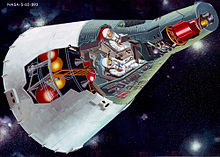
220px-Gemini_spacecraftToday I want to share with you a book you are unlikely to see. Few libraries have it and it commands unreasonable prices in used books stores. It’s writing style is not artistic. Yet it is a moving book, because of its subject, its author, and its timing. The book is Gemini, by Virgil “Gus” Grissom.

Every American knows something about Apollo. Most have at least heard of Mercury, but the Gemini program has been largely forgotten. That is reasonable enough; youth looks forward. At the time, however, Gemini saved America’s faith in the space program at a time when Soviet advances had made us look foolish and hopelessly outclassed.

Here is a brief summary for the terminally young: the Mercury program, consisting of two sub-orbital flights followed by four orbital flights, put America into space, but the one man capsules – not yet called spacecraft, for good reason – were largely occupied rather than flown. Gemini was a two man spacecraft which could change orbits, meet up with other orbiting objects, and was fully under control of its pilots.

If Mercury was a Volkswagen and Apollo was a Winnebago, Gemini was a sports car.

Mercury capsules had windows in the hatch, only placed there at astronaut insistance. Astronauts could look out, but not forward. Gemini’s viewports were moved to a front facing orientation, like the eyes of a predator. It’s pilots had to see where they were going, because they were actually flying their space craft.

For Apollo to do its job, NASA had to learn to rendezvous, dock, and perform EVAs (extra vehicular activities – space walks) and provide a cadre of astronauts who had proven their ability to do these things. That was the purpose of Gemini.

Grissom was the second American in space and the command pilot of the first manned Gemini mission. He provides a first hand look at the program through it’s brief five year span. The book was written just after the last Gemini flight.

Speaking of 1965, Grissom says: ”We had put ten men and five spacecraft into space and returned them safely, performed EVA, and achieved rendezvous. It was a pretty good record for a program that only two years before had appeared to be foundering.” Eventually sixteen astronauts flew on ten manned Gemini missions.

Grissom’s book is an excellent summary. His style charmingly represents a working astronaut who is not a writer. Nevertheless, the book is haunted. We know that, in the words of Grissom’s editor and friend Jacob Hay, “Within weeks after completing the first draft manuscript of this book, Lieutenant Colonel Virgil Ivan Grissom was dead, killed with his colleagues Lieutenant Colonel Edward M. White, and Lieutenant Commander Roger B. Chaffee, in a flash fire aboard the Apollo spacecraft they were scheduled to take aloft in its first manned flight on Feburary 21, 1967.”

The launchpad fire occurred on January 27, 1967, forty-nine years ago today. For details, see Jay Barbree’s Live from Cape Canaveral (2007), especially chapter nine, ”I’ve got a fire in the cockpit!” Also see post 27, That Was My Childhood.

The book Gemini would have been hard to read when it came out shortly after the fire. It is even harder to read today, given our understanding of the incompetence that led to the disaster. Knowing that the primary cause was flammable materials in an all oxygen atmosphere, it is hard to hear Gus admit that, “For their part, the medical people weren’t really entirely happy over out 100 per cent oxygen supply.”

Still – the book is joyful, and clearly written my a man who loved what he was doing. Gus says he was writing the book for his sons, and the sons and daughters of the other astronauts, and for other sons and daughters throughout America. He meant me (I was senior in high school when the book was published), and he meant you, whatever your age.

Grissom’s book Gemini is largely forgotten, but what he and his fellow astronauts did will not fade from our memories.

86. N——

Be sure to drop in to Serial where I am presenting a piece about a boy coming to grips with racism on the verge of the Civil War.

There it is, the N—– word. Everybody in America is afraid of it. When Paula Deen admitted using it during her youth (at a time when everybody in the South was using it freely), they almost crucified her. Granted, a lot of people were just waiting for a chance, but that was their excuse.

I could write it out plainly. It’s my blog; nobody is going to censor me. I feel a little foolish writing a letter followed by dashes, as if eveybody didn’t know what it meant. But if I spelled it out, I would feel like a little kid cussing in front of his parents, then pretending he didn’t know they were there.

I grew up whiter than white (see  posts 46. and 81.), in a black-free community. So how do you learn to hate or fear someone you never see?

Easy. You listen to your parents and their friends, and absorb their attitudes. I didn’t come to hate, in part because my parents didn’t hate. But they did fear.

Black folks seeking freedom during the sixties taught my mind and my heart not to fear them. But the gut takes longer. Forty years later I wrote a poem to confront the fear that lingered.

          Mother Tongue

               I saw a calf born.
His mother, in her need to clean him,
Knocked him over on his first rising,
And on his second rising.

In her need to make him safe,
she drove him to his knees.

               Words are like that –
A mother tongue that overwhelms us,
That makes us what we are,
and sometimes, what we should not be.

*****

When I see a black man, I hear “nigger”
Spoken sharply in my father’s voice.
I step back, my eyes grow tight,
Suspicion fires my blood,
And for one moment he is my enemy.

Then reason returns,
And I am shamed.

It is my father’s fear.
I would leave it in my father’s grave,
If I could . . .,  but I cannot!

I can only drive it down;
And bury it deep in shameful, hollow places.

If reading can remake our thoughts, writing can do even more. Making this poem a decade ago and facing my shame largely removed that inherited fear.

85. Why me?

I’m a white guy. You might ask, “What does a white guy know about Black history?” More to the point, “What right does he have to talk about it?” That’s a fair question.

You might also ask, why is a science fiction author writing a series of posts about race? Another fair question, and it has more than one answer.

I am a citizen, an observer, a teacher, a student of history and culture, and a writer on a number of subjects, and the current Serial demonstrates. It is largely coincidental that my novels so far published have been science fiction.

I grew up in a white town (see post 81.). For a lot of reasons, none of them having anything to do with race, I didn’t leave to go to college. I escaped to go to college. Once there I switched from biology to anthropology, which is, among other things, a study of the variety of lousy ways humans have treated each other. It is also a study of how groups form to manage that treatment, and how various ethnic groups interact, not according to reality, but according to how they are taught to see each other.

It sounded a lot like home.

Like any other human system of thought, anthropology has its core beliefs. Cultural relativism states that other cultures provide the for the needs of people in those cultures, and those cultures don’t need to be changed by the hand of imperialistic countries like Britain and America.

Fair enough. However, the norms of those cultures are often a set of rules designed to maintain the perks of the powerful. The groups who are contending for power are often defined by ethnic identities, and those definitions often have little to do with historical reality.

Again, a lot like home.

One non-mainstream anthropologist explained it this way. In exchanges in an South Asian village, the farming castes gives food to their landlords, and in return get the benefit of not being hit on the head by a club.

Okay, not like America this year, but a lot like the South in 1840.

I spent four years at two institutions studying South Asia and South Asians in overseas colonies. My first MA was on caste based economic interactions. Years later, while writing, I returned to college for a second BA and MA in history, concentrating on Britain and America in the last three hundred years.

But I’m not black! I am more than aware of that “deficiency” and I would never think that I understand black perspectives from the inside. However, there will be innumerable black people writing this season; they will tell their story, as they should.

My outsider’s perspective will also be valid.

84. Homegrown Terror, 1989, (3)

In 1989, I was writing a novel about being a school teacher and mirroring my story against real events when a school shooting took place in a nearby city. I wrote reality into the novel. This post is the third in an excerpt from Symphony in a Minor Key.

*****

Neil drove to the mall after school and went to a department store where he had seen racks of televisions on display. He had no TV himself and he did not want to watch this with Carmen. He could either watch it alone, or in the anonymity of a public place, but not with someone he loved. He arrived at the store just in time to see the whole bloody scene on the news. All normal business had stopped in the store as clerks and customers stood riveted by the horror of it.

A second channel picked it up and Neil watched again. His fascination was like a private shame. He hated the newsman for the way he shoved his microphone into a child’s face to ask her how she had felt, but he could not turn away.

The next morning the Modesto Bee devoted five full pages to the tragedy. Neil, who did not subscribe, went out early to buy a copy and read it all. Five dead. Thirty wounded. That would be half of the kids he taught. And all the rest, the other three hundred students, would never feel safe again. Like a rape, it would tear them out of their childhoods and plunge them into a mad, adult world long before their time.

What would he say to his own students today?

*****

As it turned out, he didn’t have to say very much. Less than half of them were aware of what had happened, and few of them were very interested. They were talking about it when they came in from the buses; those who had seen the news were telling those who had not. But it had come to them through the plastic reality of the television. It was no more real than a drug bust, famine in Ethiopia, or oil spills. Or Miami Vice. It was just another part of the endless effluvium of human suffering that washed about them every day; with marvelous sanity, most of them remained unmoved.

A few of them were affected. Tanya Michelson looked as if she had been crying when she came in and stayed unnaturally quiet all day. Lisa Cobb jumped at every sound. Oscar Teixeira had been thinking hard about what it all meant. He went straight to the fact that the children who had died had all been Asian. With a clarity of thought all out of proportion to his age, he made the connection to the celebration of Martin Luther King Day just before the shooting. Of course he did not speak of irony – not at eleven years old – but he did recognize the juxtaposition.

*****

I taught for twenty-seven years – about 4000 students by my best estimate. Most of them are a blur now, but when they were with me, they were a joy that filled my room and my life. Black (there were a few), Anglo or Mexican, or the very few of other ethnicities, all were precious.

I grew up in a time and place when everyone looked alike, sounded alike, and went to the same church. As I said on Monday, the black people who marched in Selma showed me another way of thinking.

This memory of the assassination of Asian children has inserted itself into a series of posts largely on black history, just as it inserted itself, most unwelcomely, into the novel I was writing in 1989.

It’s all part of the same story.

On Monday I’ll tell you in more detail how a white guy came to be writing on race.

83. Homegrown Terror, 1989, (2)

If you didn’t read yesterday’s post, this will make no sense. Slide on down to post 82. We’ll wait.

The non-Anglo students at my school were Mexican or Mexican-American. I never knew which were native to the U.S., which were legal immigrants, and which were illegals. No one told me, no one told me to ask, and I didn’t need to know. I did try to teach equality and tolerance whenever the opportunity arose, like my alter ego Neil McCrae.

*****

Neil had not had a good day. He had obtained a video of Martin Luther King’s “I have a dream” speech to show to his students in connection with the holiday. His morning class had responded with very little enthusiasm when he tried to get them to discuss what it meant. There were no black children at Kiernan, and Neil had not been able to convince them that the civil rights Dr. King had fought for were for all of them. To these children the events of the fifties and sixties were another world, as foreign as ancient Athens. They were indifferent to it all.

His afternoon class was even worse. He had almost reached the point of giving up in disgust and trying some other tactic, when Bill Campbell came to the door of his classroom and motioned for Neil to join him outside. The look on Bill’s face alerted Neil that something serious had happened.

“I just got a phone call from Elaine Sanders. There has been a shooting at one of the elementary schools in Stockton. Apparently, there were a bunch of dead and wounded. Elaine wanted us to be on the alert.”

Bill’s words were just words. The reality of them did not hit Neil at once. He said, “On the alert for what?”

“I don’t know. Strangers on campus; anything like that.”

Since the American Navy had accidentally shot down an Iranian airliner the previous summer there had been talk of terrorist reprisals, and American schools were one of the targets being threatened. If that was the case, and the school which had already been struck was so close . . .

Neil found himself searching the playground with his eyes, and at the time it did not seem melodramatic. He said, “What do you want me to do?”

“Don’t say anything to your students, but be on the alert. Join Tom and me out front when the buses come to pick them up. It’s late enough in the afternoon that we probably won’t have any parents coming in to pick up their children because they heard it. If some parent comes in, get their child out of the classroom without a fuss. If we can manage it, I want to get these kids home with their parents before they hear about it.”

Bill went on to pass the word and Neil returned to his classroom. Bill’s words “a bunch of dead and wounded” rang in his head as he sat down and looked at his kids. Little Randi Nguyen with her boundless energy; Rabindranath who was calm and bright and utterly without a sense of humor; Lisa Cobb with her erratic behavior and terrible puns; even Jesse Herrera. Dead or wounded . . .; he had to shake his head to drive the vision away.

The bell for the last break of the day caught him by surprise and he jumped. Somebody laughed, then hid his laughter. The students all rushed for the door. Neil was on his feet in an instant and out the door to pace the playground in paranoid fear. All of the other teachers were out, exchanging worried glances and saying nothing.

When the buses came, a phalanx of teachers was there to protect their students from an enemy who never appeared.

This excerpt concludes tomorrow.

82. Homegrown Terror, 1989, (1)

“Life is not a well told tale.  Things come out of nowhere, and in their wake, everything is changed.”

On the day after Martin Luther King day in 1989, terror struck Stockton, California. I was teaching in a small middle school about forty miles away and writing a novel about being a middle school teacher. As I said in post 35, I had decided to have events in my novel mirror events in the real world, not knowing what a trap I had laid for myself. The next three posts are an except from that novel. For factual research, I had only to open the day’s newspaper.

Terror

Life is not a well told tale.  Things come out of nowhere, and in their wake, everything is changed. There is frequently no warning, and even afterward, those events may make no sense.

In Stockton, thirty miles north of Kiernan School, at about eleven thirty in the morning, a distracted young loner named Patrick Purdy parked his car outside Cleveland Elementary School. As he left his car, he used a fourth-of-July sparkler to light a pipe bomb in the front seat, and entered the school yard through an unlocked gate in the fence. He crossed a grassy field, rounded a classroom building and waited there watching the playground where the students were at recess. He was wearing a 9mm automatic pistol and carrying an assault rifle.

Purdy had attended that school for four years when he was a child. At that time it had been a white, middle class neighborhood. Now the community was filled with southeast Asian refugees. Most of the children in the playground were Asian.  Purdy had told acquaintances how much he hated Asians.

Two things happened almost at once. The bomb Purdy had left in his car exploded, and the bell ending the recess period rang.  The children turned from their play and ran back toward their classrooms. Purdy raised his AK-47 and calmly, matter-of-factly, fired a burst of thirty rounds into the mass of students. They fell, screaming and bleeding, or silent and already dead.

He replaced the ammunition clip and fired again.  A teacher herding her children toward safety was shot down, and more students fell. Teachers inside the building at Purdy’s back huddled on the floor with their students, but he did not turn in their direction. He walked to his right, crossing in front of them, still firing into a school yard now littered with huddled heaps of the dead and wounded.

He rounded the far corner of the building just as the first sirens began to sound in the distance. Laying aside his assault rifle, he pulled out his pistol, put the barrel of it to his chin, and fired once.

He was dead when the first officers arrived at the scene.  Five students lay dead. Twenty-nine students and a teacher lay wounded.

*****

Terror was not invented on that day, nor did it end with Stockton. However, no other event ever struck so close to home for me. I went back to school the following day in a school little different from Cleveland Elementary. Our ethnics were Mexican, but so what? Mexican, southeast Asian, or Black – or, in other decades, Polish, Japanese, Irish, or Italian, so what?

I didn’t want to write about Purdy and his handiwork, but I did. It did not exploit the children of Stockton, but honored them by not hiding the truth.

More follows in the next two posts.