Tag Archives: memoir

511. Novel or Novella

If you don’t know about <tor.com>, it is a high quality on-line magazine of science fiction. For years they were one of the few places which would take unagented submissions for short stories, although they have recently changed that policy. They have been mostly closed to novellas as well, but they still have occasional open periods, and one has just begun.

Since most submissions end in, “Try again elsewhere,” I have not previously mentioned any of my own submissions in this blog. However this opening for novellas has brought up some things I want to talk about. Again (see also 146. Novella 1).

Before we begin, here is a piece of information. SFWA (Science Fiction Writers of America), the professional organization which awards the Nebulas, breaks stories into these categories:

short story    under 7,500 words
novelette       7,500 – 17,500 words
novella         17,500 – 40,000 words
novel            40,000 words and up

In the last few years, most people would add very short, or flash fiction, to this list.

I have been working since January on a novel called Like Clockwork, but it has been fighting back. It wants to be 65,000 words long. That would be just right for a submission in the 1970s or ’80s, but is too short to sell in today’s market, unless you are self-publishing.

I’m not. I have considered it seriously, but it calls for a skill set that I don’t have, and don’t want. So I continued soldiering on, hoping for inspiration. Then I became aware of the novella opening at Tor (dot) com, which left me with a choice — try to make Like Clockwork longer than it wanted to be, self-publish it at its natural length, or cut it drastically to create a novella.

My own first publication was a novella, To Go Not Gently in Galaxy in 1978. It was roughly the first third of the novel A Fond Farewell to Dying which I was then in the process of writing.

Cutting TGNG out of FFTD was easy. There was a natural break in the action that allowed me to end the story without leaving the reader feeling cheated.

Cutting Like Clockwork down to size would be another matter; I would have to remove about a third of the book. That would be painful, but would not be a new situation. The floor under my computer is already metaphorically knee deep with good writing that didn’t fit into various novels.

First I had to cut out a long section that took place before the main story. That was easy enough, except that it meant dribbling the necessary backstory into the rest of the book a sentence here and a paragraph there. Smoothly, you understand, and without letting the seams show.

There were four main characters and four lesser characters in Like Clockwork, all paired off. One pair had to be dropped. Some of the things that they did for the plot had to be shoehorned into the lives of the remaining pairs. Smoothly; without letting the seams show.

Much was lost. The Great Babbage, companion to the Great Clock, simply went away. It was reduced to a couple of off-hand references, and that really hurt.  Altogether, it took me a month to chew 65,000 words down to 39,000 words. I submitted it earlier this week, retitled The Clock That Ate Time.

Will you be reading it soon? The writer’s psychotic optimism says yes, but I didn’t destroy any of the files that I cut, and everything that was removed can always be restored if necessary.

That’s my recent history, but it is only worth telling because it points out a larger problem.

Only certain lengths of story can find a market in today’s world. There are homes for flash fiction and for short stories, and novellas can occasionally find their place, but the lengths between 40,000 words and about 90,000 words reside in a wasteland. That is really unfortunate, since most of the best novels in the history of science fiction were in that range.

It’s all a matter of fashion. The best of today’s science fiction would have been rejected unread as too long to publish just a few decades ago.

To put it bluntly, then and now both stink if you have a good story that is the wrong length.

All this is somewhat malleable but there are stories that need to be a certain length. If you are a young writer, this profiling by story length is one more reason self publishing may be your future.

505. Heinlein and the Hippies

I have come to realize the value of a post title in finding readers, but I try to avoid bait and switch. To provide a balancing bit of honesty, this isn’t about the effect Stranger in a Strange Land had on the Free Love generation, but on the relationship between Heinlein and one particular group of hippies, the Jefferson Airplane, aka the Jefferson Starship.

For the relationship of hippies to Stranger, see 160. Stranger in a Strange Land. That way I don’t have to tell you again that I read it early and found it to be a dud.

As for me, I was a half-way hippie. I opposed the war, grew a beard, let my hair go long, and dressed in rumpled casual. The wild, multi-colored garb of TV hippies was largely a media invention. Real hippies wore Army surplus because it was cheap, which was also one of my sartorial motivations.

However, I didn’t do drugs and I was in the wrong place in the wrong time. My college roommate spent the Summer of Love in California; I spent it looking for archaeological sites in the backwoods of Michigan. He told me all about it when he came back in the fall; I had been out of touch and didn’t even know it had happened.

The only thing I understood as it happened in 1967 was the music, blaring out of the car radio as our survey crew drove around looking for archeology sites. I particularly liked that new group the Jefferson Airplane.

Which brings me to the heart of the post. In 1969, Paul Kantner wrote Heinlein a letter asking permission to quote from his work. I knew this, after a fashion, from contemporary gossip, and it was evident in the lyrics soon after, but I didn’t get confirmation until the second volume of Heinlein’s biography came out (see below). I’ll quote some of Heinlein’s reply:

I am pleased by your courtesy . . . Bits and pieces from my stories have been used by many people . . . and it is rare indeed for anyone to bother to ask my permission.

Heinlein gave permission and went on to ask for some autographed albums in return, since he was a fan of their work. Who knew?

The album Blows Against the Empire came out about a year later, by Paul Kantner and the Jefferson Starship. Despite the title. it was actually a compendium band filling in the time between the breakup of Jefferson Airplane and its later rebirth as Jefferson Starship.

It would be impossible to overstate how much music from this era was fueled by LSD. If you seek out the full lyrics, you’ll see how many drug references I have left out of what follows:

from the cut Hijack

You know – a starship circling in the sky – it ought to be ready by 1990
They’ll be building it up in the air ever since 1980
People with a clever plan can assume the role of the mighty
And hijack the starship
Carry 7000 people past the sun
And our babes’ll wander naked thru the cities of the universe

7000 Gypsies swirling together
Offering to the sun in the name of the weather
Gonna hijack – hijack the starship

from the cut Starship

Out – the one remaining way to go
Free – the only way to fall
The light in the night is the sun
And it can carry you around the planetary ground
And the planetary whip of the sun

Mankind gone from the cage
All the years gone from your age

If you are at all familiar with Heinlein, you will recognize that this imagery is from the novel Methuselah’s Children, originally serialized in 1941, which was also the first appearance of Lazarus Long. Of course Kantner reworked it. The hijackers are not Howards fleeing for their lives, but drug-fired hippies whose faith in everything turning out well is a bit laughable in hindsight.

Like all the first half dozen Jefferson Airplane or Starship albums, I loved it. If you are younger than old, there is an excellent change that you’ve never heard music that shows the spirit of innovation and experimentation that was the hallmark of the 60’s. The music that appears on TV flashback programming is fine stuff, but it is also the tame stuff. The raw stuff doesn’t get replayed.

If you are curious, give this album an online listen, although you may not care for it.

==========

Robert A. Heinlein, vol. 2, The Man Who Learned Better by William H. Patterson, Jr, p. 312. FYI, the subtitle does not refer to a change of heart by Heinlein, but is RAH’s idea of one of the three or four basic plots in fiction, and one he often used.

504. Homage to Robert Louis Stevenson

I can’t remember the first time I read Kidnapped, but it stayed with me. When I took a class on children’s literature as I was preparing to become a teacher, Kidnapped was the book I chose for a report. I read it again before going to Scotland for the first time, and have read it additional times since.

I have also read a half dozen other works by RLS, but Kidnapped began it and remains my lodestone in things regarding the author.

Robert Lewis Balfour Stevenson was born at N. 8 Howard Place, Edinburgh, on the 13th of November, 1850.

That is a quotation from RLS’s cousin and first biographer Graham Balfour. While RLS was still a child, his father changed the spelling of his name to Louis, without adopting the French pronunciation, because he was angry with a contemporary politician named Lewis. RLS himself dropped the Balfour to make his name shorter for his literary works.

Balfour was his mother’s maiden name. Despite dropping it, RLS was fond and proud of his maternal ancestors — so much so that he used the name for the main character David Balfour in Kidnapped.

Two recent things brought my long time fascination with RLS to the surface for these posts. First, a character in my latest novel is his doppelgänger. My character Balfour is — and is not — RLS. He has been “transmigrated”, for want of a better word, into an alternate London. He has minimal memories of RLS’s life and death, and is trying to recover them. Like most of the rest of the characters in Like Clockwork, he spends the novel trying to figure out what the hell is going on.

To tell more would be a spoiler, and besides, Balfour only explains things to me as he learns them, and the two of us haven’t reached the end of his book yet.

The second thing that brought RLS to the fore was The Great American Read on PBS. I watched the premier and looked at the 100 books on offer to be crowned as America’s favorite book. RLS was nowhere to be seen. How could this be? Surely either Kidnapped or Treasure Island should have made the cut. And if not, what about The Strange Case of Dr. Jekyll And Mr. Hyde?

I’ll say more about The Great American Read in a later post.

All this sent me in search of a more comprehensive biography of RLS than the one I had picked up in Scotland. I had avoided too much research when I began Like Clockwork, but by the time The Great American Read reignited my curiosity, my Balfour had become an established separate entity in my mind. I no longer had to worry about being sidetracked by an excess of reality.

I went to my favorite underfunded library where they never throw books away — because they can’t afford new ones — and found volume II of the Graham Balfour’s 1901 biography. Volume I was missing, although I eventually got a look at it online. It was a bit dense, as well as being too old fashioned even for me. Also Graham Balfour was a cousin, writing under the eye of a very protective family.

I ended up with the Pope-Hennessy biography, a work that is thinner, more up to date, and not written by a relative. Pope-Hennessy has an honest reputation and gives a balanced view.

RLS’s life was a bit of a soap opera, so I will stick to the highlights. The first key to understanding him is that he was sickly from birth, and his mother was sickly before him. His father was a robust engineer, who carried on the family business of building lighthouses.

RLS’s schooling was late starting and continued irregularly. Bouts of ill health punctuated his whole life. In fact, part of his appeal during the Victorian era was his illness. In that era, it was romantic to be clinging to life, or falling to suicide, and tuberculosis was a particularly romantic way to go.

The elder Stevenson intended him to follow in the family business, but RLS chose from an early age to be a writer. His father, fearing that he would become dissolute, restricted his allowance to such a degree that RLS lived a strange life of poverty throughout his young manhood, alternating with travel and convalescences that would only be available to the wealthy.

Shortly after writing his first book, Inland Journey, in 1878, he met Fanny Osbourne, an American woman who was separated from her unfaithful husband. RLS’s love for her was instant, intense, and permanent. When she returned home, he followed her to America where he almost died in Monterey before moving to San Francisco, all in pursuit of Fanny. She eventually received a divorce and they were married. During this time RLS was constantly writing, receiving positive reviews, but little money.

RLS, Fanny, and her two children returned to England, but could find no place suited to RLS’s ill health. During this period he wrote his best loved works, Treasure Island, Kidnapped, and The Strange Case of Dr. Jekyll and Mr. Hyde, but could find no easing of his tuberculosis.

In 1888, RLS, Fanny, and her two children, now financially secure from his novels, left for the South Pacific. They never returned. This was the first place that had allowed RLS to gain the health that had eluded him throughout his lifetime, and he was unwilling to leave it. He settled in Samoa, where he lived his last years, dying at forty-four. By that time he had written many works I have not had space to mention, and left the novels St. Ives and the Weir of Hermiston unfinished.

I future posts, I will talk about some of those works.

==================

Biographies — Graham Balfour, The Life of Robert Louis Stevenson, 2 volumes, 1901.   James Pope-Hennessy, Robert Louis Stevenson, 1974. Forbes Macgregor, Robert Louis Stevenson, 1989. The last is a an excellent summary biography in 29 pages, shown at the head of this post. It is sold in Edinburgh to tourists who probably never read it. Interestingly, the author’s name is buried at the bottom of the last page. Writer’s get no respect, even when they are writing about other writers.

503. Colliding Conventions

On the fourth of July weekend in 1939, the first World Science Fiction Convention (Worldcon) was held in New York City. 200 people attended. It has met yearly since, except during WWII.

Despite its name, Worldcon didn’t leave the United States until 1948, when it was held in Toronto. It didn’t leave North America until 1957 when it was held in London. It didn’t leave the English speaking world until 1970 when it was held in Heidelberg.

Worldcon is best known for the fact that it gives out the Hugo Awards.

In 1948 the LA Science Fantasy Society started a west coast convention (Westercon) for those who couldn’t afford to go east for Worldcon. This competing event also meets yearly.

In those years when Worldcon meets outside North America, a North American Science Fiction Convention (NASFiC) is held somewhere in the US.

This year’s Worldcon 76 will be held in San Jose, California August 16-20. In 2019, Worldcon will be held in Dublin, Ireland, so a NASFiC should be held. The bid, which will be decided in San Jose, is for Layton, Utah on July fourth weekend.

This year’s Westercon starts tomorrow in Denver. Next year it will be in Utah — Layton, Utah, to be precise.

Yes, you did see them palm that ace.

In 2019, Westercon, which began as an alternative to Worldcon, and NASFiC, which occurs only when Worldcon is somewhere else in the world, will be the same convention. I wonder how that is going to work out?

Just fine, I would imagine.

I attended Westercons 33 and 34 in Los Angeles and Sacramento shortly after my first two novels came out. I attended Westercon 70 in Tempe last year just after Cyan was published.

In preparation for that convention, I made eighteen posts here on a number of subjects that would be covered on panels in Tempe. If you missed them, or if you want to see “How to Build a Culture” which I presented at Westercon 34, click on Westercon in the menu bar at the top of this page.

This year I am skipping Westercon 71, Denver, for my first Worldcon, just down the hill a hundred miles or so in San Jose. This should be fun.

502. Harlan Ellison

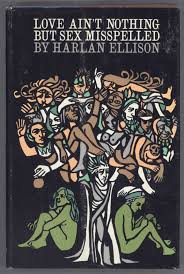
When his book Love Ain’t Nothing But Sex Misspelled came out in 1968, Harlan Ellison said that the title “reflects an attitude toward reality I would dearly love to see come to pass”. I disagreed — I still do — but it didn’t matter.  Ellison was out there kicking American culture in the shins, and that was good enough for me. He was an angry man in an angry era.

I never met the man and I stopped reading him after about 1970, so this is about early Ellison. He was a major part of my life through his short stories, still some of the best ever written, but I lost track of him about the time he went to Hollywood.

I read him through the time when I dumped God, watched blacks being fire-hosed in the deep South, escaped my parents, met up with the rest of the world, watched Americans on TV burning Viet Nam to the ground, and sat listening to the first draft lottery. My number was 41, by the way. Yikes! Everybody was angry on one side or the other of every issue (sound familiar?).

Through all this, Harlan Ellison was writing stories that kicked ass and took names. He was the perfect writer for the era.

He died yesterday (June 28th). I saw it this morning on a trailer sliding by under pictures of the latest atrocity on my morning news cast. I haven’t checked out the details yet. I don’t need to before writing this, because this is bibliography, not biography.

There were a lot of angry people writing things in the sixties. Most of them have been forgotten. Harlan is remembered because he made the things he wrote come real and resonate at a level beyond the moment. His short stories were the best I ever encountered, occasional clunker notwithstanding.

I went to my bookshelf and pulled out Paingod, I Have No Mouth & I Must Scream, The Beast that Shouted Love at the Heart of the World, From the Land of Fear, Earthman, Go Home, and Love Ain’t Nothing but Sex Misspelled. The first five are paperback. You can write them down when you finish reading and go to your neighborhood used book store, where the best in literature resides.

I say that because I just took a moment to check my local library’s online catalog. There are twelve entries on Ellison, all from late in his career, or things for which he wrote introductions. When he was hot, he was a newsstand sensation.

Newsstand: a place to buy newspapers, magazines, and paperback genre fiction. In other words, ephemera. You would never find War and Peace at a newsstand. You also wouldn’t find any of these books five months after they were published.

You will also find Ellison in a lot of anthologies beginning with the word Best . . .. He won a lot of Hugos and Nebulas, not always for his best work.

That’s it. The rest is a laundry list and the admonition to seek these out and read them. You’ll never find better.

Get Love Ain’t Nothing but Sex Misspelled and read it all, but pay particular attention to the Preface, and Pretty Maggie Moneyeyes. If you want to read the most honest writer’s autobiography ever submitted under the name of fiction, try Final Shtick.

Get as many of the others as you can still find. There will be some overlap since Love Ain’t . . . was mostly a self-chosen best-of. The gems awaiting you are not only the rest of the stories, but all of the highly personal introductions that never made it into Love Ain’t . . ..

I particularly recommend that you look at Earthman, Go Home to see what bad editing can do to a good writer. Not only was the original title Ellison Wonderland changed from something charming to something thumb-fingered dumb, but the cover contains every robot cliché that Ellison would never have used.

501. Preface to Robert Louis Stevenson

As anyone who has read even a few posts here knows, I started AWL to find readers for my novels, specifically for Cyan which had just been accepted by EDGE. I had no idea how many interesting people I would meet along the way. Some of them were fellow writers of science fiction, fantasy, and steampunk, some were fellow bloggers who wanted to be writers (this post is for you, as you’ll see at the end), and some of the ones I met indirectly had been dead for many years.

Of course, I had been discoursing with dead people all my life. Imaginary people, as well, starting with Victor Appleton II, “author” of books I was reading before I got my first library card. If you don’t recognize “him”, “he” was a house pseudonym belonging to the Stratemeyer group. “He” wrote the Tom Swift, Junior books which were my idea of science fiction when I was ten.

Come to think of it, many of the people in the Bible that my parents introduced me to were imaginary as well as dead, but a wise man doesn’t talk about to that in public.

One of my favorite friends-I-never-met is Robert Louis Stevenson. He has been a part of my life for decades, and I recently had cause to dig deeper into his personal story while putting together an upcoming series of posts.

Very early in his career (1878), long before anyone had heard of him, Stevenson wrote a travel book about his voyage by canoe on some European rivers, called Inland Voyage. I’m not recommending it to you, but it went into my massive pile of turn of the century — that’s nineteenth century — marine and canoe travel books, after I had skimmed it and found this in his preface:

To say truth, I had no sooner finished reading this little book in proof, than I was seized upon by a distressing apprehension.  It occurred to me that I might not only be the first to read these pages, but the last as well; that I might have pioneered this very smiling tract of country all in vain, and find not a soul to follow in my steps.  The more I thought, the more I disliked the notion; until the distaste grew into a sort of panic terror, and I rushed into this Preface, which is no more than an advertisement for readers.

A preface is only an advertisement for readers? Imagine that! If Stevenson had been writing 140 years later, he would have had a blog, and wouldn’t I love to read that. Also, consider the notion that one of the world’s most successful writers started out thinking that no one would ever read what he was writing.

Of course, there were thousands of other writers in 1878 who thought no one would ever read their writing, and no one ever did. We never knows in advance what will happen. We just have to keep putting one foot in front of the other, and hope.

499. Triple Tease

Thomas Anderson of Schlock Value has an ongoing love/hate (largely hate) relationship with blurbs. I mostly share his view, but things have changed since the era, mostly the 70s, which he reviews. When Cyan came out, I had the chance to write the blurbs myself. In fact, I was asked to write three blurbs of 10, 25, and 75 words, from which the publisher would choose.

Squeezing a whole novel into twenty-five-words-or-less is an interesting exercise. I decided to try it again on the novel I’m presently writing, Like Clockwork, but with a variation. 10, 25, and 75 is really hard. I’ll wait until the book is finished for that, but I did write short, shorter, and really short candidates.

Here are the results.

=========

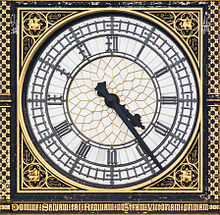
The year is 1850. The year is always 1850. Now it is November and a year’s worth of progress toward understanding is in jeopardy. In a few weeks will come Midwinter Midnight, when the Clock that Ate Time will reset, it will be January first once again, and all that has been gained will be lost from memory.

Snap, who helped to build the Clock and regrets his actions; Balfour who was another man in another life; and Hemmings, formerly a computer, who now figures differently — these three, with Pilar, Eve, Lithbeth, Pakrat, and old man Crump are determined to set Time free again. And if they fail . . .

The year will be 1850. The year will be 1850 forever.

119 words

=========

The year is 1850 — again. A year’s worth of progress toward understanding is in jeopardy. In a few weeks it will be Midwinter Midnight, when the Clock that Ate Time will reset, it will be January first once again, and all that has been gained will be lost from memory.

50 words

=========

The year is 1850 in a this alternate London, where time has no hold. There are only a few weeks left to restart the future.

25 words

=========

How’s that for a tease?

496. Bob Dylan, Nobel Laureate

There is something about blogging that I didn’t expect when I started. Since these posts are opinionated, but not totally opinion, I find myself doing research from time to time to keep my facts straight. That means I occasionally learn things I would never otherwise have known.

It’s a major bonus.

I was aware of Bob Dylan’s selection by the Nobel committee, and his reticence regarding the event, but I didn’t know the full outcome. I wanted to make an off-hand comment about it in another post, but didn’t want to make a fool of myself, so I checked out the facts.

The Nobel committee awarded Dylan the prize for literature last October “for having created new poetic expressions within the great American song tradition.”

Can a song be true literature? I would say yes, although rarely; about as often as a poem is or a novel is. Does Dylan’s work rise to that level of gravitas. Again, my answer is yes; the only other songwriter who comes to mind who worked at that level was Leonard Cohen. Paul Simon just misses the cut.

Dylan took a very long time replying to the committee, fueling speculation that he would refuse the honor, but he finally complied, and eventually provided his Nobel lecture, which is the only requirement attached to the prize.

His lecture was also my prize for checking out the facts. It is superb. I’ve provided a link below.

The lecture, actually more of a biographical essay, is written in the same intelligent but not over-educated voice that we hear in his songs. This is entirely appropriate; it is pure Dylan. He tells of the early impact of Buddy Holly, and then of American folk, then shifts to a personal analysis of three classic books, Moby Dick, All Quiet on the Western Front, and the Odyssey. He presents their complexity, their unflinching view of the rough truths of life, and the manner in which each makes statements which require the readers engagement. Much in these books is not spelled out and nailed down, just as much in his songs is not. These three books are offered for their influence on Dylan’s work.

I found the essay intelligent and moving, and instead of providing a blow by blow, I recommend that you use the link below to read it for yourselves.

I will only quote one short passage, from near the end:

Our songs are alive in the land of the living. But songs are unlike literature. They’re meant to be sung, not read. The words in Shakespeare’s plays were meant to be acted on the stage. Just as lyrics in songs are meant to be sung, not read on a page. And I hope some of you get the chance to listen to these lyrics the way they were intended to be heard.

I hope you will take the time to read the whole essay. Meanwhile, I think I’ll go dig up some of those old LPs I bought while I was in college during the sixties. He has a rough voice and I don’t like his harmonica playing, but oh, those words!

494. We Can Have Archaic and Eat it Too

Marquart rode into my life on horseback. The day after my epiphany, I had a couple of hours off. I was in the Navy at that time, working as a dental technician in an oral surgery, and we had back-to-back cancellations. I wasn’t a writer yet, just an over-committed reader, but I had written the first chapters of a dozen novels. That was usually as far as I got before the impulse ran out.

I took that two hours to write Marquart and his companion’s entry into the Valley of the Menhir. You can see what it eventually became over in Serial today, but it took a long time to reach that level of sophistication.

When Marquart first rode into the valley, forty-six years ago, he was riding a horse. It was all very medieval because I hadn’t done any world building. All of the religious aspects aspects of the story, enreithment, the relation of souls to bodies, and both to ai — even the existence of ai — were nowhere in my mind. It was just a bunch of soldiers in armor riding horses into a valley populated by deer and dotted with oaks. The only fantasy element was a werewolf. I didn’t even know then that shapeshifters were not native to the world of the menhir, having been brought in through the Weirwood menhir from the world of Lorric by the Shambler. I didn’t even know there was a Shambler, nor any of the other gods that you met during the last two weeks.

After two hours I had a short chapter, and the next customer knocked on the door, ready to have his wisdom teeth extracted. I put the chapter in a drawer. I wasn’t a writer then, and had no intention of becoming one.

Three years later, I decided to give writing a try and got hooked. Two years after that I pulled out that chapter, dusted it off, and started world building.

All this was about the time of the fantasy revival led by Ballantine, and there was no lack of books on how to create fantasy worlds. Purists were arguing that a simply medieval world hardly qualified as fantasy. I could see their point. Although it never kept me from enjoying fantasies that did not rise to that standard, I decided that horses just weren’t going to work for me.

During those Navy years I had lived near the San Diego Zoo Safari Park. On one trip there I had seen okapi, had fallen in love with them, and now added them to the book. That lasted about a week before I realized that I needed a true fantasy creature, not just a real one most people had never heard of, so I created kakais in okapi’s much jazzed-up image. Their heavily sloped backs — much sharper than okapis —  gave me the need and opportunity to design strange saddles which would require unusual practices for troops in the field. They also gave me reason to design a harsh culture for the riders of the plains, the Dzikakai (literally, men of the kakai) who were going to be the perennial enemies of the people of the Inner Kingdom.

Okapi.

Eventually, I populated the world of the menhir with a mix of “normal” and created critters. Besides kakais, I brought in tichan as bovine substitutes, added krytes (described and used for plot purposes)  and jaungifowl to my list of birds, made my bears red, and kept ordinary squirrels and deer.

Plot building, world building, and language building all took place as I wrote successive drafts. I don’t recommend the technique. Not only did it take me decades to finish the project, but I ended up with at least a hundred thousand words of text that had to be cut out as the project grew out of hand. Maybe a few chunks of that will end up in Serial late this year, but most of it will never be read by anyone but me.

Still, I doubt if this particular fantasy could have been written any other way, so I guess I shouldn’t complain. At least that’s what I tell myself.

During all this, I went to Westercon 33 in Los Angeles in 1980. I sat in the audience of a lugubrious discussion of what the magic horses in Lord of the Rings ate, and whether it was Tolkien’s responsibility to tell us. (My answer, unspoken as I gritted my teeth, was, “No, you damned fools, it wasn’t!”)

This was followed by a spirited but deeply nerdy debate on the use of language in fantasy. The language of the Inner Kingdom in VOTM was just beginning to come together for me, so I perked up my ears. The idea of archaic language was floated, and someone said that it should only be used as a spice in regular English. The concept spice morphed into general food terms, and the metaphor had become almost embarrassingly labored when one member of the audience stood up and said:

“Are you trying to tell us that we can have archaic and eat it too?”

I wish I had said that. Maybe sometimes we do try too hard.

493. Lost Classics

I have been cleaning out a house where I used to live. It’s a little like archaeology. This was the house where I wrote some of my early novels, and it is the place I have been keeping the older and less often accessed half of my books. Every place I go in the house, a good memory looks back, and every box of books I open brings a forgotten smile.

I found an old A Common Reader catalog. I wish I had kept all the ones I received in those days, but who knew that A Common Reader would go out of business and make them irreplaceable. I’ll tell you about it in a future post.

One of the odd books I ordered from that odd catalog also turned up, Lost Classics by Michael Ondaatje, Michael Redhill, Esta Spalding, and Linda Spalding. You only need the first name to find it on Amazon, but fair is fair. I quote from the introduction:

A book that we love haunts us forever . . . it is in the act of reading, for many of us, that forged out first link to the world. And so, lost books . . . gnaw at us.

I know the feeling. Although, to be honest, I try not to lose my favorites, which is why it takes two houses to hold my library.

Lost Classics comes from Brick: a literary journal. In 1998, the editors ran a Lost Classics issue, and thereafter they were inundated with additional material from their readers. This was collated into the volume on the desk in front of me. You can still get it from Amazon, even though it came out in 2000.

Seventy-four writers provide short essays on somewhat more than that many lost books. They range from slightly forgotten to seriously obscure, but they all fascinate. Searching the index, I find that when I first read Lost Classics nearly two decades ago, I had already read two, The Highwayman by Phillip Noyes (one of only two which really weren’t lost) and N by E by Rockwell Kent. A couple were on my to-read list, and I made a point of finding and purchasing Islandia by Austin Tappan Wright. On full disclosure, it was too dense to penetrate.

That leaves nearly eighty unaccounted for, and that is the point. These are books you will probably never see, but the joy here is reading what they meant to those who did read them.

These are strange people, but I think they will be familiar to you. I will give you just one example:

I cannot find the book and the two or three people to whom I might have lent it have no memory of it, have never heard of it. But I have a clear memory of a Saturday in the summer of 1990, during the year when I tried to live one month in Dublin followed by one month in Barcelona and managed not to live much at all . . . the book hit me hard. I started reading . . . and I am still recovering, in certain ways, from what I learned.

Which reader was that? Which book? I won’t tell you. You will have to find a copy and seek it out for yourself. If you like old things, or odd things, or obscure things, you owe it to yourself.