Tag Archives: science fiction

642. The Green Fields of Mars

European Space Agency

First a note on timing. My normal Wednesday post will be pushed forward to Thursday to coincide with the fiftieth anniversary of Apollo 12.

I was a bright kid in a very small school, so sometimes they cut me some slack. In 1964 I was allowed to take both junior and senior English because there wasn’t much left for me to take, and they knew I was such a nerd that all I would do with this unexpected freedom was study harder.

As a result, I took senior English a second time the following year, not because I needed it, but because what else were they going to do with me? That was the year I wrote a long paper on “The Probability of Life on Mars”, based on such things as the advancing and retreating color changes during the Martian year. The scientists speculated on tough, low growing plants; I suggested tall grasses, because the changes persisted despite all those dust storms.

Life was good.

Then NASA sent out all those probes and took all the fun out of the solar system. Suddenly Venus was not a swamp where dinosaurs might lurk and if you wanted to dream of running your feet through alien grasses you had to go on out to planets around other stars.

Now exoplanet research is taking away the nearby stars from the realm of the imagination, and dropping them one by one into the crucible of reality. A pox on all your probes!

There is a reason for this rush of nostalgia. I love science fiction and I have been writing it for decades, but nothing has given me half as much pleasure as the books about space exploration I read when I was young. The good ones, that is. I’m going to provide an annotated list on November 18. It will be too long to append to this post, and the post between will be taken up by the fiftieth anniversary of Apollo 12.

For years now, I’ve wanted to write some new space exploration juveniles/YAs, and I have worked out a few possible plots, but nothing seems to work for me. I also don’t see any good ones coming from anyone else. If you know of any, let me know.

I do see a lot of nostalgia. One fellow is writing a series of reimagined Tom Swifts, disguised as fan fiction for legal reasons. I won’t name him in hopes that he will continue to fly under the radar. I tried one and they aren’t bad.

George R. R. Martin and Gardner Dozios have produced a pair of anthologies of new stories in the old style called Old Mars and Old Venus. John Michael Greer and Zendexor have a similar anthology called Vintage Worlds. I won’t be reading them since I have long since lost my taste for short stories, but I don’t see anything similar in juveniles — except for the one mentioned above which the courts may remove any moment.

Anyway, nostalgia isn’t the path to take. Today’s kids aren’t yesterday’s kids, and nostalgia is for my generation. What we need is juvenile/YA space exploration literature as good as the best of the old, but modern in outlook.

In one sense, it is remarkable that we don’t have a hundred good space exploration juveniles each year. Even the best imaginations of the past could not begin to equal what NASA has actually discovered in the last decades.

Perhaps the best thing to do is evaluate what worked then, that doesn’t seem to work now. These are the things which come to mind.

Most of the older books I loved were written before space exploration was a reality; only a few were written as things were happening. The death of exploration in 1972 has to be part of the problem, since the space shuttle and ISS were basically just politics, not exploration, IMHO.

All of the young protagonists in those old books wanted to become adults in a futuristic world. The need to become an adult — or at least get out from under the thumb of adults — hasn’t gone away, but the futuristic world doesn’t seem as accessible or as exciting as it once did. Dystopia rules the day, but that won’t last. It never does.

Education isn’t helping. Kids now put together robot kits that are no more individualistic than their soda and vinegar volcanoes used to be. What joy is there in that? Robots used to be laughed at, but kids still made them out of cardboard boxes and goldfish bowls. Now they are prepackaged and shoved down kid’s throats in middle school.

In the old stories, there was intelligent life everywhere in the solar system, and it seemed like those young people couldn’t step out of their ships without finding a new or lost race. Now there may be bacteria under a dozen miles of ice.

The old spaceships worked. They got places quickly. They didn’t have to put up with the utter stupidity of trying to explore the solar system in craft depending on burning gasses, essentially no different chemically from your kitchen stove. See post 402. Nuclear Spacecraft.

I’m sure that someone is going to solve this conundrum and there will be good new space exploration juveniles/YAs for another generation. I’m equally sure that they won’t be written by old fogeys. The people who will write them are in their teens and twenties now, and I hope they hurry, because I want to read them.

===============

My, my, how strange is life. I finished writing this post late afternoon of Oct. 7th. When I turned my computer on the following morning, the new EDGE newsletter was in the inbox. (EDGE published Cyan.) They were advertising a new book, The Rosetta Man by Claire McCague. It appeared to be a juvenile/YA. At least one of the quoted reviews said it had a “well crafted story, amazing hero’s and not one ‘bad’ word or adult activity!”

So I bought it and started in. It isn’t a juvenile/YA because the protagonist is an adult. That is a critical point that was simply assumed in the post above. It is good clean fun; it reminded me in that way of Michael Tierney’s To Rule the Sky. Either of these would be great for kids, but they aren’t juveniles. Perhaps we need a new category. Let’s call it IETCNHAAA, which stands for Innocent Enough to Cause No Heart Attacks Among Adults.

Then again, maybe not.
641. The Synapse Emerges 2

This concludes the post begun Monday.

The Cyan sequel, unnamed, has remained in the upper left corner of my brain all the time that I’ve been writing Dreamsinger. Dreamsinger is not a sequel to Cyan; it is sideways, starting at the same point and diverging into an empty corner of the Cyan/Jandrax universe.

Today (I’m writing both parts of this post on October 5, 2019) everything fell together. Hang on, this get’s complicated.

Humans have colonized the space around Sirius. The main population center is Home Station, in orbit of Stormking, a basically uninhabitable planet. Directed dreaming is used to keep the population happy and easy to control. (See 621 and 622.)

Okay, good enough, but how does this directed dreaming work? How can you create and store a dream, then implant it into a living brain? What technologies are involved, and how much do I have to tell the reader? I will certainly tell less than I know, but I have to have it well in hand to tell the story effectively.

REM sleep was discovered in 1953 and sleep studies were in all the science magazines I was reading through high school. Consequently, I already know more than people who came onto the scene after it had faded from prominence. Still, research is a writer’s best friend so I went to the local library, sorted through the books on dreams and dreaming, and dumped the ones which were astrology, self-help and wishful thinking.

In one book there was reference to a researcher sending visual images to a dreaming colleague. (See Our Dreaming Mind by Robert Van de Castle, pp. xxii and xxiii.) It seemed legitimate, and not believing anything is as futile as believing everything. Besides, I don’t have a Ph.D. reputation to uphold, so I decided to go with it. Now I have to explain it. Here’s a bit from the (very) rough draft of Dreamsinger.

     In the misty olden days of the twentieth century, Van de Castle demonstrated that thought images could be projected into a dreaming mind. That tiny bit of knowledge did not fit into the world as it was then understood, and was forgotten for nearly a hundred years. When it was discovered again, it pointed toward revolutionary changes in our understanding of the brain.
     Basil Kendrick demonstrated that events similar to brain to brain transmission seemed to occur continuously within the brain. He theorized that transmissions of information took place not only by synapses, but also by means of what he called K-waves, which were so short as to be undetectable and, incidentally, travelled faster than light.

K-waves, are you kidding? That sounds like something E. E. Smith would have used. Hang with me a while. The idea of telepathy taking place at FTL speeds goes back to Heinlein, and I always liked it. I needed some entrée into FTL, and this seemed like a good way to get it. As for the term K-waves, Kendrick named them after himself in order to get his name into the history books.

The name Kendrick came out of the air, and I was prepared to keep changing names until I found one that didn’t have a (K or B or D or whatever)-wave connected with it in the real world. As it happened, I got lucky on the first try.

I Googled. There are real K-waves, but they refer to long cycles in economics. I could ignore them. However, there is also a K-complex, so I checked that out.

Without getting into things that are above my pay grade, the K-complex is an EEG waveform associated with memory consolidation, which occurs during a non-dreaming stage of sleep. K-waves (imaginary) and the K-complex (real) are unrelated, but they won’t be when I get through writing Dreamsinger.

Now picture an old writer jumping for joy, just not as high. Things are coming together, or at least close enough to use.

They used to say, “Close only counts in horseshoes and hand grenades”. I would add, “. . . and in writing science fiction”. It is fiction, after all, and you have to at least go beyond our present knowledge, probably in a direction future reality will not support. I work hard at world building, but I’m not obsessive about it. (Reading these two posts, you might disagree.)

My Kendrick, on Earth just before colonists departed for Cyan and for Sirius, stirred up controversy with his theories and then the nukes came down. All his studies were in the massive databanks of the computers that went to Sirius and to Cyan. Under Sirius, they led to directed dreaming. On Cyan . . .?

Suddenly, I have a way of connecting the unconnected all over the place.

I already know that Louis Dumezil, who will later write the Monomythos, and “Frank”, who will invent the FTL drive, have met while waiting to go on the new Darwin expedition. Now I simply add one conversation. In a bull session during training Dumezil will tell “Frank” about K-waves, and their purported FTL speed. He will know this because his father (the religious fanatic, remember?) was a nut on telepathy. Dumezil will also tell his life story, which includes the white powder on the blue berries that lead to a psychedelic experience. (I wrote all this a couple of months ago in a short piece called Children of the Hollow Hills, which you haven’t seen.)

When “Frank” gets washed out of the trip on the Darwin by Debra and Beryl’s new research, he sets out to study the supposed connection of telepathy with FTL, but there are no known telepaths on Cyan. However, he finds the remnant of the cult Dumezil escaped, who are still sucking fungus powdered berries and talking mind to mind.

“Frank’s” study of telepathy, using the cultists as subjects, proves the FTL nature of K-waves. He also discovers K-waves are the actual carriers of all information inside the brain, as Kendrick suggested. The previously measured energies of the synapses are only a side effect, a sort of down-cycle echo of the true energies. “Frank” renames the K-waves as Synapse waves, and goes on to invent the FTL drive I used in Jandrax, and which will allow him to go exploring after all, bad genes notwithstanding.

He names it The Synapse, which I knew he had to because that was what I called it back in 1976.

Don’t you  love it when everything falls together?

Was intuition at play here? Maybe. Foreknowledge? Don’t be ridiculous. I think it was pure, dumb luck, augmented by self-training in grabbing anything good as it floats by, and letting nothing escape that might further the cause.

640. The Synapse Emerges 1

Life is weird, and strange things happen. It is almost enough to make you believe in a master plan, although it remains questionable whether that would be divine or diabolical. In any case, if there is a plan, it’s a hoot.

I’m going to tell you a story that began in January of 1976 and came full circle on October fifth, about a month ago. I have to warn you though, only old writers, new writers, or wannabe writers are likely to be be interested.

But really, who among you hasn’t either built a world, or wanted to?

In the fall of 1975, I sat down to prove or disprove my ability to churn out 40,000 to 50,000 words and call it a novel. By Christmas I had succeeded, although it wasn’t good enough to publish. Right after New Years, I set out to write a “real” novel, science fiction, with world building and everything. It was to be a lost colony book, so I had to get my people stranded, and that meant inventing an FTL drive. I took all of five minutes to do it.

     A sphere floating in space, silver against a backdrop of stars.
     The stars shift their colors, doppler down, out. The sphere hangs alone in darkness where here and there are concepts yet unborn. Six antennae project; it is not so much moved as displaced. First it is here, then it is there, but it never crosses the space between here and there . . . Synapse drive can cross the galaxy in a heartbeat.

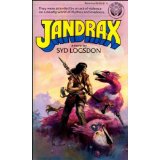
from Jandrax

All done. I blew things up and left my people who-knew-where, and I didn’t have to think about that star drive again.

Synapse? It was just a word that came to mind, with no real connection to brain cells except that it seemed to imply something, without specifying what.

Beware of what you create, Dr. Frankenstein.

I wrote the novel Jandrax, and it was published. Picture a young author leaping with joy.

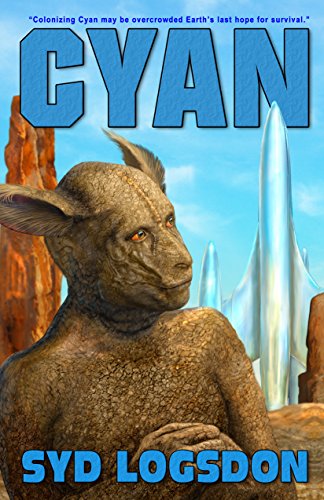
A few years later I started Cyan and had to invent a non-FTL star drive. (For more, check out the post coming November 20.) This time I put some thought into it so that it had some reasonable underpinnings. Lots of years passed and eventually Cyan was published, but I wasn’t through. I now had a world full of people I really liked, and some of them were young enough to continue exploring on the decrepit old starship Darwin.

The trouble was, I’d blown up the Earth, and I couldn’t count on it to recover for a long while. Someone had to write the Monomythos which had driven/would drive the plot in Jandrax, and someone had to invent the Synapse. I had to find them hidden among the population of Cyan, and I had to find motivations for both of them to do what I knew they had to do.

Writing prequels is like doing a time travel paradox story. He invented this, because he had to, because he used it on page 92 of a previously published book, that takes place in the new book’s future. See, time travel.

There was no problem with the Monomythos. I decided to have its writer be a rational young man who had grown up under the influence of a religious fanatic, either his father or a father figure. That’s right up my alley and the writing of it has been dribbling along recently on days when other writing is stalled.

In fact, the whole sequel to Cyan has been dribbling along in lots of pages of notes-to-self. Darwin is too old to push to previous accelerations, so the next journey will need cold sleep. No problem, there are 60,000 cold sleep units left over from Cyan’s colonization.

But that brings up something else.

I don’t know about you, but loose ends keep rolling around in my head long after I’ve moved on to other books. In Cyan, between 10 and 20 percent of the cold sleepers never woke up. Their bodies were fine, there was just nobody home. I had created that as an unexplained fact, but ever since then I’ve been wondering why things should work out that way. I decided to let Debra and Beryl figure it out in the sequel.

If you don’t know who Debra and Beryl are, for God’s sake go buy a copy of Cyan and read it. (LINK)

Using the computer’s file of DNA patterns from the 60,000 who set out from Earth, Debra and Beryl discover that a certain cluster of seemingly unrelated genes is present in all who died, and absent from all who lived. Further research is indicated, but it provides an absolute predictor of who will die in cold sleep.

One of the people (still unnamed, let’s just call him Frank for now) who is ready to depart on the new exploration finds that he has the deadly gene cluster and can’t go. When the Darwin departs without him, he is motivated to find an answer to faster than light travel.

All of this was worked out during the last six months, well before yesterday’s epiphany.

I’m only half way through this odd tale, and this post is already long enough, so I’ll to finish on Wednesday.

635. That Many?

It’s hard for me to believe that I am two months into the fifth year of this site. On the other hand, it’s hard to believe that I’ve done this much writing in only four plus years.

According to WordPress, this will make 1289 posts. Some were longer, some shorter, a few quite short like this one, and others were quite long. They probably average roughly 700 words. I’ve made a few repeats, so by a rough estimate that’s about 800,000 words.

To be fair, about half of that was material in the form of old stories from my long and checkered past, mostly presented in Serial. Let’s call the rest a bit more than 400,000 new words.

No, I didn’t believe it either, so I checked my figures twice.

That’s the equivalent of three or four modern novels, or about seven novels the length they were when I started writing. Truthfully, it’s easier to write a post than the equivalent number of words from a novel, but still . . .

Oh, by the way, during that time I also spent a lot of effort playing editorial ping-pong getting Cyan into print, and wrote two new novels, The Cost of Empire and Like Clockwork, and to date about twenty percent of the novel Dreamsinger.

Retirement from teaching middle school has been fun, but not relaxing.

All this cogitation came about as I was considering a novel I didn’t write (yet) which I plan to tell you something about on Wednesday.

633. Good Books for Kids

When I was a child, I read as a child,
I thought as a child, I understood as a child:
but when I became thirteen,
I switched to Clarke and Heinlein.

That pretty much screws up 1 Corinthians 13:11. And it isn’t exactly true. When I was a child, i.e. about twelve, plus or minus, I read what was available, and it wasn’t always great. It was primarily science fiction and mysteries, by which I mean Tom Swift, Jr. and the Hardy Boys. You could buy them in a toy and hobby store on the main street of Coffeeville, Kansas, one of the towns we shopped in. There were no bookstores; there were libraries, but I didn’t know that yet.

The Stratemeyer Syndicate, which ground out novels for kids like Hershey’s grinds out chocolate bars, was actually the best thing that ever happened to rural American youth for most of the twentieth century. I read them, my grandfather read them, and kids were still reading them when the millennium rolled over. They weren’t very good. In fact, a lot of them were terrible, but they were there. For a kid out in the sticks who liked science fiction, the choice wasn’t Tom Swift or something from Arthur C. Clarke. It was Tom Swift or nothing.

When I started going to libraries a couple of years later, my possibilities were expanded, but it was still a small library. I read a lot of things that I would never have touched if more had been available. I read a lot of books meant for adults, but that’s the goal anyway. I also read books way below my level, because they were there.

I recently remembered a book I hadn’t thought about since those days, The Wonderful Flight to the Mushroom Planet by Elanor Cameron. I was too old for it when I read it, but I still loved it, so much that I tried to find it again. No luck, but I did get a copy of the sequel.

I couldn’t read it. I could barely read it when I was thirteen, but if I had gotten to it when I was eight, I would have been in love.

That got me to thinking about what makes book a juvenile, as they were called then. The Mushroom Planet books would not have qualified. They were for children. Juveniles were for boys who were anxious to become men.

Of course there were juveniles for girls, but girls and boys were separate species in the fifties, so I can’t report on their books.

Heinlein did a lot of juveniles which I’ve already talked about. (See posts 311 and 513) My real favorite juvenile writer was Andre Norton, and I’ve done a few reviews on her as well. (For science fiction see posts 262 and 263, or others see posts 260 and 261.)

What Heinlein, Norton, and many other juveniles authors had in common was that their characters were not yet adults but were given adult roles by the author. The Heinlein characters were often learning a futuristic trade under an adult. Norton’s characters were often being stranded on an alien planet. Outdoors and with no other kids in sight — she was channelling my childhood.

Today’s young adult books seem to be quite different from yesterday’s juveniles. First, they are targeted for slightly older audience, and second, 2019 isn’t 1959. The audience itself is different.

I can’t imagine a modern kid reading the early Nortons I loved so much. With only slight exaggeration, those Nortons were about a young person alone in a wasteland, trying to survive the dangers of nature, and modern kids live in crowded cities trying to survive the dangers inflicted by the adults around them.

I wouldn’t want to be a modern kid, and I understand why the books of my childhood probably wouldn’t mean much to them.

I taught middle school for twenty-seven years and I tried to keep abreast of what was available for my students, but I’ve been out of that loop for a while. I used to go to every Scholastic book sale to see what was new and good. The answer — damn near nothing. The few good books the kids had to choose from were mostly reprints from way back when.

Those book sales were where I found Fog Magic by Julia Sauer. It’s a wonderful book but it was published in 1943. Later I found A Storm Without Rain by Jan Adkins published in 1983. That’s still almost four decades old. Both were time travel stories of the old style; that is, without a time machine. The kids just went back in time and never understood how it happened.

I also stumbled across a fine steampunk novel, before I really knew anything about steampunk. That would be Airborne by Kenneth Oppel, published 2004. At least we are getting into the right millennium.

Harry Potter? Tried it, couldn’t read it. Twilight and the Hunger Games? Don’t want to, and if you don’t know why, I could never convince you.

Good books for kids are rare. Fortunately they stay around forever.

Why didn’t I mention A Wizard of Earthsea? You can’t pigeonhole it as a juvenile or a young adult book. It’s literature. Buy it for your kids and read it yourself.

632. Dam Gravity

M. Rehemtulla for QUOI Media Group

Tuesday morning. When I wrote these posts about two weeks ago, I mentioned PG&E. Guess what? They just announced that tomorrow my county is slated for a possible shutoff of power because of projected high winds. Even if that doesn’t happen, a regular power outage is likely. While you are reading this, there is a good chance I will be reading a book by sunlight through the window, because I won’t have any electricity to power my computer. I would find that ironically amusing, except my stove and refrigerator also won’t be working. At this moment I might be eating cold beans out of a can.

Additional, 6 hours later, it is now almost certain that we will be blacked out, and that it might well last up to five days. Posts come to you from WordPress, not directly from my computer, and I have a month of posts in the can so, see you later. Now back to what I already wrote.

==================================

This is a continuation of last post. What does a kid with a toboggan have to do with solar energy storage, you ask? You’ll find out by the end of the post.

If you have any science background at all, please forgive the next few paragraphs as I set things up for something you may not know.

A battery does not hold electricity like a can holds Coke. The electrons which are present inside the battery do not go into your device. They travel from the (-) pole to the (+) pole, and essentially the same electrons are there in a discharged battery as are in a charged one.

It is the flow itself which powers your device. The flow is caused by chemicals inside the battery changing from a high energy configuration to a low energy one. This is true of the lithium ion battery that just burned up your hoover board, and equally true of the car battery in your great-grandad’s 1950 Nash Rambler. Such batteries are recharged by running electricity back through them to return the low energy chemicals to a higher energy state.

In other words, batteries don’t store electricity, they store energy. Chemical energy, and there are many other ways to store energy besides batteries. Let’s look at one.

===================

Last post I invited you to take a trip with me from the California foothills toward the coast. Now we have dropped down out of the brown hills, have crossed the hot, flat, agriculturally green Central Valley, and suddenly our car turns its nose upward because we have reached the Coast Range which stands between us and the ocean. We are on Highway 152 and to our left is the imposing dam of San Luis Reservoir.

Everyone knows the story of rainfall on mountains. California lives on it. Sunlight on the Pacific raises moisture which gets an uplift first by the low Coast Range and then by the High Sierra. The west side of the Coast range and the western Sierra foothills get winter rain in moderate quantities, and west side of the high Sierras gets a big dump of snow which melts in spring to fill reservoirs all over the western foothills, providing irrigation and electricity to California.

The eastern side of the Coast Range and of the Sierras get squat.

Where San Luis Reservoir is located, there isn’t enough local rain or snow to fill it. Water is brought to it by a system of canals, accumulated in the forebay and pumped up into the reservoir.

Sounds goofy, right? The dam exists to harvest in spring and store for summer, water that has already passed thorough the other reservoirs and would otherwise go to the ocean. Of course it’s controversial; everything related to water in California is controversial.

So what does this have to do with solar cells on the roof? San Luis Reservoir not only stores water, it is essentially a giant storage battery for electricity.

When the water arrives at the forebay, it is pumped, by electricity, up about 320 feet into the reservoir. When it exits the dam to be used, it passes through a hydroelectric generator, recouping much of the energy originally used to lift it. It isn’t 100% efficient system, but nothing is.

Batteries store energy by chemical change. There are innumerable other ways to store energy, many of them new, complicated, expensive, and with unknown dangers. Carrying a load uphill to store gravitational energy, and getting that energy back when the load comes down is old, simple, and well known. Kids have been doing it with toboggans ever since there have been snow, toboggans, and kids. (See, I told you I’d explain that photo.)

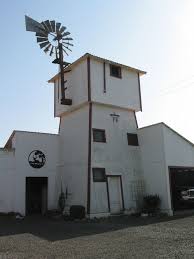
In California, people have been doing the same thing for a hundred years or more in tankhouses, water tanks attached to houses which allow gravity flow so you don’t need to turn the well pump on every time you open a faucet. The one shown here even used wind power to get the water out of the well and up into the tank.

This was done for the sake of the water, but it could as easily be done for the sake of storing energy. With twin tanks, one high and one low, there would be no reason to “use up” the water. It could even be structured in tandem with the house’s normal water usage.

I submit that a good engineer could turn this into a cheap, simple, and easy way to harvest solar power all day and use it all night, without frightening Mother Nature. You would simply use excess solar electricity to pump water upward all day, and drain it back through a turbine and generator that night.

How much water, how high would we have to pump it, how much would the raised tank cost? Would it be practical? Would it make money for the ones who provide the system? Who knows; that’s for some young engineer is search of a project to determine. Will it be you?

Since I didn’t invent this technique, I can’t ask for royalties once you perfect it. I will, however, expect a finder’s fee.

And if any of you out there know of someone who is already doing this, I would love to take my tongue out of my cheek and hear about it.

631. To Grid or Not To Grid

Although I fully believe in it, I normally steer clear of talking about global warming, wind and solar power, and the impending end of civilization. There are plenty of sources for that, and I don’t want to get caught channeling PBS.

However, speaking of PBS, there was a bit about the problems of energy storage as part of the solar solution yesterday (Sept. 27) that made me realize I knew a few odd things from a few odd sources that were worth sharing.

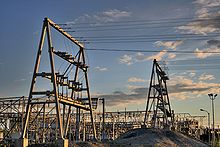
I live in California, in the foothills of the Sierras. PG&E provides my electricity, but every time it rains more than a tenth of an inch, my power goes out for six hours. This has been true for decades, not just since PG&E went bankrupt for its role in recent fires and told us all that it was going to shut our power off every time the wind comes up.

It’s enough to make you want to go off the grid.

We’ve all grown up with the grid — even me. The first house I remember, about 1950, had no plumbing, no running water, and an outhouse out back, but it had electricity coming in from elsewhere through the wires. Consequently, I can’t honestly tell Lincolnesque tales of reading by a coal oil light (except when tornadoes took the wires down).

The history of the grid goes back to Tesla and Edison fighting the battle of AC vs DC, and continues through the REA. (That’s the Rural Electrification Administration which brought electricity to isolated farms throughout America in the thirties.)

The grid is wonderful; it has given us our present level of civilization.

The grid is terrible. It is a dinosaur, completely out of date and tying us to the mistakes of the past.

As is so often the case, both of those statements are true. No one decided to choose centralized production of electricity with a massive distribution system. Its alternative, dispersed production, was simply not an option in the past.

That is no longer the case. A system of solar power through electrovoltaic cells can now be built one roof at a time. (There are other alternative sources of electricity, but I’m only going to talk about one in this post.)

There is a big problem, though. Solar cells only generate sufficient power during reasonably sunny days. There is also a solution, but it is only going to work for a few years.

In today’s installation of rooftop solar cells, homes mostly draw on the grid at night and “turn the meter back” during the day. Quite clever, for now. It amounts to using the grid like a giant storage battery. But if enough rooftop solar installations try this trick, daytime generated electricity will become essentially a waste product from the viewpoint of the owners of the grid.

Of course you could have a mega-array of solar cells in America lighting up India at night, and a similar array in India lighting up America at night, but that’s turning the grid into a GRID. It’s good science fiction, but not very practical.

If you want off the grid — and eventually the grid will want you off, if you are a daytime energy generator — you will have to find a way to store your daytime energy for night time use.

Storage batteries are heavy and expensive, not only in the owner’s dollars but also in terms of world resources. They also blow up. I’m not just talking about lithium ion batteries; car batteries blow up too from time to time.

If you could invent the perfect battery — light, safe, cheap, environmentally friendly, capacious — it would make you more money than cold fusion.

If you could invent both, you would solve all the world’s problems except overpopulation and religious strife. You could run for God and probably win.

Heinlein invented the perfect battery, the Shipstone, and built a whole universe around it, but it’s harder to do in the real world.

Coming back down to the individual home owner, what is needed is a non-battery source of energy storage to make those solar cells practical.

I have an idea! Actually it isn’t mine; it already exists, and I can point to it.

Hop in the car with me and let’s take off for the coast. I drive by something every time the foothills get too hot and I need a Monterey fix down by the ocean. I’ll show it to you.

We’ll go there Wednesday.

630. Sequel

I spent most of the summer trying out possibilities before settling on Dreamsinger as my next novel. One thing I considered was a sequel to A Fond Farewell to Dying. FFTD was set in a post nuclear war/post rising of the waters world. I wrote it before global warming became obvious, and my main character thought the flooding was due to the nukes that opened up the San Andreas fault. I don’t feel obligated to agree with him if I write another novel.

There would be several advantages in this sequel. I wasn’t done with my characters, even though FFTD had a proper closure. I had several bits and pieces of story that needed telling, but not enough to make a novel. I had a dandy idea for a third novel, if I could find a good second one to sew everything together.

In FFTD, the protagonist starts out in Ozarka, the island chain that lives in the middle of a much expanded Gulf of Mexico, but this is told as a flashback. The shattered, inundated remains of NorAm are not explored, and I felt there was a lot to see there. I wanted my old characters to fade into the background, letting me tell the next story through new eyes.

On a practical note, I’ve lived fifty years in California but only two of my novels are set there, and neither is science fiction. I know a lot of stuff that is going to waste.

So I decided to bring in a new character. He (I don’t know his name yet) is not so driven as David Singer was, but he is still a backwoods kid who has a lot to learn. That’s always useful; it lets us learn along with our character. I decided to let him grow up on an island off the coast of what is left of California, make his way across the now flooded Central Valley, spend some times in the former gold rush towns which will become seaports by his time, then head north walking along the crest of the Sierra/Cascade ranges. Up north he will come in contact with the characters from FFTD and his story will meld with theirs, but I don’t have that completely figured out yet.

I could tell you more, but at this point everything is still malleable. In fact, it is probably too soon to write this story; it needs to ferment a few more years.

Just to get a feel for this new novel, I wrote a few hundred opening words. You can have a peek at what may be coming, if you want.

==============

1.

The town I reached was a haphazard scattering of buildings up the dense green slopes of what was once the Coast Range, mostly built from sawn driftwood. At sea level were shacks and several small piers for fishermen, as well as a longer one for oceangoing vessels.

As for me, I was an invading army of one. Maybe I should say navy, since I was coming in from downcoast in the middle of a sealskin and driftwood kayak of my own making. I had left my birthtown two weeks ago, heading north to find a bigger life. Here and there I slept on islets, and cooked fish over driftwood fires, but mostly I just paddled all day with the sunrise on my right and the sunset on my left, and slept on the waters each night.

This place was not going to give me the life I wanted, but that long pier meant ships would come eventually. I beached the kayak on the open shore and dragged it into the brush, out of sight.

First things first. There were hundreds of streamlets coming down the steep, west facing slope. I picked one, walked up until I reached a waterfall, and let it sluice two weeks of grime and stench off my body. I swilled my fill of fresh water that had not spent days in a stoppered gourd. Then I walked on up the beach.

The first man I saw was a fisherman. So were the next dozen.

You could read the history and the future of the town in its architecture. There were a dozen huts on stilts paralleling the beach. The first actual houses were three hundred yards up a steep zigzag, and a hundred feet above the water.

Conclusion: from time to time a storm would wipe out everything below those houses. Prediction: someday, tomorrow maybe, or maybe ten years from now, a larger storm would wash the headland clean and this town would become a memory — if anyone survived to remember.

The first man I met looked me over and snarled, “Where did you come from?”

“Pirling. Two weeks south, out on one of the islands.”

“How’d you get here?”

“Kayak.”

His eyes ran down the beach behind me, looking, but he didn’t ask where I had hidden it. He said, “We all work here. No handouts. What can you do?”

“Anything you can do.”

#             #             #

For two weeks I worked, harder than anyone in the town. I wasn’t trying to impress anybody. It’s just that I had no friends or family, and nothing to keep me occupied but work. I slept on the beach. The sand was comfortable enough, and my boudoir was swept clean twice a day by the tide.

My body was comfortable, my belly was full, and the surly bastards I worked with never asked any questions. But my mind was trying to crawl out my ears to find something interesting to think about. Fat chance in that town.

Then a ship came. She was called Mariposa, Spanish for butterfly, a twenty-five meter schooner with a ferrocrete hull. I went aboard and looked for the skipper.

==============

His next stop will be the shattered remains of nuked San Francisco, with only Nob Hill still above the water. Maybe. Someday. If I get that far down the list of books-to-write.

629. Lord Darcy

First a note for those who got here following the tag steampunk —
this isn’t exactly steampunk, but it tastes a lot like it.

It was in the Jokake room, Westercon 70, in Tempe, Arizona. Science and Technology vs. Magic was the name of the panel, and it seemed to falter from the beginning. Some panels are like that. They look good on paper, but in real life they are too cute to live.

I was a panelist, and I was puzzled by what I wasn’t hearing, so I asked, “Doesn’t anybody remember Lord Darcy?”

Some did, and said, “Oh, yeah, I read those.” Most of the audience had never heard of him.

Although the Lord Darcy series was somewhat successful — it got a Hugo nomination — it was too unique, too “in-between”, and it fell into the crack between the sub-genres. It was exactly what the panel planners had in mind, a set of stories based on magic as something that was studied, understood, and put to work by magicians who were trained in its laws — laws which had been meticulously discovered by scientific study.

The Darcy stories were also gloriously filled with in-jokes, with references to popular literature, and most of all they were great fun.

The series is set in modern times (the 60s and 70s, actually) in an alternate universe where King Richard did not die, John did not gain the throne of England, and magic took the place of science. I could say more, but I’m trying to avoid running this up to novella length.

Randall Garrett, the author, was a supreme practitioner of the punster’s art. If he had been writing about a magical object lost at a circus, he would certainly have called it The Adventure of the Rube’s Cube. He didn’t (sadly) write that, but I will dissect one of his real titles below.

Lord Darcy and his colleague Master Sean O’Lochlainn are often described as a kind of Holmes and Watson. That’s relatively fair, but it only scratches the surface. Darcy was of the aristocracy, tall, lean but strong, able with sword and pistol, brilliant of mind, lovely of body — the pluperfect hero. If that sound like Superman in need of a little kryptonite, forget it. You can be that heroic if the stories have an strong undercurrent of humor. Call him James Bond with a brain.

Master Sean, on the other hand, is no Watson. He is as competent in his own realm as Darcy is in his.

Darcy is chief investigator for Normandy, although he is sometimes called to England itself; he finds things out if they depend on actions, motives, and deception. Master Sean is a forensic sorcerer; he finds things out if they depend on magic. They work together seamlessly to solve murders and political crises for (modern day) Prince Richard and occasionally, King John IV.

There is a pattern to the stories. Typically, everybody is running around, wringing their hands and calling the latest crime an act of black magic. Darcy and Sean arrive on the scene; Sean investigates the magic at hand and passes the actual facts on to Darcy; Darcy sees the connections that no one else saw and shows how the murder was committed by purely physical means.

Master Sean explains Darcy’s technique like this:

“Like all great detectives, my lord, you have the ability to leap from an unjustified assumption to a foregone conclusion without passing through the distance between. Then you back up and fill in.”
                    from A Matter of Gravity,
                   but also repeated in several other stories

The only novel, Too Many Magicians, is particularly full of pop culture references of the day, including appearances by Nero Wolfe and Archie disguised as the Marquis de London and his assistant Lord Bontriomphe.

My favorite story title is The Muddle of the Woad. If it doesn’t strike you funny at first, say it fast three times. Woad is the blue dye used by the Picts when they went into battle. A double agent for the King, investigating a cult seemingly devoted to regicide, is found dead in another man’s coffin, stark naked and dyed blue. A warning from the cult? Everybody thinks so but Darcy.

The only thing wrong with these stories is that there are not enough of them. I first read them in the paperback collections Lord Darcy Investigates (which contains A Matter of Gravity, The Ipswich Phial, The Sixteen Keys, and The Napoli Express) and Murder and Magic (which contains The Eyes Have It, A Case of Identity, The Muddle of the Woad, and A Stretch of the Imagination). I read the only novel Too Many Magicians in the Gregg Press version with the excellent preface by Sandra Meisel.

If I had to replace my copies, I would opt for the 2002 edition of Lord Darcy, edited by Eric Flint, because it also contains the two otherwise uncollected stories The Bitter End and The Spell of War.

All these are out of print, but that is what used bookstores and — dare I say it? — Amazon are for.

As it was with Holmes, there were further adventures after Garrett’s death, written by Michael Kurland. They are on my to-read list.

628. It Isn’t Working

Please note that today’s eyecatcher
is a busted clock. Thanks wikihow.

“Comp,” he said, “if I don’t cancel this order within one del, notify Yorki 00247 of everything that has happened in the last dur.”

Yikes, this isn’t working. I’ve really had fun with the idea of decimal time, and I think it is something that these people would actually use. If someone on Home Station were reading what I’ve written so far, they would understand it completely, but I can’t seem to make it work for readers who live on Earth.

It isn’t for lack of trying. There are a dozen little tricks, like saying “later” or “earlier” or using a vague time like “in a while” to avoid the decimal time terms. I made sure that Antrim spends his off hours reading old Earth novels so he is constantly translating into hours and minutes, even though the people around him don’t use our time terms any more. It still doesn’t work. I never realized until this experiment how many times in one novel a time phrase like “wait a minute” is used. My best guess now is about a million.

The other thing from the example at the top, computer names, is working out fine. The reader, just like the people of Home Station, keys in on the first name and ignores the number completely. I could screw this up for myself by using both Lafel 18273 and Lafel 19581, but I’m not masochistic. I don’t even try to remember the numbers. They have a logic — the lower the number the older the person — but I simply have everybody listed on a separate file. Most of the time I just use the first name, and if I need the number, I cut and paste.

It’s not that easy with time terms. Just five minutes ago I had Antrim checking out the computer records on some people he was about to interact with and I needed to make note of their ages. I couldn’t just say “she was a year younger than Antrim and the other two were about two years older.” I could say —

She was about a third of a kilo-det younger than Antrim and the others were nearly a kilo-det older, which told Antrim that she was a year younger and the other two were about two years older.

Arf, snarf, and boogles! That doesn’t even work once, and I seem to need something like that twice a page.

What I actually said when I got to that point was — “I give up”.

From now on, I’ll do what I do in fantasy fiction. In Menhir, Tidac and Cinnabar speak the language of the Inner Kingdom, but I write it in English.

I might make a note in passing that Home Station uses decimal time, but I’m going to write the novel in English. I’m going back to hours and minutes and years.

Ahhhhhhh! Man, that feels better.

I just went back to the paragraph preceding the age snarl and changed it to read, “It was a five minute walk to his destination.”  It didn’t take me twenty minutes (1.2 durs) to figure out how to say three dins (five minutes, more or less) is a way that a reader on Earth would understand.

Much better — but the experiment was still fun.